

Key Takeaways
Treat political history as contingent: two minutes nearly changed Thatcher's Britain
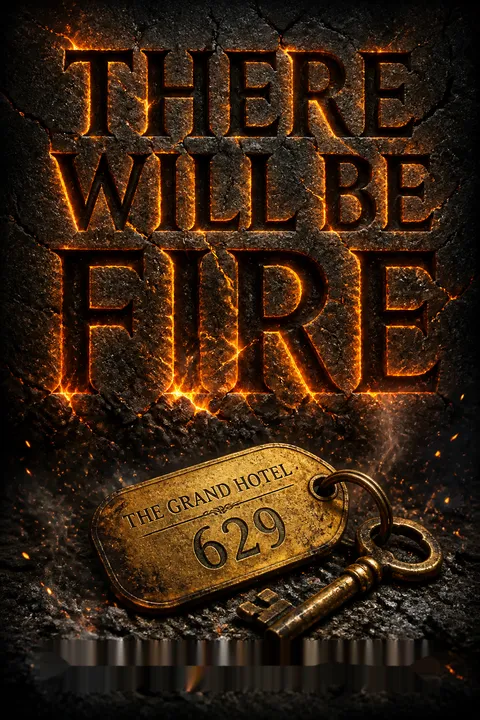
A narrow escape. At 2:54 a.m. on October 12, 1984, a bomb tore through Brighton's Grand Hotel, where Margaret Thatcher and her cabinet were staying. A collapsing chimney sent tons of masonry down a vertical line of rooms. Thatcher had left her bathroom roughly two minutes before the blast; the destruction narrowly missed her suite. Five people died, and dozens were injured. The attack was designed to kill the prime minister and cripple her government, not merely frighten conference-goers.
A changed path. Thatcher survived, remained in office, and continued to shape British politics and international relations. The book links her survival to consequential events, including the Anglo-Irish Agreement, signed in 1985. But the counterfactual remains unknowable: no one can establish what a successor would have done. The point is the scale of possibility compressed into a few minutes and a few feet.
What's striking is how the book makes contingency concrete. History can look inevitable when viewed backward, but here it depends on a room, a schedule, and the direction a chimney falls. This is a useful corrective to biographies that treat powerful leaders as the sole engines of events: institutions and material accidents matter too. Yet counterfactuals should be handled carefully. Thatcher's survival clearly preserved her political agency, but it does not prove that no successor could have signed an agreement or pursued similar policies. The near miss reveals vulnerability, not a single alternate history.
Read Northern Ireland through competing histories, not a single origin story
A divided inheritance. The conflict grew from centuries of British rule, settlement, and resistance, but its immediate political structure was created in 1921. Twenty-six Irish counties gained independence, while six northeastern counties remained in the United Kingdom, with a Protestant majority. Many Protestants identified as British and feared rule by a Catholic-majority Ireland. Catholics in the new Northern Ireland faced discrimination in housing, jobs, and political power. Civil rights protests in the late 1960s met police violence, riots, and the revival of the IRA's armed campaign.
Contested terms. Republicans described the campaign as a war against occupation; British and Irish governments called it terrorism. Even names for the region carried political meaning. The book presents these rival accounts without suggesting that every claim or act was equivalent. By 1984, more than 2,500 people had died in the conflict known euphemistically as the Troubles.
The book's insistence on contested memory is more than a language lesson. Political labels allocate legitimacy: one side's freedom fighter can be another's murderer, while a state's law can be experienced by a minority as the instrument of exclusion. Understanding those frames explains why arguments about history remained politically active, rather than safely past. That context should not become an excuse for violence or a device for false equivalence. The same account can recognize structural discrimination, republican agency, loyalist violence, and civilian suffering without collapsing their differences.
Treat the hunger strike as a political turning point, not only a prison protest
A fight over status. Margaret Thatcher's government treated republican prisoners as ordinary criminals, rejecting their claim to political status. Prisoners first refused uniforms, then spent years in a blanket protest and a dirty protest against prison conditions. In 1981, Bobby Sands began a hunger strike. He died after sixty-six days without food. During the fast, he ran for Parliament in a by-election and won 30,492 votes, drawing worldwide attention to the prisoners' cause. Nine more men died before the strike ended.
A political opening. Thatcher did not publicly concede the prisoners' central demand, but the election result undermined the argument that republicanism was merely the work of an isolated gang. Sinn Féin gained an electoral foothold. The strike brought grief and fury, but also pushed the movement toward political organizing, giving Gerry Adams a route to broaden its influence.
The episode shows how a dispute over classification can become a struggle over whose account of a conflict counts. The prison policy aimed to strip the IRA of political legitimacy; the hunger strike instead made that legitimacy visible to audiences far beyond the prison walls. Sands's election is especially revealing because a protest tactic became a vote, not simply a symbol. Still, the political result should not romanticize self-starvation or imply that every voter endorsed IRA violence. Public sympathy for a prisoner, support for a party, and approval of armed tactics are distinct judgments.
Violence and electoral politics pulled the IRA in opposite directions
A double strategy. Gerry Adams argued that the movement needed both armed operations and electoral participation. The phrase Armalite and ballot box captured this approach: the IRA would continue its campaign while Sinn Féin contested elections. At a 1981 party conference, Danny Morrison presented the combination as a route to power, and delegates endorsed it. The hunger strike had made the political opportunity hard to ignore, while bombing campaigns in England offered attention without directly alienating the voters Sinn Féin hoped to attract in Northern Ireland.
A built-in conflict. These aims did not always reinforce each other. A spectacular attack could satisfy militants and dominate headlines, yet civilian deaths and public revulsion could damage political prospects. Adams had to navigate between military leaders who feared the war was being run down and party strategists who saw elections as a path beyond violence. The Brighton plot tested that balance at its most consequential point.
This is a classic organizational tension: a movement can use violence to signal resolve while trying to earn trust through ordinary politics, but each activity changes how the other is understood. The strategy's appeal was its flexibility. Its danger was that separate factions could interpret the same operation as either leverage or sabotage. The episode also cautions against treating a political organization and an armed group as interchangeable, even when they share personnel and purpose. Electoral support may create pressure to moderate, but it does not automatically dissolve the institutions or loyalties built around armed struggle.
A spectacular attack depended on ordinary logistics, distant allies, and silence
A network, not a lone actor. Patrick Magee planted the Brighton bomb, but the operation depended on years of reconnaissance, safe houses, false identities, couriers, and a supply network. The IRA's England Department coordinated attacks across the Irish Sea, where operators could not rely on the local support available in Northern Ireland. Its supplies came through channels involving Irish fixers, American supporters, and foreign patrons. The operation itself involved more people than the small group who entered the hotel, although many did not know the target.
Secrecy's price. Magee's path included bomb-making work, prison, a failed attempt to leave the conflict behind, and a return to active service after the hunger strikes. The operation depended on keeping information tightly compartmentalized. That protected the plot, but also made communication difficult and encouraged leaders to manage plans through a small circle.
The narrative usefully shifts attention from the dramatic planter to the infrastructure that makes covert violence possible. Logistics can be politically consequential precisely because they look mundane: transport, money, lodging, and people who keep ordinary schedules. The case also demonstrates a paradox of secrecy. Compartmentalization reduces the damage of a captured member, yet it prevents others from learning, coordinating, or challenging a plan. Treating an attack as the product of a network does not dilute individual responsibility. It clarifies how responsibility is distributed across planners, facilitators, and executors.
Warnings fail when agencies divide responsibility and normalize the threat
A known danger. British officials had recognized that long-delay bombs could be planted well before a VIP visit. A 1979 Ministry of Defence report warned that such devices could be timed to detonate at sensitive moments. Yet the warning did not produce an effective search of the Grand Hotel. Before Thatcher arrived, Sussex officers searched part of the first floor under crowded, time-limited conditions. A broader alert about possible IRA activity in England was vague, and the local force later said it had not received it.
A fragmented response. The Met, Special Branch, MI5, the RUC, and local police held different pieces of the picture, guarded their jurisdictions, and did not connect the clues. No single failure explains Brighton. The system had information about the threat and the technology, but lacked a shared assessment that made a full hotel search seem necessary.
The failure resembles a familiar problem in complex organizations: information can exist without becoming knowledge that changes action. Siloed agencies may each perform their assigned task competently while the whole system misses a pattern. The account also shows how repeated warnings can lose force when nothing happens, making an extraordinary risk feel routine. Hindsight makes the answer seem obvious, so the useful lesson is not simply to demand more security. It is to make responsibility for integrating signals explicit, while testing whether routine procedures still fit a changing threat.
Forensic patience beat the bomber's invisibility
A paper trail. After the bombing, detectives found the Grand's guest registration cards among the ruins. One card belonged to a guest who had signed in as Roy Walsh, using a false address. Staff could barely describe him, and the alias initially led police nowhere. Scotland Yard fingerprint expert David Tadd treated the card with ninhydrin, a chemical that reveals traces left by sweat. The resulting palm mark was small and difficult to interpret, so analysts compared it with records of known IRA suspects.
A painstaking match. In January 1985, analyst Stephen Turner matched the mark to Patrick Magee's palm print, recorded in Norwich years earlier. Two other analysts independently checked the identification. Magee was eventually found through surveillance in Glasgow and arrested. The case turned on patient comparison, not a dramatic confession or a single inspired hunch.
The investigation turns forensic work into a story of disciplined uncertainty. A smudge does not announce its meaning; it becomes evidence through controlled handling, comparison, and independent review. That process is especially important because fingerprint identification at the time relied on trained human judgment, not an infallible machine. The book's account invites admiration for the analysts' patience while also reminding readers that forensic conclusions depend on method and institutional trust. A persuasive result is not merely a match. It is a match others can examine and reproduce.
Public defiance can deny terrorists spectacle, but cannot undo private catastrophe
The conference continued. After the explosion, Thatcher escaped the Grand Hotel and insisted that the Conservative conference resume that morning. Her decision projected continuity: the bomb had not stopped the government or silenced its leader. Firefighters entered a dangerously unstable building to search for survivors. Among those rescued was Norman Tebbit, severely injured; his wife Margaret was left paralyzed. Five people died, including Anthony Berry, a member of Parliament, and Muriel Maclean, who died a month after the blast. Thirty-three people received hospital treatment.
Resolve had a cost. Thatcher's public composure did not mean she was untouched. She later kept a torch by her bed and left her bedroom door open, while the survivors and bereaved families faced years of loss. The conference's return was a political act, not a restoration of the lives and ordinary futures destroyed at the hotel.
The distinction between public resilience and private recovery matters. A leader's visible steadiness can reassure institutions and deny attackers the political image they seek, but that performance is not evidence that trauma has vanished. The firefighters' work, the injured survivors, and the bereaved families make the cost of symbolic defiance impossible to abstract away. Political communication often rewards a clean story of courage. This account is stronger because it leaves the two truths together: continuity can be valuable, and continuity does not make the damage small.
Measure political violence by what it changes, not only whom it kills
The target survived. The IRA failed to kill Thatcher, but the attack reshaped British security practices. The Grand's reopening in 1986 featured an exclusion zone and far tighter precautions, reflecting a broader shift away from informal access between leaders and the public. The bombing also affected the politics of Thatcher's negotiations with Ireland. She initially feared that talks might look like concessions made under attack, yet the Anglo-Irish Agreement was signed in 1985, giving Dublin an advisory role in Northern Ireland while affirming that the region's status required majority consent.
No simple verdict. The agreement did not end the Troubles, but it helped change British-Irish relations and contributed to the conditions for the 1998 Good Friday Agreement. The bomb did not dictate that outcome. Its legacy includes a failed assassination, heightened security, political adaptation, and consequences no planner could fully control.
The book resists the easy binary of success or failure. By the IRA's immediate measure, Thatcher lived; by the government's measure, the state continued. Yet the attack altered security norms and entered a political landscape already moving toward negotiation. Historical effects are rarely attributable to one event alone, especially in a conflict shaped by changing parties, public opinion, and international relationships. The careful formulation is that Brighton mattered, not that it caused peace. That distinction preserves the event's influence without granting the bombers ownership of the settlement.
Reconciliation requires victims to confront perpetrators without erasing responsibility
A meeting after violence. In 2000, Jo Berry, daughter of Anthony Berry, who was killed in the bombing, asked to meet Magee. Their conversations developed into a public dialogue about conflict and forgiveness. Magee expressed regret for the pain he caused, yet continued to defend the bombing as a legitimate act of war. Harvey Thomas, the conference organizer who survived the blast, also forgave him. These encounters do not settle the moral argument or restore those who died.
An unresolved ledger. The wider peace process included the early release of convicted paramilitaries, including Magee, as part of the 1998 agreement. For some, that was necessary to make a political settlement possible; for others, it was intolerable. The book leaves the reader with a hard distinction: listening across a divide can be meaningful without turning remorse into absolution or making responsibility disappear.
Berry's decision to meet Magee makes reconciliation an action rather than a slogan. It opens space for individual recognition across categories that once reduced people to enemies, while leaving the asymmetry of victim and perpetrator intact. That distinction is ethically important: dialogue need not require agreement about the past, and forgiveness cannot be demanded from those harmed. The scene also exposes a limit of personal reconciliation. It may alter how two people understand one another, but it cannot repair the political structures or losses that produced the violence.
Analysis
The book's central achievement is to make a famous near miss feel neither inevitable nor self-explanatory. Its interlocking perspectives, the IRA operative, the prime minister, the detectives, and the people trapped in the hotel, turn the Brighton bombing into a study of how political violence moves through systems. The bomb depended on a history of grievance, an organization capable of logistics, a divided political strategy, and a security apparatus that failed to integrate what it knew. Its discovery depended on methodical police work and a tiny trace left on a registration card. The sequence is vivid precisely because no single character controls it.
The narrative also treats memory as a political arena. Republicans, unionists, British officials, victims, and later peacemakers carry different accounts of what the violence meant and what it achieved. Explaining those accounts is not the same as endorsing them. The book's strongest moral restraint lies in giving the motives of Magee and other republicans context without allowing context to erase the civilians killed or injured. At the same time, its attention to Thatcher's resolve avoids reducing her to a symbol: she survives, governs, feels fear, and remains politically consequential.
The account is necessarily incomplete. Some operational decisions remain secret, Gerry Adams's role is disputed in public, and the sources sometimes conflict. Carroll makes clear that he selects the most credible versions rather than claiming omniscience. That method gives the reconstruction authority while asking readers to distinguish documented evidence from inference. The book's counterfactuals are similarly powerful but limited. Thatcher's death might have changed policy, leadership, or international events, but no alternate timeline can be proven. The most defensible conclusion is narrower and more interesting: the bombing failed at its immediate objective, yet its consequences crossed into security practice, political relationships, and private lives. Its history is not a clean story of victory or defeat, but of actions whose effects exceeded their authors' control.
Review Summary
There Will Be Fire receives mostly positive reviews (4.38/5) for its thriller-like narrative about the 1984 IRA bombing attempt on Margaret Thatcher at Brighton's Grand Hotel. Readers praise Carroll's meticulous research, neutral journalism, and compelling storytelling that reads like fiction. However, critics note the book lacks deeper context about the Troubles, British atrocities, and Catholic oppression in Northern Ireland. Some perceive a pro-Thatcher bias, while others appreciate the balanced approach. The investigation details and forensic work receive particular acclaim. Many compare it favorably to "Say Nothing," though some find it overly detailed or lacking nuance.
People Also Read




Glossary
The Troubles
Northern Ireland's conflictThe name commonly given to the sustained political and sectarian conflict that intensified in Northern Ireland from the late 1960s. It involved republican and loyalist paramilitary groups, British security forces, and civilians. The term is a mild-sounding label for a period that killed thousands and whose causes, legitimacy, and memory remain contested.
H-Blocks
Maze prison cell blocksThe H-shaped prison blocks at the Maze prison, where republican prisoners were held under a regime that treated them as ordinary criminals rather than political prisoners. Their refusal to wear prison uniforms developed into the blanket protest and dirty protest. Hunger strikes in the H-Blocks became a major political confrontation between prisoners and the British government.
England Department
IRA operations in EnglandThe IRA unit responsible for organizing and supporting its campaign in England. It coordinated operators, reconnaissance, transport, safe houses, weapons, explosives, and other supplies. Its work required more secrecy than operations in Northern Ireland, where volunteers could draw on local networks. The Brighton plot was one of its most ambitious operations.
Armalite and ballot box
Armed struggle plus electionsA strategy associated with Sinn Féin's effort to combine the IRA's armed campaign with electoral politics. Armalite refers to a rifle used by the IRA; the ballot box refers to voting. The approach aimed to increase political influence without immediately abandoning violence, but created persistent tension between military priorities and the demands of electoral legitimacy.
criminalization
Treating republicans as criminalsThe British government policy of refusing political status to republican prisoners and treating them as ordinary criminals. The policy aimed to deny the IRA's claim that its members were combatants in a liberation struggle. Prison protests and hunger strikes challenged that framing, turning prison conditions into a wider dispute over the legitimacy of the conflict.
Paddy Factor
A stereotype about Irish mistakesA dismissive label used by British security forces for errors or failures attributed to Irish carelessness or incompetence. The book presents the phrase as an outdated prejudice that obscured the IRA's increasing skill and adaptability. In Brighton, the IRA's ability to plan and conceal an operation challenged the assumption that its members would inevitably make mistakes.
clean skins
Operatives unknown to policeIRA volunteers who had not previously come to the attention of security forces and therefore lacked an established police profile. Using such people could reduce the risk of identification, since investigators often relied on existing files, prior arrests, and surveillance. The term describes an operational advantage, not a guarantee of anonymity or immunity from detection.
hypothenar eminence
Palm muscle near little fingerThe raised muscular area on the palm at the base of the little finger. A partial mark from this region on the Grand Hotel registration card became crucial evidence in identifying Patrick Magee. Because the mark's orientation and location were not immediately clear, fingerprint analysts had to determine which part of the palm had made it before comparing ridge patterns.
About the Author
Other books by Rory Carroll
Download PDF
Download EPUB
.epub digital book format is ideal for reading ebooks on phones, tablets, and e-readers.








