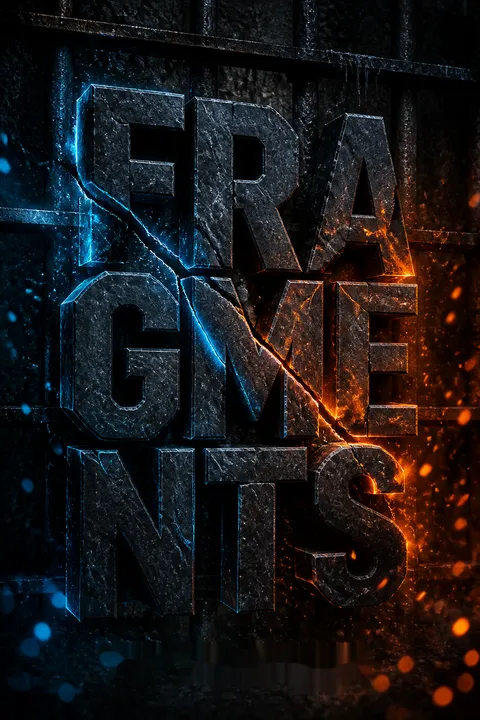


Plot Summary
Prologue
Four years earlier, Warren Xavier2 makes a living selling sex to wealthy men, mistaking the numbness that follows each encounter for control. After his parents19 condemn him and his father19 threatens to destroy him, Warren2 returns to their house at night, soaks it with kerosene, and sets it alight with both parents19 inside.
The fire gives him a moment of power, but it also marks the beginning of a life built around destruction and the belief that he is made only for harm.
The fire is both an act of violence and Warren’s attempt to author the pain he has spent his life enduring. He turns rejection into spectacle, choosing a means of destruction that reflects the identity his parents have imposed on him. Yet the act does not free him from their judgment; it makes that judgment seem true. The prologue establishes the contradiction at the heart of Warren: he craves control and sensation, but repeatedly uses both to deepen the very emptiness he wants to escape.
The Hacker and the Missing Friend
Before prison, Lexington Deon1 is an exceptionally gifted Berkeley student who feels more at ease with computers and online friends than with people around him. When his friend Leah13 disappears, then secretly tells him she was kidnapped as a child and forced into sexual exploitation, Lex1 cannot accept her warning that powerful people will never be held accountable.
He abandons schoolwork to investigate, breaks into protected government systems, and accidentally reaches the Pentagon’s files. After sending Leah13 a loving message, he wakes to armed men in his bedroom. They inject him with a sedative and take him away, leaving his parents18 behind and his digital life abruptly cut off.
Lex’s defining strength, his ability to see patterns and breach barriers, is also his danger. Faced with Leah’s impossible situation, he treats a human catastrophe as a problem that can be solved by sufficient intelligence. His refusal to accept helplessness is compassionate, but it also exposes the limits of competence: he can reach hidden information without having the power to protect the person who trusted him with it. The arrest turns his private, online world into a prison sentence and leaves his friends unaware of why he disappeared.
The Second Fire
After an affair with Callum Kade,14 an older friend of his father who first introduced him to sex when Warren2 was fifteen, Ren2 loses his place at Columbia and returns to a home where his parents19 treat him as a disgrace. He finds work at Club Edge, where sex, drugs, and wealthy clients become a routine he can control.
A masked client offers him an unusually tender encounter, while Callum14 continues choosing younger partners and refusing Ren2’s attachment. When Ren2 sees Callum14 with another teenage boy, he sets fire to a private room at the club. The blaze kills Callum14 and others, and Ren2 is arrested, ensuring that the destructive life he chose will carry him to Alabaster Penitentiary.
Ren’s movement from private humiliation to public violence shows how easily he confuses agency with destruction. At Club Edge, he can set terms, name prices, and turn other people’s desire into leverage, but those transactions do not resolve his need to be wanted by one particular man. The masked client briefly complicates Ren’s expectation that sex must be degrading to feel real. Still, when Callum repeats the pattern of taking what he wants and leaving, Ren answers rejection with fire, converting emotional injury into irreversible harm.
A Name Across the Table
Five years before the present, Ren2 arrives at Alabaster Pen and immediately fixes on the young inmate known as Luthor.1 Lexington Deon1 is reserved, academically brilliant, and still insists that he is straight; Ren2 is charming, invasive, and certain he can read him. They bond with other inmates over family damage, but Ren2 invents a poor childhood despite his wealthy upbringing.
When Officer Jasper calls him a rich kid, Lex1 realizes Ren2 has been lying from their first meal. The discovery should end the friendship before it begins. Instead, Ren2 keeps seeking Lex1 out, offering gifts and attention, while Lex1 finds himself drawn to the strange, beautiful newcomer he distrusts.
Their first connection is built on unequal ways of reading people. Lex values candor and assumes that knowing a fact means understanding the person behind it. Ren treats disclosure as a performance, using invented suffering to create intimacy while protecting the truth of his privilege. The lie damages trust before either man can admit that trust matters. Yet the prison’s forced proximity keeps them in one another’s orbit, making attraction and suspicion develop together rather than allowing either to settle into a simple judgment.
The First Yes
Ren2’s persistence gradually makes him Lex1’s closest friend, although Lex1 keeps insisting that he is straight and that they should remain friends. A private visit to Lex1’s cell ends with Ren2 kissing him; Lex1 is startled, but he does not reject him. Their next private night becomes a first sexual experience for Lex,1 who is still a virgin.
Ren2’s tenderness gives Lex1 a kind of closeness he has never known, and they begin experimenting while naming the relationship cautiously. Lex1’s feelings deepen, and he tells Ren2 he loves him during an intimate moment. Ren2 cannot yet meet that certainty with an equally clear commitment, but promises he will try to put Lex1 first.
Lex’s discovery of desire is not a sudden reversal so much as the recognition of a feeling that his categories cannot contain. His inexperience makes the first kiss and first sexual encounter emotionally consequential in a way Ren does not initially understand. Ren, meanwhile, can offer exquisite attention in the moment while still avoiding the obligations that intimacy creates. Their different meanings for sex become the central vulnerability of the relationship: Lex experiences it as a path toward trust, while Ren has learned to use it as sensation, escape, and control.
The Shower Betrayal
Although Ren2 tells Lex1 he will try to be exclusive, he continues using sex with other inmates to manage his restlessness and self-hatred. After guards separate the men for a time, Lex1 returns to the showers and finds Ren2 having sex with Percy Gage and others. Ren2 looks remorseful but does not stop the encounter before Lex1 leaves.
Lex1 runs, and Joy5 takes him to the prison kitchen, where he smashes dishes and bottles until grief gives way to exhaustion. Ren2 later writes apologies he cannot deliver honestly enough to restore what he broke. Their connection does not disappear, but from then on Lex1 expects the next betrayal, while Ren2 treats his own destructive impulses as proof that he is incapable of change.
The betrayal is devastating because it confirms the exact mismatch the couple had not resolved. Ren’s body can respond to sex without his emotional loyalty being absent, but Lex has no reason to experience that distinction as reassuring. What matters is not only the encounter, but Ren’s failure to interrupt it when he sees Lex watching. The aftermath turns Lex’s pain into action, briefly giving him a physical outlet, while Ren’s shame folds inward into self-condemnation. Both men are left with a story about themselves that makes repair harder.
A Cellmate Named Dash
Years later, bank robber Dascha Reznikov3 arrives at Alabaster Pen and is assigned to Lex1’s cell. Lex1 recognizes a frightened young man beneath Dash3’s guarded manner and offers him practical help. Ren,2 jealous of their quick friendship, tries to use Dash as a sexual proxy to provoke Lex,1 but Dash3 returns unsettled and wants no part in their conflict.
Lex1’s concern for the newcomer fuels another argument with Ren.2 Dash3’s behavior grows stranger: he speaks to an unseen officer, shifts suddenly in manner, and becomes confused about what has happened. The prisoners read these episodes through the chaos of the prison, not knowing how much Dash3’s perception of reality is breaking down.
Dash’s arrival gives Lex a relationship that is not organized around Ren’s desire, and that difference is precisely what unsettles Ren. Lex offers companionship without a sexual bargain, while Ren turns intimacy into a strategy for regaining attention. Dash is therefore not simply a rival; he exposes the limits of the couple’s private rules. His disorientation also makes the prison’s already unstable reality harder to read. The others respond to symptoms as interpersonal behavior because the institution offers little language or care for mental illness.
The Escape and the Killing
Dash3’s episodes intensify, and after he beats Ren2 during a prison recreation fight, guards send him to the East Wing. Lex1 later reveals that Dash3 had been planning an escape and had asked him to come; Lex1 refused because he could not leave Ren.2 Ren2 and Lex1 discover that Dash3 is missing and that inmate Kieran O’Malley has been stabbed to death.
Ren2 learns from prison gossip that Felix Darcey9 killed O’Malley and opened Dash3’s cell, allowing him to escape the island. The revelation gives the friends a partial explanation for Dash3’s disappearance, but no certainty about where he went or whether he survived the crossing.
Dash’s escape is both an act of agency and the result of a community’s failures. Lex’s refusal to join him reveals how thoroughly his attachment to Ren has become part of his definition of home, even when that home is a prison. Felix’s intervention collapses the boundary between danger and rescue: the same act that makes Dash’s escape possible also costs O’Malley his life. The uncertain account forces the remaining inmates to live with incomplete knowledge, a condition that echoes the wider institution’s deliberate withholding of truth.
A Machine in the Wall
Lex1 begins carving the plans for a homemade computer into his cell wall, determined to reclaim the technical life he lost when he was arrested. When Warden Manuel Blanco11 summons him to the East Wing, Lex1 repairs a failing server before an approaching storm can disable it. The work reminds the Warden11 that Lex1 is useful, but it also gives Lex1 a chance to study the prison’s connected systems.
Meanwhile, Ren2 returns from the East wearing a locked chastity device imposed by the Warden.11 He tells Lex1 he wants to be friends, though his old possessiveness remains. Their fragile closeness resumes amid contraband, surveillance, and the knowledge that the Warden11 can reach them at will.
The computer is more than a hobby or a symbol of Lex’s former life. It restores a sense of agency inside a place designed to make every choice dependent on guards. The server repair creates an uneasy exchange: the Warden recognizes Lex’s competence, while Lex gains access to a system he can quietly study. At the same time, Ren’s chastity device makes the prison’s control of bodies literal. Their renewed friendship remains shaped by the same imbalance that governs the institution: each must negotiate for access, safety, and even the right to touch.
The Price of Jealousy
Ren2 returns from the East and asks Lex1 to stay in his life, but Lex1 will not trust another promise. Ren2 then offers to watch Lex1 and Byron Kang4 fool around, hoping to let Lex1 feel the jealousy Ren2 has repeatedly caused him. Byron4 unexpectedly accepts, and the encounter becomes a confused, intimate three-person experiment rather than a clean lesson.
Lex1 and Ren2 kiss again, then resume sex and eventually make their relationship more serious. Lex1 chooses to lose his virginity to Ren,2 and Ren2 promises to stop sleeping with others. For a while, their affection becomes mutual in ways it never was before, though both remain aware that desire alone cannot erase the old betrayal.
The jealousy experiment forces Ren to experience, rather than merely imagine, the asymmetry he has created. Yet his offer is still a strategy, and Byron is nearly reduced to a tool in the couple’s negotiation. What changes is that Lex can now articulate what he will not accept, while Ren begins to treat exclusivity as an action rather than a line meant to keep Lex close. Their renewed intimacy is not a clean reset. It is a decision made with the past still present, and therefore carries both genuine hope and a high risk of repetition.
A Wrist Between Them
Ren2 tries to resist his old pattern, even when Officer Jasper comes to his cell and initiates sex. Ren2 stops him before anything happens, but Lex1 sees Jasper leaving and assumes Ren2 has betrayed him again. Ren,2 convinced Lex1 will never believe his change, cuts his wrist and collapses. Lex1 finds him, hides the wound from the guards, and stays beside him until he wakes.
Ren2 explains that he refused Jasper and has been trying to remain faithful for months. Lex1 recognizes that his fear made him assume the worst, and the two apologize. Their reconciliation is tender but not effortless: Lex1 remains frightened, while Ren2 agrees that he must prove his intentions through continued choices.
The scene tests whether a history of betrayal can be revised by present evidence. Lex’s suspicion is not irrational; it is an adaptation to repeated injury. Ren’s self-harm, meanwhile, reveals how quickly shame turns into punishment when he believes he has become irredeemable. His explanation matters because it is backed by a specific refusal, not simply an appeal to love. Lex’s apology marks a shift from demanding certainty to allowing the possibility of change, without pretending that trust has already been repaired.
The Stranger in the Showers
The prison’s fragile routines change when Trevel Fenwick12 arrives, a reserved British inmate whose purple eyes and sudden presence unsettle the guards. Byron4 becomes unusually attentive to him, while Ren2 distrusts him and warns the others to keep their distance.
Trevel12 soon reveals a personal grievance against Lemuel Love,10 the psychiatrist who now treats Felix Darcey,9 and uses Byron4’s anger over O’Malley’s death to deepen the divide between him and Lex1 and Ren.2 When Byron4 accuses the couple of selfishness and of treating him as a prop, he walks away with Trevel.12 Lex1 and Ren2 are left unsure whether they have lost their friend or merely failed to hear him.
Trevel’s influence works because it meets a real wound rather than inventing one. Byron has reason to feel peripheral: Lex and Ren’s volatile bond repeatedly takes up the room, and O’Malley’s death remains unresolved grief. Trevel offers recognition precisely where the couple has offered assumptions. His arrival exposes a weakness in the group’s chosen-family ideal: loyalty cannot be demanded as a substitute for attention. Byron’s departure is therefore not just a romantic complication; it is a consequence of emotional neglect within a friendship that believed itself secure.
Dash Calls from Freedom
After weeks of silence, Joy5 lets Lex,1 Ren,2 and Byron4 speak with Dash3 by phone. He is alive, living outside the prison with Officer Kellan Kemper, and learning to manage schizophrenia with support. Dash3 explains that the officer who appeared in his hallucinations was rooted in his real attachment to Kemper, though his mind had reshaped events while he was ill.
His recovery reassures Lex1 and Ren,2 but it also makes the outside world feel newly imaginable. Ren2 admits that Dash3’s earlier advice helped him stop sleeping with other inmates. The call gives the group joy and hope, while leaving Byron4’s connection to Trevel12 and the prison’s worsening conditions unresolved.
Dash’s call reframes earlier scenes without reducing them to a trick. The hallucinations were real experiences for him, shaped by a mind trying to make sense of fear, desire, and confinement. His diagnosis and care provide a contrast to Alabaster Pen, where distress is treated as misconduct and punished with isolation. The call also gives Ren a model of change that does not depend solely on romantic devotion. Lex and Ren hear not a miraculous cure, but the possibility of living with an illness through support and deliberate treatment.
The Warden’s New Army
Warden Blanco11 brings in a new force of guards, replacing the familiar, imperfect staff with men who enforce silence and separate prisoners without explanation. Ren2 and Lex1 are pulled apart, while Byron4 and Trevel12 draw closer. Lex1 finally activates the homemade computer he built from salvaged parts, disabling cameras and unlocking his cell so he can reach Ren2 in the East Wing.
There, he finds Ren2 shackled in a padded room and frees him. They begin planning an escape, but Blanco11 discovers them and has guards drag them away. Before they can be separated again, a severe storm brings down the prison’s already weakened guard tower, smashing through the building and plunging the island into chaos.
Blanco’s takeover reveals that the earlier routine was never freedom, only a more familiar form of control. The new guards make that distinction visible through silence, forced separation, and arbitrary violence. Lex’s device lets him act against the system that once valued him only for his expertise, but his success is partial: it gets him to Ren, not out of danger. The storm then interrupts the Warden’s control without offering a planned rescue. Nature becomes an unpredictable force that can destroy the institution, but it cannot guarantee who will survive.
Fireworks Above the Ruins
The collapsing tower leaves Ren2 free to escape the wreckage, while Lex1 is marched outside by two guards. Lightning kills one guard, and falling debris incapacitates the other. Ren2 finds fireworks in his backpack and launches them as a signal. Lex1 sees the bursts and reaches him; they reunite, then steal a small tender from the Warden’s yacht and head into the storm.
A towering wave overturns the boat and separates them. Ren2 washes ashore near Orient Point and believes Lex1 may be dead. Lex1 is rescued by a fishing crew, treated at a hospital, and slips away before the authorities can identify him. Each sets out for California, their agreed destination, without knowing the other survived.
The fireworks turn a private promise into a practical signal, joining the couple through a language they built together long before escape became possible. Their reunion is real, but brief; freedom immediately demands a new risk, and the sea separates them again. The split journey tests the difference between attachment and possession. Neither can control the other’s survival, yet both keep moving toward the same remembered place. Their hope is no longer based on certainty, but on choosing a direction despite having almost no evidence that it will lead to the person they love.
Sycamore Cove Reunion
Ren2 drives west in stolen cars, convinced he has lost Lex,1 and waits at Sycamore Cove, where Lex1 once watched fireworks with his parents.18 Lex1 also makes it to California after escaping the hospital, and the fireworks lead him to Ren.2 Their reunion dissolves Ren2’s belief that he caused Lex1’s death.
They shelter with Lex1’s online friend Cyrus,15 his twin Colson,16 and their wealthy stepfather Tauren,17 who eventually accepts their need for refuge. Ren2 and Lex1 begin imagining a life beyond survival, reconnect with old online friends, and become engaged. But a call from Trevel,12 speaking from the island and claiming Byron4 is with him, reveals that Alabaster Pen’s danger has not ended.
The reunion gives the couple a temporary home without pretending that escape has resolved their trauma or their obligations. Sycamore Cove links Lex’s childhood family rituals to the promise he and Ren made under the prison fireworks, allowing memory to become a means of finding one another. Their engagement signals a chosen future, but the call from Trevel breaks the calm before it can harden into a conventional happy ending. The novel closes by holding two truths together: the lovers are free and committed, while the people and power struggles they left behind remain unsettled.
Epilogue
In California, Lex1 and Ren2 stay with Cyrus,15 Colson,16 and Tauren17 while they rebuild their lives and try to learn whether their friends on Alabaster Isle survived. Lex1 proposes with a simple ring he found on the beach, and Ren2 accepts. They reconnect with Lex1’s old online gaming group, then discuss finding Dash3 and building a future where Ren2 can seek help and Lex1 can use his skills.
Their fragile calm breaks when Trevel12 answers Joy5’s phone and says Byron4 is with him, while hinting that the Warden11 has Velle6 in trouble. Lex1 and Ren2 are safe for now, but the island’s unfinished conflict reaches across the distance.
The epilogue grants the couple commitment, shelter, and a future they once could not imagine, but refuses to confuse safety with resolution. Their engagement is an act of mutual recognition after years in which Ren’s promises and Lex’s fear repeatedly collided. Reconnecting with online friends restores part of Lex’s lost life, while Ren begins to consider support beyond sex and self-punishment. Yet Trevel’s call makes clear that their new home is not insulated from the prison’s violence. The ending offers hope as a practice, not a guarantee: they can choose each other while remaining answerable to unfinished loyalties.
Analysis
Fragments treats intimacy as something that must be made trustworthy through action, not promised into existence. Ren2’s central problem is not simply that he has many sexual partners; it is that sex has become a way to escape shame, produce sensation, and regain control. Lex1’s problem is almost the inverse: he uses logic to protect himself from uncertainty, but love cannot be verified like code. Their relationship develops when each begins to recognize the other’s actual vulnerability rather than the role he performs. Ren2’s fidelity matters because it is a repeated choice made under pressure, while Lex1’s forgiveness matters because it does not erase the harm or deny his fear.
The prison complicates any easy distinction between freedom and confinement. Alabaster Pen is coercive, violent, and designed to strip people of ordinary agency. Yet Lex1 and Ren2 find friendships there that neither had managed to form outside. This does not make the prison good; it shows that human attachment can grow even inside systems built to exploit it. The guards’ informal networks, the inmates’ traded resources, and the group’s fragile loyalty reveal how survival depends on relationships as much as individual toughness.
The novel also refuses to make love a cure. Ren2’s self-harm and compulsive behavior do not vanish when Lex1 accepts him, and Dash3’s recovery requires diagnosis and ongoing support. The strongest promise between the couple is not that they can repair each other completely, but that they can tell the truth about what is broken and choose help. Their escape and engagement offer real hope, while Trevel12’s final call keeps that hope from becoming complacency. The ending insists that a future is possible, but must be built amid danger, grief, and unfinished responsibility.
Review Summary
Fragments received largely positive reviews, praised for its complex characters, intense emotions, and steamy romance. Readers appreciated the backstory of Ren and Lex, their chemistry, and character development. Many found it the best book in the series so far, though some felt it was too long and repetitive. The book's exploration of themes like redemption, addiction, and found family resonated with fans. While not as dark as previous installments, it still delivered drama, action, and mystery, leaving readers eager for the next book in the series.
People Also Read










Characters
Lexington Deon
The prison’s boy geniusKnown in prison as Luthor, Lexington is a brilliant, introverted computer expert whose loyalty to friends can override his instinct for self-preservation. Before prison, online games and coding gave him a community that felt easier to inhabit than the physical world. He is compassionate, observant, and often more emotionally perceptive than he believes, but his inexperience with romance makes him vulnerable to Ren2’s charm and unpredictability. Lexington wants clear evidence before he trusts, yet he is also capable of taking risks for people he loves. His central tension is between the safety of rational detachment and the human need to commit, even when certainty is impossible.
Warren Xavier
The prison’s firestarterWarren, usually called Ren, is a wealthy New Yorker whose polished beauty conceals profound insecurity, compulsive lying, and a habit of using sex to regulate painful feelings. He is quick-witted, generous with gifts, and intensely attentive to Lexington1, yet his need for sensation and control repeatedly damages the connection he most wants. Ren has learned to view himself as irredeemable, so shame often drives him toward self-punishment instead of repair. His growth depends on more than romantic devotion: he must recognize his patterns, accept responsibility, and seek ways to live with his emotional distress without turning it against himself or others.
Dascha Reznikov
The restless new cellmateDash is a young, striking bank robber whose guarded manner hides fear, restlessness, and a deep need for connection. He bonds quickly with Lexington1 through small conversations about cars, music, and survival, and their friendship gives both men a rare sense of ordinary companionship. Dash struggles to distinguish his own perceptions from experiences shaped by mental illness, especially under the stress of confinement. He is neither simply a danger nor a helpless patient: he is observant, stubborn, and capable of making difficult choices, while still needing genuine support.
Byron Kang
The quiet martial artistByron is one of Lexington1 and Ren2’s closest companions, a restrained and capable inmate who often acts as a buffer between their volatile personalities. His quietness is not passivity; he has firm boundaries and a strong sense of loyalty. He can be protective, dryly funny, and surprisingly willing to question his own assumptions, though grief and isolation make him guarded. Byron wants friendship that is not conditional on serving another person’s romance or strategy. His relationships reveal how a chosen family can falter when care is assumed instead of actively shown.
Joy Jameson
The guards’ steady centerJoy is a sharp, irreverent officer who treats the prisoners as people without pretending the prison is humane. Her humor softens an otherwise hard presence, and she often makes practical interventions when someone is distressed or in danger. She is difficult to intimidate and has earned the inmates’ respect through consistency rather than softness. Joy’s loyalties extend beyond her job, but she understands how much risk she takes when she bends rules. She represents a form of care that is concrete: an extra minute, a private conversation, or help offered without demanding a sexual or emotional price.
John Chevelle
The prison’s hard-edged officerKnown as Velle, John Chevelle is a forceful senior guard whose authority is reinforced by physical confidence and an unforgiving manner. He can be cruel, especially when maintaining order, yet his conduct is not reducible to simple sadism. He understands the prison’s structure and the dangers that surround its inmates, and his relationships with Joy5 and Rook7 reveal a more complicated person beneath the uniform. Velle is accustomed to controlling a volatile environment, but the Warden11’s power makes even his authority precarious.
Harley Samuels
The rookie with a conscienceCalled Rook by the inmates, Harley Samuels is a newer guard whose decency remains visible despite the brutal institution around him. He is cautious and sometimes overwhelmed, but he listens when prisoners explain what they need and occasionally risks disapproval to help them. His sympathy does not make him powerful; much of his tension comes from knowing what would be right while lacking control over what happens. Rook’s connection with Joy5 and Velle6 also places him within a fragile network of loyalty among the guards.
Parker Freeman
Ren’s gentle cellmateParker is a gentle, thoughtful inmate who becomes one of Ren2’s closest friends and a source of steadiness in the prison. He lives with HIV and depends on access to medication, which makes the prison’s scarcity more than an inconvenience. Parker speaks honestly about loneliness, illness, and the possibility of love, often challenging Ren2 to consider the harm caused by his sexual choices. His quiet presence offers a counterweight to the group’s more dramatic personalities, and his friendship gives Ren2 a glimpse of care not based on desire.
Felix Darcey
The deceptively gentle killerFelix is a soft-spoken, bespectacled inmate whose gentle manners sit uneasily beside his reputation as a serial killer. He is observant and often more socially perceptive than he lets on, using an unthreatening manner to move through dangerous situations. His developing connection to Dr. Love10 gives him a kind of intimacy that contrasts with the prison’s transactional relationships. Felix’s presence forces other characters to confront the gap between a person’s outward warmth and the violence of their past.
Lemuel Love
The prison’s visiting psychiatristDr. Love is a psychiatrist who works within the prison’s murky power structure and forms a close relationship with Felix9. His polished professionalism contrasts with the danger of the institution, while his calm manner can make him difficult to read. He is not simply an outside authority: his choices connect him to the Warden11’s interests and to the inmates whose care he is meant to provide. His presence raises questions about whether treatment can remain ethical when the institution itself is built around control.
Manuel Blanco
The island’s hidden rulerKnown as the Warden, Manuel Blanco governs Alabaster Pen with wealth, intimidation, and an appetite for control. He presents himself as a polished administrator, but his authority extends far beyond ordinary prison discipline. He treats inmates as subjects within a private system and values their usefulness as much as their confinement. Blanco is patient when it serves him and threatening when his power is challenged. His cultivated appearance makes his menace more unsettling, because he rarely needs to raise his voice to remind others who owns the island.
Trevel Fenwick
The unsettling new inmateTrevel is a British inmate whose unusual violet eyes, precise manner, and intense attention make him difficult to read. He appears reserved, but he knows how to identify other people’s vulnerabilities and approach them with calculated intimacy. His arrival unsettles the prison’s existing relationships, especially Byron4’s. Trevel’s apparent interest in loyalty and revenge may sound principled, yet he carries an agenda that makes his sympathy hard to trust. He is a quiet presence with the unsettling ability to make others feel seen and manipulated at once.
Alleah Tilsen
Lex’s guarded online friendKnown online as Leah, Alleah is one of Lexington1’s oldest friends, a private and guarded presence in his gaming circle. She listens closely to him while revealing little about her own life, which makes their connection both genuine and asymmetrical. Her trust in Lex1 matters because it asks him to confront realities he would rather believe are distant or impossible. Leah’s caution is not coldness; it is a learned way of surviving circumstances she does not feel free to control.
Callum Kade
Ren’s first older loverCallum is an influential adult in Warren2’s family circle and a man whose attention shapes Warren2’s early ideas about desire, secrecy, and power. He is polished, attractive, and emotionally distant, offering Warren2 intimacy without the care or commitment Warren2 longs for. His role in Warren2’s history helps explain why sex becomes entangled with validation and pain, though it does not excuse the choices Warren2 later makes.
Cyrus Vance
Lex’s longtime gaming friendCyrus, also known as Cyclops180 online, is Lexington1’s longtime friend from gaming and comic-book debates. He is thoughtful, loyal, and intellectually curious, with a dry humor that makes him easy for Lex1 to trust. Their friendship shows how online intimacy can be emotionally real even when two people have never met in person. Cyrus provides a link to Lex1’s life before prison and remains willing to help when that past suddenly returns.
Colson Vance
Cyrus’s guarded twinColson is Cyrus15’s twin brother, an introspective musician whose reserved, darkly styled exterior contrasts with his brother’s more openly conversational nature. He is creative and observant, often communicating through music and dry humor rather than easy disclosure. His home becomes a refuge for people who have been cut off from ordinary life, and his wary generosity suggests that he understands what it means to carry private pain.
Tauren Vance
The powerful unexpected hostTauren is a successful technology entrepreneur and the stepfather of Cyrus15 and Colson16. He is confident, protective, and accustomed to taking responsibility for the people in his household. His wealth gives him practical power, but his concern for the young men around him is not merely paternal authority. Tauren is cautious about risk, especially when other people could be harmed, yet he can be persuaded by the needs and loyalty of those he loves.
Marla and Dennis Deon
Lex’s loving parentsLex1’s parents are ordinary, caring people who try to draw their brilliant, introverted son into family life even when they do not fully understand his online world. Dennis shares Lex1’s interest in classic rock and cars, while Marla provides warmth and practical care. Their relationship with Lex1 is imperfect, but affection is present on both sides. The family memories Lex1 carries into prison show what he lost when his hacking and arrest severed him from home.
Beth and Kenneth Xavier
Ren’s rejecting parentsWarren2’s wealthy parents are preoccupied with status, reputation, and the polished family image they expect their son to uphold. Their emotional distance leaves him feeling unwanted long before he becomes destructive. They interpret his sexuality and sex work as embarrassments to manage rather than parts of a child they should understand. Their failure to offer affection helps shape Ren2’s belief that love must be earned through performance, even as it cannot justify the harm he causes.
Plot Devices
Fireworks
A signal through darknessFireworks begin as a childhood ritual for Lex1 and his parents18, then become a point of connection when Lex1 and Ren2 discover they both love watching them over the ocean. Ren2 later uses them to guide Lex1 through the wreckage and toward him. Their meaning shifts from a shared memory to a promise that can be acted upon. The bursts also fit the couple’s emotional pattern: brief, bright eruptions that must be seen before darkness closes over them.
LOIS
A tool for regained agencyLex1’s first computer, named LOIS, represents his private world of invention and online friendship. After prison removes access to technology, he begins building a crude replacement from salvaged parts and hides its plans in his cell. His skills become useful to the Warden11, who summons him to repair the prison servers. Lex1 quietly studies those connected systems, eventually using his homemade device to disable cameras and open locks. The machine links his old identity to the possibility of action in the present.
Proxy sex
Desire used as leverageRen2 repeatedly imagines other partners as stand-ins for Lex1, using sexual encounters to manage frustration and provoke jealousy. The practice lets him approach feelings he cannot express directly, but it also turns other inmates into instruments and repeatedly harms Lex1’s trust. The proxy idea exposes the distance between physical appetite and emotional fidelity. It also gives Ren2 a concrete test when Lex1 returns: can he stop using sex as an automatic response and make choices that match the love he claims to feel?
Alabaster Penitentiary
A prison built on controlThe island prison isolates its inmates from the outside world and replaces ordinary currency with goods traded through favors and sex. Its neglected concrete, unpredictable schedules, hidden East Wing, and powerful Warden11 create a system where no one can rely on stable rules. The prison tests the characters’ survival strategies while also producing friendships they did not have outside. Its walls are both literal confinement and a pressure chamber that intensifies attraction, dependency, conflict, and the need to imagine another life.
The storm and tender
Escape without certaintyThe approaching storm is first made urgent when Lex1 repairs the Warden11’s failing servers. Later, it brings down the already weakened guard tower and damages the prison, creating a chance for Ren2 and Lex1 to escape. They steal a small tender from the yacht, but the same violent sea that carries them away overturns their boat and separates them. The storm is not a convenient rescue; it destroys the prison’s control while exposing the fugitives to another uncontrollable danger.
Alabaster Penitentiary Series



About the Author
Other books by Nyla K.





Download PDF
Download EPUB
.epub digital book format is ideal for reading ebooks on phones, tablets, and e-readers.








