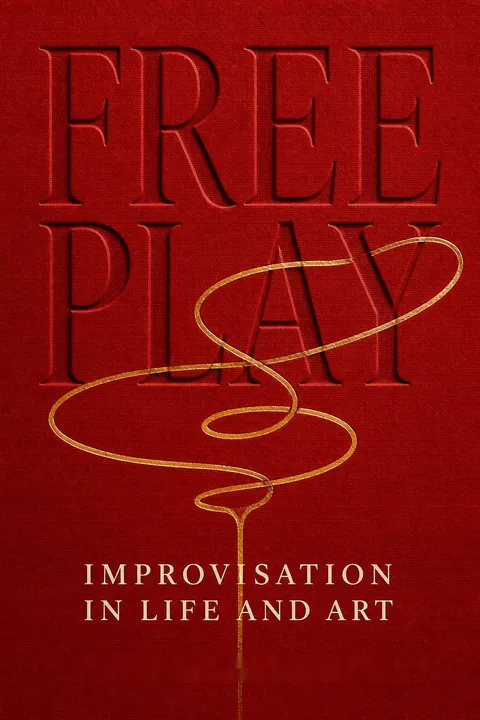


Key Takeaways
Technique can teach the tune, but surrender lets it become yours.
A tune without a voice. The book opens with a gifted flautist sent to study a new instrument. He masters the technique and practices one simple tune for months, but his teacher keeps finding something absent. Years later, impoverished and ashamed, the student returns to play at a concert. With nothing left to win or lose, he performs the same tune, now with a depth that moves the audience. The point is not that training is useless. Skill gives expression a vehicle, but cannot manufacture the feeling that makes it alive.
Play beyond the score. The author calls the larger movement of creation, destruction, and renewal lila, a Sanskrit concept that joins play with the unfolding of life. Improvisation is its practical form: disciplined action that stays open to what arrives. The student’s journey shows that artistry is not a prize handed down by a master. It ripens when technique no longer crowds out the person using it.
The story is memorable because it refuses the easy answer that more practice always solves the problem. It distinguishes competence from presence, a distinction relevant to any skilled work where a procedure can be performed correctly yet fail to meet the particular moment. Still, the master’s repeated, unexplained criticism would be poor instruction if treated as a teaching method. Its value is symbolic: some forms of insight cannot be transferred as a checklist, but learners still need humane feedback and enough support to keep experimenting.
Prepare carefully, then respond to the living moment instead of your script.
Ordinary life improvises. Conversation is a daily example: people use shared vocabulary and grammar, yet assemble sentences in real time that neither speaker has rehearsed. In spontaneous music, inspiration, technical choices, performance, and communication with listeners happen together. Improvisation does not mean acting without preparation. Planning can focus attention, then be loosened so the actual situation can guide the next move.
Know when to script. The author contrasts a teacher who adjusts to the people in a classroom with a performer who must still arrive when the concert begins. A physician, too, needs training without mistaking a patient for a generic textbook case. Preparation is useful when it sharpens attention; it becomes a problem when it blinds someone to the person, audience, or circumstance in front of them.
This is a strong model of adaptive expertise: established knowledge provides options, while attention determines which option fits this case. The idea travels beyond art to teaching, medicine, and conversation because each involves both reliable routines and irreducible particulars. But responsiveness should not be confused with improvising every decision. Checklists, schedules, and scripts protect people where errors are costly or coordination matters. The sharper distinction is between using a plan as support and treating it as a substitute for noticing.
Make practice playful enough to expand skill instead of hardening it.
Practice is part of the art. The book separates play, an exploratory attitude, from a game, an activity with rules. A musician can practice inside a formal scale while changing its rhythm, sequence, or tone, turning repetition into discovery. Practice then serves the work now, not only some future performance. Skill matters because a vision cannot be expressed if the available movements are too limited.
Build more options. The author uses galumphing for exuberant, seemingly excessive experimentation, such as taking the scenic route or adding complications for the pleasure of working through them. He connects it to requisite variety, the principle that a system needs enough possible responses to handle the range of conditions it meets. For an artist, playful variation builds a larger repertoire, so the hand, voice, or mind can answer more kinds of feeling.
The account usefully treats play as a mode of attention rather than a synonym for unseriousness. That helps explain why a demanding practice session can feel playful while an easy task can feel deadening. The connection to learning is practical: varied attempts expose more possible solutions than mechanical repetition alone. Yet repetition has a role too, especially when accuracy or safety depends on reliable execution. The useful question is not whether practice is playful or disciplined, but whether discipline is increasing the range of response or merely enforcing sameness.
Treat constraints as material for invention, not proof that you lack resources.
Limits give shape. The book points to prehistoric cave painters who used the bulges and hollows of rock walls to help form animal images. The surface was not a blank obstacle; it contributed to the design. In a later example, two musicians use a Los Angeles street map as a score, one following local streets and the other the freeways. The map’s patterns provoke a piece neither could have planned in advance.
Make do creatively. Bricolage means building or solving with the materials already at hand. A narrow palette, an awkward tool, a small room, or a chosen rule can reduce aimless possibility and invite surprising choices. The author cautions against romanticizing poverty: having needed resources matters. The creative point is that limits can be worked with, rather than waiting for perfect conditions before beginning.
Constraints can act like a search filter: by ruling out some options, they make neglected possibilities easier to see. That is why a small assignment or limited palette can stimulate invention rather than diminish it. The cave-painting example also makes creation look reciprocal: the artist shapes the material, and the material shapes the artist’s next move. A necessary qualification is that chosen constraints and imposed deprivation are not equivalent. Celebrating resourcefulness should never become an excuse to deny people the tools, time, or security their work requires.
Treat a mistake as information before deciding whether to correct it.
An error can open a door. The author compares mistakes to grit inside an oyster: irritation can be transformed into something valuable when it is worked with. On the violin, an unexpected note can be repeated and developed into a new pattern instead of rejected automatically. In another example, laryngitis forces the author to abandon a planned poetry performance and use an amplified, rough voice, revealing an expressive quality he had not anticipated.
Choose the next move. This does not mean every error should be preserved. A mistake can reveal a technical weakness that needs correction, or it can supply useful material for a different direction. The essential choice comes immediately after the disruption: erase it, explore it, or find a context that can hold both the original plan and the surprise.
The insight resembles a learning loop in which deviation supplies feedback, while curiosity determines whether the deviation contains a new possibility. That mindset is especially powerful in creative work, where an unexpected result can expose assumptions the maker did not know were guiding the process. It is not a universal rule to celebrate errors. In medicine, engineering, or other high-stakes settings, some mistakes demand immediate correction. The value lies in resisting reflexive shame long enough to understand what happened and what response the situation calls for.
Keep the inner critic from judging work before there is anything to judge.
The editor can arrive too soon. The author describes two creative roles: a muse that generates material and an editor that evaluates and shapes it. The judging spectre is the internalized voice of criticism, expectation, and fear that can silence the muse before a draft exists. When evaluation becomes a running verdict on every new idea, the maker may freeze, procrastinate, or chase approval instead of developing the work.
Let feedback help. Judgment is necessary to make art coherent, but its timing matters. A musician can listen and adjust while playing; that kind of feedback travels alongside action. By contrast, stopping repeatedly to ask whether the work is good enough interrupts the process. Automatic writing and other low-stakes experiments create room for rough material to emerge before it is revised.
The distinction is not between judgment and no judgment, but between feedback that guides action and evaluation that makes action feel unsafe. This maps neatly onto environments where people need permission to propose rough ideas before a group selects among them. Such permission is not an argument against standards; it is a way to keep standards from operating as premature censorship. The model also has limits: some creators benefit from early structure, and some drafts need immediate constraints. The practical test is whether critique helps the work move or turns the critic into its gatekeeper.
When stuck, loosen control without walking away from the work.
A block is not a blank. The author argues that creative paralysis often contains too much: fear, expectations, half-formed ideas, and mental noise. Forcing productivity can tighten the knot. Instead, he recommends staying near the work while changing the quality of attention: sit quietly, experiment freely, talk through the problem, or set it aside for a while without abandoning it.
Let effort ripen. The flute student’s long retreat from music does not erase years of practice; when he returns, the familiar tune comes through differently. The author also describes breakthroughs arriving during ordinary pauses, such as walking, bathing, or resting. Samadhi is a state of absorbed attention in which self-consciousness recedes. It can arise through meditation, craft, or play, but it cannot be summoned by pretending to surrender.
The useful balance here is persistence without coercion. Continuing to make contact with a problem keeps it available, while a pause can reduce the pressure that makes every attempt feel like a test. This resembles incubation, the common experience of a problem becoming clearer after focused effort is interrupted. Still, waiting is not a universal cure for blockage, and prolonged avoidance can masquerade as patience. The section is strongest when surrender means dropping the demand for an immediate answer, not dropping responsibility for the work.
Listen closely enough for collaboration to create a third voice.
A group can become a new instrument. In free improvisation, two musicians may begin without an agreed structure. Each listens, responds, leads, and follows; within moments their exchanges create a form neither could have designed alone. The result is not a compromise between their styles, but a distinct shared pattern. Ordinary conversation works similarly when speakers build an idea together rather than merely taking turns presenting finished thoughts.
Synchronize without sameness. Entrainment is the alignment of rhythmic patterns across people or systems. The author describes performers and audiences gradually sharing a pulse, while still shifting in and out of exact synchronization. This requires mutual awareness, restraint, and trust. Collaboration therefore depends not only on adding different talents, but on letting those differences affect the direction of the work.
The idea of a third voice captures a real feature of collaboration: interaction can produce results that are not contained in either participant’s initial plan. The same principle helps explain why shared attention can energize work even when collaborators are not speaking. Yet synchronization is not automatically wise. A group can become so aligned that dissent disappears, or mistake smooth agreement for insight. Productive collaboration needs both attunement and difference, with enough trust for participants to interrupt the emerging pattern when it stops serving the work.
Measure quality by resonance and integrity, not novelty or market fit.
Quality resists a formula. The author does not define it as prettiness, virtuosity, or novelty. Strong work can be harsh or simple, and technically dazzling performance can still feel empty. Quality emerges from a balance: free invention needs discernment, while discernment must not choke invention. Formal craft matters, but so does the feeling that the work connects its details to a larger, living whole.
Be original at the source. Originality does not require looking unlike everyone else. It means making work from one’s own center, even when that work resembles an older form or begins with an ordinary idea. The author warns against reshaping work to satisfy an imagined market, and against becoming strange merely to appear original. Clear communication can improve a work without replacing the voice that made it worth communicating.
This account refuses two easy substitutes for quality: measurable polish and conspicuous difference. It treats the audience’s response as a kind of recognition, not as a final vote on market value. That is a productive standard for work whose aims cannot be reduced to popularity or technical difficulty. But resonance is not infallible. Audiences can be moved by familiar conventions, and makers can mistake personal attachment for artistic integrity. The most defensible implication is to use craft, honest response, and inner conviction as complementary tests, none of which can stand alone.
Join creative power to care, because invention alone has no moral compass.
Creativity can serve harm. The book makes an important distinction between the capacity to invent and the commitment that directs it. The same flexibility and experimentation can produce art, compassionate work, advertising, or weapons. Creative skill by itself does not guarantee wisdom or benefit. The author argues that artfulness belongs in ordinary life and public problems, but should be joined to love, attention, and responsibility for the wider world.
Life can become a shared performance. The author recalls the 1988 effort to free three whales trapped beneath Alaskan ice. For two weeks, people watched an uncertain event unfold as rescuers worked within severe limits; two whales eventually reached open water. He treats this as improvisational theater in everyday life: not because the danger was entertainment, but because people responded together to a changing situation with real stakes.
This closing move gives creativity a civic dimension without claiming that artistic methods can solve every political or ecological problem. Imagination can help people see new options, and shared attention can make a distant crisis feel concrete. But inspiration is not a substitute for expertise, institutions, resources, or accountability. The whale rescue story is most persuasive as an image of coordinated response under uncertainty, not as proof that creativity alone can reverse systemic damage. Its ethical force lies in asking what invention is for, and whom it helps protect.
Analysis
Free Play is less a method for producing art than an account of what happens when learned capacity meets uncertainty. Its recurring story of the student and the flute gives the argument a human scale: technical mastery can make performance possible, but it cannot dictate the quality that listeners recognize as alive. The book’s answer is neither raw spontaneity nor disciplined control. It is a responsive relationship among preparation, material, attention, error, and other people.
That relational view is the book’s main strength. It refuses to isolate creativity inside a gifted individual. The instrument resists, the room constrains, the audience changes the event, and collaborators introduce patterns no one participant owns. This makes improvisation useful as a model for learning and work, not just as a musical technique. The author also sees that mistakes and blocks can carry information, provided they are met with curiosity rather than automatic shame.
The argument is most convincing when it stays close to practice: vary an exercise, listen to the material, notice the difference between helpful correction and premature verdict. It becomes less secure when spiritual language implies that intuition reliably speaks for a larger truth. Intuition can integrate experience quickly, but it can also reproduce habit, prejudice, or wishful thinking. Similarly, surrender may release an overcontrolled process, but it cannot replace deliberate judgment, resources, or care for consequences.
Those tensions do not undo the book’s central insight. They sharpen it. Free play is not freedom from responsibility, technique, or form. It is the capacity to remain responsive within them. A creator learns enough structure to act, enough humility to notice what the action changes, and enough patience to let the next possibility appear. The result is not guaranteed brilliance. It is a more alive way of making, learning, and participating in ordinary life.
Review Summary
Free Play is a highly regarded book about creativity, improvisation, and the artistic process. Many readers find it deeply inspiring and insightful, praising its exploration of play, freedom, and the connection between art and life. The book draws from various philosophical and spiritual traditions, offering practical advice and thoughtful reflections on overcoming creative blocks. While some find it overly mystical or romanticized, most reviewers appreciate its unique perspective on creativity and its applicability to diverse fields beyond music.
People Also Read


Glossary
lila
divine creative playA Sanskrit word for play that the book presents as more expansive than recreation. It includes creation, destruction, and renewal, and joins immediate delight with the larger unfolding of life. Nachmanovitch uses lila to frame creativity as both spontaneous enjoyment and a serious, ongoing participation in change.
galumphing
playful excess and explorationA term for exuberant, apparently unnecessary elaboration of action. Examples include hopping instead of walking, taking a scenic route, or adding difficulty for the pleasure of exploring it. The book treats galumphing as valuable because playful excess develops flexibility and a wider range of possible responses.
requisite variety
enough responses for complexityA principle from cybernetics that a system needs enough possible states or responses to manage the variety of conditions it encounters. Applied to art, it means that a creator needs a broad enough technical and expressive repertoire to convey different materials and emotions, rather than relying on a narrow set of habits.
bricolage
making with what is availableThe practice of creating or solving problems with materials already at hand, including imperfect tools, unexpected events, and limited resources. The bricoleur does not wait for ideal conditions or a ready-made solution. In the book, this ability turns constraints and accidents into material for new work.
temenos
protected creative spaceAn ancient Greek term for a bounded or sacred space in which special conditions apply. Nachmanovitch uses it for the studio, stage, or other setting prepared for creative work. Clearing the space and marking its purpose helps separate it from ordinary distraction and makes experimentation feel possible.
judging spectre
internalized voice of judgmentThe book’s name for the critical, fear-driven inner voice built from remembered expectations, authority figures, and self-doubt. It can obstruct creativity when it evaluates ideas before they have developed. Judgment itself remains necessary; the problem is criticism that interrupts action rather than helping shape the work.
samadhi
absorbed, self-forgetting attentionA term from Buddhist traditions for a state of deep concentration in which ordinary self-consciousness recedes. The book applies it beyond meditation to activities such as playing music, writing, cooking, or dance. In this absorbed state, attention is alert and focused, while the usual sense of effort and clock time may diminish.
entrainment
rhythms falling into alignmentThe synchronization of two or more rhythmic systems into a shared pulse. The book uses the example of workers gradually matching the rhythm of their hammering, and applies the concept to musicians and audiences. In improvisation, entrainment supports coordination while allowing participants to move slightly apart and reconnect.
FAQ
What's "Free Play: Improvisation in Life and Art" about?
- Exploration of Creativity: The book delves into the nature of creativity, focusing on improvisation as a fundamental aspect of artistic and everyday life.
- Integration of Art and Life: It discusses how art and life are interconnected, suggesting that creativity is not confined to traditional art forms but is a part of daily living.
- Spiritual and Psychological Insights: The author explores the spiritual and psychological dimensions of creativity, drawing on various traditions and philosophies.
- Practical Guidance: It offers practical advice on how to tap into one's creative potential and overcome obstacles to creativity.
Why should I read "Free Play: Improvisation in Life and Art"?
- Enhance Creativity: The book provides insights and techniques to enhance your creative abilities, applicable to any field.
- Overcome Creative Blocks: It offers strategies to overcome common obstacles and blocks that hinder creativity.
- Broaden Perspective: By integrating art with life, the book encourages a broader perspective on creativity and its role in personal growth.
- Inspiration and Motivation: The book is filled with inspiring stories and quotes that motivate readers to embrace their creative potential.
What are the key takeaways of "Free Play: Improvisation in Life and Art"?
- Creativity is Universal: Creativity is not limited to artists; it is a fundamental aspect of human life and can be cultivated by anyone.
- Importance of Play: Play is essential for creativity, allowing for exploration and experimentation without fear of failure.
- Embrace Mistakes: Mistakes are valuable opportunities for learning and can lead to unexpected creative breakthroughs.
- Balance Structure and Spontaneity: Effective creativity involves balancing structure with spontaneity, allowing for both discipline and freedom.
How does Stephen Nachmanovitch define improvisation in "Free Play"?
- Spontaneous Creation: Improvisation is described as the act of creating in the moment, without a preordained script or plan.
- Integration of Time: It involves the fusion of inspiration, technical execution, and communication with the audience in real-time.
- Beyond Art Forms: While often associated with music or theater, improvisation is seen as a way of living and interacting with the world.
- Master Key to Creativity: The author views improvisation as a fundamental key to unlocking creative potential across various domains.
What are the obstacles to creativity mentioned in "Free Play"?
- Fear and Judgment: Fear of failure and judgment from oneself or others can stifle creativity.
- Perfectionism: The desire for perfection can lead to procrastination and creative blocks.
- Societal Pressures: Conformity and societal expectations can suppress individual creative expression.
- Internal Critic: An overactive internal critic can prevent the free flow of creative ideas.
How does "Free Play" suggest overcoming creative blocks?
- Surrender and Trust: Letting go of control and trusting the creative process can help overcome blocks.
- Embrace Mistakes: Viewing mistakes as opportunities for growth and learning can transform obstacles into creative breakthroughs.
- Play and Experimentation: Engaging in play and experimentation without fear of judgment can reignite creativity.
- Patience and Perseverance: Allowing time for ideas to incubate and ripen can lead to unexpected insights and solutions.
What role does play have in creativity according to "Free Play"?
- Foundation of Creativity: Play is seen as the root of creativity, providing a space for exploration and discovery.
- Freedom and Flexibility: It allows for freedom from constraints, encouraging flexibility and adaptability in thinking.
- Joy and Intrinsic Motivation: Play is intrinsically rewarding, fostering joy and motivation in creative pursuits.
- Galumphing and Experimentation: The book highlights the importance of "galumphing," or playful experimentation, in developing creative skills.
What is the significance of the "Muse" in "Free Play"?
- Source of Inspiration: The Muse is depicted as the source of creative inspiration, guiding the artist in their work.
- Intuition and Inner Voice: It represents the intuitive voice within, urging the creator to follow their instincts and desires.
- Cultural and Mythological Roots: The concept of the Muse is explored through various cultural and mythological lenses, emphasizing its universal presence.
- Personal and Inventive: The book encourages readers to find and cultivate their own personal Muse, tailored to their unique creative journey.
How does "Free Play" address the balance between structure and spontaneity?
- Necessary Tension: The book emphasizes the importance of balancing structure with spontaneity to achieve creative flow.
- Rules as Catalysts: Structure and rules can serve as catalysts for creativity, providing a framework within which spontaneity can thrive.
- Dynamic Interaction: Creativity involves a dynamic interaction between planned elements and unexpected improvisations.
- Personalized Approach: Each individual must find their own balance, adapting structure and spontaneity to their personal creative process.
What are the best quotes from "Free Play" and what do they mean?
- "Do not fear mistakes. There are none." - Miles Davis: This quote highlights the idea that mistakes are part of the creative process and can lead to new discoveries.
- "The creation of something new is not accomplished by the intellect but by the play instinct acting from inner necessity." - Carl Jung: It underscores the role of play and instinct in the creative process, rather than purely intellectual effort.
- "The impeded stream is the one that sings." - Wendell Berry: This suggests that obstacles and limitations can enhance creativity, leading to richer and more profound outcomes.
- "The artist's life cannot be otherwise than full of conflicts." - Carl Jung: This reflects the inherent tension in the creative process, where personal desires and the passion for creation often clash.
How does "Free Play" relate creativity to spirituality?
- Spiritual Path: Creativity is presented as a spiritual path, offering a way to connect with deeper aspects of the self and the universe.
- Mystical Experience: The book explores creativity as a mystical experience, where the creator taps into a source beyond the conscious mind.
- Integration of Traditions: It draws on various spiritual traditions to illustrate how creativity can lead to personal and spiritual growth.
- Transcendence of Self: Through creative expression, individuals can transcend their ego and connect with a larger, universal consciousness.
What is the "Imaginary Liberation Front" mentioned in "Free Play"?
- Art for Life's Sake: The concept emphasizes using creativity not just for art's sake but for enhancing and enriching life itself.
- Beyond Individual Creativity: It calls for an expansion of creativity into all areas of life, addressing global challenges with imaginative solutions.
- Commitment to Values: The Imaginary Liberation Front advocates for creativity that is aligned with deeply held values and a commitment to the greater good.
- Collective Transformation: It envisions a collective transformation where creativity becomes a driving force for positive change in society and the world.
Download PDF
Download EPUB
.epub digital book format is ideal for reading ebooks on phones, tablets, and e-readers.








