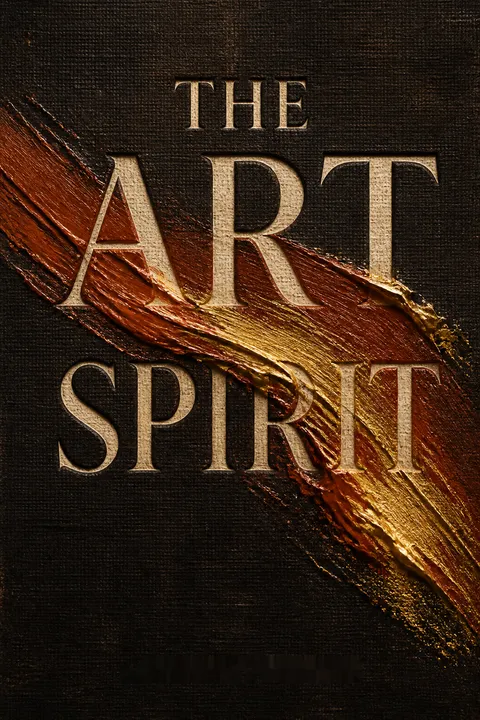


Key Takeaways
Treat art as a way of living, not a special profession
Art belongs in ordinary life. Henri rejects the idea that art is an extra activity reserved for painters, sculptors, or musicians. An artist, in his broad sense, brings invention, attention, and personal expression to whatever work they do. The important reward is not status or money, but the satisfaction and understanding created in the act of making. Museums alone cannot make a society artistic; that depends on people developing judgment and caring about the quality of everyday work.
The work is evidence. A painting may preserve a moment of heightened attention, but it is only one possible result of a fuller way of living. Henri recalls students who worked all day, painted at night, and sometimes lacked a room to sleep in. Their devotion shows the seriousness of the pursuit, though it should not be mistaken for a requirement that artists endure hardship.
What's striking is the shift from art as an object to art as a practice of attention and agency. That idea reaches beyond the studio: a cook, builder, or teacher can shape materials with judgment and personal intent. It also resembles a practical view of creativity, where meaning emerges through doing rather than arriving fully formed. The broad definition is energizing, but it can blur the difference between expressive work and labor performed under tight constraints. Henri's invitation is strongest when it enlarges creative possibility without romanticizing poverty or pretending every workplace grants the same freedom.
Paint the meaning you perceive, not the inventory your eyes collect
Seeing is selective. Henri argues that artists do not simply copy a scene. They notice and organize the features that matter to them. Two people can admire the same sunset while responding to different shapes, colors, or feelings; each makes a different selection. A painting records that personal arrangement, not a neutral catalogue of everything present.
Relations change appearances. A background, for example, is not a fixed collection of objects behind a sitter. Its shapes and tones matter because of how they support or contrast with the figure. The same wall can seem different beside a dignified face than beside a lively one. Henri even describes a small Paris room that alternated between a romantic refuge and a dreary box as his state of mind changed. Perception involves both the world and the perceiver.
This account anticipates a basic insight from perception research: attention selects, organizes, and gives weight to sensory information rather than passively recording it. In painting, that selectivity becomes visible as composition. The idea also offers a useful test outside art: ask which details are carrying the meaning of an experience, and which are merely present. Personal vision is not automatically accurate, however. People can overlook what challenges their expectations, so a strong interpretation benefits from repeated observation and comparison, not just conviction.
Let a strong impression choose your technique, not inherited formulas
Begin with something to say. Henri calls the motivating interest in a subject the basis of the work. The artist first decides what feels most significant, then selects lines, colors, and forms that can express it. Technique is not a stock of impressive tricks; it is a set of means adapted to a particular purpose. Studying materials and learning from other painters matter, but their methods should not replace the artist's own reason for painting.
Plan to reduce confusion. In one classroom exercise, Henri proposed dividing a portrait into seven broad color-and-value areas, mixing those notes before applying them, and judging how they worked together. This preparation separates the problem of color relationships from the problem of detailed drawing. It is one useful experiment, not a universal recipe. The point is to make craft serve the idea.
Henri's approach resembles design thinking in reverse: rather than selecting a familiar tool and searching for a use, the maker identifies a need and chooses or invents the tool. That is a persuasive account of originality because it links new form to a real expressive problem. Yet intention alone cannot guarantee effective technique. Materials impose physical limits, and deliberate practice builds control before a demanding moment arrives. His practical palette exercise makes the strongest case: preparation expands freedom when it is specific, tested, and subordinate to what the work needs.
Build the whole from a few forceful masses before polishing details
Start with large relationships. Henri repeatedly warns portrait painters not to rush toward eyes, buttons, or wrinkles. They should first establish the major masses that occupy the canvas, such as the face, hair, clothing, and background. Those broad shapes carry much of the subject's character and determine how smaller features will function. He advises students to spend time getting the largest forms right before adding detail.
Make every part cooperate. A nose is not an isolated object; its expression depends on the other features and the movement of the head. Clothing should help describe the body, and the background should support the sitter. Henri compares a successful picture to a unified structure: parts gain force through their relationships. More detail cannot repair a weak beginning, and a picture can feel complete with few details if its main forms are organized.
This is a visual version of hierarchical processing: viewers first grasp broad shapes and relationships, then inspect finer features. The advice is useful because it gives beginners a concrete order of operations and guards against polishing local details while the overall design remains unstable. It also explains why restraint can feel more convincing than painstaking description. Large masses are not a shortcut, though. If their proportions or values are poorly judged, simplicity only makes the error more conspicuous. The method asks for fewer elements, but greater responsibility for each.
Use memory to preserve the moment the model cannot hold
Remember the first impression. Henri's Concept-and-Carry method is a way of studying from a model by observing closely, carrying the essential impression in memory, and making the work from that retained understanding. A sitter's expression changes during a long session; copying each new mood can turn one portrait into a patchwork of incompatible moments. The artist can return to the model for information without letting every change redirect the picture.
Practice seeing, not just copying. Henri points to short poses of five, ten, or thirty minutes as exercises in noticing essentials quickly. He also argues that memory drawing reveals how little a student may have understood while the model was directly in front of them. The method does not mean using the model less. It means looking more attentively, then testing what observation has actually become knowledge.
The method makes observation active: the artist must decide what to retain, rather than outsourcing every choice to a visible reference. That resembles retrieval practice in learning, where recalling information can expose gaps that rereading conceals. It can also protect a work from endless reactive adjustment. Memory, however, is reconstructive, not a perfect recording. A remembered expression may be vivid but inaccurate. Returning to the model for specific facts, as Henri recommends, offers a productive balance between direct observation and independent judgment.
Study the masters for principles, then invent your own visual language
Learn without impersonating. Henri urges students to know how earlier artists composed and used their materials, but not to inherit their conventions as rules. A tradition is a store of discoveries, including approaches worth extending and habits worth avoiding. Rembrandt's drawings interested Henri because a few lines could suggest a person's life and surroundings. Velasquez mattered because he could portray kings, clowns, and dwarfs with an attentive sense of human dignity.
Translate the lesson. The goal is not to make another Rembrandt or Velasquez. It is to notice how selection, structure, and feeling work in their art, then solve a new problem with a personal response. Henri treats the past as shared experience that living artists can use. Copying a master's surface may produce a recognizable manner; understanding the underlying decisions can sharpen one's own.
This is a strong model of apprenticeship: learn the logic behind a result, not only its visible style. In many fields, expertise develops through close study followed by adaptation, rather than either blind imitation or the fantasy of starting from nothing. Henri's examples also make art history a form of contact across time, because a drawing can transmit a way of attending to people. The canon he favors is selective, however. Students gain more when they compare artists with different histories and visual priorities, rather than treating a few celebrated masters as the whole inheritance.
Make your education self-directed, and use schools as resources
Do not wait to become an artist. Henri criticizes students who spend years copying appearances in the hope that imagination and purpose will arrive after technical training. He asks them to begin with the abilities and interests they already possess, then build on them through work. A school can offer models, instruction, books, and fellow students, but it cannot determine what matters to each person.
Turn experience into study. Henri recommends keeping old drawings and paintings, including failures, and examining them rather than hiding them away. Comparing a new attempt with an earlier one can reveal both progress and recurring problems. Students can also draw from memory, seek criticism, read, and learn from peers. The essential move is to judge advice actively and apply what proves useful, instead of mistaking attendance or tuition for education.
Henri describes self-education as a form of metacognition: learners monitor what they understand, test methods, and adjust their practice. Keeping old work makes that process visible and gives improvement a record beyond memory. His argument also protects students from confusing institutional approval with competence. Still, independence is not the same as learning alone. A beginner may lack the knowledge to diagnose a weakness, while a trusted teacher or peer can reveal it. The most robust version of Henri's position treats instruction as valuable evidence, not as a command or a substitute for judgment.
Do not let prizes and juries dictate what deserves to exist
Art has no foot-rule. Henri argues that a painting cannot be ranked as objectively as a long jump. He points to artists later honored in France who faced rejection from official exhibition juries, and describes the barriers independent American painters encountered in his own period. The lesson is not that every rejected work is good, but that committees can mistake unfamiliar work for failure.
Share judgment widely. Henri favors open opportunities to exhibit and encourages buyers to choose works themselves, accept the risk of mistakes, and support artists whose work matters to them. He sees purchasing and public response as forms of participation, not merely transactions. Such choices let a community develop its own taste instead of delegating all judgment to a small group of gatekeepers.
The argument is a defense of pluralism: when artistic value is difficult to measure, concentrated authority can suppress unfamiliar approaches before they find an audience. Direct support also gives viewers a stake in cultural life. But juries can serve practical purposes, such as allocating scarce exhibition space, and expert judgment is not inherently hostile to experimentation. The important distinction is between evaluation that explains its criteria and a system that presents its preferences as objective truth. Multiple routes to visibility make errors less costly for both artists and audiences.
Paint contemporary life with respect, even when it looks ordinary
Everyday subjects can hold history. Henri champions the people and places around him rather than treating art as a retreat into approved subjects. He praises Thomas Eakins's unsentimental portraits and describes John Sloan's drawings of city houses and boys on rooftops as records of neighborhood life. Ordinary scenes matter when the artist sees their particular character and gives them serious attention.
Look for human dignity. In his essay on people he wanted to paint, Henri describes responding to individuals across national and social boundaries when their gestures or expressions reveal personality. He is less interested in turning them into symbols for a political message than in conveying what he sees as their humanity. This choice made contemporary life a legitimate subject for serious painting, rather than a lesser substitute for history or myth.
Henri's focus on present-day people gives visual art a documentary force without reducing it to a report. A street or face can preserve the felt texture of a time that official histories overlook. His insistence on individual attention is also a useful counterweight to stereotypes. Yet a portrait's expressive power does not necessarily explain the conditions shaping its subject. When social context is excluded, dignity can become detached from history. Artists and viewers can hold both questions at once: what is singular about this person, and what forces surround them?
Use each mark economically, but never confuse simplicity with thin effort
Marks make claims. Henri treats a brushstroke as more than a trace of paint. Its direction, speed, texture, and pressure can strengthen a form or weaken the picture's unity. A timid stroke may make an image feel uncertain; a decisive one can suggest movement or weight. The artist should consider what each change contributes instead of adding marks simply because more work seems more complete.
Simplicity takes preparation. Henri's economy is not an excuse for carelessness. He urges painters to understand their pigments, keep brushes and palettes ready, and use enough material for the intended effect. Sometimes a quick sketch captures an idea; sometimes a longer effort is needed to organize it fully. The standard is not minimal detail, but whether the marks work together to express the subject.
This principle resembles signal design: a mark becomes powerful when it carries information that the surrounding marks do not. Economy can make a picture easier to read and can leave room for a viewer's imagination. But sparseness is not inherently profound, just as visible labor is not automatically empty. A painter can turn restraint into a mannerism or use abundance with purpose. Henri's practical emphasis on tools and material control keeps the idea grounded: expressive freedom depends partly on command of the medium.
Analysis
The Art Spirit is not a step-by-step manual so much as a collected education in attention. Henri's notes, letters, and classroom advice return to one central claim: artistic work begins in a person's encounter with life, and technique earns its place by making that encounter communicable. This makes the book unusually resistant to a tidy system. Advice about speed sits beside insistence on patient revision; spontaneity depends on serious study; personal vision must still be organized through shared materials and principles.
Its most productive tension is between inward authority and external discipline. Henri asks artists to trust their own responses, yet also demands knowledge of anatomy, color, composition, tools, and art history. The apparent contradiction resolves when self-trust is treated not as certainty but as responsibility: the artist must make a choice, test it, and learn from what the work reveals. His practice of preserving old work and drawing from memory makes this process concrete.
The book also makes a social argument. Contemporary subjects deserve attention, independent artists need room to exhibit, and audiences should exercise judgment rather than outsource it to prizes or critics. Henri's critique of institutions is compelling where authority confuses convention with quality. It is less complete as a theory of access: studios, exhibition venues, and time for sustained practice are unequally available, and personal judgment does not eliminate those inequalities.
A modern reader can therefore take Henri's advice as both artistic method and civic invitation. Look carefully, choose what matters, learn the means, and make the parts cohere. Then ask whose life receives that attention, and which structures determine what gets seen. The book's enduring force lies in joining formal rigor to human regard. Art is not merely a finished object, but evidence of someone trying to understand and express the world they inhabit.
Review Summary
The Art Spirit receives overwhelmingly positive reviews, praised for its inspirational and timeless wisdom on art and life. Readers appreciate Henri's insights on creativity, self-expression, and finding joy through artistic pursuits. Many consider it essential reading for artists and creatives of all disciplines. The book is described as thought-provoking, with quotable passages on every page. Reviewers often mention re-reading it multiple times, finding new insights with each revisit. Some note its verbose style but overall find it a valuable resource for artistic and personal growth.
People Also Read
Glossary
art spirit
creative attention in any workHenri's broad name for the impulse to work with invention, judgment, and personal expression. It is not limited to professional artists or traditional art forms. A person can embody the art spirit in any kind of work by finding value in doing it thoughtfully and well, rather than treating the activity only as a means to status or money.
Concept-and-Carry method
observe, remember, then constructA proposed way to study a subject by observing it closely, retaining its essential appearance in memory, and making the work from that understanding. The model remains available for gathering information, but the artist does not follow every changing expression or pose. The method trains selection and recall instead of relying on continuous copying.
sketch hunter
seeker of visual momentsHenri's description of an artist who moves through ordinary life looking for people, places, and events that stir genuine interest. The sketch hunter pauses to observe and record selected impressions, often in quick studies. The practice develops seeing and enjoyment, while the sketches may later inform larger works or remain valuable records of the artist's experience.
state of being
heightened, integrated attentionHenri's term for a condition in which a person's mind, body, feelings, and faculties are fully engaged and working in order. Artistic activity may arise from this condition as an expression of the experience, rather than as its sole purpose. A resulting work can preserve evidence of that moment, but Henri regards the living experience as more important than the object.
super color
overall color unityHenri's name for the color impression created by the painting as a whole, beyond the separate colors of its objects. The surrounding light or general color atmosphere can affect every part of a scene, making individual notes feel related. A painter therefore considers the shared color character of the complete composition, not only whether each local color resembles its subject.
FAQ
What is The Art Spirit by Robert Henri about?
- Comprehensive teaching collection: The Art Spirit is a compilation of Robert Henri’s notes, letters, articles, and talks, presenting his philosophy and practical advice on art, picture making, and artistic living.
- Art as life and expression: Henri views art as an essential human activity, emphasizing that it is about expressing personal emotion and engaging deeply with life, not just technical skill.
- Guidance for artists: The book offers both technical instruction and inspiration, encouraging artists to paint what they truly feel and see, rather than conforming to convention.
Why should I read The Art Spirit by Robert Henri?
- Timeless artistic philosophy: Henri’s teachings have profoundly influenced American art and modernism, making the book essential for artists and art lovers.
- Unique teaching style: The book is both instructional and inspirational, blending practical advice with passionate advocacy for art’s connection to life.
- Encouragement of individuality: Henri urges readers to develop their own artistic voice and respect their emotions, rather than imitating others.
What are the key takeaways from The Art Spirit by Robert Henri?
- Art is universal and personal: Art belongs to everyone and is about expressing personal experiences and emotions.
- Technique serves expression: Technical mastery is important, but it should always serve the artist’s unique vision and purpose.
- Spontaneity and emotion matter: Artists should paint from direct experience and feeling, not just from technical skill or imitation.
- Composition and unity: The organization of forms, backgrounds, and composition are crucial for creating a unified, living artwork.
What is the central theme of The Art Spirit by Robert Henri?
- Art as a state of being: Henri believes the true object of painting is to attain a heightened state of existence and intense living, not just to create a picture.
- Freedom and individuality: The book stresses the importance of artistic freedom and the development of one’s own vision.
- Art as a universal impulse: Henri asserts that the artistic spirit exists in everyone and is a natural outcome of life’s rhythms and emotions.
How does Robert Henri define the artist’s relationship to life and individuality in The Art Spirit?
- Art as an extension of life: The artist’s work is a manifestation of their personal vision and emotions, not mere copying of appearances.
- Individuality is essential: Every person has a unique vision; artists must find and develop their own voice rather than imitate others.
- Freedom and order: True art balances freedom of expression with an understanding of order and values in nature and composition.
- Art as communication: Art connects people across time and space, forming a “Brotherhood” of shared understanding.
What are Robert Henri’s views on technique and its role in artistic expression in The Art Spirit?
- Technique as a means: Technique should serve the idea or emotion, not overshadow it; it is a language for expressing life’s moods.
- Personal invention: Artists must invent new techniques specific to their ideas, rather than relying on established methods.
- Mastery of materials: Henri stresses the importance of knowing and organizing tools and materials meticulously.
- Economy in art: He advocates for selecting only the vital elements to express the idea fully and simply.
What practical advice does Robert Henri give on painting portraits in The Art Spirit?
- Start with deep impression: Begin with the strongest, most interesting vision of the model and preserve it throughout the work.
- Focus on larger masses: Perfect the drawing, color, and design of the largest shapes before moving to details.
- Features express emotion: Paint features as expressions of the sitter’s state of mind, not as isolated parts.
- Work quickly and energetically: Aim to finish in one sitting if possible, capturing the gesture and mood without delay.
- Use memory over direct copying: Work mainly from memory of the model’s expression, as poses and emotions change constantly.
How does The Art Spirit by Robert Henri describe the use of brush strokes and color?
- Brush stroke as expression: Every brush stroke reflects the artist’s state of being and contributes to the painting’s vitality.
- Variety and meaning: Strokes can be bold, timid, rich, or miserly; their direction and texture affect the painting’s harmony.
- Color as expression: Colors should express emotions or ideas, not just serve as decoration.
- Palette organization: Henri suggests mixing a limited number of tones for clarity and balance, and warns against overusing white.
What does Robert Henri say about composition and design in The Art Spirit?
- Composition as order and growth: Henri compares composition to orderly growth, where every part supports the whole.
- Economy and unity: He advises using economy in lines and forms, focusing on the big, simple notes that unify the work.
- Interaction of elements: Good painting involves putting form against form, color against color, and line against line for dynamic results.
- Strong beginnings: The success of a painting depends on a well-organized start, focusing on large masses and composition.
What teaching methods and study advice does Robert Henri offer to art students in The Art Spirit?
- Work from memory: Develop the ability to paint from memory to capture the vital mood and avoid following the model’s changing poses.
- Start many studies: Begin multiple canvases or sketches to explore different approaches and learn from comparisons.
- Quick sketches: Short poses train the mind to see essentials rapidly and improve mental activity.
- Self-education: Students must be self-educators, critically selecting what to learn and developing personal taste and vision.
How does Robert Henri view the relationship between art and society or community in The Art Spirit?
- Art as a communal spirit: Henri believes art should enter the very life of the people for a healthy society.
- Art beyond museums: He advocates for accessible art galleries throughout cities to make art available to all.
- Community judgment: Communities should develop their own artistic judgment by buying and displaying art, learning from mistakes, and fostering originality.
- Art sustains civilization: Henri asserts that art is life-sustaining and essential for civilization’s growth.
What are the best quotes from The Art Spirit by Robert Henri and what do they mean?
- “Paint what you feel. Paint what you see. Paint what is real to you.” — Encourages artists to express their personal truth and emotions.
- “The object... is the attainment of a state of being, a state of high functioning, a more than ordinary moment of existence.” — Art is about lived experience, not just the product.
- “Technique is to me merely a language... so sincere, so translucent that it may be forgotten.” — Technique should serve the idea, not distract from it.
- “Restrictions hide vice, and freedom alone bears morality.” — True creativity and morality come from freedom, not restriction.
- “An art student must be a master from the beginning; that is, he must be master of such as he has.” — Students should develop confidence and mastery over their current abilities as a foundation for growth.
Download PDF
Download EPUB
.epub digital book format is ideal for reading ebooks on phones, tablets, and e-readers.








