

Key Takeaways
Understand van Gogh through the changing bond between his life and art
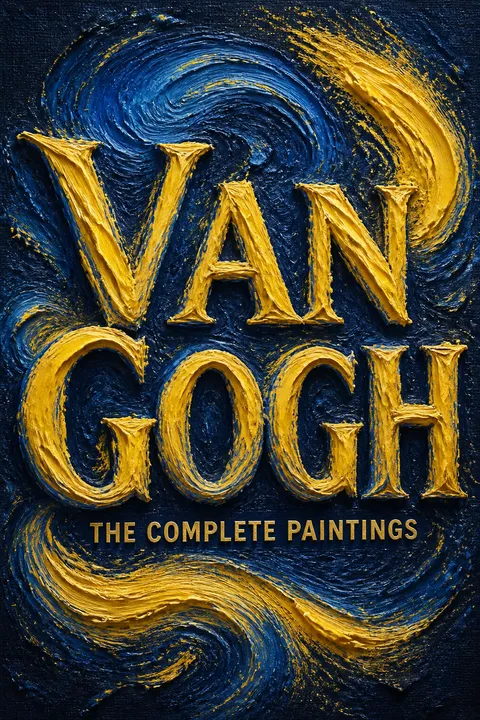
A life in sequence. This book presents van Gogh’s paintings in chronological order and reads them alongside his letters, relationships, beliefs, and changing circumstances. Its subject is not simply a solitary genius, but an artist whose pictures shift as he moves from the Dutch countryside to Paris, Arles, Saint-Rémy, and Auvers. The catalogue includes about 870 paintings, with some attributions disputed, while the narrative traces how recurring subjects acquire new meanings.
The work keeps changing. Peasants and weavers first carry van Gogh’s sympathy for working people. In Paris, Japanese prints and new ideas about color reshape his approach. In Arles, he imagines a shared artistic life; in Saint-Rémy and Auvers, confinement, memory, and the search for steadiness become increasingly visible. His biography helps explain the paintings, but the paintings also reveal a life that letters alone cannot.
What's striking is how the chronological method turns style into evidence of changing priorities, rather than a parade of masterpieces. It also invites a useful caution: a life story can make every brushstroke look like a symptom or confession. Paintings are made objects, shaped by materials, audiences, and artistic traditions, not transparent windows into a mind. The book is strongest when it holds those explanations together, showing how personal experience and formal choices interact without reducing one to the other.
Let chairs, shoes, and books reveal the people who are absent
Objects become portraits. Van Gogh gives ordinary things emotional weight by connecting them to the people who used or treasured them. In Arles, he painted his own plain chair with a pipe and Gauguin’s more comfortable armchair with books and a candle. The men are absent, yet the contrasting chairs make their friendship and separation visible. Earlier, a still life pairing his father’s Bible with a modern novel by Zola turned books into signs of competing worldviews.
Look beyond the object. A chair remains furniture, and a book remains a book, but placement, color, and remembered associations make each one stand for more. Shoes can suggest a life of travel and labor; an empty seat can summon departure or death. Van Gogh’s objects work as personal symbols, not as a universal code. Their meanings depend on the stories attached to them.
This approach resembles how people use personal possessions in grief: an object preserves ordinary presence precisely because the person is gone. In visual terms, absence becomes something the viewer can encounter rather than merely infer. The interpretation is persuasive when the artist’s letters establish a connection, as with the two chairs. It becomes less certain when viewers assign a fixed meaning to an object without supporting context. The method rewards close looking, but it also asks readers to distinguish evidence from imaginative association.
Treat artistic discipline as labor, not effortless genius
Work made the vocation. Van Gogh’s career was marked by repeated attempts to find a role, from art dealer and lay preacher to painter. He described an approach he called “active melancholy”: instead of surrendering to despair, he tried to keep moving through work. In Nuenen, he painted peasants and weavers while living on money Theo sent. His idea of the “peintre ouvrier,” or painter-worker, joined artistic practice to the dignity and hardship of manual labor.
Ambition had a cost. Van Gogh planned demanding projects, paid models when he could, and worried that canvas and paint were draining his limited funds. In one period he set himself dozens of peasant studies before attempting The Potato Eaters. His output did not come from effortless inspiration. It came from routines, experiments, sacrifice, and support from his brother, who helped make the work possible.
The emphasis on labor counters the seductive myth that major art simply erupts from innate genius. It also clarifies the economics behind creative work: time, materials, and a reliable source of support shape what an artist can attempt. Yet van Gogh’s self-sacrifice should not be mistaken for a healthy template. His work ethic was entangled with poverty, isolation, and physical strain. The distinction matters: persistence can sustain a practice, but suffering is neither proof of artistic worth nor a necessary ingredient of achievement.
Repeat a subject until looking itself changes the picture
A series is a method. Van Gogh returned to subjects repeatedly, not just to make multiple versions but to learn what each one could become. In Nuenen, he painted more than forty peasant heads and a group of studies of domestic work before creating The Potato Eaters. His ten paintings of weavers move from an intimate view of a worker to scenes where the loom seems to dominate him. The repetition records a change in the artist’s understanding, not merely a change in composition.
Difference emerges through comparison. In Arles, fifteen orchard paintings let van Gogh test how blossoms, light, and color behave across related scenes. A first version might map a subject in lines; another could give color and atmosphere greater force. Working in series lets viewers see artistic decisions that a single finished painting would conceal.
Repeated versions function like controlled experiments, even though van Gogh was not isolating variables in a scientific sense. A familiar subject gives the artist room to test scale, viewpoint, color, and emotional distance. That makes the series valuable to viewers too: comparison reveals choices that otherwise look inevitable. The limit is that repetition does not guarantee discovery. A series can become formulaic. Here, its interest comes from the way van Gogh’s repeated encounters alter both the subject’s appearance and the relationship between painter and subject.
Let color express what literal description cannot
Color changes its job. Van Gogh’s early Dutch paintings often use subdued, earthy tones suited to dim interiors and rural subjects. In Paris, exposure to Impressionism and Japanese prints broadened his palette. In Arles, he used strong contrasts, especially blue against yellow, to convey the heat and intensity he associated with the south. In The Sower, he even assigns blue and yellow to parts of the scene in ways that depart from their ordinary appearance.
A painting is more than a copy. By Saint-Rémy, van Gogh used color and forceful brushwork to reshape familiar subjects, such as olive trees and enclosed fields, into images of unease, endurance, or consolation. His colors are not always faithful records of what an eye would see. They make feeling part of the structure of the picture, while the recognizable subject keeps that feeling connected to the world.
Color here operates both as description and as an argument about perception. A field can remain recognizable while its palette changes how the viewer experiences it, much as lighting transforms the mood of a room without changing its contents. That double role helps explain van Gogh’s modernity: he does not have to choose between depicting things and making a picture with its own visual logic. Still, color alone cannot be translated into a stable emotional dictionary. Its meaning depends on the whole composition and the viewer’s attention.
Borrow from other art, but transform it into a personal world
Japan offered new possibilities. Van Gogh collected Japanese woodblock prints, studied their strong outlines, flattened spaces, bold color areas, and unusual viewpoints, then made painted versions of works by Hiroshige and Eisen. These European imitations were known as “Japonaiseries.” In Arles, he began to treat the south as a place where he could live out an imagined Japan, rather than merely copy its images.
Influence became a test. He also hoped Gauguin would join him in an artists’ community, but the two men disagreed about painting and daily life. Gauguin favored abstraction from memory; van Gogh remained attached to working from visible subjects. Their conflict shows that influence is not simple imitation. Van Gogh borrowed techniques and ideas, then altered them to fit his own need for vivid contact with people, landscapes, and everyday objects.
The exchange between Japanese prints and European painting shows influence as active translation rather than passive borrowing. Artists take what a form makes possible, then redirect it through local materials, concerns, and habits of seeing. The book also presents the “Cloisonnism” associated with Bernard and Gauguin, in which bold contours divide flat areas of color, as a point of artistic disagreement. Its account of Japan is imaginative, however, and reflects a European idealization of Japanese life as much as detailed knowledge of it.
Separate artistic intensity from romantic myths about madness
Illness is not a style guide. Van Gogh suffered serious mental crises, including episodes in Arles and Saint-Rémy that required hospitalization and interrupted his work. The book connects these events to the subjects and methods he chose, such as claustrophobic spaces, distorted forms, and portraits of fellow patients. But it also shows him planning compositions, studying earlier artists, and making deliberate decisions between attacks. His paintings cannot be treated as medical charts.
The legend simplifies the record. Writers have proposed different explanations for his illness, and the text does not establish a definitive diagnosis. It also questions the familiar image of every late painting as direct proof of impending breakdown. Van Gogh himself sometimes worried that people would confuse illness with his art. His suffering mattered, but it does not explain every choice or exhaust the meaning of his work.
The distinction is important because retrospective diagnosis can turn formal decisions into symptoms and obscure an artist’s agency. Mental illness may shape what someone can do, but it does not make every unusual form a clinical sign. The reverse simplification is equally risky: celebrating suffering as the source of genius can make preventable pain seem artistically necessary. A careful reading can acknowledge the documented crises while still examining technique, historical context, and deliberate artistic labor on their own terms.
Read the final wheatfields as complex works, not suicide clues
The ending resists certainty. In Auvers, van Gogh painted wheatfields, cottages, portraits, and broad landscapes. Wheat Field with Crows is often read as a direct announcement of his suicide, but the book notes that his own description also connects the fields with vitality in rural life. The painting can hold loneliness and energy together without serving as a simple prediction. Van Gogh died by suicide at 37, on July 29, 1890, two days after he shot himself.
The personal stakes were real. His final letters show concern about Theo’s financial and family troubles, alongside continued commitment to painting. He also feared being a burden and doubted what his work could earn. These pressures help explain the tragic context, but they do not prove a single motive. The book’s closing account asks readers to look at the paintings and letters without turning the death into a tidy final scene.
A famous ending exerts a powerful pull on interpretation: once the outcome is known, every dark cloud or flying bird can appear prophetic. That is hindsight, not evidence. The more responsible reading keeps several facts in view at once: van Gogh’s distress, his attachment to work, his relationship with Theo, and his own descriptions of the pictures. This approach does not make the death less tragic. It protects the art from being reduced to a coded suicide note and preserves the uncertainty that the record cannot resolve.
Analysis
This book’s main achievement is to make chronology interpretive. A catalogued painting is not treated as an isolated object, but as a moment in a developing practice shaped by family, money, reading, artistic exchange, place, and illness. The movement from Nuenen’s peasant studies to Parisian experiments, Arlesian color, Saint-Rémy’s compressed landscapes, and Auvers’s calmer fields gives readers a usable map of van Gogh’s art without pretending that style develops smoothly. The recurring tension is between fidelity to visible life and the desire to make a picture carry more than literal appearance. Van Gogh keeps working from recognizable people and places, yet increasingly uses color, line, scale, and repetition to give them personal and symbolic force.
The book is also alert to the dangers of its own narrative. Van Gogh’s biography invites a romantic story in which poverty, madness, and early death certify artistic greatness. The text sometimes leans toward explaining images through the artist’s mental state, but its stronger moments resist that shortcut by attending to technique, historical models, and the artist’s own statements. Its treatment of the final wheatfields is particularly useful: a painting may register fear and vitality without predicting its maker’s death. The letters illuminate the work, but they are not a final key that makes every image transparent.
The resulting portrait is less a tale of inevitable genius than of laborious adaptation. Van Gogh borrowed from painters, prints, literature, and religious imagery, then made those influences answer to a changing personal vision. The ambition to unite art and life gave his work unusual urgency, but it also carried risks: isolation, financial dependence, and an impossible demand that painting redeem existence. The book’s most lasting insight is that those contradictions are not distractions from the art. They are part of what the art makes visible.
Review Summary
People Also Read
Glossary
active melancholy
Despondency turned into workVan Gogh’s term for responding to sadness through purposeful activity rather than passive despair. He used it to describe his decision to keep working as an artist when his earlier religious and professional paths had failed. The phrase captures an important tension in his life: painting offered direction and hope, but did not remove the underlying melancholy.
peintre ouvrier
Painter as working craftsmanLiterally, “worker painter.” Van Gogh used this idea to align artistic labor with the effort and dignity of manual work, especially the labor of peasants and craftspeople. It expressed solidarity with ordinary workers and a preference for persistent, direct production over polished display. It does not mean that van Gogh was economically independent; he relied heavily on support from his brother Theo.
Japonaiserie
European Japanese-style imitationA European artwork that imitates or adapts Japanese art. Van Gogh made painted versions of Japanese woodblock prints, borrowing features such as strong contours, flattened space, decorative surfaces, and bold color. These works were not exact reproductions. They helped him test techniques that he later transformed within his own paintings.
Cloisonnism
Outlined zones of flat colorA style discussed in connection with Bernard and Gauguin, using strong outlines to separate areas of largely flat color. The term refers to cloisonné enamelwork, in which metal strips divide colored sections. Van Gogh encountered this approach through his artistic circle, but his own commitment to painting from observed subjects made his relationship to it complicated.
Download PDF
Download EPUB
.epub digital book format is ideal for reading ebooks on phones, tablets, and e-readers.








