

Key Takeaways
Fit consciousness and institutions into one world without reducing them away.
The unifying problem. Searle asks how conscious, meaning-making, social beings belong in a universe described by physics, chemistry, and biology. He calls these scientific descriptions the basic facts. The challenge is to take both sides seriously: particles and physical processes are real, and so are experiences, intentions, and institutions.
Naturalism without erasure. Searle rejects both dualism, which places mind in a separate realm, and reductionism, which explains consciousness away as behavior or brain activity. Instead, he treats consciousness as caused by brain processes while retaining its subjective character. Social institutions, too, belong to the natural world, even though their existence depends on what people collectively accept.
The strength of this position is its refusal of a false choice between scientific explanation and everyday reality. Biology routinely explains phenomena at multiple levels, such as how cells produce an organism without making the organism unreal. Searle applies a similar layered approach to mind and society. The difficult question is whether saying that consciousness is caused by the brain explains enough. A naturalistic account still needs a mechanism that connects neural activity to subjective experience, rather than merely asserting that both descriptions concern one world.
Treat the felt gap in choice as a problem to explain, not proof.
What deliberation feels like. Searle distinguishes perception from voluntary action. A tree’s appearance is mostly set by the tree and the senses; choosing what to do feels different. In deliberation, reasons seem to guide a choice without forcing it, and alternatives seem available. He calls this experienced openness the gap.
A question, not a verdict. The gap can occur between reasons and a decision, between the decision and starting an action, and while carrying out an extended action. Choosing a candidate, for instance, may feel as though the reasons matter without making the vote inevitable. Searle treats that experience as central evidence about what needs explaining, not as proof that free will exists. The book leaves the ultimate problem unresolved.
The distinction is valuable because it identifies a feature of experience that a theory of action must address. Yet the feeling that alternatives are open cannot by itself show that the brain was not determined. Cognitive science finds that decisions can be shaped by processes outside awareness, which complicates introspective reports without making deliberation meaningless. The useful question is therefore not whether choice feels free, but how that feeling relates to the causes of action and to an agent’s capacity to respond to reasons.
Explain reasons-based action by recognizing an agent, not only causes.
Reasons are not sufficient causes. Searle contrasts explaining an ordinary event with explaining a deliberate action. A glass falls because it was knocked from a table: the explanation points to a cause that, in context, was enough to produce the result. Saying someone voted for a candidate because of a policy concern does not usually claim that the concern made any other choice impossible.
The role of a self. Searle argues that this kind of explanation makes sense only if an agent acts on a reason. The self is not a separate ghostly substance. It is the unified subject who can reflect, decide, act, and take responsibility. His argument is that our practices of deliberating and explaining action presuppose such an agent, even though they do not settle how the brain produces one.
This account highlights a real difference between explaining behavior from the outside and explaining an action as something an agent did for a reason. It also resists treating people as mere locations where causes collide. Still, the need to use agent-based explanations does not automatically establish a metaphysically irreducible self. A critic could argue that reasons are themselves causes, even when they do not feel compelling. The distinction may be less about whether causes exist than about what a complete explanation of intentional action must include.
Neural randomness alone cannot turn a decision into free will.
Two possible brain stories. Searle considers a deterministic brain in which neural activity fixes every decision. On this account, the experience of choosing has no causal effect on what happens, making it epiphenomenal. His alternative is that the brain’s processes are not always causally sufficient, allowing a conscious agent to make a difference. He presents this as a possibility to investigate, not a discovery about how the brain works.
Randomness is not agency. Quantum physics permits indeterminacy at a fundamental level, but random events are not thereby free decisions. If genuine freedom exists, Searle argues, it would need to be realized in the brain and connected to rational thought. He also cautions against assuming that randomness in microscopic processes would make the whole brain’s behavior random.
The two possibilities make the stakes unusually clear: either deliberation is causally idle, or neuroscience must explain how non-determined processes can still support coherent, reason-responsive action. Searle is right that indeterminacy alone is not a theory of agency. A further challenge is that showing consciousness has an evolutionary function would not by itself prove that conscious experience causes action. The account needs a testable bridge from neural processes to both rational control and the experience of choosing.
A money fact depends on belief, but not anyone’s private opinion.
Two kinds of dependence. Searle separates facts that depend on people’s attitudes from facts that do not. Money depends on shared acceptance: without people treating a piece of paper as money, it would not function as money. By contrast, the paper’s mass does not depend on anyone’s opinion.
Dependence is not subjectivity. A second distinction concerns whether a claim can be objectively true. The paper’s status as money depends on collective attitudes, yet it can still be objectively true that it is a ten-dollar bill. Searle calls the first feature ontological dependence and the second epistemic objectivity. The distinction helps explain how political and economic facts can be socially created without being matters of personal taste.
This distinction is useful well beyond currency. A border, a university degree, or a legal office can depend on human conventions while remaining objectively identifiable within the relevant system. It prevents the common mistake of assuming that socially constructed means imaginary or arbitrary. The harder cases arise when the shared rules are disputed or enforced unequally. An account of how a fact depends on collective attitudes should also ask whose attitudes count, and whose interests the arrangement serves.
Create institutions by assigning shared statuses under public rules.
From cooperation to institutions. Collective intentionality is shared intention or belief among people or animals acting together. Searle argues that cooperation alone does not create institutions. People also assign functions to things, and some functions depend on collective recognition rather than physical design. A banknote works as money because people treat it as having that status, not because of its material properties.
Rules make statuses possible. Constitutive rules create new forms of activity, rather than merely regulating an existing one. Their basic pattern is that an X counts as a Y in a context: a person meeting certain conditions counts as president, or a move counts as checkmate. Language helps make these statuses publicly recognizable. In simple cases, a community may establish a status before spelling out formal rules, as when a group treats one person as its leader.
Searle’s account connects institutional life to ordinary coordination: shared rules let people treat paper, offices, and procedures as carrying powers beyond their physical features. This also explains why institutional rules need public recognition to guide behavior. The framework is especially useful for seeing institutions as made and maintained, not simply found in nature. Its boundary cases deserve attention, however. Informal rules can be contested, and people may comply with a status because of pressure rather than genuine shared acceptance.
Treat accepted obligations as reasons, not just punishments or incentives.
Obligations can motivate directly. Searle calls rights, duties, permissions, and related powers deontic powers. When someone recognizes an obligation as valid, it can provide a reason to act even without a personal desire or threat of punishment. A promise, for example, can give the promisor a reason to keep it. A department chair’s request can carry weight because the role has recognized authority, even if committee work is tedious and refusal brings no penalty.
A human social capacity. Searle argues that institutional life depends partly on this ability to act for desire-independent reasons. A parking ticket, jury summons, or accepted invitation can create a reason to respond that is not simply a calculation of pleasure or self-interest. Sanctions can reinforce a system, but Searle says they cannot fully explain why people recognize its rules as binding.
This idea illuminates how institutions operate without constant enforcement. People often follow rules because they regard them as obligations, which makes shared life more stable than a system of threats alone. It also connects social philosophy to the study of norms: a rule can shape action by changing what people regard as a reason. The account should not be mistaken for a claim that every recognized obligation is morally justified. Acceptance can explain why a duty motivates someone without proving that the duty deserves obedience.
Political authority rises from collective recognition, while enforcement rests on force.
Power requires recognition. Searle treats political power as a system of recognized statuses that carries rights and obligations. Its distinctive authority is not the same as the physical power of an army occupying a territory. Political arrangements depend on enough people recognizing the offices and rules as valid. In that sense, power is built through collective acceptance, even when citizens feel individually powerless.
Recognition has a hard edge. Governments also control organized force, especially through police and military institutions. Searle describes a tension: political authority depends on recognition, but its continued operation is backed by the possibility of coercion. He points to the collapse of communist rule and the end of apartheid as cases in which declining acceptance helped undermine established systems. The examples show that institutions can lose their hold when collective recognition weakens.
The account explains why political authority is neither pure consent nor mere violence. A government needs offices and rules that people recognize, but it also has enforcement capacity that other institutions generally lack. This helps distinguish legitimacy from raw control without pretending they are separable in practice. One important nuance is that compliance can reflect habit, fear, or lack of alternatives, not endorsement. Collective acceptance is therefore best understood as a condition for institutional power, not as evidence of unanimous or freely given approval.
Do not confuse a leader’s influence with the office’s formal powers.
Office and effectiveness differ. Two people can hold the same official position yet exercise very different influence. Searle distinguishes power, the capacity to get people to act, from leadership, the capacity to make people want to act in a particular way. An office supplies formally recognized authority, but a leader may exercise influence beyond the authority written into the role.
Influence can outlast office. Searle contrasts Franklin Roosevelt and Jimmy Carter as presidents who held the same constitutional powers but differed in political effectiveness. He argues that Roosevelt exercised influence beyond his formally assigned authority. A leader may also retain an informal following after leaving office. The point is not that formal rules are unimportant, but that actual political influence depends on how people respond to the person occupying the role.
This distinction helps explain why legal authority and practical influence often diverge. It also cautions against measuring leadership solely by title or formal jurisdiction. Political science similarly separates institutional resources from the ability to build coalitions and shape what others regard as possible. Yet influence is not always leadership in a normatively attractive sense. Persuasion, loyalty, pressure, and manipulation can all produce compliance, so the source and quality of a leader’s influence matter as much as its reach.
Analysis
The book brings two questions that can initially seem unrelated into one naturalistic project. The first asks how free choice could belong to a brain governed by physical processes. The second asks how political authority could exist in a world made of physical beings. Searle’s connecting strategy is to reject the idea that explaining a phenomenon requires explaining it away. Conscious experience remains subjective even if brain processes cause it; institutional facts remain socially dependent even if claims about them can be objectively true.
The free-will discussion is strongest as a diagnosis. Searle identifies the felt openness of deliberation, distinguishes reason-based explanations from ordinary causal explanations, and frames competing possibilities for neuroscience. He is notably unwilling to pretend that this resolves the problem. The cost is that the proposed bridge from neural activity to rational, non-determined agency remains largely a research agenda. The experience of alternatives is something a theory must explain, but it does not by itself establish that alternatives were physically open.
The social ontology is more developed. Shared recognition, status functions, rules, language, and obligations form a persuasive account of how institutions can be real without being natural objects. It also reveals how ordinary compliance sustains political order. Yet acceptance is not a simple yes-or-no attitude. Citizens may recognize an office while rejecting its legitimacy, or follow its rules under coercion. That complexity does not defeat Searle’s account, but it suggests that collective recognition needs to be analyzed alongside unequal power and contested consent.
The book’s lasting value is its method: distinguish kinds of dependence, identify the assumptions hidden in familiar explanations, and turn abstract puzzles into specific questions. It offers no final theory of freedom or government. Instead, it shows what a credible explanation would have to preserve: subjective experience, reason-responsive agency, and the objective force of institutions people collectively sustain.
Review Summary
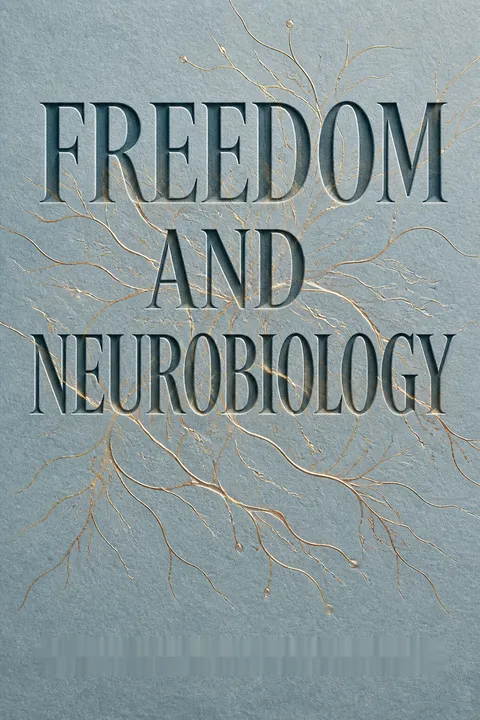
Freedom and Neurobiology receives mixed reviews, with ratings ranging from 1 to 5 stars. Readers appreciate Searle's clear writing style and his attempt to bridge neurobiology and free will. Many find his ideas on social ontology and political power intriguing. However, some criticize the book for being overly complex, lacking new insights, or failing to fully address the free will problem. Several reviewers note that the book's two parts feel disconnected. Overall, readers value Searle's philosophical approach but are divided on whether he successfully tackles the central questions posed.
Glossary
the gap
felt openness in actionThe experienced interval between reasons and a decision, between deciding and beginning an action, or during the continuation of an extended action. In these moments, a person does not experience the reasons or prior decision as sufficient to force what comes next. Searle treats this feature of voluntary consciousness as central to the free-will problem, not as proof that freedom exists.
collective intentionality
shared thought or intentionA shared belief, desire, intention, or other directed mental state among two or more agents. It supports cooperation, from animals hunting together to people organizing a political movement. Searle treats collective intentionality as a biological capacity that underlies social facts, while arguing that additional features are needed to create institutions such as money, government, and property.
status function
socially assigned functionA function an object or person has because a community collectively recognizes a particular status, rather than because of physical structure alone. A piece of paper can function as money, and a person can function as president, because people recognize those statuses and the powers attached to them. Status functions are central to Searle’s account of institutional reality and political power.
constitutive rules
rules that create activitiesRules that create or define a form of activity, rather than simply regulating behavior that already exists. Searle describes their typical structure as one thing counting as another in a particular context. Rules of chess, for example, make certain moves and outcomes possible as chess moves and outcomes. Such rules also help communities establish institutional statuses and powers.
deontic powers
rights and obligationsPowers that consist of rights, duties, obligations, permissions, authorizations, requirements, or privileges. They arise through recognized institutional statuses, rather than through physical force alone. For Searle, political authority and other institutions operate through deontic powers, which can give people reasons to act even when those actions do not serve their immediate desires.
observer-dependent features
features requiring shared attitudesFeatures of reality whose existence depends on the attitudes or intentionality of observers, users, creators, or other agents. Money, property, marriage, and language are examples: they would not exist in the same way without people treating them as real. Their dependence on human attitudes does not mean that claims about them are merely subjective or impossible to establish objectively.
desire-independent reasons for action
reasons not based on desireReasons to act that do not depend on an agent’s immediate wants or expected personal rewards. Searle argues that promises, recognized duties, and institutional obligations can provide such reasons. A person may keep a commitment or respond to an official request even when doing so is inconvenient and no punishment would follow. These reasons help explain how institutions guide behavior.
institutional facts
facts created by institutionsFacts that require human institutions and collective recognition in order to exist. Being a citizen, holding public office, or possessing a banknote as money are institutional facts; the physical materials alone do not make them so. Searle contrasts them with brute facts, which can exist independently of human institutions, such as the relative size of two stones.
About the Author
Other books by John Rogers Searle



Download PDF
Download EPUB
.epub digital book format is ideal for reading ebooks on phones, tablets, and e-readers.








