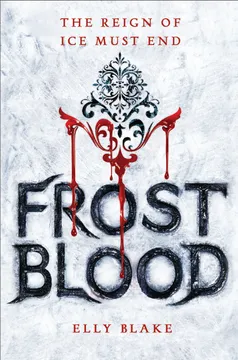


Plot Summary
The Village Burns
Ruby Otrera, a Fireblood girl raised in a snowy northern village, secretly practices the heat her mother has forbidden her to use. When soldiers arrive, they discover her burning skin and drag her into the village square. Clay, the butcher's son who once kissed her, identifies her as a Fireblood and accuses her of causing his infant brother's death.
The captain tests Ruby with flames, which cannot burn her, then strikes down her mother when she attacks him. Ruby's power erupts in a blast that scorches the soldiers, but the captain orders the village burned and has Ruby taken away. Her home, her mother, and the safety she tried to protect vanish in a single night.
Ruby's first use of power is not triumph but a chain reaction: secrecy becomes discovery, discovery becomes collective punishment, and grief releases the force she could not control. Clay's accusation gives the raid a personal face, even though fear and coercion shape his choice. Ruby's mother embodies care without power, while the captain turns that care into a target. The village's destruction makes Ruby's guilt understandable, but not proof that she caused the soldiers' cruelty.
Blackcreek's Frostbound Bargain
Five months in Blackcreek Prison leave Ruby weak, chilled, and chained, while guards torment her with buckets of ice water. She once burns a guard to stop him beating a sick prisoner, but the man dies and her intervention earns her an ankle shackle. Brother Thistle, an elderly Frostblood monk, and Arcus, a younger masked warrior, arrive when frost mysteriously avoids Ruby's cell.
They offer freedom if she helps them strike at King Rasmus. Ruby agrees because prison promises only a slow death and the king ordered the raid that killed her mother. Arcus breaks her chain and carries her past the waking guards; outside, Ruby sees stars again, but her rescuers have made her part of a dangerous plan.
The offer gives Ruby agency, but only inside a bargain made by others. Her prison defense shows the healer's instinct surviving beneath her revenge, yet it costs her strength and brings no rescue to the dying man. Thistle offers a political purpose; Arcus supplies force and distrust. Ruby accepts less because she believes in them than because every available choice has been narrowed to captivity or risk. Freedom begins as an exchange, not a gift.
A Dangerous Sanctuary
At Forwind Abbey, Brother Gamut treats Ruby's infected ankle and helps her regain strength. When she tries to burn her prison clothes, grief overwhelms her control and sets her robe and a nearby tree alight. Arcus pulls her from the river after she panics and falls into it. Days later, a fire traps Sister Pastel in the library while Brother Thistle lies unconscious from smoke.
Arcus freezes at the burning entrance, so Ruby crosses the flames, breaks a window, and gets Sister Pastel out with his help. Brother Lack then calls Ruby a danger and threatens to expose her. Thistle defends her, but the accusation reminds Ruby that sanctuary depends on other people's willingness to trust her.
The abbey is a refuge with conditions, not a clean escape from persecution. Ruby's rescue of Sister Pastel reverses the expected roles: the feared Fireblood risks herself for someone who had distrusted her. Arcus's paralysis reveals that elemental power carries a history of injury, not simple mastery. Brother Lack's hostility shows how institutions can shelter the vulnerable while still reproducing the prejudice they oppose. Ruby earns belonging through action, though it remains precarious.
The Runaway Returns
Afraid the abbey will send her back to prison, Ruby steals a mare and provisions, then rides west. At a refugee camp, she hears soldiers are searching for a Fireblood and learns that a coughing child, Kaitryn, has lost her medicine in a fire. Ruby risks detection to treat her with herbs and carefully applied heat, then escapes when a sentry catches her.
The decision changes her purpose: fleeing will not end the harm caused by the king's raids. She turns back toward Forwind, but a blizzard leaves her near death. Arcus follows the mare's tracks and finds Ruby buried in snow. His rescue brings her back to the abbey and, for the first time, she chooses to return rather than merely submit.
Kaitryn gives Ruby a concrete alternative to revenge: use knowledge passed down by her mother to keep a child alive. The healing succeeds through restraint, an important contrast with the uncontrolled blaze at the village. Ruby's return is not a sudden conversion to the monks' politics; she recognizes that escape protects only herself while the king's violence continues. Arcus's rescue also complicates their antagonism. Care begins to make a home where fear had only allowed a hiding place.
The Scar Beneath the Hood
Back at Forwind, Ruby trains with Thistle to quiet her mind and direct her fire, while Arcus builds her strength and teaches her swordwork. Their closeness grows through shared meals and teasing, but a sparring session turns cruel when Arcus provokes her to unleash her power. Ruby's flame catches his hood and exposes the severe burns beneath it.
Horrified, she learns that a Fireblood master once attacked him and left him for dead. She apologizes, and Arcus eventually shares more of his past: he grew up at court, knows Rasmus personally, and believes the throne has corrupted him. Their connection deepens, but Arcus still hides important parts of himself, leaving Ruby unsure whether trust can survive his silences.
Training makes their conflict physical before it becomes intimate. Arcus tries to teach control by provoking the very loss of control that frightens Ruby, repeating a logic of discipline through pressure. Her accidental injury exposes the cost of that method and forces both to recognize the other as vulnerable. His scars complicate Ruby's inherited picture of Frostbloods as a single oppressor class. Still, partial disclosure preserves an imbalance: intimacy grows faster than certainty.
A Throne Needs Melting
Brother Thistle connects Ruby's birth during a violent western storm to a prophecy about a powerful Fireblood who might defeat an ancient darkness. He believes the Frost King's throne carries a curse that amplifies the ruler's power and distorts his judgment. Ruby's task, he says, is to melt the throne before confronting Rasmus, though he hopes she might heal the king rather than kill him.
Ruby rejects the change because revenge for her mother is the reason she agreed to train. She storms away, and Arcus stops her from leaving the abbey. During their argument, he admits that he was attacked by a Fireblood assassin and later saved by a golden-haired woman he believes was Sage. He wants a chance to save Rasmus, not simply destroy him.
The mission shifts from personal retaliation to a problem of political structure. Killing a ruler may leave the throne's influence intact, while destroying it could alter the conditions that produce tyranny. Ruby resists because the proposed mercy asks her to imagine a future beyond the person she lost. Arcus's account of his own near-death makes that future emotionally credible, but Thistle's prophecy risks turning Ruby into an instrument again. Her central question becomes not only what she can do, but who gets to decide why.
The Letter to Greywater
Ruby discovers Brother Lack secretly writing a letter and confronts him. Their argument becomes a fight: Lack strikes and kicks her, and Ruby burns his arm enough to drive him away. Arcus tends her bruised face, and their guarded affection finally becomes a kiss. Before they can settle what it means, Thistle learns Lack has ridden toward Greywater, the king's garrison.
Soldiers arrive at the abbey, so Sister Pastel guides Ruby through hidden catacombs toward the woods. Captain Drake and his men wait at the exit. They douse Ruby before she can build heat and take her prisoner. Drake reveals that the king wants powerful Firebloods brought to the castle, and Ruby is marched away from the only home she has found since her village burned.
The letter turns prejudice into an active breach of sanctuary, while Ruby's clash with Lack shows how easily defense can resemble the violence she fears in herself. Her kiss with Arcus arrives at the moment trust becomes most costly: the soldiers' approach interrupts any private certainty. The catacombs make refuge literal, a passage through the dead toward an uncertain life. Drake's capture closes the route back to safety and forces Ruby into the public spectacle the abbey hoped to prevent.
The Beast's Trial
At King Rasmus's ice castle, Ruby discovers that the throne drains her heat and can freeze her where she stands. Marella, a noblewoman near the king, persuades him to test Ruby instead of killing her at once. He sends her against Gulzar, a frost beast held beneath the castle. Ruby climbs the chamber walls, uses fire to drive the creature back, then survives the dark by sensing its cold and listening for its movements.
When it lunges, she burns its mouth and kills it. The guards are astonished, but the king is angry at losing his pet. He grants Ruby a place in the arena, where she can be killed by a champion instead. Marella introduces herself as an ally, though Ruby cannot yet tell what she wants.
The throne's power makes Ruby's natural advantage unreliable before she even reaches the arena. The beast trial strips away spectators and ceremony, leaving her to combine trained perception with improvisation. Her victory is not simply greater force: she studies Gulzar's movement and uses its own attack to defeat it. Marella's intervention buys Ruby a chance, but the court's idea of mercy remains another form of control. Survival depends on reading both monsters and people.
The Minax Takes Notice
Doreena, a servant to the arena fighters, advises Ruby to watch for a champion's weakness. Before Ruby's first match, she sees a fire-breathing Firebeak killed by Frostblood warriors and recognizes the arena's appetite for suffering.
Then Gravnach, a huge crowd favorite, traps her in ice and cuts one of her fingers. As Ruby nears defeat, a darkness enters her and turns the world gray. It guides a precise blast into Gravnach's heart, killing him. Ruby feels no triumph, only a frightening emptiness and a brief desire to burn the watching crowd.
The king publicly dismisses her victory, then freezes her for sport. Braka, the champions' trainer, nevertheless acknowledges Ruby's fighting. Marella watches with satisfaction, recognizing that something beyond fire has awakened.
Ruby's victory exposes a second power that works by simplifying moral perception. In the arena, pain narrows her world until killing feels like a clean answer, and the crowd's cruelty offers no counterweight. The Minax's intervention saves her body while threatening her capacity to judge what survival costs. Doreena's advice and Braka's respect provide human forms of recognition, but the king turns even victory into another spectacle of domination.
Clay's Last Stand
After Ruby's first match, the king promises her a chance to face Drake, the captain who killed her mother. In the next arena contest, Ruby recognizes Clay among prisoners being offered to the beasts. He says he did not summon the soldiers and explains that he later joined people resisting the king.
When a tiger attacks him, Ruby enters the ring to protect him. Drake is sent in as her opponent. Clay strikes Drake from behind, but Drake runs him through before Ruby can intervene. Ruby's grief opens the darkness again, and she kills Drake with fire.
Drake had revealed that soldiers found Ruby practicing in the woods, not because Clay betrayed her. He also claims the abbey has been destroyed. Ruby wins revenge, but the captain's daughter watches her become the source of another family's grief.
The arena turns Ruby's private grievance into a public inheritance. Clay's explanation does not erase his earlier complicity, but it restores the coercion that the village square concealed. His death forces Ruby to confront the difference between justice and repetition: Drake's killing answers one loss while creating another child shaped by vengeance. The revelation about the woods sharpens Ruby's guilt without absolving the soldiers who chose to burn her village. She is left with grief and a dangerous source of relief.
The Darkness Offers Bliss
During her recovery, Ruby dreams of a shadow creature and fears that each arena killing strengthens it. Rasmus later leads her through a hidden passage to the throne. He explains that the Minax inhabits its ice, feeds on violence, and has selected Ruby as a vessel capable of carrying its power beyond the castle. He offers her a place beside him, promising that the darkness will erase her pain.
Ruby resists, remembering Arcus and the life she wanted as a healer. Marella then admits she has studied the throne and believes Ruby must face the Minax to destroy it. She urges Ruby to fight Kane, claiming he helped destroy the abbey and that Arcus is dead. Ruby agrees to enter the arena, driven by grief and the need to stop the darkness.
Rasmus's offer works because it speaks to Ruby's real wound: the exhaustion of carrying grief, guilt, and responsibility. The Minax does not tempt her with abstract evil but with relief from feeling, making surrender psychologically plausible. Marella's knowledge gives Ruby a possible route to destroying the throne, yet her false claim about Arcus manipulates the same pain. The chapter's moral pressure comes from compromised help: both allies and enemies try to shape Ruby through what she most fears losing.
The Prince in the Arena
Ruby faces the masked Kane on the summer solstice, when her fire is strongest. She calls on the Minax and begins to overpower him, but his voice makes her recognize Arcus, alive beneath the helm. Ruby draws the shadow tendrils away from his heart. Arcus admits he needed time to bring his supporters into position, then removes his helmet and identifies himself as Arelius Arkanus, Rasmus's elder brother and rightful claimant to the throne.
Rebels and loyalists pour into the arena as Arcus calls the people to choose their ruler. The fight spills into the castle grounds. Ruby understands that the throne still stands and that the rebellion may fail unless she reaches it, so she slips through a hidden passage with Marella's help.
Recognition interrupts the Minax at the instant it turns intimacy into a target. Ruby's ability to stop herself matters more than the force that nearly overwhelms Arcus. His identity reframes their relationship and the political conflict at once: the guarded warrior is also a claimant with a public obligation. Yet revelation does not resolve the immediate danger. The rebellion begins before the throne is disabled, leaving Ruby to act within a crisis no single person can fully control.
Fire, Frost, and Shadow
Marella leads Ruby toward the throne room, but Rasmus catches them and freezes Marella to the door. He reveals that she once paid Drake to keep Ruby away from him, then draws Ruby to the throne and returns her heat when she touches it. As the brothers fight, Ruby accepts the Minax to break free of the ice.
The darkness takes command, and she attacks Arcus before recognizing her love for him. Together, Ruby, Arcus, and Rasmus create frostfire; Ruby redirects it into the throne and melts the cursed ice. She then draws on love and forgiveness to drive the Minax from herself. Rasmus invites it back, and it kills him. The shadow escapes, marking Ruby near her ear before vanishing.
The climax does not let power become a simple cure. Ruby must enter the force that has been exploiting her, and the Minax initially turns that choice into possession. Her bond with Arcus helps restore judgment, but the decisive act is her redirection of shared power toward the throne rather than a person. Destroying the structure ends the curse's political instrument, not the darkness itself. The mark left on Ruby preserves an unresolved threat inside an otherwise decisive victory.
A Home After the Crown
Ruby collapses with a fever after the throne falls. Brother Gamut reaches the castle and treats her, confirming that most of the abbey survived the soldiers, though several members, including Brother Peele, died in the fighting.
Arcus returns to her bedside grieving Rasmus and preparing to rule a kingdom exhausted by war. He withdraws troops and plans to reopen negotiations with neighboring nations. The arena champions are freed from service, and the abbey becomes Ruby's chosen home again.
When she recovers enough to speak with Arcus, they share their grief and renew their affection. Ruby also tells him the Minax called her its true vessel and may return. The throne is gone, but the people must rebuild trust, and Ruby's future remains shadowed by the mark.
The ending restores neither the old order nor the people lost to it. Arcus inherits practical work, withdrawing armies and rebuilding diplomacy, while Ruby returns to a community defined by healing and shared labor. Her fever makes the cost of victory bodily rather than ceremonial; grief for Rasmus and the abbey's dead resists a neat triumph. The Minax's mark prevents the conclusion from pretending that destroying an institution erases every consequence. Home is possible, but it must be rebuilt.
Analysis
Frostblood makes power intimate before it makes it political. Ruby's heat is first a secret she must conceal from neighbors, then a weapon that answers panic, and finally a skill she must learn to direct. That progression matters because the novel refuses to equate self-control with emotional numbness. Ruby becomes more capable not by suppressing grief, but by learning to act without letting grief choose every target.
The Frost King's throne gives this personal struggle a structural counterpart. Rasmus's violence is not presented as an excuseable accident, yet the throne helps explain how power can reward cruelty until cruelty feels like strength. The arena makes that system visible: the crowd consumes suffering, the king turns victory into spectacle, and Ruby's survival risks making her an instrument of the same appetite. Her victory over individual opponents cannot end the pattern while the throne remains intact.
Relationships complicate the story's simple division between fire and frost. Arcus's fear of Ruby's gift coexists with his care for her; Ruby's desire for revenge coexists with the healer's impulse to protect. Marella's help carries strategic motives, and even her choices force Ruby to weigh the cost of being treated as a means. The story's romance grows from mutual vulnerability, not from the disappearance of political conflict.
The climax refuses an easy purification. Ruby uses the Minax's power to destroy the throne, then must reclaim herself through love, forgiveness, and deliberate choice. That does not erase the dead, repair the kingdom overnight, or destroy the Minax forever. The ending offers a harder form of hope: institutions can be dismantled, responsibility can be taken up differently, and a damaged community can begin rebuilding while danger remains.
Review Summary
Reviews for Frostblood are mixed, averaging 3.82/5. Fans praise its engaging characters, particularly the enemies-to-lovers dynamic between Ruby and Arcus, compelling action sequences, and addictive pacing. Many readers enjoyed the fire-versus-ice world-building and slow-burning romance. Critics argue the book relies heavily on YA fantasy clichés, including a "chosen one" protagonist, binary world-building, and predictable plot points, drawing comparisons to Red Queen and Throne of Glass. Despite its divisiveness, many readers plan to continue the series.
People Also Read

Characters
Ruby Otrera
Unruly Fireblood healerRuby is a young Fireblood whose body runs hot and whose emotions can make her power surge beyond her control. Raised by a healer and taught to hide her gift, she begins with little training and a fierce need to avenge her mother's death. Her sharp humor protects a more vulnerable fear: that she is dangerous to everyone she loves. She is also observant and compassionate, quick to recognize suffering in people and animals even when they belong to the enemy. Her central tension is between using power to punish and using it to protect. Ruby's growth depends on learning that control is not the denial of feeling, but the ability to choose what her feelings serve.
Arcus
Guarded Frostblood warriorArcus is a formidable Frostblood who hides his scarred face beneath a hood and masks emotion with discipline. He acts as Ruby's protector and sword instructor, though impatience and fear often make his teaching harsher than he intends. His deep discomfort around fire is rooted in an earlier attack, and Ruby's warmth unsettles defenses he has spent years building. He values duty and the safety of others, even when that means withholding information or pushing people away. Beneath his austere manner are humor, tenderness, and a capacity for loyalty that he rarely names. His relationship with Ruby forces him to risk being known rather than relying on distance as protection.
Marella
Observant court nobleMarella is a noblewoman with access to the king's court, an observatory, and a formidable collection of political and historical knowledge. Her interest in stars and old texts gives her a perspective beyond court gossip, while her elegant manner conceals a willingness to take risks. She studies people as carefully as she studies the throne, knowing that information can be a form of power for someone denied direct authority. Marella can be warm and candid, but she is also strategic, prepared to manipulate events when she believes the stakes demand it. Her choices reveal the difficult line between helping someone and treating them as the instrument of a larger plan.
King Rasmus
Volatile Frostblood rulerRasmus is a young king whose moods shift between polished charm and sudden cruelty. He treats power as the surest route to respect, and his court has learned to read his silences as carefully as his commands. His relationship with his family and the burdens of rule leave him isolated, even as he possesses the authority to command soldiers and shape the lives of ordinary people. Rasmus is not merely a distant political villain: his need to feel strong makes him susceptible to forces that promise to remove his pain. That vulnerability does not excuse his choices, but it helps explain why he confuses domination with safety and obedience with loyalty.
Brother Thistle
Prophet-scholar mentorBrother Thistle is an elderly Frostblood monk, scholar, and former warrior who leads Forwind Abbey. He studies prophecy and royal history, and believes that ending the kingdom's crisis requires confronting the throne itself. His kindness is balanced by a willingness to plan around Ruby before fully trusting her with the truth. He sees potential in her, but must learn to treat her as a person rather than a necessary weapon.
Brother Gamut
Abbey healerBrother Gamut is an elderly monk whose knowledge of mountain herbs makes him a patient healer. He treats Ruby's injured ankle and gives her a rare experience of care without suspicion. His gentle manner echoes the healing work Ruby learned from her mother, and his practical compassion helps make the abbey feel like a possible home.
Captain Drake
King's relentless captainDrake commands the soldiers who hunt Firebloods and carries the king's authority into villages and prisons. He is calculating, cruel, and adept at turning fear into compliance. His personal life and public brutality coexist without apparent contradiction; he can speak proudly of his family while inflicting suffering on others.
Clay
Ruby's compromised first loveClay is the butcher's son from Ruby's village and the first boy she kisses. He is shaped by fear for his family and by the pressure soldiers put on the villagers. His choices leave Ruby feeling betrayed, though his later actions reveal a young man struggling to oppose a regime that can punish everyone around him.
Ruby's mother
Protective village healerRuby's mother is a skilled healer who values practical care and a quiet life. She teaches Ruby to conceal her Fireblood nature because she understands how quickly suspicion can become violence. Her love is steady but complicated by the burden of protecting a daughter whose power she cannot fully teach or control.
Sister Pastel
Abbey illuminatorSister Pastel is a meticulous artist and illuminator at Forwind Abbey. Initially wary of Ruby, she is capable of reconsidering her judgment when Ruby's actions contradict her fears. Her craft and willingness to teach offer Ruby a gentler way to practice patience and precision.
Brother Lack
Suspicious abbey monkBrother Lack is a monk from the South whose past experience with Firebloods has hardened into prejudice. He believes the abbey must protect itself, even if that means rejecting its duty to shelter the persecuted. His fear makes him a source of danger within the sanctuary.
Doreena
Quiet arena attendantDoreena serves the arena's champions and understands its routines better than the nobles who watch from above. Nervous around Ruby at first, she offers practical advice that may help her survive. Her compassion is discreet, shaped by the risks of speaking openly in the king's household.
Braka
Champion trainerBraka is a veteran Frostblood warrior who trains the king's champions. Blunt and physically imposing, she respects skill and courage even when the court expects her to despise a Fireblood.
Kaitryn
Hopeful refugee childKaitryn is a sick but spirited child traveling with refugees toward the coast. She dreams of seeing the world beyond the reach of soldiers, and her illness gives Ruby a chance to use healing knowledge rather than violence.
Plot Devices
Fireblood and Frostblood gifts
Opposing elemental powersFirebloods wield heat and flame, while Frostbloods command cold, ice, and frost. Their opposing abilities shape the political conflict and determine how characters fight, protect themselves, and interpret one another. Ruby's heat can resist ordinary cold, but hunger, injury, and the Frost King's throne can weaken her. Arcus's frost gives him control over the environment, yet fire can overwhelm him. Their powers are dangerous, but neither is morally good or evil in itself. The relationship between the two gifts makes cooperation possible while exposing the fear and history that keep the peoples divided.
The Frost King's throne
Power with a hidden costThe throne is an ancient seat of ice said to amplify the Frost King's power. It reaches through the castle and into the arena, where its influence can suppress Ruby's heat. Brother Thistle's research suggests that it also carries a curse affecting the rulers who sit upon it. The throne is not simply a symbol of government: its power changes the balance of the kingdom and becomes the central obstacle to ending Rasmus's rule. Ruby must understand both its political and supernatural functions before she can challenge it.
The Minax
Shadow that feeds on violenceThe Minax is a living shadow associated with ancient myths about darkness trapped beneath the world. It appears around the throne and intrudes into Ruby's consciousness during mortal danger. In the arena, it lends her power when pain and rage narrow her choices, but the relief it provides blurs her judgment and makes killing feel pleasurable. Its growing influence links private trauma to the kingdom's political violence. The creature's presence turns Ruby's struggle for power into a struggle over who controls her desires and sense of self.
Dru's prophecy
A contested map of fateBrother Thistle studies prophecies attributed to Dru, especially one connecting a western storm, a child of light, and the destruction of an ancient darkness. He interprets Ruby's birth and Fireblood strength as signs that she may be the person described. The prophecy gives the resistance a reason to seek her, but it also risks making her feel like a tool assigned a destiny. Characters disagree about whether prophecy dictates outcomes or merely describes possibilities, preserving Ruby's responsibility to choose.
The king's arena
Violence staged as spectacleRasmus's arena turns prisoners, challengers, champions, and exotic beasts into entertainment for the court and public. Its rules reward endurance and spectacle, while its crowds help normalize the king's brutality. For Ruby, the arena is both a threat and a route to remain alive long enough to reach the throne. Each match tests her training, but also gives the Minax openings to exploit her fear and anger. The arena therefore advances the plot while making visible how violence becomes a public ritual rather than an isolated act.
Download PDF
Download EPUB
.epub digital book format is ideal for reading ebooks on phones, tablets, and e-readers.








