


Plot Summary
Prologue
After King Esban dies defeating the Aphrasian rebels, Renovia waits outside the palace for Queen Lilianna to confirm that the kingdom still has a ruler. Grieving, recently delivered of a child, and afraid the surviving rebels will strike again, Lilianna finally accepts her advisor Cordyn Holt’s plan to protect her and the infant princess.
She binds Cordyn by a blood vow: he and his heirs must defend the crown and restore the missing Deian Scrolls. Cordyn drinks the queen’s magically charged blood, tying his young son Caledon to a duty he never chose.
The opening makes political survival intimate: a kingdom’s future is secured through a promise imposed on one family. Lilianna’s grief is not merely private sorrow, since every day she remains hidden invites uncertainty about succession and invites enemies to act. Cordyn’s vow answers that emergency, but it also converts protection into inheritance. The magic has an ethical cost before the main story begins: Caledon will be born into a debt made by adults for the sake of a child. The prologue therefore frames the novel’s central tension between personal agency and obligations claimed in the name of public good.
Baer Abbey Calls Shadow
Eighteen years later, Shadow lives with Guild-trained Moriah and Mesha at their Honey Glade farm, longing to join the Hearthstone Guild instead of being kept from its dangerous work. After another argument with her guardians, she follows an abandoned road into the forest, where animal-sense and instinct help her survive an attack by a jaguar.
Rather than turn home, she presses on to the ruined Baer Abbey, once the stronghold of the Aphrasians. Inside, she finds evidence of recent human presence and discovers a hidden passage descending to an underground river. Voices approach from the tunnel. Shadow slips into the current to escape, not knowing the ruin has drawn her into a conspiracy that her Guild family believes has been defeated.
Shadow’s first decisive act is not a mission assigned by an authority but a refusal to accept the narrow future assigned to her. The forest rewards her attentiveness, yet the same instinct that makes her capable also pulls her into peril. Her arrival at Baer joins private rebellion to the kingdom’s buried history: the site is both a physical ruin and a place where suppressed knowledge remains active. That distinction matters because Shadow is not simply disobedient. She is responding to a world whose adults have withheld the reasons for their caution. Curiosity becomes a form of agency, but not yet informed agency.
Alast Falls Beneath the Mask
The river carries Shadow out near the battlefield where King Esban died. Touching a willow, she experiences the battle as a vivid memory and watches the king fall to an Aphrasian swordsman. A masked monk then attacks her in the present. Caledon Holt, the young Queen’s Assassin, kills the assailant before he can strike.
Shadow recognizes the unmasked man as Grand Prince Alast, Esban’s brother and a celebrated royal protector. She flees before Cal can question her, then returns to the Honey Glade shaken by the vision and the attempt on her life. The encounter gives her dangerous knowledge: the rebels have survived, and a figure trusted by the crown was apparently among them.
The scene makes history physically legible to Shadow, but it refuses to make that knowledge comforting. She can witness the past without changing it, while the present repeats its violence in a form she can barely understand. Cal’s intervention establishes him as both protector and instrument of royal force. The unmasking complicates the moral categories Shadow has inherited: a revered prince appears to embody the enemy he once fought. Her instinct is to flee, not to claim authority over what she has seen, revealing how little permission she has been given to act on her own perceptions.
Two Orders from the Queen
Queen Lilianna summons Cal to court after the killing. She accepts that Alast was a traitor, but hides the truth from the public and sends Cal north to investigate whether Montrice is aiding the Aphrasian resurgence. To protect him from retaliation, she orders him imprisoned at Deersia before the secret mission begins.
At the same time, Shadow learns that she must leave the Honey Glade and take her place beside the queen at court. Shadow tries to tell her mother what happened at Baer, but their dispute over her future leaves her unheard. The two orders set the protagonists on intersecting roads: Cal is confined for serving the crown, while Shadow is being summoned to a life she does not want.
The queen’s strategy is effective in the short term and costly in human terms. Cal is praised for protecting the realm, then publicly treated as a criminal so that the state can control what the public knows. Shadow, meanwhile, is summoned into royal service without being told what her role means. Both are acted upon by institutions that regard their bodies and choices as resources. Their different responses sharpen the contrast: Cal has internalized obedience as duty, while Shadow interprets confinement as a reason to take action herself.
A Message Through the Bars
In Serrone, Shadow watches the prisoner cart carrying Cal toward Deersia while townspeople jeer at him as a murderer. Knowing he saved her at Baer and that the public story is false, she pushes through the crowd and gives him a handkerchief as the cart passes. Cal cannot know what she intends, but the small gesture tells him he is not entirely abandoned.
Shadow returns to the Honey Glade, where she overhears her aunts discussing a Montrician prisoner bound for the same fortress and the danger posed by the Aphrasian resurgence. She decides the palace summons can wait. Instead, she begins planning how to reach Deersia and help Cal, turning gratitude into a risky commitment.
The handkerchief is a small act with disproportionate emotional weight because it counters the public spectacle of punishment. The crowd reduces Cal to the charge against him; Shadow sees the deed behind the charge and answers it with recognition. Her choice is not yet a clear-eyed commitment to the Guild or the queen. It is personal, driven by indebtedness and a wish to prove herself. That mixture is psychologically credible: moral courage and self-assertion can coexist with vanity and incomplete judgment. Shadow’s decision begins the partnership, but also exposes how easily a desire to help can become a desire to be seen as worthy.
Forged Papers, Cut Hair
With the royal summons and its seal as a model, Shadow forges a work order assigning her to stable duty at Deersia. She binds her chest, cuts her hair, and dresses as a boy, then times her arrival to join a prisoner transport before its guards can investigate. On the journey, she overhears the guards speaking about Cal and suspects that the Montrician prisoner is meant to kill him.
At Deersia, the stable boys mock and bully her, especially their leader Luce, while Jander, a quiet younger worker, treats her with unexpected kindness. Shadow fights Luce after he humiliates Jander, and the guards send both of them to kitchen work. That punishment gives Shadow a route inside the fortress.
The disguise converts courtly materials into tools of escape: the royal seal that was meant to direct Shadow becomes a forgery that lets her cross a boundary. Cutting her hair makes the choice bodily and difficult to reverse. Yet her confidence exceeds her preparation. She enters a prison whose rules and social hierarchies are unfamiliar, then learns that survival depends on small alliances as much as boldness. Her defense of Jander is the first sign that her mission is not solely self-advancement. She risks exposure to protect someone with even less power than she has, making compassion a practical skill rather than a sentiment.
Deersia Opens from Within
While cleaning Deersia’s dining hall, Shadow touches its tiled floor and sees a vision of Omin of Oylahn, who directs her to continue on her chosen path. Later, she volunteers to deliver meals to prisoners, allowing her to search the cells. She finds Cal in the east turret, pretending to be sick, and he initially restrains her with a sharpened stick.
The handkerchief proves she is the girl from Baer and Serrone. Shadow explains that a hostile prisoner may be targeting him, and they decide to escape before the guards return. Cal’s caution and Shadow’s access to the kitchens combine as they steal swords and horses, though Luce spots them and raises the alarm.
The vision provides Shadow with affirmation, but the episode’s more consequential guidance comes through practical work: cleaning, delivering food, noticing who is confined where. Her magical receptivity and her ability to improvise operate together. Cal’s suspicion is a necessary correction to her romantic idea of rescue; he does not trust her merely because she means well. The handkerchief closes the loop begun in the marketplace, changing a symbol of sympathy into proof of identity. Their escape only becomes possible when their distinct competencies meet, though neither has yet learned to rely on the other without competing for control.
Owls Break the Ambush
Prison guards block Cal and Shadow on the mountain road, and the pair are captured after their escape falters. Shadow tries to use her inner magic, but a black shield on one captor’s chest throws the force back at her. She realizes the men are Aphrasians, not Deersia guards. Bound and carried away, she calls on owls and wolves to attack their captors; the horses bolt, and Cal frees himself amid the chaos.
Jander helps misdirect the remaining pursuer, letting Cal and Shadow recover their horses and flee. The black material confirms that the rebels possess a new defense against magic. Shadow and Cal leave Deersia alive, but the enemy’s growing power follows them toward Montrice.
The ambush revises the meaning of Shadow’s magic. Her power is real, but it is not sovereign: the enemy has developed a material answer to it. This prevents the story from treating innate talent as an effortless solution and forces Shadow to adapt rather than rely on heroic confidence. Her animal call succeeds because it works through relationships with living creatures, not command over them. Cal, in turn, learns to value a form of magic he cannot perform himself. Their survival is collaborative, though his instinct to intervene and her insistence on proving herself remain sources of friction.
Argonian Heirs in Montrice
Cal and Shadow argue over whether to travel by road or through the Black Woods, then evade a tracking party when Shadow draws a deer stampede across the hunters’ path. After a clash with Aphrasian monks leaves Shadow’s arm badly cut, Cal treats the wound and begins teaching her swordcraft. In the quiet of a cave, they exchange stories and learn the cost each associates with a life in the Guild.
At the border city of Mont, they pose as Argonian siblings, Lord Callum and Lady Lila Holton, heirs to an estate in Stavin. Their gold buys them entry and lodgings at the Starlight Inn. The lie becomes their cover, but their growing closeness makes the performance harder to separate from desire.
The journey turns rivalry into competence through repeated negotiation. Shadow is right that caution can require hiding, while Cal is right that her choices can endanger them; neither is consistently correct. His treatment of her wound creates a temporary dependence that complicates their sharp banter, while her instruction in courtly behavior will later balance his field expertise. Their fabricated sibling identity is both useful and emotionally charged: it permits public intimacy while forbidding them to name what they feel. The false inheritance also anticipates the deeper question of who inherits power, land, and obligations in a world shaped by bloodlines.
The King Notices Lady Lila
In Mont, Shadow uses an emerald ring to persuade the grand vizier to arrange an introduction to King Hansen. The vizier’s lavish household and the city’s conspicuous wealth reveal a court more attentive to status than to the poor outside its gates.
Shadow and Cal secure invitations to a royal audience, where her appearance catches Hansen’s attention and earns them places on his upcoming hunt. At the Duke and Duchess of Girt’s estate, the couple gains a more useful foothold among the nobility, though Cal learns that the duke’s household prizes display and social manipulation.
Shadow and Cal recognize that court access will require more than stealth. They must perform their invented identities convincingly while searching for whoever is helping the Aphrasian cause.
The court rewards legibility: the ring, the title, and the polished story matter more than the travelers’ actual origins. Shadow grasps this quickly, using wealth as a language the vizier understands. Cal is more suspicious of the social theater, but his mission depends on entering it. Their success also exposes the moral imbalance of the setting. The poor children’s coins at the king’s fountain and the aristocrats’ expensive entertainments occupy the same city, yet the court treats them as unrelated facts. The protagonists gain access by participating in that economy, so espionage requires them to inhabit, not simply condemn, the system they investigate.
Dead Dukes, Living Lies
At the Girt estate, Cal and Shadow notice that the duke’s hunting display does not match his skill: during a royal hunt, he claims a stag that Shadow sees as enchanted branches. They also find a shard of the black substance that repelled her magic. In the duke’s study, a mortality record shows that the real Duke and Duchess of Girt died more than twenty years earlier, despite later correspondence from Renovia naming the duke as a host.
The evidence makes their hosts’ identities suspect, but not yet their full purpose. Meanwhile, the Renovian ambassador Nhicol arrives in Montrice, forcing Cal and Shadow to avoid recognition. The pair remain at the estate, where the mystery is closing around them.
The false stag and false household make deception a material feature of the plot, not merely a matter of political rhetoric. Shadow’s sight catches what ordinary perception accepts, while the mortality record gives Cal a piece of evidence that can be tested. Their investigation must combine intuition with documentation. The revelation that the hosts’ history is fabricated does not immediately solve the danger; it creates a more difficult question about what kind of beings can sustain such a lie. Nhicol’s arrival adds pressure because the protagonists’ cover can collapse from either direction, exposing them to both Montrician scrutiny and the Renovian network.
The Duke Unmasked
At the Girts’ crowded party, Shadow’s protective talisman reacts to a nearby dark mage. She follows the sensation upstairs, where the duke leads her onto a balcony and traps her with an obsidian collar. Cal arrives and discovers the duke can change his appearance, including into the likeness of the monk he killed at Baer.
The apparent Grand Prince Alast was therefore an impostor, and the real prince had likely been murdered by the duke. Jander appears with Cal, recognizes that the duke’s power depends on an obsidian ring, and cuts off the finger bearing it. Shadow breaks free and turns the duke’s attack back on him. Cal kills the weakened shapeshifter, but Jander warns that the body must be burned with Deia’s fire before it can return.
The climax makes identity itself the battlefield. The duke has survived by wearing familiar faces, turning public trust into camouflage; Cal’s earlier certainty about Alast was therefore built on an illusion. Jander’s intervention is both tactical and sacrificial, demonstrating that a person dismissed as powerless may hold the crucial knowledge. Shadow and Cal finally act in coordination: she disrupts the enemy’s magic, he delivers the physical strike. Yet victory is deliberately incomplete. The warning about burning the body prevents the protagonists from mistaking immediate success for final resolution, and it gives their later choices a shadow of unfinished danger.
Shadow Becomes Queen
After the duke’s death, Cal and Shadow are captured, hurried through a royal hearing, and sentenced to execution by King Hansen. The vizier later retrieves Cal and brings him into a public ceremony instead of to the scaffold. Queen Lilianna arrives from Renovia, announces that she is ending her regency, and presents her daughter as Princess Lilac, the future queen and Hansen’s intended bride.
Cal realizes the princess is Shadow. Lilianna explains that Montrice uncovered the conspiracy and that the marriage will bind the kingdoms against future war. Shadow’s earlier secrecy, court knowledge, and royal jewels take on new meaning. Her rescue mission has carried her directly into the royal role she had spent her life resisting.
The identity reveal reinterprets Shadow’s rebellion without canceling it. She has not pretended to want the Guild; she has concealed the fact that royal duty has always been the force she hoped to escape. The ceremony resolves the immediate political crisis by converting a threatened invasion into a dynastic alliance, but its solution is coercive: a young woman’s marriage becomes a treaty instrument. Cal’s presence makes the cost personal, while the public pageantry attempts to make the arrangement appear consensual and celebratory. The scene asks whether peace built through a person’s sacrifice can be called just, even when it prevents broader bloodshed.
Love, Bargained for Peace
At her engagement reception, Shadow confronts Lilianna about the life arranged for her and learns that the queen negotiated their release after the hearing. Shadow’s condition was Cal’s pardon; she agreed to marry Hansen to prevent renewed war between Renovia and Montrice.
Cal, meanwhile, discovers that Shadow’s love helped secure the alliance, but the queen urges him to forget her and fulfill his blood vow. Before the wedding, Shadow visits him secretly, admits her identity and gives him an obsidian key found among the duke’s possessions, which may lead to the Deian Scrolls.
Cal asks her to flee with him, but she refuses because her disappearance could unravel the peace. They spend one night together, then part without resolving their future.
The lovers’ intimacy is inseparable from political coercion. Shadow’s affection does not liberate her; it gives her a reason to accept a bargain that preserves Cal’s life and protects two kingdoms. Cal’s oath and Shadow’s royal duty mirror one another, but their burdens differ: his was inherited through blood magic, while hers is administered through statecraft and marriage. The key offers Cal a route toward freedom, yet it arrives from the person whose freedom is most constrained. Their final night grants emotional truth without changing the political arrangement, making tenderness a real choice but not a sufficient escape.
Cal Takes the Obsidian Key
After Shadow leaves, Cal prepares to depart before her wedding. He searches the catacombs for the duke’s body, intending to destroy it with Deia’s fire, but finds Jander waiting by an empty tomb. Jander explains that the body was not burned before sunset, so the enemy has returned, and Cal understands that the duke was King Phras, the ancient Tyrant King.
The obsidian key may still lead to the Deian Scrolls, and Jander knows a possible route to the lock. Cal leaves Montrice with Jander as a new apprentice and carries Shadow’s silk handkerchief beside the earlier one. He cannot yet fulfill his vow or erase the threat, but he resumes the search with a companion and a clearer sense of what remains at stake.
The ending refuses the satisfying arithmetic of a slain villain and a freed hero. Phras’s return makes the earlier victory provisional, while the key turns the missing scrolls from a distant obligation into a concrete next task. Jander’s survival also reframes apprenticeship: Cal, once reluctant to share his work, leaves with someone whose knowledge and courage he needs. Shadow’s handkerchief joins the old token, preserving connection without pretending that love has overturned duty. The close is therefore neither pure loss nor reunion. Cal moves forward carrying a promise he did not choose, but now acts with greater understanding and less isolation.
Epilogue
Months after her wedding, Queen Lilac lives in a political marriage that remains unconsummated. Hansen is not cruel, and their separate routines keep the alliance intact, but Lilac misses Cal and wonders whether he will return.
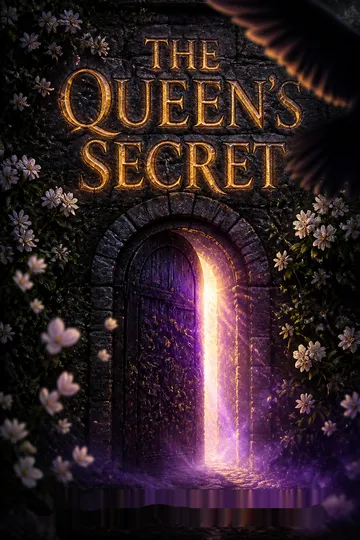
She trains with a Guild master, determined to shape her own path as queen, and reads a newly made collection of Renovian legends. As she prepares for sleep, she hears a knock from the small chamber adjoining her bedroom, the room reserved as the Queen’s Secret. Hope rises before she can know who is there.
The epilogue offers a possible opening rather than a confirmed reunion. Lilac has gained the authority she wanted only after accepting a marriage that limits her private life, yet she now uses that authority to train and to reclaim the legends that formed her. The separate rooms of the royal couple materialize the political bargain: peace is maintained through distance, not intimacy. The final knock makes the secret chamber a counter-image to the public throne. It holds the possibility that Lilac and Cal can preserve a private bond inside a life structured by duty, but the text leaves that hope suspended rather than guaranteed.
Analysis
The novel builds its fantasy conflict around the ownership of knowledge. The Aphrasians do not merely oppose the crown; they seek to monopolize magic by controlling its texts, institutions, and public history. Their power depends on making one account of the past seem inevitable. Shadow’s visions challenge that monopoly, but the story does not present insight as a complete solution. Her memories of Baer are vivid, yet she cannot change what happened, and her later discoveries require corroboration from documents, witnesses, and other people. Knowledge becomes reliable only when different forms of knowing are brought together.
The parallel constraints on Shadow and Cal give the romance its political shape. Cal inherits Cordyn’s blood vow, while Shadow is bound by a royal life arranged for her protection and the kingdom’s survival. Both experience duty as a claim on the future, but their situations are not identical: Cal’s obligation is magical and explicit, while Shadow’s is enforced through family, rank, and diplomacy. Their attraction offers genuine recognition, yet it cannot erase the systems that govern them. Shadow’s decision to marry Hansen protects Cal and helps secure peace, but the sacrifice remains hers to bear.
The novel also questions heroic competence. Cal’s training does not spare him from manipulation, and Shadow’s magical strength does not defeat the obsidian shield. Their progress depends on learning from each other, and the people they initially overlook, particularly Jander, become crucial. The final return of Phras prevents the story from treating victory as a clean ending. A villain can be killed and still return when the conditions sustaining his power remain intact. The unresolved threat echoes the larger political problem: removing one tyrant is not the same as dismantling the structures that let tyranny survive. The book ends by pairing unfinished work with an unfinished love, leaving both as active forces rather than closed outcomes.
Review Summary
People Also Read





Characters
Shadow
Guild-raised runawayShadow is a perceptive young woman raised at the Honey Glade by Moriah and Mesha, both experienced members of the Hearthstone Guild. She reads animal behavior, senses danger, and experiences powerful visions, but her defining impulse is to choose her own work rather than accept the role others have prepared for her. Her courage can outrun her judgment, especially when she wants to prove she is capable. She is also observant and emotionally responsive, quick to defend someone being mistreated. As she moves between rural life, espionage, and courtly performance, her confidence grows more grounded: she begins to understand that independence includes accepting the consequences of her choices.
Caledon Holt
The queen’s young assassinCaledon, usually called Cal, is the son of Cordyn Holt and the crown’s young assassin. A blacksmith’s shop gives him a public identity, while his missions demand disguise, patience, and lethal skill. He prefers action to uncertainty and solitude to dependence, habits shaped by losing his father and inheriting a dangerous obligation. His discipline makes him effective, but it also narrows his sense of what a life can contain. Shadow’s presence challenges his belief that working alone is safer and more honorable. Beneath his controlled manner, Cal is loyal, grieving, and hungry for a freedom he has never been able to imagine without first completing his inherited duty.
Queen Lilianna
Renovia’s calculating regentLilianna rules Renovia after the death of King Esban and bears the political burdens of preserving both the crown and its fragile peace. She is composed in public, guarded in private, and willing to make severe choices when she believes the kingdom is at risk. Her marriage to Esban connected her to Renovia, while her origins in Montrice leave her exposed to suspicion from both sides. She trusts careful plans more than open displays of feeling, a tendency that protects the state but can make those closest to her feel managed rather than loved. Lilianna’s decisions are shaped by grief, fear of renewed rebellion, and a ruler’s conviction that personal cost may be necessary.
Cordyn Holt
A vow-bound royal guardianCordyn is Cal’s father, a trusted advisor to King Esban and a skilled protector of the Renovian crown. His loyalty to the royal family leads him to make a binding promise intended to secure the kingdom after Esban’s death. Cordyn is remembered as capable, mischievous, and deeply connected to the Guild, but his devotion to public duty leaves his son with an inheritance that complicates the meaning of love and protection.
Moriah
Shadow’s Guild guardianMoriah is one of Shadow’s guardians at the Honey Glade and a former active Guild operative. Practical, affectionate, and alert to danger, she helps raise Shadow while trying to steer her away from reckless choices. She and Mesha preserve household magic and teach Shadow how to listen to the natural world. Moriah’s care is sometimes expressed through limits rather than explanations, which leaves Shadow frustrated even as it gives her a secure home.
Mesha
A healer of the GuildMesha is Moriah’s wife and one of Shadow’s principal caregivers. A healer who makes practical remedies from herbs, she balances Moriah’s discipline with gentleness and emotional warmth. Mesha is sensitive to threats that others dismiss, especially dangers connected to forgotten magic. She offers Shadow a model of care based on attentive work, though her protective instincts sometimes conflict with Shadow’s need to take risks for herself.
Jander
A quiet stable handJander is a small, withdrawn boy working among Deersia’s stable hands. Other boys treat him harshly, but he responds to Shadow’s kindness with quiet loyalty. His limited speech and guarded manner make him difficult to read, while his attentiveness allows him to notice more than others expect. Jander’s vulnerability draws out Shadow’s protective instincts and helps reveal the difference between authority and genuine strength.
King Hansen
Montrice’s young monarchHansen is a young king surrounded by elaborate court ritual and eager advisors. He is vain and pleasure-seeking, with more interest in hunting, horses, and display than in the hardships beyond the palace. Yet he is not presented as purely cruel; he can show restraint and courtesy, and he understands the political value of alliances. His limited attention to governing creates opportunities for ambitious courtiers to shape events around him.
Duke Girt
A guarded court powerThe Duke of Girt is a wealthy Montrician aristocrat whose private manner is restrained and whose public position gives him access to the king’s circle. He appears indifferent to social chatter and prefers his work to the entertainments favored by his wife. His household’s history and his behavior during the hunt make him a figure Cal and Shadow cannot afford to dismiss. He represents the danger of judging political influence by manners alone.
Duchess Girt
A matchmaking court hostessThe Duchess of Girt is an exuberant hostess who thrives on gossip, parties, fashion, and romantic intrigue. She takes a special interest in Cal and Shadow, offering them lodging and access to her social circle. Her apparent frivolity makes it easy for others to underestimate her, while her enthusiasm gives her unusual influence over who is welcomed at court. She is skilled at turning hospitality into leverage.
Grand Prince Alast
A celebrated royal brotherAlast is the younger brother of the late King Esban and a prominent figure in Renovian memory. He is known as a loyal defender of the royal family and a man who devoted himself to the crown rather than building a household of his own. His public reputation gives his name considerable weight in court and makes any challenge to the accepted story of the royal family especially dangerous.
Ambassador Nhicol
Renovia’s courtly envoyNhicol represents Renovia in Montrice and moves among the foreign court’s political and social circles. His work requires discretion, careful observation, and the ability to pass through settings where national loyalties are uncertain. His presence forces Cal and Shadow to reconsider who knows their identities and what information has already reached the queen.
Mathieu
The ambassador’s husbandMathieu is Nhicol’s husband, a sociable man who owns drapers’ shops in Renovia. His cheerful manner and interest in Montrician fabrics make him a welcome presence at court gatherings, where his ease contrasts with Cal and Shadow’s constant caution.
The Grand Vizier
A gatekeeper to courtThe grand vizier controls access to King Hansen and understands that influence in Montrice is traded through favors, gifts, and appearances. He is ostentatious, acquisitive, and anxious about keeping the king’s favor. Though he can seem ridiculous, his position makes him a valuable intermediary for anyone seeking entry to the royal court.
Luce
Deersia’s stable bullyLuce leads a group of stable boys at Deersia and uses humiliation to maintain his standing among them. He targets newcomers and those he considers weak, making the stable a smaller reflection of the prison’s wider abuse of power. Shadow’s refusal to submit unsettles the hierarchy he relies on.
Missus Kingstone
A precise court seamstressMissus Kingstone measures and dresses Shadow for court, treating clothing as a matter of exact construction and social expectation. Her fitting sessions teach Shadow how aristocratic appearance is carefully manufactured, even as the corsets and gowns feel like restraints to her.
King Esban
Renovia’s reforming kingEsban was Lilianna’s husband and Renovia’s king, remembered for challenging Aphrasian control of magic and knowledge. He sought to loosen old levies and make learning more accessible, but he underestimated the power of political lies and the resistance of those who benefited from secrecy. His death shapes the fears and loyalties of the living characters.
Omin of Oylahn
A legendary source of magicOmin is a legendary mage associated with the founding of ancient Avantine and the beginnings of Deian magic. Shadow encounters Omin through visions connected to places layered with history. The mage’s presence links her personal choices to the long struggle over who may possess and practice magical knowledge.
Plot Devices
The Blood Vow
Duty inherited through bloodAfter King Esban’s death, Queen Lilianna binds Cordyn Holt to protect the crown and restore the Deian Scrolls. Cordyn’s promise extends to his heirs, so Cal inherits an obligation that shapes his profession, limits his freedom, and influences his choices about love and family. The vow turns a political crisis into a personal inheritance and gives Cal a concrete reason to keep searching even when the task appears impossible.
The Deian Scrolls
Lost knowledge at the centerThe scrolls contain the collected history and practice of magic, which the Aphrasians seized and withheld from the people. Their disappearance leaves Renovia vulnerable and gives the rebels a powerful source of authority. The queen needs them restored, while Cal’s inherited vow requires him to find them. The search connects the personal plot to the kingdom’s conflict over who may preserve, teach, and control magical knowledge.
Obsidian
Magic made weapon and shieldThe black, glasslike substance found near Baer Abbey can strengthen magic and repel outside magical forces. Aphrasian fighters use pieces as protective shields, while a ring and collar give the hidden enemy a way to command and restrain others. Its discovery explains how the rebels have regained power after years in hiding. The obsidian key found among the enemy’s possessions also offers a possible route to the missing scrolls.
Visions and Animal Sense
The past presses into the presentShadow senses animals’ fear and movement, and certain places allow her to witness events from the past. At Baer, she sees the final battle and King Esban’s death; at Deersia, she encounters Omin in a vision. Her abilities do not simply provide answers. They expose her to danger, reveal what ordinary observers miss, and require her to interpret what she sees. The animal call that helps the fugitives escape also shows how her magic works through attention and relationship.
Disguises and False Names
Identity as a survival toolShadow disguises herself as a stable boy to enter Deersia, then she and Cal pose as Argonian siblings to move through Montrician society. Their false names grant access to places where their real identities would make them targets. The cover story also creates romantic and political complications, since their public roles conceal feelings, loyalties, and backgrounds from one another and from their hosts. In a world where faces and titles can be manipulated, disguise is both protection and a source of dangerous misrecognition.
The Queen's Assassin Series
About the Author



Download PDF
Download EPUB
.epub digital book format is ideal for reading ebooks on phones, tablets, and e-readers.








