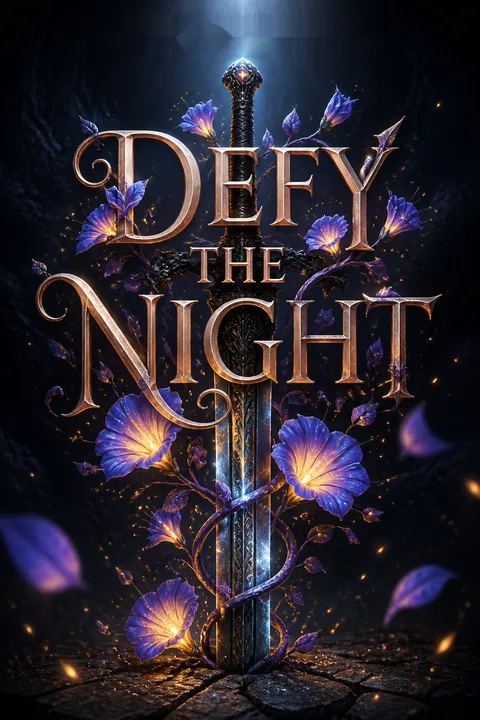


Plot Summary
Petals Stolen Before Dawn
In Kandala, the fever can kill without warning, and only Moonflower petals are known to help. Because the rare plant grows in two guarded sectors, the poor often go without.
Tessa Cade, an apothecary’s daughter whose parents were executed for smuggling medicine, sneaks into the Royal Sector with her masked partner, Weston Lark. They turn stolen petals into measured doses and deliver them to families who cannot pay. Tessa trusts Weston, the one person who has stood beside her since the patrol killed her parents.
Across the wall, Prince Corrick watches over his sickly older brother, King Harristan, and helps govern through a council divided by medicine, money, and fear. As King’s Justice, Corrick enforces the harsh laws meant to preserve order.
The opening binds private care to public failure. Tessa’s careful measurements challenge a system that treats medicine as both scarce resource and political leverage, while Corrick’s official severity is presented beside his intimate concern for Harristan. Neither character can act freely: Tessa works outside the law because lawful distribution leaves people behind, and Corrick uses authority to keep a fragile kingdom from splintering. Their parallel routines establish the novel’s central tension. Survival depends on practical acts of care, yet the same acts become crimes when power decides who may provide them.
Gillis Dies at Daybreak
On a medicine round, Tessa and Weston find thirteen-year-old Gillis Kendall barely breathing. They give him Moonflower elixir and a stimulant, but the fever has advanced too far; he dies in his mother’s arms.
Mistress Kendall, shattered and furious, accuses the king and prince of abandoning the poor. Weston tries to quiet her before patrols hear, but she runs into the street and throws stones at the soldiers. A crossbow kills her.
Tessa and Weston hide as the patrol leaves both bodies behind, then continue their deliveries because other families still need help. The deaths turn Tessa’s grief into anger at the Crown, while Weston’s steady presence keeps her moving. At work, Tessa later hears that ten Steel City smugglers have been captured.
Gillis and his mother make the cost of rationing painfully specific: medicine arrives, but not soon enough, and a grieving citizen is treated as a threat. Weston’s decision to pull Tessa into hiding protects her, yet it also forces them to leave the dead behind and resume their rounds. That practical choice exposes the limits of their compassion without diminishing it. Tessa’s anger grows from witnessed consequences, not political theory. Her growing attachment to Weston also carries fear: because she has already lost her parents, his unexplained absences feel like another possible bereavement.
The Execution Riot
Corrick questions the captured smugglers and refuses to torture them, though Consul Allisander Sallister, whose Moonlight Plains grow much of Kandala’s Moonflower, wants information about further raids. Consul Arella Cherry asks Harristan to pardon the prisoners, but the king and Corrick proceed with a public execution to deter theft.
Tessa attends with her coworker Karri, expecting a spectacle of state violence. Instead, the prisoners call for rebellion and name a group called the Benefactors; the crowd surges toward the stage.
Guards kill five prisoners, while three escape in the chaos. Harristan and Corrick survive, but the riot makes clear that fear no longer guarantees obedience. Corrick orders more patrols and searches, while Tessa leaves convinced that Weston is safe because he was not among those arrested.
The execution is meant to make authority visible, but the crowd changes its meaning by refusing to remain an audience. Calls for revolt turn a punishment into a public demonstration of shared desperation, while the escapees give that anger a route forward. Harristan and Corrick’s choice is not simply cruelty for its own sake: they fear that disorder will disrupt the medicine supply further. Yet the spectacle confirms what they hope to prevent, because the poor see the law protecting a system that cannot keep them alive. The Benefactors enter as a promise whose motives and methods remain unknown.
Wes Hangs at the Gate
After the riot, Weston warns Tessa that doubled patrols make their work too dangerous. She insists they continue helping people, and he leaves alone to steal more petals. When he does not return, Tessa finds a body hanging at the sector gates, dressed in Weston’s mask and clothes, with daggers driven through its eyes and a Moonflower displayed as a warning.
She believes her closest friend has been killed and spends days barely eating or working. Desperate to help the families they abandoned, she accepts a delivery to the Royal Sector and follows palace servants inside, hoping to steal stronger medicine. She loses her way in the servants’ passages. Palace Master Quint discovers her, and guards drag her before Corrick.
The staged corpse turns Corrick’s attempt to protect Tessa into a fresh trauma. She interprets his absence through the only evidence available to her, and her grief becomes both personal loss and guilt for the sick people she and Weston can no longer reach. Her entry into the palace is not a calculated assassination plan, but despair mixed with the hope of finding effective medicine. That distinction matters: Tessa’s defiance comes from care, while the Crown’s security apparatus reads every breach as treason. Her forced arrival at the center of power changes her from an unseen provider into someone the rulers must hear.
The Prince Beneath the Mask
Tessa recognizes the man who captured her as Prince Corrick, the feared King’s Justice. He reveals that he was Weston all along, and that the body at the gate belonged to a real criminal whose death he used to fake his own. Tessa feels she has lost not only Weston but the history she shared with him.
Corrick keeps her alive despite her attempted break-in, and his friend Quint invents a public explanation: Tessa is an apothecary with useful research. The next morning, Harristan hears her claim that the royal doses are wastefully high and asks her to explain. Tessa describes the lower dosages that kept her patients well. Harristan orders an inquiry and gives her time to substantiate her findings.
The revelation fractures Tessa’s memory: the tenderness she experienced was genuine, but it belonged to a man whose public work includes executions. Corrick’s secrecy protected his identity and Harristan’s rule, yet it denied Tessa informed consent in their friendship. Harristan’s willingness to hear her dosage argument opens a different kind of power: evidence may matter even when it comes from a poor young woman. Still, his invitation is provisional, and Tessa must make herself legible to institutions that have ignored her community. The emotional shift is not instant forgiveness, but a reluctant recognition that Corrick contains more than his feared title.
A Dose Before the Throne
While Tessa prepares to present her findings, Allisander brings Corrick to the Hold to inspect prisoners captured after an attack on Moonflower shipments. The captives have been badly beaten after surrendering.
Corrick orders the prison doctor to treat and feed them, then bars Allisander from the palace for countermanding his rules. Later, at an elite gathering, Allisander threatens to halt supplies if the Crown cannot protect his deliveries. Corrick publicly smooths over their dispute to prevent panic, while privately asking Tessa to review records with him.
She notices that Sunkeep has fewer fever deaths and studies Kandala’s waterways for a possible explanation. Their joint inquiry gives Tessa access to royal data, but the supply threat makes clear how little room the king has to change policy.
Corrick’s treatment of the prisoners complicates the image he has built as an instrument of punishment. His authority is real, but it is constrained by the people who control the cure. Allisander can convert an agricultural monopoly into political pressure, so even a sound medical reform risks provoking shortages. Tessa’s records and maps offer a different form of leverage, grounded in observation rather than rank. Their collaboration is uneasy because she sees injustice where Corrick sees interlocking risks. The scene makes governance material: a decision about dosage or a shipment can determine whether workers build bridges, families survive fever, or sectors turn against one another.
The Hold Goes Up
Tessa and Corrick study fever records and maps, finding patterns worth testing but no cure. Then explosives tear through the Hold, freeing most of the prisoners and setting nearby buildings ablaze. Two badly burned captives remain, too injured to survive. Under Allisander’s demand for a show of force, Corrick kills them himself, making the deaths quick even as he presents them as executions.
Tessa sees the blood on him and recognizes the cost of his role, but cannot excuse it. Together they decide to return to the Wilds disguised as outlaws and learn who is funding the attacks. The plan risks exposing Corrick to rebels who would use his identity against Harristan, yet staying within palace walls has produced no answers.
The prison attack collapses the distinction between policy and violence. Corrick’s decision to kill the burned men is framed as an attempt to spare them prolonged suffering, but he performs it under the pressure of a political demand and carries the guilt himself. Tessa’s compassion allows her to see his distress without absolving the act. Their decision to investigate as outlaws converts their private past into a method: they will seek trust where official interrogations produce silence. It is an ethically unstable choice, since they conceal their identities again, but it also marks the first time they direct their shared knowledge toward changing the larger crisis.
Outlaws Return to Wilds
Back in the Wilds, Tessa and Corrick visit an elderly woman who says the Benefactors have supplied medicine since their rounds stopped. On the path, they hear patrolmen accuse young Forrest of smuggling. Corrick intervenes, and Tessa strikes one soldier with a rock.
Corrick shoots another when he threatens Forrest; Tessa kills the last with Corrick’s dagger. They tell Forrest to get help hiding the bodies, then continue toward their workshop. Lochlan, an escaped prisoner, recognizes the dagger and suspects Corrick’s identity.
Before they can leave, Lochlan’s followers seize the pair and bring them to a rebel camp. Corrick realizes that a crowd there may recognize him as the King’s Justice, while Tessa understands that their rescue mission has become a test of whether the people they helped will trust them.
The encounter with Forrest forces both characters across a moral boundary they had previously managed through concealment. Corrick and Tessa use lethal force to stop an immediate killing, but the aftermath resembles the violence they condemn: bodies must be hidden, and the patrol’s crimes cannot be reported safely. Their actions save Forrest while making their own identities more vulnerable. Lochlan’s suspicion grows from a concrete clue, not omniscience, and his capture of them reflects the distrust created by years of punitive rule. The scene asks whether protective violence can remain distinct from institutional violence when every available authority is armed.
The Mob Remembers Tessa
At the camp, Lochlan strips away Corrick’s mask and tells the gathered people that their helper is the King’s Justice. The crowd beats Corrick while Tessa is restrained. She names the families who received medicine, firewood, repairs, and care from the two of them, reminding the mob that Corrick helped them even while serving the Crown. Forrest’s father joins her appeal, and the crowd finally stops.
Karri, Tessa’s former coworker, helps carry Corrick to a shelter and explains that she has joined the rebels to secure medicine for her family and neighbors. She says wealthy Benefactors are paying for raids and supplying petals. Before Tessa can learn more, fighting erupts outside, and royal soldiers find the wounded pair and arrest them.
Tessa’s appeal succeeds because she gives the crowd a counter-memory to Corrick’s public reputation. She does not deny the executions or ask the injured to forget them; she makes specific acts of care visible beside the harm. The people’s response remains fragile, since their violence has already nearly killed him and their trust is attached more to Tessa than to the prince. Karri’s presence also unsettles the idea that rebellion belongs only to hardened political actors. Ordinary people join because a neighbor needs medicine. The capture interrupts a possible reconciliation and transfers the conflict from the Wilds back to the Crown’s prison.
Brothers Behind Bars
In separate cells, Corrick fears that Harristan will believe Allisander’s accusations and replace him with the consul. Instead, Harristan visits, brings water and food, and listens as Corrick insists he did not organize the attacks.
Tessa is brought to the palace, where she tells Harristan how Corrick secretly helped people as Weston. She asks for amnesty for the rebels, including those who beat him, and for Corrick to be released from the burden of serving as King’s Justice. Harristan grants her a chance to act as a liaison and considers her other requests.
Meanwhile, Allisander visits Corrick’s cell and threatens to remove the king. Corrick has him imprisoned. Rocco then brings Corrick back toward the palace, where Harristan and Tessa examine a suspicious Moonflower sample.
The prison scenes invert the usual distribution of authority: Harristan enters the Hold, sits beside his brother, and offers sustenance before demanding an explanation. His choice signals trust without erasing the danger Corrick’s secrecy created. Tessa’s requests extend mercy beyond her personal feelings, even to people who nearly killed Corrick, because she understands that a peace excluding them would be false. Allisander’s threat reveals that the Crown faces danger from within its own elite circle as well as from the streets. Rocco’s decision to bring Corrick back makes loyalty practical rather than ceremonial: protecting the king may require disobeying a narrow reading of orders.
Moonflower Under Suspicion
Tessa compares the petals found among the rebels with the genuine Moonflower and notices that some are different. She suspects the rebels have received adulterated medicine and wonders whether the royal supply is also compromised, especially because Harristan’s cough has worsened despite his frequent doses.
Before they can investigate, armed attackers storm the palace with explosives. Corrick leads Tessa, Harristan, Quint, and the guards through smoke toward his quarters.
They escape by rope as the east wing burns, with Corrick too injured to climb alone and Harristan helping him reach safety. At the workshop, Harristan refuses to hide while the sector burns. He asks Tessa to help negotiate with the rebels, and she accepts, seeking amnesty and a path to make medicine available more fairly.
The altered petals turn a medical mystery into a political emergency: the substance meant to preserve life may be used to manipulate who remains healthy and who becomes desperate. Tessa’s expertise matters because she recognizes a difference that court officials have overlooked. The palace assault then strips away the security of the royal center, forcing the brothers into the same vulnerability experienced by their subjects. Harristan’s decision to negotiate is a shift from managing the crisis at a distance to entering it directly. Tessa’s acceptance is not simple allegiance; she uses her access to press for amnesty and reform, while knowing both sides may distrust her.
The Circle's Hostages
Harristan and Tessa travel through the Wilds toward the Royal Sector, where the gates have been blown open and banners call for revolt. At the Circle, rebels have surrounded themselves with fire and explosives, holding consuls and palace staff at weapon point.
Consul Leander Craft is killed when Harristan’s first offer fails to satisfy the rebels’ demand for medicine. Lochlan insists that a promise of future help cannot replace access to the cure now. Meanwhile, Corrick wakes at the workshop and rides with Rocco and Quint to the Hold.
He questions Allisander, who admits that he helped fund raids to force Harristan to raise Moonflower prices, using fake petals for the rebels. Allisander names Lissa Marpetta and the dead Leander as allies in the scheme.
The hostage crisis shows that Harristan’s authority cannot substitute for a credible answer to material need. The rebels have leverage, but their explosives and threats also make the king’s offer harder to trust. Leander’s death intensifies the danger without moving the standoff toward resolution. Corrick’s parallel discovery reveals that the revolt has been deliberately engineered by elites who exploit genuine desperation for private advantage. The false petals are especially cruel because they imitate a cure while prolonging the illness that fuels rebellion. Responsibility is therefore layered: the Crown’s unequal system creates the grievance, while Sallister and his allies manipulate it into violence.
Sallister's Manufactured Revolt
Allisander admits that he paid desperate people to attack his own supply runs so Harristan would grant him higher prices and greater power. The medicine distributed to rebels was not genuine Moonflower, and his allies included Lissa and Leander.
Corrick forces Allisander to promise eight weeks of real medicine and takes him on horseback to the Circle. There, Harristan and Tessa have failed to persuade Lochlan to release the hostages; the rebels are still demanding the king and a dependable supply.
Tessa tells them the petals were false, then reminds them of the care she gave their families. One by one, people she helped speak up for her. Corrick admits he expects no trust for himself, but asks the rebels to trust Tessa’s account of Harristan’s offer.
The revelation does not make the rebellion imaginary; it exposes how real grievances became tools for someone seeking profit and control. Allisander’s scheme depended on people being ill enough to risk raids and uninformed enough to accept counterfeit medicine. Corrick’s decision to bring him publicly reverses the usual spectacle: the powerful man must now answer for the violence he helped provoke. Tessa’s credibility comes from sustained, ordinary service rather than office or force. Corrick’s willingness to place the negotiation on her standing marks a change in his understanding of authority. He cannot demand trust through fear, so he lends power to someone who has earned it.
A Different Kind of Justice
Harristan promises eight weeks of genuine medicine, a council that will include ordinary people, and amnesty for rebels who release their hostages and leave peacefully. Lochlan hesitates until Forrest’s father and other people Tessa helped recall what she did for them.
The rebels lower their weapons, and Harristan orders his soldiers to stand down. In the days that follow, shipments are inspected, Allisander is detained, and Lissa is summoned to answer for the false petals.
Harristan gives Tessa a room and appoints her as his adviser on rebel relations; she also begins work with the palace physicians on dosages. Corrick and Harristan begin to speak more honestly about the King’s Justice, while Tessa urges Corrick to let Kandala know the brothers as themselves, not only as ruler and executioner.
The settlement is conditional rather than miraculous: eight weeks of medicine buys time, not a cure, and amnesty asks both sides to stop converting grief into further punishment. Harristan’s promise of a people’s council changes who may speak in governance, while Tessa’s appointment gives her practical influence without pretending she can solve the fever alone. Corrick’s future remains unsettled, but the brothers begin confronting the secrecy and delegated cruelty that have defined their rule. Tessa’s final challenge is relational as well as political. If the people know only the feared roles of king and King’s Justice, then any trust built by private kindness will remain fragile and hidden.
Analysis
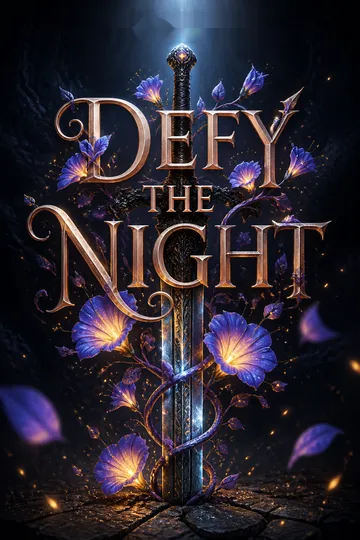
Defy the Night makes the governance of illness inseparable from the governance of people. Moonflower is not merely a cure; it is a resource whose scarcity gives growers bargaining power, encourages elite hoarding, and makes desperate citizens criminal in the eyes of the state. Tessa’s work exposes the contradiction at the center of this arrangement: the law condemns the theft of medicine while tolerating a system that leaves people without enough to live. Her dosage research offers a plausible improvement, but not a miraculous solution, preserving the difference between evidence-based reform and wishful rescue.
Corrick embodies the psychological cost of delegated violence. As King’s Justice, he performs the harshness that Harristan believes will preserve the kingdom, then secretly tries to mitigate the suffering produced by that order. His disguise allows him to help individuals, but it also lets him avoid confronting the political structure he enforces. Tessa’s discovery makes intimacy ethically complicated: Corrick’s private goodness is real, yet it cannot erase public harm. Her insistence that he be seen as himself challenges both the deception and the assumption that fear is the only viable form of rule.
The rebellion resists a simple division between innocent people and corrupt rulers. Ordinary citizens have genuine reasons to revolt, while their anger is manipulated by wealthy actors who profit from scarcity. At the same time, the Crown’s concern about supply chains and civil war is not invented. The result is a conflict in which every policy carries human costs, and moral intent alone cannot settle political responsibility.
The resolution is therefore provisional. Eight weeks of real medicine and a council that includes ordinary people do not cure the fever or erase mistrust. They create time and a public process through which change might be negotiated. Tessa’s influence rests on care made visible; Harristan’s rests on his willingness to share authority; Corrick’s future depends on whether he can stop using secrecy and punishment as substitutes for trust. The book’s modest hope comes from these changed relationships and structures, not from the promise that suffering can be ended at once.
Review Summary
Defy the Night received mixed reviews, with ratings ranging from 1 to 5 stars. Many readers praised the engaging plot, well-developed characters, and political intrigue. The romance between Tessa and Corrick was particularly well-received. Some appreciated the relevant themes and fast-paced storytelling. However, critics found the worldbuilding lacking, the plot predictable, and the characters frustrating. Several reviewers noted similarities to other YA fantasy novels. Despite the divided opinions, many readers expressed excitement for the sequel.
People Also Read






Characters
Tessa Cade
Wilds-born apothecaryTessa is a skilled young apothecary whose parents taught her to measure ingredients carefully and treat healing as an obligation, not a luxury. After their deaths, she lives alone and works for Mistress Solomon while secretly helping families who cannot afford Moonflower. Her grief makes her fiercely protective of the sick, but her urgency can push her into danger before she has a plan. She is observant, compassionate, and capable of admitting uncertainty, qualities that let her move between the Wilds and the palace without fully belonging to either. Tessa values concrete help over status, and she judges people by what they do for others. Her medical knowledge and earned relationships become as consequential as any weapon.
Corrick
Feared royal enforcerCorrick is Harristan’s younger brother and the King’s Justice, responsible for carrying out the punishments that preserve the Crown’s authority. He is watchful, strategic, and practiced at hiding emotion, shaped by his parents’ assassination and the burden of protecting his brother. His severity is not simple sadism: he believes fear can prevent worse violence, even as the role exacts a personal cost. Corrick has a sharp eye for political motives and a deep capacity for loyalty, but he often treats secrecy as the safest form of care. That instinct strains his relationships and obscures the gentler impulses he rarely allows others to see.
Harristan
King under pressureHarristan inherited Kandala’s throne as a teenager after his parents were assassinated. He is thoughtful and politically cautious, accustomed to weighing the survival of the whole kingdom against the urgent needs of individual sectors. He relies heavily on Corrick to enforce decisions he does not want to enact himself, while trying to preserve a balance among consuls who control vital resources. Harristan’s reserve can look like indifference, but he is attentive to public suffering and capable of changing course when evidence or trusted counsel challenges him. The tension between his desire to protect people and his fear of losing control shapes both his leadership and his bond with his brother.
Quint
The king's shrewd fixerQuint is the young Palace Master, responsible for the practical machinery of court and the flow of information through the palace. His restless chatter and disheveled manner disguise a precise observer who understands both gossip and danger. He is Corrick’s trusted friend, willing to manage appearances and keep confidences because he believes the prince’s intentions are more complicated than his reputation. Quint’s loyalty is not passive: he plans, intervenes, and sometimes challenges Corrick when secrecy threatens to become isolation.
Karri
Tessa's loyal friendKarri works beside Tessa in Mistress Solomon’s shop and offers the warmth and curiosity of an ordinary friendship. She notices Tessa’s distress, protects her privacy, and responds to vulnerability with practical kindness rather than judgment. Karri is close to her family and attentive to the needs of neighbors, but she is also willing to question the safety of simply obeying the rules. Her grounded perspective keeps Tessa connected to the community beyond their secret work.
Arella Cherry
Sunkeep's principled consulArella represents Sunkeep, a small southern sector whose people fare comparatively well against the fever. She speaks quietly but challenges Harristan and Corrick when she believes the Crown’s response is harming ordinary citizens. Unlike consuls who defend their own holdings first, Arella is willing to risk political standing by advocating leniency and broader care. Her relationship with the older consul Roydan draws attention at court, where every alliance is scrutinized.
Allisander Sallister
Moonflower power brokerAllisander controls Moonlight Plains, one of the sectors where Moonflower grows, and understands how scarcity can be converted into leverage. He is proud, calculating, and sensitive to perceived slights, particularly those involving his family’s status and influence. His former friendship with Harristan has curdled into political rivalry, leaving him adept at presenting self-interest as concern for stability. He speaks with confidence and expects others to treat his resources as indispensable.
Lissa Marpetta
Emberridge's quiet consulLissa represents Emberridge, the second sector that grows Moonflower. She is reserved in public and often lets Allisander speak for their shared interests, making her easy to underestimate. Her ties to Harristan’s late mother give her a more personal place in the royal court than many consuls possess. Lissa values influence exercised without spectacle and is careful about when she chooses to intervene.
Roydan Pelham
Veteran Sorrowlands consulRoydan is an elderly consul who has served the Crown through several reigns. He is patient, conventional, and often more humane than the younger political figures around him. His long experience gives him a feel for the risks hidden in apparently simple alliances. He treats Harristan and Corrick with a gentleness few courtiers offer, while remaining willing to question decisions that place ordinary people at risk.
Lochlan
Rebel organizerLochlan is a forge worker and escaped prisoner with a blunt distrust of royal authority. He is physically tough, intensely protective of the people around him, and convinced that polite requests have failed the poor. His anger is grounded in real loss, though his readiness to use force can endanger the very people he hopes to defend. Lochlan’s damaged wrist and his conflict with Corrick give their encounters a personal edge.
Jossalyn
Kind palace servantJossalyn is a young palace servant who helps prepare Tessa for court. She is efficient and discreet, but her patience and gentle manner make the palace feel briefly less hostile. Through her, Tessa glimpses the invisible labor that keeps royal life running.
Rocco
Harristan's steadfast guardRocco is one of Harristan’s personal guards, a disciplined soldier who follows orders without surrendering his judgment. He watches Corrick and Tessa closely, but his duty is ultimately to protect the king and the people under his care. His calm presence becomes especially valuable when palace authority breaks down.
Gillis Kendall
A fever-stricken boyGillis is thirteen, hardworking, and eager to join Tessa and her masked partner on their medicine rounds. His illness reveals how quickly a missed dose can become irreversible, while his closeness to his mother gives the fever’s toll a human face.
Mistress Kendall
A grieving motherMistress Kendall is Gillis’s mother, left to raise him after her husband’s death. She loves her son fiercely and has little patience for the rulers who leave families to face illness without enough medicine. Her grief makes her vulnerable to a patrol system that treats public anger as a crime.
Mistress Solomon
Tessa's demanding employerMistress Solomon owns the shop where Tessa and Karri prepare remedies. She is commercially practical and convinced that her mixtures help, even when Tessa privately knows many are ineffective. Her shop provides Tessa with wages and a place in the community, but also limits what she can safely say.
Leander Craft
Steel City's consulLeander represents Steel City, a sector built around metalworking and industry. He participates in the council’s negotiations over medicine and security, where each consul must protect both local interests and the kingdom’s stability.
Jonas Beeching
Artis's ambitious consulJonas represents Artis and presses the Crown for funding to build a bridge that would improve trade. He is eager to secure resources for his sector, but his inflated proposal damages his credibility with Corrick and Harristan.
Tessa's parents
Apothecary mentorsTessa’s parents were apothecaries who taught her to study remedies carefully and value a life over profit. Their work among the sick shapes Tessa’s medical skills and her belief that people should not be denied help simply because they are poor.
Plot Devices
Moonflower elixir
Scarcity drives the kingdomMoonflower petals are the only known treatment for Kandala’s fever, and they grow in just two sectors. The Crown purchases and distributes a limited supply, while wealthy families can buy extra doses. This arrangement gives the growers enormous political power and leaves the poor dependent on rationing, charity, or theft. Tessa’s careful experiments suggest that lower doses may help more people, but changing the accepted dosage risks panic and political resistance.
Masks and hidden identities
Concealment creates intimacyTessa and her partner wear masks while stealing and distributing medicine, protecting themselves from identification and torture. The disguise also lets them form a close bond without knowing each other’s faces or public roles. When Corrick’s hidden identity is exposed, Tessa must reconsider whether their shared acts were false, genuine, or both. The mask becomes more than camouflage: it represents the division between a person’s private conduct and the role demanded by power.
The Benefactors
A cure hides a motiveThe Benefactors are invoked by rebels as sources of medicine and support, making them an early symbol of possible resistance. Their identity and purpose remain uncertain as raids become more organized. The eventual discovery that rebels have received false petals changes the meaning of their aid: apparent generosity has helped prolong desperation and intensify violence. The Benefactors’ network allows the novel to distinguish sincere community help from political manipulation.
Medical records and maps
Evidence challenges customTessa’s father’s notes and her own records preserve observations about dosage, symptoms, and recovery that official physicians have not established. Harristan orders Corrick to examine sector health data, and Tessa compares those records with a map of Kandala’s geography. The information does not reveal an immediate cure, but it gives her a way to question accepted practice and propose further investigation. The device makes knowledge an instrument of political change, while showing how difficult it is to turn local experience into policy.
Walls and searchlights
Borders enforce unequal safetyThe Royal Sector and the Moonflower-growing sectors are walled and guarded, while the Wilds beyond them contain crowded, impoverished communities. Tessa’s repeated crossings show how the boundaries control access to medicine and privilege. Searchlights and patrols make theft dangerous, but they also reveal how the Crown defines security: protection for the wealthy sectors, punishment for those who cross in desperation. The walls eventually become routes for escape and infiltration, turning instruments of exclusion into practical openings.
Defy the Night Series

About the Author
Other books by Brigid Kemmerer






Download PDF
Download EPUB
.epub digital book format is ideal for reading ebooks on phones, tablets, and e-readers.








