


Plot Summary
Prologue
A blizzard buries Stur, and its children celebrate on the village pond once the storm passes. Then black lightning fractures the ice. Snow melts in an instant, flooding the streets and pulling people and animals into the water.
When the flood recedes, the children lie frozen beneath a thin layer of lilac-colored frost. The strange color turns a natural disaster into a political omen: before anyone knows what caused the deaths, the people of Montrice have a vivid sign they can attach to their foreign queen.
The opening makes nature itself appear weaponized, but its political force comes from the lilac frost, a clue that is also an accusation waiting to happen. The disaster is frightening because no visible attacker can be confronted, and its aftermath offers the villagers an image more memorable than any uncertainty about cause. Lilac is implicated before she has a chance to act. The prologue therefore establishes the story’s central trap: supernatural violence does not merely kill, it manufactures a public explanation that can be used to isolate a ruler and divide neighboring kingdoms.
The Queen Becomes the Suspect
Months after marrying King Hansen of Montrice, Lilac rides beside him on a public visit while Caledon Holt, her former partner and secret lover, watches from the royal guard. The villagers do not welcome the royal couple. They mourn Stur’s dead children and direct their anger at Lilac, whose name has become attached to the strange lilac frost.
Cal urges the procession back to the capital before the crowd grows more dangerous. Inside the castle, he and Lilac can still meet through a hidden passage, but their private closeness cannot protect her from public suspicion. The attack has changed the meaning of her marriage: the alliance meant to unite kingdoms now makes her look like a foreign threat inside her own court.
The crowd’s accusation converts grief into a political instrument. Lilac is blamed not because evidence connects her to Stur, but because her foreign identity gives fear a human target. Cal’s protective retreat keeps her physically safe while confirming how little control she has over her public image. Their secret relationship sharpens the contrast: in private, she is known and loved; in public, she is reduced to a symbol. The episode shows that legitimacy is not secured by a crown alone. It depends on recognition, and a frightened population can withdraw that recognition faster than a ruler can answer the charge.
A Monk in the Tower
With the royal family confined to Castle Mont, Lilac tries to reclaim some agency by training with Rhema Cartner, a young Guild apprentice. Seeing Cal smile at Rhema stirs a jealousy Lilac cannot safely admit. Meanwhile, Chief Scribe Daffran tells Cal that he twice glimpsed a hooded figure in gray near his library, a color forbidden in the castle because of its association with the Aphrasians.
Cal orders guards to search the tower, but they find nothing. Lilac still receives intelligence indirectly, and the court treats her as a consort rather than an equal ruler. When Hansen visits her, he insists that the kingdoms need an heir and that Cal must leave so no one can question the child’s paternity.
The tower sighting and the court’s refusal to take it seriously establish two forms of blindness: officials dismiss evidence that does not fit their expectations, while Lilac is excluded from decisions that directly affect her. Her training is more than exercise. It is an effort to preserve a self that court ritual keeps trying to make ornamental. The jealousy she feels toward Rhema also exposes the cost of secrecy: Lilac cannot openly claim Cal, so even harmless public contact becomes painful evidence of what she lacks. Political suspicion and romantic insecurity grow from the same condition, her life being governed by others’ interpretations.
Cal Rides Back to Renovia
At the Small Council meeting, Hansen and his advisers order Cal to lead a mission into Renovia and search for the Aphrasians. Lilac is there, but the council announces the plan for an heir in front of Cal, making their private relationship suddenly feel untenable. The mission will take months, and Lilac has already agreed to try for a child with Hansen.
That night, Cal confronts her for not telling him sooner; Lilac answers with jealousy about Rhema, and they part hurt instead of saying goodbye tenderly. At dawn, Cal leaves with Jander, his long-lived apprentice, and Rhema. He sends Lilac a message of concern through Father Juniper, but the message cannot bridge the distance created by duty and distrust.
The council’s announcement turns intimacy into a matter of state. Cal is not simply sent on a dangerous assignment; he is removed so the monarchy can produce an uncontested heir. Lilac’s agreement is neither uncomplicated consent nor simple betrayal. She is responding to a real obligation, but the court has arranged the choices so that her private love becomes the sacrifice expected of her. Their argument compounds that pressure by translating fear into accusation. Cal suspects Lilac is choosing the crown over him, while she suspects he is already turning toward Rhema. The departure is thus both a plot transition and a failure of communication with lasting consequences.
Baer Abbey Answers
Cal’s team reaches Renovia and learns from Queen Lilianna that miners near Baer Abbey have heard whispers underground and seen black lightning. On the way to the ruins, Cal, Jander, and Rhema stop at the cottage of Lilac’s aunts, Moriah and Mesha. The women give them supplies, including a white stone that can shine if their torches fail, and Moriah warns Cal not to build his whole future around Lilac.
At the mine, the team finds blood, a huge animal tooth, and signs of a miner’s attack. Rhema chases what she believes is a monk and discovers a giant black jaguar instead. Cal and Jander help her fight it. The creature vanishes into obsidian shards, confirming that the violence at Stur is part of a wider magical threat.
The journey gives Cal practical evidence that the crisis is not a rumor or a political fabrication. A miner’s wounds, an unnatural tooth, and the beast’s disappearance connect the supernatural threat to the Aphrasians without yet revealing the larger mechanism. The aunt’s warning also places Cal’s romantic fixation beside his inherited duty: he has sworn to defend the crown, but risks mistaking service for a life of his own. Rhema’s reckless pursuit nearly costs her dearly, yet her courage and tracking skill make her an indispensable teammate. The mine’s darkness tests the group’s ability to trust different kinds of knowledge, from combat instinct to Guild craft.
The Chapel Holds a Body
While Cal is away, Lilac enters the chapel and finds Father Juniper dead in his vestry, with black residue around his mouth. The guarded tower appears to have no usable entrance beyond its main door, yet Daffran’s report of a gray monk now seems harder to dismiss.
The physician, Martyn, suspects an unknown poison but cannot explain how it was delivered. Lilac takes the murder to the Small Council and orders an investigation, only to have the advisers use the danger as grounds to confine her.
She turns to Varya, a Guild wise woman, who sees a dark, hooded figure in Lilac’s fire and names it the Obsidian Monk. Varya also reports that a piece of black glass was found in the chapel. Lilac pretends to be ill to delay the court’s demand for an heir.
The chapel murder transforms the castle from a place of political confinement into a crime scene that official power cannot explain. The locked-tower puzzle makes the threat feel both intimate and structurally invisible: the killer may be inside the institution without entering by any recognized route. Lilac responds by asserting authority, but the council converts protection into restriction, echoing the way her marriage has been used to manage her body. Her alliance with Varya offers a different kind of inquiry, one that treats images, materials, and inherited Guild knowledge as evidence. The false illness is a small but consequential act of resistance, buying Lilac time without granting her freedom.
The Races Turn to Slaughter
The Winter Races force Lilac out of her chambers and back beside Hansen in public. His black horse, Raven, belongs to his favorite, Lady Cecilia, while the queen’s white horse is presented as a royal gift.
As Raven wins, Lilac’s horse changes shape: its limbs multiply, its body becomes a spinning mass of ironlike claws, and it tears Raven apart before the crowd. Hansen freezes in terror. Lilac steadies him and gets him back to the castle while courtiers and townspeople blame her for the attack. She demands that her aunts be summoned because the violence is plainly magical.
Soon afterward, a fire destroys the Renovian palace at Serrone. Cal, who had been ordered to investigate Baer Abbey, rides through the devastation and returns to Mont when he realizes the royal family there may be the next target.
The race turns an ordinary public spectacle into a demonstration of how completely the court has misread danger. Hansen and his advisers have treated the queen’s public image as something to manage; now a magical attack makes that image the first explanation the crowd reaches for. Lilac’s decisive act is not to solve the mystery but to keep Hansen moving and prevent the frightened gathering from collapsing into further violence. That reversal matters: the king who demanded an heir must rely on the queen’s composure. The destruction of Serrone widens the threat from personal scapegoating to dynastic assault, making the political marriage a security problem as well as a symbol.
Three Monarchs in Mont
Cal reaches Mont as Queen Lilianna arrives, driven from the ruins of Serrone. He learns that Father Juniper was poisoned and that the Winter Races exposed the same dark magic seen at Baer Abbey. Rather than return to his original mission, he argues that the Aphrasians may have burned the palace to drive Lilianna into a trap beside Lilac and Hansen.
Moriah secretly enters the castle and helps arrange the dowager queen’s escape back to Renovia in a potato cart. Before she can leave, Cal learns that Martyn has also been killed, his mouth marked with the same black substance. The court continues to minimize the murders, while Lilac is moved toward Hansen’s apartments and Cal is again ordered away, this time toward the Stavin border.
The convergence of three rulers in one vulnerable castle makes the political stakes visible: the Aphrasians may be targeting a dynasty by manipulating where its members gather. Cal’s decision to return from Serrone is an act of interpretation rather than obedience, because he reads the fire as a strategic lure. Moriah’s secret route gives the Guild a practical advantage over the castle’s formal security, and Lilianna’s escape shows that inherited status cannot guarantee safety. Martyn’s murder raises the cost of institutional complacency. Yet Cal and Lilac remain separated by court protocol and the looming heir, so even as they recognize a common danger, their personal future stays uncertain.
The Queen’s Room Is Breached
As Lilac’s ladies prepare to leave court, Lady Cecilia is found dead below the battlements, her mouth frothing black. That night Lilac is drugged in her chamber, and Cal hears the commotion from the courtyard. He runs upstairs to find a woman wearing Lady Marguerite’s face holding a dagger over the helpless queen.
The impostor claims Lilac is a witch and intends to make Cal appear her jealous killer. Lilac briefly resists, but the shapeshifter throws her aside. Cal fights with his sword and a fireplace poker until Rhema breaks through the door and distracts their attacker.
Cal kills the impostor, who reveals herself as the former Duchess Girt. The incident proves the palace can be infiltrated despite its guards, and Lilac has narrowly survived another attempt to make her look culpable.
The attack concentrates the book’s political and personal dangers in Lilac’s bedroom. The impostor weaponizes familiar court roles, using Marguerite’s trusted appearance to make an accusation credible and Cal’s forbidden intimacy to frame him as a plausible killer. Lilac’s resistance, though weakened by the drug, prevents her from becoming merely a victim in the scene. Rhema’s intervention also unsettles Cal’s jealousy: she is not a rival in this moment but a reliable ally whose action saves Lilac. The attackers’ strategy is less about eliminating the queen cleanly than making her death legible as evidence of her own guilt, showing how public narrative can be engineered as carefully as a physical ambush.
Daffran Feeds the Enemy
After the failed attempt on Lilac, the castle delays its northern expedition, and Jander disappears. Cal searches the catacombs and finds a black feather near King Phras’s tomb, prompting him to suspect that the crows Daffran feeds are connected to the infiltrations.
Jander reappears in the courtyard and builds a protective circle from obsidian fragments, placing poisoned linseed around it. Crows swarm him, pecking and clawing until they eat the bait. Each dying bird transforms into an Aphrasian monk, exposing the hidden route into the castle.
Daffran then reveals himself as the towering, clawed demon who has been directing the attacks. His magic freezes Cal, Rhema, and the guards in place, leaving Lilac and Hansen to watch helplessly from a window as Phras prepares to strike.
Jander solves the mystery by treating the castle’s most ordinary feature, its crows, as part of the evidence. The solution depends on accumulated knowledge: his own observations, the Guild’s protective practices, and the earlier clue of poisoned linseed. Daffran’s role makes the institution’s failure especially sharp. He has been trusted as a keeper of records while using the habits of a harmless scribe to conceal the enemy’s movement. The revelation also elevates Jander from overlooked assistant to strategic actor. His method is not force but disciplined inference, and the scene’s danger comes from the gap between recognizing a pattern and being able to act on it.
Lilac’s Arrow Finds Phras
From her chamber window, Lilac recognizes that Jander has trapped the crows and that their transformation explains the monks’ secret access to the castle. When Daffran becomes a gigantic black-clawed figure and freezes the courtyard, she identifies him as King Phras, the ancient tyrant whose spirit has survived in other bodies.
Hansen retrieves Lilac’s bow and helps her light an arrow in the fireplace. Lilac calls Phras’s attention to her, then shoots the flaming arrow into his heart. The demon shatters into obsidian, releasing the people held motionless.
The attack ends, but the body must still be burned in Deia’s sacred fire to prevent Phras’s spirit from surviving again. The victory belongs to Lilac’s aim and Hansen’s quick assistance, not to the court’s failed searches or soldiers.
The climax gives Lilac a form of agency that is both intimate and political. She is the target of a campaign designed to make her seem responsible for magical violence, yet she is also the person who recognizes the tyrant and acts when trained fighters are immobilized. Hansen’s role matters because he supplies the bow and fire rather than competing with her for the decisive act. Their cooperation briefly replaces the marriage’s public performance with genuine trust. The arrow does not erase the history that made Lilac a scapegoat, but it gives the public a counter-image: the queen can defend the kingdom with the very skill her court has tried to confine.
The Fire Releases Jander
Guild members carry Daffran’s body beyond the city and burn it in Deia’s fire. Jander’s research explains how the poison exposed the monks, while the failed attempt to destroy Duchess Girt’s body clarifies that she was an accomplice, not Phras’s host.
The ritual finally consumes the tyrant’s spirit. As the fire lifts the ancient curse from Jander, his body disappears and he is freed from the immortality Phras imposed on him. A golden box emerges from the ashes.
Cal uses the obsidian key recovered earlier to open it, finding the Deian Scrolls, the magical texts the Aphrasians had kept from the kingdoms. Cal and Lilac meet privately afterward and confess that they still love one another, but Hansen enters and orders Cal away before they can decide what their future will be.
The fire resolves more than a supernatural threat. It completes Jander’s long captivity and Cal’s inherited oath, while the scrolls turn a private victory into a public resource. The body of the tyrant must be treated differently from the body of his accomplice, underscoring the story’s distinction between a hostile person and a spirit that can persist beyond death. Jander’s disappearance is therefore both liberation and loss. The reunion that follows gives Cal and Lilac a brief emotional truth, but Hansen’s interruption reminds them that personal love still exists inside a political structure. Defeating the demon removes one form of coercion, not every constraint shaping their lives.
A Family in the Shadows
After Cal delivers the scrolls to Queen Lilianna, Hansen summons him and proposes a settlement instead of punishment. Lilac is already several months pregnant with Cal’s child, though the public will believe the heir belongs to Hansen.
Cal suggests that Hansen rule from his beloved mountain palace while Lilac oversees Renovia’s reconstruction, creating two allied courts. Hansen agrees and asks Cal to send Rhema to serve as his guard; he and Rhema have grown close. By May Day, Lilac returns to Mont to cheering crowds, and a new castle emblem honors her flaming arrow.
She and Cal share secret chambers again. Lilac privately foresees two children: her child with Cal and a child Hansen will have with Rhema. The kingdoms can keep their public story while both couples build lives across the two courts.
The resolution does not abolish secrecy; it reorganizes it into a livable arrangement. Hansen distinguishes public legitimacy from private truth, allowing Lilac and Cal’s child to inherit without exposing the couple or destabilizing the alliance. That compromise is ethically uneasy, but it reflects a world where political institutions still demand a father’s recognized claim. The two-court plan also answers the story’s opening problem of unity by replacing forced proximity with coordinated distance. Lilac’s final vision extends the family beyond strict dynastic arithmetic: children can connect the households without requiring one woman to surrender every private desire. The ending imagines duty and love as negotiable structures, not natural enemies.
Analysis
The novel makes political legitimacy a sensory problem. Citizens do not encounter the cause of Stur’s flood directly; they encounter lilac frost, a striking image that attaches blame to the queen who already looks foreign to them. The court repeats this process at a higher level. It manages appearances through processions, a proposed heir, and restrictions on Lilac, as if public confidence could be restored by controlling her body and access. Yet those strategies make the real threat harder to recognize. The Aphrasians exploit both supernatural disguise and ordinary institutional habits: an old scribe is dismissed as unreliable, crows are treated as harmless, and a queen is treated as a symbol rather than an investigator.
The contrast between court knowledge and Guild knowledge drives the solution. The Council has soldiers, reports, and authority, but it repeatedly mistakes visibility for truth. The Guild works through observation, material clues, inherited practices, and trust built outside official channels. Jander’s success is especially important because it revises the usual hierarchy of strength. The slight apprentice defeats an invasion not by overpowering it but by noticing what others have normalized. Lilac’s final arrow likewise combines trained skill with political self-recognition: she acts as both queen and assassin, refusing the court’s attempt to define those identities as incompatible.
The romance tests whether private attachment can survive public duty without simply demanding that one person disappear. Cal initially understands love as exclusive possession and Lilac’s obligations as rejection. Hansen, meanwhile, learns that a public marriage need not dictate every private relationship. Their final arrangement remains unequal and dependent on secrecy, so the story does not pretend that a clever compromise abolishes patriarchy or dynastic pressure. Instead, it imagines agency as the capacity to negotiate within imperfect structures. The restored scrolls broaden that hope beyond the royal household: knowledge once hoarded by a violent order may become communal, giving political unity a foundation more durable than marriage alone.
Review Summary
People Also Read







Characters
Lilac Dellafiore
The warrior queenQueen of Renovia and newly married queen of Montrice, Lilac was raised by her aunts in the Hearthstone Guild and knows how to fight, track, and read the natural world. She has never wanted to be reduced to a dynastic ornament, yet her marriage to Hansen was made to unite kingdoms and save Cal from execution. Her love for Cal gives her a private life the court cannot openly acknowledge, while her public role demands that she appear loyal to a husband she does not love. Lilac’s instinct is to act, not wait, but she must learn to exercise authority in a court that treats her as an outsider. Her central tension is between inherited responsibility and the desire to choose her own life.
Caledon Holt
The crown’s assassinChief Assassin and son of the famed Cordyn Holt, Cal serves the crown under a blood oath inherited from his father. He is disciplined, observant, and most comfortable in the field, where skill and consequence are clearer than courtly performance. His secret love for Lilac puts him in an impossible position: he protects the queen while remaining unable to claim her publicly. Cal can mistake endurance for loyalty and duty for identity, especially when his private future seems to depend on Lilac’s choices. His command of the mission team is tested by Rhema’s independence and Jander’s quieter expertise. Beneath his controlled manner is a man trying to discover whether a life pledged to service can still belong to him.
King Hansen
The reluctant monarchKing of Montrice, Hansen is handsome, sheltered, and fond of hunting, dogs, and horse races. He initially appears politically passive, leaving much of governance to the Small Council, but his attachment to his people gives him a deeper sense of responsibility than his easygoing habits suggest. His marriage to Lilac is a political alliance, and he expects both of them to perform the duties that will secure it. Hansen is not a romantic rival in the simple sense: he has his own favorites and is also trapped by public expectations of kingship. His character is shaped by the distance between what he enjoys and what the crown requires, and crisis forces him to take a more active part in protecting the kingdom.
Jander
The ageless apprenticeCal’s slight, quiet apprentice is far older than he appears, a survivor of the ancient tyrant Phras’s curse. Jander speaks little, observes carefully, and understands animals, plants, and Guild knowledge with a depth that stronger fighters often overlook. Others mistake his reserve for weakness or ignorance, but Cal trusts his instincts and relies on his practical skill in the wilderness. Jander’s value comes from patience rather than force: he notices patterns, gathers useful materials, and knows when a small clue matters. His long existence has left him carrying an unusual burden, yet he remains devoted to the people who treat him as a person rather than a servant.
Rhema Cartner
The mountain-born fighterA young apprentice assassin from the Montrician mountains, Rhema is quick, brave, and sometimes too impatient to wait for a plan. Her fighting and tracking skills earn Cal’s respect, while her energetic questions test his preference for silence. Rhema is not simply a younger echo of Lilac: she has her own Guild training, ambitions, and temperament. Her open manner allows her to form working relationships across the court, even where Lilac and Cal must hide theirs. She values action and competence, and her willingness to enter danger makes her a reliable member of the team.
Queen Lilianna
Renovia’s dowager queenLilac’s mother and the long-serving Dowager Queen of Renovia, Lilianna is composed, politically astute, and devoted to preserving the Dellafiore line. She believes alliances and heirs can protect the kingdoms from renewed conflict, and she expects Lilac to accept the duties that come with royal privilege. Her reserve can make her seem emotionally distant, though her concern for her daughter is real. Lilianna’s experience gives her a clear view of dynastic danger, but her commitment to political continuity sometimes leaves little room for Lilac’s personal wishes.
Moriah
Lilac’s Guild auntOne of the aunts who raised Lilac, Moriah is a skilled Hearthstone Guild member whose practical judgment extends from protective magic to political risk. She offers Cal food and tools during his journey, but also challenges him to imagine a future beyond his devotion to Lilac. Moriah speaks plainly because she recognizes how easily love can become another form of self-erasure. Her loyalty is expressed through action: she carries messages, makes plans, and uses Guild connections where court protocol fails.
Mesha
The Guildwise protectorMoriah’s wife and Lilac’s other aunt, Mesha is a formidable Guild practitioner with a gift for remedies, protective magic, and practical care. She helps prepare Cal’s team for the dangers around Baer Abbey and has also taught Jander. Her warmth is paired with sharp judgment: she notices character and danger before either is openly discussed. Mesha represents the knowledge passed through Guild relationships, outside the formal hierarchies of court and military command.
King Phras
The tyrant beneath the maskAn ancient ruler whose reign divided and scarred Avantine, Phras survives through possession and the devotion of the Aphrasian order. His power makes ordinary death insufficient; unless the body he occupies is destroyed through the sacred fire of Deia, his spirit can persist. Phras embodies a political past that refuses to stay past, using fear, secrecy, and stolen magical knowledge to destabilize the present. His continued influence also explains the curse placed on Jander and the long struggle over the Deian Scrolls.
Daffran
The castle’s chief scribeAn elderly scribe who records the Small Council’s proceedings and feeds the crows in the courtyard, Daffran appears anxious, eccentric, and more interested in his chronicles than court politics. His warnings about a gray figure in the tower are easy for officials to dismiss, partly because he is old and easily frightened. He lives among the records and routines of the castle, a position that makes him seem harmless and familiar. His relationship to knowledge is central to his role: he observes, records, and shapes what others believe they have seen.
Father Juniper
Lilac’s quiet priestThe gentle priest who tends Lilac’s private chapel in Castle Mont, Father Juniper offers her a calm presence amid court gossip and political pressure. Though the religious customs of Montrice are unfamiliar to Lilac, she finds comfort in his quiet rituals and patient company. His chapel becomes one of the few places where she can pause and think without performing the role of queen.
Martyn
The careful physicianThe court physician takes his work seriously and approaches strange deaths through observation of the body and its substances. He is willing to admit the limits of ordinary medicine when confronted with possible magic, and his questions help move the investigation beyond rumor. Martyn’s measured approach offers a contrast to the court’s tendency to dismiss inconvenient evidence.
Lady Marguerite
The observant attendantLilac’s youngest lady-in-waiting is politically perceptive and unusually attentive to the movements and anxieties of the castle. She often knows which messages have arrived and which courtiers are watching the queen. Her caution can feel intrusive, but it also makes her a valuable source of information in an atmosphere where Lilac cannot trust every servant or advisor. Marguerite is earnest, careful, and eager to protect the queen, even when the limits of her position are clear.
Duke of Auvigne
The king’s forceful adviserA powerful member of the Montrician court, the Duke of Auvigne expects the king to follow his counsel and prefers visible order to uncertain investigation. He sees Lilac chiefly through her political usefulness and often dismisses her judgment until danger makes it inconvenient to do so. His bluster reflects the confidence of an official used to ruling through proximity to the throne rather than personal courage in the field.
Lord Burley
The cautious chancellorThe elderly chancellor advises Hansen and the Small Council, favoring protocol, security, and the stability of succession. His careful manner can conceal how quickly he turns a crisis into a reason to restrict Lilac. Lord Burley represents the court’s preference for preserving appearances, even when the evidence calls for more decisive action.
Ivanis
Stavin’s watchful envoyThe ambassador from Stavin arrives at Mont to press the neighboring kingdom’s concerns about refugees, border violence, and the apparent failure to contain the Aphrasians. He is suspicious of Montrice and Renovia, and his reports carry political consequences beyond the castle. Ivanis’s role demonstrates how quickly supernatural attacks become diplomatic accusations.
Plot Devices
The Deian Scrolls
The lost source of magicThese sacred texts hold Avantine’s magical knowledge and have been kept from the kingdoms by the Aphrasian order. Their disappearance gives the conflict a historical and political dimension: recovering them would weaken the order’s monopoly and allow magic to be shared more widely. Cal’s father’s oath binds the Holt family to their recovery, making the search both a public duty and a personal burden. The scrolls also connect the present attacks to the old struggle against Phras.
The Fire of Deia
The test of true deathIn this world, killing the body occupied by Phras does not necessarily destroy him. His spirit can survive unless the body is burned in Deia’s sacred fire before sunrise. The fire therefore distinguishes ordinary defeat from a lasting end, and it gives the Guild a ritual means of confronting a threat that swords alone cannot finish. It also governs Jander’s hope of release from the curse tied to Phras.
The Obsidian Key
A lock for forbidden knowledgeCal carries an obsidian key found earlier by Lilac. Its meaning is not immediately clear, but it is connected to the missing Deian Scrolls and the long mission inherited from Cal’s father. The key provides a concrete link between the search for the scrolls and the conflict at Baer Abbey. Its eventual use turns a symbolic object into the instrument that allows the Guild to recover magical knowledge.
The Crow Infiltration
A hidden route into courtThe crows that gather around Castle Mont seem to be an ordinary nuisance, especially because Daffran feeds them. Jander recognizes that their presence may conceal a way for Aphrasian monks to enter the castle unseen. Poisoned linseed and an obsidian protection circle force the disguised birds to reveal their human forms. The device turns a familiar background detail into a security breach and rewards attention to behavior the court has ignored.
The Queen’s Secret
A passage for hidden intimacyA concealed doorway behind Lilac’s tapestry connects her chambers to a narrow staircase and the castle’s cellars. It lets Cal visit her without passing through guarded public corridors, creating a private space inside the machinery of royal surveillance. The passage represents the couple’s attempt to keep love alive alongside Lilac’s political marriage. Its key becomes a measure of access and separation as court duties shift around them.
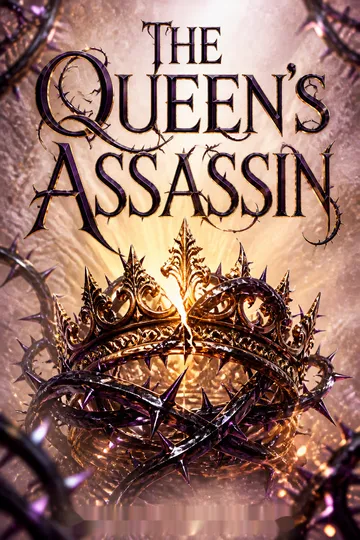
The Queen's Assassin Series
About the Author



Download PDF
Download EPUB
.epub digital book format is ideal for reading ebooks on phones, tablets, and e-readers.








