

Key Takeaways
Face life's full catastrophe by changing your relationship to what happens.
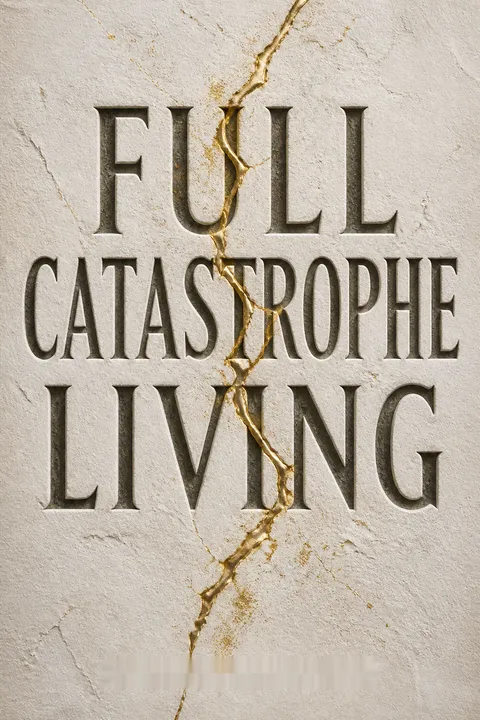
Catastrophe means life entire. The title borrows a phrase for the whole human package: illness, pain, loss, ordinary frustrations, and joy. Kabat-Zinn developed Mindfulness-Based Stress Reduction at a hospital clinic for people whose chronic conditions had not been resolved by medical treatment alone. The invitation was not to deny what hurt, but to discover inner resources while facing it.
The person is more than the diagnosis. One man entered after a heart attack, believing his life had lost meaning. His heart disease did not disappear, but eight weeks of practice helped him see beyond the identity of patient, reconnect with his family, and imagine a different future. Another participant's severe foot pain remained, yet felt more bearable. For both, change began in how they met their circumstances.
The distinction between changing circumstances and changing one's relationship to them is a useful form of psychological flexibility: painful facts can be acknowledged without letting them define every possible action. This is not a claim that attitude cures illness, nor a reason to tolerate injustice or inadequate care. Its strength is that it restores agency where control is limited, while leaving room for practical intervention where change is possible.
Train attention by returning to the breath, not by silencing thought.
Mindfulness is practiced awareness. Kabat-Zinn defines it as deliberately attending to present experience without immediately judging it. A simple exercise is to feel the breath for three minutes. When attention wanders, notice what captured it, then return to the sensations of breathing. The task is not to force a quiet mind or control the breath.
Wandering is the practice field. A study discussed in the book found that people's minds wandered nearly half the time, and that wandering was associated with lower happiness in the moment. The book treats each noticed distraction as a chance to practice returning, not as evidence of failure. Breath is useful because it is always available and brings attention back to bodily experience.
This method builds metacognitive distance: a person learns to notice a thought as an event rather than automatically treating it as a fact or command. That capacity is relevant to emotion regulation and decision-making, not just meditation. Still, attention is not always best aimed inward. During a task requiring vigilance, driving, for example, awareness should support the task rather than compete with it. The method is flexible precisely because the breath is an anchor, not a rule to ignore context.
Commit to practice before demanding proof that it is working.
Consistency comes before certainty. The clinic's eight-week course asks participants to practice about 45 minutes a day, six days a week. The work may feel boring, restless, or unproductive. Kabat-Zinn recommends a skeptical but open approach: try the practice seriously, observe what happens, and assess it from experience rather than from early expectations.
Effort without forcing results. The book emphasizes attitudes such as patience, acceptance, trust, and non-striving. They do not mean passivity. They mean noticing the present honestly instead of treating each session as a test that must produce calm or pain relief. The full schedule is demanding; the book also recognizes that even a few minutes of practice can be restorative when a longer session is not possible.
The structure resembles skills training: repeated practice creates familiarity that can be drawn on under pressure. This helps explain why a brief course can feel more useful when it includes daily work, rather than relying on discussion alone. The demanding schedule may also exclude people with caregiving duties, disability, or inflexible jobs. A sustainable adaptation is more valuable than an ideal schedule that cannot be maintained; commitment need not become another standard for self-criticism.
Use body awareness to reclaim capacity without overrunning your limits.
The body scan makes attention concrete. Lying down, a practitioner moves awareness gradually through the body, noticing sensations, tension, or even an absence of sensation. Breathing with each region is a way to stay present, not a claim that breath physically travels there. The practice can help people become more familiar with a body they may have experienced mainly as painful or unreliable.
Movement can be meditation. In mindful yoga, stretching and balancing are done slowly, with attention to breath and bodily limits. The book advises modifying or skipping postures and consulting a clinician when health conditions make that prudent. It also recounts a participant who experienced a rare trauma-related memory during a body scan; such experiences warrant qualified support, not an assumption that meditation is always soothing.
Attention to bodily sensation can improve interoception, the ability to detect internal states that guide decisions about rest, exertion, and care. Yet inward focus can be difficult for people with trauma, panic, or certain medical conditions. The book's emphasis on gentleness and modification matters: bodily awareness is not a contest in endurance. A trauma-informed approach preserves choice, including the option to stop, open the eyes, or seek a trained clinician.
Pause at the body's alarm before stress chooses your response.
Stress depends on the encounter. The book presents stress as an interaction between a situation and a person's appraisal of its demands and available resources. A threat can trigger a useful fight-or-flight response, but the same alarm can fire during social conflict or ordinary pressure. Repeated reactions, followed by denial, overwork, or other unhelpful coping, can compound strain.
A pause creates options. Notice early signs such as a clenched jaw, tense shoulders, or a racing heart. A breath or two can help identify fear, anger, or urgency before acting. One plant manager described month-end pressure that left him dizzy and sleepless. As he learned to notice his tension, he changed how he delegated work and used breathing to interrupt his familiar spiral.
The useful insight is not that perception creates every stressor, but that appraisal can shape the response to many stressors. That distinction aligns with stress research on coping and control. A pause can make room for a better choice, though it cannot make an unsafe situation safe. Sometimes the wisest response is to leave, seek help, or challenge the conditions causing harm, rather than simply regulate the body's alarm.
Separate pain's sensations from the suffering layered around them.
Pain has several dimensions. The book distinguishes bodily sensations from the thoughts and emotions attached to them. A person with chronic pain might feel a sharp sensation, then add predictions of permanent disability or despair. Observing these elements separately may reduce suffering even when the physical pain remains. This approach does not mean pain is imaginary, and MBSR is presented as a complement to medical care.
Some clinic results were substantial. In an early study described in the book, 72 percent of chronic-pain participants reported at least a 33 percent reduction on a pain-rating measure after the program; 61 percent reported at least a 50 percent reduction. These findings came from the clinic's program and should not be treated as guaranteed results. A participant with painful feet said his pain changed little, but he became more active and less ruled by it.
Modern pain science also separates sensory intensity from unpleasantness, attention, and threat appraisal. That helps make sense of why changing the relationship to pain can improve function without erasing the signal itself. The distinction has limits: chronic pain may require medication, rehabilitation, or further diagnosis, and severe pain should not be ignored. The strongest version of the book's claim is therefore modest but important: pain can be real, treatment can be necessary, and suffering may still be workable.
Hear another person's perspective without surrendering your own center.
Conflict has habitual scripts. People may submit, avoid contact, or push back when they feel threatened. In a clinic exercise inspired by aikido, participants first acted out these responses, then practiced stepping slightly aside, making contact, and turning with the other person's momentum. The exercise was a metaphor for communication, not a physical self-defense lesson.
Assertiveness begins with awareness. Before responding, notice what you feel and what the other person may want. An I-statement describes one's own experience without declaring the other person responsible for it. The aim is not automatic agreement. It is to listen, express needs clearly, and reduce needless escalation while keeping personal boundaries intact.
This approach connects mindfulness with interpersonal regulation: a calmer listener can reduce defensiveness and make mutual understanding more likely. But communication is not always reciprocal. A person facing coercion or abuse may need distance, outside support, or firm boundaries, not a more skillful conversation. The valuable principle is to choose among options deliberately. Sometimes that means entering dialogue; sometimes it means ending it.
Practice presence in ordinary moments instead of waiting for life to calm down.
Daily life is the practice ground. Eating a raisin slowly reveals how often attention races ahead of the experience. The same experiment can be applied to meals, walking, washing dishes, or preparing food: notice what the body is doing and where the mind has gone. The point is not to make chores sacred, but to experience them rather than rush through them unconsciously.
Time can be reclaimed. The book treats formal meditation as a protected pause from constant doing, especially in a culture of phones and nonstop messages. A woman who feared being alone chose not to call a friend after returning from a day of practice. She spent the evening by herself and discovered that the time felt peaceful rather than frightening.
This perspective makes mindfulness practical because it does not depend on a retreat, a perfect room, or an empty schedule. It also offers a counterweight to digital systems designed to capture attention. Still, not every mundane task needs elaborate monitoring. The goal is not maximal self-observation, which can become tiring, but more choice about when attention is scattered and when it is deliberately placed.
Measure healing by restored agency, not only by disappearing symptoms.
Health involves the whole person. The book challenges a view of medicine focused only on body parts and diagnoses. Thoughts, emotions, behavior, relationships, and environment interact with physical health. Its term participatory medicine means patients actively contributing to care alongside clinicians, not replacing medical treatment with meditation.
Healing is not identical to cure. A disease may remain while a person's confidence, activity, or sense of wholeness improves. The book cites a small psoriasis study in which participants who meditated during light treatment cleared about four times faster than the comparison group. The study had limitations, including differences in the audio and visualization conditions. It is suggestive evidence, not proof that meditation cures disease.
This is a humane corrective to treating people as diagnoses, and it fits the biopsychosocial view that health reflects biological, psychological, and social processes. The book is strongest when it presents mindfulness as a partner to clinical care. Its scientific examples require caution: small studies, self-reports, and preliminary brain findings do not establish broad medical effects. Better patient agency is valuable in its own right, even when symptom change is uncertain.
Carry awareness outward, from personal habits to shared conditions.
Stress extends beyond the individual. The book asks readers to notice how food systems, pollution, media, work, and social institutions shape daily experience and health. Air and water quality, for example, are not controlled by individual meditation. They depend on collective choices and public safeguards.
Attention can inform action. The practical invitation is to become better informed about the pressures entering one's life, then identify a meaningful response, such as changing a habit, supporting a local effort, or working with others. The book connects personal awareness with the larger systems people inhabit, while warning that constant exposure to alarming information can itself become a stressful diet.
The move from personal awareness to shared conditions prevents mindfulness from shrinking into private stress management. Environmental health, job design, and access to care shape what individuals can realistically change. A calm response cannot substitute for policy, organizing, or material support. At the same time, collective action benefits from attention that is less reactive and more capable of holding complexity. The bridge between inner practice and public responsibility is one of the book's most ambitious claims.
Analysis
Full Catastrophe Living is part clinical manual, part personal philosophy, and part account of a new medical practice finding its footing. Its organizing movement is from attention, to a changed relationship with bodily and emotional experience, to applications across pain, anxiety, work, relationships, food, and social life. The patient stories supply its narrative spine: a person arrives with a diagnosis and a sense of diminished possibility, then discovers that some dimensions of life remain open even when the condition does not disappear.
The book's most durable contribution is not the claim that meditation fixes disease. It is the proposal that patients can be active participants in care and that healing may include reduced fear, improved function, and renewed agency without cure. Its distinction between pain and suffering is useful when treated as a map of experience, not as a judgment that people could simply choose not to suffer. The same caution applies to claims about immunity, genes, and brain structure. The text describes promising findings, but many are preliminary, small, correlational, or drawn from selected populations. Anecdotes reveal possibility; they cannot establish typical outcomes.
The method also has an access problem. An intensive daily schedule asks for time, privacy, mobility, and sometimes a safe relationship with bodily attention. Those resources are unevenly distributed. In addition, mindfulness can be recruited by employers or institutions to make people more tolerant of harmful conditions. The book's own emphasis on relationality and world stress points toward a better interpretation: awareness should clarify both what can be accepted and what should be changed. Its strongest ethic is therefore participatory rather than individualistic. Practice helps people see more clearly, care for themselves, communicate, and act; it does not absolve clinicians, organizations, or governments of responsibility. The result is an unusually broad account of mindfulness, grounded in simple exercises but aimed at the whole ecology of a life.
Review Summary
Full Catastrophe Living receives mixed reviews, with many praising its comprehensive approach to mindfulness and stress reduction. Readers appreciate the practical exercises and scientific backing but criticize the book's length and repetitiveness. Some find it life-changing, while others struggle with its verbosity. The 8-week MBSR program is highly regarded, though some feel the book could benefit from better organization and editing. Overall, it's considered a valuable resource for those interested in mindfulness, despite its challenges.
People Also Read







Glossary
Full catastrophe
The whole of lived experienceThe book's phrase for the complete range of human life, including illness, pain, loss, conflict, uncertainty, ordinary inconvenience, love, and joy. Catastrophe is not limited to disaster. The term frames mindfulness as a way to meet life as it is, rather than waiting for every difficulty to disappear before living fully.
Mindfulness
Intentional present awarenessA trainable way of attending to present experience deliberately and without immediately judging it. Attention may rest on breathing, bodily sensations, thoughts, emotions, sounds, or everyday activity. The practice is not about suppressing thought or forcing relaxation. It involves noticing when attention wanders and returning to what is happening.
Mindfulness-Based Stress Reduction
An eight-week mindfulness programAn intensive program developed at the University of Massachusetts Medical Center in 1979. Participants practice meditation, body scanning, mindful yoga, and awareness in daily life, alongside group instruction. It is designed to help people work with stress, pain, and illness as a complement to medical treatment, not as a substitute.
Body scan meditation
A guided tour of bodily sensationA mindfulness practice, commonly done lying down, in which attention moves gradually through regions of the body. Practitioners notice whatever sensations are present, including numbness or no clear sensation, and may use breathing to sustain attention. The purpose is to cultivate awareness and familiarity with the body, not to force a particular sensation or outcome.
Mindfulness-mediated stress response
A conscious alternative to reactionThe book's term for meeting a stressful event with awareness rather than automatically repeating a habitual reaction. A person notices the situation, bodily alarm, thoughts, and feelings, creating room to choose an appropriate action. The response may involve speaking, problem-solving, seeking help, or doing nothing for the moment.
Allostatic load
Accumulated stress-related wearThe cumulative physiological burden associated with adapting to demands over time. Short-term stress responses can help an organism meet immediate challenges, but repeated or prolonged activation may contribute to wear on bodily systems. The book uses the concept to explain why chronic stress and inadequate recovery may undermine health.
Participatory medicine
Patients as active care partnersA model of health care in which patients contribute actively to decisions and to their own movement toward health, in collaboration with clinicians. It recognizes the patient's knowledge of personal experience and treats mindfulness practice as a possible complement to diagnosis and treatment, rather than making the patient a passive recipient of care.
Healing
Coming to terms with realityThe book distinguishes healing from curing. Healing means developing a more workable, accepting, and integrated relationship with present circumstances, including illness or disability. It may accompany symptom improvement, but it does not require a disease to vanish. The term emphasizes changes in perspective, agency, and well-being alongside appropriate medical treatment.
FAQ
What's Full Catastrophe Living about?
- Mindfulness and Stress Management: Full Catastrophe Living by Jon Kabat-Zinn focuses on using mindfulness to manage stress, pain, and illness. It introduces the Mindfulness-Based Stress Reduction (MBSR) program, which combines meditation and yoga practices.
- Holistic Approach: The book emphasizes a holistic approach to health, integrating mind and body awareness. It argues that well-being can be accessed through mindfulness practices.
- Personal Growth: Readers are encouraged to explore their inner experiences and cultivate self-awareness, leading to personal growth and healing.
Why should I read Full Catastrophe Living?
- Practical Techniques: The book provides practical techniques for reducing stress and enhancing well-being through mindfulness, which can be applied in daily life.
- Scientific Backing: Grounded in scientific research, it offers a credible resource for understanding the benefits of mindfulness, supported by various studies.
- Transformative Insights: Readers often find transformative insights about their relationship with stress, time, and their own bodies, encouraging a shift in perspective.
What are the key takeaways of Full Catastrophe Living?
- Mindfulness as a Tool: Mindfulness is presented as a powerful tool for managing stress and enhancing quality of life, allowing individuals to observe their thoughts and feelings without judgment.
- Non-Doing Concept: The concept of "non-doing" encourages stepping out of the constant rush of life to cultivate stillness and presence, transforming one’s relationship with time and tasks.
- Integration of Mind and Body: Emphasizes the importance of integrating mind and body awareness for holistic health, leading to improved emotional regulation and physical well-being.
What is the Mindfulness-Based Stress Reduction (MBSR) program?
- Structured Program: MBSR is an eight-week program designed to teach mindfulness meditation and yoga, including guided practices, group discussions, and home assignments.
- Focus on Awareness: It emphasizes awareness of the present moment, helping participants observe their thoughts and feelings without becoming overwhelmed.
- Research-Backed: Extensively researched, MBSR is shown to be effective in reducing symptoms of stress, anxiety, and chronic pain, widely used in clinical settings.
How does mindfulness help with stress and pain according to Full Catastrophe Living?
- Awareness of Experience: Mindfulness allows individuals to become aware of their stress and pain without judgment, reducing emotional reactivity.
- Cultivating Acceptance: Encourages acceptance of one’s current state, alleviating feelings of frustration and helplessness, leading to a more balanced emotional state.
- Improved Coping Strategies: Enhances coping strategies by promoting a sense of agency and control over responses to stressors, leading to healthier outcomes.
What is the body scan meditation in Full Catastrophe Living?
- Systematic Awareness: The body scan involves lying down and systematically bringing awareness to different parts of the body, promoting relaxation and body awareness.
- Breath Integration: Practitioners are encouraged to breathe into each area of focus, enhancing the experience and promoting healing.
- Emotional Insights: It can reveal emotional blockages or traumas stored in the body, helping individuals uncover deeper feelings and experiences.
What are the attitudes essential for mindfulness practice in Full Catastrophe Living?
- Non-Judging: Cultivating a non-judging attitude allows individuals to observe experiences without labeling them as good or bad, fostering acceptance.
- Patience: Mindfulness requires patience, as change unfolds in its own time, fostering calm and reducing frustration.
- Beginner’s Mind: Encourages approaching each experience with curiosity and openness, preventing stagnation and seeing richness in ordinary moments.
How can I incorporate mindfulness into my daily life according to Full Catastrophe Living?
- Mindful Breathing: Focus on your breath for a few moments each day to ground yourself in the present moment.
- Mindful Walking: Engage in walking meditation by bringing awareness to the act of walking, integrating mindfulness into your routine.
- Daily Activities: Practice mindfulness during everyday tasks, such as eating or washing dishes, by paying full attention to the sensations involved.
What are some common challenges in practicing mindfulness as described in Full Catastrophe Living?
- Restlessness and Distraction: Many experience restlessness or distraction initially; the key is to gently bring attention back to the present moment.
- Physical Discomfort: Mindfulness can bring awareness to discomfort or pain, encouraging observation and acceptance rather than avoidance.
- Expectations and Goals: Specific expectations can lead to frustration; it’s important to approach mindfulness with an open mind and let go of specific outcomes.
What is the significance of "non-doing" in Full Catastrophe Living?
- Transforming Relationship with Time: "Non-doing" involves stepping away from busyness to cultivate stillness, transforming one’s relationship with time.
- Inner Stillness: Fosters inner stillness and calm, enhancing overall well-being by encouraging presence in the moment.
- Foundation for Mindfulness: Serves as a foundation for mindfulness practice, emphasizing the importance of being present over constant productivity.
What role does self-compassion play in Full Catastrophe Living?
- Foundation of Mindfulness: Self-compassion is integral, allowing individuals to treat themselves with kindness during difficult times, fostering resilience.
- Reducing Self-Judgment: Cultivating self-compassion reduces negative self-talk and judgment, leading to a more positive self-image.
- Encouraging Acceptance: Promotes acceptance of one’s situation, fostering peace and understanding, crucial for moving forward and coping with challenges.
What are the best quotes from Full Catastrophe Living and what do they mean?
- “You don’t have to like it; you just have to do it.”: Emphasizes commitment to mindfulness practice, suggesting consistent practice is key to benefits.
- “Healing is a transformation of view rather than a cure.”: Suggests healing involves a shift in perspective, recognizing wholeness and interconnectedness.
- “Time past and time future allow but a little consciousness.”: Highlights the importance of being present, suggesting true awareness is found in the here and now.
About the Author

Download PDF
Download EPUB
.epub digital book format is ideal for reading ebooks on phones, tablets, and e-readers.








