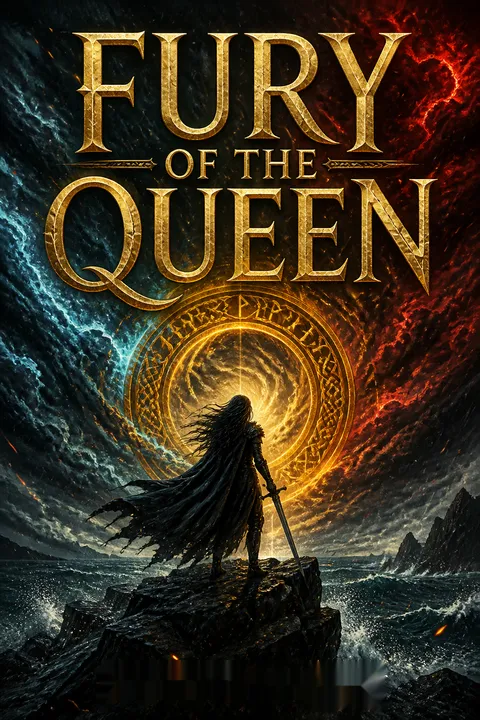


Plot Summary
Prologue
In the rain outside Andala, Gudrum Killi demands justice from King Ranuf Furyck for his only son, killed by Ranuf’s daughter, Jael. Ranuf refuses to punish her, insisting that the boy’s death was retribution for taking something from Jael.
Gudrum leaves humiliated and grieving, but the refusal hardens into a promise: he will return and make Jael pay. The wound that begins as a father’s private grief becomes a political danger, carried forward through every new crown Gudrum reaches for.
Gudrum’s grievance begins with real grief, but Ranuf’s refusal gives it a political shape. Gudrum interprets the king’s partiality toward his daughter as proof that some lives count more than others, then turns that judgment into a license for revenge. The scene also establishes Jael as a force before she appears in the main narrative: her actions have already altered Gudrum’s life. His vow makes private injury the story’s fuse, while the cold rain and the king’s refusal frame justice as something power can define, deny, or seize.
Winter Locks Slussfall
Four months after victory at Tromsund, Reinar Vilander shelters his family and displaced Alekkans in Slussfall, but the frozen sea, dwindling stores, and endless winter make the fortress a cage. King Hector Berras holds Stornas with Gudrum Killi, now Lord of Ottby, as his enforcer.
Reinar’s brother Sigurd is absent, and the dreamers believe Alari has taken Ulfinnur, the God of Winter, preventing spring. Reinar wants to act, yet his father Stellan warns that their army is too small and their allies unreachable.
Alys de Sant, her children, and her puppy Puddle share the overcrowded refuge; Reinar’s feelings for Alys deepen even as his wife Elin’s jealousy strains their marriage. Slussfall’s people need more than shelter. They need spring, food, and a king who can move.
The fortress is both protection and pressure cooker: it shields the refugees from Gudrum while exposing them to hunger, cold, and political paralysis. Reinar’s uncertainty is not simply a flaw in courage. He is trying to distinguish a legitimate claim to rule from the wish to act decisively when people depend on him. His attraction to Alys complicates that responsibility, while Elin’s jealousy shows how public power enters private rooms. The missing season makes political stagnation physical. The inhabitants cannot move, and neither can the future they are trying to secure.
A Crown From Ashes
At Stornas, Hector trusts his restored dreamer, Gysa, whose beauty and new voice conceal an old grievance. She reveals that Hector ordered her village burned, killing her husband and children, then uses a poisoned drink and supernatural strength to force him into his own hearth.
Gysa presents Hector’s crown to Gudrum, who has been away consolidating control in the south. He accepts it, surprised by the sudden elevation but exhilarated by the authority it brings.
Gysa offers to help him defeat Reinar, while Gudrum names Jael Furyck among the enemies he wants to punish. In Slussfall, Raf’s dream confirms that Gysa wants more power, not an exit. Hector’s death changes the war: Gudrum is no longer an ambitious lord serving a king. He is the king.
Gysa’s vengeance is both intimate and political. She kills Hector for a specific atrocity, but her private reckoning also rearranges the kingdom by placing Gudrum on the throne. Her revenge does not restore her lost family; instead, it gives her a new source of agency, one she uses through another ruler. Gudrum’s ascent reveals how quickly ambition can convert an unexpected opening into a claim of destiny. The crown is not earned through public consent or descent. It is passed through violence, and the people facing its consequences must now decide whether legitimacy can be reclaimed by force.
The God Bait
In Gallabrok, Sigurd admits that Alari has taken Ulfinnur to keep the sea frozen and isolate Reinar. Though Thenor forbids the gods from fighting human wars, Sigurd offers himself as bait so Omani can track Alari if she captures him.
Reinar, desperate for news, presses Raf to find her old friend Sigurd, giving her his family arm ring to guide the dream. Raf struggles with the belief that Sigurd no longer wants her, while Alari continues intruding into her dreams. Sigurd appears outside Slussfall, warning Reinar not to open the gates until the dreamers protect the fort.
Alari immediately seizes him. Thenor, Valera, and Tikas follow Omani’s mark to Alari’s island, fight her death collectors, and rescue Ulfinnur. Restored to Gallabrok, Ulfinnur releases winter, and spring begins to thaw Alekka.
Sigurd’s decision turns divine restraint into a personal cost. He accepts danger because his brother’s people are suffering, but the plan exposes the limits of his new status: he is powerful enough to become bait, not free enough to choose his own battlefield. Raf’s failure to reach him is also emotional, not merely magical. She assumes his silence means rejection, while Sigurd’s capture proves that distance may be imposed by forces neither of them controls. Spring’s return resolves the immediate environmental crisis, but it does not settle the deeper conflict between human need and the gods’ insistence on noninterference.
Lotta Sees the Field
Reinar finally takes Lotta riding after she recognizes that he keeps hiding behind Slussfall’s walls. Her plain challenge helps him see that waiting for the gods, dreamers, or allies will not make him a king. But Raf soon dreams of Gudrum crowned amid bodies, with Reinar dead on the field. Ragnahild confirms that the future is not fixed, though she cannot promise a way around it.
Reinar chooses to leave Slussfall and draw Gudrum toward Salagat rather than let him besiege the fortress. Eddeth and Raf accompany the army. In the forest, Alys and Lotta are surrounded by hungry outlaws; Eddeth enchants the attackers with symbols on her staff, giving Alys time to fetch help. The army’s road south is now a deliberate wager, not a retreat.
Lotta’s insight matters because it comes from someone with little authority and no interest in courtly language. Her words puncture Reinar’s habit of treating destiny as permission to wait. Raf’s vision then makes action frightening rather than triumphant: moving forward may lead directly to his death. The outlaws show what the prolonged winter has done beyond the walls, turning desperation into danger for the very people Reinar hopes to protect. Eddeth’s improvised spell offers a different kind of leadership, one based on knowledge and timing rather than rank. The group advances because it can no longer confuse safety with stillness.
Alys Rides After Fate
As Reinar’s force heads south, Helgi Eivin confides that the woman he planned to marry, Sahra, helped men attack him and seize his farm. Alys recognizes his violent memories in a vision and urges him to build a life beyond the betrayal.
At Slussfall, someone lures Puddle into a sack and throws him into a quarry. Lotta foresees what happened, and Jonas climbs down through the rain to retrieve the nearly lifeless puppy. Ragnahild then warns Alys that Reinar will die without her, urging her to leave with Jonas, Stina, and the children.
Alys follows the army, carrying the brooch she once thought belonged to her grandmother. She reaches Salagat before the decisive battle, bringing her children and Puddle into a danger she can no longer watch from afar.
These seemingly separate events converge on the question of whether care requires movement. Helgi’s history shows how betrayal can make a person mistake self-destruction for a fresh start; Alys urges him toward a future not defined by Sahra. Puddle’s kidnapping makes danger intimate for Alys’s children, while Lotta’s vision turns their fear into useful knowledge. Ragnahild’s warning finally compels Alys to leave the refuge she built. Her decision is not simply romantic loyalty to Reinar. It is a recognition that the protective roles she has taken on, mother, dreamer, and witness, now demand that she enter the conflict herself.
Gord’s Field Burns
Reinar reaches Salagat and prepares for Gudrum’s larger army. Before the battle, fjaladen, dead children transformed into Vasa’s creatures, attack the camp with giant forest cats. Eddeth uses magic taught by Valera to send them back, though many soldiers are injured.
On Gord’s Field, Reinar draws Gudrum into a trap of shield walls and smoke, but Gudrum’s allies attack the hill and the flanks. Reinar faces Gudrum directly. Gysa has secretly enchanted Gudrum’s sword, and its touch drops Reinar into a deadly curse.
Raf pushes through the fighting to warn him, then throws herself between Gudrum and the fallen lord. Gudrum kills Raf. Sigurd arrives, drives Gudrum’s forces back with walls of fire, and gives Reinar’s army a chance to retreat, but Reinar remains near death.
The battle tests more than military skill. Reinar’s plan initially works because he studies the field, but Gysa’s hidden enchantment bypasses the logic of terrain and numbers. Raf’s intervention is a decisive act of loyalty, yet it cannot prevent her death or immediately save Reinar. Sigurd’s fire changes the battle’s outcome, but his intervention also reopens the conflict between divine power and human agency. The warriors survive because several kinds of courage converge: tactical patience, dreamer knowledge, and a brother’s refusal to abandon the field. Victory remains incomplete because Reinar’s body has become the war’s next battleground.
Mirella’s Hidden Lesson
While Reinar lies cursed, Alys learns that the brooch she carried came from her mother, Mirella. A dream returns her to the night her grandmother Eida died, revealing that Mirella had once hesitated to take Alys away and had left her with a neighbor to protect her.
Thenor explains that Mirella learned magic from Alari and that her knowledge may help save Reinar. Alys reaches Mirella through the brooch and bargains for the method to break the curse. Mirella shows her the symbol Alari taught her, one designed to bind rather than heal, and gives Alys a counter-symbol.
Alys draws it in her mind and places it against Reinar’s wound. The curse lifts. Reinar wakes, though he is too weak to lead the army, and Alys’s love for him remains entangled with his marriage to Elin.
Alys’s family history becomes practical knowledge rather than a detour into the past. She sees that Mirella was once capable of hesitation and care, without mistaking that earlier self for the dangerous woman she later became. Their bargain is not reconciliation; it is a temporary alliance around Reinar’s survival. The counter-symbol also reverses the usual direction of dreamer power. Alys does not defeat magic by becoming more violent than Gysa, but by understanding how the original spell was constructed. The cure restores Reinar’s life without resolving Alys’s emotional conflict, making survival a beginning rather than an answer.
The Islanders Arrive Bound
Eadmund Skalleson answers Reinar’s request for aid with a fleet from Oss, but Jael stays behind, unable to dream clearly after the Vale of the Gods. Gysa manipulates the Islanders’ messenger and binds their loyalty to Gudrum, who tells Eadmund that he is Ake’s chosen successor. Though Bram distrusts the story, Eadmund accepts Gudrum’s hospitality and delays questioning him.
Gudrum then reveals the deception, takes Eadmund, Thorgils, Bram, and Beorn prisoner, and plans to use their soldiers against Reinar. He also declares his intention to kill Jael in revenge for his son. Jael’s dreams return with that threat, and she leaves Oss with Fyn and a local guide, Milla, determined to reach Gudrum’s camp before he can carry out his plan.
The Islanders’ capture demonstrates how political allegiance can be manufactured through information control. Gudrum does not win their aid through shared purpose; Gysa makes them act on a false account of who rules Alekka. Eadmund’s trust is not stupidity so much as the cost of arriving without local knowledge, a weakness Bram recognizes too late to prevent the trap. Jael’s return to dreaming converts private memory into warning. Her decision to travel is driven by more than loyalty to her husband: Gudrum has made her past grievance a present threat, and she knows that ignoring it will leave others to pay.
Fire in the False Sky
Gudrum attacks Salagat under cover of darkness, sending the bound Islanders against Reinar’s sleeping camp. Eddeth and Raf use dreamer magic to make the invaders believe the earth is splitting and the sky is filled with fire. The illusion sends Gudrum’s army running back through the forest, but it leaves the Vilanders’ camp exposed to further magic.
Jael finds Eddeth in a dream and learns that Reinar’s dreamers need her help to free the Islanders. She gives Eddeth a symbol stone that can shield its bearer from powerful dreamers, then plans to kill Gysa and Gudrum while Fyn frees the prisoners. Eddeth carries the symbol back to Reinar. The allies now have a fragile plan, but Gysa remains powerful and can still turn the camp against itself.
The false catastrophe is a strategic answer to a numerical disadvantage: Eddeth and Raf make Gudrum’s army experience fear as if it were terrain. Yet the trick does not destroy his forces or permanently break Gysa’s hold. Its success depends on a narrow window before the enemy regains control. Jael’s meeting with Eddeth links the distant Oss plot to the Alekkan campaign, giving the dreamers both a concrete tool and a timetable. The symbol stone matters because it does not overpower Gysa; it creates a pocket in which people can act without being seen or manipulated.
Jael Enters the Camp
Jael arrives at Gudrum’s camp with Fyn and Milla, carrying symbol stones meant to protect the Islanders from Gysa’s influence. She approaches Gudrum openly, keeping him occupied while Fyn slips through the camp and frees Eadmund, Thorgils, Bram, and Beorn.
When Gudrum discovers the escape, he takes Jael prisoner and threatens her, still focused on making her suffer for Ronal’s death. Jael resists and uses the moment to distract him, while Eadmund and the others reach the horses and ride toward Reinar’s army.
Gudrum’s obsession with Jael keeps his attention away from the larger danger: the Vilanders are advancing, and the Islanders may soon recover their own will. Jael’s plan has bought time, but she is now isolated with the man who wants her dead.
Jael uses herself as a decoy, not because she underestimates Gudrum but because she understands what holds his attention. His need to turn old injury into a spectacle makes him strategically vulnerable. Fyn’s quieter rescue work complements her confrontation: one of them occupies the enemy, the other restores the prisoners’ ability to choose. The scene also marks a shift in Jael’s relationship to her own history. She does not pretend Gudrum’s grievance is harmless, but she refuses to let his version of the past dictate how she behaves in the present. Her control is tactical, fragile, and hard-won.
Gudrum’s Last Duel
As the armies converge, Jael’s captors leave her alone with Gudrum. He tries to assault her, but she breaks his nose, uses a hidden knife in her boot, and fights with her hands still fettered. When he draws his sword, Jael kicks the brazier into him; the tent catches fire, and she stabs him before the flames consume the structure.
At the same time, Gysa sends skeplukka, wolf-like creatures, into the Vilanders’ camp. Alys protects Reinar with a wall of light, while Eddeth holds the dreamers’ circle and Raf uses Gysa’s hair in a counter-spell. Ragnahild helps Alys spread a symbol across the camp, destroying the creatures. Jael kills Gysa, ending the binding spell, and the Islanders turn against Gudrum’s remaining allies.
The climax resolves several kinds of captivity at once. Jael escapes the physical and psychological threat Gudrum poses by acting with the skills she has cultivated, even while bound. In the other camp, Alys, Eddeth, Raf, and Ragnahild combine different forms of knowledge to counter the creatures and the dreamer’s magic. No single hero can secure the victory alone. Gudrum’s death removes the political usurper, while Gysa’s death breaks the spell that made the Islanders instruments of his rule. The cost is severe, however: magic can defend a community and still leave bodies, grief, and obligations that victory cannot undo.
A King Without Sigurd
With Gudrum and Gysa dead, Stellan gathers the survivors and gives the surrendered Ennorians mercy, while Reinar prepares to rule from Stornas. The victory is shadowed by Ludo’s grave wounds; Stina stays beside him, and Lotta’s vision offers her hope of a future in which he lives.
Reinar learns that Elin is carrying his child. Though he loves Alys, she refuses to continue their hidden relationship and chooses to build a life with her children and Jonas at Burholm. Helgi’s friendship offers her a possible future beyond old betrayals, while Berger remains committed to protecting Solveigh and her unborn child.
Jael and Eadmund leave with their surviving Islanders. Reinar gains the throne, but he also loses the ease of imagining kingship as a prize: his rule begins amid grief, damaged loyalties, and people who need rebuilding.
The resolution refuses to treat political victory as emotional repair. Reinar can claim the throne, but he cannot keep Alys, restore every casualty, or make the people around him untouched by war. Alys’s refusal is an act of self-definition: she will not remain a hidden alternative to Elin, even when love makes that choice painful. Lotta’s hopeful vision gives Stina a reason to imagine life beyond the immediate crisis, but it does not erase Ludo’s injury. Reinar’s kingship therefore begins not with triumphal certainty but with the ethical burden of tending to what victory has broken.
Gallabrok Turns Red
In Gallabrok, Sigurd argues with Thenor over the gods’ refusal to intervene in human affairs. He wants to leave and help his family, while Thenor insists that Reinar must earn his crown without divine interference. Valera, newly responsible for guiding dreamers, also clashes with her father after helping the humans.
Thenor returns from the Northern Reach with urgent knowledge, but before he can explain it, Ulfinnur stabs Valera and then attacks Thenor. The God of Winter reveals that the being who came back from Alari’s prison is only a shell under Alari’s control.
Alari and Vasa appear, and the dying Thenor urges Sigurd toward the North. Sigurd escapes with Tulia as Alari declares her victory. The human war is over, but the divine conflict has opened inside the family that was meant to guard Alekka.
The abrupt turn from human victory to divine catastrophe changes the meaning of the gods’ restraint. Thenor’s rules were presented as a safeguard against repeating Eutresia’s mistakes, yet the attack exposes how vulnerable that order has become to an enemy willing to infiltrate its own ranks. Sigurd’s anger at being kept from his family now intersects with an immediate need to survive and act. Valera’s death also makes her earlier intervention costly rather than merely defiant. The story ends this arc with the guardians compromised, leaving human political stability and divine protection newly uncertain.
Epilogue
Far in the Northern Reach, Mirella and Tarl Brava discover a frozen lake and use dreamer magic to see beneath its surface. There lies the Sun Torc, which Mirella identifies as the key to healing the Rift and claiming Alekka’s throne.
Tarl, who has spent months crossing ice and danger with her, now sees a path toward the wife and child he wants to reclaim. Mirella leads him away from the lake to find Ulrick and begin the next stage of their plan. Gudrum is gone, but the struggle over Alekka has not ended.
The epilogue refuses the comfort of a clean ending. Reinar’s accession settles the immediate contest for the crown, but Mirella and Tarl uncover an older source of power that could destabilize the settlement. The Sun Torc is presented as an object that joins personal desire to political ambition: Tarl wants his family, while Mirella sees a route to reshape the kingdom. Their discovery also echoes the novel’s central danger, that magical knowledge rarely remains private or neutral. The lake holds a future conflict beneath its ice, just as the apparent peace conceals the next struggle.
Analysis
The novel treats political legitimacy as a relationship that must be continually earned, not a property conferred by a crown. Gudrum obtains power through a chain of expedient choices: Gysa removes Hector, Gudrum accepts the throne, and a spell turns the Islanders’ allegiance into an apparent endorsement. Reinar, by contrast, must build authority while hungry, wounded, uncertain, and surrounded by people whose lives his decisions can cost. The contrast makes the book’s central question less about who is destined to rule than about what a ruler owes those who cannot safely refuse him.
Magic sharpens that ethical problem because it can protect, conceal, coerce, or injure. A dream is useful only when someone interprets it responsibly; a symbol can preserve a community or make an army act against its own interests. Raf’s and Eddeth’s abilities matter not because they replace military action, but because they expand what action can mean. Their spells create openings that warriors must use, while Jael’s combat skill cannot settle the larger crisis without the dreamers’ work. Power is therefore distributed across bodies, memories, relationships, and knowledge rather than concentrated in one chosen hero.
The intimate plots resist the idea that political victory repairs private harm. Alys saves Reinar yet refuses a relationship that would make her complicit in his marriage. Stina risks intimacy after trauma, and Lotta’s visions force adults to recognize a child without handing her adult burdens. Jael must return to the dreams she once rejected, while Reinar must accept a kingship that cannot imitate Ake’s. The conclusion complicates even that hard-won settlement: the divine order fails from within, and the epilogue reveals a further instrument of power. The story’s durable insight is that victory is not closure. It is a new obligation to protect the people left alive.
Review Summary
Characters
Alys de Sant
Dreamer and reluctant leaderAlys is a skilled dreamer, a mother to Magnus and Lotta, and a survivor of years spent under the control of her former husband, Arnon. She reads other people’s feelings readily, but her insight does not make her immune to doubt: she often sees danger more clearly than she trusts her own ability to meet it. Her loyalty to Reinar grows alongside her attraction to him, complicating her effort to act with integrity toward his wife. Alys is protective without being naturally martial, yet she can fight when her family or friends are threatened. Her deepest struggle is to stop measuring herself through the cruelty others have inflicted on her and to choose a life that she can respect.
Reinar Vilander
Heir under pressureReinar is the chosen heir to Alekka’s throne, the son of Stellan, and the brother of Sigurd. He wants to protect the people sheltering in Slussfall, but the scale of that responsibility makes him question whether he is capable of ruling. His first instinct is often to seek a sign from dreamers or gods, even as he learns that leadership requires decisions no vision can make for him. Reinar’s marriage to Elin and his feelings for Alys pull him between loyalty, desire, and guilt. He is a capable strategist who must grow into authority without becoming the kind of ruler who treats people as pieces on a map.
Raf
Wary dreamerRaf is a young dreamer shaped by years in the company of Gudrum, whose protection was mixed with exploitation. Quiet and distrustful, she expects to be unwanted and often keeps valuable knowledge to herself. Her feelings for Sigurd deepen her fear of rejection, while her ability to enter dreams makes her essential to Reinar’s cause. Raf’s reserve is not indifference; it is a defense learned in a world where powerful people decided what she was worth. She begins to accept care from Eddeth and the others, though trust remains difficult. Her growing skill with symbols gives her a way to act without surrendering her judgment to another person.
Sigurd Vilander
God raised as a brotherSigurd is Reinar’s younger brother, raised among the Vilanders before learning that Thenor is his divine father. He is caught between two identities that both feel real: a human family he loves and a divine role he never asked to receive. His bond with Raf is tender but unsettled, while his history with the warrior Tulia carries affection and regret. Sigurd’s desire to help his family repeatedly collides with Thenor’s rule that gods must not decide human wars. He is brave, impulsive, and uncomfortable with the comfort of Gallabrok, where safety risks becoming another form of confinement. His central need is to choose who he is rather than merely inherit a place.
Jael Furyck
Warrior queen of OssJael is a formidable warrior and queen of Oss, daughter of the late King Ranuf, and wife to Eadmund. She is known for her directness, self-command in battle, and reluctance to expose private pain. The loss of her family and the violence of her past have made her wary of dependence, even within marriage. After the Vale of the Gods, she distances herself from her dreams, preferring the certainty of training and practical action. Her instincts remain sharp, but accepting responsibility as a queen asks her to face both the casualties of leadership and the memories she would rather outrun. Jael’s fierce independence is also a source of loyalty: she risks herself when people she loves are threatened.
Gudrum Killi
A vengeful claimantGudrum is a Brekkan warrior who rises from hardship through military skill, resilience, and a fierce appetite for advancement. The death of his son at Jael’s hands becomes the wound around which he organizes his ambitions. He is charismatic when it serves him, impatient with cautious leaders, and convinced that survival proves he is entitled to more power. Gudrum understands battle but is less comfortable with the obligations of rule, which require restraint and attention to people beyond himself. His history with Raf shows that he can offer shelter while still treating another person as a tool. He is dangerous because real grievance and self-serving ambition have become difficult to separate in his own mind.
Gysa
Restored dreamerGysa is a dreamer restored by Alari after years of living with severe burns and physical disfigurement. She serves as a strategist to whoever holds power, but her expertise does not make her submissive or emotionally simple. Gysa is attentive to how rulers use people, and she wants autonomy after a life in which others shaped her choices. Her history has made her suspicious of weakness and intensely conscious of power’s ability to protect or destroy. She is ambitious, observant, and capable of genuine attachment, though her need for security can lead her to align herself with dangerous people. Her skill with symbols gives her influence that conventional political roles rarely grant women.
Eddeth Nagel
Unruly healer and dreamerEddeth is a healer and dreamer whose rambling speech, odd habits, and frequent mishaps conceal formidable knowledge. She uses herbs, symbols, and hard-won instinct to help people others underestimate. Though she can be comic and distractible, Eddeth has courage when danger arrives and a generous devotion to those in her care, especially Raf. The death of Aldo has made her more cautious about attachment, but she still forms bonds readily. Eddeth’s development is not a transformation from foolishness to competence; she was competent all along. Her growth lies in recognizing that her unusual mind and methods are not embarrassing obstacles, but necessary tools in a world where conventional military strength cannot solve every problem.
Stellan Vilander
Father and battle commanderStellan is Reinar’s father, a veteran commander, and a friend to the late King Ake. He supports his son’s claim while knowing that no parent can fight a king’s battles for him. Stellan is practical, experienced, and inclined to conceal fear behind dry humor or direct advice. His affection for his family is complicated by a long, unhappy marriage to Gerda and by the losses that have accumulated around him. He often steadies Reinar by making the immediate task concrete: assess the ground, care for the army, keep moving. Stellan’s experience gives him authority, but he must learn when to stand beside his son and when to let Reinar lead.
Eadmund Skalleson
King and Jael’s husbandEadmund is Jael’s husband and the King of Oss, responsible for an island realm whose ships and warriors can alter Alekka’s balance of power. He is warm, capable, and more diplomatic than Jael, though he sometimes mistakes a persuasive host for a trustworthy ally. His loyalty to his marriage is tested by distance and by the danger surrounding Jael, but he also has to lead without relying on her judgment. Eadmund values friendship and keeps close ties with Thorgils and Bram. His steady temperament can temper Jael’s volatility, yet it can also make him slow to recognize when caution has become credulity. He wants to be a capable king and an attentive husband at once.
Elin Vilander
Reinar’s estranged wifeElin is Reinar’s wife and a member of the Vilander household. She wants affection, security, and a meaningful place beside the man she has loved for years. Isolation, grief, and jealousy make her increasingly preoccupied with Alys and with the possibility of losing Reinar. She is not merely an obstacle to the romance: her fears arise within a marriage strained by war, displacement, and Reinar’s emotional withdrawal. Elin’s concern with clothing and public presentation reflects her wish to inhabit the future she imagines for herself. Her relationship with Reinar exposes how political upheaval can intensify private insecurity rather than erase it.
Ludo Moller
Sigurd’s loyal friendLudo is Sigurd’s closest friend and a dependable warrior among the Vilanders’ allies. He grieves Sigurd’s absence while trying to support Reinar’s campaign, and his feelings for Stina gradually become harder to conceal. His guilt over failing to protect her in the past makes him hesitant, but he eventually learns that silence cannot repair what happened. Ludo is brave without being showy and often acts as a bridge between people who struggle to say what they need. His loyalty is practical: he guards the vulnerable, follows through, and stays when others are tempted to leave.
Stina Arnborg
Alys’s steadfast friendStina is Alys’s close friend, a capable caretaker who helps raise the children and maintain a home under constant strain. Her past with Torvig has left her cautious about intimacy and doubtful that someone might choose her freely. She worries that age and trauma have closed off the future she wants. Alys encourages her to speak honestly with Ludo, but Stina must decide for herself whether she is ready to risk new affection. Her steadiness is a form of labor that often goes unnoticed: she feeds, mends, comforts, and keeps people functioning when the larger world is falling apart.
Thenor
Father of the godsThenor is the powerful father of Sigurd and Valera, and the guardian who insists that gods must not dictate human rule. He values order and believes limits on divine intervention protect both worlds from catastrophic overreach. His care for his children is real, but it is expressed through rules and restraint more readily than emotional openness. Thenor sees himself as responsible for the balance of a vast system, which makes individual suffering difficult for him to prioritize. Sigurd’s challenge forces him to confront the distance between principled noninterference and the responsibilities of a parent whose family is directly endangered.
Valera
Goddess of love and dreamersValera is Thenor’s daughter and the Goddess of Love and Fertility, later entrusted with guiding dreamers. She is warm, perceptive, and more emotionally open than her father. Valera recognizes the cost of isolation in both Raf and Sigurd and tries to offer care without treating them as possessions. Her wish to help humans conflicts with Thenor’s strict boundaries on divine action. She is neither naïve nor indifferent to consequence; her interventions come from an understanding that restraint can also leave people abandoned. Valera’s compassion gives her influence, but it also makes her vulnerable to grief and disagreement within her own family.
Mirella Vettel
Alys’s dangerous motherMirella is Alys’s mother, a powerful dreamer whose history links the Vettels to Alari’s magic. As a young woman, she was caught between her birth family and the violent household she entered through marriage. Alys’s memories reveal a more complicated past than the cruel mother she encountered later, without excusing the harm Mirella caused. Mirella values control and information, often using knowledge as leverage rather than offering trust freely. Her relationship with Alys remains strained, but both women can recognize a shared enemy when their interests briefly align. Mirella’s ambition reaches beyond family repair toward the political future of Alekka.
Tarl Brava
A rival claimantTarl is a powerful northern lord with a history of violence toward Solveigh and a claim that remains a threat to Alekka’s stability. His ambition is bound up with family control and political destiny, and he expects others to yield to his authority. Mirella’s loyalty and dreamer knowledge make him more dangerous than his title alone suggests. Tarl is not present in most of the central battles, but the people around him continue to anticipate his return. His pursuit of Solveigh and their child makes the future of the kingdom inseparable from the private safety of a woman who has already survived too much.
Helgi Eivin
A survivor seeking a startHelgi is Berger’s cousin, a restless warrior who leaves his farm after Sahra and her accomplices try to kill him and take the property. His impulsive manner can make him seem aggressive, but beneath it is grief, loneliness, and a desire to escape the life he had built around a false promise. Helgi’s bear spirit gives him unusual strength in battle, though he must decide when to unleash it. He is candid about his pain and gradually becomes more thoughtful about what kind of life he wants. His interest in Alys is complicated by her loyalty to Reinar and her need to define herself.
Lotta de Sant
A child who sees aheadLotta is Alys’s younger child, imaginative, strong-willed, and more perceptive than adults often assume. Her dreams and intuitions help reveal dangers involving Reinar and Puddle, though she still wants ordinary things: play, attention, and time with her brother. Being treated as a child frustrates her, especially when Magnus grows more independent. Lotta’s visions are not a substitute for adult responsibility; they are information that the adults must learn to hear without burdening her with their decisions. Her bond with Puddle gives her a source of comfort amid war and displacement.
Magnus de Sant
A boy growing into dangerMagnus is Alys’s older child, eager to train as a warrior and increasingly drawn to older boys and the work of soldiers. He wants to protect his mother after witnessing violence, but his desire to grow up quickly worries Alys. Magnus can be impatient with Lotta while remaining deeply protective of her when danger becomes immediate. The campaign exposes him to responsibilities no child should have to shoulder, including defending those he loves during the attack on the camp. He is learning how courage differs from bravado, and how being older does not mean he must face every threat alone.
Lief Gundersen
Slussfall’s responsible lordLief commands Slussfall and stays behind to protect its refugees while Reinar’s force marches south. He is practical and reserved, committed to his pregnant wife Falla and their household. His leadership is often expressed through maintenance rather than glory: food, shelter, safety, and the work that keeps a crowded fort alive.
Tulia Saari
Sigurd’s warrior confidanteTulia is a formidable warrior and Sigurd’s former lover, now living among the dead in Gallabrok. She values candor and independence, and she refuses to let Sigurd use her affection as a refuge from difficult truths. Her advice pushes him to confront what he wants rather than hide behind divine uncertainty. Tulia’s longing for the freedoms of human life makes her understand Sigurd’s discomfort with his new role.
Jonas Bergstrom
Alys’s stubborn grandfatherJonas is Alys’s grandfather, an experienced fighter whose blunt affection helps steady the family. He regrets the years estranged from Alys and is determined to remain present for her children. Even when injured, he refuses to imagine himself useless. His bond with his lifelong friend Vik offers a model of loyalty built through shared danger, humor, and practical care.
Puddle
The family’s small survivorPuddle is Alys’s small, energetic puppy, beloved by Lotta and Magnus. His appetite and habit of wandering repeatedly create trouble, but the children’s fierce attachment to him reveals how much they need ordinary sources of comfort. He remains a lively presence amid the campaign’s cold and danger.
Plot Devices
Dreaming and visions
Warnings from the unseenDreamers receive glimpses of possible events, enter one another’s visions, and sometimes use objects such as hair or heirlooms to find a person. Their knowledge is incomplete and can be manipulated by more powerful dreamers. Raf’s vision of Reinar’s death warns the Vilanders, while Eddeth’s vision of the Islanders alerts them to Gudrum’s growing army. Jael’s returning dreams send her toward Eadmund. Dreams create opportunities to act, not guarantees of what will happen, so characters must choose whether to trust, interpret, or resist what they see.
Symbols and spellcraft
Magic made actionableDreamers draw or imagine symbols to protect people, influence minds, heal, curse, or disrupt an enemy’s perception. The symbols may be made in ink, carved into wood, carried on stones, or formed through focused thought. Knowledge passes between generations and dreamers, making memory a practical resource in battle. Alys learns a counter-symbol through Mirella, while Raf and Eddeth coordinate protective and deceptive spells. The system rewards preparation, but no symbol works automatically; fear, distraction, and an opponent’s greater power can disrupt it.
The frozen sea
A kingdom cut offAlari’s capture of Ulfinnur prevents the seasonal thaw, leaving the sea impassable and limiting Alekka’s access to ships, allies, trade, and food. The prolonged winter crowds refugees into Slussfall and makes political delay physically dangerous. Sigurd’s attempt to draw Alari out helps Thenor’s party locate Ulfinnur, whose return allows spring to begin. The thaw changes the military balance by reopening sea routes, but it does not resolve the land war or erase the scarcity and displacement the winter caused.
Gudrum’s enchanted sword
A hidden curse in combatGysa secretly places Alari’s symbols on Gudrum’s sword, so a wound from its blade carries a curse rather than an ordinary injury. Reinar is struck during the battle at Gord’s Field and becomes dangerously weak. Alys reaches Mirella through the brooch and learns a counter-symbol that can break the curse. The sword turns a tactical confrontation into a crisis of dreamer knowledge and family memory. Its magic also reveals the risk of accepting supernatural help without knowing what has been placed in a weapon.
Binding the Islanders
An army turned against itselfGysa uses dreamer magic to make the Islanders believe Gudrum is the legitimate king they have come to support. The false allegiance allows Gudrum to use Eadmund’s rescue fleet against Reinar and to imprison Eadmund and his companions. Jael carries protective symbol stones into the camp, while Raf’s later work helps break the dreamer’s control. The device makes loyalty itself a battlefield: the Islanders remain capable warriors, but their choices are being redirected until the spell is removed.
The Lords of Alekka Series

About the Author
Other books by A.E. Rayne




Download PDF
Download EPUB
.epub digital book format is ideal for reading ebooks on phones, tablets, and e-readers.








