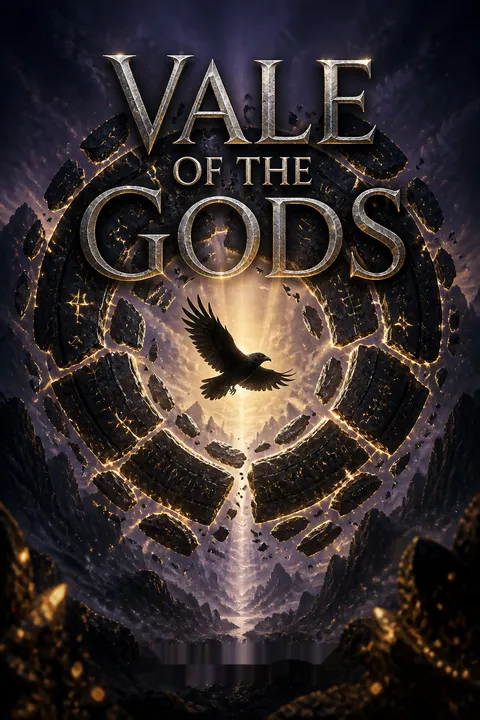


Plot Summary
Prologue
Jael wakes from a nightmare that returns her to the forest where Ronal Killi once attacked her. In the dream, an unknown voice warns that she will not come back from the battle ahead.
Aleksander reminds her that she will lead a queen’s army, not face the danger alone, but Jael remains afraid that armies cannot protect them from Draguta. The old terror of being cornered has become a present fear for everyone she must lead.
The nightmare makes Jael’s private history part of the coming war. The threat echoes a childhood assault, but its force now comes from the possibility of losing an army and a husband, not merely her own life. Aleksander’s reassurance identifies Jael’s central conflict: she must accept help without believing that numbers can control what Draguta has become. The dream also frames the saga’s danger as both intimate and political. The enemy can reach into memory, while the queen must make decisions that determine who survives.
Andala Counts Its Dead
After the barsk attack, Gisila lies wounded, Runa is dead, and Jael’s niece Amma has been carried off with the infant Sigmund. The raid has left Andala grieving and exposed, so Jael prepares to take her army to Hest and confront Draguta. Her own recent loss, the baby she had with Eadmund, makes Fyn’s grief for his mother impossible to dismiss; she tells him about her loss so he can speak of his.
Jael trains with Karsten and checks the catapults, but the army needs experienced leaders to stay behind. Gant chooses to protect the fort, while Thorgils agrees to go. Edela also warns that Eadmund and Jaeger are marching toward Helsabor, opening a second front.
Jael’s command begins not with confidence but with accumulated bereavement. The attack forces her to choose between defending the people in Andala and pursuing the people taken from it. Her decision is therefore a form of triage: she cannot protect everyone by staying, yet leaving makes those remaining more vulnerable. Her conversation with Fyn matters because she offers grief as recognition rather than instruction. Meanwhile, Gant’s decision to remain shows that leadership is distributed. Jael goes forward only because others accept the dangerous work of holding home in her absence.
Two Kings Sent West
Draguta sends Eadmund and Jaeger to seize Helsabor and its queen, Briggit Halvardar, whose Followers threaten Draguta’s control. Eadmund argues for protecting the soldiers, but Jaeger resents his advice and trusts Draguta’s Book of Darkness to win the campaign. Meanwhile, Amma arrives in Hest with Sigmund and his wet nurse, Tanja.
Draguta intends to make Amma Jaeger’s obedient queen and preserve the child she believes is his heir. Meena, Varna’s frightened granddaughter, is ordered to help manage Amma and Draguta’s preparations. Across the sea, Morana escapes Hest and reaches Angard, offering Briggit her knowledge of Draguta and the Book of Darkness in exchange for an alliance against her former protégé.
The plot divides power among people who each believe they can control it. Draguta treats kingdoms, prisoners, and even her bound kings as pieces in a campaign. Jaeger mistakes access to the Book of Darkness for sovereignty, while Eadmund’s practical concern for his soldiers exposes the difference between command and responsibility. Amma and Meena enter Hest under coercion, yet their fears are not identical: Amma wants to return to her family, while Meena has learned to survive by anticipating Draguta’s moods. Morana’s alliance with Briggit extends the conflict beyond a simple pursuit of Jael.
Angard's Wall Explodes
Briggit expects her Followers’ protective circle to hold against the Hestian army, but Draguta begins the assault with two enormous dragons summoned from the Book of Darkness. Their fire devastates Angard and kills many defenders, while Briggit’s dreamers bring the beasts down. Draguta then uses the Ring of Taron to break a section of the city wall, allowing Jaeger’s soldiers to enter.
The destruction crushes defenders and leaves the survivors choking in dust and smoke. Jaeger captures Briggit, but Eadmund stops him from abusing her and insists that she be delivered alive. Draguta takes the city, its gold, its ships, and the surviving Followers, while the scale of the ring’s power becomes clear.
Angard’s defenses fail because they assume magic will meet magic on familiar terms. Briggit’s circle can resist soldiers and dragons, but Draguta changes the physical conditions of the battle by collapsing the wall itself. The Ring of Taron is frightening not only because it destroys stone, but because it lets Draguta make an apparently secure boundary irrelevant. Eadmund’s intervention against Jaeger establishes a different kind of resistance: he cannot yet oppose Draguta’s command, but he still refuses to accept cruelty as ordinary military conduct. His limits and his remaining moral judgment coexist uneasily.
A Shield in the Catacombs
After Jaeger sails back to Hest with the captives and treasure, Eadmund remains in Angard to secure the city. His dead mother, Eskild, leads him through dreams to Morana Gallas, who is hiding with the volka Dragmall and his companion, Else. In the darkness of the catacombs, Morana attacks Eadmund, but Dragmall gives him his sword and Eskild’s presence helps him find the strength to strike back.
Eadmund kills Morana and grieves for the family she helped destroy. Dragmall then reveals that a shield made for Eadmund by the gods is hidden in Angard. He and Else search for it, eventually finding the Shield of Esk in Briggit’s chambers and setting out to deliver it to Eadmund.
Morana’s death resolves a personal history of coercion, but it does not restore what she took from Eadmund. His grief after killing her makes clear that revenge can end a threat without repairing the person who survives it. The shield’s revelation gives his inheritance a physical form, connecting his fate to Jael’s sword and to the gods’ larger design. Yet Eadmund does not immediately accept that destiny. His reluctance to oppose Draguta shows how deeply captivity can distort agency: knowing what one ought to do is not the same as being free to do it.
The Ring Calls Meena
Jael gathers an army from Brekka, Oss, and the Slave Islands, while Gant stays behind to defend Andala. Before leaving, Jael and Edela dream of Draguta using the ring to destroy Angard’s wall, and Jael understands that the same weapon could devastate the fort or the approaching army.
Berard gives Jael a token carrying Meena’s hair, allowing her to reach the young woman in a dream. Jael asks Meena to take the ring and destroy it, promising that she and Berard will come for her. Meena is terrified of betraying Draguta, but the message gives her a reason to resist. Jael departs with Ayla and healer Astrid, leaving Edela, Eydis, and Gant to protect Andala.
Meena’s assignment turns the story’s most vulnerable character into a possible agent of change, but Jael’s appeal cannot erase the power imbalance in which Meena lives. Her fear is rational: Draguta has manipulated her thoughts, exploited her dependence, and can punish any perceived disloyalty. Jael’s promise of rescue gives Meena a future to imagine, while Berard’s personal connection makes the request more than a strategic order. The ring thus functions as both a weapon and a test of whether someone trained to obey can act from her own judgment.
Whisps at the Fort
Once Jael’s army is away, Draguta turns harmless whisps into armed killers and sends them through Andala. The creatures slaughter livestock, wound defenders, and kill Nicolene Dragos before the residents understand the attack. Edela draws a protective circle using an ancient symbol Marcus found in a rescued Tuuran scroll, and Ayla helps her find the chant through a dream.
The whisps cannot cross the circle and fall when Edela completes the spell. The victory comes at a high cost: Marcus is gravely wounded and later dies, while the dead animals threaten the fort’s food supply. Edela responds by planning a larger circle around the settlement, knowing that ordinary walls cannot keep Draguta out.
The whisp attack makes the domestic space of Andala newly unsafe. A threat that can pass through cracks and keyholes defeats the assumption that strong walls are sufficient protection. Edela’s circle offers a response based on knowledge recovered from the past, but its safety depends on human effort and concentration rather than stone. The loss of livestock turns violence into a slow pressure on survival, while Marcus’s death confirms that protection is never complete. The survivors must build a community around shared labor, even as the limits of that labor remain painfully visible.
Vallsborg Joins the March
Jael reaches Vallsborg, where Lady Beryth gives her army shelter and provisions. Raymon Vandaal arrives with Iskavallan soldiers, grieving his murdered mother and uncertain of his ability to lead a kingdom. Jael helps him face the campaign as a king who must protect his people, not merely seek revenge.
She also warns him that Getta’s place in the Furyck family is not what he believes, though he postpones confronting his wife until after the battle. Jael fights Beryth’s daughter Marissa in the hall, winning her respect and recruiting her for the march. The alliance grows, but the gathering of warriors also makes the coming losses more personal: families say goodbye before the army heads south.
Vallsborg is a necessary pause, but not an escape from the campaign. Its hospitality gives the army a place to eat and regroup, while its people make the cost of marching impossible to abstract. Raymon’s grief resembles Jael’s, but his inexperience leaves him unsure how to convert pain into leadership. Jael guides him by distinguishing care for a kingdom from vengeance against an individual. Her contest with Marissa likewise transforms a potentially humiliating spectacle into a practical alliance. The army’s strength grows through relationships, not simply through numbers.
Fog Turns Friends Against Friends
Draguta binds Veiga, the goddess of weather, and uses her power to send a poisonous fog over Jael’s marching army. Within it, soldiers mistake friends for attackers: Jael fights Aleksander and Ivaar, Thorgils turns on Torstan, and Bruno kills the wagon driver while believing he is defending himself.
Fyr’s bites and pecks break some fighters out of the illusion, while Ayla and Edela work together to drive the fog away. Torstan dies from his wounds, as do many others, and the survivors must burn the bodies and leave the exposed field. Thorgils is left with the guilt of killing his closest friend. Jael orders the army onward, carrying the dead and the knowledge that Draguta can turn fear into a weapon.
The fog attacks the army’s ability to trust its own senses. It does not merely conceal an enemy; it creates enemies from familiar faces, making each fighter’s capacity for self-defense a source of danger. Thorgils’ grief is especially severe because his skill and readiness to fight become the means by which he kills Torstan. The intervention of Fyr and the dreamers limits the slaughter but cannot undo it. Jael must lead people who are now afraid not only of Draguta, but of what they themselves might do when reality becomes uncertain.
Snow Yields to Darroc
Draguta traps the army in a sudden blizzard, burying the men, wagons, and catapults outside their protective circles. Jael and Ayla realize that they need help from Darroc, a reclusive god of the seasons. Jael enters a trance and finds him among the owls in his forest, but he initially refuses to help humans.
She challenges his indifference by reminding him that the creatures in his care are also at risk. Darroc relents and melts the snow, allowing the army to resume its march. The thaw brings relief, but it does not make the road safe. Jael has learned that a god may be persuaded by a specific responsibility, while Draguta remains capable of controlling the weather through Veiga.
Darroc’s refusal challenges the assumption that divine power automatically entails moral responsibility. Jael cannot command him, so she has to make him see that the danger reaches beyond human combatants to the creatures he protects. Her bluntness succeeds where flattery or invocation might not. The episode also reframes the gods as beings with limits, loyalties, and conflicts rather than as dependable instruments. Darroc’s intervention opens the road, but it leaves the larger danger intact: Draguta can still weaponize a goddess and impose conditions on the entire landscape.
Fire Across the Forest
As the army approaches the vale, Draguta sends fire through the forest beside its route and toward Andala. Jael refuses to abandon the catapults, so Thorgils and the Islanders haul them by rope while Jael and Aleksander lead the horses through the advancing flames. In the fort, Edela keeps the residents inside her protective circle as smoke fills the air.
Jael calls on Darroc again, and he answers by bringing snow that smothers the fire before it reaches Andala. The delay costs the army time and equipment, but Jael saves the remaining catapults and keeps the road open. Draguta’s attack also confirms that the fort and the marching army remain linked targets, no matter how far apart they are.
The wildfire forces Jael to choose between speed and the tools she believes she will need against Draguta. She chooses to preserve the catapults, accepting danger for herself and the soldiers hauling them. At the same time, her call to Darroc links battlefield action to the survival of Andala’s civilians. The rescue is not a simple victory: the fire has already damaged the landscape, and the army loses time. Jael’s leadership becomes a practice of refusing false choices, though every choice still carries a cost.
Eydis Cuts the Binding
Dragmall brings the Shield of Esk to Jael just as her army reaches the Vale of the Gods. Before the battle begins, Eydis enters Eadmund’s soul with Edela’s help and cuts the rope binding him to Draguta. Jael then fights Eadmund long enough to restrain him, and he wakes free, taking up the shield.
When Jaeger attacks Karsten, Jael shoots an arrow through Jaeger’s mouth, killing him and freeing Karsten from the threat that has haunted his family. The armies clash, but Draguta collapses the mountainsides, trapping many soldiers and burying the catapults. Jael and Eadmund survive inside her circle, while the rest of the battle fractures around them.
This turning point converts several separate inheritances into action: the shield arrives, Eydis’s bond with her brother breaks Draguta’s spell, and Jael uses the tactical restraint she practiced to keep Eadmund alive. Her killing of Jaeger is an act of protection as much as revenge, ending a threat to both Karsten’s family and the campaign. Yet Draguta’s collapse of the mountains shows that these victories do not make the army secure. The scene’s tension comes from the difference between freeing one person and freeing an entire community.
The Ring Leaves Draguta
Draguta sends a where-worm into the arena, then uses the ring to unleash flaming birds and attack Aleksander. Jael and Eadmund battle the worm while Meena, using a spell Evaine gave her, knocks Draguta off balance and dislodges the Ring of Taron. Fyr snatches it from the ground. Jael’s allies kill the worm with sea-fire, but Draguta’s lightning strikes Aleksander as he shields Jael, killing him.
Jael is devastated, yet she turns back toward Draguta. With the ring gone, Draguta reaches for the Book of Darkness and tries to finish the fight. Jael drives the broken end of Toothpick into Draguta’s chest, believing she has ended the threat, but the wound releases Raemus from within her.
The battle’s apparent solution arrives through cooperation across unequal roles. Meena’s nerve, Fyr’s speed, Jael’s sword, and the army’s sea-fire each affect a different part of Draguta’s control. But success cannot prevent Aleksander’s death, which turns victory into an immediate emotional crisis for Jael. Her decision to return to the fight despite grief reflects the cost of leadership, not an absence of sorrow. Draguta’s apparent defeat then proves incomplete: the enemy was not only a powerful woman but also the ancient force bound to her.
Eydis Becomes the Light
Raemus emerges from Draguta’s body and fills the vale with a suffocating darkness, killing the Followers and leaving the armies unable to breathe. Eydis understands from Dara’s vision that she is the light named in the prophecy. While Raemus turns his attention to Daala, Eydis reaches the Book of Darkness and touches its pages.
Light erupts through her and the book, burning the volume and driving Raemus into the blaze. Daala pushes him into the column of light, ending his return. The darkness lifts, and the survivors breathe again, but Eydis vanishes with the light. Aleksander is also dead, and Jael must face the victory without either of the people whose love helped sustain her.
Eydis’s final act gives the prophecy a human rather than purely martial fulfillment. The sword and shield have brought Jael and Eadmund to the decisive moment, but the book is destroyed by the person who can see through the darkness. Eydis’s gift is not a weapon she possesses over others; it is a capacity to understand what the rest cannot see and to act when they are immobilized. The cost is devastating. The world is freed, but Jael’s victory is inseparable from the deaths of Eydis and Aleksander.
A Home to Return To
With Draguta and Raemus gone and the Book of Darkness destroyed, the survivors begin the long return to Andala. The army’s losses are severe, and Jael cannot bring Aleksander back. Eadmund apologizes for the harm he caused while bound to Draguta, and Jael accepts that she still wants a life with him.
In Hest, Axl reunites with Amma and claims her unborn child as his own; Meena returns with Karsten, who has survived Jaeger’s attack, and she finds a home with Berard. Bayla comes back with Hanna and the Dragos children, while Thorgils, Fyn, and Bram are reunited. Jael reaches Andala to find Gant, Gisila, Edela, and Biddy alive. Their home is damaged, but the threat that drove them apart has ended.
The resolution refuses to treat survival as a clean restoration. The characters return to one another, but they carry physical injuries, bereavement, and altered family relationships. Jael’s reunion with Eadmund is a choice made after coercion has been removed, not a return to the marriage as it stood before. Amma’s child is welcomed into a family defined by care rather than biological certainty, while Meena’s return gives her a place beyond servitude. The damaged fort makes freedom concrete: they can begin rebuilding, but they cannot pretend that the cost was small.
Epilogue
Three years later, Jael and Eadmund spar in the Pit while their friends watch from the railings. Eadmund catches Jael off guard and knocks her into the snow, prompting their children to rush over and check on her.
The scene closes the story not with another prophecy or battle, but with a family able to tease, train, and gather together. Jael is still a warrior, and Eadmund is still capable of surprising her.
The epilogue gives the survivors a future measured in ordinary time. The Pit returns Jael and Eadmund to a familiar practice, but their contest now includes children, friends, and the ease of a life no longer organized around Draguta’s threat. Eadmund’s unexpected victory reverses their usual physical dynamic without diminishing Jael. The ending does not erase the dead or suggest that grief has vanished. Instead, it shows that intimacy and play can coexist with memory, and that the world they fought to preserve is worth inhabiting.
Analysis
Vale of the Gods makes the struggle over power concrete through bodies, homes, and the labor of keeping people alive. Draguta does not conquer by force alone: she turns weather, creatures, and even familiar perceptions into instruments of control. Against that reach, the resistance relies on knowledge shared across generations, on dreamers who interpret rather than dominate, and on ordinary acts of care. Edela’s circles, Jael’s leadership, Meena’s hesitation, and Eydis’s vision each offer different forms of agency.
The novel is especially interested in coercion and responsibility. Eadmund’s binding complicates blame without erasing harm, while Jael’s choice to fight beside him requires her to distinguish the person she loves from the weapon Draguta has made of him. Meena’s path similarly shows that obedience can be a survival strategy before it becomes a choice she can challenge. Neither character is freed by a simple declaration of will; their freedom depends on relationships that make action possible.
The costs are deliberately not reversible. Aleksander’s death and Eydis’s disappearance remain losses even after the Book of Darkness is destroyed and Raemus is defeated. Victory therefore means more than defeating an antagonist, but less than restoring the world to its former shape. The survivors must build a future around absences. The three-year epilogue offers a modest answer: family, sparring, and humor return, not as proof that grief is gone, but as evidence that life continues after the struggle to protect it.
Review Summary
People Also Read
Characters
Jael Furyck
The iron-willed queenJael is a warrior and queen whose instinct is to meet danger directly, often before she has allowed herself to feel its cost. Her training under her father made her disciplined, but she is not untouched by fear, grief, or doubt. She leads by making hard decisions in public and carrying much of the pain privately. Her bond with Eadmund is central to her emotional life, while Aleksander remains a deeply trusted companion. Jael’s challenge is not simply to defeat an enemy, but to accept help without surrendering responsibility for those who follow her.
Eadmund Skalleson
The captive kingEadmund is Jael’s husband and a king of Oss, caught between the person he wants to be and the commands forced upon him. He has a practical concern for soldiers and a capacity for tenderness, though guilt, grief, and magical coercion have repeatedly distorted his judgment. His relationship with Jael is built on affection and shared hardship, while his history with Evaine and his responsibilities as Sigmund’s father complicate his loyalties. Eadmund’s struggle is to recover agency without pretending that the harm done while he lacked it can be ignored.
Draguta Teros
The book-bound sorceressDraguta is a calculating dreamer whose ambition grows through her command of the Book of Darkness. She treats people as instruments, measuring their value by how well they serve her designs. Her control of Jaeger and Eadmund reflects a need to make loyalty absolute, while her pursuit of Jael is driven by a deeper rivalry tied to family, power, and the gods. Draguta’s confidence makes her dangerous, but it also reveals a weakness: she assumes that everyone can be reduced to a role in her plans.
Eydis Skalleson
The seeing sisterEydis is Eadmund’s younger sister, blind but gifted with a powerful form of sight through dreams. She is sensitive to other people’s fear and pain, sometimes to the point of being overwhelmed by them. Her family’s habit of protecting her can leave her feeling underestimated, yet she is determined to contribute rather than remain sheltered. Eydis is closely connected to Edela, who helps her understand her gift, and to Jael and Eadmund, whose safety matters deeply to her.
Meena Gallas
The reluctant dreamerMeena is a nervous young dreamer raised among powerful and demanding relatives. Years of being mocked and manipulated have taught her to doubt her own thoughts, making her especially vulnerable to Draguta’s influence. Yet her caution also makes her observant, and her sympathy for people trapped in Hest gradually competes with her instinct to survive by obeying. Her relationships with Berard, Amma, and Jael give her reasons to imagine a life beyond service and fear.
Aleksander Lehr
Jael's steadfast companionAleksander is a skilled fighter and Jael’s closest companion from childhood. He understands her habits, can challenge her when she withdraws, and remains loyal without demanding that she choose him over Eadmund. His history with Hanna creates a quieter emotional possibility, but his attachment to Jael remains powerful. Aleksander’s steady support is practical as well as affectionate: he helps Jael plan, fight, and remember that command need not mean isolation.
Axl Furyck
The young Brekkan kingAxl is Jael’s younger brother and the king of Brekka. He is still growing into the authority his position demands, and grief or fear can pull his attention toward the person he most wants to protect. His bond with Amma reveals a tenderness that contrasts with the violence of the political world around them. Axl learns from Jael’s example, but he must also make decisions of his own rather than rely on her to carry every burden.
Jaeger Dragos
The volatile kingJaeger rules Hest and craves strength, status, and the approval of Draguta. His confidence often masks insecurity, and his impulsiveness makes him dangerous to those around him. The Book of Darkness intensifies his worst instincts, while his family history leaves him haunted by what he has done and by the brothers who oppose him. Jaeger’s relationships are shaped by possession and domination rather than trust, especially in his treatment of women and rivals.
Amma Furyck
The captive queenAmma is a young woman caught between two royal families and forced into a role she never chose. Her quietness can be mistaken for passivity, but she continues to search for ways to endure and return to the people she loves. Her relationships with Axl, Jael, and Meena give her a fragile network of trust inside Hest. Amma’s concern for her child and her own safety makes her a reminder that political bargains are lived in the body.
Edela Saeveld
The keeper of old knowledgeEdela is Jael’s grandmother, a seasoned dreamer and healer who draws on the Book of Aurea to protect her family and community. She carries a formidable sense of duty, sometimes pushing herself beyond her physical limits because others depend on her judgment. Edela is both a teacher and a participant: she guides Eydis, advises Jael, and must learn to trust the younger dreamers when her own strength is stretched. Her compassion is disciplined by a clear-eyed understanding of danger.
Gant Olborn
The steadfast defenderGant is a veteran warrior who has long served the Furyck family and helped raise Jael and Axl. He combines practical authority with deep affection, often acting as a stabilizing parent figure. His relationship with Gisila grows from years of shared history and regret, while his decision-making is shaped by the desire to protect those who cannot fight. Gant’s loyalty is not blind; he knows that staying behind can be as dangerous as riding into battle.
Thorgils Svanter
The loyal IslanderThorgils is an experienced Islander, Jael’s trusted friend, and one of the people who keeps the army’s spirits from collapsing. His humor and appetite make him seem carefree, but he is deeply attached to his friends and family. He shares a long bond with Torstan and a loving relationship with Isaura, and his loyalty to Jael is expressed through action more than speeches. Thorgils knows that courage does not prevent grief, but he keeps moving through both.
Ayla Adea
The searching dreamerAyla is a Tuuran dreamer and healer whose knowledge of herbs and visions makes her essential to Jael’s expedition. She is perceptive but burdened by the secrets and injuries within her marriage to Bruno. Her connection to the natural world helps her read threats that soldiers cannot see, while her willingness to travel exposes her to risks she once might have avoided. Ayla’s strength lies in acting despite uncertainty, not in claiming certainty she does not possess.
Briggit Halvardar
The ambitious Follower queenBriggit rules Helsabor and commands a powerful community of Followers. She is vain, politically sharp, and accustomed to being treated as the center of any room. Her devotion to Raemus gives her ambition a religious purpose, while her confidence in her own power makes her underestimate how quickly control can change hands. Briggit treats loyalty as both a resource and a tool, and her relationship with Draguta is shaped by competing visions of who should command the Followers.
Karsten Dragos
The scarred challengerKarsten is one of Jaeger’s brothers, a fierce fighter whose damaged eye and strained family history shape how others see him. He is driven by a desire to protect the remaining members of his family and to confront the brother who has harmed them. His bluntness often hides grief and uncertainty, particularly when he considers whether he will return to his children. Karsten’s alliance with Jael shows that respect can grow even between people who began as enemies.
Morana Gallas
The embittered dreamerMorana is a powerful dreamer and Evaine’s mother, shaped by a lifetime of devotion to the Followers and resentment toward those who have thwarted her. She raised Draguta and believed they shared a purpose, making their conflict personal as well as political. Morana’s intelligence and knowledge of the Book of Darkness make her valuable, but her loyalty to Raemus narrows her choices. She sees revenge as a route to restoring the order she believes was stolen from her.
Dragmall Birger
The hidden volkaDragmall is a volka, historian, and dreamer whose knowledge links the present crisis to generations of hidden lore. He has spent much of his life concealing his own gifts, especially because male dreamers are not readily accepted. His care for Else and his duty to protect the Shield of Esk pull him into a dangerous journey. Dragmall is cautious and often weary, but when the moment demands it, he acts on knowledge that others have forgotten.
Raymon Vandaal
The grieving young kingRaymon rules Iskavall and is Jael’s newly discovered half-brother. Young and burdened by his mother’s death, he is uncertain of his experience but wants to become a king worthy of his people. His marriage to Getta is politically and emotionally complicated, and he must decide what trust means after learning how much has been hidden from him. Raymon’s willingness to join Jael’s campaign shows both courage and a desire to belong to a family he barely knew.
Evaine Gallas
The desperate former loverEvaine is Morana’s daughter and the mother of Eadmund’s son, Sigmund. She is vain, ambitious, and accustomed to using beauty and enchantment to secure affection. Her desire for Eadmund is tangled with a deeper fear that life without him has no purpose. Evaine’s relationship with Meena is marked by contempt, while her connection to Draguta is shaped by self-preservation and hope of regaining influence.
Sybill Ethburg
The guarded motherSybill is Ontine’s protective mother, a Tuuran woman who has kept her daughter’s dreamer abilities private. She appears nervous and eager to help, but her caution makes her difficult for Edela to read. Sybill’s central motivation is protecting her remaining family after earlier losses. Her relationship with Ontine is close and watchful, shaped by affection and the fear that the world will take the girl from her.
Ontine Ethburg
The untrained dreamerOntine is a young dreamer who has received no formal training and is still learning to distinguish visions from fear and imagination. She is serious, observant, and willing to help despite the danger of being drawn into a conflict she barely understands. Her loss of a sweetheart has made her cautious, while her growing connection with Fyn gives her a tentative path toward companionship. Edela’s guidance helps Ontine begin to trust what she sees.
Bruno Adea
A healer's wounded husbandBruno is Ayla’s husband, a skilled archer and former temple figure whose past choices have damaged their trust. He wants to protect Ayla and repair their relationship, but guilt and anger can pull him toward old injuries. Bruno’s physical limitations do not erase his determination to help the expedition. His bond with Ayla is strained, yet both continue to choose honesty and shared responsibility over easy avoidance.
Hanna Boelens
The newly found daughterHanna is Marcus’s daughter, found after growing up apart from him. Her long illness has left her physically vulnerable, but she is observant and generous toward people others overlook, including Berard. She wants connection without being treated as fragile, and her feelings for Aleksander are complicated by his history with Jael. Hanna’s need for family shapes her choices as she tries to decide where she belongs.
Bayla Dragos
The formidable matriarchBayla is the mother of the Dragos brothers and a forceful matriarch accustomed to a royal household. Displacement strips away some of her status, but she remains determined to secure a safe home for her family. Her relationship with Ulf grows through shared danger and practical care, while her concern for her children and grandchildren often comes out as sharp demands. Bayla is proud, resourceful, and more vulnerable than she likes to show.
Fyn Gallas
The grieving young fighterFyn is Runa’s son and a young fighter learning to carry grief while still serving Jael’s cause. His quietness can make him seem withdrawn, but he is loyal to the people who have become his family. His developing connection with Ontine gives him a reason to look beyond loss, while his growing relationship with Bram offers a sense of belonging he has long lacked.
Plot Devices
The Book of Darkness
A source of corrupting powerThe Book of Darkness contains spells that let Draguta summon creatures, manipulate weather, bind people, and attack at a distance. Its influence also changes those who depend on it, especially Jaeger, whose strength and judgment fluctuate with access to the book. The Followers seek it as a means to restore Raemus, while Draguta uses it to secure her own rule. Its danger lies in combining practical power with emotional dependence: characters do not merely fear losing the book, they are tempted to let it decide what they can do.
The Book of Aurea
A counterweight of protective knowledgeEdela’s Book of Aurea preserves symbols, chants, and protective practices that help the defenders respond to threats the army cannot meet with weapons alone. Edela uses it to repel the whisps and strengthen the circle around Andala, while Ayla and the other dreamers rely on its knowledge to recognize and resist magical attacks. The book is not a guaranteed answer to every crisis. Its usefulness depends on interpretation, memory, and the stamina of the people who apply it, which makes learning and cooperation as important as possession.
The Ring of Taron
A weapon against distance and wallsThe Ring of Taron lets Draguta affect targets beyond her reach, including the stone wall around Angard and the weather threatening Jael’s army. Its compact size disguises its capacity to change entire battlefields. Because Draguta can use it while watching through her seeing circles, the ring turns distance into an unreliable protection. Meena’s attempts to steal it, and Fyr’s eventual seizure of it, make the ring a contested object whose control can shift the balance of a battle.
Toothpick and the Shield of Esk
A paired defense against darknessJael’s sword, Toothpick, and the Shield of Esk are linked to an old prophecy and to the gods’ attempt to prepare humans for the threat of Raemus. Jael relies on the sword as both weapon and familiar anchor, while the shield is meant for Eadmund and is carried across dangerous country by Dragmall. Their importance is not simply that they are powerful objects. They represent a partnership in which neither warrior is meant to stand alone, and their use depends on Jael and Eadmund acting together.
Dreamer Circles
Temporary borders against magicDreamer circles use symbols, blood, chants, and focused will to shelter people from magical attacks. Edela’s circle protects Andala, while Jael and Ayla create smaller circles during the march. Their protection is real but conditional: a circle must be carefully formed and held, and breaking it can expose everyone inside. Draguta’s attacks repeatedly test these limits, forcing the characters to decide who can be protected and who must remain outside. The circles make safety a collective practice rather than a permanent feature of walls or armor.
Furyck Saga Series


About the Author
Other books by A.E. Rayne



Download PDF
Download EPUB
.epub digital book format is ideal for reading ebooks on phones, tablets, and e-readers.








