

Plot Summary
A Curse Finds Fire
With fewer than two weeks before the full moon, Saida must find her friend Elmerah and kill the demon emperor Egrin, or risk surrendering the divine circlets to save what remains of Faerune. In the Makali camp, she fears the location curse Brosod has taught her, remembering how a previous curse nearly killed her.
Malon stays beside her as she places the Crown of Cindra on her head and enters the dream realm. There, Egrin appears and reminds her of their bargain. He also plants a doubt: Malon may have helped the Dreilore invade Faerune. Saida refuses to stop searching. A distant spark, which she recognizes as Elmerah, draws her across the dark stones.
The opening makes Saida’s leadership a choice made under pressure, not a title she comfortably inhabits. She accepts a dangerous ritual because loyalty to Elmerah and responsibility for Faerune have become inseparable. Egrin’s appearance turns the dream journey into a second kind of test: he cannot stop her physically, so he tries to fracture her trust in Malon. The circlet’s whispers offer comfort and unease at once, suggesting that power may guide Saida without making her certain what guidance means. Her decision to keep moving establishes her pattern: fear remains present, but it no longer gets the final vote.
Fog Over the Akkeri
On Elmerah’s ship, an unnatural fog hides an Akkeri vessel closing in. Isara’s lightning reveals its dark sails, while Zirin’s winds drive their own ship forward. Rissine strikes at the pursuers, but her lightning glances harmlessly off their hull, protected by Dreilore metal. Cannon fire and arrows follow.
Still shaken by the uncontrolled fire that killed the Dreilore, Elmerah cannot call her magic when the crew needs it; an arrow pierces her shoulder before the ship sinks. Alluin gets her onto floating wreckage and paddles toward an island. Isara reaches shore separately with her brother Daemon, whom she freed from the brig. Saida sees the ship go down through the curse, then wakes with no way to know who survived.
Elmerah’s paralysis is not simple cowardice. Her recent victory over the Dreilore has taught her that power can save people and erase them in the same instant, leaving her afraid of the very capacity others depend on. Rissine’s attack failing against the metal hull also establishes that their adversaries have prepared for witchcraft, so courage alone will not solve the coming conflict. The wreck strips the group of its plans and divides its members into separate survival problems. Saida’s helpless position in the dream mirrors that division: she can witness danger, but cannot yet touch or alter it.
Hotrath's Silver Whistle
After washing ashore, Rissine wakes under the spear of High King Hotrath, who wants Saida and the Crown of Cindra. He claims Egrin once promised him the priestess, then betrayed him. Rather than kill Rissine, Hotrath offers his forces in exchange for Saida and the circlet, and gives her a silver whistle that can summon him.
Rissine takes it, keeping her options open while Zirin warns that Elmerah would hate the bargain. Elsewhere on the island, Isara and Daemon find shelter and argue over whether to seek their friends. Egrin visits Daemon in secret and orders him to build a bond with Isara. Daemon agrees to keep her close, though he does not tell her why.
Rissine’s bargain grows from a protective instinct that repeatedly risks becoming control. She believes she can manage Hotrath’s demands and keep Elmerah safe, even though the whistle makes the cost of that confidence tangible. Her choice echoes the old wound between the sisters: Rissine acts first and trusts that survival will justify withholding the truth. Isara and Daemon’s separation plot introduces a parallel problem of intimacy shaped by manipulation. Egrin treats closeness as a tool, while the siblings struggle to distinguish genuine care from the obligations imposed by family and power.
The Demon Road
Determined to reach Elmerah quickly, Saida accepts Malon’s plan to travel through a demon portal, despite learning that his own blood carries a trace of demon ancestry. Brosod insists on joining them. Inside the dark realm, Saida uses the Crown of Cindra to enchant Malon’s compass, giving it the power to point toward Elmerah.
A greater demon tracks them, and Malon creates a diversion so they can flee. When the creature later pins him beneath its legs, Saida hesitates, then freezes it with the circlet’s magic and pulls him free. At their camp, she asks why Malon let the Dreilore into Faerune. He says he meant to spare lives and secure the Crown of Arcale, though his explanation does not erase the loss.
The portal makes Saida’s rescue attempt a literal descent into the consequences of choices made for power. Her new ability to direct the compass shows that the circlet responds to her agency, not just to ritual instructions. Saving Malon matters psychologically because she has not forgiven him; the brief hesitation reveals that compassion and resentment can coexist without resolving each other. Malon’s account of Faerune reframes his betrayal as calculation in service of a larger plan, but Saida remains aware that strategic intent cannot restore the people who died. Their growing trust is therefore practical and conditional, not absolution.
Fire on the Island
Elmerah and Alluin reach the island where she once hid from her people, then find Celen, Merwyn, Killian, and the surviving members of the ship’s crew. They learn that Rissine and Zirin are alive, though Killian has seen them meeting with Akkeri. Before the group can leave, demons surround their camp.
Rissine’s lightning and Celen’s earth magic hold the creatures back, but Elmerah cannot summon her own power until the attack threatens everyone. Her fire erupts and burns the demons without harming her companions. Exhausted and frightened by what she has done, she is still standing when Saida, Malon, and Brosod arrive. Saida crosses the distance between them, and Elmerah finally has her closest friend beside her again.
Elmerah’s fire changes her relationship to power because, for the first time since the earlier catastrophe, it acts without repeating it. The magic remains frightening, but its precision suggests that terror has not permanently broken her ability to use it. The arrival of Saida restores a bond that the wreck and distance had threatened, while the reunion also exposes new complications: Rissine’s contact with Hotrath and Malon’s presence are both sources of mistrust. Elmerah does not become fearless. Instead, she acts while afraid, then allows another person to witness the aftermath rather than hiding from it.
Egrin Names Orius
Aboard the ship to the mainland, Saida secretly uses her own blood to curse her way into the dream realm and confront Egrin. He claims Malon came to him first, offering the location of the circlets in exchange for a chance to seize the Crown of Arcale. Egrin says he had planned to infiltrate Faerune through Nokken agents, but Malon’s bargain led to the invasion that killed Saida’s mother.
Egrin names the killer as Orius, a Dreilore lord, and offers vengeance in exchange for the circlets and Malon’s death. Saida wakes shaken and tells Elmerah what she learned. Elmerah, in turn, explains why she cannot forgive Rissine for concealing their mother’s coming death. Neither friend is ready to call betrayal harmless.
Egrin’s revelation destabilizes Saida by replacing a simple story of reluctant compromise with a more disturbing possibility: Malon may have initiated the catastrophe he later claimed to contain. Because the claim comes from an enemy who wants to separate the allies, it cannot be accepted without scrutiny, yet its specificity gives it force. Elmerah’s account of her mother’s death sharpens the parallel between the women. Both carry anger toward someone who made a choice in their name. Their friendship survives not because either endorses the other’s forgiveness, but because they can speak honestly about what remains unresolved.
Elmerah Leaves Saida
As the party approaches the mainland, Malon warns Elmerah that Rissine’s whistle can summon Hotrath, who expects Saida as payment. Elmerah fears her sister could betray Saida, so she leaves the main group with Rissine, Alluin, Celen, Killian, and Zirin, planning to reach Egrin before the Makali army. The split is meant to protect Saida, but it leaves Elmerah without the circlets.
In the woods, Egrin and the Dreilore ambush them. He crushes the air from Elmerah’s lungs, shackles the witches, and transports her to a cage in the keep. He threatens her friends to force her cooperation. Thera, a court elf who once knew Rissine, brings food and quietly reveals that Egrin is building an empire of demons.
Elmerah’s departure is both an act of care and a repetition of the family pattern she resents. She decides what Saida needs without consulting her, then accepts the risk of separating herself from the person most able to help her. The decision has immediate consequences: Egrin captures her before she can reach the Capital. Thera’s guarded disclosure complicates the court’s apparent loyalty, showing how coercion can make complicity look voluntary. Elmerah’s captivity narrows her choices, but it also reveals what Egrin wants from her: not merely obedience, but access to a kind of power he cannot extract like a relic.
The Whistle Calls War
Egrin’s captors march Alluin, Celen, Killian, and Rissine onto a ship bound for Galterra. Killian reveals that his shackles are an illusion, steals the keys, and frees Alluin before the group jumps into the sea. Rissine and Zirin stay behind to delay their captors, leaving Alluin to reach Elmerah by whatever route he can.
Hotrath’s fleet attacks the ship, and Rissine uses the chaos to summon him with the whistle. Captured by the Akkeri, she offers to lead them to Saida after Egrin falls, in exchange for their help rescuing Elmerah. Hotrath agrees, though he keeps the captured Arthali as leverage. Meanwhile Saida and Malon continue toward the Capital with the Makali, unaware that Elmerah has been taken.
The ship sequence turns loyalty into a series of unequal choices. Killian risks exposure to free the others; Alluin accepts that escaping may require leaving Rissine behind; Rissine, in turn, bargains with the very king she knows cannot be trusted. These decisions are not clean acts of heroism. Each protects someone while placing another person in danger. Rissine’s promise to Hotrath exposes her willingness to use Saida as a future bargaining chip, even as her stated aim is to save Elmerah. The growing convergence of armies makes private motives increasingly consequential for whole populations.
Isara Finds the Breach
Still stranded on the island, Isara refuses Daemon’s suggestion that they remain there. She discovers a cavern where demons have emerged and confronts her brother about Egrin’s orders. Daemon admits they were being kept safe until Egrin needed them, but he does not understand the danger Isara faces. When a group of Fogfaun appears, Isara asks them to take her to Elmerah.
They transport her and Daemon to the shore near Galterra, where she sees Hotrath’s fleet and hears battle already underway. Isara knows the Capital’s hidden entrances, so she heads toward the city. Her arrival gives the rescue party the one power they need against Egrin: she can nullify magic, including his.
Isara’s choice to leave the island is a break from the protective enclosure Daemon has mistaken for safety. Her knowledge that Egrin wants her for a purpose makes waiting a form of surrender, even though she does not yet know the full plan. The Fogfaun’s intervention pays off the story’s recurring idea that escape routes are rarely controlled by the powerful. Isara reaches the conflict by trusting beings others might dismiss and by acting before her brother approves. Her nullifying ability is not an offensive weapon, but it can make other people’s courage and magic usable against Egrin.
The Circlets Break Through
At Galterra, the Makali and their allies attack Egrin’s forces. Saida and Malon wield the circlets against Dreilore, demons, and militia, cutting through the first defenses with devastating ease. The Crown of Cindra’s whispers tell Saida that Elmerah needs her. She leaves the battlefield with Brosod and is carried by moonlight to the keep, where Alluin, Celen, Killian, and Merwyn are already searching.
Saida uses her compass to locate Elmerah, and the group forces its way inside. Isara and Daemon join them near a hatch leading underground. Alluin descends first, because the others must save Elmerah and stop Egrin. Below, they find a glowing cauldron, Elmerah drained of magic, and Egrin completing a ritual.
The assault gives Saida the power to win by force, yet the circlet redirects her attention from the army’s immediate objective to one endangered person. Her departure risks the larger campaign, but it also clarifies that victory cannot be measured only by territory taken. The rescue party gathers characters who have repeatedly been separated by mistrust and distance, now acting together despite unresolved conflicts. Alluin’s decision to descend first is consistent with his tendency to place himself between danger and the people he loves. Egrin’s ritual transforms the final confrontation from a contest of armies into a struggle over who may wield and reproduce power.
The Queen Beneath the Keep
Egrin has used Thera’s priestess blood, Orius’s Dreilore blood, and Elmerah’s power to open a passage and restore his dead queen. Isara nullifies Egrin’s magic, but the queen can still suppress Elmerah’s fire. While Saida’s light blinds the cavern, Elmerah thrusts her arm into the cauldron and draws in its power.
She unleashes it, destroying the cauldron and killing the queen, while the blast knocks everyone unconscious. When Egrin resumes crushing Elmerah, Alluin drives a shard of the cauldron through his heart. Saida uses the Crown of Cindra to restore Elmerah’s breath. Before the cavern collapses, Saida confronts Orius about killing her mother, then refuses his offer of power and leaves him behind.
The climax forces each character’s established capacity into a different form of action. Isara limits Egrin, Saida creates the opening, Elmerah risks herself to redirect the ritual, and Alluin uses an ordinary weapon when magic cannot finish the work. This distribution matters: the emperor is not defeated by a single superior power but by cooperation across unequal abilities. Elmerah’s choice to draw from the cauldron is not a clean triumph; it nearly kills her and leaves the group dependent on Saida’s healing. Saida’s refusal of Orius rejects the logic that justice requires inheriting the power of the guilty.
Hotrath Faces His Curse
At the docks, the wounded Rissine remains in Hotrath’s grip while he demands Saida. Saida approaches with Merwyn and explains what the circlet has shown her: Hotrath’s theft and misuse of the Crown of Cindra cursed him and his people. Merwyn’s restored appearance proves the curse can be reversed, but Saida says Hotrath himself must die to free the Akkeri.
As the Akkeri close around their king, Rissine leaves with Zirin rather than defend the bargain she made. She reaches Elmerah and admits she acted to save her. Elmerah does not forgive her, but embraces her and says she matters. Rissine collapses from her wound before they can settle the rest of their history.
The confrontation replaces a military negotiation with a moral one. Hotrath has treated Saida as a cure he can claim, but Saida identifies his own responsibility as the source of the Akkeri’s suffering. Merwyn’s changed body gives the claim evidence, while the question of Hotrath’s fate remains with his people. Rissine’s reconciliation with Elmerah is deliberately incomplete. Elmerah distinguishes love from absolution, allowing the sisters to recover a bond without pretending that past harm has vanished. That distinction keeps forgiveness from becoming another bargain imposed on the person who was hurt.
A Keep Counts Its Dead
With Egrin dead, Isara begins planning repairs and new borders for the Capital, while Saida and Malon prepare to fulfill their promise to the Makali. The survivors discuss prisoners, the Nokken, and the dangers of the still-open portal beneath the keep. Elmerah, exhausted and unsure where she belongs, leaves the meeting with Alluin.
He tells her he will go wherever she chooses. Elmerah admits she trusted he would come for her, and they kiss. Their closeness gives her a home that is not tied to a clan or a city. Yet the portal remains unresolved, and Malon’s gaze toward the ruined cavern unsettles the others. Victory has ended Egrin’s reign, not the threat of power seeking a new use.
The first aftermath is practical as well as intimate. Isara must turn military victory into governance, while the group confronts the fact that removing Egrin has not repaired every political wound. Elmerah’s romantic choice matters because she has spent much of her life interpreting belonging as a place she must either escape or earn. Alluin offers companionship without demanding a fixed destination, which lets her imagine home as a relationship rather than territory. The lingering portal and Malon’s attention prevent this resolution from becoming complacent. The story allows emotional closure while keeping the political and supernatural consequences open.
The Portal Takes Saida
Later that night, Saida tells Malon she does not want the sheltered life expected of her on the High Council. She wants to travel and remain with her friends, though she does not know what role the circlets should have. After she returns to her room, Malon takes her through the surviving portal without the Crown of Cindra.
They emerge among marble pillars in an unknown land. Malon says Egrin’s notes describe a third relic, the Crown of Ilthune, hidden in the realm between life and death. He claims he brought Saida because the High Council would kill him and because he believes they can build a better world. Saida realizes he intends to pursue the relic and resolves not to let him control it.
Malon’s final action revives the book’s central conflict in a more intimate form. He does not simply betray Saida for an enemy; he decides that his judgment about their future outweighs her right to choose it. His fear of the High Council may be real, and his vision of change may still contain genuine idealism, but neither cancels the coercion of taking her through the portal. Saida’s missing circlet leaves her dependent on him, yet her resistance is immediate. The third crown extends the story’s question from who deserves power to whether any person can safely possess power over life and death.
Epilogue
Elmerah finds Saida’s abandoned Crown of Cindra and sits with it until Alluin and Isara bring books from Egrin’s study. They hope the texts will explain how to reopen the portal and retrieve Saida. Isara adds that the Fogfaun may be able to locate her, since they transported her from the island to Galterra.
When scouts report demons gathering outside the city, Elmerah decides to seek the Fogfaun herself. Rissine, Zirin, Celen, and Killian join her. The friends who once scattered across sea and desert now set out together, pursuing Saida before Malon can claim the third crown.
The epilogue converts the ending’s shock into a new, collective decision. Elmerah does not wait for certainty or for someone else to lead; she chooses a route toward Saida, while Alluin and Isara begin the research needed to make rescue possible. The old network of allies gathers again, but this time its unity rests less on a shared enemy than on a specific person they refuse to abandon. The renewed demon sightings also prevent the rescue from becoming a simple journey home. Malon’s pursuit of a third crown has changed the scale of the danger, and the group must decide whether loyalty can withstand the return of a former ally as an antagonist.
Analysis
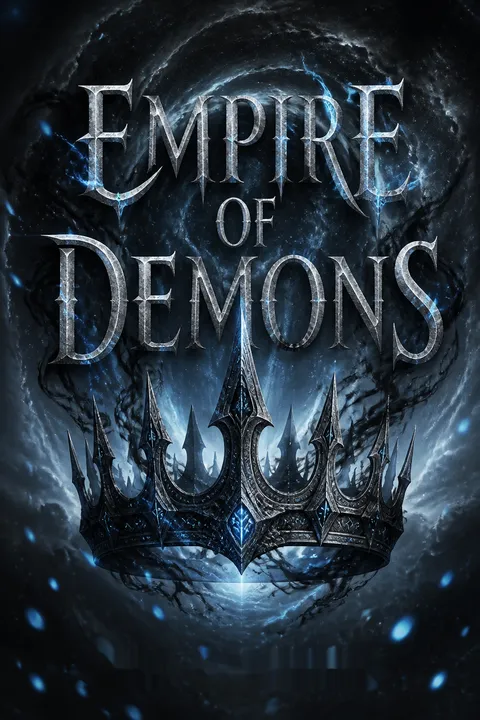
Empire of Demons treats power as a relationship rather than a possession. The circlets, Elmerah’s innate magic, Isara’s ability to cancel magic, and Malon’s demon blood all change meaning according to who controls them and who bears their consequences. Egrin’s plan to revive his queen concentrates that problem: he turns people into ingredients, regarding love, blood, and magical talent as resources that justify any cost. The protagonists resist him not because they are free of ambition or anger, but because they continue to recognize one another as people whose choices matter.
The book repeatedly complicates protection. Rissine hides the truth about their mother to keep Elmerah alive. Malon claims he compromised Faerune to save lives and secure the Crown of Arcale. Daemon keeps Isara on an island because he believes he is safeguarding her. Each acts from some version of care, yet each also makes decisions for someone else. Elmerah and Saida’s conflict over these choices matters because neither accepts easy forgiveness. Their friendship survives through disclosure and continued commitment, not through pretending the harm was necessary or harmless.
The large-scale conflict also challenges inherited political boundaries. Faerune, Galterra, the Makali, the Nokken, the Akkeri, and the Arthali all carry histories of exclusion and violence. Egrin exploits those divisions, but defeating him cannot automatically create trust or legitimate rule. Isara’s work after the battle, Saida’s obligations to the Makali, and Alluin’s hope for his people all point toward the harder labor of reconstruction. The novel’s final reversal refuses to let victory stand as a finished moral answer. Malon’s ambition returns through the promise of a third crown, leaving the survivors to confront the same question in a sharper form: can they build a different world without repeating the coercion they fought to end?
Review Summary
Characters
Saida
Reluctant moon priestessSaida is a Faerune elf whose connection to the Crown of Cindra gives her access to powers she does not fully understand. She begins under the weight of grief for her mother and uncertainty about Malon, while also carrying responsibility for a homeland threatened by Egrin. Her strongest motive is personal loyalty: she repeatedly risks herself to find Elmerah and protect the people she loves. Saida is neither naturally ruthless nor eager to rule. She must learn to distinguish compassion from surrender and to trust her own judgment even when powerful allies offer convincing plans. Her struggle concerns what leadership costs when every available choice can endanger someone.
Elmerah
Fearful fire witchElmerah is an Arthali witch of Shadowmarsh, a survivor shaped by the murder of her mother and years spent hiding from her own people. Her fire is formidable, but its destructive reach has made her fear using it around those she loves. She values self-reliance and often tries to protect friends by withholding her worries or leaving before they can be endangered. Her bond with Saida gives her a reason to risk connection again, while Alluin offers steadiness without asking her to surrender her independence. Elmerah’s central struggle is not simply mastering magic. It is learning that dependence and trust can be forms of strength rather than traps.
Malon
Calculating ex-guardsmanMalon is a former Faerune guardsman who moves easily between protector, strategist, and manipulator. He carries demon blood, which lets him sense portals and cross into the demon realm, and he understands power as something to be planned around rather than feared. His ambitions are bound to a desire to remake a society that excluded people like him, but his methods often deny others a meaningful choice. Saida is the person whose judgment he most wants, while Elmerah and Alluin see the danger in his secrecy. Malon’s appeal lies in the genuine care beneath his calculations, and his danger lies in believing that good intentions authorize him to decide for everyone.
Alluin
Steadfast Valeroot survivorAlluin is a Valeroot elf who has lost much of his community to Egrin’s campaign. He fights without witch magic, relying instead on patience, practical judgment, and a fierce willingness to stay beside his companions. His loyalty to Elmerah is inseparable from his grief for the people he could not protect, and he often assumes responsibility for losses beyond his control. Alluin’s quieter form of courage becomes essential when magical power dominates the battlefield: he can act when others are exhausted or their abilities fail. He wants to rebuild a life for his people, but he also learns that commitment need not mean choosing between community and personal attachment.
Rissine
Protective elder sisterRissine is an Arthali witch and Elmerah’s older sister, skilled in lightning and accustomed to taking command. She is fiercely protective, politically shrewd, and capable of making hard choices quickly. The same decisiveness can become controlling: Rissine often believes that keeping someone safe matters more than letting them choose their own risk. Her history with Elmerah is marked by love, resentment, and the long shadow of their mother’s death. Rissine also carries the burdens of a leader, bargaining with dangerous powers when ordinary options disappear. Her relationships reveal how care can be both genuine and harmful when it is expressed through secrecy.
Egrin Dinoba
Demon emperorEgrin is the demon emperor ruling from Galterra, a patient strategist who uses fear, bargains, and other people’s ambitions to extend his influence. He wants the divine circlets and the magic of the land, but his private attachment to his lost queen also drives his long campaign. Egrin can recognize emotional weaknesses and turn them into political leverage, especially by making allies doubt one another. He sees living beings as resources to be arranged around his goals, whether they are prisoners, soldiers, or magical vessels. His authority rests not only on supernatural force but on his ability to make people believe that cooperation with him is their least dangerous option.
Isara
Magic-nullifying scholarIsara is a human woman with demon blood, an intellectual and practical traveler who carries spectacles and often has to prove that she is more capable than others assume. She can nullify magic, making her vital in conflicts where conventional strength is useless. Her relationship with her brother Daemon is strained by years of distance and his association with Egrin’s regime. Isara values knowledge, but she is not content to observe from safety; once she recognizes that she is being kept for someone else’s purpose, she acts. She approaches danger with a mixture of caution and stubborn courage, and her independent judgment makes her a possible bridge between communities that distrust one another.
Brosod
Makali hunter and allyBrosod is a Makali warrior and hunter who accompanies Saida through the desert and into the demon realm. She speaks plainly, values practical survival, and is willing to risk herself when she believes a person or cause deserves protection. Her loyalty grows from the hope that Saida can bring life back to the Helshone, but it also becomes personal. Brosod provides physical skill and grounded counsel without pretending that danger can be wished away. Her directness challenges Saida’s hesitation, while her presence makes the Makali alliance more than an army serving another people’s war.
Daemon
Isara's divided brotherDaemon is Isara’s brother and a former servant of Egrin’s government. He is proud, defensive, and accustomed to measuring his worth through status and usefulness. His loyalty to the emperor is complicated by family history and by his belief that he is protecting Isara from a danger she does not understand. He often mistakes concealment for care and assumes his sister remains the frightened girl he remembers. Their conflict exposes how siblings can share a past yet disagree sharply about what survival requires.
Celen
Earth-shaping allyCelen is an Arthali ally with the ability to move and shape earth. He is blunt, resourceful, and loyal to Elmerah and the small circle of companions who have become his chosen people. His scars and dry humor mark a life lived through danger, but he does not let cynicism prevent him from taking risks. Celen often supplies practical force when others are trapped, opening paths or shielding allies. His steadiness gives the group a useful counterweight to the volatile magic and intense personal histories surrounding them.
Killian
Nokken illusionistKillian is a Nokken who can disguise himself with illusion and move between the worlds of his people and the others he travels with. He is curious, quick-thinking, and more brave than his initial reluctance suggests. His ability to conceal his identity makes him useful in tense situations, while his loyalty to friends gradually matters more than the mistrust attached to his heritage. Killian’s humor softens the group’s strain, but he repeatedly takes concrete risks when someone needs help.
High King Hotrath
Akkeri king in exileHotrath rules the Akkeri, a people marked by an ancient curse, and pursues Saida because he believes the Crown of Cindra can restore what his people have lost. He is physically imposing, politically patient, and alert to the leverage that hostages and bargains provide. His past dealings with Egrin have made him distrustful, though he still tries to control the terms of every alliance. Hotrath’s desire to free his people is tangled with his refusal to accept the personal cost attached to their curse.
Vessa
Alluin's resourceful sisterVessa is Alluin’s sister and a survivor who knows the Capital’s hidden routes. She is observant, practical, and less inclined than Alluin to treat danger as a reason to retreat. Her loyalty to her brother coexists with an independent sense of where she can be useful. Vessa often sees through plans that assume she will simply follow, and she helps connect the rescue effort to the people and places she knows.
Vail
Skeptical healerVail is a healer who travels with the elves and tends injuries even when she distrusts the people she treats. She is protective of Alluin and Vessa, and her skepticism toward the witches comes from a fear that their powerful choices leave ordinary companions to pay the price. Vail’s blunt judgments can wound, but they also voice a question the group cannot ignore: who bears the cost when leaders choose to fight?
Zirin
Winter Isles wind witchZirin is an Arthali witch from the Winter Isles whose winds can drive a ship or turn the course of a fight. He is controlled in manner and dependable under pressure, though his dry responses sometimes conceal affection for the people around him. Zirin’s injury and limited stamina remind the group that magic does not make its users inexhaustible. He remains a steady companion to Rissine even when her choices trouble him.
Merwyn
Akkeri witness and guideMerwyn is a small, quiet Akkeri who has survived among people who often fear or misunderstand his kind. He is a careful observer, more courageous than his reserved manner suggests, and carries knowledge of Akkeri history that others lack. His presence challenges the assumption that a whole people can be judged by their rulers. Merwyn’s loyalty is expressed through persistence and through the facts he is willing to share when the group needs them.
Thera
Court elf under pressureThera is a Faerune elf at Egrin’s court, tied to old relationships with Rissine and vulnerable to the emperor’s demands. She is cautious and worn down by a life shaped by power she cannot easily resist. Her quiet attention to what is happening around her makes her a potential source of information, even when fear limits what she can do openly. Thera embodies the difficulty of judging people who survive by serving dangerous rulers.
Lord Orius
Dreilore commanderOrius is an ancient Dreilore lord and commander whose knowledge of metals and magic makes him useful to Egrin. He approaches violence with the composure of someone accustomed to command. His authority rests on the power Egrin grants him and on the fear his people inspire. Orius represents the political bargain made when a community accepts borrowed power from a ruler who expects obedience in return.
Phaerille
Outcast seeking belongingPhaerille is a mixed-heritage woman who has never found an easy place among the different peoples from whom she comes. She has attached her hopes to Malon and to the possibility of finally belonging somewhere. Her longing makes her vulnerable to jealousy and to choices that damage the relationships she wants to secure. Phaerille’s story gives a personal face to the prejudice and exclusion that shape the larger political conflict.
Plot Devices
The Divine Circlets
Power with competing purposesThe Crown of Cindra and the Crown of Arcale are ancient relics associated with different forms of power. Saida’s connection to Cindra gives her access to healing, dreamwalking, and guidance, while Malon can wield Arcale’s destructive force. Together, the circlets can overcome defenses that ordinary magic cannot, making them essential to the war against Egrin. Their significance is not only military: each wearer must decide whether the relics are tools, obligations, or voices to heed. The story’s ending introduces a third relic, the Crown of Ilthune, which Malon believes is hidden beyond the boundary between life and death.
Dream Curse and Compass
Finding the distantBrosod teaches Saida a curse that lets her enter a dreamlike realm and locate a person by focusing on their magical presence. The first ritual allows Saida to witness Elmerah’s shipwreck, though she cannot intervene. Later, Saida uses her own blood to reach Egrin in the dream realm, accepting additional danger to learn what he knows. Malon’s compass becomes a more durable guide after Saida enchants it with the Crown of Cindra. It can point toward Elmerah and other targets, turning Saida’s growing command of magic into a practical means of navigation.
Demon Portals
A dangerous shortcutDemon portals connect distant places and allow rapid travel, but they lead through a realm filled with hostile creatures. Malon can sense them because he has demon blood, and he leads Saida and Brosod through one to reach Elmerah. Portals also become a threat when Egrin uses them to move demons into the living world and to open a passage connected to his attempt to restore his queen. The characters never gain complete control over what may emerge or where a portal leads. At the end, Malon takes Saida through the surviving passage into an unknown realm.
The Dreilore Cauldron
A vessel for stolen magicEgrin’s cauldron is made from enchanted Dreilore metal and serves as a vessel for combining different sources of power. He uses moonstones and the blood of Thera, a moon priestess, and Orius, a Dreilore commander, to prepare it. Elmerah’s innate magic then binds her to the mixture, allowing Egrin to draw on her power and attempt to restore his dead queen. The cauldron brings together the story’s separate forms of magic in one physical object, making the ritual visible and vulnerable. Its destruction ends Egrin’s attempt, but the portal it opened remains a danger.
Hotrath's Whistle
A bargain made audibleHotrath gives Rissine a small silver whistle that can summon him and his Akkeri forces. It marks the bargain Rissine makes while under threat and offers a way to turn an enemy’s army into an ally, at least temporarily. The whistle also gives Malon a reason to warn Elmerah that Rissine’s deal may put Saida in danger. Its significance grows as Rissine uses the Akkeri to attack Galterra and reach her sister. The object condenses the story’s recurring problem into a single token: help can be real and still carry a price someone else may be forced to pay.
Moonstone Chronicles Series
About the Author




Download PDF
Download EPUB
.epub digital book format is ideal for reading ebooks on phones, tablets, and e-readers.








