

Plot Summary
Terms at the Hidden Gate
Lyssandra Yonvrode and her lifelong friend, Tholdri, climb to a fortress hidden in the mountains, hoping its witches will teach her magic to defeat Eiric, the first vampire. High Witch Drucida recognizes Lyssandra's Blackmire ancestry but refuses her, citing her bond to the vampire Asher and her grandfather Cedrik's old departure from the order.
When Lyssandra insists Eiric threatens everyone, Drucida agrees to hear her out. The witches have suffered a string of murders, and Drucida turns the hunters' visit into a bargain: find the killer, though lessons are not promised. She gives them shabby lodging and no answers, but the assignment places Lyssandra inside the fortress and among the people whose trust she must win.
The bargain makes Lyssandra's need for power inseparable from other people's safety. Drucida does not accept her because of shared ancestry or the danger Eiric represents; she grants access because the fortress has a problem that hunters might solve. Lyssandra, in turn, accepts work without assurance of reward. Their mutual suspicion establishes a practical alliance in which trust must be earned through acts, not lineage. The hidden stronghold also turns inherited identity into a material obstacle: Lyssandra's blood gives her a claim, but her choices determine whether that claim matters.
Strangers Leave Bloody Tokens
Before Lyssandra can establish a routine in the fortress, a young witch named Wylan is found skinned in his room, joining six earlier victims preserved in an enchanted ice chamber.
Teresa, the nervous apprentice assigned to assist the visitors, gives Lyssandra a lead: her murdered friend Nigella bought a locket from a beautiful traveler, while Jacques, another victim, bought a hunting knife from an elderly man. Both strangers asked for their names. Ophelia, Jacques's twin sister, confirms she has kept his belongings but says she never saw the knife.
Her grief makes her a reluctant ally, while Ian, a kitchen worker who can perceive people's energies, offers a different kind of help. The pattern suggests that the killer approaches victims before taking them.
The murders first appear as a forensic puzzle, but the victims' names and purchases make the pattern intimate. The killer does not simply find vulnerable people; it approaches them through ordinary exchanges and asks for identifying information. Lyssandra's investigative discipline helps her treat a locket and knife as evidence, while Ophelia's reluctance shows how grief can make useful testimony painful to provide. Teresa and Ian widen the circle of people who can help, but their gifts also establish that the fortress contains forms of knowledge Lyssandra cannot yet interpret.
The Murdered High Witch
Lyssandra's inquiry is interrupted when Illya, the elderly witch who once wove prophetic images into tapestries, is found disemboweled. A hunting knife is embedded in the wall behind one of those tapestries.
Drucida allows Asher into the fortress to identify its scent, and he finds that the killer had spent considerable time with Illya. The suspicion falls on a short list of people who entered her rooms, including Elanore, one of the witches Lyssandra hopes will teach her.
Then Illya's body is discovered skinned inside a locked, magically protected chamber. Since the room's enchantment should have made entry impossible, the killer must have powerful magic or have hidden inside before the door was sealed. The case now implicates the fortress itself.
Illya's murder collapses the comforting boundary between a dangerous outsider and a safe community. Asher's scent-reading identifies familiarity, not identity, while the violated chamber shows that the fortress's protections can be bypassed. Lyssandra must therefore investigate relationships as carefully as physical clues. Illya's tapestries deepen that uncertainty: her art may contain knowledge she could not consciously explain, so even a room's decoration might serve as evidence. Drucida's willingness to admit Asher marks a small change in policy, but necessity, rather than affection for Lyssandra, still governs her decisions.
Blood Knows Its Heir
After Lorena, one of Illya's apprentices, is killed and skinned, Drucida and Elanore test Lyssandra's blood. It rejects ordinary magical affinities, but boils when mixed with Tholdri's blood; the relic ring and her demon-slaying sword also react to her. The witches identify her gift as blood magic, a rare Blackmire power they fear because it can corrupt its user.
They refuse to teach her more, until Elanore explains that Lyssandra can connect herself to a fresh victim's blood and follow the killer. Lyssandra cuts her arm and establishes that link over Lorena's body. The connection pulls her up the mountainside to a cave, where a locket becomes a blonde woman who attacks, then escapes by transforming into a mouse.
The discovery gives Lyssandra the power she sought, but not the reassurance she wanted. Her blood makes ancient weapons answer and provides a way to track a murderer, yet the witches frame the same gift as a threat to its user and those nearby. Her first successful act of magic is an act of mourning turned into pursuit: she links herself to Lorena in order to avenge her. The locket's transformation then confirms that the killer is not merely a witch using disguises. Lyssandra gains a tool, but each use draws her further into a danger she cannot yet control.
The Locket's Living Face
The night after the cave encounter, Lyssandra finds Asher struggling after weeks without feeding. Before she can return to the fortress, Xavier, Eiric's human servant, wounds Asher with a dagger to lure her outside.
Xavier says Eiric wants Lyssandra to learn magic, although he cannot explain why, and warns that the plan endangers everyone. Lyssandra reaches Asher's daylight refuge and gives him her blood. As their connection intensifies, she discovers she can send warmth through his blood and heal his injury, making her magic both intimate and dangerous.
Meanwhile, Cael's worsening condition becomes impossible to ignore, and Tholdri volunteers blood to keep him stable. Lyssandra's companions are now relying on her and one another to survive the cost of their gifts.
This episode makes bodily exchange a form of trust rather than a simple fantasy convention. Lyssandra's initial reluctance to feed Asher gives way when she sees his injury, and her blood does more than sustain him: it lets her direct power through their bond. The new magic is restorative, but it also demonstrates her capacity to affect another person's body. Tholdri's donation to Cael extends the same ethic of chosen risk to friendship. Xavier's warning complicates every act of growth: the power Lyssandra needs may be precisely what her enemy is arranging for her to gain.
The Skin Changer Laughs
A black feather left by the escaping creature lets Lyssandra reconnect to its blood and chase it through the fortress wards. In the dining hall, it attacks Ian while wearing the face of Jacques, Ophelia's dead twin.
Asher throws it against a wall, and the creature dies before Lyssandra can question it. Ian recognizes Jacques's features, but Lyssandra reminds him that the killer has stolen only his skin. The dying creature refers to Lyssandra as kin and suggests she will destroy the beings that saved her, confirming Eiric has influenced the attacks.
Soon after, Markus and Steifan arrive with news from the Helius Order: Gregor Syvise has accused Lyssandra of killing Cedrik, and the hunters may pursue her. The danger has reached beyond the fortress.
The creature's borrowed face turns the investigation's central horror into a personal violation. For Ophelia and Ian, the killer is not an abstract monster but a false Jacques, a familiar appearance used to reopen grief. Lyssandra's insistence that the creature is not Jacques protects that distinction, though it cannot undo the image. Its final claim of kinship also anticipates Eiric's strategy of using blood ties as leverage. Meanwhile, the Helius Order's accusation removes the institution Lyssandra once served as a possible refuge. Her allies must now be chosen individually, not inherited from either witch or hunter community.
Markus Pays the Trail
When Drucida disappears, Lyssandra uses the dead skin changer to form another blood connection and follow its surviving relative. Her own reserves are depleted, so the magic takes strength from Markus, her former human servant.
He collapses, then calls her a monster as she rises with enough power to locate the creature. Tholdri, Steifan, Ophelia, and Elanore follow her into a mountain storm. At the cave, two more skin changers guard Drucida, who is alive but badly injured.
Elanore reveals that the creatures are her cursed children, altered by a former lover, the blood witch Alexander. She has hidden the truth while hoping to protect them. Ophelia, however, refuses to let her mother's affection excuse Jacques's murder, and Lyssandra prepares to act.
Lyssandra's magic crosses a moral threshold here: she no longer uses only her own blood or a willing partner's, but takes power from Markus without consent. The result is effective and immediately damaging to their relationship. Markus's accusation lands because it names a danger Lyssandra has feared without fully accepting. Elanore's revelation supplies a parallel case: a parent's love can explain protection of a monster without making that protection just. Ophelia's refusal to excuse her siblings' crimes gives Lyssandra a clear human consequence to weigh against abstract kinship.
Elanore's Cursed Children
Lyssandra rejects Elanore's plea to spare the skin changers, and the witch uses her air magic to hurl the hunters from the cave. Ophelia strikes her mother, breaking the storm long enough for Tholdri to pull Lyssandra back from a cliff.
One skin changer kills Elanore, and Steifan beheads him; Lyssandra kills the other as it pleads for the family Eiric promised. Ophelia then uses her healing gift to keep the wounded Drucida alive. When Drucida recovers enough to explain, she says Illya's final tapestry showed Lyssandra performing a ritual from an ancient book.
Drucida accepts that Lyssandra must learn, even though blood magic frightens her. The rescue ends the killings, but leaves the fortress grieving and Lyssandra bound to a larger prophecy.
The cave forces each character to choose between biological kinship and accountability. Elanore protects the children she once abandoned, while Ophelia refuses to let motherhood erase what they did to Jacques. Lyssandra's response is not bloodless justice: the creature's appeal to family touches her own history, but she kills it anyway. The aftermath shifts Drucida's position. Illya's tapestry gives the high witch a reason to treat Lyssandra's dangerous power as a necessary responsibility, not merely a risk. The mystery ends, but its resolution opens the more consequential question of what the ritual will demand.
Equinox, Eiric's Invitation
Back inside the fortress, Lyssandra and the witches find Eiric's letter, delivered with her lost sword. He invites his followers to war at the equinox. The letter confirms that young vampires have been hearing his commands and that the attacks on witches were part of a campaign, not isolated murders. Drucida commits to teaching Lyssandra, while Charles warns that her presence will bring the vampires down on them.
Illya's unfinished tapestry shows Lyssandra reading from a grimoire beneath a dark sky, but no one can identify the ritual. Markus, Steifan, and Tholdri volunteer to search for Xavier, while Lyssandra stays to train. The deadline is only days away, and her enemy has begun choosing the battlefield and arranging the pieces.
Eiric's letter turns scattered violence into a declared political project. The murders, the attempt to isolate Lyssandra from the Helius Order, and the threat against the witches now belong to one design, although its final mechanism remains unknown. Drucida's choice to teach Lyssandra is therefore both strategic and ethical: she accepts the danger because refusing it would not prevent the war. The tapestry is a partial image, not an instruction manual, and its darkness resists easy interpretation. Lyssandra must act without knowing whether the vision records a victory, a sacrifice, or the consequences of obeying Eiric.
Parents Beneath the Ash
While Lyssandra tries to develop her magic, Eiric appears in a dream and explains that blood magic can corrupt its wielder and eventually kill them. He hints that he wants her to perform a ritual that will restore his ability to walk in sunlight.
Seeking answers, Lyssandra questions Cael about her family. He reveals that her grandfather used weak blood magic to strengthen Markus and arranged for Lyssandra to be bonded to an ancient vampire, hoping the bond would steady her.
Then Cael tells her the truth about the fire that killed her parents: as a child, Lyssandra unconsciously twisted their blood in anger, and her grandfather burned the house to conceal the deaths. Lyssandra runs from Cael, horrified that her power began in the worst moment of her life.
The revelation changes Lyssandra's origin story from one of orphaned innocence to one of involuntary harm. Cael's account does not make her a deliberate killer, but it makes her fear of her own magic psychologically specific: the power she must now cultivate once acted without her knowledge and killed the people she loved. Her grandfather's plan to bond her to a vampire reframes protection as manipulation, even if its motive was care. Eiric's dream adds a future version of the same danger. Lyssandra is not choosing between power and safety, but between forms of risk she can now see.
The Blackmire Grimoire
Training brings Lyssandra further into the power she fears. When she accidentally draws strength and magic from Ophelia while healing a wound, she also sees Teresa's concealed glamour and realizes the apprentice is hiding something. In her grandfather's long-sealed cottage, Lyssandra finds a grimoire matching the one in Illya's tapestry.
Ophelia gives her Elanore's journal, whose final entries describe Alexander taking life and magic from victims until power changed him. Lyssandra recognizes the warning as a possible version of her own future, but she still needs the book's ritual to understand Eiric's plan. She keeps both the fear and the evidence close, refusing to pretend that not knowing would make her safer.
The grimoire and journal function as competing inheritances. One offers the technical means to act; the other records the human cost of pursuing power without limits. Lyssandra's involuntary theft from Ophelia makes the journal's warning immediate rather than historical. Her discovery of Teresa's glamour also shows that learning is changing how she perceives others, but not necessarily making her wiser about whom to trust. The books cannot settle the moral question for her. They make it harder to claim that dangerous power is merely a tool, while the approaching equinox leaves little time to refuse it.
Ancients Join the Witches
Tholdri returns with Geist, the ancient vampire Lyssandra's grandfather once intended as her master, and Merri, a necromancer who has gathered allies, including the young summoner Liliana. Their arrival brings reinforcements from a hidden witch community and reveals that Charles is Merri's uncle, despite her past exile.
Drucida accepts their help after Lyssandra argues that the fortress cannot afford to refuse it. Later, Lyssandra reads Elanore's journal and tells Asher that Alexander's corruption frightens her because Eiric may be suffering the same fate.
With battle imminent, she willingly gives Asher her blood, and drinks his in return. Their bond deepens into a mutual exchange of strength and feeling, while Lyssandra remains unable to answer his declaration of love.
The alliance widens the story's moral field: people once divided by species, magic, and exile now cooperate because Eiric threatens all of them. Lyssandra's choice to accept Geist's help is not a return to her grandfather's plan; she judges the ancient by his present actions and the need of the moment. Her blood exchange with Asher similarly turns a bond originally shaped by circumstance into a more reciprocal intimacy. Yet the unresolved declaration of love matters: trust has grown enough for physical and emotional openness, but Lyssandra still cannot promise a future she fears she may not have.
Fire Over the Fortress
At the equinox, Eiric's young vampires and the powerful Ivangard witches attack, blasting through the gates with blue fire. During the fighting, Eiric confronts Lyssandra on a rooftop and explains that he wants her to perform a ritual restoring his sunlight, after which he intends to destroy the vampires he created.
Lyssandra uses blood magic against him, burning both their blood, but he retaliates by gutting Asher. Teresa reveals herself as Cerridwen, the necromancer who revived Eiric, and demands that Cael sever the bond before Eiric kills Asher.
Cael performs the separation; Markus gets Asher off the roof, and Eiric carries the burned, weakened Lyssandra away. She wakes captive beside Cerridwen and Cael, with an enchanted restraint preventing her from using magic.
The climax makes the cost of Lyssandra's power physical and relational at once. Her attack wounds Eiric, but it also burns her own body and cannot prevent him from nearly killing Asher. Teresa's transformation into Cerridwen exposes how thoroughly Eiric has infiltrated Lyssandra's circle, while Cael's choice to sever the bond converts a claimed act of protection into a betrayal Lyssandra cannot accept. Markus's rescue preserves Asher, but Lyssandra is taken. The battle defeats neither Eiric nor his plan; it changes the immediate conflict from defending the fortress to surviving captivity and understanding the ritual.
A Bond Left Behind
By dawn, the fortress has survived the assault at a terrible cost. Asher is alive but gravely wounded, and Markus, Tholdri, Steifan, and Geist prepare to track Lyssandra after Cerridwen carries her toward Ivangard. Markus can still sense Lyssandra, but Asher can no longer feel her through their severed bond.
Drucida gives Tholdri a second grimoire, explaining that its rituals are incomplete without the matching book Lyssandra found. She believes the pair may contain both the ritual Eiric seeks and a way to destroy him. Asher joins the pursuit, no longer held back by the sun or the danger of losing Lyssandra. The story closes with two urgent tasks: find her before the ritual and discover what the books demand.
The ending withholds reunion and replaces the bond's supernatural certainty with deliberate pursuit. Asher once felt Lyssandra's distress directly; now he must trust Markus's tracking and choose to follow without that assurance. The paired grimoires extend the uncertainty: the same knowledge may enable Eiric or destroy him, and neither group yet possesses the whole. The survivors are divided between captor and rescuers, while Lyssandra's own agency is constrained by the enchanted restraint. The cliffhanger is not simply whether she escapes, but whether she can master a power whose intended use has been designed by her enemy.
Epilogue
Asher cannot sense Lyssandra after Cael severs their bond, but he refuses to wait for certainty. Markus, Tholdri, and Steifan ride with him, following Markus's ability to track her, while Geist lends his help and keeps the group moving.
Asher is wounded, exposed to the coming day, and driven by the knowledge that Lyssandra is being taken farther away. He no longer treats survival as a reason for caution. His search begins with the promise that anyone who harms her will face him, even if finding her means risking everything.
The epilogue transfers the bond's former function from magical sensation to chosen action. Asher cannot feel where Lyssandra is or whether she is safe, so his devotion must operate without the intimate certainty that once connected them. His resolve is protective but also dangerous: he frames the search as a willingness to destroy whoever stands between them. Meanwhile, the practical dependence on Markus, Tholdri, Steifan, and Geist makes the hunt communal, even as Asher's emotional purpose is singular. The close leaves rescue pending and makes love a motive for movement, not proof of a happy outcome.
Analysis
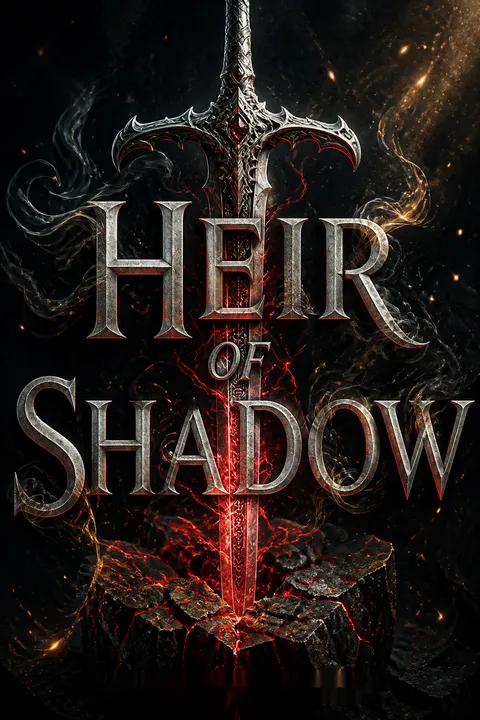
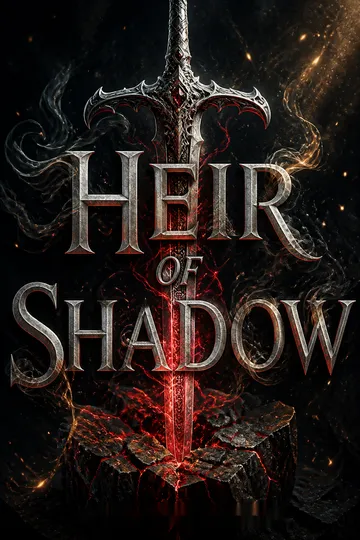
Heir of Shadow treats inheritance as a force that can protect, deform, or endanger the people who receive it. Lyssandra inherits Blackmire blood, a hunter's training, and a family history that has been concealed from her. Each legacy arrives with a cost. Cedrik's effort to protect her involved manipulating her path toward a vampire bond; her own childhood magic killed her parents without her conscious intent; and Eiric uses kinship to persuade and threaten her. The novel refuses to make ancestry either a destiny or an excuse. Lyssandra's choices matter, but she must make them with incomplete knowledge and consequences already in motion.
The murders give this conflict a concrete shape. The skin changers exploit names, purchases, and stolen faces, turning ordinary contact into a route to violence. Their victims are not anonymous casualties: Jacques's likeness wounds Ophelia, and Lorena's corpse becomes the instrument by which Lyssandra learns to track. Investigation is therefore also an ethical practice. Lyssandra must see the person beneath a borrowed skin, even as her own blood magic tempts her to treat another person's body as usable power.
The romance between Lyssandra and Asher develops through the same question of consent. Their bond begins as a condition Lyssandra resists, but their exchanges of blood increasingly become deliberate acts of care. That intimacy cannot protect them from the plot; Eiric turns their connection into leverage, and Cael's severing of it leaves both characters physically and emotionally exposed. The ending offers no simple victory. Lyssandra has gained power, lost the security of the bond, and become a captive expected to perform Eiric's ritual. Asher's pursuit and the two incomplete grimoires carry the story forward, leaving its central moral problem unresolved: how can Lyssandra use inherited power without becoming another person who decides that other lives are hers to spend?
Review Summary
People Also Read
Characters
Lyssandra Yonvrode
Reluctant blood witchLyssandra is a trained hunter raised within the Helius Order, but her Blackmire ancestry ties her to a history she was never taught. She relies on observation, preparation, and blunt persistence, often treating her own safety as expendable. Her bond with Asher complicates the hunter's inherited view of vampires, while her loyalty to Tholdri and later companions pulls her beyond the Order's boundaries. Lyssandra is not naturally comfortable accepting help or naming what she feels. She prefers action because action can be measured; grief and intimacy cannot. Her emerging magic forces her to confront the possibility that the very power she needs may harm others, making self-command as important to her as victory.
Asher
Ancient vampire partnerAsher is an ancient vampire whose restraint distinguishes him from the predatory creatures Lyssandra was trained to hunt. He is protective without trying to control her decisions, though his fear of losing her sometimes sharpens into possessiveness. Centuries of survival have made him calm, observant, and reluctant to burden others with his needs. Lyssandra's bond gives him a rare emotional intimacy, but he understands that a connection cannot substitute for her consent. His guarded history and careful approach to feeding make vulnerability difficult for him too. He values steadiness, yet his attachment to Lyssandra places that composure under pressure.
Tholdri Radran
Loyal hunter friendTholdri has been Lyssandra's closest friend since childhood and remains her most dependable human companion. A capable warrior with an easy manner, he uses humor to soften tense moments without mistaking levity for courage. He is willing to question Lyssandra when she isolates herself or treats other people's choices as his responsibility to accept. His loyalty is active rather than reverent: he follows her into danger, offers his blood when Cael needs it, and expects to be treated as a partner. Tholdri's grounded judgment helps Lyssandra see that protection can become control, even when it begins as love.
Cael
Necromancer great uncleCael is Lyssandra's great uncle, a vampire and necromancer whose power is inseparable from a visibly monstrous form. He tries to preserve a more approachable appearance, but maintaining it requires energy and effort he does not readily admit he lacks. His connection to the Blackmire family gives him knowledge Lyssandra needs, while his secrecy reflects an older generation's habit of deciding what younger relatives can bear. He is protective, proud, and shaped by losses that have lasted far longer than Lyssandra's life. His presence makes family history feel both like a source of strength and a burden inherited without consent.
Drucida
Mountain high witchDrucida leads the hidden witch community and protects it through caution, political calculation, and a formidable command of magic. Her affinity for ice reflects her ability to make boundaries literal: the fortress is concealed, its bodies preserved, and access tightly controlled. She initially directs anger at Lyssandra for choices made by Cedrik, but she can revise her judgment when new evidence challenges it. Drucida's leadership depends on holding a divided community together, especially when powerful witches disagree about risk. Her visions give her a sense of obligation, though not complete understanding. She is wary of blood magic because she knows that good intentions do not guarantee a safe wielder.
Eiric
First vampire antagonistEiric is the first vampire, a Blackmire descendant whose release threatens witches, vampires, and the people caught between them. He combines ancient patience with a talent for manipulating others through promises, mental influence, and carefully timed crises. He treats family connection as leverage, addressing Lyssandra as kin while arranging events that put her friends in danger. His motives are bound to a past in which he believes life and power were stolen from him. Eiric's charm is unstable, and the apparent tenderness in his attention never makes his plans less ruthless.
Ophelia
Apprentice healerOphelia is an apprentice witch with modest gifts in healing and illusion. She is observant and curious, but her quiet manner can make others underestimate her resolve. Lyssandra earns her cooperation by treating her testimony seriously rather than dismissing her grief as an obstacle. Ophelia's relationship with Elanore gives her access to an uneasy family history, while her commitment to learning magic reflects a wish to become useful without surrendering her own judgment. She is gentle with the injured, yet capable of drawing a firm boundary when loyalty to a loved one conflicts with the safety of others.
Elanore
Witch of the airElanore is a witch whose air magic can become powerful enough to exhaust her. She is an apprentice teacher and healer, more hesitant in confrontation than her abilities suggest. Her care for the younger witches around her is sincere, but she carries private history that shapes whom she protects and what she is willing to disclose. Elanore's gentle presentation should not be mistaken for a lack of agency; she can make consequential choices when her beliefs are tested. Her relationship with Drucida is marked by affection, disagreement, and the strain of secrets kept in the name of protection.
Teresa
Nervous apprenticeTeresa is a young apprentice assigned to help Lyssandra and Tholdri settle into the fortress. She appears timid, often watching other people's reactions before deciding what to do. Beneath that caution is a sharp interest in the patterns surrounding the murders; her observations give Lyssandra an early lead. Teresa wants a place where she can develop her abilities, but her guarded behavior suggests she has learned to protect information about herself. Her position among the apprentices lets her move between the visitors and the witch community without seeming important.
Ian
Kitchen energy readerIan works in the fortress kitchen and can perceive distinctive energies around other people. Drucida brought him into the community after his unusual gift made him an outsider in his village. He is thoughtful, good-natured, and more curious than fearful of Lyssandra, even when her magic unsettles him. Ian offers practical help as well as perception, and his life among the witches shows that a community can shelter people who do not fit its dominant category. His sensitivity is useful, but it also means crowds and their emotions can overwhelm him.
Illya
Tapestry-seeing elderIllya is an elderly witch whose visions appear through the tapestries she weaves. Her gift is powerful but not fully voluntary, making her art an uneasy record of things she may not understand as she creates them. She distrusts hunters and guards the community's secrets, yet her work preserves knowledge that outlasts her explanations. Her difficult relationship with Drucida reflects the politics of the fortress: two leaders can share a goal and still disagree sharply about how to protect their people.
Markus
Bound hunter allyMarkus is a skilled hunter whose connection to Lyssandra grew out of the human-servant bond she created. He is controlled, proud, and resistant to being treated as someone who needs protection. The bond places him in a position he did not freely choose, complicating his loyalty with anger and distrust. He continues to act as a capable ally despite those tensions. Markus represents Lyssandra's growing responsibility for the consequences of her own power, especially when her instincts to protect someone collide with that person's autonomy.
Steifan
Hunter and heirSteifan is a young Helius hunter and the son of Gregor Syvise, the man who takes control of the Order. He has a personal stake in the Order's politics but is willing to question its leaders when their claims do not fit what he has witnessed. Lyssandra's protectiveness toward him can be more restrictive than he wants, and he insists on choosing his own risks. His courage grows through experience rather than confidence; he is often frightened, but fear does not stop him from taking action.
Xavier
Eiric's human servantXavier is Eiric's human servant, bound by direct orders but able to act around their edges. He approaches Lyssandra as an adversary and a warning-bearer, making his motives difficult to trust. His constrained freedom gives him a narrow space to make choices, and he uses it to communicate information Eiric does not want her to have. Xavier's actions show how a servant bond can limit someone without erasing all judgment or resistance.
Geist
Ancient vampire allyGeist is an ancient vampire who once allied himself with Cedrik and other witch bloodlines. He is polished, observant, and comfortable discussing the political consequences of long life. Cedrik considered him a possible ally for Lyssandra, but Geist does not treat that arrangement as a right to claim her. He comes to help against Eiric while recognizing that the opportunity to shape Lyssandra's life has passed. His presence connects the immediate crisis to a wider network of old alliances.
Merri
Exiled necromancerMerri is a necromancer whose commitment to her craft led to exile from the community where she grew up. She is direct, politically alert, and accustomed to being judged before she can offer help. Her concern extends beyond her own people, since disappearances and Eiric's growing influence threaten several communities. Merri's connection to Charles complicates the fortress's picture of exile: separation from a community does not necessarily mean the ties of family or obligation have ended.
Charles
Witch of the fireCharles is a powerful witch with an affinity for fire and a firm belief in the need for unity among the fortress's male witches. He is meticulous, proud, and suspicious of outsiders, especially vampires and hunters. His formal manner masks deep loyalties and old disagreements. Charles may oppose Drucida's decisions in public, but his position is shaped by concern for the community's survival and the influence he holds among its men.
Liliana
Young summonerLiliana is an eighteen-year-old summoner who joins the resistance with Merri. Her ability gives the allied group a dangerous, unusual form of battlefield support. She is young but willing to face a conflict that older powers have set in motion.
Gregor Syvise
Order's new leaderGregor is Steifan's father and the wealthy supporter who steps into leadership of the Helius Order after Cedrik's death. His public accusations isolate Lyssandra from the hunters who might otherwise help her. Steifan believes Gregor is no longer acting like himself.
Lavandriel
Ancient Blackmire witchLavandriel is Eiric's half-sister and an ancestor of Lyssandra's Blackmire line. Her role in the old conflict and her connection to the sealing of Eiric shape the history the present characters are struggling to interpret.
Alexander
Blood witch of the pastAlexander was a Blackmire witch and the former partner of Elanore. His history survives in Elanore's journal and in the consequences of choices made around their family. He serves as a warning about the dangerous potential of blood magic.
Alicia
Lyssandra's hidden motherAlicia was Lyssandra's mother and a witch whose identity was concealed from her daughter. Her choices were shaped by conflict with Cedrik over the life Lyssandra should lead and the dangers surrounding their family.
Plot Devices
Blood magic
Power through bloodLyssandra's Blackmire affinity lets her form links through blood, track a killer, affect another person's body, and draw on another person's strength. The magic does not operate like a neutral instrument: willing exchange can sustain or heal, while taking energy without consent harms both the target and Lyssandra's relationships. Eiric's history and Elanore's journal warn that repeated use can corrupt its wielder. Blood magic therefore drives the investigation and creates the central ethical problem: Lyssandra needs it to protect others, but every new ability raises the cost of using it.
The hunter's sword
Warning and memory bladeLyssandra's sword can signal danger, respond to her blood, and sometimes show memories. It helps her recognize magical events and gives her a connection to the history of Eiric and Lavandriel. Its reactions do not explain themselves, so Lyssandra must interpret them alongside physical evidence and advice from others. The sword is both practical equipment and a record of inherited violence, one that can support her instincts without guaranteeing that those instincts are correct.
The vampire bond
Intimacy and vulnerabilityLyssandra and Asher's human-servant bond carries emotion and a supernatural connection between them. It complicates their relationship because Lyssandra has spent years resisting the implication that a vampire's claim makes her obedient or less herself. The bond can help them sense danger and share forms of strength, but it also gives enemies a way to injure one through the other. Its importance shifts from an involuntary condition toward a mutual relationship built on trust, then becomes vulnerable to the magic used against them.
The skin changers
Borrowed faces and evidenceThe killers can take animal forms and wear the skins of their victims, making identity and access difficult to establish. Their locket, knife, and feather forms leave physical traces that Lyssandra uses to pursue them, while their stolen human appearances turn familiar people into instruments of terror. The creatures' ability to evade wards makes the hidden fortress less secure than its residents believe. Their attacks are ultimately tied to Eiric's wider plan, showing how an apparently local murder mystery can be engineered to manipulate an entire community.
The paired grimoires
Incomplete ritual knowledgeIllya's tapestry depicts Lyssandra using an ancient book in a ritual, and Lyssandra later finds a matching grimoire in her grandfather's old cottage. Drucida's book contains only half the rituals, so neither volume alone gives a complete answer. The books may contain the ritual Eiric needs as well as knowledge that could help defeat him. This double function prevents the grimoire from being simply a weapon or a prophecy: its meaning depends on who assembles the text and what they choose to do with it.
A Study in Shadows Series
About the Author
Download PDF
Download EPUB
.epub digital book format is ideal for reading ebooks on phones, tablets, and e-readers.








