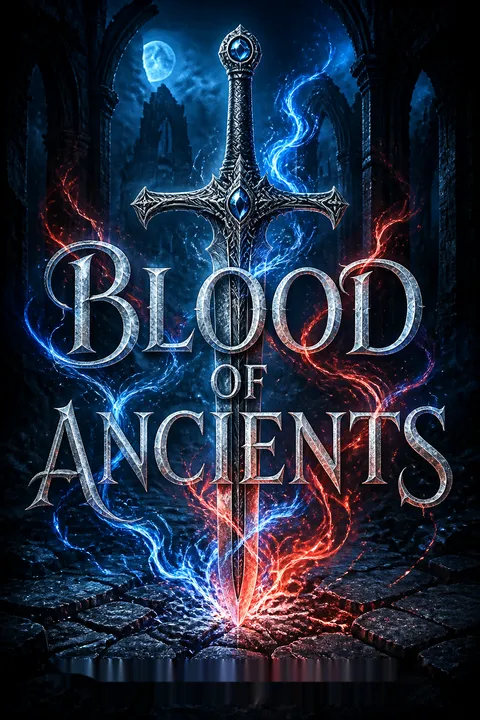


Plot Summary
A Prisoner Chooses the Temple
After Eiric captures Lyssandra and breaks her bond with Asher, he keeps her magic suppressed by a silver bracelet and carries her toward Ivangard. She cannot overpower her captors, but she decides that escaping now would put distance between her and the enemy she needs to stop. Xavier, Eiric's unwilling servant, reveals that the witches of Ivangard will hold her in their temple.
There, priestess Gwenvere gives Lyssandra a private, locked chamber instead of a dungeon, while Cael, her great-uncle, stays under Eiric's watch. Lyssandra reads the comfort as another form of control. She settles on a harder plan: learn what Eiric wants, get close enough to fight him, and keep Asher away from danger.
The temple's soft bed and outside lock establish the novel's central ambiguity: care can be indistinguishable from custody when someone else controls the terms. Lyssandra's decision to stay is not passive surrender. It is a strategic choice made under severe constraint, and it shows how thoroughly protection and self-determination have become entangled in her life. Eiric exploits her concern for others as leverage, while she tries to turn that same attachment into a reason to remain purposeful. Her separation from Asher intensifies the loneliness, but also removes a bond that had quietly dampened her growing magic.
The Atrium's Blue Fire
Cerridwen and Gwenvere take Lyssandra to the temple atrium, where Gwenvere removes the bracelet and an acolyte attacks her with blue flames. Lyssandra scrambles between trees, cuts her palm, and discovers that blood lets her reach the girl's body; she freezes the acolyte's blood, but Gwenvere ends the exercise by inflicting convincing, lingering pain.
The lesson shows Lyssandra has enormous power and little control. That night, Eiric visits her and confirms she must learn control for his ritual, though he refuses to explain its purpose.
The next day, Xavier reports that the acolyte who attacked her has been torn apart. Lyssandra also finds Isolde, a Helius Order hunter, hidden among the temple's acolytes, investigating the danger and looking for Markus.
The training scene makes power bodily before it becomes philosophical. Lyssandra learns through pain, blood, and improvisation, not through a stable curriculum, so skill and self-harm become difficult to separate. Gwenvere's ability to make imagined injury feel real also unsettles any simple distinction between magic and physical consequence. The dead acolyte shifts the story from captivity toward investigation, while Isolde's secret presence expands Lyssandra's fragile network beyond the temple. Eiric's refusal to explain the ritual creates an asymmetry of knowledge that structures the coming conflict: Lyssandra must acquire capability before she can understand what her capability is meant to serve.
A Door Beneath the Dead
Outside the temple, Asher and his companions learn that entry requires a priestess's invitation. An acolyte agrees to reveal another way in if they help her family escape the city, and Asher honors the bargain before exploring an old crypt passage beneath the temple.
He reaches Lyssandra's chamber at night. Their reunion confirms that love remains even without the servant bond, but Lyssandra refuses to flee because Eiric would pursue them and use their friends against her. She warns Asher that hunters are coming.
After he leaves, Cael arrives and detects Asher's scent on her. To hide it from Eiric, Lyssandra beats Cael with a chair until he bleeds heavily. His explanation changes her judgment: he betrayed her to preserve himself and get close to Eiric, not out of loyalty to him.
Asher's arrival tests whether the relationship survives the removal of its supernatural guarantee. Lyssandra's answer is not reassurance alone; she refuses the rescue she wants because she believes an immediate escape would endanger everyone else. Cael's bloody intervention makes his compromised position legible without absolving him. He has chosen strategic proximity over trust, and Lyssandra is forced to cooperate with the very relative she resents. The episode turns intimacy into risk management: scent can expose Asher, a wound can conceal it, and affection must be expressed through painful choices rather than uncomplicated reunion.
The Demon Inside
When another acolyte is found with her chest torn open, Lyssandra examines the wounds and concludes that something escaped from inside her. Cerridwen admits that Gwenvere and some of the girls had taken demons into themselves to gain power.
The temple's supposed protectors have therefore become hosts for beings they cannot control. Soon a demon attacks Lyssandra in her bed and wounds Cerridwen before vanishing. Gwenvere confesses that she summoned the creatures, hoping to protect herself and the other women.
Cerridwen gives Lyssandra her sword, and Xavier reluctantly joins the hunt. In the search, they find a dead guard in the cellar, confirming the demons have spread through the temple. Lyssandra is allowed her blade, but Eiric's servants still keep her magic restrained.
Gwenvere's confession complicates the category of victim without erasing responsibility. She sought protection from real dangers, but her chosen defense made the young acolytes bear the cost. The escaped demons literalize what the temple's hierarchy has concealed: power taken into the self does not remain a controllable instrument. Lyssandra's hunter instincts become useful to the people who have imprisoned her, creating an uneasy cooperation grounded in immediate danger rather than trust. Eiric's rule that she may wield either sword or magic, but not both, also signals that her captors recognize a threat they continue to underestimate.
Blood Gives the Sword
While Lyssandra is confined, Asher and the others learn that the temple ward can be bypassed through the crypt, and that Eiric may be drawing hunters toward Ivangard. Lyssandra later leaves the temple and meets Markus, who tells her that Eiric raided the fortress and took Ophelia, a witch with the ability to read magical energy.
Searching the city for an escaped demon, Lyssandra uses its black blood to awaken her sword's tracking power. She then lets Markus wound the creature, draws its blood with a dagger, and channels its magic into herself before her sword banishes it.
The power heals Markus's injuries and floods Lyssandra with dangerous strength. Tholdri witnesses her changed appearance and realizes she is no longer simply the woman he knows.
The demon hunt turns Lyssandra's investigative skill into a moral test. She does not merely kill the creature; she takes the same kind of power that Gwenvere sought, believing she can use it without repeating Gwenvere's failure. The demon's fear and pain make that distinction uncomfortable. Markus's injury becomes part of her method, showing how quickly a plan to protect allies can make them instruments. Tholdri's shock matters because it registers the change from outside Lyssandra's own heightened perception. The power is useful, but its cost is already visible in her narrowed attention and the distance opening between her and her companions.
The Ritual's Original Price
A memory shown through Lyssandra's sword reveals that her grandfather and Cael once discussed needing a blood witch to perform a ritual. When Lyssandra confronts Cael, he explains that Lavandriel created a spell capable of turning night into lethal sunlight for every vampire. Her grandfather intended Lyssandra to cast it, and her bond with Asher was always meant to be broken so she could wield her full magic.
Cael says he withheld the plan because he saw her love for Asher and would not ask her to kill him. Meanwhile, Ian arrives with news that Eiric took Ophelia and the hidden grimoire from the fortress. Lyssandra realizes that both ancient schemes depend on treating her as a weapon, though their intended targets differ.
The revelation reframes Lyssandra's childhood as preparation for a decision she was never allowed to make. Her grandfather's care and his instrumental planning coexist, leaving her unable to sort love from utility by intention alone. Cael's silence also reveals a different ethical boundary: he accepts complicity in the plan but refuses to demand the sacrifice of Asher. The competing rituals are not simply opposing magical techniques. They embody rival claims over who may decide which lives are expendable. Lyssandra's growing anger is therefore not only a response to deception; it is a defense of her right to choose what her power means.
Cerridwen Claims the Courtyard
Lyssandra learns that Cael has gone back to the temple for Cerridwen's original grimoire, but he does not return. Eiric has already found the other volume by searching for Asher and the people around him.
At the temple, hunters and priestesses lie wounded among the courtyard stones, while Cerridwen holds Asher and Eiric carries both grimoires. Lyssandra uses the demon magic she has stolen to freeze Eiric's blood. He survives long enough for Cerridwen to reveal that she never meant to make him invincible: she wanted Lyssandra to learn the ritual that would destroy all vampires.
Cerridwen turns Eiric's own weakness against him, drains him with her ring, and cuts off his head. Then she escapes through a portal with Xavier, while Cael and Steifan are left in her power.
Eiric's apparent control collapses into a contest between two older, more patient designs. He has arranged a massacre to furnish Lyssandra with power, but Cerridwen has used his threat as a teaching instrument for her own purpose. The courtyard exposes the human cost of both strategies: hunters and priestesses become fuel in plans they did not author. Lyssandra's refusal to trust the promise of safety keeps her from mistaking Eiric's defeat for freedom. Cerridwen's victory is decisive yet morally compromised, because she ends one predatory rule by preparing to impose another universal judgment.
The Tower's Living Ancestor
After Eiric's death, Lyssandra finds Xavier's hidden warning and learns Cerridwen has taken Steifan and Cael. Drucida arrives from the fortress, helps Lyssandra understand that Cerridwen's portals are limited, and agrees to keep the others from following too soon.
Lyssandra rides alone through Cerridwen's portal to a ruined coastal tower. Two skeletal guards demand her sword, while Cerridwen threatens Steifan from an upper window. Inside, Lyssandra finds Cael beaten, Xavier guarding Steifan, and Lavandriel herself, preserved in old age for centuries.
Lavandriel explains that she can command demons without absorbing their power, and that she and Cerridwen want Lyssandra to complete the sunlight ritual. Lyssandra refuses to accept that their cause makes the dead expendable.
The tower turns the family history into a physical confrontation. Lavandriel is not merely an ancestor preserved in stories; she is a living claimant to Lyssandra's identity and power. Her restraint with demons offers a model different from Gwenvere's, but it does not make her agenda humane. Cerridwen's hostage tactics make the demand immediate, while the tower's isolation strips Lyssandra of allies and familiar protections. Drucida's advice gives her a narrow tactical opening, not certainty. The scene asks whether inherited knowledge deserves obedience, especially when its custodians present coercion as the only path to repair.
A Greater Demon Answers
Lyssandra tears Lavandriel's protective necklace from Cerridwen, releasing the shadow demons the relic had kept away. In the confusion, she summons a being far more powerful than the demons she has hunted. It appears in human form, then possesses Lavandriel.
The tower becomes a battleground as Cael tries to shield Lyssandra and Cerridwen flees through the ruined wall with Steifan and Xavier. Outside, Asher intercepts Cerridwen and kills her after she orders her ghouls to attack him.
Inside, Lyssandra discovers that her sword's demon can lend her its strength. She draws it into herself to fight Lavandriel's possessor, while Cael is gravely wounded. The battle has shifted from preventing Cerridwen's ritual to stopping a ruler of demons from escaping in Lavandriel's body.
Lyssandra's summoning is both a tactical breakthrough and a loss of control. She opens a door she cannot close on command, and the greater demon immediately converts Lavandriel's body into its route through the world. The parallel action outside gives Asher a separate role: he ends Cerridwen's immediate threat, but cannot resolve the danger Lyssandra has unleashed. Cael's defense of her makes family loyalty concrete at the moment it becomes physically costly. The plot's supernatural escalation remains psychologically grounded: every new power promises protection, yet each also creates a fresh obligation to contain the consequences.
Light Turns Back
The demon in Lavandriel's body outmatches Lyssandra until she draws the demon from her sword into herself. That power lets her strike back, but the creature impales Cael and keeps him standing with shadow magic.
Lyssandra uses Cael's blood to combine her blood magic with the sword demon's strength, then invokes a burst of sunlight that destroys the demon and kills Cael. Lavandriel seizes the remaining light to continue the world-changing ritual, but Steifan breaks her concentration and holds Lyssandra as her magic threatens to consume them both.
Lyssandra draws the light back instead of releasing it across the world. She then kills Lavandriel with her sword. The tower collapses around them, ending the attempt to eradicate every vampire but leaving Lyssandra buried beneath the stone.
The climax makes restraint harder than victory. Lyssandra can unleash enough force to destroy her enemy, but the same force can erase beings who were never part of her chosen fight. Cael's death demonstrates the cost of inherited plans, while Steifan's willingness to stay beside Lyssandra gives her a relational anchor when power has stripped away ordinary perspective. The crucial act is not simply defeating the demon or Lavandriel. It is refusing to let grief and fear turn her into the executor of a totalizing solution. Her choice preserves uncertainty and conflict, but it preserves other people's right to live as well.
A New Master for Xavier
Asher finds Lyssandra beneath the tower rubble and gives her blood while Steifan confirms he survived. Xavier, badly injured, is near death, and Lyssandra understands that he cannot continue without a master. Her sword's demon asks whether she will keep hunting. Lyssandra refuses, and the demon transfers into Xavier instead, saving him and breaking Markus's servant bond to her.
Cael is nowhere to be found, and Asher believes he did not survive the sunlight. Once Lyssandra wakes in Ivangard, Drucida examines her and finds no other entity inside her, though she cannot predict what Lyssandra's magic will do. With Eiric, Cerridwen, and Lavandriel gone, Lyssandra faces a future that is no longer dictated by their plans, but remains uncertain.
The transfer to Xavier resolves one coercive bond while creating a relationship whose terms are still unknown. Lyssandra's refusal to hunt is not a rejection of responsibility so much as a rejection of violence as her entire identity. Her choice also frees Markus, showing that a decision made for one person can alter another's life. Yet the outcome does not restore a clean, ordinary self. Lyssandra remains magical, altered, and unsure of what she can safely do. Drucida's inability to guarantee her future keeps the ending honest: survival is an opening, not proof that the danger has vanished.
A Bond Chosen Freely
As Lyssandra recovers, she and Asher discuss the bond that once tied them together and the magic that still responds between them. She chooses not to restore it, even though it might dampen her power, because she wants to discover who she is without another being controlling her life. Asher accepts that risk and promises to remain beside her without making her a servant again.
Later, Lyssandra finds Cerridwen's ring and speaks with the demon trapped inside it. She wills it free, and it gives her a measure of new magic that steadies the power already within her. The next morning, Ryllae reveals that Lyssandra is pregnant. Lyssandra faints at the news, overwhelmed by a future she never expected to have.
The romance resolves not through the return of the bond but through its refusal. Asher's commitment matters because it does not require Lyssandra to surrender autonomy for safety. Her choice is not risk-free; the magic may still overwhelm her, and the pregnancy introduces a future she has not prepared for. Freeing the ring's demon extends the same ethic: she chooses release over possession, and receives an unexpected form of help in return. The result is a different model of intimacy from the book's many coercive ties. Love becomes something sustained by consent, uncertainty, and continued presence.
Ivangard Turns on Its Witches
The Archduke orders the remaining Ivangard priestesses expelled, and a hostile crowd later corners the witches as they try to leave. Lyssandra and her companions step between the mob and Drucida's group.
Gregor Syvise arrives with Helius hunters and announces that Lyssandra has been cleared of the Potentate's murder, though Lyssandra recognizes the evidence as a glamour planted by Ryllae. The hunters escort the refugees from the city instead of attacking them.
Steifan decides to return to the Order and try to change its policies from within, while Markus and Isolde go with him. Lyssandra later asks Ryllae why she intervened; Ryllae admits she wanted to repair the harm she caused. Lyssandra leaves with Asher and the witches, carrying both a new family and unresolved dangers.
The resolution refuses a sweeping political cure. Eiric's death has not ended persecution, and the city's response to the temple's crimes falls on women who were not responsible for them. Lyssandra intervenes without claiming she can remake Ivangard, while Ryllae uses deception to undo an earlier injustice. Steifan's return to the Order offers reform as a difficult, local commitment rather than a triumphant transformation. The companions separate without dissolving their bonds, which lets the ending preserve distinct forms of agency. Lyssandra's future is not a world without conflict, but a life in which she can choose her alliances and limits.
Epilogue
At the mountain above the fortress, Lyssandra and her companions gather in falling snow to remember Cael. They scatter snowdrops over the edge instead of building a monument, honoring the quiet protection he gave her and the cost of his final choices.
Asher stands behind Lyssandra with his hands over her belly. The future remains unknowable, but she has survived the people who tried to decide her purpose for her. This time, the life ahead belongs to her.
The snowdrop memorial gives Cael a remembrance shaped by intimacy rather than public legacy. Lyssandra refuses the stone monument because the gesture would make his life seem settled and interpretable, when what mattered to her was the love he finally showed. The flowers travel outward, making grief an act of release rather than possession. Asher's hands over her belly turn the final image toward a future that is bodily and uncertain, not an abstract promise of peace. The epilogue closes the book's central conflict over agency: Lyssandra cannot undo the inherited plans, but she can choose what she carries forward.
Analysis
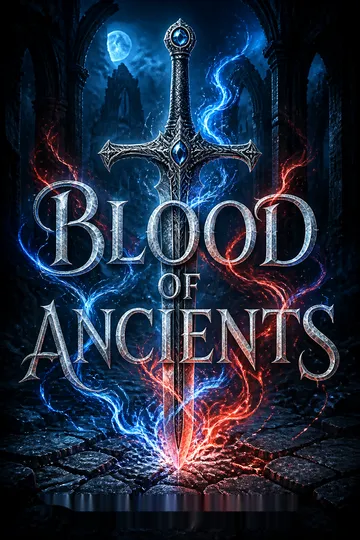
Blood of Ancients treats inherited power less as a gift than as an argument other people keep making over Lyssandra's body. Her grandfather, Eiric, Cerridwen, and Lavandriel each imagine that her blood can repair a world they believe has become intolerable. Their visions differ, but each assumes that the scale of the danger authorizes them to decide what she must sacrifice. Lyssandra's resistance grows through specific acts of refusal: she stays when escape would expose her allies, rejects the ritual that would kill every vampire, and eventually chooses intimacy without restoring the bond that once made her safer.
The novel also complicates the distinction between monster and protector. Gwenvere takes demons into herself to defend her followers, then becomes responsible for the harm they cause. Cerridwen seeks to end Eiric's violence but manipulates people and raises the dead to reach her goal. Eiric's earlier goodness does not excuse his present cruelty, just as Lavandriel's genuine fear of corruption does not make her plan morally sound. These reversals make ethical judgment depend on actions and consequences, not species or stated intentions.
The romance between Lyssandra and Asher offers a countermodel to the book's coercive bonds. Their connection matters precisely because it persists when the magical bond is broken, and because Asher accepts her choice not to restore it. Their love cannot resolve the political hostility toward witches or vampires, nor can it guarantee that Lyssandra's magic will remain safe. It gives her something narrower and more durable: a relationship in which uncertainty need not become ownership.
The ending therefore avoids a fantasy of total purification. Lyssandra stops the sunlight ritual, refuses to make herself the final judge of who deserves to live, and leaves the larger work of justice unfinished. The world remains dangerous, but her future is no longer merely a plan inherited from the dead. Her freedom lies not in becoming harmless or certain, but in choosing what she will do with power while remaining accountable for its cost.
Review Summary
People Also Read


Characters
Lyssandra
The unclaimed blood witchA red-haired hunter raised to fight monsters, Lyssandra discovers that her ancestry gives her blood magic powerful enough to make her both weapon and target. She is observant, stubborn, and quick to investigate danger, but her first instinct is often to protect others at personal cost. Her relationships with Asher, Tholdri, Cael, and Markus reveal different kinds of loyalty, from chosen intimacy to inherited obligation. Lyssandra's deepest struggle is not simply controlling magic; it is deciding whether her abilities and family history get to define what she must do. She values practical action over grand ideals, yet keeps questioning who pays when someone claims to act for the greater good.
Asher
The devoted ancient vampireAn ancient vampire and Lyssandra's beloved, Asher once saved her life by making her his human servant. He is intensely protective, but he understands that protection can become another form of control. His restraint is tested when Lyssandra asks him to stay away, and his loyalty is expressed through patience as much as action. He carries centuries of grief and has learned to value brief human connections rather than treating them as temporary distractions. Asher's central tension is the conflict between wanting to keep Lyssandra safe and respecting her right to choose danger, magic, and a life that may not last as long as his.
Cael
The burdened great-uncleCael is Lyssandra's great-uncle, a vampire and blood witch whose frightening, shadowed presence conceals a long history of protecting her family. He is secretive and often makes choices for others, believing that withholding the truth can spare them pain or keep a larger plan intact. That paternal strategy has consequences: Lyssandra experiences his protection as betrayal, especially when he helps Eiric capture her. Cael's divided loyalties reflect the book's repeated question of whether a good motive can excuse taking away another person's choice. Beneath his severity is a deep attachment to family and a readiness to accept personal cost.
Eiric
The first vampireEiric is an ancient vampire whose once-human life has been consumed by corruption, suspicion, and the need to escape his limits. He wants Lyssandra's blood magic for a ritual, but hides its full purpose while manipulating those around her. His former friend Xavier remembers a generous young man, a memory that makes Eiric's present cruelty more than a simple tale of innate evil. Eiric sees other people primarily through their usefulness or vulnerability, especially Lyssandra's love for Asher and her friends. His history warns that power can deform not only the person who wields it, but also the stories they tell themselves to justify its pursuit.
Cerridwen
The patient necromancerCerridwen is an ancient necromancer who has spent centuries trying to restore the man she loved and contain the consequences of that attempt. She is strategic, emotionally guarded, and capable of waiting until others mistake patience for loyalty. Her attachment to Lavandriel and Eiric complicates her relationship with Lyssandra, who resembles the friend Cerridwen both misses and resents. Cerridwen believes that history's violence can be corrected through decisive action, even when that action requires manipulation and sacrifice. Her certainty is unsettling because it grows from grief and responsibility, not simple malice. She embodies the danger of letting atonement harden into a new license to control others.
Lavandriel
Lyssandra's ancestral witchLavandriel is Lyssandra's powerful ancestor, a blood witch and summoner whose magic shaped the relics and rituals inherited by later generations. She once resisted using blood magic to steal power, fearing the corruption she had witnessed in her brother Eiric. Her friendship with Cerridwen shows both warmth and an inability to agree about what duty demands. Lavandriel's legacy reaches Lyssandra as a mixture of knowledge, danger, and expectation. She represents a gifted person who can recognize the cost of power yet still become convinced that an extreme solution is necessary. Her history gives Lyssandra a model to examine, not a destiny she must accept.
Xavier
The unwilling servantXavier is Eiric's former friend and long-held servant, bound to an existence he neither chose nor fully controls. He uses sarcasm to protect himself and to test Lyssandra, whose defiance gives him a rare companion in misery. Though he appears to serve Eiric, his feelings and actions are more complicated than his role suggests. Xavier longs for release but also discovers that wanting an end to suffering is not the same as having no desire left. His dry humor, buried loyalty, and uncertainty about freedom make him a counterpoint to Asher: both are vampires, but their histories have made them imagine the future differently.
Tholdri
Lyssandra's steadfast friendTholdri is Lyssandra's longtime friend, a hunter whose loyalty survives estrangement, danger, and the widening gulf between human and supernatural lives. He is practical enough to question reckless plans, but never so cautious that he abandons her. His humor helps him meet fear without pretending it is absent. Tholdri also develops a tentative connection with Geist, forcing him to consider what intimacy with a vampire might mean for a hunter. His friendship with Lyssandra is not based on ownership or obligation. He offers a steady, familiar form of care that lets her be more than a weapon, a witch, or someone's beloved.
Markus
The bound hunterMarkus is a Helius Order hunter and Lyssandra's human servant, linked to her through a bond that affects both their lives. He is disciplined, blunt, and often more comfortable with practical decisions than emotional reassurance. His connection to Lyssandra makes him unusually sensitive to her magic and whereabouts, even when he dislikes what that dependence means. Markus questions her choices because he fears what her power could do to them both, yet he continues to help her. His uneasy mixture of resentment, duty, and loyalty shows how a bond can create real care without making the relationship uncomplicated or freely chosen.
Steifan
The scarred young hunterSteifan is the kind and perceptive son of Gregor Syvise, with a hunter's training and a temperament more inclined toward empathy than authority. His facial scar marks the danger he has faced, but his defining quality is the willingness to stand beside people whom the Order mistrusts. He is close to Lyssandra and Tholdri, and he often sees the human cost of decisions others frame as strategy. Steifan's loyalty does not make him passive; he wants to change the institution he belongs to rather than simply reject it. His steadiness becomes especially important when Lyssandra's power threatens to overwhelm her.
Drucida
The fortress witchDrucida is a powerful witch who leads and protects the community at the fortress. She is practical, guarded, and experienced enough to understand that knowledge about magic rarely removes its danger. Her visions sometimes bring her into Lyssandra's path, but she does not pretend to know everything or claim the authority to make Lyssandra's choices. Drucida's concern for her people sits beside a hard-earned reluctance to expose them to hostile institutions. She offers counsel, shelter, and alliance, while recognizing that survival often means choosing between imperfect options rather than finding a clean solution.
Gwenvere
The desperate temple witchGwenvere is a senior priestess of Ivangard who possesses formidable magic and a private fear of physical decline. She is stern, defensive, and accustomed to authority, yet the deaths among her acolytes expose how little control she has over the power she summoned. Her wish to protect herself and her followers leads her into dangerous bargains. Gwenvere's relationship with Lyssandra shifts from forced instructor to a more vulnerable, uneasy alliance. She embodies a familiar psychological trap: when people fear helplessness, they may accept a greater danger if it promises immediate control.
Isolde
The undercover hunterIsolde is a Helius Order hunter who enters the Ivangard temple undercover as an acolyte to investigate its secrets and find Markus. She is trained, observant, and capable of taking risks without presenting herself as helpless. Isolde's presence reassures Lyssandra that the Order's loyalties are not uniform, even as the institution itself turns against her. Her bond with Markus is built through shared work and trust rather than easy sentiment. Isolde serves as a reminder that discipline can be used to question authority as well as obey it.
Ryllae
The glamouring former allyRyllae is a witch whose earlier choices helped set dangerous events in motion. She is clever with glamours and accustomed to acting on her own judgment, which has led her both to harm and to regret. Her attempt to repair what she has done does not erase the past, but it shows a willingness to take responsibility in practical ways. Ryllae and Lyssandra share a difficult history shaped by mistrust and loss. She understands that a sincere apology may not be enough, so she tries to change the conditions that keep an old injustice alive.
Geist
The ancient vampire allyGeist is an ancient vampire who once knew Lyssandra's grandfather and helped shape the history of the vampire servants around her. He is perceptive, composed, and often more humane than his age and power might suggest. Geist sees the motives beneath people's stated positions, though he does not always share everything he knows. His respect for Lyssandra coexists with a protective interest in Tholdri, whose courage and openness draw him closer. He represents a supernatural life not defined solely by predation, while still acknowledging the damage vampires can cause.
Ophelia
The energy-reading witchOphelia is a witch from Drucida's community who can perceive magical energy and whose abilities make her valuable to both allies and enemies. She is young but not naïve, and her gift gives her a way to understand dangers that other characters can only sense indirectly. Ophelia's presence links the fortress witches to Lyssandra's struggle and helps reveal that magic leaves traces in relationships and bodies.
Ian
The witch who scouts aheadIan is a member of the fortress witch community and one of the first to reach Ivangard with news of Eiric's raid. He is observant and willing to travel ahead of safer company, bringing information that changes Lyssandra's understanding of the threat. His perception of magical energy helps him notice changes in her that she has not yet learned to interpret.
Gregor Syvise
The Order's interim leaderGregor is Steifan's father and a nobleman who temporarily leads the Helius Order. He has institutional authority but lacks the experience of a frontline hunter, making him vulnerable to manipulation and incomplete information. His relationship with Steifan is strained by his choices, though he remains capable of reconsidering what he believes. Gregor represents the possibility, and the limits, of reform from within a tradition built around hunting.
Plot Devices
The silver bracelet
Suppresses Lyssandra's magicThe bracelet embedded in Lyssandra's wrist cuts her off from her blood magic and is repeatedly removed for lessons, then replaced to contain her power. It allows Eiric's allies to decide when she can act as a witch and when she must rely on ordinary strength. Its presence also creates a false impression that the magic is absent, when in fact it continues to grow within her. The bracelet's removal becomes a practical condition of escape and a symbol of the control others exercise over her body. Its exact removal depends on a spell Lyssandra struggles to remember.
The demon sword
Tracks and channels demon powerLyssandra's sentient sword recognizes her blood, glows near demons, and eventually communicates with her more clearly as her magic returns. It can track demon blood, banish creatures from the realm, and contains a demon that has its own purpose and history. Lyssandra first relies on the blade as a hunter's weapon, then discovers that it can transfer its power into her and later choose a new bearer. The sword thus links her inherited role as a hunter to her emerging identity as a witch and summoner. Its presence makes every victory raise questions about who, or what, is using whom.
The divided grimoires
Conceal two opposing ritualsLavandriel's rituals survive in two copied grimoires, separated so that their dangerous contents cannot easily be used together. Eiric seeks a ritual that would let him overcome his weakness to sunlight, while Lyssandra's family and Cerridwen know of a different spell capable of turning night into lethal day for vampires. The texts' divided history gives multiple characters a reason to hide information, search the fortress, and manipulate Lyssandra's training. The books are not neutral repositories: who possesses them, and what they disclose, shapes competing plans for supernatural power and mass death.
The servant bonds
Make dependence physically consequentialVampire masters can bind human servants through blood, creating unusual strength, heightened senses, and a connection that affects both parties. Lyssandra's bond with Asher once dampened her growing magic, while her bond with Markus lets him sense changes in her condition and location. The story repeatedly asks whether these bonds are protection, intimacy, ownership, or some unstable mixture of all three. Breaking a bond is possible, but it does not instantly erase emotional attachment or the effects of long dependence. The bonds make consent an active question rather than a settled assumption.
The ancient ring
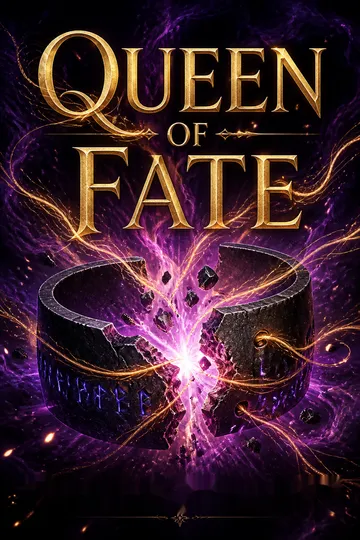
Commands undead and conceals powerCerridwen's ring gives her leverage over the undead and helps her impose her will during the struggle for Lyssandra. It is also a prison for a demon, like the demon contained in Lyssandra's sword. When Lyssandra recognizes the presence inside it and wills it free, the demon leaves the stone and gives her a measure of magic that steadies the power already within her. The ring joins necromancy and summoning in one object, while its release signals Lyssandra's movement away from controlling supernatural beings and toward negotiating with them.
A Study in Shadows Series
About the Author



Download PDF
Download EPUB
.epub digital book format is ideal for reading ebooks on phones, tablets, and e-readers.








