

Plot Summary
Below the Pirate Deck
Elmerah Volund, an Arthali witch, wakes shackled among women pirates have taken to sell. A young Faerune priestess, Saida Fenmyar, uses a hairpin to unlock Elmerah's magic-nullifying cuffs. Elmerah frees the other captives, then the two fight their way onto the deck. Saida knocks pirates down with an oar while Elmerah channels lightning through a cutlass, defeating the captain and crew.
In his cabin, Elmerah finds coins and papers naming her and Saida as requested captives. She hides the documents and escapes by boat with Saida, though the other freed women head separately for shore. Elmerah insists on keeping to herself, but the storm and their shared danger force the strangers to row together.
The rescue begins as a bargain, not a bond. Elmerah helps Saida because the priestess can free her, then chooses to release the others only after Saida insists. Her grudging choices matter: survival has not made her generous, but it has not erased her capacity to act for someone else. Saida, by contrast, turns fear into a claim on responsibility, refusing to treat the other captives as disposable. The scene establishes their friction as productive. Elmerah supplies force; Saida supplies a reason to use it beyond personal escape.
The City Beneath
The storm drives Elmerah and Saida inland to a rough inn, where the keeper warns them that militia patrols are hunting elves and watching for Akkeri. The next morning, the patrol confronts them over their identities and papers. Saida escapes with their supplies while Elmerah fights the soldiers, then a hooded Valeroot elf, Alluin, helps her evade pursuit.
He reveals a hidden route into Galterra through guarded smuggling tunnels. Once inside, the three part ways: Saida heads toward the castle to contact her mother, while Elmerah searches the city's slums for her estranged sister, Rissine. Alluin secretly follows Saida, worried that a Faerune priestess alone in the Capital will attract danger.
Galterra makes prejudice practical: papers, patrols, and unsafe streets decide who may move freely. Alluin's tunnel is not just a shortcut but a miniature alternative society, built by people excluded from official protection. Elmerah and Saida part because their priorities differ, not because their brief alliance has failed. Saida still believes institutions can answer her call; Elmerah trusts neither the city nor its authorities. Alluin's quiet pursuit complicates both positions. He helps strangers while withholding his larger purpose, suggesting that survival in this city depends on alliances that cannot yet be openly named.
Tea at the Textile Shop
Saida reaches the textile shop of Thera, a Faerune elf living in Galterra, and accepts her offer of food and help finding the castle. Thera drugs her tea, then lets Rissine question her about Elmerah. Saida lies about her name but admits the sisters parted, so Rissine plans to use her as bait.
Thera instead hands Saida to the emperor's agents, who carry her to a locked chamber in the castle. When Egrin Dinoba visits, Saida tries to flee and hits an invisible barrier. She realizes he possesses magic, a secret he cannot let her reveal. Egrin keeps her captive without explaining what he intends, while Saida understands that her knowledge has made her more vulnerable.
Saida's confidence in shared identity makes Thera's betrayal particularly sharp. She assumes a fellow Faerune elf will recognize a moral obligation to her, but Thera's life in exile has taught her to seek safety through patronage instead. The capture also shifts the story's scale: Saida is not simply a lost traveler but a political asset, and Egrin's magic exposes a weakness in the public order he represents. Her attempt to escape is brave but uninformed. She learns that truth itself can be a cage when the powerful control who may speak it.
Vessa Names the Warehouse
Elmerah reconnects with Alluin, who explains that Valeroot elves secretly smuggle people out of the city and fear the emperor is breaking old treaties. His sister Vessa, who moves among the guilds, knows rumors of the slave trade. After Elmerah corners her in a tavern, Vessa identifies a dockside warehouse where newly captured women are held.
There, Vessa and armed accomplices ambush Elmerah and Alluin. Elmerah defeats the attackers with swordplay and fire, then learns that Thera can lead them to Rissine. She reveals to Vessa that she is Rissine's sister, but lets Vessa go rather than kill her. The warehouse confirms that the kidnapping was organized, and that Elmerah's family conflict is entangled with a much larger operation.
This discovery turns Elmerah's private grievance into evidence of a system. The warehouse reduces people to cargo, while the guilds and the emperor's politics make exploitation profitable and difficult to challenge. Elmerah's choice to spare Vessa is a meaningful departure from the ruthless persona she performs: she threatens readily, but does not treat every enemy as beyond recovery. Alluin's family conflict mirrors hers, though his sister's compromises differ from Rissine's ambitions. Their growing cooperation is built less on affection than on a shared recognition that personal loyalties can be weaponized by institutions.
A City Turns on Elves
As Elmerah and Alluin try to question Thera, Akkeri fighters burst into Galterra and cut through militia patrols. The attack scatters Rissine's people and draws Elmerah and Alluin into battle. They fight the raiders through the streets, using Elmerah's fire and Alluin's knives to protect civilians before pursuing the survivors toward the castle.
Meanwhile, Egrin removes Saida from her cell and takes her out of the city with his adviser, Daemon Saredoth. He admits the raid was a diversion meant to frighten Galterra into accepting new alliances. Saida is payment to the Akkeri, whose leader has requested her by name. Egrin's bargain makes his own people expendable and turns Saida into the price of manufactured fear.
The raid exposes the gap between the emperor's public duty and his private methods. Egrin does not merely exploit a crisis; he engineers one, sacrificing ordinary people so fear will make his policy appear necessary. Elmerah's intervention is narrower and more immediate: she fights because civilians, especially children, should not die in the streets. That distinction matters. She has not embraced a political cause, but her ethics already exceed her declared indifference. Saida's transfer also links the city's violence to the Akkeri's religious and political demands, making the attack more than a random invasion.
The Akkeri Exchange
At the coast, Egrin and Daemon prepare to hand Saida to an Akkeri boat. Alluin attacks Daemon while Elmerah draws Egrin away, but the emperor pins her in place with invisible pressure. An Akkeri named Merwyn breaks Egrin's hold and urges Elmerah to run. Saida escapes her guard and joins the fight; the fugitives flee on antlioch mounts, with Elmerah bringing Merwyn along.
In the woods, Merwyn explains that the Akkeri believe their ruler can end their curse by marrying a Moon Priestess, a rare Faerune priestess born without magic. Saida is that priestess. Merwyn helped her because he rejects the cruelty of his people and hopes to earn a different life.
The rescue overturns the roles imposed by ancestry. Merwyn belongs to the people Saida fears, yet he acts with more compassion than Egrin's human court. His belief in a curse may be uncertain, but his decision to help is concrete and costly. Saida's identity as a Moon Priestess explains why she was selected, while revealing how religious myth can become a political instrument. Egrin's power is frightening precisely because it leaves no visible weapon to resist. Elmerah and Alluin can fight an army, but in this moment they are saved by an outsider's choice.
Trolls in the Deepwood
The fugitives ride into the deep forest, where Alluin guides them around a wyrm and then toward a rocky shelter. Merwyn explains that many Akkeri believe Saida's marriage to their ruler could restore their original forms, though Saida doubts the legend. At dawn, she decides to carry Merwyn south and warn Faerune, while Elmerah refuses to join her.
On the journey, trolls surround the travelers. Elmerah turns back to draw lightning from the storm and strikes the creatures long enough for the others to escape. The effort drains her and she collapses. Alluin carries her to a Valeroot settlement, where Saida and Merwyn prepare to continue toward Faerune, leaving Elmerah to choose whether she will keep fleeing.
Elmerah's conduct contradicts the story she tells about herself. She insists the lives of strangers are not her responsibility, yet turns back when the trolls threaten the group. Her magic is powerful but not free: every spectacular act leaves her exhausted and dependent on others. Saida's departure is a parallel test of agency. She chooses the long, dangerous route home because silence would betray her people. Neither woman has become fearless; each acts while afraid, but for different communities and different reasons.
The Lie in the Square
After Saida leaves, Egrin publicly accuses Faerune of directing the Akkeri attacks and introduces the Dreilore as the Empire's protectors. The announcement turns suspicion against every elf.
On the road south, Saida hears villagers repeat the accusation and realizes she cannot reach Faerune before the danger grows. She turns back, but Lord Orius, a Dreilore commander, finds her and shoots Merwyn with an arrow. Meanwhile, Alluin returns to his hidden refuge and discovers that Dreilore soldiers have massacred its inhabitants, including his uncle Ured.
Elmerah, who had meant to leave Galterra, meets Alluin in the rain. He tells her the dead were planning to replace Egrin with Isara Saredoth, a royal scholar in Faerune, and she agrees to hear the plan.
Egrin's accusation shows propaganda working as a weapon before armies even march. By presenting a fabricated threat alongside a powerful ally, he turns fear into consent and makes all elves easier to target. Saida's reversal and Alluin's discovery are distinct responses to the same danger: she abandons her safer route, while he confronts the cost of resistance in the bodies of his community. Elmerah's decision to listen is not sudden conversion. It follows the sight of grief she recognizes, and the realization that flight cannot preserve the world she would be fleeing into.
Egrin Hunts Shadowmarsh
Elmerah returns to Galterra to find Rissine, but Egrin captures her in a shack and questions her about Shadowmarsh, where their mother was killed. He believes her elemental magic may come from a source he can exploit, like Faerune's gems or the Dreilore's enchanted metals. Rissine breaks into the shack and drives Egrin back with lightning, then escapes with Elmerah.
She admits Egrin has no intention of restoring the Arthali and has been using her. The sisters recognize that he wants their knowledge and magic, not an alliance. Rissine gives up her original scheme to gain territory through him. For the first time, she and Elmerah share an enemy and begin to consider cooperation, though neither has forgotten the injuries between them.
Egrin's questioning turns family memory into a resource to be mined. Elmerah's childhood is not simply a lost home; it may contain the key to a power the emperor cannot explain or control. Rissine's rescue complicates her ambition. She has pursued status and restoration, yet draws a line when Egrin's interest threatens her sister and herself. Their alliance is therefore neither reconciliation nor trust. It is a tactical reopening of a relationship shaped by old violence, with affection present but carefully guarded.
The Shore's False Faces
Elmerah and Rissine try to leave Galterra by boat, accompanied by someone posing as Thera. Elmerah recognizes the impostor as a Nokken and knocks her into the sea, but Akkeri ambushers attack before the sisters reach shore. Wounded, Elmerah fights through the water and reaches the beach, where Rissine is battling Akkeri and Nokken alongside Daemon.
Saida returns with Merwyn after Orius wounded him, and helps Elmerah resist the Nokken. Alluin arrives on horseback and tramples a Nokken disguised as Daemon, breaking the attackers' advantage. The surviving enemies retreat. With Rissine unconscious and Elmerah bleeding, Alluin and Saida load both sisters onto the animals and leave the exposed coast before reinforcements arrive.
The beach brings the separate plots into physical contact: the slave trade, the Akkeri bargain, the Nokken's opportunism, and the resistance all converge in one ambush. Disguise makes identity unreliable, but actions clarify allegiance. Merwyn returns despite his wound; Saida turns back for him; Alluin follows the storm to find Elmerah. Elmerah and Rissine fight beside one another without resolving their history. Their teamwork is real, but it does not erase distrust. The scene's emotional force comes from this provisional solidarity, a group held together by urgent choices rather than a finished reconciliation.
A Throne Still Missing
At an inn, Elmerah recovers from her wound while Merwyn's condition remains uncertain. Alluin explains that the resistance hopes to place Isara Saredoth, Egrin's royal cousin, on the throne before killing Egrin and Daemon. Saida agrees to help, but reveals Isara left Faerune to study ancient Akkeri temples and has not been heard from.
The group therefore changes course: they will search for Isara and investigate the temples, while stopping at Valeroot settlements for supplies. Rissine chooses a separate path, riding out to rally the scattered Arthali. Elmerah, Saida, Alluin, and Merwyn leave together, no longer merely escaping the Empire but entering a mission whose central ally is missing.
The ending gives the characters direction rather than victory. Egrin remains powerful, Isara is missing, and the political alliance needed to oppose him has not yet been secured. Still, each character has moved beyond an isolated survival strategy. Saida takes responsibility for warning and organizing; Alluin continues his uncle's resistance; Rissine seeks support among her people; Elmerah chooses to travel with the others despite her longstanding wish to disappear. Their coalition remains fragile, but it is now an intentional one.
Epilogue
That evening, four travelers set out with different burdens: Merwyn seeks a chance to live beyond the Akkeri's violence, Saida carries the danger facing Faerune, Alluin grieves his dead and continues the resistance, and Elmerah follows an uncertain adventure with a cutlass at her side.
Rissine rides separately to gather the Arthali. None knows whether Isara can be found or whether Egrin can be stopped. For Elmerah, the road is no longer simply a way out. It is a choice to remain in the company of people whose fate has begun to matter to her.
The closing image offers motion instead of resolution. Each traveler begins from a different relationship to home: Merwyn seeks acceptance, Saida must return to her people, Alluin tries to preserve a scattered community, and Elmerah has spent years treating departure as the only freedom available. Their shared journey does not dissolve those differences, and Rissine's separate ride keeps the family alliance provisional. The epilogue's optimism is deliberately modest. The characters have not won a war; they have chosen not to face the next danger alone.
Analysis
The novel treats exile not as a single historical event but as a continuing arrangement of restricted movement, conditional safety, and inherited suspicion. Elmerah's inability to enter Galterra freely, Saida's capture despite her diplomatic standing, and Alluin's hidden routes all show how political power is felt in bodies and geography. The official city belongs to those who can produce papers or command guards; everyone else survives through concealment, barter, and fragile networks.
The story's central contrast is between belonging and obligation. Elmerah defines herself through refusal: she will not serve the Arthali, the elves, or a cause that might kill her. Yet her repeated interventions reveal that refusal cannot keep her untouched by others. She saves captives, civilians, Saida, and finally the people she once insisted were not her concern. Her change does not erase her anger or make her a conventional hero. It makes her more honest about the relationships her self-protection has tried to deny.
Saida and Merwyn complicate inherited enmity by acting against the expectations attached to their peoples. Saida's education does not prevent her from making mistakes, but captivity develops her judgment. Merwyn's compassion challenges the image of the Akkeri as a single, monstrous bloc without excusing their violence. Their choices suggest that responsibility can cross cultural boundaries, even when trust cannot be assumed.
Egrin's power rests on more than magic. He stages danger, controls information, and offers protection from threats he has helped create. The resulting propaganda turns fear into consent and old prejudice into a tool of government. Against him, the resistance remains improvised and vulnerable. Its hope lies not in a prophecy or a single weapon, but in people who have reason to distrust one another choosing, provisionally, to cooperate. The ending preserves that uncertainty: the allies have a direction, but still must find Isara, reach Faerune, and decide what kind of order could replace the one they oppose.
Review Summary
Characters
Elmerah Volund
Exiled elemental witchAn Arthali witch from the Shadowmarsh line, Elmerah is tall, physically capable, sharp-tongued, and deeply wary of anyone who offers help. Her elemental magic makes her dangerous, but using it can exhaust her, and years of hiding have left her out of practice. She is estranged from her older sister, Rissine, and wants a quiet life far from the politics that destroyed her home. Elmerah's cynicism is partly armor: she expects prejudice and betrayal, so she tries to need no one. Her rough humor and apparent self-interest conceal a strict instinct to protect people who are in immediate danger.
Saida Fenmyar
Moon-touched priestessSaida is a young Faerune priestess whose religious standing connects her to the High Council, though she lacks the magic many members of her order possess. Trained to fight and attentive to the histories of neighboring peoples, she begins the story with little experience beyond her sheltered homeland. Her instinct is to seek help through established ties, but captivity forces her to rely on judgment, courage, and improvisation. Saida is compassionate without being passive: she insists that Elmerah free the other captives and later accepts risks to protect Merwyn. Her sense of duty is both a source of strength and a burden that makes it difficult for her to choose her own safety.
Alluin
Valeroot resistance scoutA Valeroot elf, Alluin is a skilled tracker and fighter who knows Galterra's hidden routes and the people who survive beyond its official order. He is part of a network that helps elves escape the city and gathers information about the emperor. His suspicion of strangers is tempered by a strong sense of responsibility, especially toward Saida and his own community. Alluin is practical where Elmerah is impulsive, yet both are more willing to risk themselves than they admit. His loyalty is shaped by a culture forced to survive without a recognized homeland, and by the older generation's determination to keep its scattered members connected.
Rissine Volund
Ambitious elder sisterRissine is Elmerah's older sister, another Shadowmarsh witch, and a politically ambitious operator in Galterra. She is disciplined, calculating, and determined to restore dignity and power to the Arthali after exile. Her history with Elmerah is intimate but strained, marked by shared loss and incompatible ideas about what survival requires. Rissine believes influence can be won through negotiation and strategic alliances, even with people she distrusts. She is more sentimental than she lets on, though her affection often takes the form of control or expectation. Her confidence makes her formidable, but it can also narrow her view of the risks surrounding her plans.
Egrin Dinoba
Empire's hidden architectEgrin is the human emperor of the Ulrian Empire, a polished ruler whose authority depends on managing both public fear and private alliances. He is patient, calculating, and comfortable treating people as pieces in a political design. His interest in the elves and in the old treaties suggests ambitions beyond ordinary territorial rule. Egrin's manner can seem almost playful, but that lightness makes his threats more unsettling rather than less. He values secrecy and seeks to control what others know, especially when the truth could weaken his legitimacy. His court is orderly on the surface, while its hidden bargains expose the violence supporting that order.
Merwyn
Outcast Akkeri guideMerwyn is a small, physically unimposing Akkeri who has spent much of his life outside the favor of his own people. He knows the woods, the routes into Galterra, and the beliefs surrounding the Akkeri's supposed curse. His cautious manner reflects a life spent avoiding stronger people, but he is willing to take serious risks for Saida. Merwyn hopes that service and compassion might earn him a place somewhere beyond the Akkeri world. He is neither a conventional warrior nor a simple innocent; he carries the prejudices and history of his people while trying to act against their cruelty.
Thera
Exiled elven brokerThera is a Faerune elf who runs a textile shop in Galterra and has built a life among people who do not easily trust her kind. She is socially adept, composed, and skilled at presenting herself as helpful. Her experience of exile has made security and patronage central concerns, leaving her willing to navigate dangerous relationships for protection. Thera's polished manner contrasts with the precariousness of her position: she must read the motives of people more powerful than herself and make herself useful to them. Her shop offers a respectable face to a city where private arrangements often matter more than public rules.
Daemon Saredoth
The emperor's enforcerDaemon is Egrin's close adviser and a member of the Saredoth family. Carefully dressed and self-assured, he helps carry out the emperor's plans and appears comfortable with the power of the court. He is a capable swordsman whose elegance does not make him harmless. Daemon's family ties place him close to the imperial succession, while his position makes him an important link between Egrin and the people charged with enforcing policy. He tends to treat danger as entertainment until it becomes personal.
Vessa
Alluin's compromised sisterVessa is Alluin's Valeroot sister, a socially connected figure who moves among Galterra's guilds and criminal networks. She is quick-witted, ambitious, and accustomed to making compromises for safety and status. Her relationship with Alluin is strained by their different loyalties, though neither seems wholly indifferent to the other. Vessa's choices reflect the pressure placed on marginalized people who seek protection inside systems that also exploit them. She can be charming in company and hard to read when her interests are at stake.
Ured
Valeroot resistance elderUred is Alluin's uncle and a senior figure among the Valeroot elves in Galterra. Long-lived and politically cautious, he has spent years protecting his people and maintaining the network that gives them a measure of independence. He distrusts outsiders, particularly those whose intentions are unclear, but his suspicion grows from responsibility rather than simple hostility. Ured represents an older generation that has survived by keeping its plans and locations secret. His commitment to the Valeroot community shapes Alluin's understanding of loyalty and resistance.
Isara Saredoth
Scholar with royal bloodIsara is a human scholar from the Saredoth family, connected to the imperial line and interested in the histories of other peoples. She has spent time in Faerune and pursued research into ancient Akkeri temples. Her intellectual curiosity sets her apart from the court's more openly political figures, while her family connections make her relevant to questions of succession. Isara is not present in the main action, but her choices and whereabouts matter to those trying to imagine a different future for the Empire.
Lord Orius
Dreilore commanderOrius is a high-ranking Dreilore commander, marked by his noble appearance, white hair, and ember-red eyes. He represents the military power of Salisfait and carries its deep hostility toward Faerune. Orius is disciplined and confident in his authority, treating Saida as a strategic prize rather than a person. His presence gives the emperor's alliance a face and a sword, while his contempt for the Faerune elves reveals that the new political order is built on old rivalries.
Plot Devices
Nullifying restraints
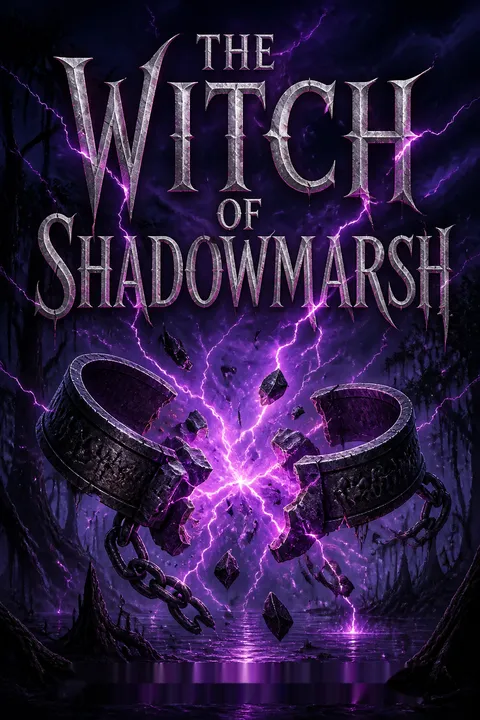
Magic under lockThe pirates' enchanted shackles suppress Elmerah's magic, forcing her to rely on Saida's dexterity before she can fight back. Similar enchanted blades later let enemies counter Arthali power. The devices turn magic from an effortless solution into a resource that can be blocked, exhausted, or redirected. They also give physical form to the political condition of the exiled peoples: their abilities remain, but hostile institutions have learned how to contain them.
Valeroot tunnels
A hidden route through powerAlluin's guarded tunnels let people bypass Galterra's official gates and move through the city without papers. They connect a resistance network to the places where the Empire exerts control, allowing Alluin to help fugitives and gather intelligence. The route is useful but vulnerable: its secrecy protects the Valeroot community, and once discovered, the refuge becomes a target. It makes the city's underground geography a practical expression of the alliances excluded from public life.
Elemental magic
Power with a physical costElmerah channels fire and lightning through weapons, while Rissine can also summon lightning. Their magic gives them an advantage in combat, but powerful uses drain Elmerah and can leave her helpless afterward. Enchanted weapons can nullify that advantage, so each fight requires judgment about when to spend power and when to rely on skill. The magic also draws the emperor's attention to Shadowmarsh, where he suspects its source may lie.
Moon Priestess belief
A person turned into prophecyThe Akkeri belief that a Moon Priestess's marriage to their ruler could lift their curse explains why Saida was requested by name. The legend gives the Akkeri a motive beyond raiding, but it does not establish whether the curse is real. Merwyn's doubts and Saida's status keep the belief from becoming a simple prediction. Instead, it shows how a religious story can shape political decisions, endanger an individual, and create an opening for the emperor to manipulate an entire people.
False-flag attack
Fear engineered into consentEgrin arranges an Akkeri attack on Galterra, then uses the casualties and public panic to justify a new alliance with the Dreilore and accuse Faerune of aggression. The attack allows him to present expansion as protection. Its consequences spread beyond the city: Saida becomes a bargaining piece, villagers repeat the accusation, and elves face growing suspicion. This political device converts private deception into public belief, making it harder for resistance movements to expose the truth.
Moonstone Chronicles Series
About the Author




Download PDF
Download EPUB
.epub digital book format is ideal for reading ebooks on phones, tablets, and e-readers.








