

Key Takeaways
Treat confident forecasts as stories, not privileged access to tomorrow.
The score was sobering. Psychologist Philip Tetlock tested 284 experts who regularly commented on political and economic affairs. Over many years, they made 27,450 probability judgements about specific events. Their collective forecasting was barely better than random guessing. Tetlock assessed not just whether a prediction came true, but whether its stated probability matched the outcome across many forecasts. A forecaster who says an event has a 70 percent chance should be right about 70 percent of the time on similar calls.
Skill still varied. Some experts performed much better than others, but credentials, experience, ideology, and access to classified information did not reliably distinguish them. Thinking style mattered more. Even the strongest forecasters were far from perfect, and a simple rule such as predicting no change sometimes beat them. The lesson is not that expertise is useless, but that expertise about a subject does not grant reliable sight of its future.
The study shifts attention from memorable hits to a forecaster's full record. That is a crucial change in standards: a compelling prediction is not evidence of predictive skill unless misses count, probabilities are explicit, and performance is compared with a reasonable baseline. This resembles good scientific practice, where a theory earns credibility by surviving repeated tests rather than explaining one striking result. The distinction also preserves a useful role for experts. They can clarify present conditions, mechanisms, and plausible outcomes without claiming certainty about which outcome will occur.
Expect surprises where feedback, people, and politics interact.
Small differences can grow. In 1961, meteorologist Edward Lorenz reran a weather simulation using numbers rounded to three decimal places instead of the computer's six. The tiny change produced a dramatically different forecast. This sensitivity to starting conditions became known as the Butterfly Effect. It helps explain why weather can be forecast usefully for a few days, but not reliably far beyond that horizon.
Society is harder still. Oil prices depend on supply and demand, but both are shaped by politics, technology, and social behaviour. Violence in Nigeria's oil-producing Niger Delta can disrupt supply; revolutionary change in Iran once did the same. Human decisions also react to one another, making outcomes harder to calculate than planetary motions. The world is not simply random, but many of its systems are too interconnected and nonlinear for precise long-range prediction.
The important distinction is between knowing a system's general tendencies and knowing its next precise turn. A region may face elevated earthquake risk, or oil supply may be vulnerable to political disruption, without anyone being able to identify the exact event and date. That distinction supports preparation without pretending to prophecy. It also guards against an overcorrection: nonlinear systems do not make every forecast worthless. They make precision and time horizon matter. A short-range weather forecast and a decades-long oil-price prediction are not equally defensible.
Think like a fox: test many explanations, and lower your confidence.
Two styles diverged. Tetlock borrowed the labels fox and hedgehog for contrasting ways of thinking. Foxes draw on multiple perspectives, revise their views, and tolerate uncertainty. Hedgehogs organize the world around one big idea and tend to express strong certainty. In Tetlock's study, foxes generally forecast better. Hedgehogs did especially poorly when they made long-range predictions, and their accuracy sometimes fell when they predicted within their own specialty.
Fame was no guarantee. Tetlock found that experts with larger media profiles tended to be less accurate. Their confident, simple explanations made them effective on television, but those same habits often obscured complications. Fox-like thinking does not make the future transparent. It makes forecasters more willing to ask what could disprove their view, revise estimates, and acknowledge that a plausible story is not the same as a reliable forecast.
Fox-like thinking has a practical strength: it makes disagreement informative. A forecaster who considers competing explanations can identify which assumptions drive a conclusion and what evidence would change it. That is valuable in fields where decisions must be made before certainty is available. Still, open-mindedness alone is not enough. A fox can become indecisive or give every possibility equal weight. The discipline lies in combining intellectual flexibility with clear probabilities, deadlines, and evidence standards, rather than mistaking caution for insight.
Treat today's trend as a starting point, not a destination.
Straight lines seduce. People commonly assume tomorrow will resemble today, with current trends continuing. In 1977, researchers asked about 800 international-affairs experts to predict the future. Many projected the persistence or growth of Communist governments. That was a reasonable extension of the world they knew, but it missed the collapse of most Communist regimes before 2002.
Japan offered another warning. During the 1980s and early 1990s, Japan's rapid growth persuaded prominent writers and economists that it would overtake the United States. Instead, Japan entered a long period of stagnation, while the American economy grew much faster than many had expected. Trend projection is not always foolish: often, tomorrow does resemble today. Its weakness is that it is least reliable when a trend bends, which is precisely when forecasts matter most.
A trend is evidence, but it is not a promise. The more useful question is not simply whether a line points upward, but what could change the conditions that produced it. That approach resembles stress testing: instead of accepting one projected path, decision-makers examine how sensitive it is to shocks, policy changes, or new technology. The book's examples also counsel against treating past reversals as proof that the opposite outcome is now certain. Japan's stagnation did not make every new economic giant destined to fail. It made confident extrapolation a poor substitute for analysis.
When uncertainty bites, notice how fear makes certainty feel true.
Not knowing hurts. The book links the appetite for predictions to a basic desire for control. In one experiment, volunteers faced either a series of strong but predictable electrical shocks or mostly mild shocks with a few stronger ones delivered unpredictably. The unpredictable sequence caused more fear. Knowing that something unpleasant is coming can feel easier than not knowing what will happen.
The 1970s show the pull. Economic troubles, oil shortages, social upheaval, and frightening environmental warnings left many people expecting disaster. Predictions of famine, national collapse, and the end of prosperity offered a definite story amid the turmoil. The forecasts often failed, but their certainty met a real emotional need. This helps explain why people keep asking for predictions even after experts have repeatedly been wrong: uncertainty itself can feel like a threat.
The emotional value of certainty helps explain why a bleak forecast can feel reassuring. It converts an open field of possibilities into one painful, settled outcome. That can be psychologically comforting, but it can also encourage unnecessary despair or premature commitment. The useful response is not to suppress concern. It is to separate emotional relief from evidential strength: a prediction may feel convincing because it resolves anxiety, not because it describes the most likely future. This distinction matters especially when fear is driving consequential choices.
A polished performance can make nonsense sound expert.
Style can overwhelm substance. In a 1970s experiment, researchers invented a professor named Myron Fox and gave him an impressive biography. An actor delivered a deliberately incoherent lecture filled with jargon, contradictions, and jokes. The audience consisted of educated professionals and students. They rated the performance positively, and many said it stimulated their thinking, despite the lack of meaningful content.
Confidence carries weight. People also tend to treat confident speakers as more reliable, even when confidence does not track accuracy. Titles, institutional affiliations, and status symbols can further shape judgement. A clear, entertaining story is easy to follow and remember, while a careful explanation full of qualifications is less satisfying. That creates an advantage for pundits who sound certain and decisive, not necessarily for those whose forecasts prove most accurate.
The lesson is not to distrust every engaging speaker. Clear communication is a genuine skill, and technical uncertainty should not be used to excuse muddled reasoning. The danger comes when presentation substitutes for evidence. A useful habit is to ask what claim is being made, how it could be tested, and whether the speaker's past record is available. That protects against both celebrity and jargon: neither polish nor complexity is a proxy for accuracy. The most responsible communicator makes uncertainty understandable rather than hiding it.
Make forecasters date and score claims before memory edits the record.
Misses are easy to erase. In 1955, Marian Keech and her followers expected a catastrophe and a rescue by aliens on a specific date. When nothing happened, they reinterpreted the prediction: their faith had supposedly saved the world. Their commitment made admitting failure harder. Experts face a milder version of the same pressure. After the Soviet Union collapsed, Tetlock found that experts often remembered their earlier estimates as much more favorable to that outcome than they had actually been, sometimes by 30 or 40 percentage points.
A record limits revision. Predictions are also selectively remembered: a correct call attracts attention, while failed calls fade from view. Recording the exact claim, probability, and deadline in advance makes it harder to redefine the forecast afterward. Scoring many predictions, rather than celebrating one apparent hit, reveals whether confidence was deserved.
A forecast log is a small procedural safeguard against a large human weakness. It does not guarantee better judgement, but it makes learning possible by preserving what was believed before the outcome became obvious. The same method can improve organizational decisions: teams can compare predictions with results without turning review into a search for someone to blame. The challenge is cultural as much as technical. If a failed estimate threatens status or employment, people have strong reasons to reinterpret it. Accountability works best when accuracy is rewarded more than bravado.
Choose actions that still work when your forecast is wrong.
Plan across possible futures. The Paddocks and Paul Ehrlich urged rich countries to stop sending food aid to nations they considered beyond rescue. Their recommendation depended on predictions of imminent famine. Because those predictions were wrong, following the advice could have worsened hunger. A decision that looks sensible only if one forecast is correct is fragile.
Prefer robust choices. Carter's call for conservation and alternative energy remained useful even though his prediction that oil would soon run out proved wrong. Greater efficiency and more diverse energy sources could reduce exposure to price shocks and political instability as well as oil dependence. This is a better use of forecasting: identify plausible risks, then choose actions that retain value across several outcomes. Shorter time horizons and explicit probabilities can support planning without pretending uncertainty has disappeared.
Robust decisions shift attention from predicting perfectly to limiting regret. The question becomes: which choice performs acceptably under several plausible outcomes, including an outcome the decision-maker dislikes? This approach is useful in public policy, business, and personal finance because it reduces dependence on one fragile assumption. It is not a universal answer. Some choices impose costs now for benefits that depend on future conditions, so trade-offs remain. But laying out those trade-offs openly is better than presenting a forecast as a guarantee.
Analysis
The book's deepest argument is not simply that experts make bad predictions. It is that prediction is a social product built from three interacting failures: the world resists precise forecasting, the human mind turns uncertainty into stories, and public attention rewards the stories that sound most certain. Those layers reinforce one another. Nonlinear events create genuine surprises; hindsight and confirmation bias then make the surprise seem foreseeable; media incentives elevate the confident person who claims to have seen it coming. The result is a market for certainty with weak feedback from accuracy.
Tetlock's research supplies the empirical spine, while the historical episodes show what the statistics feel like in practice. The examples of oil, Japan, population, and the 1970s are not merely collections of failed calls. They reveal how forecasts inherit the assumptions of their moment. An expert can be knowledgeable about present conditions and still mistake continuity for destiny. The contrast between foxes and hedgehogs is memorable because it makes style consequential: intellectual flexibility can improve judgement, but it cannot abolish uncertainty.
The book's most practical contribution is therefore a change in decision standards. Forecasts should be specific enough to score, uncertainty should be stated rather than concealed, and policies should be tested against futures that contradict the central prediction. This does not make prediction irrelevant. Everyday planning, insurance, and short-range forecasting depend on estimates that can be useful. The distinction is between bounded forecasts supported by repeated evidence and sweeping claims about complex systems over long horizons.
One tension remains productive. The book's many vivid failures can themselves create a memorable story that experts are useless. That conclusion would repeat the same mistake in reverse. Some forecasters do better than others, and careful expertise remains essential to understanding mechanisms and options. The more defensible lesson is narrower: confidence, fame, and a good narrative do not establish predictive ability. Reliable judgement requires transparent probabilities, recorded outcomes, and humility about what cannot be known.
Review Summary
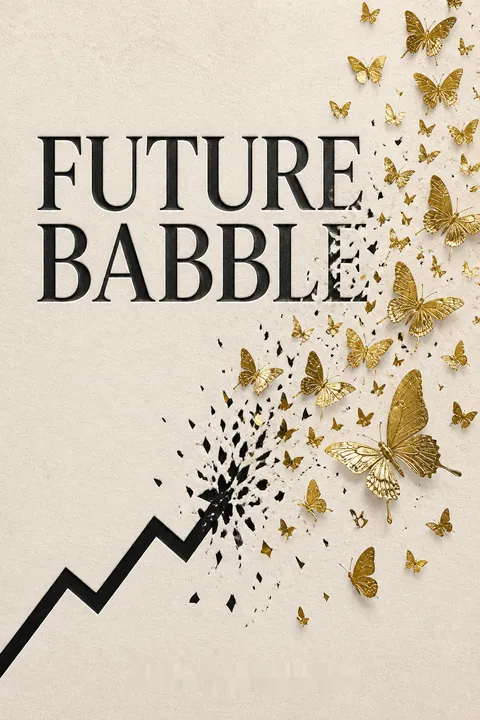
Future Babble examines why expert predictions consistently fail yet remain persuasive. Reviewers appreciate Gardner's exploration of cognitive biases, hindsight, and our craving for certainty over accuracy, noting how confident "hedgehogs" attract more attention than cautious "foxes." Many found the book repetitive, suggesting it could have been shorter, with excessive examples of failed predictions. The final chapter, discussing practical approaches to better forecasting, received particular praise. Some criticized Gardner's evolutionary psychology explanations and perceived arrogance. Most recommend reading Superforecasting instead, which covers similar ground more effectively. Overall, readers value the skepticism toward predictions but desire more actionable guidance.
People Also Read






Glossary
calibration
Probability accuracyA measure of whether stated probabilities match observed frequencies across many predictions. If a forecaster says an event has a 70 percent chance in a large set of cases, calibration asks whether events in that category happen about 70 percent of the time. It evaluates confidence levels across a record, not one isolated call.
discrimination
Separating likelier outcomesA measure of whether a forecaster assigns higher probabilities to events that occur than to events that do not. Calibration rewards accurate probability estimates overall, while discrimination rewards distinguishing between outcomes rather than assigning similar odds to everything. In Tetlock's study, it was used alongside calibration to assess forecasting performance.
foxes
Flexible, self-questioning thinkersTetlock's label for forecasters who draw on multiple perspectives, tolerate uncertainty, and revise beliefs when evidence changes. Foxes tend to avoid relying on one explanatory idea and are more willing to admit error. In Tetlock's study, this style generally produced better predictions than the more rigid, confident style he called hedgehogs.
hedgehogs
Single-idea, confident thinkersTetlock's label for forecasters who interpret events through one dominant idea and favor clear, confident conclusions. This style can produce compelling explanations, but it tends to resist complexity and contradictory evidence. In Tetlock's research, hedgehogs generally forecasted less accurately, particularly on long-range questions.
Butterfly Effect
Small changes amplifyThe idea that tiny differences in a system's starting conditions can grow into large differences in its later state. Edward Lorenz encountered the effect when slightly rounded inputs produced a dramatically different weather simulation. It illustrates why long-range forecasts can fail in systems that are sensitive to small changes.
anchoring-and-adjustment heuristic
Estimates cling to starting numbersA mental shortcut in which people begin with an available number, called an anchor, and adjust it to make an estimate. The adjustment is often insufficient, so the starting number influences the final answer even when it is arbitrary or irrelevant. A current price, for example, can shape estimates of a future price.
availability heuristic
Recall guides likelihood judgementsA mental shortcut that estimates how common or likely something is by how easily examples come to mind. Vivid, recent, or widely reported events are especially easy to recall, so they can seem more probable than they are. After a dramatic terrorist attack, for instance, people may overestimate the likelihood of another one.
cognitive dissonance
Discomfort from conflicting beliefsThe mental strain that arises when beliefs, actions, or new evidence conflict. People often reduce the discomfort by changing how they interpret the evidence, revising a memory, or adopting a new explanation rather than abandoning a strongly held belief. Commitment to a failed prediction can therefore inspire rationalizations that make it seem successful.
hindsight bias
Outcomes seem predictable afterwardThe tendency to judge an event as more likely after learning that it occurred, and to remember earlier expectations as more accurate than they were. Knowing the result makes explanations easier to construct, which can distort both judgement and memory. It can leave forecasters believing they saw an outcome coming when their recorded estimates did not.
seer-sucker theory
Demand sustains false prophetsScott Armstrong's phrase for the persistent market for people who claim to foresee the future. Evidence that reliable seers do not exist does not eliminate demand for them; people continue to pay attention to confident forecasters. The idea captures how the desire for certainty can sustain prediction businesses despite poor records.
Download PDF
Download EPUB
.epub digital book format is ideal for reading ebooks on phones, tablets, and e-readers.








