

Key Takeaways
Treat your career as a series of experiments, not a single lifelong plan
Paths take shape in motion. Gillian Zoe Segal expected law school to lead to a financially secure business career. Instead, a photography class reminded her what she loved, and she built a book by researching publishers and approaching them herself. Many of the people she interviews also began without a final destination: Leslie Moonves moved from acting to television production, and Jim Koch discovered brewing after years in school, consulting, and outdoor instruction.
Use each step as evidence. The book’s central argument is that careers often become clear through trying work, noticing what fits, and acting on new openings. A job can teach a skill or introduce a person who matters, even if it is not the intended destination. The route may look coherent only in retrospect.
This approach resembles exploratory learning: people often discover preferences through experience rather than accurate advance prediction. A first job becomes useful not only for its title or pay, but because it reveals which tasks energize, drain, or develop someone. The caution is that flexibility is easier when a person has financial room, supportive relationships, or access to new opportunities. A winding path should not be romanticized as effortless. The practical lesson is to make small, informative moves where possible, then update the plan instead of treating an early choice as a permanent identity.
Choose work where passion meets a skill you can steadily deepen
Interest supplies endurance. Segal’s interviewees repeatedly connect enthusiasm with the stamina to withstand long stretches of difficulty. Jim Koch loved brewing enough to keep building a company after investors and wholesalers turned him down. Jillian Michaels returned to fitness after an unhappy detour into talent representation, recognizing that helping clients regain strength mattered to her.
Know your useful limits. Warren Buffett calls the areas he understands well his “circle of competence.” He argues that its value lies less in its size than in knowing where it ends. He focuses on understandable businesses rather than pretending to evaluate every opportunity. Passion alone is not a business plan: Koch also insists on product quality, and Sara Blakely spent a year researching, patenting, and developing Spanx before launching it.
The combination of motivation and competence is stronger than either alone. Research on deliberate practice emphasizes that sustained improvement requires effort directed at specific skills, not merely enthusiasm. The interviews add a useful test: does the work’s difficulty still feel worth engaging with? Yet passion can also make people tolerate poor conditions or confuse obsession with fit. Buffett’s boundary-setting offers a counterweight: commitment is not a requirement to pursue every appealing possibility. A durable career needs both energy for the work and a realistic view of what one can learn, contribute, and sustain.
Let rejection redirect your method, not erase your ambition
A no can change the route. Sara Blakely failed the LSAT twice, then took a job selling fax machines. The cold-calling experience helped her become comfortable with rejection, a skill she later used to approach factories about making Spanx. Matthew Weiner faced years of rejected pitches for Mad Men before AMC agreed to produce it. He had written the script, kept improving it, and continued taking it to potential partners.
Separate refusal from diagnosis. Weiner warns against rebuilding creative work around every explanation offered by someone who rejects it. A stated reason may be a polite excuse, not a reliable assessment. David Boies offers a complementary practice: learn from setbacks without letting a single good or bad result define the next decision. Persistence matters, but so does deciding which feedback deserves attention.
Rejection is information, but it is noisy information. A failed pitch may reflect timing, audience, access, or execution, and those causes call for different responses. This is close to the logic of scientific inquiry: preserve the question, revise the method, and test again. The nuance is that persistence can become sunk-cost thinking if evidence of poor fit is ignored. Blakely’s story is compelling because she kept moving through concrete steps, not because every rejected idea deserves endless defense. The useful habit is to ask what the setback actually tells the person, rather than accepting its most discouraging interpretation.
When gatekeepers block the route, build proof on another path
Create evidence yourself. Anderson Cooper could not get an entry-level network interview, so he left a fact-checking job, traveled to Burma with a borrowed camera, and sold Channel One his footage. His employer had seen him as a fact-checker; the reporting gave it a reason to see him differently. Sara Blakely also shifted from phone calls to in-person visits when mills dismissed her shapewear idea remotely.
Make access easier to grant. Michael Bloomberg sought early feedback on his financial information service by bringing coffee and tea to Merrill Lynch employees he hoped to speak with. Wendy Kopp sent her proposal widely, sought allies, and demonstrated that students wanted to join her teaching initiative. Each found a way to show potential supporters something concrete instead of waiting for permission to begin.
These examples turn initiative into a form of proof. In organizational settings, gatekeepers often rely on familiar credentials because they have limited time and uncertainty about new candidates. A small demonstration, pilot, or sample can lower that uncertainty. This also resembles entrepreneurial bootstrapping: use available resources to test demand before securing large-scale backing. The approach has limits. Cooper’s reporting involved real danger, and not every person can safely or affordably bypass formal channels. The transferable idea is not to ignore safeguards, but to identify a lower-risk way to demonstrate capability when the usual route is closed.
Make room for breakthroughs by doing the unglamorous work first
Finished work takes time. Jeff Kinney spent four years filling a sketchbook with ideas for Diary of a Wimpy Kid, then another four years reaching a draft he wanted to show people. His long process included repeatedly reworking jokes and characters. David Boies describes a similar hidden labor in trial work: extensive reading, interviews, and research allow him to respond effectively when an opening appears in court.
Test before scaling. Scientist J. Craig Venter says his team used quick experiments to find out whether a research direction was promising, then focused intensely when results justified it. That habit helped his team pursue shotgun sequencing despite resistance to the approach. These stories counter the myth that achievement arrives fully formed. Ideas matter, but practice, preparation, and early tests turn them into something others can evaluate.
The contrast between visible achievement and invisible preparation is central to many fields. Deliberate practice, prototyping, and rehearsal all reduce the distance between intention and reliable performance. Kinney’s slow development and Venter’s quick tests may look opposed, but they address different uncertainties: craft may need extended refinement, while a hypothesis can often be screened early. The distinction matters. Endless polishing can delay useful feedback, while premature release can weaken work that needs care. A productive process alternates between making, testing, and improving, with the pace matched to the task.
Borrow judgment from mentors, and build teams that complement you
Learn from real models. Buffett credits mentors such as Benjamin Graham and Tom Murphy with shaping his work and judgment. He advises seeking people one respects, while also learning by noticing what ineffective leaders do wrong. Nitin Nohria remembers a seventh-grade English teacher who gave him books beyond the prescribed curriculum, widening his sense of what he could study.
Pair different strengths. Ian Schrager and Steve Rubell succeeded partly because Schrager focused on design and detail while Rubell excelled at social connection. Craig Newmark recognized that management was not his strength and hired Jim Buckmaster to run Craigslist. Venter likewise describes science as collaborative work across disciplines. A good team does more than add labor: it combines abilities that one person does not possess.
Mentorship is often described as advice, but these accounts show several forms of influence: access to unfamiliar ideas, demonstration of standards, candid feedback, and complementary partnership. Social learning can make tacit knowledge visible, especially when a novice cannot yet articulate what good judgment looks like. Still, mentors are not infallible, and copying a successful person’s style can obscure differences in temperament or circumstance. The strongest relationships expand a person’s options without replacing independent judgment. Team design follows the same principle: shared values matter, but useful collaboration also needs distinct strengths and clear trust.
Separate frightening risks from genuinely dangerous ones before you leap
Fear can mislabel danger. Jim Koch learned from mountaineering to distinguish an objective risk, which can cause real harm, from a subjective risk, which feels threatening but may be manageable. His students feared rappelling down a cliff, though the equipment was secure; a gentle-looking glacier could be more dangerous because unstable snow might trigger an avalanche. He applied the distinction to entrepreneurship: leaving consulting seemed risky, but staying indefinitely in work he disliked could cost years.
Plan for mistakes. Koch pursued the Boston Beer Company after established investors rejected the idea. Buffett offers a related rule for business decisions: mistakes will happen, but avoid errors that are fatal. This is not a case for reckless optimism. It is a prompt to examine the actual downside, the available fallback options, and what inaction would cost.
Risk analysis improves when probability, severity, and reversibility are considered separately. A frightening choice may be recoverable, while a comfortable default can quietly accumulate costs. This framework also helps explain why a career change should not be judged by immediate uncertainty alone. Still, the interviews feature people whose bets worked out, which can make risk-taking look more reliable than it is. A sound decision process does not guarantee success; it makes the downside visible and limits catastrophic exposure. Courage is most useful when paired with preparation, not when it substitutes for it.
Measure success by what your work contributes, not only what it earns
Build value beyond profit. Muhammad Yunus began by lending the equivalent of twenty-seven dollars to forty-two villagers trapped by moneylenders. He then created Grameen Bank to provide small loans to people traditional banks considered uncreditworthy. The bank came to focus heavily on women borrowers, who made up 97 percent of its borrowers in the account presented here. Yunus calls ventures that return the investor’s original money but reinvest later profits for social impact “social businesses.”
Purpose can shape the product. Craigslist grew from Newmark’s effort to share local events and help people connect, and it kept community service central as it expanded. Gary Hirshberg built Stonyfield around organic food and environmental responsibility, even when those commitments made growth harder. These examples make contribution part of the business model, not merely a charitable afterthought.
The cases broaden the definition of organizational performance: a venture can be evaluated by whom it serves, what need it addresses, and how it distributes benefits, as well as by revenue. This connects to social enterprise and stakeholder approaches to business, which treat community effects as part of the enterprise’s responsibilities. The hard question is measurement. Good intentions do not prove that a program works, and social goals can conflict with financial sustainability. Yunus’s model is powerful precisely because it tries to make both explicit. Purpose is most durable when paired with evidence about outcomes and a model capable of continuing.
Protect the life outside work by choosing priorities in seasons
Ambition has a calendar. Stacey Snider describes changing roles as her children grew, leaving a job whose constant demands no longer fit the family life she wanted. Kathy Ireland says that having everything does not mean doing everything at once; different periods call for different priorities. Her company also learned a business version of this lesson when Kmart’s bankruptcy threatened its finances: relying on one major retailer had left the company exposed, so it expanded sales through independent stores too.
Choose deliberately. These stories suggest that success is not a permanent maximum of work, family, income, and recognition. It requires decisions about what deserves attention now, what can wait, and where dependence has become too great. A career can remain ambitious while its shape changes. The point is not to pursue less, but to avoid treating every opportunity as equally urgent.
This idea connects to life-course thinking: responsibilities and capacities change, so a sensible definition of balance must change with them. It also resists the false choice between ambition and care by making prioritization explicit. Yet calling life seasonal should not conceal unequal burdens. Care work, financial constraints, and workplace policies affect who can change pace and at what cost. Personal planning helps, but it cannot solve structural limits by itself. The most useful question is not whether someone has achieved an abstract ideal of balance, but whether their current commitments reflect their values and remain sustainable.
Analysis
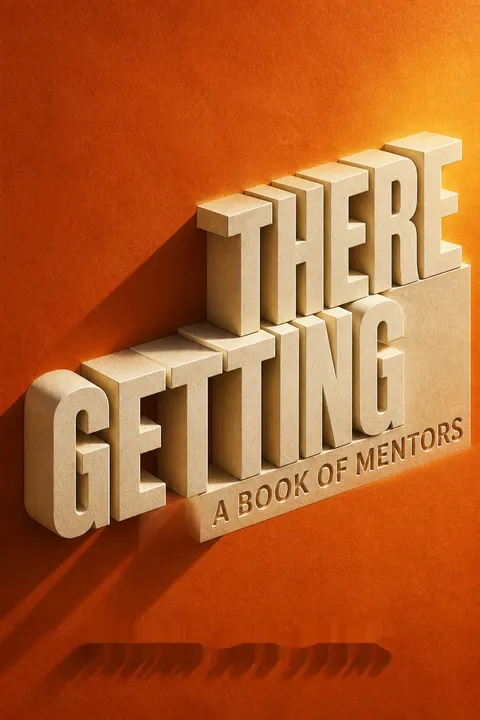
Getting There is a collection of career histories rather than a single prescriptive system. Its strongest argument emerges through contrast: a scientist, journalist, artist, chef, investor, and social entrepreneur take radically different routes, yet many rely on similar practices. They experiment before claiming certainty, keep working through rejection, learn from people around them, and develop a recognizable strength. The book therefore makes a useful distinction between having a fixed plan and having direction. A person can act with conviction without knowing the final destination.
The interview format gives these lessons texture. A failed exam redirects Blakely toward sales; Cooper turns a low-status fact-checking role into a chance to report; Yunus discovers that a tiny loan can expose a much larger failure in the banking system. In each case, a story makes an abstract trait, such as persistence or curiosity, observable in decisions. The variety also prevents success from being reduced to one personality type. Some interviewees are methodical, others improvisational; some build teams, others initially work alone.
That variety is also a reason to read the advice critically. These are people selected because they achieved unusual prominence, so their stories cannot show how often similar risks fail. Retrospective narratives make winding paths seem more coherent than they felt at the time, and individual persistence cannot erase unequal access to money, education, safety, or influential contacts. The book’s lessons work best as prompts for judgment, not universal rules. Passion can sustain effort, but it cannot guarantee a market. A mentor can open a door, but not everyone starts near one. Risk-taking is useful when the downside is understood, and persistence is useful when paired with learning.
The practical value lies in the questions the stories invite: What work holds attention beyond its prestige? What skill is becoming stronger? Which obstacle can be routed around? What feedback is credible? What cost is being mistaken for safety? Read this way, the book is less a manual for becoming famous than a field guide to building a working life through observation, effort, and revision.
Review Summary
Getting There by Gillian Zoe Segal is a collection of success stories from 30 diverse mentors across various fields. Readers appreciate the candid first-person accounts, which highlight common themes of resilience, hard work, and passion. Many found the book inspirational and enjoyed the variety of perspectives. Some critics noted repetitive advice and wished for more depth. Overall, reviewers praised the book for its motivational content and relatable stories, making it a valuable read for those seeking career inspiration or life advice.
People Also Read









Glossary
circle of competence
Area one understands wellA boundary around the kinds of work, businesses, or decisions a person can judge with genuine understanding. Buffett argues that recognizing the boundary matters more than making it large. Knowing what lies outside it helps someone avoid false confidence and focus effort where their knowledge is useful.
newspaper test
Publicity check for conductA standard Buffett asks managers to apply to their actions: imagine the decision reported in the local newspaper by a smart, skeptical reporter and read by family, friends, and neighbors. If the action would be embarrassing or difficult to defend publicly, it should not be taken, even if it is technically legal.
objective risk
Risk of actual harmKoch’s term for a hazard that can cause concrete damage, such as an avalanche on unstable snow. It contrasts with a risk that mainly feels frightening. The distinction encourages decision-makers to assess the real conditions and consequences of an action rather than treating fear itself as proof of danger.
subjective risk
Risk that feels threateningKoch’s term for a situation that feels dangerous or intimidating even when its actual hazard may be limited. His example is a properly secured rappel that frightens students. The concept helps separate emotional discomfort from material danger, while still leaving room to assess the conditions carefully.
shotgun sequencing
Sequencing DNA in piecesA genetic sequencing approach described by Venter in which DNA is read in smaller pieces as part of determining a larger genome. His team argued that this method could help sequence the human genome faster than the government project’s approach. Its use became central to Celera Genomics’ effort to sequence the genome.
microcredit
Small loans for borrowersA form of lending involving small loans, developed in Yunus’s work with people excluded from conventional banking. Grameen Bank offered loans without traditional collateral and brought banking services into villages. The loans were intended to help borrowers establish income-generating activities, rather than leave them dependent on moneylenders.
social business
Business built for social impactYunus’s term for a venture designed to address a social problem. Investors recover the money they put in, while profits beyond repayment are reinvested in the business rather than distributed as personal profit. Its success is judged primarily by the positive social effect it produces.
Bilbao effect
Cultural project revitalizes a cityThe name given to the transformation associated with Frank Gehry’s Guggenheim Museum in Bilbao, Spain. The museum opened in 1996, attracted visitors, and became a source of civic pride as the city sought to move beyond industrial decline. Other cities later tried to reproduce the same kind of cultural and economic uplift.
Download PDF
Download EPUB
.epub digital book format is ideal for reading ebooks on phones, tablets, and e-readers.








