

Key Takeaways
Read beyond the label until evidence changes what you believe about yourself
A poor start was not proof. In fifth grade, Ben Carson was mocked as the class dummy and earned failing grades. He also could barely read the classroom board because he needed glasses. His mother limited television to three programs a week and required two book reports weekly. Ben chose books about animals, plants, and rocks, building knowledge around what already interested him. When he correctly identified a piece of obsidian in science class, he began to see himself differently. By seventh grade, the boy who had struggled academically was at the top of his class.
Reading made progress visible. Books did more than supply facts: they gave Ben proof that effort could change his performance. The story’s turning point is not a sudden discovery of hidden genius, but a new routine that let knowledge accumulate.
What's striking is how a concrete success can disrupt an identity imposed by repeated failure. Educational psychology describes a similar benefit when learners receive evidence that ability can grow through practice, rather than treating early performance as destiny. Ben's glasses also matter: what looked like low ability partly reflected an unaddressed barrier. The caution is that reading and determination do not erase unequal schooling, poverty, or discrimination. The story is strongest as an account of a pathway opened by support and sustained practice, not as proof that every child can overcome any obstacle alone.
Turn ambition into daily choices, especially when money is scarce
A goal needs a routine. After Ben's father left, his mother, Sonya, worked several jobs and carefully saved toward moving the family back to their Detroit home. The boys rode bicycles to school rather than spend bus fare, and even small deposits from returned bottles mattered. Sonya made education part of the household's daily priorities, not just a distant hope.
Scarcity became visible. As a teenager, Ben wanted a costly shirt to fit in. His mother let him manage the family's weekly income, about one hundred dollars. After groceries and bills, he understood why the shirt was beyond their means, and how much work his mother did to keep the household going. The lesson did not make poverty easy; it made trade-offs real and redirected Ben toward study.
The household budget becomes a form of practical education. Ben learns that resources are finite, choices have opportunity costs, and another person's labor can be invisible until one has to manage its proceeds. This resembles experiential learning: responsibility makes abstract economics tangible. Sonya's example also turns aspiration into repeated actions, from saving to prioritizing school. Still, individual budgeting cannot solve structural poverty. The insight is not that hardship is secretly beneficial, but that clear constraints can teach judgment when adults provide guidance and young people have meaningful choices.
Refuse to treat prejudice as a verdict on your ability
Achievement did not end racism. Ben encountered white classmates who treated Blackness as shameful, was threatened and attacked by older boys, and quit football after white men threatened him and his brother. At a school assembly, a teacher used Ben's academic award to suggest white students should have outperformed him. Later, a gym teacher lowered Ben's A to a B, preventing him from earning straight A's.
He kept learning anyway. Ben rarely told his mother about these incidents because he did not want her to worry. He continued to study and earned academic recognition, but his success did not make the unfair treatment disappear. The biography presents education as a route toward opportunity, while also showing that capable students may face barriers unrelated to their effort or intelligence.
This account makes an important distinction between self-belief and social treatment. Academic achievement can challenge a stereotype, but it cannot guarantee fair evaluation or safety; Ben's changed grade is a blunt example of institutional power overriding performance. Contemporary work on stereotype threat and discrimination likewise cautions that environments shape what people can demonstrate and how others interpret it. The narrative honors Ben's persistence without needing to claim that merit reliably defeats bias. Its most useful implication is that young people deserve both encouragement to develop their abilities and adults willing to confront discriminatory systems.
Interrupt anger before one impulsive second decides your future
A close call forced honesty. As a teenager, Ben sometimes reacted violently when angry. He injured classmates during fights, then dismissed the behavior as unintentional. The turning point came when a disagreement over a radio station escalated: Ben lunged at his friend Bob with a knife. The blade struck a metal belt buckle and broke, narrowly avoiding a potentially fatal injury.
He recognized the danger. Shaken by what he had nearly done, Ben admitted he could not control his temper on his own. He prayed, read biblical passages about anger, and described experiencing a lasting change in how he responded. The episode matters because he stops defending his self-image as a good person and faces the consequences his behavior could have caused.
The scene shows why acknowledging a pattern matters more than explaining away a single incident. In behavioral terms, the knife, the argument, and the immediate reaction formed a dangerous chain, and the near miss made its possible outcome impossible to ignore. Ben credits faith with helping him change, a source of meaning and resolve that should be understood on his terms. The account does not detail a repeatable anger-management method or outside professional support, so it should not be read as a universal treatment plan. Its broader lesson is to seek help before a crisis becomes irreversible.
Change your study method when effort isn't producing understanding
Cramming stopped working. At Yale, Ben fell behind in chemistry and faced failing the course. He studied overnight before the final and later recalled dreaming about the exam's problems, which he interpreted as divine help. He promised himself not to depend on a last-minute rescue again. The episode became a warning about the gap between short-term performance and steady preparation.
He found a better fit. In medical school, lecture-heavy classes left Ben struggling despite long hours. He learned most effectively from reading, so he built his work around textbooks, classmates' notes, flash cards, and hands-on labs. He also divided study time into focused stretches with short breaks. The shift helped him improve. His response was not simply to work harder, but to identify how he learned and change the method.
This is a useful model of metacognition: the learner observes which conditions produce understanding, then adapts the process instead of treating difficulty as a fixed limit. The account also distinguishes durable learning from cramming, which can produce a passing score without long-term command of material. Ben's dream is presented as a miracle in his own religious interpretation, not as evidence that preparation is unnecessary. The practical lesson is almost the reverse: the extraordinary experience strengthens his commitment to consistent study. A good method still depends on feedback, access to resources, and time to practice.
Use THINK BIG as a checklist for ability, character, and service
The framework joins skills and conduct. Ben's named THINK BIG philosophy assigns a principle to each letter: talent, honesty, insight from others, niceness, knowledge, books, in-depth learning, and God. Talent means identifying what one does well; honesty and kindness shape how one treats people; insight means learning from those with experience. Books and deeper study support knowledge, while faith supplies the spiritual grounding in Ben's version of the framework.
Examples give the list weight. Ben recalls a high-achieving Yale classmate who cheated and was not accepted to medical school. His mother's observations of the wealthy families she worked for taught her sons to notice habits, such as how people used their time. The framework therefore treats success as more than raw ability: it combines learning, ethics, and purpose.
THINK BIG is memorable because it resists reducing achievement to intelligence or credentials. It links competence to honesty, relationships, and a reason to use one's abilities for others. That combination resembles character education, where habits of judgment and conduct are treated as part of learning rather than decoration. The framework is explicitly shaped by Carson's Christian worldview, especially its final principle, so it should not be mistaken for a value-neutral formula. Readers can still examine which commitments guide their own decisions, while recognizing that moral character alone cannot remove external barriers to success.
Turn overlooked strengths into methods that improve the work
A summer job revealed a strength. Between college and medical school, Ben operated a large overhead crane at a steel company. The job required him to picture heavy pieces of metal moving through narrow spaces and being placed precisely. He realized he had an unusual ability to visualize objects in three dimensions, a skill he later connected to surgery.
Curiosity became a contribution. While observing a neurosurgical procedure, Ben heard a surgeon describe the difficulty of locating a small opening at the base of the skull. He wondered whether imaging could make the process easier. After experimenting with X-rays and metal rings, he developed a way to locate the opening without repeatedly probing with a needle. He hesitated to present the idea because he was a student, but his teachers adopted it.
The crane and the surgical procedure illustrate transfer: a capability developed in one setting can become useful in another when someone recognizes the underlying skill. Ben's three-dimensional visualization was not an abstract gift until a specific job exposed it and surgery gave it a new application. This is a reminder to look for patterns in what feels intuitive, not only for formal achievements. Yet a single successful connection does not mean every hobby predicts a career. The more general principle is to pair self-observation with experimentation, expert feedback, and a willingness to test an idea.
Prepare breakthroughs through rehearsal, collaboration, and disciplined adaptation
Preparation made a rare operation possible. Patrick and Benjamin Binder were twins joined at the back of their heads. Their separation required about seventy medical personnel. Before surgery, the team held five lengthy rehearsals with life-size models, discussing possible problems and planning where each person would work. The operation lasted twenty-two hours, with the doctors facing heavy bleeding and a narrow window to restore circulation.
The team kept learning. Years later, Ben helped separate Joseph and Luka Banda, twins joined at the top of their heads. Computer-based three-dimensional imaging let him examine their anatomy before surgery. The operation lasted twenty-eight hours, yet the team reported little blood loss. The successful separation depended on planning, specialized expertise, coordination, and adjustments as the surgeons encountered the actual anatomy.
These operations are compelling not because one surgeon acts alone, but because complex work depends on a system that anticipates failure and coordinates expertise. Rehearsal, simulation, and shared situational awareness are now familiar principles in fields from aviation to emergency medicine. The biography's portrait of Ben's skill is inseparable from the anesthesiologists, surgeons, nurses, technicians, and hospital resources around him. The distinction matters: celebrating an exceptional clinician should not obscure the institutional labor that makes high-risk care possible, or the limits of transferring a successful procedure to a different patient.
Respect informed choice, but never mistake courage for a guarantee
Not every operation ended in recovery. In South Africa, Ben helped operate on conjoined twins Nthabiseng and Mahlatse Makwaeba. One died during surgery and the other died afterward. Doctors found that the girls had depended on each other's organs, and believed neither could have survived for long even if they had remained joined.
Adult consent changed the question. In Singapore, Ladan and Laleh Bijani, twenty-nine-year-old twins, chose separation despite being told the risk was severe. During the fifty-three-hour operation, their brains developed unexpected blood pathways. Both women died from uncontrollable bleeding. Their determination deserves respect, but it could not make the medical outcome predictable. The cases expose the painful difference between honoring a patient's informed choice and being able to deliver the life that choice seeks.
These tragedies resist the tidy inspirational arc that often turns every loss into a necessary step toward later success. Informed consent protects a patient's agency, but it does not resolve uncertainty or make a dangerous intervention ethically simple. The Bijani sisters' adulthood made their decision theirs, while the changing circulation shows how incomplete even careful medical prediction can be. The narrative's account is most valuable when it leaves room for grief and unresolved questions, rather than treating courage as proof that the risk was justified. High-stakes care requires transparent probabilities, independent judgment, and respect for patients' values.
Invest visibility in schools where achievement and service deserve recognition
Recognition can shape what children admire. Ben noticed that schools prominently displayed trophies for sports, while academic achievement received less public attention. He and Candy created the Carson Scholars Fund to recognize students for strong academic work and service to their communities. Scholars received a scholarship and public recognition at school, putting their names alongside other visible accomplishments.
Reading needed a place, too. The Ben Carson Reading Project supported school reading rooms stocked with books and designed to make independent reading inviting. At the time described, the fund had awarded nearly six thousand scholarships totaling almost six million dollars. Its reading rooms operated in eighty-five schools across twelve states, where students logged more than fifteen million minutes of independent reading in 2012. The projects turn Ben's personal route through books into shared educational resources.
The programs extend the biography's central insight from individual effort to institutional design. A trophy case signals which kinds of excellence a school values; a welcoming room makes reading easier to choose. Scholarships add material support, while public recognition can change peer expectations. The approach also acknowledges that inspiration works better when paired with access and organized opportunity. Recognition is not a substitute for strong teaching, adequately funded libraries, or equitable admissions, and awards can favor students who already have advantages. Still, these initiatives make the book's message concrete: celebrate learning, and build places where it can happen.
Let faith steady conviction, while testing empirical claims against evidence
Faith gave Ben a way to interpret hardship. He describes prayer as a source of courage before difficult operations and as a way to find calm when outcomes were uncertain. A prostate cancer diagnosis also changed how he valued time, family, and patients. Further review found that suspicious spots on his scan were harmless bone marrow abnormalities; the cancer had not spread, and surgery removed it.
Belief and evidence are distinct. The book's final spiritual advice presents creation as evidence of God and argues against evolution. Those claims express Carson's religious convictions, but his arguments against evolution do not represent the scientific consensus. His account of faith can be understood as a personal source of meaning and purpose without treating its disputed biological claims as established science.
The strongest version of this insight separates existential orientation from empirical explanation. Faith can help people interpret suffering, sustain commitment, and understand service as a duty; those functions do not depend on every religious claim being scientifically testable. Conversely, scientific conclusions require evidence that can be examined and revised, not appeals to spiritual conviction. Contemporary biology supports evolution through extensive evidence from genetics, fossils, and observed change in populations. Naming that distinction respects Carson's faith while giving readers a clear way to evaluate the book's scientific assertions.
Analysis
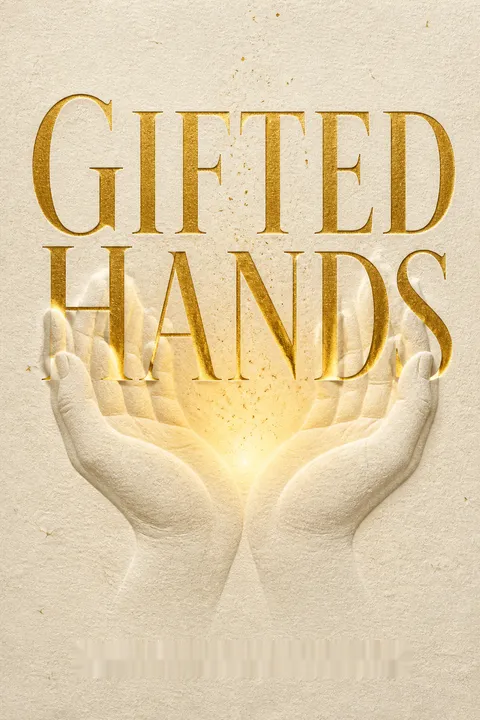
Gifted Hands is an inspirational biography for young readers, arranged as a life story that moves from childhood hardship to medical achievement and public influence. Its strongest narrative thread is not simply that Ben Carson became a renowned neurosurgeon. It is the chain of supports and decisions that made development possible: Sonya Carson's expectations, access to books, the discovery of a workable study method, mentors who trusted him with responsibility, and colleagues who made extraordinary operations a team effort.
The book's most memorable transformation begins with a child who accepts that classmates' insults describe his intelligence. Reading gives him evidence against that identity. Later, the same pattern recurs in more advanced forms: a work task reveals spatial ability, careful observation suggests a new procedure, and rehearsal helps a surgical team manage rare, dangerous cases. The biography therefore presents ability as something cultivated and applied, not merely possessed.
Its moral center is service. Ben's achievements matter because the narrative connects them to patients, young readers, scholarships, and reading rooms. The stories of the Makwaeba and Bijani twins complicate an uncomplicated success story. They show that commitment and skill do not guarantee survival, and that medical decisions can remain ethically painful even when patients understand the risk.
The biography also has limits worth keeping in view. Ben's experience is powerful evidence that a disadvantaged child can flourish with sustained effort and support, not proof that individual determination cancels structural racism or poverty. The surgical stories foreground an exceptional physician, but also reveal the indispensable work of large clinical teams and institutions. Finally, the book's Christian interpretation is integral to its account of purpose, while its closing arguments against evolution should be distinguished from scientific consensus. Read with those boundaries clear, the book offers a vivid account of how learning, character, faith, opportunity, and service can shape one life without pretending that every obstacle has a simple solution.
Review Summary
Gifted Hands, Revised Kids Edition is highly praised for its inspirational story of Ben Carson's journey from poverty to becoming a renowned neurosurgeon. Readers appreciate Carson's faith, perseverance, and his mother's influence. The book is seen as motivating for students, especially those facing adversity. Many reviewers recommend it for young readers and adults alike. Some criticisms include simplistic writing and concerns about Carson's recent political involvement. Overall, the book is widely regarded as an uplifting tale of overcoming obstacles through hard work and determination.
People Also Read

Glossary
THINK BIG
Eight-part success philosophyBen Carson's named framework for developing ability and using it responsibly. Its letters stand for talent, honesty, insight, niceness, knowledge, books, in-depth learning, and God. The framework combines personal strengths and sustained education with ethical behavior, learning from others, and the Christian faith that shapes Carson's own account of purpose.
hemispherectomy
Removal of one brain halfA surgical procedure that removes or disconnects one cerebral hemisphere, one side of the brain. In the biography, Ben Carson considers the operation for children whose severe seizures originate in one damaged hemisphere. The procedure carries major risks, including effects on movement, vision, and speech, and requires careful evaluation of the patient's condition.
craniopagus Siamese twins
Twins joined at the skullA term used in the book for twins whose skulls are fused, often with blood vessels or other tissues also connected. The specific anatomy varies, making separation exceptionally complex. Carson's cases required detailed imaging and close work by teams of neurosurgeons, heart surgeons, plastic surgeons, anesthesiologists, nurses, and technicians.
Carson Scholars Fund
Academic and service awardsAn organization founded by Ben and Candy Carson to recognize students for academic achievement and service to their communities. Its awards include public recognition at school and a scholarship for college. The fund's purpose is also cultural: to make scholarly accomplishment visible to peers in the way athletic achievement often is.
Ben Carson Reading Project
School reading-room initiativeA Carson Scholars Fund initiative that helps schools create inviting spaces stocked with books for independent reading. The project grew from Ben Carson's experience that library books helped transform his academic life. Its rooms are intended to make reading available as an enjoyable activity, not only as scheduled library instruction or research for assignments.
FAQ
What's "Gifted Hands, Revised Kids Edition: The Ben Carson Story" about?
- Overview: The book is a biography of Ben Carson, a renowned neurosurgeon, detailing his journey from a troubled childhood to becoming a world-famous doctor.
- Focus on Challenges: It highlights the challenges Carson faced, including poverty, racial prejudice, and a violent temper, and how he overcame them.
- Inspirational Journey: The story is meant to inspire young readers by showing how education, faith, and determination can lead to success.
- Author's Perspective: Written by Gregg Lewis and Deborah Shaw Lewis, the book is tailored for a younger audience, making complex themes accessible.
Why should I read "Gifted Hands, Revised Kids Edition"?
- Inspiration: The book provides a powerful message of hope and perseverance, showing that anyone can achieve greatness regardless of their background.
- Educational Value: It emphasizes the importance of education and hard work, making it a valuable read for students.
- Role Model: Ben Carson's story serves as a role model for young readers, encouraging them to pursue their dreams.
- Faith and Values: The book also explores themes of faith and moral values, offering a holistic view of success.
What are the key takeaways of "Gifted Hands, Revised Kids Edition"?
- Education is Key: Carson's story underscores the transformative power of education in overcoming life's challenges.
- Faith and Determination: The book highlights the role of faith and determination in achieving personal and professional goals.
- Overcoming Adversity: It shows that with hard work and perseverance, one can overcome significant obstacles.
- Role of Family: Carson's relationship with his mother is a central theme, illustrating the impact of family support.
How did Ben Carson overcome his challenges according to the book?
- Mother's Influence: His mother, Sonya Carson, played a crucial role by encouraging him to read and limit TV time, fostering a love for learning.
- Faith and Prayer: Carson relied on his faith and prayer to manage his temper and find direction in life.
- Educational Focus: He dedicated himself to his studies, which helped him rise from the bottom of his class to the top.
- Mentorship and Opportunities: Carson took advantage of opportunities like ROTC and medical school, which helped shape his career.
What specific advice does Ben Carson give in "Gifted Hands, Revised Kids Edition"?
- THINK BIG Philosophy: Carson encourages readers to "THINK BIG," an acronym for Talent, Honesty, Insight, Nice, Knowledge, Books, In-depth learning, and God.
- Use Your Brain: He emphasizes the importance of using one's brain to solve problems and achieve goals.
- Value of Reading: Carson advocates for reading as a means to gain knowledge and expand one's horizons.
- Faith in Action: He advises integrating faith into daily life as a source of strength and guidance.
What role did faith play in Ben Carson's life according to the book?
- Guidance and Strength: Faith provided Carson with guidance and strength during challenging times, helping him manage his temper and make life decisions.
- Prayer: He often turned to prayer for wisdom and support, especially before surgeries and major life events.
- Moral Compass: Faith acted as a moral compass, influencing his decisions and interactions with others.
- Community and Support: His involvement in church and faith-based communities offered additional support and encouragement.
How does "Gifted Hands, Revised Kids Edition" address racial prejudice?
- Personal Experiences: The book recounts Carson's personal experiences with racial prejudice, from school incidents to professional challenges.
- Resilience: Carson's story demonstrates resilience in the face of discrimination, focusing on his achievements rather than the obstacles.
- Role of Education: Education is portrayed as a tool to overcome prejudice and achieve equality.
- Positive Influence: Carson's success serves as a positive influence, challenging stereotypes and inspiring others.
What are some of the most significant surgeries Ben Carson performed?
- Hemispherectomy: Carson performed a groundbreaking hemispherectomy on Maranda Francisco, which involved removing half of her brain to stop seizures.
- Binder Twins: He led the team that successfully separated the Binder twins, who were conjoined at the head, a complex and risky procedure.
- Banda Twins: Carson also separated the Banda twins in South Africa, using innovative techniques and technology.
- Bijani Twins: Although the surgery was not successful, the attempt to separate the Bijani twins was one of his most challenging cases.
What impact did Ben Carson's mother have on his life?
- Encouragement: Sonya Carson encouraged her sons to read and limit TV, instilling a love for learning and self-improvement.
- High Expectations: She set high expectations for Ben and his brother, believing they could achieve anything with hard work.
- Role Model: Her resilience and determination served as a role model, showing that one can overcome adversity.
- Support System: Despite her own struggles, she provided unwavering support and guidance to her children.
What are the best quotes from "Gifted Hands, Revised Kids Edition" and what do they mean?
- "Do you have a brain?" This question from Carson's mother emphasizes the importance of using one's intellect to solve problems.
- "If you ask the Lord for something and believe he will do it, it will happen." This quote highlights the power of faith and belief in achieving one's goals.
- "Education is the great equalizer." Carson underscores the role of education in leveling the playing field and providing opportunities.
- "THINK BIG." This encapsulates Carson's philosophy for success, encouraging readers to use their talents and faith to achieve greatness.
How does "Gifted Hands, Revised Kids Edition" inspire young readers?
- Relatable Story: Carson's journey from a struggling student to a successful surgeon is relatable and inspiring for young readers.
- Message of Hope: The book conveys a message of hope, showing that anyone can overcome obstacles with determination and faith.
- Role Model: Carson serves as a role model, demonstrating that success is possible regardless of one's background.
- Encouragement to Dream: It encourages young readers to dream big and pursue their goals with passion and perseverance.
What lessons can educators and parents learn from "Gifted Hands, Revised Kids Edition"?
- Importance of Encouragement: The book highlights the impact of encouragement and high expectations on a child's success.
- Value of Education: It underscores the importance of education and reading in a child's development.
- Role of Faith: The story illustrates how faith can provide strength and guidance in challenging times.
- Overcoming Adversity: Educators and parents can learn the importance of teaching resilience and perseverance to children.
Download PDF
Download EPUB
.epub digital book format is ideal for reading ebooks on phones, tablets, and e-readers.








