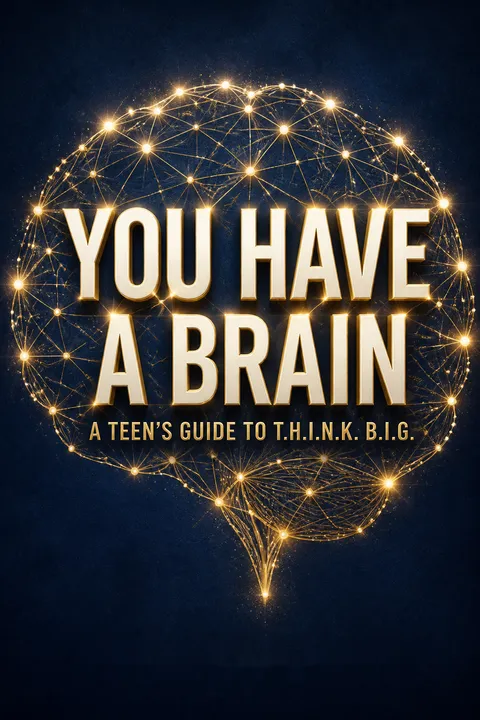


Key Takeaways
Use your brain to think beyond the moment and enlarge your choices
Potential needs direction. Carson opens with the brain’s astonishing capacity, then grounds the idea in a child’s mistake. He and his brother shot a BB gun at a can without considering where missed shots would go. Their neighbor’s damaged screen made the consequences visible. Their mother’s lesson was not simply to obey, but to look past the immediate target and think through what an action might cause.
Agency grows with practice. Carson’s own childhood classmates considered him unintelligent, and he believed them. His mother’s confidence in his mind helped him imagine a future beyond those labels. A patient story reinforces the brain’s adaptability: after half of Christina’s brain was removed to stop severe seizures, she returned to college and improved her grades. The book’s central claim is that a brain is both a remarkable gift and a responsibility to use.
The book’s strongest opening move is to connect biological capacity with everyday judgment. The BB gun story makes abstract responsibility tangible: an action has a trajectory beyond the actor’s intention. That resembles systems thinking, which asks people to follow consequences through a chain rather than judge a choice by its immediate aim. The brain’s adaptability also offers a counterweight to fixed labels. Still, potential is not a promise that effort alone defeats every barrier. Carson’s story includes supportive adults, educational access, and opportunity, all of which help turn capacity into achievement.
A library routine turned Carson from class dummy into top student
A demanding routine began. After Carson and his brother brought home poor report cards, their mother limited television and required each boy to read two books a week, write reports, and present them aloud. She had only a third-grade education and could not read those reports herself, but she listened closely and discussed their ideas. The nearby public library supplied books, beginning with the subjects Carson already loved, especially animals.
Interest opened the door. Carson moved from animal books to geology and learned enough about rocks to identify obsidian in science class. A teacher, Mr. Jaeck, noticed his knowledge and invited him to explore science after school. Reading supplied information, while a mentor gave it a place to grow. Carson’s grades rose from the bottom of the class to the top in many subjects.
This story shows how a practical structure can make confidence follow competence, rather than requiring confidence to come first. The mother’s plan combines regular practice, choice of subject, accountability, and a real audience for learning. Those ingredients resemble effective teaching strategies: meaningful material, retrieval, and feedback. The librarian and Mr. Jaeck also matter. Reading is not presented as a solitary miracle, but as a route into relationships and opportunities. The broader lesson should not be reduced to a simple prescription to read more. Access to books, time, encouragement, and good teachers are part of the mechanism.
Own your response before anger or peer pressure chooses for you
A feeling is not a command. Carson’s mother repeatedly redirected attention from what someone else had said to what he chose to do next. That lesson became urgent when a trivial disagreement over a radio station triggered Carson to lunge at his friend with a knife. The blade broke against the friend’s belt buckle. Horrified by how close he had come to killing someone, Carson prayed, read passages about anger in Proverbs, and sought help changing his behavior.
Think through the consequences. Peer approval could also pull him toward trouble. In high school, he left a group preparing to enter a warehouse because he recognized the legal and moral danger. Earlier, seeing a cousin die after becoming involved with drugs, alcohol, and violence had made the cost of destructive choices painfully concrete. Carson’s lesson is to pause, consider consequences, and accept responsibility for one’s own conduct.
The distinction between provocation and response is a useful form of emotional regulation. Modern approaches to self-control similarly emphasize noticing an impulse before acting, then creating room to choose. Carson’s story makes the stakes unusually vivid, but his account also points to faith, family expectations, and remembered consequences as supports for restraint. Personal responsibility should not be confused with denying that other people can cause harm or that circumstances constrain choice. The practical value lies in reclaiming the part of a situation that remains under one’s control, without pretending that every outcome is individually controllable.
Study in the way your brain actually learns
A poor fit looked like failure. At Yale, Carson’s habit of cramming stopped working. In medical school, he struggled with lecture-heavy courses, and an adviser suggested he consider other careers or take a slower path. Carson reviewed his own academic history and saw that he learned most effectively by reading, not by listening to long lectures.
Change the method. He began using typed lecture notes and textbooks, reading and rereading the material, making flashcards before exams, and attending hands-on labs. His grades improved sharply. The point is not that lectures are useless, or that every student should skip class. Carson’s example shows the value of diagnosing a learning problem before treating it as proof of limited ability. He adapted the way he studied to the way he had learned successfully throughout school.
Carson’s adjustment is a strong example of metacognition: observing how learning happens, then changing strategy rather than simply adding hours. It also echoes the idea of person-task fit. A method can be effective for one learner and inefficient for another, particularly when a course demands both conceptual understanding and memorization. His solution was unusual and depended on access to lecture notes and labs, so it should not be treated as universal advice. The transferable move is to test study methods against actual learning, using recall and performance as evidence rather than relying on familiarity or effort alone.
Choose work that combines your abilities, interests, and character
Talent is a combination. Carson argues that talent is not limited to visible gifts such as singing or sports. It can include learned skills, interests, personality, knowledge, and character traits. His own route to neurosurgery involved curiosity about the brain, carefulness, hand-eye coordination, and an ability to picture objects in three dimensions. A summer job operating an industrial crane helped him discover that last strength.
Look for a fit, not a label. Carson recommends reviewing past successes and enjoyable activities, looking for patterns, and asking trusted people what strengths they notice. Personality or aptitude tests and career counselors can add information, but should not make the decision. He warns against letting family expectations dictate a path, while also noting that success in entertainment or professional sports depends on factors beyond talent. Explore possibilities, then develop the abilities that fit.
This is a more useful model of career choice than searching for a single inborn gift. Work is usually a bundle of tasks, and people often thrive when their abilities, interests, and preferred ways of working align with that bundle. The crane job is especially instructive because it revealed a strength outside the field Carson later entered. That supports exploration before premature specialization. Self-assessment, however, can be distorted by limited experience or low confidence. Trusted observers and real-world trials can widen the evidence, while leaving the person responsible for deciding what a satisfying life should include.
Protect your good name when honesty costs money or approval
Integrity is more than avoiding theft. Carson describes honesty as telling the truth, treating people fairly, admitting wrongdoing, and acting consistently with one’s principles. As a boy, he returned extra change a cashier had mistakenly given him. As an adult, he refused to remove advice about abstinence from a health book when the publisher objected, and returned his advance when the book was not published.
Consistency simplifies life. Carson also withdrew his public support from a campaign when he believed some of its claims were misleading, despite agreeing with its cause. He argues that a reputation rests on patterns of conduct, not isolated declarations. Mistakes still happen; the repair is to acknowledge them, apologize, and make amends. The immediate reward for honesty may be inconvenience or lost income, but keeping one’s actions aligned with one’s stated standards avoids the burden of hiding contradictions.
The section treats integrity as both a moral commitment and a form of long-term reliability. In organizations, trust reduces the need for constant monitoring because people can make decisions with confidence in one another’s representations. Carson’s examples also show that a worthy cause does not excuse misleading claims. A useful nuance is that honesty can involve judgment about what is relevant, not merely blunt disclosure. Principles become credible when they guide decisions under pressure, especially when the short-term reward for compromise is obvious and the cost to reputation is less visible.
Convert experience into insight by asking what caused what
Insight requires reflection. Carson defines insight as learning from observation and experience, then using that learning to recognize principles and guide future choices. His family’s weekly Sabbath gatherings created time to discuss what had happened and compare perspectives. When a friend asked to borrow Carson’s bicycle, his mother prompted him to consider why the friend no longer had his own and whether he had cared for it. Carson had not considered that relevant detail before.
Ask better questions. During his medical school struggles, Carson compared the ways he had learned well with the way he was being taught. He recommends examining what happened, what factors contributed, how a similar situation differed, and what might follow from each option. Mentors and books can offer other people’s experience as material for reflection. But copying a group’s opinion is not insight; it is letting others do the thinking.
The key distinction is between accumulating experiences and learning from them. Reflection turns an event into a usable model by connecting conditions, actions, and consequences. This resembles after-action reviews used in high-stakes professions: teams ask what they expected, what happened, and what should change. Carson’s family conversations add an important social dimension, since other people may notice facts an individual misses. Yet multiple viewpoints are not automatically wiser. They can reinforce shared assumptions. The value comes from comparing perspectives, checking them against evidence, and retaining responsibility for the conclusion.
Make kindness practical: listen, help, and keep your boundaries
Niceness is behavior. Carson recalls joining a neighborhood Helping Hands Club as a child. The children volunteered to help with chores, and neighbors sometimes repaid them with small gifts. The better reward, he says, was the goodwill and satisfaction that followed. He translates niceness into concrete acts: greet people, help someone struggling, avoid humiliating others, and consider another person’s perspective before criticizing.
Respect improves cooperation. In surgery, Carson depended on nurses, clerks, and colleagues. Greeting people, thanking them, and listening helped build working relationships. He also learned that kindness does not require agreement or surrender. He advised a medical student to retake courses rather than blame discrimination without evidence, and he sought legal protection when a woman’s harassment became threatening. Kindness is a deliberate way to treat people with dignity, not permission for others to exploit it.
This account gives kindness an operational role. In teams, respect makes it easier to share information, raise concerns, and coordinate demanding work. Listening is especially consequential in medicine, where patients and families may supply details that formal tests do not capture. The book’s insistence that kindness can coexist with candid advice is equally important: tact is not the same as approval. Its boundary is safety and responsibility. A generous manner should not oblige someone to tolerate harassment, conceal a problem, or endorse a decision that evidence does not support.
Build knowledge through reading and deep study, not digital snippets
Reading can widen freedom. Carson describes books as a source of knowledge, imagination, and a sense of possibility. He recalls reading biographies of Frederick Douglass and Booker T. Washington, whose lives showed how literacy could expand a person’s choices. His own reading began with books he enjoyed and widened into science, history, and biography. He also warns that online information varies in reliability, so readers should compare sources rather than trust a single result.
Go beneath the facts. Carson calls in-depth learning the pursuit of understanding how and why something works, not just memorizing details for a test. He recommends finding one’s strongest learning methods, revisiting material, testing recall, and connecting facts to the larger subject. Repeated study makes useful knowledge easier to retrieve. Information is plentiful, but it becomes valuable when a person can assess it, connect it to what they know, and apply it.
The distinction between information and knowledge is increasingly useful in an environment where retrieval is easy but evaluation is not. Reading asks the mind to build relationships among ideas instead of simply receiving finished images or claims. Retrieval practice, spaced review, and explaining material in one’s own words are well-supported ways to make learning durable, and they fit Carson’s emphasis on repetition and self-testing. The book’s contrast between books and screens can be too neat: digital media can support serious study, while print can also be consumed passively. The deeper issue is attention and source judgment, not the format alone.
Let faith orient ambition toward service, not just status
Faith shaped Carson’s framework. The book’s THINK BIG acronym gathers eight guiding ideas: Talent, Honesty, Insight, Nice, Knowledge, Books, In-depth learning, and God. Carson presents Christianity as the source that connects these principles and gives them purpose. His mother prayed for wisdom when her sons were struggling in school, and Carson describes prayer and Scripture as central when he faced his dangerous temper and difficult decisions.
Purpose reaches beyond achievement. Carson says he came to see his abilities as gifts to use for other people, not merely ways to gain recognition. His medical career, teaching, and scholarship work all fit that understanding of service. He also recounts facing prostate cancer and finding comfort in faith while undergoing treatment. The religious claim is personal and explicit: God is not just a motivational metaphor in this book, but Carson’s explanation for his direction, endurance, and responsibility.
Faith functions here as a coherent moral orientation: it links self-development to obligations toward other people. That connection can help prevent achievement from becoming an end in itself, because success is measured partly by whom it serves. The framework is therefore inseparable from Carson’s Christian commitments, even though several practices, such as reflection, honesty, and learning, can be adopted independently. A respectful reading need not treat his account of divine guidance as evidence available to everyone. It can recognize the role faith plays in his life while distinguishing personal testimony from a universal explanation for success.
Compare the risks of acting with the risks of doing nothing
Inaction carries consequences. Carson developed the Best/Worst Analysis, a decision method that compares the possible outcomes of acting and not acting. He used this kind of reasoning in high-risk surgery, including procedures to separate conjoined twins. One operation on twins in South Africa ended with both girls dying; their organs had been mutually dependent. The painful case taught the medical team how much more they needed to understand before proceeding in similar cases.
Make uncertainty explicit. Carson’s four prompts ask what the best and worst outcomes of acting might be, then what the best and worst outcomes of not acting might be. Later, 3-D imaging helped his team study the Banda twins’ shared brain structures before their successful separation. The method does not make a decision safe or certain. It makes the trade-offs visible, especially when doing nothing also threatens a serious loss.
This framework corrects a common bias: action feels risky, while inaction can feel neutral. In medicine, public policy, and personal decisions, delay may carry its own costs. Comparing both paths is a simple way to expose that asymmetry and clarify what evidence is still missing. The twin surgeries also show why a decision matrix is only one tool. High-stakes choices require expertise, consent, preparation, and honest communication about uncertainty. A structured analysis cannot guarantee a good outcome, but it can help prevent fear of acting from disguising the risks of refusing to act.
Analysis
You Have a Brain is part memoir, part practical guide, and part Christian argument about human possibility. Its structure follows Carson’s life from a boy who accepts the label of class dummy to a neurosurgeon whose work depends on reading, discipline, mentors, and decisions under uncertainty. The autobiographical sequence gives the advice credibility, while the THINK BIG acronym turns a sprawling life story into a memorable set of values.
The book’s most persuasive idea is not that people can achieve anything through willpower. It is that self-conception can change when a person gains evidence of competence, and that evidence is often produced by ordinary systems: library visits, repeated reading, a teacher’s attention, a tailored study method, and meaningful responsibility. Sonya Carson’s expectations matter because she paired belief with structure. Mr. Jaeck and Mr. McCotter matter because encouragement became access to richer learning. The story therefore supports a more social account of achievement than a simple triumph-over-adversity narrative might suggest. Its central tension is between agency and circumstance. Carson emphasizes responsibility for choices, an effective challenge to excuse-making, but structural barriers are not equally overcome by individual resolve. The narrative itself demonstrates why: a supportive mother, public libraries, committed teachers, financial aid, and professional mentors all helped make ambition actionable. Recognizing those supports does not weaken the message. It makes the model more realistic: individual initiative works best when institutions and relationships give it room to develop.
The book is also unusually specific about learning and decision-making. Carson evaluates how he learns, changes methods, and compares the consequences of action with inaction. These are more transferable than the claim that high achievement follows from sheer effort. The THINK BIG framework’s final principle, God, is explicitly Christian and grounds the author’s ethics in faith. Readers need not share that theology to understand the architecture of the book: develop ability, act with integrity, think carefully, treat others well, learn deeply, and direct achievement toward service. The memoir’s lasting contribution is that potential becomes credible through repeated practice and responsible use, not through praise alone.
Review Summary
You Have a Brain is highly praised for its inspirational message and practical advice for teenagers and adults alike. Readers appreciate Carson's personal story, from poverty to renowned neurosurgeon, and his emphasis on reading, education, and using one's talents. The book's THINK BIG concept resonates with many. While some find parts preachy or repetitive, most consider it an engaging, motivational read that encourages readers to reach their potential. Carson's writing style is described as clear, funny, and relatable, making complex medical topics accessible.
Glossary
THINK BIG
Eight-part life frameworkCarson’s acronym for eight principles: Talent, Honesty, Insight, Nice, Knowledge, Books, In-depth learning, and God. It organizes his advice about identifying and developing abilities, acting with integrity, learning from experience, treating people well, building knowledge, and using these resources in service of others. The framework is grounded in Carson’s Christian faith.
Best/Worst Analysis
Compare action and inactionA decision method Carson developed for evaluating risk. It asks a decision-maker to consider the best and worst outcomes of taking an action, then the best and worst outcomes of not taking it. The comparison makes the costs of inaction visible alongside the dangers of acting, helping clarify which risks are acceptable.
In-depth learning
Understanding beyond memorized factsCarson’s term for learning that goes beyond memorizing names, dates, or answers. It involves understanding how and why a subject works, connecting details to a broader picture, reviewing material, and being able to retrieve and apply it. He emphasizes initiative and studying in ways that match how a person learns most effectively.
P.E.E.R.S.
Warning about peer pressureCarson’s deliberately critical acronym for People Encouraging Errors, Rudeness, and Stupidity. He uses it to warn that groups can reward conformity and discourage independent judgment. The phrase captures his view that following a crowd may substitute social approval for careful thought, especially when people feel pressure to join in.
Personal Talent Assessment
Exercise for spotting strengthsA guided self-assessment in the book’s appendix. It asks readers to list activities and subjects they do well or enjoy, identify patterns in their skills and traits, consider careers that fit those strengths, and compare their conclusions with feedback from trusted people. Carson recommends repeating the exercise as interests and abilities develop.
FAQ
1. What is "You Have a Brain" by Ben Carson about?
- Inspiring Memoir for Teens: "You Have a Brain: A Teen's Guide to T.H.I.N.K. B.I.G." by Ben Carson is a motivational memoir aimed at teenagers, sharing Carson’s journey from a struggling student in inner-city Detroit to a world-renowned neurosurgeon.
- Focus on Personal Responsibility: The book emphasizes the power of using one’s brain, making wise choices, and taking responsibility for one’s future, regardless of background or obstacles.
- Practical Life Lessons: Through personal stories, Carson introduces the THINK BIG philosophy, offering actionable advice on developing talents, character, and faith.
- Encouragement to Overcome Adversity: The narrative is designed to help young readers believe in themselves, overcome challenges, and pursue their dreams with determination and integrity.
2. Why should I read "You Have a Brain" by Ben Carson?
- Relatable Success Story: Carson’s transformation from “class dummy” to a pioneering neurosurgeon provides hope and a blueprint for overcoming adversity.
- Actionable Guidance: The book offers practical strategies for academic and personal growth, making it especially valuable for teens and young adults.
- Emphasis on Character and Values: Readers gain insight into the importance of honesty, kindness, and perseverance in achieving long-term success.
- Faith and Purpose: Carson shares how faith and a sense of purpose can guide decision-making and help navigate life’s toughest moments.
3. What are the key takeaways from "You Have a Brain" by Ben Carson?
- THINK BIG Philosophy: Carson’s THINK BIG acrostic (Talent, Honesty, Insight, Nice, Knowledge, Books, In-Depth Learning, God) serves as a framework for personal development.
- Power of Reading and Learning: Consistent reading and in-depth learning are highlighted as keys to academic and life success.
- Importance of Mentors and Role Models: Positive influences, including teachers and Carson’s mother, play a crucial role in shaping one’s future.
- Resilience and Self-Belief: Overcoming setbacks, managing anger, and believing in one’s potential are essential for growth and achievement.
4. What is the THINK BIG method in "You Have a Brain" by Ben Carson?
- Acronym for Success: THINK BIG stands for Talent, Honesty, Insight, Nice, Knowledge, Books, In-Depth Learning, and God—eight principles Carson believes are essential for reaching one’s potential.
- Holistic Approach: The method combines practical skills (like reading and learning), character traits (such as honesty and kindness), and spiritual grounding.
- Self-Assessment and Growth: Carson encourages readers to identify and develop their unique talents, seek knowledge, and maintain integrity.
- Application to Life Choices: The THINK BIG philosophy is meant to guide decision-making, goal-setting, and personal interactions.
5. How did Ben Carson overcome adversity according to "You Have a Brain"?
- Supportive Mother: Carson’s mother, despite her limited education, instilled in him the value of reading, hard work, and faith, setting high expectations for her sons.
- Turning Point with Reading: Restricting TV and requiring book reports transformed Carson’s academic performance and self-image.
- Mentorship and Encouragement: Influential teachers and mentors recognized his potential and provided guidance and opportunities.
- Faith and Self-Reflection: Carson relied on prayer and self-assessment to manage his temper, make wise choices, and stay focused on his goals.
6. What role does reading and education play in "You Have a Brain" by Ben Carson?
- Gateway to Opportunity: Carson credits reading as the single most important factor in his academic turnaround and lifelong learning.
- Developing Critical Thinking: Books provided knowledge, broadened his perspective, and helped him develop problem-solving skills.
- Escape from Poverty: Education and reading were presented as the primary means to break the cycle of poverty and achieve success.
- Encouragement for All: Carson advocates for making reading a daily habit and stresses that anyone can improve their life through education.
7. How does "You Have a Brain" by Ben Carson address character and values?
- Honesty and Integrity: Carson shares personal stories about the importance of telling the truth, taking responsibility, and maintaining a good reputation.
- Kindness and Niceness: Being considerate, helpful, and respectful to others is emphasized as both a moral duty and a practical strategy for success.
- Learning from Mistakes: The book encourages admitting faults, making amends, and using setbacks as opportunities for growth.
- Role of Faith: Carson’s Christian beliefs underpin his values, guiding his actions and decisions throughout his life.
8. What are some of the most impactful stories or examples in "You Have a Brain" by Ben Carson?
- Hemispherectomy Surgeries: Carson recounts pioneering surgeries, such as removing half of a child’s brain, to illustrate the brain’s resilience and the importance of thinking big.
- Personal Academic Struggles: His journey from being called “dummy” to excelling in school demonstrates the transformative power of effort and belief.
- Managing Anger: Carson’s near-tragic experience with his temper and subsequent reliance on faith and self-control is a pivotal lesson.
- Mentorship Moments: Stories of teachers like Mr. Jaeck and Mrs. Miller highlight the impact of encouragement and guidance.
9. How does "You Have a Brain" by Ben Carson suggest teens should handle peer pressure and setbacks?
- Think Beyond the Moment: Carson advises using your brain to consider long-term consequences rather than reacting impulsively.
- Personal Responsibility: He stresses that individuals are responsible for their own actions, regardless of others’ behavior.
- Choosing Friends Wisely: The book encourages surrounding oneself with positive influences and mentors rather than negative peers.
- Learning from Failure: Setbacks are framed as learning opportunities, not reasons to give up.
10. What advice does "You Have a Brain" by Ben Carson give about discovering and developing your talents?
- Self-Assessment: Carson provides a Personal Talent Assessment in the appendix to help readers identify their strengths and interests.
- Broad Definition of Talent: He encourages recognizing talents beyond sports and entertainment, including academic, interpersonal, and creative abilities.
- Practice and Persistence: Developing expertise requires time, effort, and repeated practice—Carson cites the “10,000 hours” rule for mastery.
- Using Talents for Good: The ultimate goal is to use one’s abilities to improve the lives of others and make a positive impact.
11. What is the role of faith and God in "You Have a Brain" by Ben Carson?
- Source of Strength: Carson attributes his resilience, wisdom, and success to his faith in God and regular prayer.
- Guidance in Decision-Making: He describes seeking God’s guidance during critical moments, such as career choices and medical challenges.
- Foundation for Values: Faith underpins his commitment to honesty, kindness, and service to others.
- Encouragement for Readers: Carson invites readers to consider a relationship with God as a source of purpose and direction in their own lives.
12. What are the best quotes from "You Have a Brain" by Ben Carson and what do they mean?
- “You have a brain. Use it to think big.” – The central message: everyone has the capacity to shape their future through thoughtful choices and ambition.
- “If you can read, you can learn just about anything you want to know. The doors of the world are open to people who can read.” – Emphasizes the transformative power of reading and education.
- “Honesty, integrity, and being true to your own principles are the surest way I know to establish a good name.” – Highlights the importance of character in achieving lasting success.
- “God has given you a resource of unimaginable power and infinite potential to pursue unlimited opportunities.” – Encourages readers to recognize and use their God-given abilities to the fullest.
- “There is no such thing as useless knowledge, because you never know what little bit of information is going to open doors for you.” – Stresses the value of lifelong learning and curiosity.
About the Author
Other books by Ben Carson

Download PDF
Download EPUB
.epub digital book format is ideal for reading ebooks on phones, tablets, and e-readers.








