

Key Takeaways
A child’s first advantage may be an adult who refuses the system’s verdict.
Sonya Carson set the direction. After her marriage collapsed, she supported Ben and his brother through low-paid jobs, periods of depression, and a move to a Boston tenement. She had little formal schooling, but insisted her sons could aim higher than their circumstances suggested. When a counselor steered Curtis toward vocational classes, she challenged the placement and demanded college preparation. At home, her confidence gave the boys a sense of security even when money was scarce.
Belief came with pressure. Sonya did not merely praise her sons. She set rules, pushed them to study, and refused to treat hardship as a reason to lower expectations. Her example taught Carson that care can mean both comfort and demanding effort.
Sonya’s influence resembles what educational research calls a high-expectation environment: adults communicate that a learner can improve, then provide structure and advocacy to make improvement more likely. The counselor episode also shows that confidence alone is not enough when institutions sort children unfairly. A parent can challenge a gatekeeping decision and change the path available to a child. The account is not a simple argument that determination defeats every barrier. Sonya’s labor, faith, and sacrifices mattered, but the story also exposes how much opportunity depended on one adult’s ability to notice and contest a damaging decision.
Correct the obstacle before concluding a child lacks ability.
A missing tool changed the picture. Carson entered fifth grade believing he was unintelligent, while classmates mocked his poor marks. A school vision test revealed that his eyesight was severely impaired. Once he received glasses, he could see the board, and his grades began to rise. The improvement was modest at first, but it gave him evidence that his performance could change.
His mother built a learning routine. Sonya limited television to a few programs each week, required two library books, and asked her sons to explain what they had read. Carson gravitated toward nature and science, where a teacher gave him projects that let him excel. Reading expanded his vocabulary and knowledge, and he eventually moved from the bottom of his class to the top.
The glasses are a reminder that achievement is partly a measurement of conditions, not just ability. A child who cannot see the board may look unmotivated or slow when the real problem is access. The same logic applies to instruction, sleep, language, and attention: before interpreting low performance as a fixed trait, check whether the learner has what the task requires. Carson’s progress also depended on sustained practice and growing interest, not a single dramatic intervention. His story supports high expectations, while cautioning against treating one success path as proof that every child needs the same rules.
Belonging can make you trade the strengths that earned respect.
Acceptance had a price. At one school, classmates valued Carson’s academic ability. After moving to a different school, he faced ridicule over his clothes and pressure to join the popular group. He learned the school’s verbal insult game, known as capping, and became skilled enough to silence his tormentors. But he also began using the same cruelty on others.
Approval displaced purpose. In high school, Carson fixated on fashionable clothes and spent more time with the in-crowd. His grades fell from the top of his class to average, and he admitted that fitting in felt exciting without making him happy. His brother Curtis, an ROTC leader, and teachers who expected serious work helped him return to his academic priorities.
Adolescent belonging is not a trivial distraction. Peer groups help shape what feels admirable, embarrassing, or worth effort, so Carson’s shift is a clear example of social incentives redirecting behavior. The lesson is not to reject peers or popularity altogether. It is to notice when acceptance requires abandoning the capacities and commitments that matter. Mentors and structured communities can offer another route to belonging, as ROTC and supportive teachers did for Carson. The account also acknowledges an uncomfortable truth: someone who has been humiliated can learn to wield humiliation. Survival strategies may solve one social problem while quietly reproducing it.
Interrupt destructive anger before it decides who you become.
Anger became dangerous. As a teenager, Carson describes reacting to insults with violence. During one argument, he struck a classmate with a lock in his hand. Later, after a dispute with a friend, he lunged at him with a knife. The blade snapped against the friend’s belt buckle. Carson recognized how close he had come to killing someone and feared losing the future he wanted.
Faith became his turning point. Alone in a bathroom, he prayed, read Proverbs on anger, and decided he could not manage his temper by willpower alone. He says the experience changed him and that he did not have another serious outburst. He also began reading the Bible daily, a practice that gave him a repeated way to orient himself when irritation arose.
Carson frames his change through a personal encounter with God, and that account deserves to be understood on its own terms. It also contains a practical sequence: recognize the danger, stop defending the behavior, seek support, and commit to a different practice. In contemporary terms, this resembles interrupting a feedback loop by connecting emotion to consequences and values. The story is not evidence that prayer will cure anger for everyone, nor should a severe pattern of aggression be left without appropriate help. Its strongest general lesson is that a person’s past reactions need not become an identity or an excuse.
Talent gets humbled at Yale; deep preparation turns failure into mastery.
Old study habits broke down. At Yale, Carson assumed his high-school success would continue. He had relied on cramming and selective effort, but freshman chemistry required steady preparation. By the final exam, he believed he was failing and faced the possibility of leaving premedical studies. He prayed, studied through the night, and describes dreaming through problems that matched the exam. He later understood the episode as divine help and received a score of 97.
The lasting lesson was preparation. Carson recognized that the course had exposed his weak study method, not a lack of intelligence. In medical school, he studied textbooks and lecture notes in depth, often working from early morning until late at night. He aimed to understand how ideas connected, rather than memorize only what might appear on a test.
The dream is an extraordinary event in Carson’s telling, but it is not a repeatable study strategy. The durable insight is his diagnosis of the academic failure: past grades had concealed an ineffective approach. Learning research distinguishes short-term familiarity from durable understanding, and Carson’s shift toward explanation and detail fits the latter. His faith helped him interpret a frightening moment and keep pursuing medicine; his subsequent work supplied the competence. This distinction preserves both parts of the story without suggesting that belief can substitute for preparation or that a lucky rescue makes last-minute cramming reliable.
Earn opportunity through work, then redesign the job when rules waste effort.
Results changed the crew’s expectations. As a summer supervisor for a highway cleanup crew, Carson found that other teams collected about a dozen bags of litter a day. He challenged his six workers to start at 6 a.m., gather 150 bags, and then finish for the day while receiving full pay. His crew accepted the deal and often completed its work in two or three hours, filling far more bags than the usual teams.
Initiative also opened doors. When he could not find summer work, Carson went directly to a Yale interviewer who held an executive job and asked for help. That connection got him a mailroom job; a later conversation with a transportation official restored his better-paying work. He argues that connections can create access, but reliable performance is what makes someone worth keeping.
The cleanup arrangement is a useful example of changing incentives rather than merely scolding workers. The crew received a clear target, a tangible reward, and pride in outperforming other teams. This resembles job redesign: people often work differently when they have autonomy and can see the result of their effort. Still, the method depended on Carson’s authority and should not become a license for employers to extract more work for the same pay. In his version, the bargain was voluntary and the crew kept its full wages. The broader point is to question whether a rule serves the mission, while checking who bears the cost of changing it.
Treat natural ability as raw material, not a finished gift.
Aptitude needed practice. Carson believed he had unusually strong hand-eye coordination and an ability to picture objects in three dimensions. A job operating a steel crane helped him notice this skill. In medical training, he applied spatial reasoning to a problem surgeons faced when locating the foramen ovale, a small opening at the base of the skull. Using X-ray alignment and two markers, he developed a more direct way to guide the procedure.
Curiosity widened his options. He had also studied art and classical music while preparing for a quiz show he never joined. That broad knowledge became useful in conversation with a Johns Hopkins interviewer. Carson’s path joins a perceived natural strength to reading, observation, experimentation, and practice. His hands were not a shortcut around training. They became valuable through years of deliberate learning.
The account avoids a false choice between innate aptitude and acquired skill. A person may have a starting advantage, but expertise requires practice, feedback, and opportunities to apply it. Carson’s spatial ability became professionally useful because he had both medical knowledge and access to imaging equipment. His unexpected interview connection also illustrates the option value of learning: knowledge gathered for one purpose can become relevant in another setting. The caution is that retrospective stories can make success look more inevitable than it was. Gifts are difficult to identify in advance, and education should develop multiple capacities rather than betting everything on one presumed talent.
When doing nothing means certain loss, define the risks and act carefully.
Maranda had almost no safe option. At four, she was experiencing as many as 100 seizures a day from Rasmussen’s encephalitis, a rare progressive inflammation affecting one side of the brain. Medication had failed, and doctors expected her condition to worsen. Carson considered a hemispherectomy, an operation removing the diseased half of the brain. He explained the possibility of death, paralysis, or loss of speech before her parents agreed.
Hope did not erase the danger. The operation lasted ten hours and involved severe bleeding. Maranda survived, stopped having seizures, and eventually returned to activities such as tap dancing, though she retained some weakness and limited finger coordination. Other cases in the memoir had worse outcomes, including a child who died. The principle is not to take every dramatic risk, but to compare intervention with the likely course of doing nothing.
This case makes decision-making under uncertainty concrete. A risky operation can be ethically defensible when the untreated condition is also life-threatening, but only if the family understands the alternatives and the limits of prediction. Carson’s account emphasizes candid consent and preparation rather than presenting surgery as guaranteed rescue. The comparison must also remain individualized: Maranda’s outcome cannot establish that the same procedure is appropriate for another patient. In medicine, outcome bias tempts observers to call a decision wise because it succeeded, or foolish because it failed. A sound judgment depends on what was known, the patient’s prospects, and the quality of the consent process.
The operation belongs to the team that prepared every hand and contingency.
The twins’ separation was collective work. Patrick and Benjamin Binder were joined at the back of their heads and shared a major vein draining blood from the brain. A team of about 70 people spent five months planning, rehearsing with models, and preparing equipment before attempting the operation. The surgery lasted 22 hours. Surgeons used heart-lung bypass and deep cooling to pause circulation while they separated and rebuilt the veins. The boys required 60 units of blood, far beyond their normal blood volume.
Preparation met surprises. The shared venous structure was much larger than expected, and bleeding threatened the operation. The team adapted under pressure, completed the separation, and both infants survived the surgery. Their postoperative course remained uncertain; Patrick later suffered a respiratory arrest. Carson presents the achievement not as a lone surgeon’s triumph, but as the result of coordinated expertise across surgery, anesthesia, nursing, and intensive care.
The story punctures the lone-genius myth without diminishing Carson’s technical role. Complex work depends on shared information, rehearsed procedures, and people whose contributions may be less visible than the lead surgeon’s. This is close to the logic of high-reliability organizations, where preparation anticipates failure points but leaves room to adapt when reality departs from the plan. The narrative also shows why a technically successful operation is not the same as a complete recovery. Teamwork improves the chance of success; it cannot remove uncertainty. Giving credit accurately is therefore both ethically fair and a more realistic account of how difficult work gets done.
Make achievement useful to others without letting work consume your family.
Carson’s closing framework ties ambition to habits. He calls it THINK BIG. Its themes include recognizing and developing talent, using time responsibly, maintaining hope and honesty, learning from experienced people, treating others kindly, reading, pursuing deep understanding, and keeping faith. Rather than presenting success as a single credential, he describes it as a combination of capacities that must be practiced.
Service also requires limits. As his surgical, research, church, and speaking duties multiplied, Carson decided family came first, protected weekends, and set a target of leaving the hospital by 7 p.m. He also wanted scholarships for talented students who lacked money and encouraged young people to consider careers beyond sports and entertainment. The goal was not achievement for its own sake, but using knowledge and opportunity to widen what others could imagine.
The framework’s strength is its breadth: it joins competence and character, private discipline and public contribution. Its ambition is also more credible when paired with Carson’s decision to cap his workday. Research on professional burnout consistently points to workload and recovery as organizational issues, not simply failures of personal resilience. His boundary makes the message more than exhortation to work harder. At the same time, individual habits cannot repair unequal access to schooling or scholarships by themselves. Carson’s aspiration to fund talented students recognizes that potential needs material support, not just inspiration. The framework is most useful when personal responsibility and institutional opportunity are treated as partners.
Analysis
Gifted Hands is a memoir shaped around a tension between agency and providence. Carson presents himself as responsible for his choices, while also interpreting turning points through faith in God. That combination gives the story its emotional architecture: Sonya’s example forms a sense of possibility, study turns possibility into competence, and religious conviction helps Carson interpret moments when outcomes cannot be controlled. The account is therefore not simply a story of an underdog defeating adversity. It is a story of capacities being built through family discipline, teachers, mentors, institutional access, and collaborators.
Its most compelling evidence is often small and material. Glasses change what Carson can see. Library books change what he can know. A uniform eases social pressure. A teacher’s intervention protects a student’s academic path. These details complicate explanations based only on innate brilliance or willpower. Carson’s own rise depends on resources and advocates, even as his advice stresses personal responsibility. That tension is productive: self-direction matters, but it operates inside social systems that can either amplify or obstruct it.
The medical chapters extend the same theme into a domain where confidence must answer to risk. Carson describes ambitious procedures, but also candid consent, lengthy preparation, teamwork, and painful failures. The memoir’s heroic framing can make success seem more predictable than it is, especially when unusual outcomes are interpreted as signs of providence. Yet the accounts of deaths, uncertainty, and team dependence resist a purely triumphalist reading.
The book’s most transferable claim is not that every person can reproduce Carson’s career. It is that perceived ability can expand when obstacles are identified, instruction becomes demanding and relevant, and opportunity meets sustained effort. Its limits are equally instructive: extraordinary maternal sacrifice, rare talent, strong mentors, and a prestigious institution cannot be reduced to a universal formula. The memoir is best read as testimony and argument together, a compelling case for disciplined aspiration that remains strongest when personal agency is not mistaken for equal opportunity.
Review Summary
Gifted Hands receives mostly positive reviews, with readers praising Carson's inspiring journey from inner-city Detroit to renowned neurosurgeon. Many appreciate his mother's influence, his faith, and his emphasis on personal responsibility. The book is lauded for its motivational message and detailed medical cases. Some critics find Carson's tone arrogant and question the credibility of certain anecdotes. Overall, readers recommend it as an inspiring story of perseverance and achievement, especially for youth and those interested in medicine.
People Also Read





Glossary
THINK BIG
Success habits mnemonicCarson’s closing mnemonic for qualities he believes support achievement. It gathers talent, time, hope, honesty, insight, kindness, knowledge, books, in-depth learning, and faith in God. The framework links practical capacities, such as reading and managing time, with ethical and spiritual commitments. Carson presents it as a guide for young people choosing goals and developing their abilities.
hemispherectomy
Removal of one brain hemisphereA neurosurgical operation in which one cerebral hemisphere is removed to address severe disease concentrated on that side of the brain. In Carson’s account, it is considered for children with relentless seizures and progressive injury when less radical treatment has failed. The operation can carry grave risks, including death, paralysis, and loss of speech, and outcomes depend on the patient’s condition and recovery.
Rasmussen’s encephalitis
Progressive one-sided brain inflammationA rare inflammatory disease of brain tissue described in the memoir as progressively damaging one cerebral hemisphere. It can cause increasingly frequent seizures and loss of movement, speech, and other abilities. The cause was not known in Carson’s account. For Maranda, the diagnosis helped explain why medication had not stopped her seizures and why doctors considered surgery.
plasticity
Brain functions can reorganizeThe capacity of brain tissue to take on functions that were previously handled by damaged areas. Carson uses the term to explain how some children could retain or regain abilities after a hemispherectomy, including language and movement. The memoir emphasizes greater flexibility in younger brains, while noting that the exact process was not fully understood.
senior registrar
Advanced supervised surgical postA medical position in the Australian training system that Carson describes as lying between chief resident and junior faculty member. Senior registrars ran clinical services under senior consultants and could receive substantial operative responsibility. Carson’s year in this role in Perth gave him extensive neurosurgical experience soon after completing his residency.
foramen ovale
Opening at skull baseA small opening at the base of the skull that surgeons may need to locate when treating trigeminal neuralgia, a painful facial condition. Carson describes developing an X-ray alignment method using markers on the skull to help guide a needle toward the opening. The example illustrates how anatomical knowledge and imaging could be combined to make a difficult procedure more direct.
FAQ
What's "Gifted Hands: The Ben Carson Story" about?
- Autobiography of Ben Carson: The book is an autobiography of Dr. Ben Carson, a renowned neurosurgeon, detailing his journey from a troubled youth in Detroit to becoming a world-class surgeon.
- Overcoming Adversity: It highlights Carson's struggles with poverty, a violent temper, and academic challenges, and how he overcame them through determination and faith.
- Medical Achievements: The narrative includes his groundbreaking surgeries, such as the separation of conjoined twins, showcasing his contributions to medicine.
- Inspirational Journey: The book serves as an inspirational story of perseverance, illustrating how Carson's mother's encouragement and his own hard work led to his success.
Why should I read "Gifted Hands: The Ben Carson Story"?
- Inspiration and Motivation: The book provides a powerful message of hope and determination, showing how anyone can overcome obstacles with hard work and faith.
- Insight into Medicine: Readers gain insight into the world of neurosurgery and the complexities of medical procedures through Carson's experiences.
- Personal Growth: Carson's story encourages personal growth and the pursuit of excellence, regardless of one's background or circumstances.
- Role Model: It presents Carson as a role model for young people, especially those from disadvantaged backgrounds, demonstrating that success is achievable.
What are the key takeaways of "Gifted Hands: The Ben Carson Story"?
- Importance of Education: Carson emphasizes the transformative power of education and reading, which played a crucial role in his success.
- Faith and Determination: The book highlights the importance of faith in God and determination in overcoming life's challenges.
- Role of Family Support: Carson's mother's unwavering belief in his potential was instrumental in his achievements, underscoring the impact of family support.
- Think Big Philosophy: Carson introduces his "Think Big" philosophy, encouraging readers to set high goals and work diligently to achieve them.
How did Ben Carson overcome his challenges in "Gifted Hands"?
- Mother's Influence: Carson's mother, Sonya, played a pivotal role by instilling the value of education and hard work in him and his brother.
- Reading and Education: He improved his academic performance by reading extensively, which broadened his knowledge and vocabulary.
- Controlling Temper: Carson learned to control his temper through prayer and self-reflection, which was crucial for his personal and professional growth.
- Focus and Determination: He remained focused on his goal of becoming a doctor, despite facing numerous obstacles and setbacks.
What is the "Think Big" philosophy in "Gifted Hands"?
- Acronym Explanation: "Think Big" is an acronym that stands for Talent, Honesty, Insight, Nice, Knowledge, Books, In-depth learning, and God.
- Encouragement to Dream: It encourages individuals to dream big and pursue their goals with passion and dedication.
- Holistic Approach: The philosophy emphasizes a holistic approach to success, combining personal integrity, continuous learning, and faith.
- Practical Application: Carson uses this philosophy to guide his life and career, and he shares it as a tool for others to achieve their potential.
What are some of the best quotes from "Gifted Hands" and what do they mean?
- "You’re the captain of your ship": This quote emphasizes personal responsibility and the power of individual choices in shaping one's destiny.
- "If you can read, you can learn just about anything you want to know": It highlights the importance of reading as a gateway to knowledge and self-improvement.
- "Think Big": This encapsulates Carson's philosophy of setting high goals and striving for excellence in all endeavors.
- "God has an overall plan for people’s lives": Reflects Carson's belief in divine purpose and guidance in achieving success.
How did Ben Carson's mother influence his life in "Gifted Hands"?
- Encouragement and Belief: Sonya Carson instilled a strong belief in education and hard work, constantly encouraging her sons to excel.
- Strict Rules: She limited their television watching and required them to read two books a week, fostering a love for learning.
- Role Model: Despite her own limited education, she served as a role model of resilience and determination.
- Unwavering Support: Her sacrifices and support were crucial in Carson's journey from a struggling student to a successful neurosurgeon.
What were some of Ben Carson's major medical achievements in "Gifted Hands"?
- Separation of Conjoined Twins: Carson successfully led a team to separate Siamese twins joined at the head, a groundbreaking surgery at the time.
- Hemispherectomy Procedures: He performed numerous hemispherectomies, a complex surgery to treat severe epilepsy, with high success rates.
- Innovative Techniques: Carson developed new surgical techniques, such as using metal rings to locate the foramen ovale, improving surgical outcomes.
- Leadership in Pediatric Neurosurgery: He became the director of pediatric neurosurgery at Johns Hopkins, leading advancements in the field.
How did Ben Carson's faith impact his journey in "Gifted Hands"?
- Guidance and Strength: Carson's faith in God provided guidance and strength throughout his life, helping him overcome challenges.
- Prayer and Reflection: He relied on prayer and reflection to manage his temper and make important life decisions.
- Sense of Purpose: His faith gave him a sense of purpose and confidence that he was on the right path in his career.
- Community and Support: His involvement in the church provided a supportive community and opportunities for personal growth.
What role did education play in Ben Carson's success in "Gifted Hands"?
- Foundation for Success: Education was the foundation of Carson's success, transforming him from a poor student to a top academic achiever.
- Reading as a Tool: Extensive reading improved his vocabulary, comprehension, and general knowledge, crucial for his academic and professional achievements.
- Continuous Learning: Carson's commitment to continuous learning and in-depth study was key to his success in medical school and beyond.
- Access to Opportunities: His academic excellence opened doors to prestigious institutions like Yale and Johns Hopkins, shaping his career.
How did Ben Carson's early life experiences shape his character in "Gifted Hands"?
- Poverty and Hardship: Growing up in poverty taught Carson resilience and the value of hard work and perseverance.
- Racial Prejudice: Facing racial prejudice motivated him to excel and prove his capabilities, shaping his determination to succeed.
- Family Dynamics: His father's absence and his mother's struggles influenced his views on responsibility and family support.
- Personal Challenges: Overcoming personal challenges, such as a violent temper, helped him develop self-control and discipline.
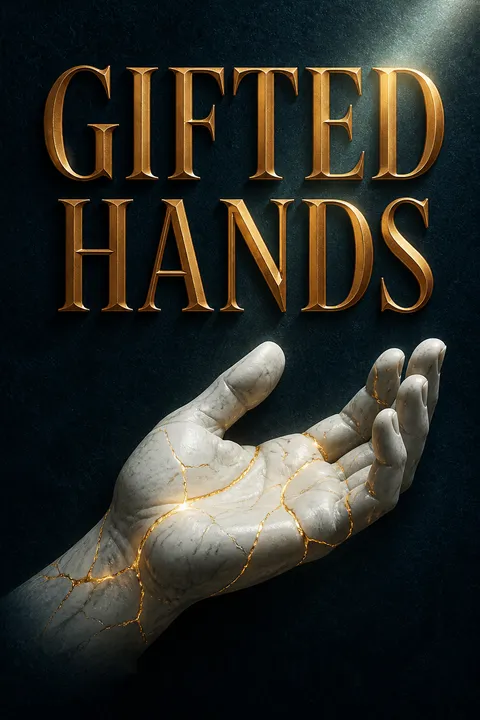
What is the significance of the title "Gifted Hands"?
- Surgical Skill: The title refers to Carson's exceptional skill as a neurosurgeon, particularly his dexterity and precision in surgery.
- Innate Talent: It highlights the innate talent Carson possesses, which he developed and honed through dedication and practice.
- Metaphor for Potential: The title serves as a metaphor for the potential within everyone to achieve greatness with the right guidance and effort.
- Recognition of Achievement: It acknowledges Carson's achievements and contributions to medicine, emphasizing the impact of his work.
About the Author
Other books by Ben Carson

Download PDF
Download EPUB
.epub digital book format is ideal for reading ebooks on phones, tablets, and e-readers.








