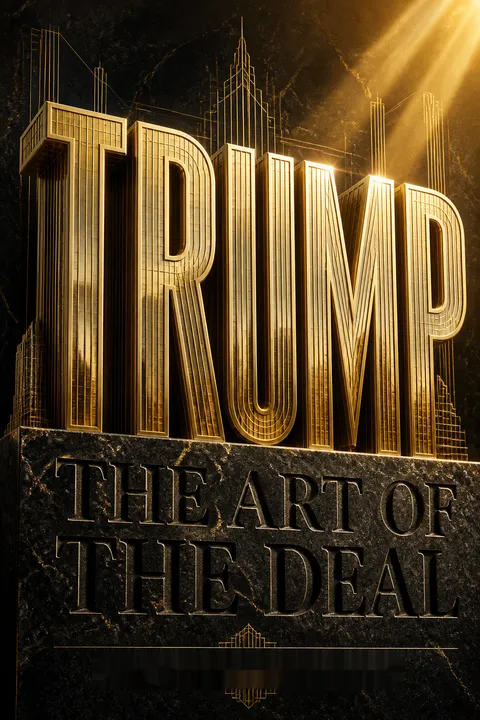


Key Takeaways
Pair ambitious targets with a downside you can survive.
Scale needs guardrails. Trump presents dealmaking as a contest of ambition and risk design, not simply daring. Aim high, he argues, but model the worst case before committing, and avoid exposing the whole business to one bet. In Atlantic City, he tied individual land deals to assembling the complete casino site, limiting his cash risk before control was secured. Even then, he waited for gaming approval before beginning construction. Later, Holiday Inns offered to finance construction and cover operating losses for five years in exchange for half the profits. He gave up some upside to reduce the downside.
Know the exception. The USFL was the contrary case: he bought a struggling team and league on a long-shot theory, then lost when the antitrust jury awarded only token damages. The contrast makes the advice concrete: pursue a large payoff, but first decide what failure will cost.
What's striking is the distinction between a bold goal and an unbounded commitment. The Atlantic City deal was ambitious, but its stages created chances to stop before the most expensive risks arrived. That resembles a portfolio of choices more than a single wager: each step buys information as well as progress. The USFL story is a useful warning that confidence in a strategy is not the same as a protected downside. The book's cases are narrated retrospectively, so the apparent precision of the successful safeguards deserves scrutiny alongside the vividness of the failures.
Make every commitment reversible until the expensive uncertainty clears.
Buy time cheaply. An option is a right to complete a purchase later, not an obligation to do so immediately. Trump used contingent agreements to keep potential projects alive while delaying the largest financial commitments. His early West Side land plans depended on approvals and financing, and he shifted the proposed use from housing to a convention center when public subsidies disappeared. The change preserved a path forward instead of turning a failed first plan into a dead end.
Stage the risk. On the Atlantic City casino site, he negotiated parcels so that each purchase depended on securing the others. That structure guarded against paying for most of a site, then being trapped by one holdout owner. He also delayed construction until his gaming license was approved. The lesson is not to postpone every decision, but to postpone irreversible spending while the uncertainties that could invalidate a deal remain unresolved.
This approach treats flexibility as something designed into a transaction, rather than as a personality trait. A contingent contract, a backup use, or a staged investment keeps more than one future available. That matters because information often arrives after negotiations begin, not before them. Still, reversibility has a price: options can expire, carrying costs accumulate, and a seller may lose patience. The useful question is therefore not simply whether a commitment can be delayed, but whether the value of waiting exceeds the cost of keeping the opportunity open.
Buy the best bargain, then improve what the address means.
Location is made. Trump argues that a prestigious address is not automatically a good investment if the purchase price is too high. The deal behind Trump Tower combined several pieces: the Bonwit Teller building and its land lease, the land beneath it, air rights from Tiffany, and an adjoining parcel. Those pieces enabled a taller building with prominent views and a more valuable design. The address mattered, but so did assembling it at a price and on terms that could support development.
Create a premium. He applied the same logic to Trump Plaza on Third Avenue, a less celebrated address than Fifth Avenue. He built a striking tower and used the Trump name to attract buyers willing to pay more. In his account, design, presentation, and perceived status could improve a location's appeal. But he also insists that the purchase price matters: a fashionable site bought too expensively can be a worse deal than a less obvious site bought well.
The argument usefully separates a place's physical attributes from its perceived value. Views, access, and neighboring buildings are tangible; reputation and desirability are social judgments that can change. A developer can influence those judgments through design and marketing, but cannot dictate them. The cases also show why brand-building depends on credible delivery: a prestigious name can attract attention, but buyers still need a building and a location that justify the premium. The strongest version of this idea is not that promotion can rescue any site, but that good development can add value to an underappreciated one.
Negotiate with the person who can actually say yes.
Find the decision-maker. Trump describes repeated tentative agreements with Hyatt executives that unraveled after they consulted someone higher in the company. He eventually went directly to Jay Pritzker, who had the authority to commit Hyatt to a partnership on the Commodore Hotel. The shift changed the negotiation: instead of repeatedly persuading intermediaries who could not finalize the deal, Trump could address the person who could approve it.
Authority is not enough. The Commodore project still required financing, tax relief, and city approval. Trump had to work with bankers and public officials as well as Hyatt's leadership. His point is that a deal can stall when its apparent champion lacks the power to bind the organization. Before investing heavily in persuasion or preparation, identify who controls the key decision, what other approvals remain, and whether the person across the table can make a commitment that survives internal review.
What's striking is how much negotiation depends on organizational structure. A willing contact may be an advocate, but only an authorized decision-maker can convert interest into commitment. This is especially useful when a process repeatedly resets after apparent agreement. Yet reaching the top does not eliminate the need to understand the institution: boards, regulators, lenders, and other stakeholders may hold independent vetoes. The practical extension is to map decision rights, not merely titles. That keeps access to senior leaders from being mistaken for certainty that the transaction can close.
Use leverage that solves the other side's problem.
Start with their need. Leverage, in Trump's account, is possessing or creating something the other party wants or needs. His Commodore Hotel proposal answered a city problem as well as a private one: the failing hotel was losing money, and its closure threatened an already struggling Grand Central neighborhood. Trump argued that a renovation could preserve jobs and revive the area, while the city could receive future payments and a share of profits through a tax-abatement arrangement.
Make the exchange legible. On the West Side yards, he branded a proposed development Television City and presented the prospect of NBC relocating there. Keeping a major network in New York gave the city a reason to consider his project. In both cases, leverage came from linking his proposal to an outcome the other side valued. The method requires a credible offer. A threat or a grand promise without a workable benefit may create attention, but it does not give the other party a sound reason to agree.
This is a more durable account of leverage than simple pressure. The strongest bargaining position often comes from making a transaction useful to both sides, especially when each side controls something the other cannot easily replace. Trump's examples show how a neglected asset can become valuable when connected to a public priority. The caution is that public benefits and private gains do not automatically align. A persuasive proposal should make the exchange transparent enough to evaluate, including who bears the costs and who captures the upside. Otherwise, leverage can look less like a solution and more like a demand dressed as mutual benefit.
Publicity can create a market, but it cannot replace a product.
Attention creates demand. Trump treated press coverage as a business tool, not merely a reputation contest. He promoted Trump Tower as a destination, emphasized its unusual atrium, and used striking design and high prices to make the building feel exclusive. Coverage, including controversy over the demolition of Bonwit Teller's exterior sculptures, brought attention to the project. The book reports that apartment sales rose during the publicity and that the atrium attracted prominent retailers and shoppers.
Give attention something to land on. Trump contrasts the atrium's design and retail appeal with projects that borrowed its appearance without accepting the cost of building it well. He also says that press attention mattered because the tower offered a distinctive place to live and shop. His term “truthful hyperbole” describes deliberate promotional exaggeration, but the underlying claim is narrower: promotion can magnify a product's appeal, while repeated disappointment eventually weakens trust.
The useful distinction is between awareness and conversion. Publicity helps people notice an offer; design, service, and experience determine whether attention becomes lasting demand. A controversy can produce reach, but reach is not the same as approval, and the same tactic can damage a reputation as easily as it can strengthen one. Trump's account is strongest where promotion accompanies visible quality, such as the atrium's materials and retailers. It is weaker as a general rule because a successful launch does not establish that hype will work for less distinctive products or less affluent audiences.
Treat construction details and cost overruns as strategic, not clerical.
Execution compounds. Trump's father taught him to know what materials and labor should cost, move quickly, and finish properly. At Swifton Village, an apartment complex bought out of foreclosure, the family invested in clean hallways, better doors and shutters, landscaping, and careful management. Occupancy rose to 100 percent, and they later sold the property for about $12 million after buying it for less than $6 million. Presentation and maintenance helped turn a troubled asset into a more valuable one.
Make accountability visible. The Wollman Rink renovation offered a different example. After years of failed city work, Trump said his team rebuilt the rink in four months, opened it ahead of schedule, and finished about $750,000 under budget. He credits direct oversight and clear responsibility. The broader principle is that schedules, specifications, and small cost decisions shape whether a grand plan becomes a functioning asset.
These stories turn execution into a source of strategic advantage. Reliable delivery reduces the gap between a proposal and what customers, lenders, or partners actually receive. The Swifton example also shows how modest physical improvements can alter an asset's appeal without requiring a dramatic redesign. The Wollman account highlights a real accountability problem: when responsibility is fragmented, delay can become nobody's failure. At the same time, a fast private project and a slow public one are not perfectly comparable. Public procurement rules and public access create constraints that a private developer may not face.
Hire proven operators, then give competence room to work.
Talent beats familiarity. Trump says he looked for strong people among competitors and offered them larger roles. He hired Stephen Hyde, a casino executive from the Golden Nugget, to run his Atlantic City operation. He also put his wife, Ivana, in charge of Trump's Castle, where she hired experienced staff and focused closely on cleanliness, service, and performance. The book reports that the casino's revenue and profitability grew under her management.
Separate skill from character. The Swifton Village manager called Irving could accomplish more in an hour than others did in a day, but Trump suspected he was stealing from the business. He tolerated the arrangement because Irving was effective and controlled other employees. That anecdote complicates the hiring lesson: competence matters, but so do trust and standards. A strong operator can improve a business, yet rewarding suspected dishonesty can expose it to costs that the story treats too casually.
The hiring principle is sharper than simply seeking impressive résumés: recruit people who have performed the work, give them real responsibility, and judge them by results. The examples also resist the assumption that management talent comes only from familiar channels. But the Irving story exposes a genuine tension. Short-term output can conceal risk to morale, controls, and the norms an organization depends on. The broader lesson is not to excuse questionable conduct for efficiency, but to assess ability and integrity as separate dimensions rather than treating one as proof of the other.
Do not let a winning story disguise a bad risk.
The league was a long shot. Trump bought the New Jersey Generals when the United States Football League was already losing money. He believed the league should move from spring to fall, sign top players, and challenge the NFL for television audiences. The Generals recruited stars including quarterback Doug Flutie and running back Herschel Walker, while the league pursued an antitrust case against the NFL, arguing that its control of television access blocked competition.
A verdict did not save it. A jury found that the NFL had violated antitrust law, but awarded the USFL only one dollar in damages. Without meaningful compensation or a fall television deal, the league suspended play. Trump presents the venture as an exception to his preference for limiting downside. Its story shows why strategic conviction is not enough: a plan can depend on other owners, broadcasters, courts, and market conditions that no single investor controls.
This is the book's clearest test of its own risk philosophy. The football strategy had an intelligible theory: build a stronger product, compete for the audience, and use legal action if access remained blocked. But the league's fate depended on coordination among owners and decisions by institutions outside Trump's control. That makes the case valuable beyond its losses. A sound strategy needs not only a plausible route to success, but also a plan for dependencies that can fail together. The memoir's confident voice cannot convert an uncertain legal outcome into a predictable business instrument.
Keep a project alive only while patience remains cheaper than forcing it.
Waiting can improve the deal. Trump first held an option on the West Side yards in the 1970s, then let it expire when financing, approvals, and other active projects made the carrying burden unattractive. He bought the land back in 1985 from a developer in financial trouble, for a price he says was lower in real terms than exercising his earlier option would have been. The delay also let him build a stronger record and financial base.
Persistence is not stubbornness. He repeatedly describes keeping alternatives open, whether changing the proposed use of a site or withdrawing from a distant Australian casino opportunity that seemed impractical to manage. His patience depended on having time and resources to wait. A project worth preserving can still become a poor choice if its carrying costs, distraction, or approval delays overwhelm its future value.
The West Side story makes patience a financial choice rather than a virtue in itself. Waiting preserves the chance to act under better conditions, but only if the holder can afford the delay and has alternatives for attention and capital. This is why persistence and flexibility belong together: persistence keeps a valuable opportunity alive, while flexibility changes the terms or the plan when evidence shifts. The book's success stories make waiting look rewarding, yet the same period could have ended with no purchase opportunity. Good patience must account for that possibility, not just celebrate the eventual result.
Analysis
The book is part memoir, part promotional casebook, and part practical argument about how deals are made. Its structure moves between a busy week, a list of principles, formative family stories, and extended negotiations. That mixture gives abstract advice a physical setting: hotel lobbies, construction sites, courtrooms, and city offices. The recurring method is to combine ambition with transaction design. A large vision attracts partners and attention; options, contingencies, financing choices, and alternatives keep the vision from becoming a single all-or-nothing wager.
Its best value is not a replicable formula for becoming a developer. Many of the outcomes depend on access to substantial capital, legal advice, political engagement, and unusual opportunities. The useful transferable ideas are more modest and more durable: identify who has authority, understand what the other side needs, make commitments in stages, monitor costs, and distinguish a compelling pitch from actual delivery. The accounts of Swifton Village, the Commodore, Trump Tower, and Wollman Rink illustrate how design and execution can reinforce one another. The USFL story demonstrates the limits of individual control when a strategy relies on partners, networks, regulators, or courts.
The narrative must also be read as self-presentation. Deals are described by a participant with a strong interest in portraying instinct, persistence, and business judgment as decisive. Successful transactions receive extensive attention, while the full distribution of risks and costs is less systematically examined. Public projects such as Wollman Rink are framed against private execution, but public agencies operate under procedures and obligations that private builders do not necessarily share. The book is most convincing when it describes concrete mechanisms, such as contingent land purchases or detailed construction planning. It is less conclusive when it treats confidence, publicity, or confrontation as broadly reliable tools. Its enduring lesson is to study how a deal is structured, not merely admire how boldly it is narrated.
Review Summary
The Art of the Deal receives mixed reviews. Many praise it as an insightful business book, offering valuable lessons on negotiation and deal-making. Readers appreciate Trump's candid approach and his detailed accounts of various projects. However, critics find it self-aggrandizing and lacking in humility. Some view it as a testament to Trump's business acumen, while others see it as a reflection of his ego and aggressive tactics. The book's relevance to Trump's later political career is noted by several reviewers.
People Also Read






Glossary
truthful hyperbole
Promotional exaggerationTrump's term for deliberate exaggeration used to make a project sound unusually large, desirable, or exciting while, in his view, remaining connected to a real offering. He presents it as a promotional technique rather than a substitute for delivery. The phrase reflects his own characterization, not an objective test for whether a claim is accurate.
Floor Area Ratio (FAR)
Building-size limitA zoning measure comparing a building's total floor area with the area of its lot. A higher permitted ratio allows more floor space to be built on the same parcel. In the Trump Tower account, air rights and zoning bonuses could increase the usable building area, while city approval determined whether the proposed scale was allowed.
421-A tax exemption
Residential tax incentiveA New York City tax incentive described in the book as encouraging residential construction by exempting qualifying improvements from increased real-estate taxes for a limited period. The exemption declined over time. Trump sought it for Trump Tower, arguing that replacing and greatly expanding an older building qualified as a substantial improvement.
value engineering
Cost-saving design reviewA review of construction plans and specifications to identify less expensive ways to achieve the required function. The book's examples include checking whether a door needs every specified hinge and placing cooling equipment where installation can begin earlier. The goal is to reduce cost or delay without sacrificing necessary performance.
poison pill
Takeover defenseA corporate measure intended to make an unwanted takeover more difficult or expensive. In the book, Holiday Inns and Bally adopt such defenses after Trump accumulates shares. He describes the measures as obstacles to control, while the companies use them to resist an investor's attempt to acquire or influence the business.
bloodletting
Licensing sacrificeTrump's metaphor for casino regulators requiring an applicant company to remove a person associated with past conduct or controversy as part of the licensing process. He says other casino companies had offered such individuals as a kind of sacrifice to gain approval. It is his description of a perceived licensing pattern, not a formal regulatory term.
FAQ
What's Trump: The Art of the Deal about?
- Business and Real Estate: The book provides insights into Donald Trump's approach to business, focusing on real estate and deal-making strategies.
- Personal Journey: Trump shares his experiences growing up in a real estate family and his ventures in Manhattan, highlighting his challenges and successes.
- Candid Insights: It offers a candid look at Trump's personality, work ethic, and the mindset that drives his success, blending memoir with practical advice.
Why should I read Trump: The Art of the Deal?
- Learn from Experience: The book is filled with lessons from Trump's real-life business experiences, making it a valuable resource for aspiring entrepreneurs.
- Unique Perspective: Trump's unconventional approach to deal-making provides insights that differ from traditional business literature.
- Cultural Impact: Understanding Trump's strategies offers context for his influence on American business and politics, reflecting the ethos of a particular era.
What are the key takeaways of Trump: The Art of the Deal?
- Think Big: Trump emphasizes aiming high in business, believing that ambitious thinking provides a competitive edge.
- Protect the Downside: He advises planning for worst-case scenarios, suggesting that if you can handle the worst, the good will follow.
- Use Leverage: The importance of leverage in negotiations is highlighted, with Trump advising that having something the other party needs strengthens your position.
What are the best quotes from Trump: The Art of the Deal and what do they mean?
- "I don't do it for the money.": This reflects Trump's passion for deal-making as an art form, emphasizing the joy in negotiation and creativity.
- "If you're going to be thinking anyway, you might as well think big.": Encourages embracing bold ideas and not limiting oneself due to fear of failure.
- "Sometimes your best investments are the ones you don't make.": Highlights the importance of prudence, suggesting that knowing when to walk away is valuable.
How does Trump approach negotiation in Trump: The Art of the Deal?
- Aggressive Tactics: Trump advocates for a bold and assertive approach, believing that aggression can lead to better outcomes.
- Flexibility and Options: He emphasizes keeping multiple options open, allowing for adaptability and more favorable terms.
- Psychological Warfare: Trump uses psychological tactics, such as creating urgency, to influence negotiation outcomes.
What specific methods does Trump discuss in Trump: The Art of the Deal?
- Reverse Sales Technique: Trump creates a sense of scarcity and exclusivity around properties to increase demand and prices.
- Leveraging Media: He uses media to shape public perception and create buzz around his projects.
- Building Relationships: Trump stresses the importance of networking and building relationships with industry key players.
How does Trump define success in Trump: The Art of the Deal?
- Financial Achievement: Success is often measured by financial gain and the ability to close profitable deals.
- Personal Satisfaction: Trump finds fulfillment in the thrill of making deals and the creative process.
- Legacy and Impact: He considers the long-term impact of his projects on New York City as a measure of success.
What challenges did Trump face in Trump: The Art of the Deal?
- Market Fluctuations: Trump navigated economic downturns and market volatility, particularly in the 1970s.
- Public Scrutiny: As a high-profile figure, he faced media scrutiny and public criticism regarding his business practices.
- Competition: The intense competition in real estate required strategic and innovative approaches to stand out.
How does Trump view risk in Trump: The Art of the Deal?
- Calculated Risks: Trump believes in taking risks but emphasizes careful calculation and preparation for various outcomes.
- Embracing Uncertainty: He suggests that successful entrepreneurs embrace uncertainty, allowing for flexibility and adaptability.
- Risk as Opportunity: Trump views risk as a chance for growth, believing that those willing to take risks achieve significant rewards.
What role does branding play in Trump: The Art of the Deal?
- Personal Branding: Trump highlights building a personal brand that reflects confidence and success.
- Project Branding: He emphasizes creating a brand around each project to enhance perceived value.
- Media Influence: Trump uses media to shape public perception and branding, creating buzz around his projects.
How does Trump describe his work ethic in Trump: The Art of the Deal?
- Relentless Pursuit: Trump works tirelessly, often late into the night, driven by a relentless pursuit of goals.
- Enjoyment in Work: He finds joy in making deals, viewing work as a source of personal satisfaction.
- Learning from Experience: Trump emphasizes learning from past experiences and applying lessons to future endeavors.
How does Trump describe his experience with the USFL in Trump: The Art of the Deal?
- Ambitious Undertaking: Trump saw the USFL as an exciting opportunity to compete with the NFL.
- Challenges of Competition: He faced financial losses and difficulties in establishing the USFL as a legitimate competitor.
- Lessons Learned: The experience taught him about competition, branding, and the importance of a strong product.
About the Author
Other books by Donald J. Trump

Download PDF
Download EPUB
.epub digital book format is ideal for reading ebooks on phones, tablets, and e-readers.








