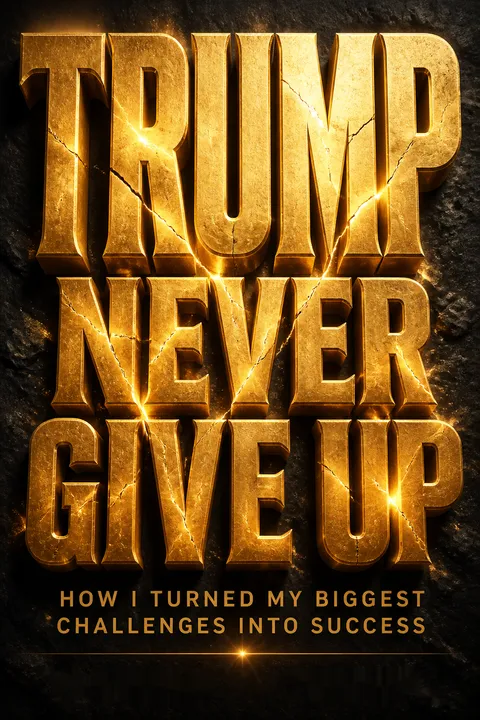


Key Takeaways
Treat failure as a chapter, not a verdict, then take the next step.
A crisis is not an identity. Trump recounts owing billions in the early 1990s, with personal guarantees of $975 million and newspapers predicting financial ruin. He says the shock exposed his complacency, after years of believing his own reputation for effortless success. Instead of treating the collapse as proof that his career was over, he focused on projects and solutions, then rallied his team around moving forward. The lesson is not that optimism pays debts by itself. His financial difficulties were real, and the book gives little detail about the negotiations that resolved them.
Keep moving with perspective. Trump argues that setbacks become survivable when they are seen as temporary problems to address, not permanent judgments about a person’s ability. He recommends drawing confidence from past experience, and from examples of people who endured worse circumstances.
The useful distinction is between a setback and a self-definition. In cognitive behavioral approaches, people are encouraged to test sweeping conclusions against specific evidence: a failed venture is not the same thing as being a failure. That reframing can preserve the attention needed for practical action. Yet positive thinking is not a substitute for accurate accounting, outside advice, or a change in strategy. The book’s turnaround story is compelling, but a memoir of survival naturally highlights the comeback more than the risks that might have made it impossible.
Turn problems into opportunities only after studying what they reveal.
Look beneath the damage. Trump presents 40 Wall Street as a property abandoned by owners who lacked the experience to manage a New York skyscraper. After watching its difficulties for years, he bought it in 1995 for $1 million, subject to liens and a renegotiated ground lease. He chose to keep it as office space, despite advice to convert it to residences. The book says the building later produced about $20 million in annual rent and was valued at $500 million. Those figures are the author’s claims, but the underlying lesson is clear: a distressed asset can be valuable if its problems are understood and solvable.
Opportunity requires diagnosis. Trump repeatedly urges readers to ask what a problem makes possible. The question works only alongside research: the previous owners’ mistakes were warnings, not merely an invitation to buy cheaply.
This is a practical version of contrarian investing: price can fall when others see only uncertainty, but the buyer still needs to identify what is fixable and what is structural. The distinction matters because visible distress often attracts optimistic stories that cannot survive due diligence. The case also illustrates how an investor’s expertise can change the value of an asset. What looks like a bargain to one person may be an unmanageable liability to another, especially when financing, legal rights, or local conditions are misunderstood.
Research deeply, then trust judgment when advisers disagree.
Advice informs, but does not decide. Trump says nearly everyone around him opposed his participation in The Apprentice, warning that a reality show could damage his business reputation. He listened, considered the risks, and went ahead because his own assessment was favorable. The show became a hit, though the book notes that the promised three hours of work each week expanded to roughly 30. His account makes risk-taking concrete: a good opportunity can demand far more time than expected.
Practice in public. Trump also describes doubts before hosting Saturday Night Live. Rehearsals, help from the writers and performers, and getting through the live broadcast made the unfamiliar task manageable. His advice is to prepare, then act instead of letting fear make the decision. Neither success guarantees that the original judgment was sound, nor does a good outcome make every ignored warning foolish.
This balances social information with personal agency. Advisers can surface risks that enthusiasm obscures, while group consensus can also punish unconventional ideas before they are tested. A sound decision process therefore asks what evidence supports each warning, what the upside is, and what the downside would cost. The book’s stories end in success, which creates survivorship bias: failed risks are less likely to become motivational anecdotes. The more transferable lesson is not to disregard counsel, but to remain accountable for the final choice.
Plan for trouble, then classify setbacks before reacting.
Separate a delay from disaster. Trump applies the question of whether an obstacle is a minor setback or a catastrophe to large projects. During construction of his Chicago tower, water entered the site from the river, a partner left amid scandal, and the architect departed. Each problem required a response, but none automatically ended the development.
Adapt the method. A rise in steel prices, linked in the book to global demand, made the planned steel-and-concrete structure less attractive. The team redesigned it as an all-concrete building and reportedly saved several million dollars. Trump’s point is to regroup rather than mistake the original plan for the goal. A project can preserve its purpose while changing its materials, partners, or sequence. The book also credits planning and technical expertise, not attitude alone, with keeping work on course.
The distinction resembles incident triage: assess severity, reversibility, and time pressure before spending scarce attention. That prevents teams from treating every surprise as an existential threat, while still escalating genuine dangers. The Chicago example also shows that flexibility is not improvisation without limits. A material substitution in a skyscraper demands engineering review, cost analysis, and regulatory approval. Positive language can steady a team, but it cannot replace technical competence or transparent reporting about risks.
Persistence needs an exit rule, not just a tougher slogan.
Endurance is not always wisdom. Trump says he tends to persist longer than most people, but his airline venture, Trump Shuttle, shows why continuing cannot be the only rule. The business faced a mechanics’ strike, a recession, rising jet fuel prices, and competition for passengers. It never earned a proper profit, and in 1990 its ownership transferred to creditor Citicorp. The operation later merged into another company.
Know what can change. By contrast, Trump describes pursuing the West Side rail yards over decades, abandoning an initial option, returning to the project, and eventually developing Trump Place. Together, the stories suggest that persistence can mean holding to a worthwhile aim while changing the route, or leaving when the economics no longer justify staying. The book gives no numerical threshold for deciding when to exit, so the reader must define one before emotion takes over.
This is the book’s most important corrective to its own central slogan. Behavioral economics calls one trap the sunk-cost fallacy: past investment can make people keep funding a poor choice, even though those costs cannot be recovered. Persistence is valuable when new effort has a plausible path to future value; it is destructive when the only reason to continue is how much has already been spent. A pre-set review point, tied to evidence rather than pride, helps distinguish tenacity from escalation.
Change the plan when evidence improves the outcome.
Do not defend a weak design. In Dubai, Trump and his partner initially favored a tulip-shaped hotel tower with an exoskeleton, estimated at $400 million. After reviewing it, they judged the design too heavy and started again with a split tower and open core, estimated at $600 million. The book presents the redesign as a deliberate choice to pursue a better result despite the cost of abandoning earlier work.
Treat revision as part of creation. Trump describes projects as evolving through review, market feedback, and changing conditions, rather than as fixed plans to be protected at all costs. This is different from abandoning a goal at the first obstacle: the desired outcome remains, while the proposed route changes. The Dubai project was still under development when the book was written, so its eventual success cannot be inferred from the redesign alone.
The example captures the value of iteration: early concepts are hypotheses, and review can reveal flaws before they become expensive construction decisions. In design practice, a prototype is useful precisely because it makes revision possible. The caution is that a more dramatic or costly alternative is not automatically better. Teams need criteria that separate genuine improvement from novelty, prestige, or attachment to a grander vision. Independent technical and financial review can make a willingness to start over more disciplined.
Prepare thoroughly so negotiation creates leverage, not theater.
Know the terrain. Trump’s negotiating advice centers on learning the facts, understanding the other side’s needs, trusting informed judgment, and knowing when to refuse. His SoHo hotel project faced opposition over height and whether condominium units would function as residences. The team worked with city officials on detailed occupancy restrictions and a formal declaration, eventually securing approval under the zoning rules as the book describes them.
Look for shared interests. For a proposed golf development in Scotland, the team researched the shifting dunes, wildlife, and local economic concerns, then worked with heritage authorities rather than treating them only as opponents. The project’s environmental planning included dune stabilization and protections for local species. The book’s strongest negotiating examples pair persistence with evidence and a workable offer. Its advice to keep information close, however, can sit uneasily beside the transparency needed to build public trust.
Preparation expands the number of possible agreements. Negotiation research often distinguishes fixed-pie bargaining, where one side’s gain is assumed to be the other’s loss, from problem-solving that identifies different priorities. The Scotland story reflects the latter: development goals and conservation requirements were treated as issues to address together. Still, partnership language does not erase unequal power. Communities affected by a project need meaningful influence, not just a polished presentation of benefits. Credibility depends on whether commitments can be independently checked.
Break large ambitions into disciplined starts, standards, and handoffs.
Give work a finish line. Trump attributes a four-part work routine to his father: begin, complete the task, ensure the quality is right, and then move on. He connects it to discipline, lists of daily, yearly, and lifetime goals, and keeping attention on the work that only the leader can do. The method aims to prevent two common failures: waiting so long that an opportunity passes, and lingering over finished work instead of freeing capacity for the next task.
Make quality operational. In describing the Trump Organization’s developments, he emphasizes checking proposals, budgets, construction documents, and job-site progress. That is more than confidence in a brand; it is an attempt to turn standards into repeated checks and clear responsibility. The approach depends on competent people and reliable oversight. Delegation without follow-up can hide problems, while constant personal involvement can make an organization dependent on one person.
The sequence links goal setting to execution and delegation, a useful bridge between strategy and daily work. Clear standards make it easier to judge whether a task is complete, while handoffs prevent leaders from becoming bottlenecks. The tension is between control and scale: the book celebrates close oversight, but no individual can personally verify every detail as an organization grows. Durable systems need shared authority, documented decisions, and channels for bad news to travel upward without delay.
Stay curious enough to spot markets others stop seeing.
Questions keep possibilities open. Trump recalls a kindergarten teacher writing that he was unusually inquisitive, and presents curiosity as a habit that continued into business. He says he asks visitors for opinions, studies unfamiliar subjects, and looks for opportunity in world events. His example of Panama City begins with noticing the place during a pageant visit; the book later describes a major hotel and condominium project there alongside expectations of growth tied to Panama Canal expansion.
Look beyond familiar borders. Trump argues that local businesses are affected by international markets, technology, and foreign investment. He encourages readers to stay informed globally while continuing to understand their immediate surroundings. Curiosity can reveal overlooked changes, but an observation is only a starting point. A promising trend still needs local knowledge, sound forecasts, and a test of whether the opportunity fits the person or organization pursuing it.
Curiosity is a practical defense against cognitive closure, the tendency to treat familiar surroundings as fully understood. Asking what has changed can expose new customers, technologies, or constraints hiding in plain sight. The global outlook is especially useful when local decisions depend on distant supply chains or capital. Yet broad awareness can create false confidence: a headline about a growing market is not proof that a particular deal will work. Curiosity generates hypotheses; careful analysis must still test them.
Judge success partly by what your work makes possible for others.
Turn resources into service. Trump describes the Trump Organization’s annual September 11 memorial and a public concert in Trump Tower. After the attacks, the company gave to charity the money that would have funded its Christmas party. He also recounts donating a drawing to a hunger-relief auction, where such contributions raised money for a New York food ministry.
Make assets useful. The book argues that buildings and businesses can support more than their owners: they can host charitable events, create jobs, and contribute to neighborhood life. Trump says giving back became more satisfying as his success gave him the means to do more. The principle is tangible, but the book’s examples are largely self-reported and do not measure the broader effects of its developments. Good intentions matter, while outcomes still deserve scrutiny.
This expands business success beyond personal wealth by asking what institutions and resources enable. Philanthropy can address immediate needs, while a business can also create jobs, provide public access, or improve shared spaces. Those forms of impact should not be treated as interchangeable: a charitable event does not by itself establish that a development benefits its neighbors. The strongest version of the book’s claim is that success creates capacity and responsibility. Evidence about who benefits, who bears costs, and whether commitments endure makes that claim meaningful.
Analysis
Never Give Up is a business memoir shaped as a casebook of setbacks. Its chapters move among a near financial collapse, contested developments, a failed airline, public performance, and charitable work. The through-line is not a technical business model but a posture: anticipate resistance, keep attention on solutions, and treat difficulty as a reason to investigate rather than retreat. The project stories make this posture memorable because they show persistence operating in zoning offices, construction sites, negotiations, and public scrutiny.
The book’s strongest contribution is its insistence that resilience has practical components. Trump describes preparation, technical expertise, persistence, curiosity, standards, and the ability to revise a plan. His accounts of the Chicago tower, Wollman Rink, and Trump Shuttle complicate a simple message of never quitting: problems differ in scale, some plans must change, and some ventures should end. The most useful reading therefore treats persistence as commitment to learning and forward motion, not loyalty to every original decision.
The book is also a highly managed self-portrait. Success stories are told by their beneficiary, many financial figures are presented without independent documentation, and the outcomes receive more attention than the people or public systems that made them possible. This limits the book as a source for evaluating the projects, but not as a record of the author’s preferred operating philosophy. Readers can separate the transferable habits from claims that require verification.
Its advice is most applicable to people who have some discretion, resources, and room to absorb risk. Confidence and boldness can open doors, but they do not distribute risk evenly. For most readers, a useful adaptation is to pair ambition with safeguards: test assumptions, seek expertise, define acceptable losses, and invite criticism early. The book’s energy comes from refusing defeat. Its best practical wisdom comes from asking what exactly should continue, what should change, and what should stop.
Review Summary
Trump Never Give Up receives mixed reviews, with ratings ranging from 1 to 5 stars. Supporters praise it as inspiring and motivational, highlighting Trump's business acumen and perseverance. Critics argue it's repetitive, self-aggrandizing, and lacks substance beyond real estate anecdotes. Some readers find value in the book's lessons on resilience and positive thinking, while others criticize Trump's character and political actions. The book's reception often aligns with readers' pre-existing opinions of Trump, with some finding it insightful and others dismissing it as propaganda.
People Also Read






Glossary
Four-Step Formula
A routine for completing workA work sequence Trump attributes to his father Fred Trump. It moves from starting a task, through completing it to a high standard, and then releasing attention for the next responsibility. The book connects the routine to goal lists, discipline, and avoiding delay or unnecessary lingering.
hub versus rim theory
A metaphor for directing attentionTrump’s image for deciding whether to focus on what is central to one’s goals or remain at the edges of activity. The hub represents the main purpose or driving force; the rim represents distance from it. He uses the metaphor to encourage readers to identify what matters most and organize attention around it.
Wholeness
A state of healthy functioningTrump uses wholeness to describe the combination of qualities that make a person healthy, happy, and productive. He contrasts it with failure, which he treats as a disruption from a more complete state rather than a permanent identity. In his account, that framing should motivate a person to take steps toward recovery.
Trump's Rules for Negotiating
Advice for reaching business agreementsA set of negotiation principles collected in the book’s appendix. It emphasizes preparation, understanding what the other side knows, trusting informed instincts, staying flexible, recognizing when to refuse, and exercising patience. Trump also recommends aiming for agreements that benefit both parties, while using information and timing strategically.
Wicks Law
A rule for public construction contractsA New York State law described in the book as requiring local governments to hire separate contractors for major construction or renovation work, including general construction, plumbing, electrical, and heating and ventilation. Trump argues that requiring separate lowest bids can increase costs and slow coordination compared with a general contractor managing the work.
Air rights
Rights to build above propertyDevelopment rights associated with the space above a property, which can sometimes be transferred or purchased from neighboring owners. In the book’s Trump Tower account, acquiring air rights from Tiffany’s allowed the proposed building to use additional development capacity and helped protect views by limiting what could be built above the store.
Is this a blip or a catastrophe?
A test for judging setbacksA question Trump proposes for distinguishing a manageable interruption from a threat serious enough to end or fundamentally alter a plan. It encourages a decision-maker to assess the scale of a problem before reacting. The book applies it to construction difficulties, where leaks, changing partners, and price shifts required responses but did not necessarily make the whole project impossible.
FAQ
What's "Trump Never Give Up" about?
- Subject of resilience: The book focuses on the theme of resilience and turning challenges into opportunities for success.
- Personal anecdotes: Donald J. Trump shares personal stories and experiences from his business career to illustrate his points.
- Lessons on perseverance: It provides lessons on perseverance, emphasizing the importance of never giving up despite setbacks.
- Practical advice: The book offers practical advice on how to handle adversity and use it as a stepping stone to success.
Why should I read "Trump Never Give Up"?
- Learn from experience: Gain insights from Donald Trump's personal experiences and business challenges.
- Motivational content: The book serves as a motivational guide for those facing difficulties in their personal or professional lives.
- Practical strategies: It provides practical strategies for overcoming obstacles and achieving success.
- Unique perspective: Offers a unique perspective on resilience from a high-profile business figure.
What are the key takeaways of "Trump Never Give Up"?
- Resilience is crucial: The importance of resilience and persistence in overcoming challenges.
- Opportunities in adversity: Viewing problems as opportunities in disguise.
- Positive thinking: The power of positive thinking and maintaining a solution-focused mindset.
- Learning from setbacks: Using setbacks as learning experiences to fuel future success.
What are the best quotes from "Trump Never Give Up" and what do they mean?
- "Never give up!" This quote encapsulates the book's central theme of persistence and resilience.
- "Focus on the solution, not the problem." It emphasizes the importance of maintaining a positive and proactive approach to challenges.
- "Be passionate—it's the only way to move mountains." Passion is highlighted as a driving force for achieving significant goals.
- "Expect problems and you'll be ready when they come." This quote advises readers to anticipate challenges and prepare for them.
How does Donald Trump suggest handling failure in "Trump Never Give Up"?
- Failure is temporary: Trump emphasizes that failure is not permanent and can be overcome.
- Learn from mistakes: He advises learning from failures to improve future decision-making.
- Stay positive: Maintaining a positive attitude is crucial in overcoming setbacks.
- Focus on solutions: Concentrate on finding solutions rather than dwelling on the problem.
What is Donald Trump's approach to negotiation as described in "Trump Never Give Up"?
- Be prepared: Know everything about what you're negotiating to gain an advantage.
- Trust instincts: Rely on gut feelings when situations are not clear-cut.
- Keep them off balance: Use strategic ambiguity to maintain an upper hand.
- Aim for win-win: Strive for negotiations where all parties feel they have gained.
How does "Trump Never Give Up" address the concept of opportunity?
- Opportunities in disguise: Problems are often opportunities in disguise, waiting to be uncovered.
- Be proactive: Actively seek out opportunities rather than waiting for them to come.
- Think big: Adopt a mindset that looks for large-scale opportunities.
- Be ready: Prepare yourself to seize opportunities when they arise.
What role does positive thinking play in "Trump Never Give Up"?
- Creative thinking: Positive thinking is linked to creative problem-solving.
- Overcoming adversity: A positive mindset helps in overcoming challenges and setbacks.
- Self-belief: Believing in oneself is crucial for maintaining positivity.
- Motivation: Positive thinking serves as a motivational tool to keep moving forward.
How does Donald Trump view risk-taking in "Trump Never Give Up"?
- Calculated risks: Take risks that are well thought out and calculated.
- Potential for reward: Recognize that high risks can lead to high rewards.
- Learning experience: View risk-taking as a learning opportunity, regardless of the outcome.
- Confidence: Approach risks with confidence and a belief in your ability to succeed.
What is the significance of the "Four-Step Formula" in "Trump Never Give Up"?
- Get in: Start taking action towards your goals.
- Get it done: Focus on completing tasks efficiently.
- Get it done right: Ensure high quality in all endeavors.
- Get out: Move on to new opportunities once a task is completed.
How does "Trump Never Give Up" suggest dealing with criticism and attacks?
- Bite back: Respond to attacks with assertiveness and confidence.
- Set the record straight: Correct misinformation and defend your reputation.
- Stay focused: Do not let criticism distract you from your goals.
- Use it as fuel: Let criticism motivate you to prove detractors wrong.
What lessons does "Trump Never Give Up" offer about leadership?
- Discipline is key: A good leader must have discipline to succeed.
- Vision and focus: Leaders should have a clear vision and maintain focus on their goals.
- Courage under pressure: Demonstrating courage and grace under pressure is essential.
- Inspire others: A leader should motivate and inspire their team to achieve common goals.
About the Author
Other books by Donald J. Trump





Download PDF
Download EPUB
.epub digital book format is ideal for reading ebooks on phones, tablets, and e-readers.








