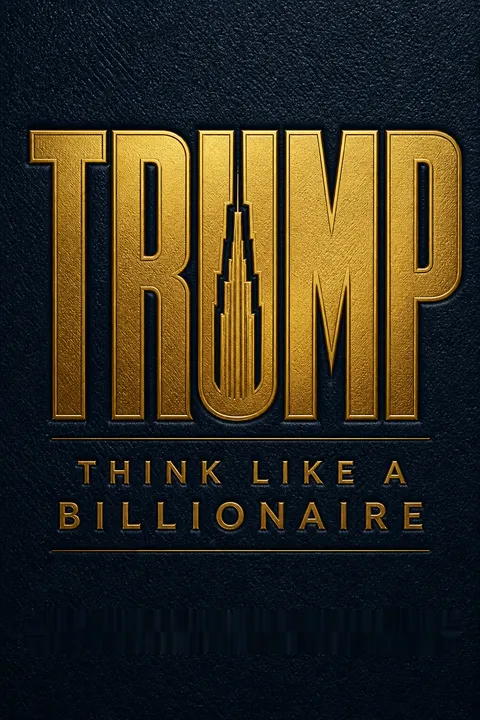


Key Takeaways
Build a vision from knowledge, then test it against conventional wisdom
Learn before you leap. Trump traces his business instincts to his father, Fred, who taught him to study construction, contractors, costs, and property details. That knowledge gave him the confidence to pursue Manhattan projects even though his father preferred cheaper land in Brooklyn. He also points to potato entrepreneur John Simplot, who left the family farm rather than accept its expected future. The lesson is not to reject advice for sport. It is to understand a field deeply enough to see options that others overlook.
Conviction needs evidence. Trump presents vision as a source of opportunity, but a bold idea still has to survive financial and practical scrutiny. His own account of severe debt in the early 1990s shows that confidence alone does not protect a venture from a falling market.
The strongest version of this argument is that expertise can make unconventional choices legible. A novice sees Manhattan prices as a warning; an informed developer may see a location, zoning, and financing combination others have missed. This resembles the role of domain knowledge in innovation: it supports recombination, not just rule-following. Yet contrarianism can become a flattering story told after success. A useful test is to define in advance what evidence would prove the vision wrong, and what loss would be tolerable if it fails.
Choose property for the life around it, not just the listing
Inspect the lived environment. Trump advises prospective renters and buyers to visit a neighborhood at different times, including weekends, and notice its noise, traffic, safety, and daily rhythm. A street that seems peaceful on a Tuesday afternoon may be loud at night; a view over an empty lot may disappear when a new building rises. He also warns that listing language can hide basic drawbacks, such as a tiny room described as cozy or missing square footage.
Separate home from investment. For a home, happiness and convenience can matter as much as a small difference in market price. For an investment, he describes buying in a less fashionable neighborhood and waiting for it to improve, citing his West Side yards project. That strategy requires patience, capital, and a credible reason to expect change.
This is a useful correction to the idea that a property can be judged from a price, photograph, or neighborhood reputation alone. Real estate value is partly relational: commute, access, noise, and future construction affect how usable a space is. Walking the area is a simple form of field research. Still, betting on neighborhood improvement is not a guaranteed civic or financial win. Buyers should distinguish observable strengths from hopes about future development, and account for the possibility that appreciation never arrives.
Use experts to see blind spots, not to surrender judgment
Buy informed help. Trump recommends qualified brokers, attorneys, appraisers, inspectors, mortgage brokers, and contractors because property transactions involve specialized knowledge and expensive mistakes. He also warns that experts have incentives of their own. A broker earns a commission, so fees should be negotiated at the start; a lawyer recommended by a broker may face conflicting pressures if a deal should be abandoned.
Verify the work. For contractor references, he suggests asking for ten recent clients rather than relying on a couple of glowing testimonials. He recounts a couple whose contractors delayed a shower renovation for two months with repeated emergencies, then finished it in under two days once challenged. The point is not to distrust every professional. It is to check credentials, recent performance, written terms, and progress.
The advice maps neatly onto principal-agent problems: the person hired to help may know more than the client, but may not share the client's priorities. Independent referrals, clear contracts, and progress checks reduce that information gap. At the same time, expertise is valuable precisely because clients cannot supervise every technical decision themselves. The practical balance is selective oversight: define outcomes and checkpoints, ask questions, and reserve independent review for decisions with large or irreversible consequences.
Treat maintenance and small costs as investment decisions
Small defects accumulate. Trump argues that chipped paint, stains, broken lights, and neglected common areas can signal wider decay. He gives illustrative renovation estimates: a $15 can of paint might add $1,000 in value, while $1,000 in landscaping might add $10,000. These are his rules of thumb, not guaranteed returns. His larger point is that visible care can improve both a property's appeal and its condition.
Steward the surroundings. Mar-a-Lago, the historic Florida property he renovated, contains tens of thousands of old Spanish tiles that require continual attention. He uses that labor-intensive upkeep to show that restoring a beautiful property is an ongoing commitment, not a one-time purchase. He also recommends neighborhood associations because nearby neglect, traffic, and public spaces can affect an owner's investment.
Maintenance is a form of risk control as much as beautification. In operations research, preventive maintenance is often cheaper than waiting for a failure that interrupts service or damages adjacent systems. The same logic applies to buildings: a minor leak can become a major repair, and a neglected entrance can shape tenants' impressions. But upgrades are not automatically investments. Their return depends on local demand, durability, and cost, so owners should separate necessary preservation from expensive improvements made mainly for appearance.
Read the numbers yourself before trusting a success story
Keep a financial snapshot. Trump calls his regular summary of cash balances, investments, and property sales a financial small shot. He says he asks for it because a large organization can still drift into trouble if its leader stops checking the numbers. He also describes signing checks and reviewing bills so that expenses remain visible and errors can be caught.
Make review lead to action. During financial strain in the early 1990s, his chief financial officer, Allen Weisselberg, renegotiated payments to protect cash flow. Trump presents this as an example of watching the bottom line rather than assuming that obligations are fixed. The same principle applies at a smaller scale: compare actual spending and performance with expectations, investigate unwelcome trends, and change course before a manageable problem becomes a crisis.
A recurring dashboard can turn vague confidence into feedback. In management science, measurement is most useful when it is tied to decisions, not collected for ceremony. Regular review can reveal cash-flow strain even when a business appears successful from the outside. The caution is that visibility can slide into micromanagement, especially when leaders treat personal attention as a substitute for sound controls. A good financial snapshot should clarify responsibility, surface anomalies, and prompt questions rather than require the owner to approve every minor expense.
Invest only in risks you understand and can afford to lose
Know what you own. Trump advises investors to study a company's business, leadership, and financial record instead of chasing a fashionable tip. He warns that a promising product cannot rescue poor management, and that future promises matter less than delivered results. He also urges investors to spread risk rather than place everything in one stock, building, or venture, while acknowledging that his own holdings were heavily concentrated in real estate.
Match risk to time and need. His adviser Eric Sacher offers a simple allocation rule: subtract your age from 100 to estimate the percentage invested in stocks, with the rest in cash and bonds. A 30-year-old with $100,000 would therefore put $70,000 in stocks and $30,000 in cash and bonds. Trump also says short-term savings should remain liquid and safer.
The durable insight is not the age-based formula but the demand to connect investments to knowledge, time horizon, and capacity for loss. Diversification reduces exposure to a single company's or property's failure, though it cannot eliminate market risk. Modern financial planning also accounts for income stability, debts, dependents, and goals, factors a simple age rule omits. The book's own admission of real-estate concentration is instructive: expertise can justify specialization, but it does not make correlated risks disappear.
Borrow to create returns, never to hide weak finances
Leverage magnifies outcomes. Trump sees borrowing as a way to make property ventures possible, but he also says excessive debt can become destructive when markets fall. He describes learning this during the real-estate downturn of the early 1990s, when his business faced enormous obligations. His later advice is more cautious: understand repayment terms, penalties, guarantees, and default conditions before taking on debt.
Borrow for a purpose. Debt should finance a project expected to produce a return, not ordinary consumption. He presents 40 Wall Street as a dramatic turnaround, reporting that he bought the empty building in 1995 for $1 million and later set a $400 million asking price. The example illustrates upside, not a typical outcome. He also warns that personal guarantees can leave the borrower responsible when an investment goes wrong.
Debt is a capital structure choice, not simply a sign of confidence. It can increase returns when cash flows are stable, but it also narrows the room for error because lenders expect payment through downturns as well as expansions. That makes stress testing essential: What if rents fall, repairs rise, or refinancing becomes unavailable? The book's turnaround story is memorable precisely because it is exceptional. Readers should study the mechanism behind a deal without treating its headline return as a reproducible forecast.
Let strong results earn attention, then use attention strategically
Substance can generate a reputation. Trump disputes the idea that promotion alone made his buildings successful. He argues that strong locations, design, zoning, and execution created results, and that recognition followed. He tells of Joel Anderson, a newspaper distributor who was a quiet neighbor for years before Trump discovered his influence at a party. The story suggests that credibility can come from demonstrated work, not constant self-advertising.
Attention is still an asset. The Apprentice turned Trump's boardroom style into a television format. He describes the first season's live finale drawing nearly 41 million viewers, and the show's success brought a far larger public audience to his business persona. That visibility can open doors, but it is an amplifier: it makes a message more visible without guaranteeing that the underlying work is good.
Reputation is a form of social capital: it can lower the friction involved in attracting customers, partners, and financing. Media can scale that capital rapidly, as the show's audience demonstrates. Yet visibility and competence are different variables. A memorable public image can help a sound enterprise, but it can also outgrow the evidence supporting it. The useful sequence is to build proof, communicate it clearly, and judge promotional success by whether it produces durable trust or merely short-lived attention.
Work with intensity, but don't mistake sleep loss for advantage
Protect your best hours. Trump urges readers to love their work and focus on the priorities that produce the greatest results. He invokes the 80/20 principle, the idea that a minority of activities may account for most output, and warns against endlessly discussing ideas without acting on them. He describes work as enjoyable because it is closely tied to his interests and projects.
Intensity is not a universal prescription. Trump also boasts of taking few vacations and sleeping about four hours a night, presenting this as a competitive edge. Those are descriptions of his personal habits, not reliable instructions for everyone. His more transferable point is to choose work that sustains effort, act on valuable ideas, and reduce time spent on low-impact activity.
The focus on meaningful work and prioritization has a strong basis in motivation research: autonomy, competence, and a sense of purpose can make demanding tasks more engaging. The sleep claim deserves a clear boundary. A large body of research links insufficient sleep with impaired attention, judgment, and health, so chronic sleep restriction is not a sound productivity strategy for most people. Sustainable intensity depends on recovery. The better question is not how little rest a person can survive on, but which work deserves sustained energy.
Make money and loyalty explicit before relationships are tested
Discuss the terms. Trump recommends talking openly about money in a relationship and consulting lawyers about prenuptial agreements. He says he used two prenups and sees legal clarity as protection for both partners, not a prediction that a marriage will fail. His broader point is that financial expectations should not remain unspoken until a crisis forces them into the open.
Notice behavior under pressure. He says his financial troubles in the early 1990s revealed which associates stood by him and which did not. He also values family ties, while recognizing that relatives can have conflicts too. Loyalty, in this account, is demonstrated through concrete actions rather than flattering language. The practical lesson is to establish boundaries, make commitments clear, and assess trust over time without manufacturing tests.
Financial transparency reduces ambiguity, and ambiguity is a common source of conflict in close relationships. A prenup can be understood as a governance agreement: it makes assumptions visible before either partner is under stress. That does not make it inherently fair; both parties need independent advice and meaningful opportunity to negotiate. Likewise, adversity can reveal reliability, but it can also distort judgment. A single refusal may reflect limited capacity rather than disloyalty, so patterns and context matter.
Use curiosity to turn daily information into better decisions
Keep learning outside your lane. Trump recommends following news from one's own industry as well as local and global events. He reads financial publications and treats conversations as chances to discover how unfamiliar businesses work. While learning about television through The Apprentice, he says he realized Thursday-night ratings mattered to networks partly because they affected the price of advertising for weekend movies. Understanding that business model helped him see why the show's ratings mattered to NBC.
Turn input into judgment. Information is not valuable simply because it accumulates. Trump advises comparing market indicators with one's own results and asking how movement in one sector might affect another. He also says young people can contribute useful ideas because they may question assumptions that experienced operators take for granted.
Curiosity expands the set of patterns a decision-maker can recognize. The television example is useful because it connects audience behavior to advertising economics, showing how a detail outside the immediate product can shape its value. But information gathering can become a performance of diligence. A practical discipline is to ask what decision a new fact might change, how reliable the fact is, and what evidence would contradict the emerging interpretation. Without synthesis, more news can produce more noise rather than better judgment.
Use wealth for defined goals, not just visible signs of success
Treat money as active capital. Trump argues that wealth should be put to work rather than stored as a status symbol. He sees it as a tool for fixing weaknesses in businesses, creating opportunities, rewarding productive work, and supporting people in need. He also cautions against leaving children large inheritances without teaching them how to earn, manage, and use money responsibly.
Plan beyond your lifetime. He recommends working with an estate-planning lawyer, deciding what family members need, and identifying charitable priorities. He contrasts this with wealth that sits idle or overwhelms its owner. His consumer advice makes a related distinction: quality and personal discernment matter more than choosing something simply because it is famous or expensive.
This view treats wealth as a bundle of options and responsibilities rather than a score to display. In family economics, transferring financial resources without financial capability can leave heirs dependent on systems they do not understand. Education, clear purposes, and thoughtful estate planning can make a transfer more constructive. Philanthropy is one avenue, though it does not substitute for fair business practices or public obligations. The most grounded test is whether money supports goals that remain valuable after the owner is no longer present.
Analysis
Think Like a Billionaire is less a single system than a collection of operating habits, real-estate guidance, personal opinions, and stories from the early Apprentice era. Its strongest through-line is attention: study the asset, inspect the contract, review the cash, notice the neighborhood, and learn how a partner's business model works. The book's most useful advice is often procedural rather than glamorous. It asks readers to verify, negotiate, and keep looking at the numbers.
Its narrative authority comes from the contrast between inherited instruction and independent judgment. Fred Trump teaches his son the mechanics of building, but Donald chooses a more expensive Manhattan path. That tension captures a real entrepreneurial problem: expertise is inherited through apprenticeship, while opportunity may require departing from a mentor's preferences. The text is also a first-person performance of confidence. The boastful tone supplies energy and memorable anecdotes, but it complicates the evidence. Successful outcomes are vivid; failed bets and alternative explanations receive less systematic treatment. This is survivorship bias, the tendency to learn mainly from visible winners while overlooking comparable risks that ended badly.
The book's real-estate advice is strongest when it reduces avoidable information gaps: inspect the building, understand the financing, use independent legal counsel, and monitor maintenance. Its investment advice is less complete. The age-based stock allocation and confident deal examples lack the individualized analysis required by a real financial plan, while the book itself acknowledges concentrated exposure and severe debt trouble. The useful response is neither to dismiss the entrepreneurial mindset nor to treat it as a universal financial prescription. Adapt its habits of curiosity, oversight, negotiation, and action, while adding independent verification, downside analysis, and sustainable limits on work.
Review Summary
Think Like a Billionaire received mixed reviews, with ratings ranging from 1 to 5 stars. Some readers found the book entertaining and motivational, praising Trump's concise writing style and business advice. Others criticized it as shallow, self-promotional, and lacking in substance. Many felt the book focused too heavily on Trump's lifestyle and TV show rather than providing practical financial insights. Some appreciated Trump's straightforward approach, while others found his ego off-putting. Overall, opinions were polarized, reflecting readers' diverse views on Trump's personality and business acumen.
People Also Read







Glossary
financial small shot
Regular financial snapshotTrump's name for a periodic report covering key financial information, including cash balances, investments, and property sales. Its purpose is to give the owner a direct view of the organization's financial condition, rather than relying on general assurances. The concept emphasizes regular review of actual numbers and prompt attention to troubling trends.
The Mar-a-Lago Diet
Flexible, chef-designed eating planA diet Trump describes as developed with Mar-a-Lago executive chef Gary Gregson. Rather than forbidding entire food groups, it emphasizes appealing meals, moderate portions, fresh ingredients, and satisfying cravings in a balanced way. The book presents elaborate menus and claims the approach is sustainable, but it does not provide clinical evidence or a formal nutritional protocol.
financial IQ
Practical financial judgmentTrump's term for the ability to understand financial information and apply it to business and investment decisions. In the book, it is not treated as a fixed measure of intelligence. It grows through studying markets, learning financial concepts, following one's holdings, and applying knowledge to real or imagined projects.
FAQ
What's "Trump: Think Like a Billionaire" about?
- Author's Perspective: The book is written by Donald J. Trump and offers insights into his mindset and strategies for achieving success in business, real estate, and life.
- Billionaire Mindset: It focuses on teaching readers how to think like a billionaire, emphasizing unconventional thinking and following one's vision.
- Practical Advice: The book provides practical advice on real estate investment, financial management, and personal development.
- Behind the Scenes: It includes behind-the-scenes insights into Trump's business operations and his experience with the TV show "The Apprentice."
Why should I read "Trump: Think Like a Billionaire"?
- Learn from Success: The book offers lessons from Trump's personal experiences and successes in various industries.
- Real Estate Insights: It provides valuable advice on real estate investment, a core component of Trump's wealth.
- Business Strategies: Readers can gain insights into effective business strategies and financial management.
- Inspirational Stories: The book includes motivational stories and anecdotes that can inspire readers to pursue their own success.
What are the key takeaways of "Trump: Think Like a Billionaire"?
- Think Big: Trump emphasizes the importance of thinking big and setting ambitious goals.
- Attention to Detail: He highlights the significance of paying attention to details in business and investments.
- Persistence and Hard Work: The book underscores the value of persistence and hard work in achieving success.
- Financial Savvy: Trump shares tips on managing finances, investing wisely, and leveraging opportunities.
What are the best quotes from "Trump: Think Like a Billionaire" and what do they mean?
- "Think big." This quote encourages readers to set ambitious goals and not limit their potential.
- "Attention to detail is key." It emphasizes the importance of being meticulous in business dealings and investments.
- "Success breeds success." This suggests that achieving success can lead to more opportunities and further accomplishments.
- "Be curious." Trump advises readers to stay curious and continuously seek knowledge to stay ahead.
How does Donald Trump suggest thinking like a billionaire?
- Ignore the Odds: Trump advises not to be fazed by the odds and to pursue one's vision regardless of others' opinions.
- Focus on Details: He stresses the importance of being involved in every detail of a business to ensure success.
- Be Unconventional: Trump encourages thinking outside the box and not following conventional paths.
- Persistence: He highlights the need for persistence and resilience in the face of challenges.
What real estate advice does Donald Trump offer in "Trump: Think Like a Billionaire"?
- Location Matters: Trump advises choosing good locations for investments, as they can significantly impact property value.
- Use Brokers Wisely: He suggests using brokers for their expertise but also negotiating their fees.
- Renovate Smartly: Trump recommends making necessary renovations to increase property value but warns against over-improving.
- Long-term Vision: He encourages investing in areas with potential for growth and improvement.
How does Donald Trump approach financial management in the book?
- Penny-Pinching: Trump advocates for being frugal and watching every dollar spent to maximize profits.
- Diversify Investments: He advises diversifying investments to minimize risk and increase potential returns.
- Debt Management: Trump discusses the importance of managing debt wisely and using it as leverage when necessary.
- Stay Informed: He emphasizes the need to stay informed about market trends and financial news to make better investment decisions.
What does Donald Trump say about balancing work and personal life?
- Work as Pleasure: Trump suggests making work enjoyable so that it doesn't feel like a burden.
- Romance as Motivation: He views romantic pursuits as a motivator to excel in work and life.
- No Balance Needed: Trump believes work and personal life should complement each other rather than be balanced separately.
- Continuous Improvement: He encourages using personal relationships to inspire continuous growth and improvement.
What insights does "Trump: Think Like a Billionaire" provide about "The Apprentice"?
- Behind the Scenes: The book offers a behind-the-scenes look at the making of "The Apprentice" and Trump's role in it.
- Business Lessons: Trump shares business lessons and strategies that were highlighted in the show.
- Candidate Selection: He discusses the qualities he looked for in candidates and the decision-making process in the boardroom.
- Impact of the Show: Trump reflects on how the show influenced his public image and business ventures.
How does Donald Trump view success and failure in the book?
- Learning from Failure: Trump views failure as a learning opportunity and a stepping stone to success.
- Success as a Habit: He believes that success breeds more success and encourages building on small victories.
- Resilience: Trump emphasizes the importance of resilience and bouncing back from setbacks.
- Vision and Execution: He highlights the need for a clear vision and effective execution to achieve success.
What does Donald Trump say about personal branding in "Trump: Think Like a Billionaire"?
- Promote Your Strengths: Trump advises promoting one's strengths and achievements to build a strong personal brand.
- Consistency: He emphasizes the importance of consistency in maintaining a positive and recognizable image.
- Authenticity: Trump encourages being authentic and true to oneself in personal branding efforts.
- Leveraging Fame: He discusses how fame and public recognition can be leveraged for business success.
How does "Trump: Think Like a Billionaire" address philanthropy and social responsibility?
- Wealth as a Tool: Trump views wealth as a tool to achieve goals and make a positive impact on society.
- Charitable Giving: He discusses the importance of charitable giving and supporting causes that align with one's values.
- Legacy Planning: Trump emphasizes planning one's estate to ensure wealth is used responsibly after one's passing.
- Social Responsibility: He believes in using personal wealth to benefit society and encourage productivity in the community.
About the Author
Other books by Donald J. Trump


Download PDF
Download EPUB
.epub digital book format is ideal for reading ebooks on phones, tablets, and e-readers.








