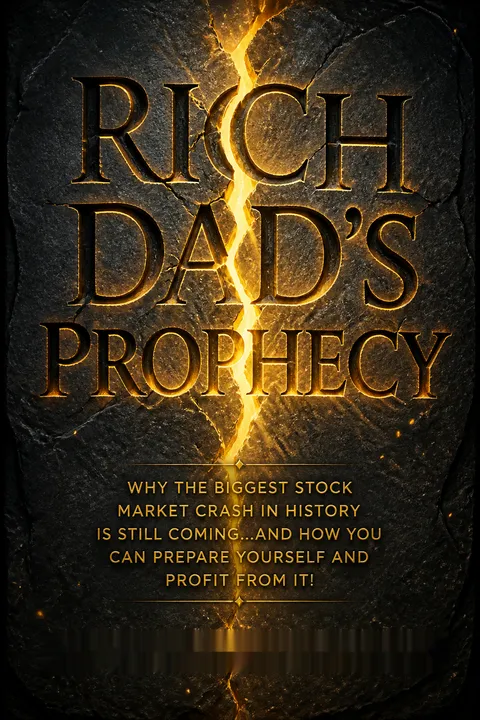


Key Takeaways
Treat retirement as a responsibility, not a benefit your employer guarantees
The burden shifted. The book argues that the 1974 Employee Retirement Income Security Act, or ERISA, helped move retirement risk from employers to workers. A defined benefit plan promises a specified pension, while a defined contribution plan provides contributions whose eventual value depends on saving and investment results. In the author’s account, workers were handed more responsibility without receiving the financial education needed to manage it. The Enron collapse, in which employees had much of their retirement savings tied to company stock, becomes the book’s alarm bell: a long career does not guarantee a secure retirement.
A warning, not a verdict. The author links this shift to a future retirement crisis and stock-market turmoil, especially as large generations age. His practical message is to understand who bears the risk in a retirement plan before relying on it.
The shift from promised benefits to individual accounts is not just a change in investment products. It transfers decisions, uncertainty, and the consequences of mistakes to households. That makes financial education and clear disclosure matters of institutional design, not merely personal virtue. Still, ERISA alone cannot explain pension changes or forecast a market collapse. Demographics, employer choices, regulation, and market performance all interact. The strongest lesson is therefore narrower and more durable: know what your plan promises, what it leaves uncertain, and what other resources must cover the gap.
Prepare for a storm without pretending you can date the crash
Build for uncertainty. The book’s central metaphor is Noah’s ark: preparation matters more than claiming prophetic certainty. The author predicts an exceptionally severe crash, connecting his concern to retirement-plan rules, an aging population, and the possibility that many retirees would sell investments to fund their lives. He proposes that investors use smaller market rises and falls as practice, rather than waiting for a crisis to learn how markets behave.
The date is conjecture. The book names possible windows, including 2010 to 2020 and a demographic turning point around 2016. These are forecasts made in a 2002 book, not dependable deadlines. The actionable core is to prepare for bad outcomes while also building finances that can function if the predicted disaster does not occur.
This is a useful distinction between forecasting and preparedness. Risk management does not require certainty about when a shock arrives. Emergency savings, manageable debt, and a plan for income disruptions can help across many scenarios. The book’s ark image makes preparation concrete, but its dramatic crash prediction can also tempt readers to treat a scenario as a certainty. That may encourage market timing, a notoriously difficult task. A sturdier reading keeps the preparation and discards the calendar: plan for downturns without betting the household on a single prediction.
A retirement balance matters only when it can reliably fund life
Balance is not a paycheck. The book distinguishes putting money into investments from becoming an investor who can manage assets and draw income from them. Its example of an Enron employee shows the danger of concentrating retirement savings in the employer’s stock. It also questions the assumption that a diversified portfolio will reliably provide an adequate income, especially if a downturn arrives just as withdrawals begin.
Plan for withdrawals. The author describes a retiree selling shares to meet required distributions and warns that a prolonged slump could shrink both the portfolio and the income it supports. That concern is especially relevant when withdrawals occur during falling markets, because selling assets then can leave fewer assets to benefit from any recovery. The book’s challenge is to judge a plan by what it can provide, not only by its account balance.
The focus on spendable income usefully shifts attention from a headline balance to the relationship between assets, withdrawals, and time. Financial planners call the danger of selling investments during a downturn early in retirement sequence-of-returns risk. Yet a bad outcome for one concentrated employee account does not prove that stocks, mutual funds, or diversification are inherently unsafe. Diversification can reduce exposure to a single company, though it cannot eliminate market risk. The practical question is whether a household’s savings rate, portfolio mix, and withdrawal needs fit together, rather than whether one investment category is always superior.
Read cash flow, not labels, to distinguish assets from liabilities
Follow the money. Kiyosaki’s personal definition treats an asset as something that sends money into a person’s pocket and a liability as something that takes money out. He urges readers to examine both an income statement, which records income and expenses, and a balance sheet, which lists assets and liabilities. A home, for example, may build equity but still require mortgage payments, upkeep, taxes, and insurance. If rental income exceeds its costs, the same property may produce positive cash flow.
Make the numbers tell the truth. In the book’s account of a failed wallet business, the financial statements exposed unpaid taxes, suppliers, and employees. The author says that reviewing his numbers forced him to face the damage and settle what he owed. The lesson is to inspect actual cash flows rather than trust a label such as asset, investment, or net worth.
The emphasis on regularly reviewing personal finances is powerful because a written record makes vague optimism testable. Cash-flow analysis also reveals obligations that a simple net-worth figure can conceal. One qualification matters: standard accounting does not define an asset solely by whether it currently generates income. A home may be an asset on a balance sheet while also creating substantial expenses. Kiyosaki’s definition is best understood as a decision tool for personal investing, not a replacement for accounting standards. Separating those meanings preserves the practical insight without confusing financial vocabulary.
Invest in financial skill before investing money you cannot replace
Learn before you scale. The author’s term financial IQ refers to practical financial understanding, including reading statements, assessing investments, and recognizing how income, expenses, assets, and liabilities relate. He contrasts that with academic and professional education, which may prepare someone for a career without teaching them how to manage investments. His own early business failure is the cautionary story: sales grew, but inexperienced management, unpaid bills, and poor financial control helped destroy the company. Facing the failure and paying employees and taxes became part of his education.
Practice at small scale. The book recommends gaining experience before committing large sums. Kiyosaki and his wife began with comparatively small real-estate investments, then pursued larger properties and business opportunities. This progression is offered as a learning path, not a guarantee of profit. Mistakes are valuable only when the learner can survive them and use them to improve decisions.
The argument resembles deliberate practice: build a skill through repeated attempts, feedback, and increasing difficulty. The business failure also shows why financial competence includes accountability, not just finding profitable opportunities. But small investments are not automatically safe, and operating a business or managing property is not an appropriate route for every household. A useful adaptation is to scale learning as well as money: study unfamiliar risks, test assumptions, and avoid making an irreversible bet merely to prove commitment. Education improves judgment, but it cannot remove uncertainty.
Use spare time to build assets beyond your paycheck
Work on your own future. Kiyosaki recounts struggling in his Xerox sales job, then making extra sales calls for a charity to practice selling. He describes this as using spare time to build a skill that later served his businesses. He also studied real estate while employed. His point is not that a job is worthless, but that a paycheck alone may not create financial independence, particularly when retirement depends on investments the worker does not understand.
Create another source. The book suggests keeping a job while beginning a small business or learning to invest. It describes business, real estate, and paper investments as different routes for building assets. The useful question is what an extra hour can develop: a marketable skill, a clearer financial plan, or an income source that is not solely tied to hours worked.
This advice reframes time as an investment, but the example also benefits from context: the author could use spare hours to make calls, while many workers face caregiving, shift work, or health constraints. Financial independence should not become a moral judgment about how people spend limited time. The underlying idea is still valuable: protect a realistic block of time for learning or planning, and connect that effort to a concrete goal. A small, sustained commitment is more plausible than assuming everyone can launch a second career alongside a full-time job.
Challenge fear and excuses before they make your decisions
Question the assumption. The book retells the wreck of the whaling ship Essex. After the crew abandoned ship, they considered sailing toward Tahiti, but a sailor warned that the islanders were cannibals. The crew accepted the warning without checking it and chose a much more difficult route. In the book’s telling, fear and an untested assumption helped shape a disastrous decision. The author uses the story to argue that emotional reactions should be examined rather than mistaken for facts.
Be honest about choice. In a seminar anecdote, participants say they lack time, money, or good credit to invest. Kiyosaki asks them to distinguish a constraint from an excuse, such as admitting that they are unwilling to make time. The useful point is not that every obstacle is imaginary. It is that naming the real obstacle can reveal what action, if any, is possible.
The Essex story illustrates a familiar decision-making failure: vivid threats can dominate less dramatic evidence, particularly under stress. Modern behavioral science describes related patterns as availability bias and loss aversion. Yet the story should not make caution look foolish. A warning about danger can be rational even when it is unverified, and real limits such as debt or caregiving are not character flaws. The strongest practice is to separate what is known, what is feared, and what can be checked. That creates space for a better decision without demanding reckless optimism.
Learn the rules, then keep advisors accountable to your goals
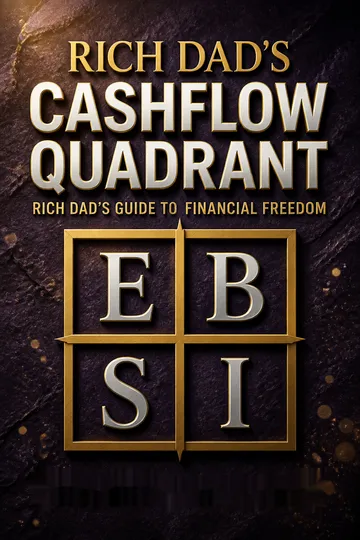
Rules shape outcomes. The book argues that changes in law alter people’s financial choices and responsibilities. Its CASHFLOW Quadrant is a model that sorts income sources into four groups: employee, self-employed person, business owner, and investor. Kiyosaki says each group faces different incentives and rules, particularly around taxes and investment opportunities. He urges readers to understand their position rather than assume that advice designed for one situation fits another.
Advisors inform, owners decide. The author recounts trusting an accountant during his struggling business. The accountant recommended cuts that, in Kiyosaki’s account, protected some creditors while the business failed. He later insists on hearing professional advice without surrendering final judgment. His practical recommendation is to keep clear financial records, ask questions, and make sure advisors understand the goals and risks being considered.
Attention to incentives is one of the book’s sharper ideas. An advisor may be competent yet still have a limited role, a narrow specialty, or compensation that affects recommendations. Asking how a professional is paid and what assumptions underlie advice is sensible. However, the contrast between quadrants can oversimplify the real economy, where employees may invest, business owners may rely on wages, and laws differ by jurisdiction. Readers should use the model to prompt questions, not treat its categories as fixed identities or assume that moving into business ownership is inherently better.
Build a financial ark from more than one kind of asset
Prepare a working vessel. The book calls a person’s financial preparation an ark: a combination of knowledge, planning, and resources intended to withstand changing conditions. Kiyosaki describes building his own through businesses, real estate, and investments in financial markets. He recounts starting with smaller deals, then moving toward larger properties and private business investments as his experience grew. The sequence is meant to build capability as well as income.
Do not copy the cargo. The author favors assets that produce cash flow and criticizes relying entirely on savings or a retirement account. He also acknowledges that business and property investments can fail, and that the deals he describes require substantial learning. The transferable principle is to avoid letting one employer, one company’s stock, or one source of income determine the whole financial future. Match investments to knowledge, time horizon, and ability to bear losses.
The ark metaphor brings the book’s scattered advice together: resilience comes from preparation, not a single promised safe harbor. Multiple income sources can reduce dependence on one employer or asset, while practical knowledge helps people notice when assumptions change. Still, the author’s enthusiasm for real estate, leverage, and private deals should not be mistaken for universal guidance. Those assets can be illiquid, concentrated, and difficult to manage. A diversified portfolio of public investments may suit some households better. The aim is not to imitate Kiyosaki’s holdings, but to understand risks and build a plan sturdy enough for one’s circumstances.
Analysis
The book’s most useful argument is not its confident prediction of a historic stock-market crash. It is the claim that retirement systems can transfer complex financial responsibilities to individuals without equipping them to carry those responsibilities. ERISA and the move from defined benefits to defined contributions serve as the narrative hinge. The author’s stories of Enron workers, his own failed business, and his father’s reliance on a pension make an abstract institutional change feel personal.
The ark metaphor gives the book coherence: watch for changing conditions, prepare before the emergency, and learn how to steer rather than assume rescue. Its practical tools are equally clear. Track income and expenses, understand what a retirement plan actually promises, question assumptions, and keep advisors from replacing personal judgment. The book also makes a memorable distinction between accumulating investments and having investments reliably support spending.
Its weaknesses are tied to its strengths. The urgent tone makes preparation compelling, but also encourages the reader to accept speculative predictions as if the future were legible. The proposed crash timeline and the claim that retirement-plan rules could trigger it are not established by the anecdotes offered. The contrast between a supposedly secure middle class and entrepreneurial freedom also understates business failure, illiquidity, and the value of diversified public investments. Real estate and business ownership can build wealth, but they are not universally safer or simpler.
The fairest reading separates the enduring lesson from the dated forecast. The forecast is a scenario to examine, not a timetable to trade on. The enduring lesson is that people should understand the risks and incentives embedded in their retirement arrangements and avoid confusing account balances with guaranteed income. Financial literacy is not a substitute for sound institutions, and personal responsibility cannot solve every structural problem. It does, however, help people ask better questions, compare options, and prepare for outcomes that no institution can promise away.
Review Summary
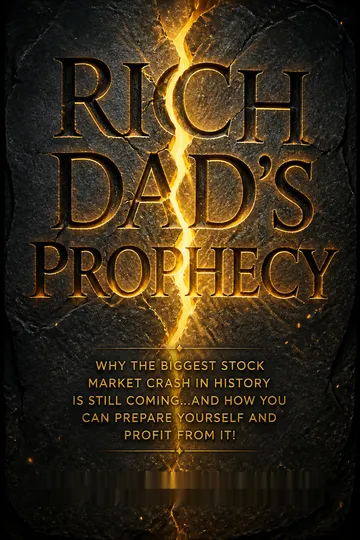
Rich Dad's Prophecy receives mixed reviews. Some readers find it insightful, praising its financial education and perspective on investing. They appreciate Kiyosaki's emphasis on financial literacy and taking control of one's financial future. However, critics argue the book is repetitive, lacks concrete advice, and makes questionable predictions. Some reviewers note that the book's warnings about market crashes and retirement plans are still relevant, while others criticize Kiyosaki's self-promotion and potentially risky financial advice. Overall, readers seem to find value in the book's core message but disagree on its execution and specifics.
People Also Read







Glossary
ERISA
U.S. retirement-benefit lawThe Employee Retirement Income Security Act of 1974 is a U.S. federal law governing many employee benefit plans. The book emphasizes its relationship to employer retirement plans and argues that the movement toward defined contribution arrangements placed more investment responsibility on workers. ERISA is complex and has been amended repeatedly; it should not be reduced to a single cause of pension changes or market risk.
defined benefit plan
Promised retirement paymentA retirement plan in which the benefit is specified, often using a formula tied to factors such as salary and years of employment. The employer or plan bears responsibility for funding the promised benefit, subject to the plan’s terms and financial condition. The book contrasts this arrangement with plans where workers accumulate contributions and bear more responsibility for the eventual retirement income.
defined contribution plan
Retirement contributions accountA retirement plan in which contributions are specified, while the final account value depends on contributions, investment performance, fees, and withdrawals. The worker generally bears more of the investment risk than under a defined benefit plan. The book discusses 401(k) plans as an example and argues that employees need financial knowledge to manage the responsibility such plans place on them.
CASHFLOW Quadrant
Four income-source categoriesKiyosaki’s model groups ways of earning income into four categories: employee, self-employed person, business owner, and investor. The book uses the categories to argue that people face different incentives, rules, and forms of financial risk depending on how they earn money. It is a simplified teaching model, not a complete classification of every worker or a guarantee that one category produces greater security.
financial IQ
Practical money understandingThe book’s term for applied financial knowledge, including reading financial statements, understanding cash flow, assessing investments, and recognizing how financial decisions interact with taxes and risk. Kiyosaki presents it as distinct from academic achievement or professional expertise. The concept emphasizes skills that help a person evaluate choices, though it does not eliminate uncertainty or replace qualified professional advice.
financial ark
Personal financial preparationThe book’s metaphor for the knowledge, plans, and resources a person builds to withstand economic change. Like Noah’s ark, it represents preparation before a crisis rather than certainty about exactly when danger will arrive. Kiyosaki describes it as something built through financial education and assets, while the practical meaning is broader: create a plan that can handle setbacks and changing circumstances.
Rich Dad Series



About the Author
Other books by Robert T. Kiyosaki




Download PDF
Download EPUB
.epub digital book format is ideal for reading ebooks on phones, tablets, and e-readers.








