

Key Takeaways
Understand the case for Trump as a revolt against neglect, not conversion.
An outsider became an advantage. Hanson argues that Trump’s victory began with voters who wanted someone outside a political class they believed had failed them. Trump had never held public office or served in the military. His celebrity, wealth, and lack of political obligations let him attack established norms without needing approval from donors or party leaders. To supporters, his rough manner seemed more candid than the polished evasions of experienced politicians.
The choice was comparative. Trump’s voters did not need to regard him as exemplary. Many saw him as preferable to Hillary Clinton, whose long career in public office made her a symbol of the system they distrusted. Hanson’s central claim is that Trump represented a demand for change, especially among people who felt ignored by both parties, not a sudden conversion of the country to every Trump position.
The book’s strongest starting point is its distinction between support for a candidate and confidence in him. Political choice often works comparatively: voters can back a flawed figure because they distrust the alternative or want to disrupt a system they see as unresponsive. That insight helps explain why personal scandal did not automatically disqualify Trump. The limit is that an outsider’s appeal does not establish that the outsider can solve the problems that produced it. Dissatisfaction explains the opening, not the quality of the remedy.
Target the Electoral College’s neglected middle, where tiny margins decide power.
Geography shaped the contest. Hanson describes an America divided between wealthy, culturally influential coastal centers and a less prosperous interior where manufacturing and other traditional industries had declined. The split was not simply urban versus rural or rich versus poor. It also reflected differences in work, culture, and confidence about globalization. Trump’s strategy was to energize voters in the interior rather than try to win every region.
Small margins mattered. Trump won Michigan, Pennsylvania, and Wisconsin by less than one percentage point in each state. Hanson estimates that roughly 80,000 votes across those three states decided the Electoral College. He also points to polling that underestimated voters without college degrees, who were less likely to participate in surveys. The result, in his account, was a coalition broader than the stereotype of angry working-class Trump supporters alone.
This geographic account clarifies why national popularity and electoral power can diverge. A candidate’s coalition is not just a list of demographic groups. It is a map of where those groups live under the rules that convert votes into office. The argument also points to a familiar measurement problem: people easiest to survey may not represent people most likely to be missed. Still, economic geography alone cannot explain each voter’s choice. The same regional pattern can contain distinct motives, from employment concerns to cultural identity or party loyalty.
Put jobs, borders, and trade fairness ahead of party orthodoxy.
Work was the unifying concern. Hanson presents Trump’s signature agenda as a challenge to Republican assumptions about free trade, cheap labor, and overseas commitments. Trump argued that trade agreements and globalization had benefited elites while hollowing out industrial communities. He linked stricter immigration enforcement to higher wages and more opportunities for American workers. He also criticized military interventions that, in his view, consumed resources without delivering a clear victory.
The message was more coherent than the details. Trump’s broader promise was that economic growth and well-paid work could restore independence and dignity. But his proposals carried tensions. Tariffs could protect some producers while raising costs elsewhere. He campaigned against prolonged wars yet kept troops in Afghanistan and Syria as president. Hanson calls the approach Jacksonian nationalism: forceful defense against threats, with skepticism toward optional intervention.
The political strength of this agenda is its focus on consequences people can see: a closed factory, a wage that will not rise, or a war with no clear endpoint. It also challenges the idea that aggregate economic gains settle questions about who benefits and who bears the costs. Yet trade and immigration policies affect industries and workers in different ways, so a national promise of protection can create local losers. The useful test is not whether a policy sounds pro-worker, but whether it improves workers’ bargaining power without imposing larger costs on them.
A disruptive candidate can turn attention, even outrage, into political leverage.
The performance mattered. Trump’s years on The Apprentice gave him a public identity as a decisive boss who could act while politicians argued. In the campaign, he used blunt language, repetition, insults, and conflict to keep attention on himself. Hanson says the media amplified that strategy: Trump received extensive free coverage because he was more entertaining and contentious than his Republican rivals. His persona became part of the message, not a wrapper around it.
Outrage could strengthen loyalty. Supporters often interpreted Trump’s attacks as retaliation against media figures and elites they already disliked. They were more interested in whether he would pursue jobs, immigration enforcement, and trade changes than in whether he behaved conventionally. But the same style could repel voters outside his base, distract from policy, and make governing harder. Its political value depended on who was watching and what they believed the conflict represented.
Trump’s attention strategy resembles the logic of an attention economy: visibility is scarce, and conflict can make a candidate impossible to ignore. That does not mean all attention converts into persuasion. For loyal supporters, insults may signal defiance; for undecided voters, they may signal instability. The book is persuasive in treating style as politically consequential rather than superficial. Its harder question is whether a tactic that mobilizes one audience can also sustain the trust and cooperation required to govern.
When parties offer contempt or stale doctrine, outsiders inherit their abandoned voters.
Hanson sees failures on both sides. He argues that Democrats moved away from working-class voters as the party embraced progressive positions and identity politics. Hillary Clinton’s description of Trump supporters as deplorable, along with her dismissive remarks about coal workers, reinforced the impression that the party looked down on parts of the country. Her campaign also relied heavily on her credentials and opposition to Trump, while offering an unclear account of what her presidency would change.
Republicans had their own blind spots. Before Trump, party leaders often defended free trade, open access to low-wage labor, and foreign commitments, even as those positions alienated voters in industrial communities. The party had won elections below the presidential level but repeatedly failed to win the presidency. Hanson’s lesson is that a party can retain its familiar donors and doctrines while losing people whose votes decide close national contests.
This account captures a basic party-system danger: organizations can confuse their most vocal supporters with the electorate they need to win. It also shows how perceived disdain can become politically meaningful, especially when voters already feel economically insecure. But the book’s sharp contrast between elite contempt and working-class authenticity can oversimplify both groups. Voters are not moved by class identity alone, and parties may lose support for reasons beyond tone. A useful diagnosis separates policy disagreement, cultural exclusion, and campaign incompetence rather than treating them as one grievance.
Judge the administrative state by both expertise and democratic accountability.
Hanson’s deep-state argument. The book uses deep state to describe a durable network of government agencies, career officials, political appointees, and connected institutions that can outlast elections and shape policy. Hanson argues that this network had become politically aligned and resistant to Trump, citing leaks, unfilled appointments, and the 2018 anonymous New York Times essay by an official who said colleagues were working to frustrate parts of Trump’s agenda.
The concern is larger than Trump. Career expertise can protect public services from political interference, but unelected officials also exercise substantial power over regulation, surveillance, and enforcement. The book presents the conflict as a struggle over who governs. Its claims about coordinated opposition are controversial, and individual examples do not by themselves establish a single organized conspiracy. The democratic question remains: how can officials be held accountable without destroying independent competence?
The tension here is a classic principal-agent problem. Elected officials delegate specialized work to administrators, who gain expertise but also discretion to interpret instructions. Too little independence invites partisan misuse; too much can make policy unresponsive to voters. The book is right to insist that civil servants are not outside politics simply because their work is technical. Its account is less secure when separate leaks or conflicts are treated as evidence of unified intent. Accountability requires transparent evidence, not merely suspicion of institutions.
Separate measurable policy gains from the claims that one president caused them.
Hanson’s 2018 case for performance. At the time of writing, the author pointed to economic growth above 3 percent, unemployment near 4 percent, rising labor participation, a strong stock market, tax cuts, deregulation, and increased energy production. He argued that Trump’s policies and optimistic rhetoric helped revive investment and hiring after the slower recovery under Barack Obama. He also cited tougher positions on Iran, North Korea, China, and NATO as signs of restored deterrence.
The record was incomplete. The book also reports that Trump failed to secure major funding for his promised border wall, could not repeal the Affordable Care Act, and signed a large spending bill despite his objections to deficits. He kept troops in conflicts he had criticized. The figures describe conditions in 2017 and 2018; they do not alone prove how much of the change resulted from presidential decisions.
The distinction between outcome and attribution is essential. An economy can improve during a presidency without every improvement being caused by that president, and policy changes can have delayed or uneven effects. At the same time, leadership can matter through expectations, regulation, taxes, and political signals. The book makes a strong case for taking the early indicators seriously, but its own short time horizon limits causal certainty. A careful assessment needs comparisons, counterfactuals, and attention to distribution, not just headline growth and unemployment.
Use the tragic-hero lens to explain Trump’s appeal, not excuse his conduct.
The outsider as a dangerous instrument. Hanson compares Trump to tragic heroes such as Achilles and to film figures such as Shane: abrasive, proud, and difficult to accommodate, but capable of confronting dangers that more conventional leaders avoid. The analogy explains why supporters might tolerate behavior they would reject in another politician. They believed Trump’s combative nature made him willing to challenge trade arrangements, entrenched agencies, and foreign adversaries.
The same traits impose a cost. A tragic hero is useful in a crisis but poorly suited to ordinary civic life. Trump’s feuds, impulsive statements, and contempt for convention could undermine alliances, distract from policy, and weaken trust. Hanson’s comparison is not proof that Trump’s actions were necessary or effective. It highlights a political bargain: voters may accept a disruptive leader for perceived results, while fearing the damage his methods do to shared norms.
The tragic-hero frame helps explain why a leader’s flaws can appear functional to supporters. A person who ignores normal constraints may break a stalemate, but the same disregard can damage institutions that make collective action possible. The analogy also risks romanticizing disruption by turning political conduct into dramatic necessity. The more practical question is whether a system can preserve the capacity to challenge entrenched interests without requiring a single volatile figure to carry that role.
Demand durable wins: the 2018 results did not settle Trump’s case.
The midterms offered a mixed verdict. Democrats won control of the House in 2018, while Republicans gained two Senate seats. Hanson notes that this was not the sweeping Democratic wave many had predicted, but it still limited Trump’s ability to pass legislation and opened the prospect of renewed congressional investigations. The election left the country divided, with Trump retaining a committed base but not broad, stable approval.
Results need institutions behind them. By the book’s cutoff, the economy was strong by several measures and some foreign-policy disputes had shifted toward negotiation. Yet the wall, health care, spending, and the long-term consequences of tariffs and executive action remained unresolved. Hanson’s final uncertainty is whether Trumpism could outlast Trump. A policy victory that depends on one personality, or is reversed by the next administration, is not yet a durable political settlement.
The midterm result illustrates why elections rarely deliver a single, clean judgment. Voters can reward economic conditions, punish a president’s conduct, and choose different parties for different branches at the same time. The deeper test is institutional durability: whether a coalition can translate protest into policies that survive scrutiny, legal constraints, and changes in leadership. The book’s portrait of 2018 is necessarily provisional. A strong early record and a polarized electorate are evidence of political force, not proof of lasting renewal.
Analysis
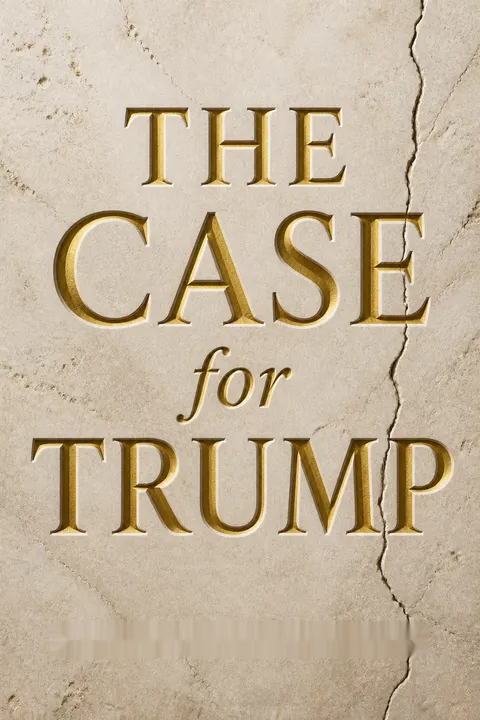
The Case for Trump is best read as an argument about political representation, not as a conventional biography or a neutral audit of a presidency. Its narrative moves from a geographical and cultural division, to the failures of both parties, to the candidate’s distinctive performance, and finally to the first two years of governing. Hanson’s central explanatory move is to make Trump’s style inseparable from his political appeal. To supporters, abrasiveness signaled that he was not bound by the conventions that had produced the problems they resented.
The book is strongest when it connects electoral behavior to concrete experience: the decline of industrial communities, anxiety about wages and borders, and the Electoral College’s leverage in a few Midwestern states. It also usefully distinguishes support for Trump from admiration of him. That distinction helps explain why scandal, low favorability, and policy support could coexist. Its weaknesses follow from its advocacy. Hanson presents selected quotations and episodes as evidence of broad elite contempt, party failure, and bureaucratic resistance. The examples are vivid, but vividness is not the same as representativeness. The book also treats disputed allegations about institutions and political opponents with more confidence than its evidence always warrants. Its economic claims are tied to a narrow period, making attribution especially uncertain: growth occurred alongside tax, regulatory, and energy changes, but the text cannot isolate their effects from other forces.
The tragic-hero metaphor captures the book’s final tension. A leader may be valued for disrupting a system while remaining dangerous to the norms that system depends on. That framing is illuminating only if it prompts scrutiny rather than admiration. The practical question is not whether Trump was sufficiently presidential, but whether disruption produced accountable, durable results, and whether the same changes could be achieved without normalizing personal rule, contempt, or permanent political warfare.
Review Summary
The Case for Trump receives mixed reviews, with supporters praising its insightful analysis of Trump's rise and presidency, while critics argue it lacks factual accuracy and presents a biased perspective. Many readers appreciate Hanson's historical context and explanation of Trump's appeal to middle America. However, some find the book repetitive and overly sympathetic to Trump. Reviewers note Hanson's intelligent writing style but disagree on the effectiveness of his arguments. Overall, the book sparks debate and provides a conservative viewpoint on Trump's presidency.
People Also Read




Glossary
Trumpism
Nationalist populist politicsIn Hanson’s account, Trumpism is a political coalition and approach built around economic nationalism, stricter immigration enforcement, skepticism toward free-trade orthodoxy, resistance to optional foreign interventions, and opposition to established political and bureaucratic institutions. It joins those positions to Trump’s combative public persona and appeal to voters who felt neglected by both parties.
Jacksonian nationalism
Forceful defense, fewer optional warsHanson uses Jacksonian nationalism for a foreign-policy outlook that favors a strong response to direct threats and expects allies to contribute to their own defense, while resisting interventions undertaken without a clear American interest or attainable objective. In the book, Trump’s calls for military strength and his criticism of nation-building are presented as parts of this approach.
principled realism
Interest-based foreign policyPrincipled realism is the Trump administration’s stated foreign-policy idea, as described in the book. It holds that the United States should act when its own interests or those of its alliances are at stake, and when action has a realistic chance of success at an acceptable cost. The term was used to reconcile a muscular posture with opposition to unnecessary intervention.
deep state
Durable unelected power networkHanson uses deep state to describe the permanent bureaucracy and its surrounding network of political appointees, agencies, media connections, and institutional relationships. In his argument, this network can shape policy and resist elected leaders across administrations. The term is contested, and the book’s examples do not establish that every agency or official acts as part of a unified group.
About the Author
Other books by Victor Davis Hanson
Download PDF
Download EPUB
.epub digital book format is ideal for reading ebooks on phones, tablets, and e-readers.








