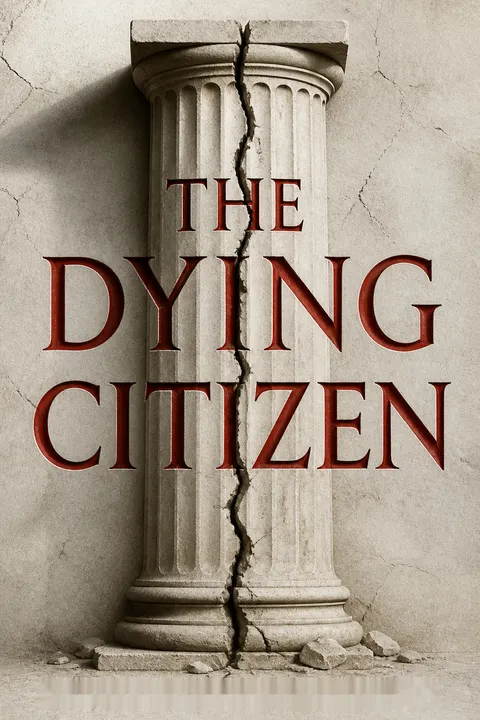


Key Takeaways
Treat citizenship as a practice, not merely a passport or benefit.
A republic needs participants. Hanson defines citizenship through legal equality, protection from arbitrary power, and a voice in choosing laws. Those rights come with responsibilities: obeying the law, sustaining shared institutions, and contributing to the common life. He traces the idea from Greek city-states, where political membership differed from subjecthood, to Roman citizenship, which extended legal protections across a vast empire. Both models excluded many people, yet their principles also gave later generations grounds to challenge exclusion.
Rights need memory. Hanson contrasts a 2019 survey in which 92% of respondents felt their rights were under threat with a 2017 poll in which 37% could not name a First Amendment right. The mismatch, he argues, points to a civic problem: rights are easier to lose when citizens do not know what they are or how institutions protect them.
What's valuable here is the distinction between possessing a legal status and having the knowledge and habits that make it meaningful. Political theorists often describe citizenship as both membership and participation, not simply a document. The historical examples also show that civic ideals can be used to criticize their own societies. Yet ancient citizenship is an imperfect model: it was built on exclusions that modern democracies rightly reject. A durable account must preserve civic responsibility without making full belonging depend on cultural sameness or inherited privilege.
Keep economic independence broad enough to sustain self-government.
Material security matters. Hanson argues that citizens need enough economic autonomy to resist domination by either wealthy patrons or the state. He looks to the Greek mesoi, or middle citizens, often small farmers who owned property and served in the city-state's army. In his account, property gave them both a stake in public life and the means to act independently. He compares that ideal with a modern middle class burdened by debt, housing costs, and weak savings.
A home illustrates the shift. Hanson recalls his parents buying a modest Santa Cruz house near the university for $26,000 in 1972. By 2020, he estimated its value at nearly $1 million, far beyond what many first-time buyers could manage. He calls indebted households a modern peasantry, but the comparison is an analogy about dependence, not literal serfdom.
The core insight connects political voice to bargaining power. When people have savings, secure work, and time, they can more readily organize, speak, and refuse bad terms. That logic appears in labor economics as well as political theory. Still, homeownership is only one route to security, and poverty does not make a person unfit for citizenship. Public benefits can enable participation rather than undermine it. The sharper question is whether institutions give ordinary people enough control over their economic lives to avoid dependence on a single employer, creditor, or political patron.
Protect equal membership by pairing lawful immigration with civic integration.
Residence is not membership. Hanson distinguishes living inside a country's borders from holding its citizenship, which includes political rights and a lasting legal bond. He argues that when the two statuses blur, citizenship can lose meaning and confidence in law can weaken. His account follows major shifts in immigration policy, including the 1965 Hart-Celler Act and the 1986 Immigration Reform and Control Act. He contends that later enforcement failures and repeated amnesties encouraged confusion between legal entry, unlawful residence, and eventual membership.
Integration gives the bargain meaning. The book describes an immigrant neighbor who valued being treated with dignity in ordinary interactions, and presents that experience as a reason people seek citizenship. Hanson favors a shared language, civic knowledge, and allegiance to constitutional rules. The historical account also acknowledges that earlier immigration restrictions were discriminatory, and that assimilation often occurred unevenly.
The distinction between residence and citizenship is essential to any political community: rights, duties, and procedures need clear definitions. The harder question is how those rules are administered. A civic integration model can create common ground, but it can also become a demand that newcomers erase harmless cultural differences. Research on immigrant incorporation generally treats language acquisition, economic opportunity, and social acceptance as interacting processes, rather than a one-way test of loyalty. The book's strongest version is a case for shared constitutional commitments, not a claim that ancestry or cultural uniformity should determine belonging.
Build a shared civic identity that makes ancestry politically secondary.
Citizenship competes with tribal loyalty. Hanson treats tribalism as the older impulse to organize political life around kinship, race, religion, or clan. He argues that constitutional citizenship redirects loyalty toward common laws and institutions. His ancient example is Cleisthenes's reorganization of Attica in 508/7 BC, which replaced some inherited tribal arrangements with new political units. The change was meant to weaken clan power and build a broader civic identity.
Shared work can create common ground. Hanson recalls teaching Greek and Roman texts to students of varied backgrounds at California State University, Fresno. In his telling, a demanding common curriculum made ethnicity less important in the classroom. He sees this as an alternative to policies that emphasize group identity. The example illustrates his preference for common civic culture, while also revealing how strongly he associates that culture with classical Western learning.
A shared task can create what social psychology calls a superordinate identity: people retain distinct backgrounds while cooperating toward a common goal. The Fresno classroom is a vivid case of that possibility, though one professor's experience cannot establish a general education policy. Nor must a common identity require one canon or one historical story. Civic unity is strongest when people can contest the national narrative and still recognize one another as equal members. The practical test is whether shared institutions invite participation across groups, rather than asking minorities to assimilate on terms set only by the majority.
Make bureaucratic power answerable to voters, law, and independent review.
Expertise can accumulate power. Hanson uses the term administrative state for permanent agencies that make rules, enforce them, and sometimes judge alleged violations. He argues that this concentration weakens democratic control because agency staff are not directly elected. By 2019, he notes, the federal government had about 450 agencies and 2.7 million employees. In 2016, agencies issued 3,853 rules and regulations, compared with 214 laws passed by Congress and signed by the president.
A raisin crop shows the reach. Hanson describes a federal marketing program that reserved part of raisin growers' crops to regulate supply and prices. Growers could face penalties for withholding or selling certain raisins outside the program. For him, the episode shows how rules written far from a farm can materially affect owners who have little influence over them. He argues that elected officials and courts must be able to audit such power.
Modern states need specialized agencies: legislatures cannot write technical standards for every domain, and expertise can protect the public. The democratic problem arises when delegation becomes opaque, hard to challenge, or impossible to reverse. Public administration offers tools beyond dismantling agencies, including transparent rulemaking, independent audits, judicial review, and clear limits on delegated authority. The raisin example makes the stakes concrete, but a single unusual program does not prove that regulation as a whole is illegitimate. The useful principle is accountable expertise, not government by either unchecked officials or uninformed majorities.
Preserve constitutional brakes even when your side wants faster change.
Rules slow political momentum. Hanson defends constitutional structures such as the Electoral College, the Senate, the filibuster, and a stable Supreme Court as checks on temporary majorities. He sees efforts to abolish or alter them without following constitutional procedures as attempts to gain immediate political advantage. His examples include proposals for a national popular vote, adding states to change Senate control, and expanding the Supreme Court after partisan conflict over appointments.
Amendment is different from evasion. The Constitution can be changed through a demanding process requiring broad agreement across Congress and the states. Hanson argues that this difficulty protects citizens from abrupt institutional redesign. His concern is less with change itself than with changing the rules through shortcuts when they obstruct a favored agenda. Critics, however, see some existing arrangements as unfairly weighting votes or entrenching minority power.
Constitutional friction has a real democratic function: it can protect minorities, encourage bargaining, and prevent every election from becoming a wholesale rewrite. But the same friction can preserve unequal representation or block widely supported reforms. Institutional design is therefore a tradeoff, not a choice between pure democracy and tyranny. The most defensible standard is procedural consistency: advocates should explain both the benefits and costs of a reform, then pursue it through legitimate rules rather than treating those rules as binding only when politically convenient.
Judge globalization by who bears its costs and who can exit.
Global ties distribute gains unevenly. Hanson argues that global trade and finance can enrich mobile professionals while weakening workers whose jobs can be moved abroad. He uses the World Economic Forum at Davos as a symbol of an internationally connected elite that can discuss poverty and climate policy while remaining insulated from the consequences of its choices. He also points to the NBA's commercial ties in China, where league figures faced pressure to avoid criticizing the Chinese government.
Interdependence has vulnerabilities. The pandemic exposed how dependent the United States had become on foreign production of medicines and protective equipment. Hanson presents this as evidence that efficiency and low prices are not the only measures of a sound supply chain. He recognizes that globalization has brought material gains to many people, but argues that national leaders should weigh those gains against lost jobs, reduced resilience, and diminished accountability.
The question of who can exit is a useful way to examine power. A firm can relocate, an investor can diversify, and an elite professional can change cities more easily than a worker tied to a local labor market. That asymmetry helps explain why aggregate growth can coexist with insecurity. At the same time, cross-border exchange can reduce poverty and help address problems no nation can solve alone. The policy challenge is not simply to choose openness or closure, but to make gains visible, distribute adjustment costs fairly, and keep critical decisions answerable to affected communities.
Renew citizenship through civic knowledge, self-criticism, and participation.
A republic must be tended. Hanson presents citizenship as historically fragile, not as an automatic reward of birth or prosperity. He argues that citizens need to know their constitutional rights, understand the country's history, and preserve the institutions that protect political choice. He also treats self-criticism as part of the Western civic tradition: a society can expose its failures and use law and amendment to widen its promises without rejecting the whole political framework.
The year 2020 tested that balance. The epilogue describes the pandemic, shutdowns, racial protests, changes to voting procedures, and disputes over the election as shocks that intensified existing conflicts. Hanson sees the period as a warning about how quickly confidence in institutions can erode. His closing argument is that renewal requires continued effort, not nostalgia for a supposedly flawless past or faith that institutions will repair themselves.
This conclusion is strongest when read as a call for democratic maintenance rather than a demand for patriotic conformity. Civic education can help people distinguish constitutional protections from political slogans, while historical self-criticism can make belonging more credible. The caution is that crises invite every faction to describe its own preferred policies as the only defense of the republic. A resilient citizenship needs habits that survive disagreement: fair procedures, reliable information, peaceful transfers of power, and room for citizens to challenge both government and one another.
Analysis
The book's central achievement is its organizing distinction between a citizen and several nearby political identities: the dependent peasant, the resident without full membership, the tribal affiliate, the bureaucratic subject, and the imagined citizen of the world. This gives a sprawling argument a memorable structure. Across ancient history, American institutions, economics, and contemporary politics, Hanson asks what material security, legal equality, shared identity, and political control a republic needs in order to reproduce itself.
Its most persuasive insight is that citizenship is not merely a status granted by law. It depends on institutions that let people exercise rights, learn what those rights mean, and influence decisions that govern them. The links Hanson draws between economic insecurity and political dependence, or between administrative complexity and democratic opacity, are valuable even when readers reject his prescriptions. His attention to the middle class also counters accounts of politics that treat identity, institutions, or economics as the sole cause of civic conflict.
The argument is less convincing when a historical analogy becomes proof. Greek city-states, Rome, medieval Europe, and contemporary America differ radically in scale, inclusion, and political structure. The book's account of tribalism can also make a shared national culture sound more consensual than it has been, while giving less attention to how exclusion shaped the boundaries of citizenship. Likewise, claims about immigration, regulation, and elite motives are often presented through a partisan lens; causal explanations and cost estimates deserve independent scrutiny rather than automatic acceptance.
The most useful reading is therefore neither as neutral history nor as a settled diagnosis of national decline. It is a forceful argument about the conditions of self-government, one that also needs to be tested against questions it underplays: Who gets to define the common culture? Which forms of economic support increase independence rather than dependence? How can constitutional checks be preserved without freezing unjust arrangements? Those questions extend the book's strongest theme: a republic survives when citizens can contest its rules while remaining equal participants in the political community.
Review Summary
The Dying Citizen receives mostly positive reviews, praised for its analysis of declining American citizenship. Readers appreciate Hanson's historical context and examination of threats to democracy, including immigration, tribalism, and globalization. Critics argue the book is partisan and may not persuade those outside conservative circles. Many reviewers find the content thought-provoking, albeit dense at times. Some criticize Hanson's pro-Trump stance, while others commend his insights on societal changes. Overall, readers recommend the book for its perspective on contemporary American issues.
People Also Read






Glossary
Precitizens
People before civic membershipHanson's label for conditions that precede or weaken full citizenship. It groups economic dependency, mere residency without political membership, and primary allegiance to tribal identities. The term frames the book's first three chapters and describes a return, in his view, to forms of life in which people lack the autonomy and shared political identity needed for self-government.
Postcitizens
People beyond national citizenshipHanson's label for political and cultural forces that move beyond traditional constitutional citizenship. He applies it to unelected administrators, advocates of major constitutional redesign, and globalists who prioritize transnational ideals over national political membership. It is a critical category in the book, not a standard legal or political-science classification.
autarkeia
Economic self-sufficiencyAn ancient Greek term Hanson uses for material self-sufficiency and independence from economic dependency. He connects it to the ability of property-holding citizens to act without relying entirely on wealthy patrons or the state. In the book, economic autonomy is presented as one foundation for citizens' freedom of speech, political judgment, and participation.
mesoi
The middle citizensGreek for the middle ones, the mesoi are the middling property holders Hanson associates with early Greek citizenship. Often farmers, they were neither wealthy aristocrats nor landless poor. Hanson draws on Aristotle's praise of this group to argue that a substantial middle class can moderate political extremes and provide a stable base for self-government.
clerisy
Credentialed professional eliteA term coined by Samuel Taylor Coleridge and used in the book for an influential class of educated professionals and intellectuals. Hanson portrays the modern clerisy as prominent in academia, media, law, and government, with secure careers and cultural authority. He argues that its members can promote policies whose costs fall more heavily on less powerful workers.
administrative state
Permanent agency governmentThe system of federal agencies and career officials that writes and enforces regulations, administers programs, and exercises authority delegated by elected branches. Hanson emphasizes its permanence and technical expertise, but argues that it can become difficult for voters and elected representatives to supervise. The term refers to a contested account of modern government, not an official institution with a single definition.
oikophobia
Aversion to one's own cultureA term formed from Greek words for home and fear or aversion. Hanson uses it to describe what he regards as hostility toward one's own culture or national inheritance. In his account, material security and distance from hardship can encourage harsh judgment of a society's past. The term is evaluative and should not be confused with ordinary criticism of national history or policy.
FAQ
What is The Dying Citizen by Victor Davis Hanson about?
- Core argument: The book examines how progressive elites, tribalism, and globalization are eroding the traditional concept of American citizenship, threatening the republic’s foundations.
- Historical and contemporary lens: Hanson traces the evolution of citizenship from ancient Greece and Rome to modern America, highlighting the importance of economic autonomy, shared borders, and cultural assimilation.
- Current challenges: The work analyzes issues like the decline of the middle class, the rise of identity politics, and the expansion of bureaucratic power, all of which fragment national unity and weaken constitutional governance.
- Warning and urgency: Hanson warns that citizenship is not a given but an achievement that must be actively preserved, or the American experiment in self-government could be lost.
Why should I read The Dying Citizen by Victor Davis Hanson?
- Deep insight into citizenship: The book offers a historical and philosophical exploration of what citizenship means and why it is essential for a functioning republic.
- Contemporary relevance: Hanson connects ancient concepts to modern issues such as immigration, economic inequality, and political polarization, providing a framework to understand current American challenges.
- Call to civic action: Readers are encouraged to reflect on their own roles as citizens and the importance of preserving constitutional principles, civic responsibility, and national cohesion.
- Critical perspective: The book challenges prevailing narratives and offers a counterpoint to progressive and globalist ideologies, making it valuable for readers interested in political and cultural debates.
What are the key takeaways from The Dying Citizen by Victor Davis Hanson?
- Middle class as foundation: Economic self-sufficiency and a robust middle class are crucial for sustaining participatory democracy; their erosion leads to societal division between elites and peasants.
- Citizenship vs. residency: True citizenship requires allegiance to constitutional laws and a shared national identity, distinct from mere physical residency.
- Tribalism and fragmentation: The resurgence of tribal identities based on race, ethnicity, or religion undermines national unity and threatens democratic governance.
- Elite and bureaucratic overreach: Progressive elites and unelected bureaucracies often expand government power and redefine citizenship in ways that conflict with traditional American values.
- Fragility of republics: Republics can be lost quickly if citizens fail to uphold their duties, respect traditions, and resist forces that erode constitutional protections.
How does Victor Davis Hanson define citizenship in The Dying Citizen?
- Philosophical foundation: Drawing on thinkers like Immanuel Kant, Hanson defines citizenship as “lawful freedom,” where individuals obey only laws they consent to and enjoy civil equality.
- Legal and political independence: Citizens have rights protected by law, including free speech, due process, and voting, and are accountable to themselves rather than to rulers or elites.
- Economic autonomy: Citizenship historically required economic self-sufficiency, often linked to property ownership or middle-class status, enabling independent participation in governance.
- Cultural assimilation: Sustaining a constitutional republic requires citizens to give up primary ethnic or tribal identities in favor of a common culture and national character.
What is the role of the middle class in American citizenship according to The Dying Citizen?
- Economic self-sufficiency: The middle class provides the material security necessary for citizens to exercise their rights and responsibilities.
- Social stability: Hanson emphasizes that a large middle class is the “glue” of the state, preventing extremes of wealth and poverty that destabilize society.
- Modern decline: The erosion of the American middle class through stagnant wages, rising debt, and high costs threatens democratic participation and leads to a bifurcated society.
- Historical perspective: The book draws on Aristotle’s view that a strong middle class is essential for a stable and participatory republic.
How does The Dying Citizen distinguish between citizens and residents?
- Legal distinction: Citizens enjoy constitutional protections, voting rights, and political participation, while residents may simply live within borders without full rights or responsibilities.
- Historical assimilation: Immigrants were traditionally expected to assimilate and adopt American values to become citizens, a process now undermined by conflating residency with citizenship.
- Consequences of conflation: Blurring these statuses leads to legal and social confusion, dilutes the value of citizenship, and strains public resources.
- Political and cultural impact: The confusion between residency and citizenship fuels fragmentation and weakens the integrity of the nation-state.
What does Victor Davis Hanson say about tribalism and multiculturalism in The Dying Citizen?
- Tribalism undermines unity: Tribalism encourages citizens to identify primarily with racial, ethnic, or ideological groups, fragmenting national unity and weakening patriotic bonds.
- Multiculturalism’s paradox: While Americans support diversity, there is tension between egalitarian ideals and group-based advantages, leading to a “Tower of Babel” culture.
- Practical consequences: Multiculturalism can result in bureaucratic inefficiencies, legal challenges, and inconsistent application of laws, undermining trust in institutions.
- Political dangers: Tribalism and identity politics foster division, competition for privileges, and legal inequalities, threatening the principles of equal citizenship.
How does The Dying Citizen describe the impact of globalization and globalism on American citizenship?
- Globalism dilutes local identity: Globalization undermines the traditional idea of localism and rooted citizenship, creating a class of “anywheres” disconnected from national identity.
- Economic and cultural consequences: Globalization has hollowed out the American interior, leading to job losses and enriching coastal elites, while imposing global norms that conflict with American values.
- Elite cosmopolitanism: Globalist elites prioritize international agendas over national welfare, often at the expense of American sovereignty and citizen interests.
- Loss of exceptionalism: Globalism encourages moral equivalency and undermines the belief in American exceptionalism, eroding the foundations that sustain citizenship.
What is the “deep state” or administrative state according to The Dying Citizen by Victor Davis Hanson?
- Definition and scope: The deep state refers to a permanent, unelected bureaucracy—intelligence agencies, regulatory bodies, and civil service officials—that wields legislative, executive, and judicial powers without direct voter accountability.
- Historical context: Bureaucracies have existed in monarchies and democracies, but democracies are especially vulnerable as government responsibilities expand.
- Modern implications: The administrative state can undermine elected leaders, manipulate political outcomes, and erode citizens’ control over their government.
- Examples of overreach: Hanson cites the IRS, EPA, and FBI as agencies that have acted beyond their mandates, threatening constitutional governance.
How does Victor Davis Hanson analyze the role of elites and bureaucracy in undermining American democracy in The Dying Citizen?
- Unelected power: Bureaucrats and elites can create and enforce regulations with the force of law, often bypassing constitutional checks and diluting the influence of elected representatives.
- Progressive agenda: Elite progressives seek to reshape citizenship and the Constitution to fit cosmopolitan ideals, sometimes prioritizing equality of outcome over traditional rights.
- Disconnect from citizens: These elites often live insulated lives, exempt from the consequences of their policies, which disproportionately affect the middle and lower classes.
- Citizen alienation: The concentration of power among unelected officials fosters cynicism and disengagement, as citizens feel powerless to influence governance.
What examples does The Dying Citizen provide to illustrate the erosion of constitutional rights and freedoms?
- First Amendment challenges: Free speech is increasingly curtailed on campuses and in government agencies through speech codes, mandatory diversity statements, and Big Tech censorship.
- Second Amendment debates: Renewed efforts to restrict gun rights reflect broader attempts to limit individual freedoms, often ignoring the complexities of gun violence.
- Nullification and nonenforcement: Sanctuary cities and selective enforcement of laws undermine the rule of law and create unequal protections for citizens.
- Media and information: The loss of journalistic neutrality and the rise of partisan media further erode citizens’ ability to make informed decisions and participate in democracy.
What solutions or calls to action does Victor Davis Hanson propose in The Dying Citizen for preserving American citizenship?
- Revive middle-class autonomy: Strengthening economic independence through policies that support home ownership, education affordability, and stable employment is essential.
- Reassert legal distinctions: Reinforcing the difference between citizenship and residency, enforcing immigration laws, and ensuring equal application of the law protect the integrity of citizenship.
- Combat tribalism: Promoting a shared national culture, civic education, and individual merit over group identity can restore unity and democratic participation.
- Limit bureaucratic power: Enhancing oversight of unelected agencies and reaffirming constitutional guardrails can restore citizen control over governance.
- Renewal through localism: Hanson emphasizes the importance of rootedness in local communities and face-to-face civic engagement as foundations for revitalizing citizenship.
About the Author
Other books by Victor Davis Hanson

Download PDF
Download EPUB
.epub digital book format is ideal for reading ebooks on phones, tablets, and e-readers.








