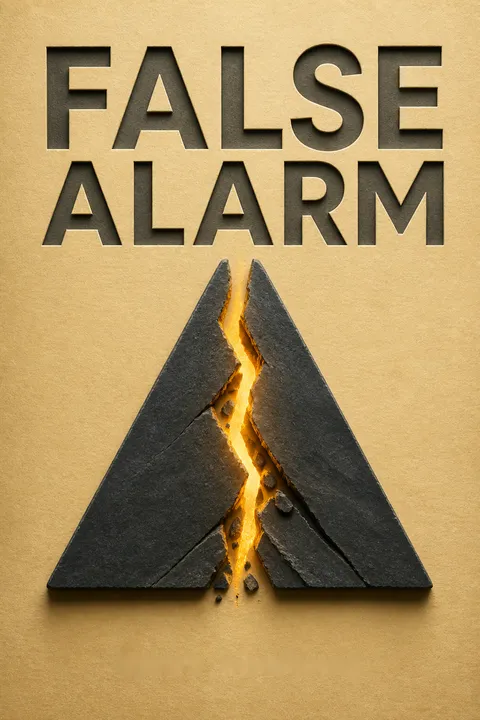


Key Takeaways
Treat climate change as a serious chronic risk, not an extinction countdown
The central distinction. Lomborg accepts that human-caused warming is real and harmful. His objection is that public discussion often turns a long-term, manageable problem into a near-term story of human extinction. He argues that the widely repeated 2030 deadline comes from asking what it would take to meet a particularly ambitious temperature target, not from scientists declaring that civilization ends in 2030. A hypothetical target describes a chosen outcome and the measures needed to pursue it; it does not, by itself, establish an imminent catastrophe.
Why the framing matters. The book points to fear among adults and children, and to policies made as if climate were the only urgent problem. Lomborg estimates that unchecked warming could reduce global GDP by roughly 3.6 to 4 percent by 2100, while projecting much larger economic growth over the same period. Those estimates depend on models, but his main argument is that climate risk deserves proportionate action, not panic-driven policy.
What's striking is the distinction between a scientific projection and a political objective. Confusing the two can make a selected target sound like a deadline imposed by nature. Risk communication also has a psychological cost: warnings that imply there is no meaningful future can produce helplessness rather than sustained engagement. The counterpoint is that uncertainty cuts both ways. A risk that is difficult to quantify is not necessarily small, and a moderate average economic estimate cannot rule out severe local losses. Calm should improve scrutiny, not become an excuse for complacency.
Separate climate hazards from exposure, vulnerability, and human adaptation
A disaster has several causes. The book distinguishes a weather hazard from the people and property exposed to it, and from society's ability to prepare. Lomborg calls the growth in exposure the expanding bull's-eye effect: when more people and valuable buildings occupy a hazard zone, an otherwise similar storm can cause much greater losses. Miami's population and coastal housing have grown dramatically, so comparing its modern hurricane damage with early twentieth-century losses without adjusting for development can mislead.
Protection changes projections. A widely cited sea-level scenario estimated 187 million people might be displaced if societies did nothing to adapt. Lomborg cites the study's lower estimate of 305,000 when adaptation is included. The point is not that flooding is harmless. It is that dikes, land-use planning, building standards, and warning systems can change outcomes, and should be included when assessing future harm.
This is a useful risk-analysis habit: distinguish hazard, exposure, and vulnerability before assigning causes. It also shifts attention toward decisions that communities can change, such as where homes are built and whether warning systems reach residents. The caution is that adaptation is not automatic or equally available. Poor governments, informal settlements, and people without insurance may be unable to respond in the way a model assumes. A realistic assessment should count adaptation, but also ask who can afford it, who is protected, and who bears the residual risk.
Judge climate impacts from the whole ledger, not only bad headlines
Effects are not one-directional. Lomborg argues that climate change can worsen some conditions while easing others. A major study he cites found that cold was associated with about seventeen times as many deaths as heat in the locations it examined. He also highlights research finding that more than half of the world's vegetated area became greener over three decades, while about 4 percent became browner, with increased CO2 among the causes. Neither result means warming is beneficial overall.
The missing context matters. The book also argues that human activity such as habitat destruction and overexploitation poses a larger immediate threat to many species than climate change does. Its example is the polar bear: estimates of the global population rose from roughly 5,000 to 19,000 in the 1960s to about 26,500 in 2019, though estimates are uncertain and hunting remains a threat. Lomborg's lesson is to report mixed evidence, not just the damage that fits a single narrative.
The strongest version of this point is not that every environmental change has a compensating benefit. It is that policy requires a complete accounting of effects, including those that receive less attention because they unfold slowly or lack dramatic images. The distinction between local and global averages also matters: a global trend can hide serious regional harm. Conversely, a vivid local example cannot establish a worldwide trend. Balanced evidence should not be confused with equal weight for every claim; the weight should follow the strength and scope of the research.
Measure climate promises by delivered temperature change and their full cost
Promises are not outcomes. The Paris Agreement assembled national emissions pledges, but Lomborg argues that its targets were far more ambitious than its concrete commitments. Using estimates available to him in 2020, he calculates that fulfilling the pledges would lower the end-of-century temperature rise by about 0.05°F. He estimates their annual global cost at roughly $1 trillion to $2 trillion by 2030, depending on how policies are implemented. These figures are model-based estimates, not direct measurements.
Compare costs with results. The book notes that the agreement's maximum promised emissions reductions were far short of what would be needed for its stated temperature goals, and that many countries were not on track to meet their pledges. Lomborg's broader test is practical: assess policies by what they achieve, what they cost, and whether voters will sustain them. A grand announcement is not evidence that emissions have fallen or that the climate benefit justifies the expense.
This emphasis on implementation is valuable well beyond climate policy. A target, a budget, and a measurable outcome are different things, and public debate often collapses them into one. The analysis also depends on assumptions about economic costs, future emissions, and the value assigned to climate damages. Those assumptions deserve independent testing rather than selective acceptance by either advocates or opponents. Policy comparison should include more than temperature change: distributional effects, health impacts, technological learning, and the risk of political reversal can all alter whether a commitment works in practice.
Stop confusing personal carbon gestures with system-level emissions cuts
Small changes stay small. Lomborg estimates that unplugging an idle phone charger saves about seven pounds of CO2 a year. He estimates that a person in a wealthy country who becomes vegetarian reduces total personal emissions by about 2 percent after accounting for spending shifted to other goods. That shift is an example of the rebound effect: savings from using less of one resource can lead to consumption elsewhere that gives back some of the emissions reduction. The book also discusses moral licensing, the tendency to treat one environmentally helpful act as permission for a less helpful one.
Focus on scale. These examples do not show that personal choices are meaningless. They show why individual restraint alone cannot transform an energy system. Lomborg argues that better technologies and policies can change the choices available to millions of people at once, without requiring everyone to give up ordinary activities.
Personal action can still matter as a way to express values, build habits, and support collective rules. Its climate effect is simply not the same as its symbolic or civic effect. This distinction helps avoid two traps: blaming individuals for a system they do not control, and assuming that good intentions guarantee large results. The book's rebound examples also invite careful measurement. Rebound varies across activities and households, so it should be estimated rather than used as a blanket reason to dismiss efficiency or lifestyle changes.
Fund breakthroughs that make clean energy cheaper than fossil fuels
Innovation changes what people can choose. Lomborg argues that people rarely solve a major resource problem by accepting less; they adopt a better alternative when it becomes available and affordable. Whale oil once supplied lighting, then kerosene and electricity replaced it. In agriculture, Norman Borlaug's improved crop varieties helped India increase grain production by 47 percent between 1967 and 1980, despite earlier predictions that production could not keep pace with population.
Research beats photo opportunities. The book proposes spending about $100 billion annually on clean-energy research and development, arguing that a portfolio of experiments is more promising than relying mainly on subsidies for existing wind and solar technologies. It cites an estimate that each dollar spent on clean-energy R&D could avoid $11 in climate damages. That is a model estimate, not a guaranteed return. The aim is to bring forward technologies that can compete on price and reliability, including storage, advanced nuclear power, and carbon removal.
The case for research is strongest when it treats innovation as a portfolio: many ideas fail, while a few can alter the economics of an entire sector. That logic aligns with the history of public research and private commercialization. Yet innovation is not a substitute for near-term emissions policy. Research takes time, and cheaper technology does not guarantee rapid adoption when infrastructure, regulation, and political interests resist change. Funding basic research, demonstration projects, and deployment learning can address different bottlenecks, but those investments need transparent evaluation rather than a promise that a breakthrough is inevitable.
Protect poor households from climate policies that price energy out of reach
Energy costs are not shared equally. Lomborg argues that low-income households spend a larger share of their budgets on heating and electricity, so energy price increases can force difficult trade-offs. In the developing world, a small off-grid solar system may power a lamp or charge a phone but may not run a refrigerator, electric stove, or industrial equipment. The Indian village of Dharnai, celebrated as a solar-powered community, protested that its system could not provide the reliable power residents wanted; after connection to the national grid, residents received electricity at a lower price.
Development is part of the calculation. Lomborg cites research from Bangladesh associating grid electrification with a 21 percent rise in household income and a 13 percent reduction in poverty over nine years. His argument is that restricting cheap, reliable energy can slow development and worsen poverty, while climate aid can crowd out health, nutrition, or education programs.
Distribution is not a side issue in energy policy. A price change that looks modest in an average household budget can be severe for people with little room to adjust. The Dharnai story also illustrates why energy access should be measured by useful services, not simply by the installation of panels. At the same time, fossil-fuel access carries pollution and climate costs that are not captured by the electricity bill. Good policy has to compare those harms with the immediate benefits of reliable power, and design protections so that poorer households are not asked to bear disproportionate costs.
Use a modest, rising carbon tax to price emissions efficiently
Correct the missing price. Carbon emissions impose climate costs that are not fully reflected in the price of fuel and goods. A carbon tax makes those costs more visible, encouraging consumers and producers to reduce emissions where doing so is least expensive. Unlike a detailed rule for every activity, one broadly applied tax can let millions of decisions respond to the same signal. Lomborg recommends starting near $20 per metric ton of CO2, about 18 cents per gallon of gasoline, and increasing the tax gradually.
Balance both bills. The tax reduces climate damages but also makes energy more expensive, so the book evaluates both costs together. In its Nordhaus-based model, a moderate, increasing tax produces a better overall result than either doing nothing or trying to eliminate emissions rapidly. The precise optimum depends on assumptions about future growth, damages, technology, and policy efficiency. Lomborg's key principle is to cut emissions where the avoided harm is worth more than the cost.
A carbon price has a powerful economic advantage: it decentralizes discovery. Regulators need not know in advance which factory, vehicle, or process can cut emissions most cheaply. But the tax's effectiveness depends on coverage, measurement, enforcement, and public trust. Revenue design matters too. Returning revenue to households or reducing other taxes can ease burdens, though the book's central argument is about the emissions signal itself. The proposed optimal tax is not a value-free answer. Different assumptions about future generations and climate risk can produce different preferred levels.
Adapt locally where risks are immediate and protection pays
Useful protection can arrive quickly. Unlike emissions cuts, many adaptation measures reduce risk in a specific place as soon as they are built. Bangladesh combined cyclone warnings, public education, shelters, and stronger buildings. Lomborg reports that average cyclone deaths fell from about 15,000 a year in the final three decades of the twentieth century to about 12 a year in the 2010s. In cities facing heat, reflective roofs, shaded public spaces, cooling centers, and heat alerts can protect people during the next heat wave.
Match the measure to the danger. Coastal defenses, river management, fire-resistant building standards, and limits on construction in risky locations address different hazards. The book cites estimates that flood adaptation in the United States returns about $6 in benefits for each dollar spent. Adaptation is not a reason to ignore emissions, but it can prevent harm while slower measures take effect and can protect people from hazards that would occur even without climate change.
Adaptation makes climate policy tangible: residents can see a warning system, shelter, or safer building do its job. It also offers a way to help people facing present-day hazards without waiting for global coordination. The distributional question remains central. A seawall may protect valuable property while shifting floodwater toward less powerful communities; a cooling plan may miss people without transport or safe housing. Cost-benefit estimates should therefore track who gains, who loses, and whether the intervention reduces vulnerability rather than merely relocating it.
Research geoengineering as insurance, not as permission to keep emitting
A fast lever with unknowns. Geoengineering means deliberately changing a planetary process to alter climate. Lomborg discusses stratospheric aerosol injection, which would reflect some sunlight, and marine cloud brightening, which would make certain clouds more reflective. The 1991 Mount Pinatubo eruption provides a natural example: sulfur dioxide released high into the atmosphere helped cool global temperatures by about 1°F for roughly eighteen months.
Study before deployment. The book does not recommend using these methods now. Potential effects on rainfall, agriculture, and regional climates remain uncertain, and decisions about a planetary intervention raise difficult questions of international control. Its case is for research, particularly because geoengineering could act much faster than emissions cuts if a severe emergency emerged. Lomborg presents it as a possible backup, not a substitute for reducing emissions or preparing communities.
The insurance analogy captures both the promise and the governance problem. A tool that can alter risk quickly may be valuable precisely because ordinary policy moves slowly, but the same speed makes unilateral action dangerous. Research can clarify physical effects and governance options before a crisis narrows deliberation. The ethical concern is also real: an apparent temperature fix could reduce pressure to cut emissions, while leaving ocean acidification and other CO2-related effects untouched. A backup plan is most responsible when its limits are made as visible as its potential.
Treat health, education, and prosperity as climate resilience infrastructure
A richer society can withstand more. The book argues that prosperity is not just a competing goal to climate policy; it also helps people adapt. A family with savings can improve its home, move away from danger, or afford cooling. A government with resources can build flood defenses and fund health services. Lomborg contrasts Bangladesh with the Netherlands: both face flood risk, but the Netherlands could finance major defenses after its catastrophic 1953 flood, while Bangladesh has far fewer resources for protection.
Choose priorities by benefit. In the UN scenarios discussed in the book, education, health, and technological development strongly shape future welfare. Lomborg argues that investments such as nutrition, tuberculosis treatment, contraception, and freer trade can produce large benefits while making communities less vulnerable. These gains do not erase climate risks. They make the people most exposed better able to respond to them.
This broadens resilience from engineering to social capacity. Roads, clinics, education, and functioning institutions can reduce vulnerability across many hazards, not only climate-related ones. The useful question is not whether development or emissions reduction matters more in the abstract, but which mix protects people without locking in avoidable risks. The book's scenario comparisons should be read as conditional futures, not forecasts or a simple choice between growth and sustainability. Prosperity can expand adaptive options, but its distribution and environmental costs still require deliberate policy.
Analysis
False Alarm is a policy argument organized around a deceptively simple question: compared with what? Lomborg's strongest move is to insist that climate claims be evaluated against realistic alternatives, including adaptation, economic growth, and the opportunity cost of public spending. He repeatedly exposes how a striking projection can depend on an implausible assumption, such as no future flood defenses, no heat adaptation, or no change in land use. The book also separates a policy target from a scientific forecast, and a rising damage bill from a rising hazard. These distinctions are useful well beyond climate debate.
Its method also has limits. Economic damage models compress varied harms into GDP, which can obscure losses to ecosystems, cultural attachment to place, health, and people whose welfare is not well represented by market income. Aggregated growth can coexist with concentrated suffering. Long-run estimates depend on discounting, technological assumptions, and judgments about how much weight to give future generations. Adaptation is not a frictionless response: institutions, finance, land rights, and unequal bargaining power determine who can act. A projected average benefit can therefore conceal an adaptation gap.
The book's policy menu is more persuasive as a portfolio than as a rejection of ambitious climate action. Carbon pricing addresses incentives, research expands future options, adaptation limits immediate harm, and development improves general resilience. Those approaches can complement emissions standards and public investment rather than compete with them. The essential standard is disciplined comparison: disclose assumptions, measure outcomes, distribute costs fairly, and revise policies when evidence changes. The book is most valuable when it lowers the temperature of the argument without lowering the standard of evidence. Its own estimates deserve the same scrutiny it asks readers to apply to alarmist claims.
Review Summary
False Alarm received mixed reviews, with some praising its nuanced approach to climate change and others criticizing its representation of data. Supporters appreciated Lomborg's analysis of climate policies' economic impacts and his call for innovative solutions. Critics argued that Lomborg misrepresents scientific consensus and cherry-picks data to support his arguments. Many readers found the book thought-provoking, even if they disagreed with some conclusions. The book's central message—that climate change is real but not apocalyptic—resonated with some readers while others saw it as downplaying the urgency of the issue.
People Also Read







Glossary
Expanding bull's-eye effect
Growing exposure increases lossesThe tendency for disaster damage to rise as more people, buildings, and valuable assets occupy hazard-prone areas. A storm of similar strength can therefore cause higher monetary losses in a developed coastal city than it would have decades earlier, even if the storm itself has not become more severe.
Rebound effect
Savings trigger new consumptionThe reduction in expected resource or emissions savings when money saved through efficiency or reduced consumption is spent on other goods and activities that also use resources. The size of the effect varies. It can offset part of an initial reduction, and in some cases may outweigh it.
Moral licensing
Good deeds excuse later choicesA behavioral tendency in which people treat a past responsible action as permission to make a less responsible choice afterward. In the book's climate examples, someone may reduce emissions in one area and then feel less constrained about a higher-emission purchase or activity.
Shared Socioeconomic Pathways
Scenarios of future social developmentA set of modeled scenarios describing plausible global futures through 2100. They vary assumptions about factors such as economic growth, education, health, technology, inequality, cooperation, and energy use. The book uses these scenarios to compare how different development patterns could affect prosperity, emissions, and climate damages.
MAGICC
Simplified climate projection modelA climate model used to estimate changes in global temperature from greenhouse-gas emissions and other inputs. The book describes it as a simplified alternative to more comprehensive climate models and notes that it has been used in United Nations climate assessments.
DICE
Climate and economy modelThe Dynamic Integrated Climate-Economy model developed by economist William Nordhaus. It links economic activity, greenhouse-gas emissions, temperature change, climate damages, and climate policy costs. Lomborg uses its outputs to compare policy scenarios, while emphasizing that results depend on the model's assumptions.
Carbon intensity
Emissions per unit of energyThe amount of carbon dioxide emitted for each unit of energy produced or used. A decline in carbon intensity means energy is being supplied with fewer emissions per unit. The book uses this measure to assess whether the global energy system is becoming less carbon-intensive.
Schelling conjecture
Development can reduce climate vulnerabilityAn idea associated with economist Thomas Schelling: for poor populations, economic development may reduce vulnerability to climate impacts more effectively than policies focused only on limiting emissions. The book applies it to argue that higher incomes and stronger institutions can improve adaptation and resilience.
Geoengineering
Deliberate intervention in climate systemsThe intentional modification of a planetary process to influence climate. The book focuses on techniques that reflect some incoming sunlight, including stratospheric aerosol injection and marine cloud brightening. It presents geoengineering as an area for research and a possible emergency backup, not as a technology ready for deployment.
FAQ
What's False Alarm about?
- Critique of Climate Panic: False Alarm by Bjørn Lomborg critiques the widespread panic surrounding climate change, arguing that it leads to ineffective policies and misallocation of resources.
- Rational Solutions: Lomborg emphasizes the need for a rational, data-driven approach to climate change, rather than alarmist rhetoric.
- Economic Analysis: The book discusses the economic implications of climate policies, suggesting that the costs often outweigh the benefits, especially for the poorest populations.
Why should I read False Alarm?
- Counter-Narrative: The book provides a contrarian view to mainstream climate discourse, encouraging readers to think critically about climate policies.
- Practical Solutions: Lomborg offers practical solutions to climate change that prioritize economic growth and poverty alleviation, making it relevant for policymakers and concerned citizens alike.
- Comprehensive Analysis: It combines scientific data, economic analysis, and real-world examples to present a well-rounded view of climate change and its impacts.
What are the key takeaways of False Alarm?
- Manageable Climate Change: Lomborg argues that while climate change is real, it is not an existential threat that requires immediate drastic action.
- Economic Costs: The book highlights that current climate policies often lead to significant economic costs, particularly for the poor, and may not effectively address climate issues.
- Innovation and Adaptation: Lomborg stresses the need for innovation in technology and adaptation strategies rather than solely focusing on emission reductions.
What are the best quotes from False Alarm and what do they mean?
- “Dial back on the panic”: Lomborg calls for a more measured and scientific approach to climate change, rather than succumbing to fear.
- “Overall negative impact”: Despite the challenges posed by climate change, humanity has made significant progress in various areas, suggesting a balanced perspective.
- “False climate alarm”: This warns against the consequences of alarmist narratives, which can lead to ineffective policies that harm rather than help.
How does Bjørn Lomborg define the current climate change panic?
- Culture of Fear: Lomborg describes the current climate discourse as a "culture of fear," where exaggerated claims about climate impacts dominate the narrative.
- Media Sensationalism: He points out that media outlets often sensationalize climate issues, leading to public anxiety and misguided policy responses.
- Science Misrepresentation: The author argues that the scientific community's findings are often misrepresented, contributing to a distorted understanding of climate risks.
What are the economic implications of climate change according to False Alarm?
- Projected Costs: Lomborg estimates that the cost of climate change by the end of the century, if no action is taken, will be around 3.6% of global GDP.
- Ineffective Spending: He argues that current climate policies are leading to trillions of dollars in wasted spending without significant benefits.
- Impact on the Poor: The book highlights that climate policies disproportionately affect the poor, who are less able to absorb increased costs associated with energy and food.
What solutions does Bjørn Lomborg propose for addressing climate change?
- Carbon Tax: Lomborg advocates for a market-based solution like a carbon tax, which would incentivize reductions in emissions while allowing for economic growth.
- Investment in Innovation: He emphasizes the need for increased investment in green technology and innovation to create sustainable energy solutions.
- Adaptation Strategies: The author suggests that focusing on adaptation measures, such as improving infrastructure and disaster preparedness, can be more effective than aggressive emission cuts.
How does False Alarm address the effectiveness of the Paris Agreement?
- Limited Impact: Lomborg argues that the Paris Agreement will have a minimal impact on global temperatures, estimating a reduction of only 0.05°F by the end of the century.
- High Costs: He highlights that the costs associated with implementing the agreement could reach $1–$2 trillion annually, which he considers exorbitant for the negligible benefits.
- Unmet Promises: The book points out that many countries are not on track to meet their emissions reduction commitments, undermining the agreement's effectiveness.
What role does adaptation play in Lomborg's argument in False Alarm?
- Key to Resilience: Lomborg posits that adaptation is crucial for building resilience against climate impacts, particularly for vulnerable populations.
- Historical Success: He cites historical examples where societies have successfully adapted to environmental changes, suggesting that this approach should be prioritized.
- Economic Growth: The author argues that increasing wealth and improving living standards are essential for effective adaptation, as they enable better infrastructure and disaster preparedness.
How does Bjørn Lomborg view the relationship between poverty and climate change?
- Poverty as a Greater Threat: Lomborg asserts that poverty is a more pressing issue than climate change, as it directly affects people's ability to cope with environmental challenges.
- Ineffective Climate Policies: He argues that current climate policies often exacerbate poverty rather than alleviate it, particularly in developing countries.
- Focus on Development: The book advocates for prioritizing economic development and poverty reduction as the most effective means of addressing climate-related issues.
What is Lomborg's stance on individual actions to combat climate change in False Alarm?
- Limited Impact: Lomborg argues that individual actions, such as recycling or reducing meat consumption, have a negligible effect on overall emissions.
- Misguided Focus: He believes that focusing on personal lifestyle changes distracts from more effective systemic solutions to climate change.
- Policy Change Needed: The author emphasizes the need for comprehensive policy changes at the governmental level to achieve meaningful reductions in carbon emissions.
How does False Alarm compare climate change to other global challenges?
- Moderate Problem: Lomborg positions climate change as a significant but moderate problem compared to other global challenges, such as poverty and health issues.
- Resource Allocation: The book discusses the need for balanced resource allocation across various global challenges, suggesting that focusing too heavily on climate change can divert resources from other critical areas.
- Integrated Solutions: Lomborg advocates for integrated solutions that address multiple challenges simultaneously, believing that improving global prosperity can enhance resilience to climate change while also addressing issues like poverty and inequality.
About the Author
Other books by Bjørn Lomborg


Download PDF
Download EPUB
.epub digital book format is ideal for reading ebooks on phones, tablets, and e-readers.








