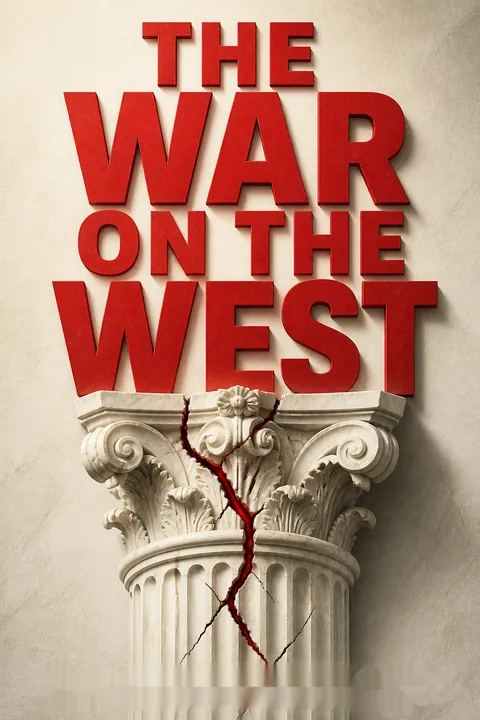


Key Takeaways
Challenge one-sided indictments without turning criticism into civilizational denial.
A cultural conflict. Murray describes a political struggle over whether Western societies can be criticized without treating their entire inheritance as illegitimate. He sees attacks on the West’s racial majority, history, religious traditions, and cultural institutions as connected, even when they arise in different settings. His concern is not that the West has no grave wrongs, but that its wrongs are treated as uniquely defining while its achievements are discounted.
A test of fairness. The book asks readers to assess both the harms and the goods of a civilization. It points to individual rights, scientific inquiry, pluralism, and artistic traditions as inheritances worth defending, while insisting that criticism should remain open. Its central warning is that self-examination becomes destructive when it turns into a verdict of permanent collective guilt.
The distinction between criticism and total delegitimization is useful: institutions need honest scrutiny, but they also need enough legitimacy to reform themselves. The argument is less convincing when it treats varied activists, academics, and institutions as a single coordinated project. A sharper analysis would separate shared rhetoric from actual coordination, then examine each policy and claim on its evidence. The book is most persuasive as a warning against one-sided moral accounting, not as proof that every criticism of Western institutions belongs to one campaign.
Judge racial claims by evidence, not by the moral force of repetition.
Stories become symbols. Murray argues that racial incidents are often made to stand for an entire society before the facts are settled. He contrasts the rapid global interpretation of George Floyd’s death as proof of systemic racial violence with the less publicized death of Tony Timpa, a white man who died in a similar police restraint. The comparison raises a question about why similar cases receive different attention, though it does not establish that their causes or wider contexts are identical.
Misperception matters. The book cites a survey in which many respondents greatly overestimated the number of unarmed Black Americans shot by police in a year. Murray says the figure was around ten. He argues that such errors can distort public debate and fuel responses built on exaggerated premises.
The examples show how salient images can shape public belief more strongly than base rates, a familiar problem in risk perception. But a rare event can still reveal a recurring institutional failure, and a comparison between two cases cannot settle whether racial disparities exist across many encounters. The strongest practice is to separate questions: what happened in a specific case, how often similar events occur, and whether patterns differ by race. Each requires different evidence, and neither anecdotes nor aggregate numbers alone answer all three.
Do not let one racial lens explain every social problem.
A framework becomes a verdict. Critical race theory, or CRT, is an academic movement that studies how race, law, institutions, and power interact, and that also aims to change those structures. Murray focuses on versions of CRT that define racism through prejudice and power, interpret social institutions through racial hierarchy, and privilege lived experience over conventional evidence. He argues that some popularized forms make disagreement itself seem like proof of racism, leaving no clear way to test claims.
Politics gets racialized. The book criticizes this framework for turning issues such as school standards, voting rules, and health policy into tests of racial virtue. It argues that binary labels, racist or antiracist, make ordinary disagreement harder and can justify unequal treatment in the name of equality.
The distinction between investigating structural patterns and making a theory unfalsifiable is crucial. Personal experience can reveal mechanisms that broad statistics miss, but it cannot by itself establish how common a pattern is across a population. Conversely, numbers can describe disparities without explaining their causes. A sound inquiry combines testimony, institutional history, and data, and remains willing to revise conclusions. The book’s warning applies most strongly when a framework treats every possible response, including requests for evidence, as confirmation of its claim.
Teach Western history with context, contradictions, and neglected achievements.
Origins shape identity. Murray challenges efforts to recast national histories through a single founding injustice. He focuses on the New York Times’ 1619 Project, which proposed placing the arrival of enslaved Africans at the center of America’s national story. Historians disputed some of its claims, including the suggestion that protecting slavery was a primary reason for the Revolution. Murray also recounts how the project’s online language was later edited, intensifying his concern that a political argument had been presented as settled history.
Details matter. In the Rhodes Must Fall campaign, activists circulated a damning quotation attributed to Cecil Rhodes. Murray traces it to several separate and uncertain sources, including one passage altered to include a racial slur. He argues that a valid critique of empire does not need fabricated evidence or stripped context.
The insistence on checking quotations and distinguishing interpretation from verifiable fact is a sound historical discipline. Yet correcting a project’s errors does not refute its broader questions about slavery’s place in American history, just as exposing a fabricated quotation does not absolve Rhodes of imperialism. Historical work is strongest when it can hold both tasks together: correcting the record and examining what the corrected record still means. The book’s own polemical style makes that same discipline especially important when assessing its counterexamples.
Make historical repair specific, accountable, and directed toward people actually harmed.
Who can forgive? Murray uses Simon Wiesenthal’s account of a dying Nazi soldier who confessed to helping murder Jews. Wiesenthal left without offering forgiveness, because he could not forgive on behalf of the dead. The story frames a problem with apologies and reparations for distant historical wrongs: present-day officials may speak for neither the original perpetrators nor the victims.
Design before slogans. The book asks how recipients and responsibility would be identified, how costs would be shared, and how a payment could be judged sufficient. It also recalls Britain’s costly campaign against the Atlantic slave trade, including naval patrols that freed enslaved people and killed British sailors. These details complicate any simple account of historical responsibility, though they do not settle whether later remedies are justified.
The demand for a clear account of who was harmed, by whom, and through what continuing mechanism improves debates that otherwise trade in inherited guilt. It does not follow, however, that historical distance makes repair impossible. Governments can address traceable harms through institutional reforms, targeted programs, or restitution without claiming that every present citizen is personally guilty. The relevant test is whether a remedy responds to a demonstrable injury and avoids creating new, arbitrary burdens. Moral complexity is a reason for careful design, not automatic dismissal.
Examine today’s abuses abroad as seriously as yesterday’s Western wrongs.
Comparison is strategic. Murray argues that Western self-condemnation can be used by authoritarian governments to blunt criticism of their own conduct. He describes China’s repression of Uyghurs, restrictions on political freedoms, and efforts to expand economic influence, while Chinese officials point to American racism to challenge US credibility. He also recounts Western institutions and former officials seeking Chinese investment, sometimes while overlooking the political conditions attached to it.
History is not enough. The book contrasts arguments about nineteenth-century opium sales with the contemporary flow of synthetic opioids from China, which it links to mass deaths in the United States. Its point is that attention to past wrongdoing should not displace attention to present dangers or prevent scrutiny of governments outside the West.
Comparative scrutiny can reveal double standards and remind readers that human-rights abuses are not confined to one civilization. But comparison becomes whataboutism when another country’s crimes are used to evade responsibility at home. The useful question is not which society is morally pure, but whether a standard is applied consistently and whether it improves policy. The book’s geopolitical examples make that question vivid, although claims about influence and responsibility still require case-by-case verification rather than inference from a country’s general record.
Preserve shared standards while correcting real institutional exclusions.
Moral language can harden. Murray compares some forms of contemporary antiracism to religion: they offer an account of original sin, rituals of confession, and penalties for heresy. He points to churches that describe themselves as institutionally racist and adopt racial training, while neglecting Christian traditions of opposition to slavery. He also follows similar arguments into science and education, including proposals that treat objectivity, standardized testing, or conventional mathematics as expressions of white supremacy.
Standards have consequences. The book’s concern is that institutions may replace shared criteria with racial categories, or treat evidence-based disagreement as moral failure. Its examples include disputes over vaccine priorities, school admissions, and the idea that even basic mathematical claims can be culturally contingent.
Moral movements often give people a language for recognizing harms that established institutions have ignored. Their corrective force weakens, however, when every disagreement is recoded as bad faith and ordinary standards are discarded without a better method. Objectivity is not achieved simply by claiming neutrality, but shared procedures for testing claims can limit favoritism and make correction possible. Institutions should inspect who their standards exclude, while also asking whether proposed alternatives measure learning, health, or fairness more reliably.
Treat cultural borrowing as a question of respect, not automatic theft.
A mural becomes a case. Rex Whistler’s fantasy mural at the Tate included tiny scenes that critics read as racist depictions of a Black child and Chinese figures. The gallery’s response, followed by an ethics review, helped shut the restaurant where the mural was displayed. Murray argues that the work was reduced to a political indictment, despite its broader imaginative setting and the artist’s life, which ended after he joined the fight against Nazi Germany.
Exchange can honor. He contrasts this with composers who drew on other traditions: Michael Tippett incorporated African American spirituals into an oratorio responding to Nazi violence, while Benjamin Britten absorbed Balinese gamelan music into later compositions. Murray sees these cases as admiration and artistic learning, not simple extraction.
The examples expose a real weakness in using one label for every cross-cultural encounter. Artistic exchange can involve unequal power, misrepresentation, or profit without recognition, but it can also involve study, collaboration, and sincere tribute. The relevant distinctions concern consent, credit, context, and who benefits. A gallery should explain troubling imagery rather than assume that displaying it endorses it. Likewise, defenders of cultural exchange should not treat artistic intent as a complete answer to the effects a work may have on its audience.
Practice gratitude without confusing inheritance with innocence.
Resentment seeks a culprit. Murray draws on Nietzsche’s account of ressentiment, a grievance that turns into a moral demand for revenge, and on Dostoyevsky’s image of a devil barred from gratitude. He argues that a politics focused only on inherited wrongdoing can make blame feel more useful than repair. If every achievement is dismissed and every historical flaw is treated as permanent guilt, people lose reasons to preserve or improve what they inherited.
Gratitude is not denial. The book asks readers to notice the benefits of living amid legal protections, relative peace, scientific knowledge, and cultural works, without pretending those benefits erase injustice. It presents gratitude as a counterweight to resentment, not as a claim that the past was morally clean.
Gratitude can support stewardship: people are likelier to preserve institutions they understand as valuable and imperfect, rather than either sacred or irredeemable. The concept becomes dangerous if it is used to silence people still facing harm or to demand loyalty to a flattering national story. A mature gratitude can acknowledge debt and beauty at once. It asks not only what was received, but who was excluded from receiving it and what responsibilities follow from that knowledge.
Defend a common civic inheritance without demanding cultural sameness.
Reject the retaliatory answer. Murray warns that treating whole populations as guilty can provoke an equally tribal backlash: if one group’s history is disdained, others may refuse to respect its people or culture. He rejects that path and draws on writer Thomas Chatterton Williams’s case for a society that recognizes inherited identities without letting them define every person.
Make inheritance shareable. The conclusion argues that Western traditions can belong to people of any background, just as people can learn and participate in cultures beyond their own. Its proposed remedy is education that teaches both diversity and commonality, while defending free inquiry and the institutions that allow peaceful disagreement. The goal is not to freeze the West in place, but to improve it without requiring self-erasure.
A shared civic story can provide solidarity across ancestry, but it works only if it is genuinely open to revision and participation. Cultural inheritance need not be a possession reserved for descendants, nor a burden that descendants must disown. The strongest version of Murray’s conclusion is therefore pluralist: retain common institutions and standards while widening whose experiences shape them. That balance is difficult, and neither a triumphalist history nor a permanent indictment can achieve it alone.
Analysis
The book’s organizing claim is that Western institutions have moved from correcting historical myths to judging the West through a single, punitive frame. Its strongest contribution is to insist that moral comparison requires more than a catalogue of Western failures. The chapters make that case through sharply chosen episodes: a disputed founding narrative, a fabricated quotation in a statue campaign, a cultural institution retreating from its own artwork, and exchanges between Western governments and China. These examples make asymmetrical scrutiny concrete and memorable.
The same method creates the book’s main weakness. Murray often treats extreme statements and institutional mistakes as evidence of a unified movement, without consistently demonstrating how representative they are. His rebuttals can also risk the mirror image of the reasoning he criticizes: selective comparisons may expose double standards, but they do not establish that Western institutions are broadly fair or that structural discrimination is absent. Nor does identifying errors in a particular activist claim dispose of the underlying historical question.
The most useful reading is therefore neither as a neutral history of the West nor as a final verdict on contemporary antiracism. It is a polemical warning about what happens when identity becomes the master explanation, when disagreement is treated as evidence of moral guilt, and when institutions surrender their responsibility to investigate claims carefully. That warning applies across political camps. A durable civic culture needs the capacity to acknowledge inherited injustice without assigning guilt by ancestry, and to value inherited achievements without treating them as proof of innocence. The book supplies forceful cases for that balance, but readers should test its examples with the same skepticism it demands of its opponents.
Review Summary
Reviews of The War on the West are sharply divided. Supporters praise Murray's thorough research, wit, and courage in challenging anti-Western narratives, calling it essential reading on race, history, religion, and culture. Critics argue the book is hyperbolic, factually unreliable, and relies on cherry-picked anecdotes rather than representative evidence. Some accuse Murray of double standards and selective outrage. The book's overall Goodreads rating of 4.26 reflects its polarizing nature, resonating strongly with conservative readers while drawing pointed criticism from those who find its arguments reductive and intellectually dishonest.
People Also Read




Glossary
Critical race theory
Race and power frameworkAn academic movement examining how race, law, institutions, and power interact, with an activist aim of changing social arrangements. Murray focuses on versions that interpret many institutions through racial hierarchy and challenge liberal ideas such as neutrality and individual rights. He argues that some popular applications make claims difficult to test or dispute.
1619 Project
Slavery-centered US history projectA New York Times initiative launched in 2019 that sought to place the arrival of enslaved Africans in 1619 near the center of the American national story. Its framing and historical claims prompted disputes among historians and journalists. Murray presents it as an example of political argument being advanced through a major historical project.
Ressentiment
Grievance turned into revengeA term associated with Nietzsche for resentment that develops into a moralized desire to blame and punish others. In Murray’s account, ressentiment can present revenge as justice and use equality as a cover for hostility toward those perceived to possess greater status or success.
Cultural appropriation
Borrowing framed as exploitationA term used in debates about adopting or using elements of another culture, especially when a more powerful group benefits from them. Murray argues that the label is often applied too broadly, treating artistic exchange as theft even when it involves study, admiration, or tribute. He distinguishes this from cases involving exploitation or lack of credit.
White Fragility
Defensiveness treated as evidenceRobin DiAngelo’s term for reactions by white people who become defensive when race or racism is discussed. Murray objects to applications in which denial of racism, or discomfort at being called racist, is itself interpreted as confirmation of racism, leaving little room for disagreement or falsification.
religion of antiracism
Antiracism as a faith systemA comparison, associated in the book with John McWhorter, between some contemporary antiracist movements and religious systems. The analogy points to an account of original sin, practices of confession, moral authorities, and social penalties for heresy. It describes the movement’s perceived structure, not a literal religious institution.
About the Author
Download PDF
Download EPUB
.epub digital book format is ideal for reading ebooks on phones, tablets, and e-readers.








