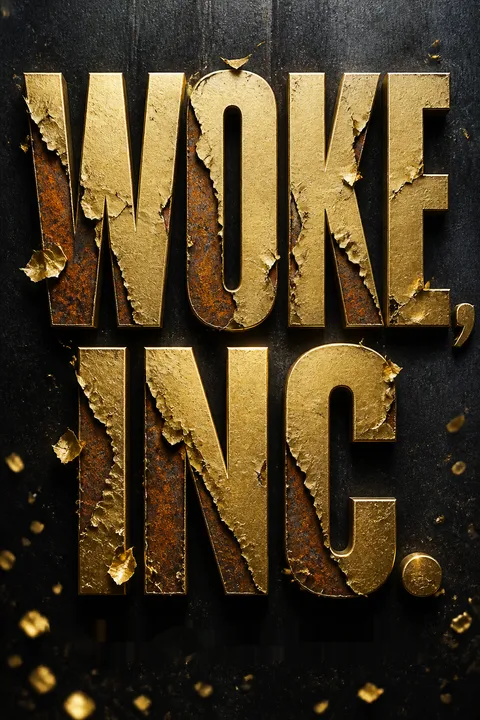


Key Takeaways
Treat corporate virtue claims as marketing until incentives prove otherwise
Follow the money. The book opens with a Goldman Sachs summer internship where a company service day produced few planted trees and many photographs. The author calls the lesson the Goldman Rule: those with money gain power to set the rules. Years later, State Street placed the Fearless Girl statue near Wall Street to promote women’s leadership. The statue also advertised State Street’s SHE investment fund, even as the firm faced a lawsuit over pay differences between male and female employees.
Test the outcome. The author argues that companies can turn a social cause into a reputation shield, drawing attention away from their business conduct while gaining customers, influence, or fees. The point is not that every public commitment is false, but that uplifting language is weak evidence of meaningful change.
What's striking is the gap between visible gestures and verifiable outcomes. That gap is familiar in organizational psychology: people infer virtue from public signals, especially when checking the underlying facts takes effort. A useful consumer test is therefore concrete: What changed for the people named in the campaign, and can the company show it? Yet motive is hard to prove. A campaign can serve marketing and still help its cause. The statue’s promotional role is evidence of mixed incentives, not by itself proof that the company’s advocacy was wholly cynical.
Keep corporations in commerce, and let democratic institutions decide moral rules
A boundary by design. The author’s central claim is that shareholder primacy can limit corporate power, not merely reward shareholders. Limited liability lets people invest in risky ventures without risking all their personal assets. The book argues that society granted this unusual legal protection alongside an expectation that companies focus on commercial activity, rather than claim authority to define the public good.
A historical contrast. Early American corporations often received narrow charters for specific purposes, such as building a bridge. The author says modern corporations’ focus on shareholder value serves as a broader boundary: companies make goods and provide services, while citizens and public institutions debate social priorities. His objection is to CEOs using corporate power to settle questions that belong in democratic debate.
The argument usefully shifts the discussion from whether profit is virtuous to who has authority to make collective choices. In political theory, this is a question of jurisdiction: institutions need defined roles and ways to be held accountable. Still, shareholder primacy is not a neutral wall around business. Decisions about wages, products, and pollution shape society even when managers avoid public statements. The strongest version of the book’s proposal is not that firms have no social effects, but that contested public goals need transparent, democratically answerable rules rather than private executive decrees.
Make managers answer to clear principals, not an unlimited crowd of stakeholders
Accountability can blur. The book describes a growing managerial class: hired executives and professional directors who control institutions without owning or embodying their core purpose. Managers may seek reputation and future influence as well as financial results. If a CEO claims to answer to shareholders, employees, communities, and society at once, it becomes difficult to tell who can judge failure.
Volkswagen’s warning. The automaker promoted itself as a sustainability leader, then admitted that software in its diesel vehicles manipulated emissions tests. The scandal showed how a celebrated social purpose can coexist with deception. The author argues that stakeholder language can make it easier for managers to evade scrutiny, because nearly any decision can be defended as serving some group.
This diagnosis connects to the principal-agent problem: an agent entrusted to act for others may pursue personal goals that are difficult to observe. Clear objectives can make oversight easier. But the claim that accountability to more groups means accountability to none is too broad. Boards, regulators, workers, and customers can all impose real constraints, though those constraints may conflict. The important design question is not simply how many stakeholders exist, but whether each has a defined channel to challenge decisions and whether managers must explain trade-offs with evidence.
An ethical investment strategy must accept the returns it gives up
Values have a price. The book applies a basic investment argument to ESG investing, meaning strategies that use environmental, social, or governance criteria when choosing investments. If investors avoid certain companies for moral reasons, they reduce demand for those shares. Assuming the businesses’ prospects stay the same, their share prices may fall, creating higher expected returns for investors who still buy them. Ethical screening can influence a company by raising its cost of capital, but it may also mean lower expected returns for the investors doing the screening.
The scale is large. The book reports that ESG strategies covered about $17 trillion, or roughly a third of professionally managed US assets, in 2020. It presents performance findings as mixed, cautioning that flattering comparisons may depend on the period, benchmark, or companies selected.
This is a valuable distinction between doing good and expecting the market to reward the effort. An investor can rationally accept lower returns for ethical reasons, just as a consumer may pay more for a preferred product. But the chain from a stock sale to real-world improvement is not automatic. If one investor exits and another takes the shares, the company may not change much. Impact depends on whether financing costs, voting, or engagement actually alter decisions, so ethical intent and measurable effect should be assessed separately.
Judge ESG promises by what companies do when compliance costs money
Reputation is not performance. Volkswagen won praise for its environmental credentials before the emissions deception came to light. Unilever promoted women’s empowerment while Kenyan tea workers pursued claims that the company had failed to protect them during violent attacks. These examples support the book’s warning that social branding can distract from conduct affecting workers, customers, or the environment.
Follow the incentives. The author also describes post-financial-crisis bank settlements in which some funds intended as consumer relief went to nonprofits chosen through settlement agreements. He argues that such arrangements could help companies and officials claim public benefit while bypassing ordinary accountability. The recurring test is practical: when a cause conflicts with profits, access to a market, or executive reputation, what does the organization actually do?
The strongest insight here is methodological: judge institutions by costly choices, not polished disclosures. In accounting and audit practice, independent verification matters because an organization has incentives to present its own performance favorably. The examples also show why one score or pledge cannot establish ethical conduct across a sprawling business. At the same time, scandals do not prove that every sustainability measure is useless. Better standards can expose misconduct if they use clear definitions, independent audits, and consequences for false reporting.
Do not mistake a company's domestic virtue for courage abroad
Markets create leverage. The author argues that companies may make conspicuous statements about US social issues while staying quiet about abuses by governments that control access to profitable markets. Airbnb’s public stakeholder commitments, for instance, sat uneasily beside reports that it shared user information with Chinese authorities. The company’s former trust officer reportedly resigned over concerns about the data-sharing.
Different rules, different risks. The book also describes the NBA’s response to a Houston Rockets executive’s support for Hong Kong protesters, and Disney’s decision to film Mulan in Xinjiang and thank local authorities in the credits. The author’s point is that authoritarian governments can use commercial access to influence corporate speech. A company’s public values may be loud where dissent is safe and muted where it could lose revenue.
This section highlights a real asymmetry: corporations can speak freely in open societies while facing coercion in authoritarian markets. That makes selective advocacy more than a branding puzzle; it can affect privacy, labor, and political dissent. The dilemma is not solved by demanding that every firm exit every abusive country, which could also hurt workers and customers. More useful standards would require disclosure of government data requests, clear limits on cooperation, and consistent public criteria for when commercial pressure changes company policy.
Protect dissent before platforms turn private moderation into public rulemaking
A platform can govern. The book argues that major technology companies shape access to news, speech, and commerce on a scale that makes their moderation decisions politically consequential. It focuses on Section 230, a US law that gives online platforms legal protections for user content and for certain moderation decisions. The author says those protections helped companies grow, while political pressure from lawmakers helped encourage content restrictions.
A contested legal claim. The book proposes treating some platform actions as government action when public officials pressure companies to censor speech. It also discusses the suppression of the New York Post’s Hunter Biden story and the removal of President Trump’s accounts. These examples frame the concern: a private company can become a powerful gatekeeper without the public safeguards applied to government.
The book identifies a difficult governance problem: platforms are private services, yet their scale gives moderation decisions public consequences. Network effects make it hard for users to leave when a few services dominate communication. But the claim that moderation becomes government action is a legal argument, not an established rule for every platform decision. Platforms also need ways to address harassment and threats. A sound middle ground would emphasize published rules, consistent enforcement, explanations, appeals, and scrutiny of government pressure, while preserving space for genuine editorial judgment.
Measure institutional diversity by intellectual range, not inherited traits alone
Proxies can mislead. The author argues that race and gender are often used as stand-ins for diversity of thought, even though people who share a demographic trait may think very differently. He calls his alternative Critical Diversity Theory: institutions should define their purpose, identify which kinds of varied experience or thinking help fulfill it, and assess those qualities directly. At Roivant, he says, a recruiting program aimed at candidates from lower-income households sought broader experience without using race as its selection rule.
Belief can become orthodoxy. The book compares some forms of workplace antiracism ideology to religion, pointing to rituals of confession, shared doctrines, and social penalties for dissent. It also makes a legal argument that some secular beliefs may receive religious protections under employment law. That is the author’s proposed interpretation, not settled law.
The warning against treating individuals as demographic representatives is important for both fairness and better decision-making. A useful hiring process asks what experience or skill the work requires, rather than assuming identity predicts a viewpoint. Yet demographic patterns can reveal barriers that individual-level measures miss, so representation data need not be discarded. The religious analogy captures how moral systems can police dissent, but it can also flatten the difference between dogma and evidence-based claims. The best institutional culture protects disagreement while still allowing organizations to address documented exclusion.
Use political persuasion before spending power to punish a neighbor
Shopping becomes signaling. The book argues that purchases and boycotts increasingly mark political identity, from Goya beans to fast-food chains. It connects this behavior to the Big Sort, a term for Americans clustering in communities with people who share their politics. The book cites an increase from 26 percent of voters living in landslide counties in 1976 to 61 percent in 2016.
Money is not a ballot. A boycott can be a legitimate way for consumers to choose where to spend, but the author warns that coordinated economic pressure can silence people who cannot afford to lose customers or jobs. When punishment replaces argument, opponents become targets rather than fellow citizens. The book urges people to treat persuasion and open debate as the first response to political disagreement.
Consumer choice is a form of speech, and boycotts have sometimes helped people challenge powerful institutions when other channels were closed. The concern is not that spending decisions must be apolitical, but that economic pressure is unequally distributed and can chill speech. The Big Sort also has causes beyond corporate branding, including housing, work, and personal networks. A useful norm is proportionality: criticize, organize, or refuse to buy, while resisting efforts to make a person’s livelihood depend on political conformity.
Give young Americans shared work before asking them to share a national identity
Markets do not replace community. The author’s childhood visits to Vadakanchery, India, showed him capitalism loosening caste boundaries and bringing comfort, but also changing family expectations and making temple rituals more transactional. In one temple, paying more could shorten the wait to see the deity. Markets can expand choice, he argues, yet they can also spread into relationships and institutions that depend on obligations money cannot capture.
Build solidarity through service. The proposed remedy is mandatory civic service during part of high school students’ summer breaks. Shared work, the author argues, could bring young people across class and political lines into contact and give them a stake in the country they inherit. His broader ideal joins individual opportunity with a shared American identity, rather than defining people by a single inherited trait.
The proposal responds to a genuine civic problem: people are more likely to trust one another when they have worked together toward a common goal. Shared service could provide that contact, especially across communities that rarely meet. But a mandate needs careful design. Poor students may already carry family or paid-work responsibilities, and state-directed service can become performative or coercive. Programs would need flexible options, meaningful choice of placement, and practical support. The deeper principle is stronger than the specific policy: solidarity grows through shared responsibilities, not slogans alone.
Analysis
Woke, Inc. is a first-person political and business argument, not a neutral survey of corporate social responsibility. Its organizing claim is that companies gain moral authority by adopting progressive causes, then use that authority to advance their commercial and political interests. The narrative moves from the author’s own encounters in finance and biotech to corporate governance, investment, global markets, technology platforms, identity, and civic belonging. Its strongest contribution is to make institutional boundaries the central question: who should decide public values, and what accountability should accompany that power?
The book is especially persuasive when it examines incentives. The Fearless Girl campaign, Volkswagen’s emissions deception, and corporate accommodation of Chinese market demands each show why a public pledge cannot substitute for examining conduct. Its account of the managerial class also offers a useful extension of standard agency theory: executives may seek reputation and political influence, not only compensation. The book’s demand for clearer responsibility is therefore more than a defense of profit. It is a demand that power be visible and answerable.
Its weaker move is treating shareholder primacy as a reliable boundary against corporate power. Companies influence society through products, labor practices, lobbying, and investment even when they avoid public moral statements. A profit-only mandate does not itself settle questions of harm, and democratic government can be captured too. The book also relies heavily on examples selected to demonstrate hypocrisy, while the performance and impact of ESG strategies are acknowledged to be disputed. These limits do not erase the concern. They suggest that the real choice is not corporate virtue or pure profit, but which decisions require public rules, which belong to organizational judgment, and how either can be challenged. The book’s final appeal to shared identity and civic service is its most constructive answer to polarization: build institutions that make cooperation concrete, while leaving room for citizens to disagree about what justice requires.
Review Summary
Woke, Inc. receives mixed reviews. Many praise Ramaswamy's insights into corporate exploitation of social justice issues for profit, while others criticize his arguments as oversimplified or biased. Supporters appreciate his analysis of stakeholder capitalism and corporate hypocrisy. Critics argue he misunderstands systemic issues and offers flawed solutions. The book is seen as thought-provoking by some and divisive by others. Readers generally agree it provides a unique perspective on the intersection of business, politics, and social movements in America.
People Also Read







Glossary
Goldman Rule
Capital buys rulemaking powerThe author’s term for the idea that people and institutions with financial power can shape the rules others must follow. It begins as a joke about an elite bank, then becomes a broader criticism of corporate leaders using market influence to set social expectations without democratic accountability.
Wokenomics
Profit-making through social brandingThe author’s name for a business model in which companies adopt progressive social causes as part of their commercial and public strategies. He argues that corporate advocacy can generate goodwill, distract from unpopular conduct, and increase influence, even when the company’s underlying incentives remain focused on profit and power.
stakeholder capitalism
Corporate service to multiple constituenciesA view of corporate purpose that asks executives to consider interests beyond shareholders, including employees, customers, communities, and society. In the book, the term primarily refers to companies actively pursuing social or political goals. The author distinguishes this from simply avoiding harm and argues that broad mandates can make executives less accountable.
managerial class
Hired institutional power brokersThe author’s label for professional executives, administrators, and directors who manage companies and other institutions without necessarily owning them or embodying their central work. He argues that these managers may prioritize reputation, status, and influence, and that diffuse responsibilities can make it harder for shareholders, citizens, or institutional members to hold them accountable.
Corporate Social Irresponsibility
Virtue branding that launders self-interestThe author’s term for companies using public commitments to social causes as reputational cover while pursuing ordinary commercial interests. The criticism is not simply that firms make profits, but that moral language can cause customers and citizens to trust them more than their conduct warrants, reducing scrutiny of decisions that affect workers, customers, or public institutions.
idea-fixing
Restricting ideas through platform powerThe author’s term for online platforms using their control over communication to limit which views people can find, share, or discuss. It parallels market power that restricts consumer choice, but the principal harm in his argument falls on citizens and public debate rather than buyers in a conventional market.
Critical Diversity Theory
Purpose-specific measure of viewpoint rangeThe author’s proposed approach to organizational diversity. It asks institutions to define their purpose, identify which kinds of thought and experience advance that purpose, and assess those differences directly rather than treating inherited traits such as race or gender as sufficient proxies. The proposal also stresses that institutions may need shared commitments in some areas and disagreement in others.
woke consumerism
Political identity through purchasesThe use of buying, refusing to buy, or publicly promoting products to express political or social commitments. The author distinguishes this consumer-driven behavior from corporate advocacy led by executives and investors. He argues that consumer campaigns can turn ordinary purchases into political tests and use unequal spending power to pressure others.
Big Sort
Political clustering of communitiesA term associated with Bill Bishop’s account of Americans increasingly living among people with similar political preferences. In the book, the pattern extends from neighborhoods to online networks and consumer choices. Shared preferences can make everyday life feel comfortable, but clustering reduces routine contact with people who hold different views.
woke essentialism
Identity reduced to inherited traitsThe author’s label for a view of people as chiefly defined by inherited characteristics such as race, sex, or sexual orientation. He contrasts it with a plural identity made up of many affiliations, experiences, and choices, arguing that essentialism makes cross-group solidarity harder to sustain.
FAQ
What's Woke, Inc.: Inside Corporate America's Social Justice Scam about?
- Critique of Corporate Wokeness: The book critiques how corporations use social justice rhetoric to mask profit-driven motives, creating what Ramaswamy calls the "woke-industrial complex."
- Impact on Democracy: It argues that this trend undermines democracy by allowing corporate elites to dictate social values, polarizing society and eroding shared American identity.
- Personal Experience: Ramaswamy draws on his corporate experiences to illustrate these dynamics, providing firsthand accounts of the pressures faced by CEOs and employees.
Why should I read Woke, Inc.?
- Insightful Analysis: The book offers a critical perspective on capitalism and social justice, challenging prevailing narratives around corporate responsibility.
- Personal Journey: Ramaswamy shares his transition from a successful CEO to a critic of corporate wokeness, providing a unique insider's view.
- Call to Action: It encourages readers to rethink capitalism and corporate roles, advocating for a return to a shared American identity.
What are the key takeaways of Woke, Inc.?
- Wokeness as Strategy: Corporations adopt wokeness to enhance profitability, creating a façade of virtue while maintaining power structures.
- Threat to Democracy: Stakeholder capitalism threatens democracy by concentrating power with corporate elites, undermining equal representation.
- Shared Identity Importance: Rediscovering a shared American identity is crucial for restoring unity and democratic values.
What are the best quotes from Woke, Inc. and what do they mean?
- "Wokeness has remade American capitalism...": This highlights the shift from profit-driven motives to a focus on social justice, altering capitalism's nature.
- "The defining scam of our time...": Ramaswamy critiques corporate manipulation of social justice rhetoric, which diminishes individual agency.
- "The antidote isn’t to fight wokeness directly...": Emphasizes fostering a collective identity over engaging in divisive battles against wokeness.
How does Woke, Inc. define the "woke-industrial complex"?
- Corporate Manipulation: It refers to corporations adopting progressive values to enhance market power, not out of genuine social concern.
- Societal Impact: This complex polarizes society by creating identity-based divisions, shifting power away from democratic processes.
- Economic Exploitation: Corporations exploit social issues for profit, using them as marketing tools while failing to address underlying problems.
How does Woke, Inc. address stakeholder capitalism?
- Critique of Stakeholder Capitalism: Ramaswamy argues it allows executives to prioritize social agendas over shareholder interests, undermining corporate purpose.
- Power Concentration: It concentrates power with corporate elites, threatening democratic principles by dictating social values.
- Call for Accountability: Advocates for shareholder primacy to protect against corporate overreach into social and political realms.
What examples does Ramaswamy provide in Woke, Inc.?
- Goldman Sachs: Their diversity requirement for boards is seen as a strategic move to enhance reputation, not a genuine commitment.
- Fearless Girl Statue: Used by State Street Global Advisors as a marketing ploy, distracting from gender pay equity issues.
- Airbnb and China: Highlights data-sharing with China as prioritizing profit over ethics, showcasing corporate hypocrisy.
How does Woke, Inc. define "woke capitalism"?
- Corporate Social Responsibility: Describes it as adopting social justice initiatives for profit and image, leading to inauthenticity.
- Economic Self-Interest: Notes tech companies profiting during the pandemic, undermining their social justice claims.
- Political Agenda: Suggests it advances a political agenda prioritizing ideological conformity over genuine diversity of thought.
What is the significance of mandatory civic service in Woke, Inc.?
- Fostering Unity: Proposed to create a shared national identity, bridging divides from identity politics.
- Counteracting Division: Aims to counter self-segregation by fostering mutual respect through shared experiences.
- Building Character: Instills duty and responsibility, shaping engaged and empathetic citizens.
How does Woke, Inc. address corporate censorship?
- Corporate Censorship: Discusses tech companies' censorship under social responsibility, stifling free speech.
- Impact on Discourse: Warns of narrative control leading to homogenized thought and lack of debate.
- Call for Accountability: Suggests treating corporations as state actors for censorship, ensuring adherence to free speech standards.
What role does identity politics play in Woke, Inc.?
- Divisive Nature: Critiques identity politics for emphasizing differences, detracting from unifying shared values.
- Woke Essentialism: Introduces the concept of defining individuals solely by race or gender, which is seen as reductive.
- Need for Pluralism: Calls for recognizing diverse identities and experiences, fostering greater understanding and solidarity.
What solutions does Ramaswamy propose in Woke, Inc.?
- Rebuild Shared Identity: Advocates for transcending divisive identity politics to restore democratic values.
- Limit Corporate Power: Suggests focusing on shareholder primacy to prevent corporations from dictating social values.
- Encourage Authentic Engagement: Calls for genuine engagement with social issues, focusing on value creation over superficial causes.
About the Author
Other books by Vivek Ramaswamy

Download PDF
Download EPUB
.epub digital book format is ideal for reading ebooks on phones, tablets, and e-readers.








