

Key Takeaways
Treat language as political infrastructure, not harmless decoration
Words guide attention. Knowles argues that speech does more than label the world: it helps people decide what is normal, blameworthy, or worth protecting. A label such as “justice-involved youth,” for example, presents a young offender differently from “juvenile delinquent.” A Christmas display called a “holiday tree” also frames its meaning differently, even if the tree itself is unchanged. The point is not that every wording change is sinister, but that language can carry assumptions into everyday conversation.
Politeness is not the whole story. The book distinguishes ordinary tact, which softens a statement without changing its meaning, from political language that may redirect or obscure the underlying issue. Its central warning is that people who dismiss wording as mere semantics can miss how a debate’s terms shape what seems possible.
What's useful here is the distinction between language as a label and language as a frame. Cognitive research broadly supports the idea that wording directs attention and makes some interpretations easier to retrieve, but it does not show that vocabulary controls thought outright. People can question a label, compare it with evidence, and reject its implied assumptions. That limit matters: treating every new term as a deliberate plot can be as distorting as treating words as politically neutral. The practical habit is to ask what a phrase highlights, what it leaves out, and whether the referent has changed.
Define the standards you defend instead of invoking limitless speech
No society is standard-free. The book rejects the idea that freedom of speech means saying anything, anywhere, without consequence. Legal traditions have always recognized limits, including rules concerning threats, libel, and obscenity; social groups also maintain norms of manners and conduct. Knowles argues that conservatives weaken their position when they condemn new speech restrictions while refusing to explain which standards they would uphold instead.
The proposed alternative is substantive. Rather than defend speech as an abstract ideal, the author urges conservatives to name the moral and cultural goods their standards serve. This position is more demanding than a slogan, and it includes a willingness to restrict some speech. It also raises a hard question: who decides what counts as a just standard, and how can that authority be prevented from becoming partisan coercion?
The strongest insight is that rules do not disappear when one side stops defending them; power over rule-setting simply moves elsewhere. Political theory distinguishes liberty from the absence of every constraint: constitutional rights, for example, depend on institutions that protect them. Yet a distinction is essential between legal limits imposed by the state and social criticism or private moderation. Treating them as interchangeable risks giving government powers that a defense of speech ought to constrain. A persuasive standards-based argument therefore needs both a clear account of the good being protected and safeguards against selective enforcement.
Study institutional footholds, not only the slogans that go viral
Culture shapes political possibility. Knowles traces his account through Antonio Gramsci, who argued that revolutionaries could seek influence by changing institutions and common assumptions, not only by confronting opponents directly. The book calls this strategy a “war of position”: gaining ground inside institutions that shape education, media, and public life. It contrasts this with a “war of maneuver,” a more direct contest for political power.
Ideas travel through organizations. Knowles connects Gramsci and the Frankfurt School to campus activism, new academic fields, and later political campaigns. He presents Black Lives Matter’s influence in schools, companies, and media as an example of institutional reach. This is the book’s explanatory lens, not proof that every participant followed one coordinated plan. Its practical lesson is to watch who sets organizational rules and curricula, not just who wins a news cycle.
The institutional lens helps explain why cultural change can outlast an election: schools, professions, and media routines reproduce assumptions through hiring, training, and repeated practice. Organizational sociology offers a useful complement here, since norms often spread without a central director. People adapt to incentives, imitate respected peers, and follow procedures that gradually become ordinary. That account supports the book’s attention to institutions while tempering its tendency to infer unified intent from diverse actors. Similar outcomes can arise from coordination, shared incentives, or independent decisions, and those explanations should not be collapsed into one.
Ask what a new label makes easier to believe or do
Framing can move the question. The author argues that political language can make a contested conclusion seem settled before people debate the underlying issue. In his account, describing an offender as “justice-involved” shifts attention from personal responsibility toward institutional treatment. Calling a union “same-sex marriage,” he argues, changes the debate from what marriage means to who should have access to it. Readers need not accept his conclusions to see the method he is highlighting: labels can smuggle in premises.
New words do not erase reality. Steven Pinker’s “euphemism treadmill,” discussed in the book, describes how a substitute term can acquire the negative associations of the condition it names, prompting another replacement. Knowles sees this cycle as evidence that meaning and reality push back against verbal engineering, even when language changes public attitudes for a time.
This is a useful tool for reading political rhetoric: identify the implied premise before arguing about the proposal. Framing effects can influence judgment, but a changed frame is not automatically deceptive. A newer term may correct a stigma, improve accuracy, or reflect a genuine shift in how people understand a category. Conversely, an older word can also conceal assumptions. The best test is comparative: ask what each term makes salient, whether it describes the same facts, and what evidence would distinguish competing interpretations. That method avoids both passive acceptance and reflexive suspicion.
Defend a concrete common good, not a vacant promise of openness
Abstract defenses can retreat. In 1991, President George H. W. Bush warned that efforts against prejudice could create new prejudices, but Knowles criticizes his response as too focused on general appeals to tolerance and free speech. Pat Buchanan’s 1992 convention speech, by contrast, named the cultural disputes he believed conservatives were losing. The author sees this difference as a lesson in political argument: stating what one values can be more effective than only objecting to an opponent’s tactics.
A story makes the trap visible. In David Mamet’s play Oleanna, a student accuses a professor of misconduct, while the professor’s angry response ends up reinforcing the accusation. Knowles uses the scene to show how a critic can accidentally validate an opponent’s frame. His advice is to answer calmly and affirmatively, rather than imitate the behavior being criticized.
The distinction between criticizing a tactic and offering an alternative is central to persuasion. Research on political communication often finds that people respond not just to facts but to identity, trust, and the story that organizes those facts. A positive case can therefore help audiences understand what a speaker is trying to preserve. Still, a claimed common good can conceal whose interests are being privileged. The answer is not to abandon substantive argument, but to make its reasons public, acknowledge trade-offs, and apply its standards consistently, especially when the same rules constrain allies.
Treat curriculum choices as cultural choices, not neutral scheduling
A syllabus distributes attention. The book recounts how Stanford replaced its Western Culture course with a broader humanities requirement after students and faculty challenged the old curriculum. It also describes a Yale petition opposing a required course centered on major English poets, including Shakespeare and Chaucer. For Knowles, these disputes were not simply about adding authors: class time is limited, so every addition changes what students have time to study.
Education always selects. Drawing on Allan Bloom’s critique of the university, the author argues that an education organized around openness can close students off from inherited works and shared standards. He favors teaching the Western canon and rejects the idea that choice alone protects it. The counterquestion is important: a canon can be valuable without being beyond revision, and broader representation need not mean discarding older works.
Curriculum is a form of public memory: it tells students which works deserve sustained attention and which questions a community considers worth handing on. That makes selection unavoidable, but not self-justifying. A canon can offer students a shared reference point, while new scholarship can expose omissions and widen interpretation. The productive debate is not simply preservation versus inclusion; it is about criteria, intellectual depth, and the opportunity cost of each course. The book is right that time is finite, but that fact supports transparent curricular reasoning, not a fixed list immune to evidence or change.
Let experts inform policy, but do not let them replace politics
Facts do not choose goals. During the COVID-19 crisis, public health guidance changed, including recommendations about masks. The World Health Organization also altered its wording about herd immunity before returning to a definition that included immunity from infection as well as vaccination. Knowles presents these shifts as evidence that appeals to science can sometimes mask political choices about which risks and costs matter most.
Uncertainty needs honest explanation. The book also recalls 1970s warnings of global cooling and Paul Ehrlich’s forecasts of mass starvation from population growth, arguing that confident predictions can fail while still influencing policy. Its broader point is that scientists can advise on likely consequences, but elected officials must weigh health, liberty, economic effects, and other public priorities. Changing guidance alone, however, does not establish that experts acted in bad faith.
The most durable lesson is about decision-making, not the accuracy of any one disputed forecast. Scientific findings can estimate effects, but policy also requires judgments about acceptable risk, distribution of costs, and competing public goods. Those judgments are political even when evidence is strong. At the same time, revision is a feature of inquiry: new data, changing conditions, or limited supplies can justify changed recommendations. Trust is better preserved by explaining what changed, what remains uncertain, and which values informed the decision than by pretending that policy follows mechanically from science.
Hold digital gatekeepers accountable before they become the public square
Private systems can hold public power. In January 2021, major platforms suspended Donald Trump’s accounts, while Apple, Google, and Amazon cut off or restricted Parler’s access to app distribution and web hosting. Knowles treats this sequence as a warning about concentrated control: a service can be privately owned yet function as an important channel for public communication. He argues that conservatives helped weaken their own position by treating private-company decisions as beyond political concern.
The ending is a call to act. Knowles does not recommend a speech free-for-all. He argues for articulating standards, defending a substantive public culture, and engaging institutions rather than relying on slogans or improvised protests. The tension is real: accountability can protect public access, but government oversight can also threaten speech. The essential question is how to prevent either platforms or officials from wielding unchecked power.
The episode points to a modern governance problem: communication infrastructure is privately operated but socially consequential. The useful response is not to assume that platforms are neutral utilities or that every moderation decision is censorship. Different tools address different risks: transparency rules illuminate enforcement, competition policy can reduce dependence on a few firms, and due process can make appeals meaningful. Each carries trade-offs. A workable system should protect users from arbitrary exclusion while preserving room to limit threats and abuse, with rules applied consistently rather than according to political convenience.
Analysis
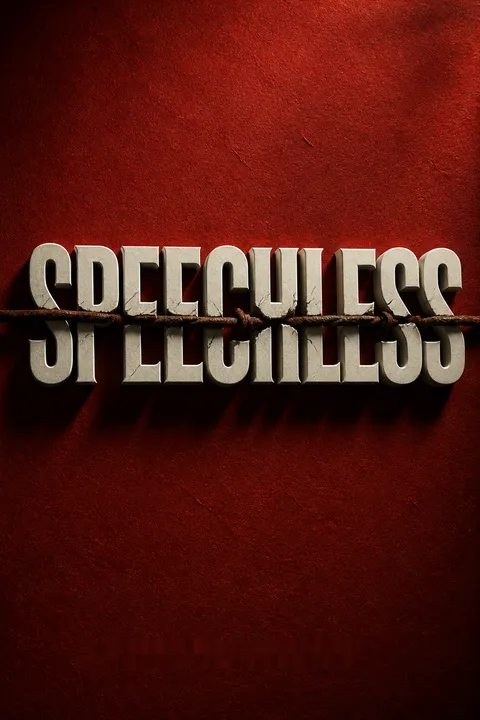
Speechless is a partisan political polemic arranged as a historical argument. It begins with a theory of language, follows that theory through Marxist thought, campus activism, changing social norms, and disputes over science, then ends with the 2021 platform bans as its culminating example. Its organizing claim is that political correctness is not merely etiquette or censorship, but a contest over which standards define public life. The strongest contribution is its challenge to the comforting idea that a society can avoid standards altogether. If a community does not debate and defend its rules, others will set them, whether in universities, workplaces, government, or digital platforms. The book is most persuasive when it asks readers to inspect the framing of terms, the incentives of institutions, and the gap between abstract principles and actual enforcement. Its account of speech restrictions also raises a genuine problem for free-speech advocates: a public square needs rules, but the power to make rules can itself be abused. The key distinction is not simply speech versus censorship. It is who decides, under what authority, with what transparency, and subject to what limits.
The historical narrative requires more caution. The book links thinkers and movements across a century, but intellectual influence does not by itself demonstrate a unified strategy or direct causal chain. Gramsci, feminism, Critical Theory, contemporary activism, public health agencies, and technology firms are treated as parts of a sweeping story that often gives less attention to internal disagreement, alternative explanations, and the possibility of unplanned change. Many examples illustrate the author’s interpretation without establishing its scale. The pandemic cases, in particular, show the risks of confusing policy judgment with scientific evidence, but changing advice can reflect uncertainty as well as political bias.
The reader should take the diagnostic questions seriously without accepting every diagnosis. Language shapes political debate, and standards are unavoidable. Neither fact proves that every contested change is manipulative or that older standards deserve restoration. The lasting value lies in demanding clear reasons, consistent rules, and explicit debate over the common good.
Review Summary
Speechless by Michael Knowles receives mixed reviews. Supporters praise it as an insightful critique of political correctness and leftist ideology, lauding Knowles' research and writing style. Critics argue the book is biased, inconsistent, and promotes harmful ideas about marginalized groups. Some reviewers find it thought-provoking but lacking in solutions. The book's discussion of language, culture, and conservative values resonates with many readers, while others view it as inflammatory and poorly argued. Overall, reactions are polarized along ideological lines.
People Also Read




Glossary
Political correctness
Ideological speech and conduct standardsKnowles uses this term for standards of speech and behavior aligned with a political orthodoxy. In his account, political correctness is more than politeness or censorship: it can rename, soften, or redefine disputed realities and displace older moral norms. The book argues that its enforcement matters even when its specific vocabulary changes.
Cultural hegemony
Influence over social common senseA concept associated in the book with Antonio Gramsci, describing how a group can secure influence by shaping the assumptions and institutions that make a social order seem natural. Knowles applies it to education, media, and other cultural institutions, arguing that control over common sense can matter as much as direct control of government.
war of position
Institutional change from withinIn the book's account of Gramsci's political strategy, a war of position seeks influence by gaining ground within established institutions rather than confronting opponents directly. Schools, media, and professional organizations can shape habits and accepted ideas over time. The term is contrasted with direct political struggle, which the book calls a war of maneuver.
war of maneuver
Direct political confrontationKnowles uses this term for an open contest between political movements, such as campaigns for office or direct challenges to existing authority. In the book's discussion of Gramsci, it contrasts with the slower effort to influence institutions and cultural assumptions from within. The distinction helps explain why cultural change may not follow electoral outcomes.
repressive tolerance
Selective tolerance used politicallyHerbert Marcuse's argument, as presented in the book, that tolerance can reinforce existing power when all viewpoints are treated equally within an allegedly unequal society. Marcuse proposed restricting right-wing ideas while making room for left-wing ones, which he considered liberating. Knowles presents the concept as a rationale for selective censorship.
false consciousness
Misrecognition of one's own conditionA Marxist concept discussed in the book, referring to a person's mistaken understanding of their social or political situation. Knowles describes how activists may use the idea to explain why people do not see themselves as oppressed, then seek to raise their political awareness. He criticizes this approach when it treats disagreement as proof of ignorance.
euphemism treadmill
Replacement terms inherit old stigmaA term associated with psychologist Steven Pinker, describing how a polite or clinical replacement for a stigmatized word can acquire the same negative associations over time. Speakers then introduce another substitute. Knowles uses the concept to argue that changing vocabulary can alter attitudes temporarily, but the underlying condition or social judgment may continue to shape meaning.
anti-standard standard
A norm aimed at replacing normsKnowles's label for political correctness as both a set of speech rules and a challenge to older standards. He argues that it can succeed by imposing new rules or by persuading opponents to reject standards altogether in the name of absolute freedom. In either case, he says, the prior moral framework loses its authority.
School of Resentment
Ideological approach to literary studyLiterary critic Harold Bloom's phrase, used in the book for academic approaches that judge literature primarily through contemporary political categories and grievances. Knowles argues that these approaches can push close reading and the study of enduring literary achievement aside. The term is polemical, and it does not describe every scholar working on identity, history, or literature.
consciousness-raising
Group discussion that develops political awarenessA feminist organizing practice described in the book through small-group discussions of women's experiences. Participants interpreted personal difficulties as expressions of broader social conditions and sought collective political responses. Knowles connects the method to Marxist ideas about consciousness, while critics of his account may view it as a way to identify patterns that individual experience alone can obscure.
FAQ
What's Speechless: Controlling Words, Controlling Minds about?
- Focus on Political Correctness: The book explores the rise of political correctness and its impact on free speech and cultural standards in America. Michael Knowles argues that it is a tool used by the Left to control language and thought.
- Critique of Conservatism: Knowles critiques conservatives for failing to effectively combat political correctness, suggesting their vague appeals to free speech are inadequate.
- Historical Context: The author provides a historical overview, tracing political correctness back to Marxist thought and cultural movements, discussing key figures and events that shaped current political discourse.
Why should I read Speechless: Controlling Words, Controlling Minds?
- Urgent Cultural Relevance: The book is essential for understanding the current cultural and political climate in America, with high stakes for free speech and traditional values.
- Insightful Analysis: Readers gain insights into the mechanisms of political correctness and its effects on language and thought, with a thorough examination of tactics used by the Left.
- Call to Action: It serves as a rallying cry for conservatives to reclaim cultural heritage and engage in the battle for free speech, offering practical advice on confronting political correctness.
What are the key takeaways of Speechless: Controlling Words, Controlling Minds?
- Understanding Political Correctness: Knowles defines it as a standard of speech and behavior aligned with leftist ideology, censoring traditional language and redefining reality.
- Cultural Hegemony: The book explains how the Left has infiltrated institutions to reshape societal norms, leading to a shift in acceptable discourse.
- The Role of Language: Language is highlighted as a powerful tool in shaping thought and culture, with the warning that abandoning traditional standards leads to a cultural vacuum filled by radical ideologies.
What are the best quotes from Speechless: Controlling Words, Controlling Minds and what do they mean?
- “If they can control the words we use, they can control the thoughts we think.”: This encapsulates Knowles's thesis that language shapes ideology, emphasizing the defense of language against politically correct redefinitions.
- “The answer is always more speech, not less.”: Knowles advocates for open dialogue as a solution to political correctness, believing that silencing dissent empowers radicals and stifles discourse.
- “The personal is political.”: Critiqued as a means of politicizing private life, Knowles argues this ideology undermines the distinction between personal choices and political discourse.
How does Speechless: Controlling Words, Controlling Minds define political correctness?
- Standard of Speech: Defined as a set of standards aligning with leftist ideology, enforced through social pressure and institutional power.
- Censorship vs. Redefinition: Distinguishes political correctness from censorship, asserting it involves redefining language to fit ideological narratives, often contradicting traditional meanings.
- Historical Roots: Traces origins to Marxist thought and cultural movements, suggesting it is a strategy to undermine Western civilization.
What strategies does Michael J. Knowles suggest for combating political correctness in Speechless?
- Engage in Open Dialogue: Encourages conservatives to engage in discussions rather than retreat into silence, advocating for more speech to counter radical ideologies.
- Reclaim Language: Advocates for reclaiming traditional language and standards, urging conservatives to use clear and direct speech without fear of backlash.
- Educate and Inform: Stresses the need for education on free speech principles and the dangers of political correctness, calling for efforts to inform the public.
How does Speechless: Controlling Words, Controlling Minds critique the conservative response to political correctness?
- Inadequate Defense: Argues conservatives have failed to mount an effective defense, often resorting to vague slogans about free speech lacking substance.
- Surrendering Ground: Suggests conservatives have surrendered cultural ground by adopting politically correct language or failing to challenge it, emboldening radicals.
- Need for Tactical Aggression: Calls for a more aggressive stance from conservatives in the cultural battle, warning that without a clear response, they will continue to lose ground.
What historical examples does Michael J. Knowles provide in Speechless?
- The Rise of Political Correctness: Discusses its emergence in the late 20th century, particularly on college campuses, highlighting key events and figures.
- Cultural Marxism: References the Frankfurt School and Antonio Gramsci as influential in shaping political correctness ideology, explaining their cultural strategies.
- Contemporary Incidents: Cites examples like campus protests and backlash against conservative speakers, illustrating real-world implications of the ideology.
How does Speechless: Controlling Words, Controlling Minds relate to current events?
- Cancel Culture: Connects political correctness to cancel culture, where individuals face repercussions for dissenting views, arguing it's a result of the ideological framework.
- Free Speech on Campuses: Discusses battles over free speech on campuses, emphasizing the importance of defending it as a bulwark against political correctness.
- Cultural Shifts: Analyzes how political correctness has influenced broader cultural shifts, warning these threaten American democracy and free expression.
What role does gender ideology play in Speechless: Controlling Words, Controlling Minds?
- Critique of Gender Constructs: Critiques the understanding of gender as a social construct, arguing it undermines biological realities with evidence and case studies.
- Impact on Society: Discusses how gender ideology influences public policy and education, warning of confusion and harm, especially among children.
- Historical Examples: Uses cases like John Money and the Reimer twins to illustrate consequences of ignoring biological truths, serving as cautionary tales.
How does Speechless: Controlling Words, Controlling Minds address the concept of free speech?
- Free Speech vs. Censorship: Argues political correctness creates a hostile environment for free speech, emphasizing the importance of protecting it as a democracy cornerstone.
- Heckler’s Veto: Discusses the "heckler's veto," where protests silence speakers, arguing it undermines free expression and must be challenged.
- Call to Action: Encourages readers to defend free speech and resist political correctness pressures, advocating for a cultural shift prioritizing open dialogue.
What is the significance of the title Speechless: Controlling Words, Controlling Minds?
- Loss of Voice: Reflects the idea that political correctness renders individuals speechless, unable to express true thoughts and beliefs.
- Cultural Commentary: Comments on the broader implications of silencing dissenting voices, serving as a rallying cry for those marginalized by political discourse.
- Call to Action: Urges readers to reclaim their voices and engage in cultural battles, emphasizing the need to speak out against silencing forces.
Download PDF
Download EPUB
.epub digital book format is ideal for reading ebooks on phones, tablets, and e-readers.








