

Key Takeaways
Trace some ghetto norms to inherited culture, not slavery alone
A cultural lineage claim. Sowell argues that some customs associated with poor Black communities have parallels in an older Southern white subculture. He traces that subculture to migrants from turbulent regions of Britain, where weak law and persistent violence could reward short-term thinking, forceful self-assertion, and distrust of formal education. In his account, these habits crossed generations through Southern contact and migration, then persisted in some urban neighborhoods after many white Southerners had moved beyond them.
Not a universal explanation. Sowell does not claim that all Southern whites or Black Americans share these traits, or that culture explains every disparity. His historical comparisons aim to show that slavery alone cannot explain patterns that he finds among white Southerners before they encountered enslaved Africans. The argument is a proposed account of cultural transmission, not a claim that discrimination or slavery had no lasting effects.
The argument usefully asks whether behaviors have histories older than the explanations commonly attached to them. Cultural habits can persist after the conditions that once made them adaptive have changed. But resemblance across populations does not by itself prove direct transmission, and a cultural account can be mistaken for a complete one. A careful reading treats Sowell's lineage as a hypothesis to test alongside slavery, exclusion, labor markets, and public policy, rather than as a replacement for those explanations.
Do not turn a damaging subculture into a protected racial identity
Identity can reward conformity. Sowell argues that some post-1960s voices presented ghetto customs as authentic expressions of Black identity. In his account, this made it harder to criticize behaviors that hindered education or stable work. One example is the charge that a Black student is acting white for taking school seriously. Such pressure can turn belonging into a test of whether someone imitates the neighborhood's expectations.
Alternative models mattered. Sowell points to schools and colleges founded by Northern missionaries after the Civil War. Their leaders tried to replace prevailing habits with strict academic standards, self-discipline, and different expectations for speech and conduct. The book argues that many prominent Black leaders emerged from these institutions, suggesting that advancement did not require preserving every inherited custom.
This is a sharp reminder that group identity is not neutral: it can define which behaviors earn respect and which invite ridicule. Social psychologists describe a related tension between belonging and achievement, especially when a group interprets outside standards as threats to solidarity. Yet identity can also protect people from exclusion and preserve valuable traditions. The useful distinction is not between pride and self-criticism, but between cultural practices that sustain community and those that make learning or opportunity costly.
Compare groups and eras before treating disparities as causal proof
Comparisons sharpen explanations. Sowell tests broad claims about race by comparing people who share a racial category but have different histories, or groups with different racial backgrounds but similar circumstances. He contrasts Black Americans from the South with West Indian immigrants, and notes differences between Northern and Southern Black test scores. He also points to the steep decline in Black poverty from 1940 to 1960, before the major civil rights laws and social programs of the 1960s.
Timing matters. If a disparity changes sharply across time, or differs among groups that share a supposed cause, that cause may not explain the whole pattern. Sowell uses such comparisons to argue that culture and education deserve attention alongside discrimination. These examples suggest questions for research; they do not, by themselves, settle which factor caused a particular outcome.
The book's comparisons resemble natural experiments: variation across place, time, or migration can help distinguish explanations that look identical in a single snapshot. This is a stronger approach than inferring cause from a gap alone. Still, groups differ in more than one dimension, and migration selects people rather than assigning them randomly. Differences in outcomes can point toward a mechanism, but establishing that mechanism requires careful measurement and attention to confounding factors.
Recognize the value created by people who connect buyers and sellers
Coordination is productive work. Sowell calls groups concentrated in trade, retailing, or lending middleman minorities. Their contribution is often less visible than manufacturing, but they connect people who would otherwise struggle to find, exchange, or finance what they need. In a World War II prisoner-of-war camp, prisoners spontaneously traded goods through intermediaries who saved everyone the trouble of arranging individual exchanges. The middlemen earned a return for providing that service.
The role invites resentment. Sowell argues that customers often blame the visible shopkeeper or lender for prices and terms shaped by wider costs and conditions. Jewish, Chinese, Lebanese, and other trading communities appear in his comparisons across countries. Their family labor, saving, and business networks helped them rise from poverty, but also made them seem separate from their neighbors.
The prisoner-camp example makes an abstract economic function concrete: intermediaries reduce the time and effort required to trade. Modern economies rely on similar coordination, even when it happens through platforms, distributors, or credit systems. Recognizing that contribution does not make every price fair or every lender benign. The analytical task is to distinguish value creation from exploitation, then examine specific conduct instead of treating an entire ethnic group as guilty by occupational association.
Remember slavery was global, while abolition became a distinct Western campaign
Slavery crossed continents. Sowell emphasizes that slavery was practiced in societies around the world, often involving people enslaved by others of the same broad racial group. Europeans were enslaved in North Africa, Slavs in Europe and the Islamic world, and Asian and Indigenous societies also held slaves. He argues that race became a more visible dividing line in the Americas, but was not the original cause of an institution that long predated modern racial ideology.
Abolition required a campaign. Sowell describes the late eighteenth-century emergence of organized opposition in Britain, led early by Quakers and then by evangelical activists. British law, public pressure, and naval patrols eventually helped suppress the Atlantic trade and put pressure on other societies. The global history broadens the frame, but does not make the particular abuses of American slavery less severe.
A worldwide frame corrects the misleading impression that slavery belonged to one race or one region. It also clarifies that ending an institution can require organized moral and political action, not merely a change in sentiment. But a broad account should not flatten distinct systems into interchangeable experiences. Sowell's claim that abolition was uniquely Western is sweeping, and the argument is strongest when it distinguishes the documented scale and forms of slavery without implying that only one civilization possessed moral agency.
Judge past choices by real constraints without confusing context with absolution
History has constrained choices. Sowell asks readers to distinguish moral judgment from causal explanation. He describes Washington, Jefferson, and John Randolph as men who opposed slavery in some respects but faced legal, political, and social barriers to emancipation. Randolph, for example, arranged in his will to free his slaves and provide for them, yet his plan to settle them in Ohio ran into local opposition. The details complicate easy labels, but do not make slaveholding harmless.
Consequences shaped policy. Lincoln's Emancipation Proclamation used a military rationale and applied to areas in rebellion, rather than declaring universal abolition in a single stroke. Sowell argues that its limited wording helped it survive political and legal challenges. He also emphasizes that slavery was central to Southern secession. Context explains why actors chose particular means; it does not erase what they defended or the harm done.
This distinction resembles bounded rationality in political analysis: leaders act within limited legal authority, imperfect information, and competing risks. Understanding those limits can prevent retrospective moral theater. It also demands discipline. Context can be selectively used to excuse powerful actors, just as abstract condemnation can obscure the choices they did have. Sound judgment asks both what alternatives existed and who bore the costs of the decision.
A school's outcomes can change dramatically when its institutional culture changes
Dunbar challenged assumptions. Washington's M Street School, later Dunbar High School, was a Black public school whose students outscored students at two of the city's three white high schools in 1899. Sowell describes academic success that continued for decades. Many families were working class, and admission did not depend on an entrance exam. Graduates entered leading colleges and became prominent in fields including law, science, and public service.
Reorganization changed the school. When Dunbar became a neighborhood school, its student body and teaching staff changed, and its academic reputation collapsed. Sowell presents this as a warning against treating integration or a new school building as a substitute for the conditions that support learning. He also cites other successful schools serving low-income and minority students, arguing that racial composition alone cannot determine academic quality.
Dunbar is compelling because it challenges claims of impossibility: a school serving Black students from modest backgrounds achieved results that prevailing assumptions said were out of reach. The case directs attention to expectations, staffing, peer culture, and continuity. A single school's history cannot isolate which element mattered most, and Sowell's account should not be read as proof that segregation improves education. Its durable lesson is narrower: institutional design and daily practice can matter greatly.
Demand evidence from teaching methods, not just educational promises
Successful schools differed in method. Sowell describes schools that used direct instruction, phonics, memorization, frequent tests, strict behavior standards, or longer school days. At Bennett-Kew Elementary in California, the principal raised reading performance from the third percentile to the fiftieth percentile in four years, despite resistance to her methods. Houston's KIPP Academy gave students substantially more classroom time than a typical public school.
No single recipe emerges. Some examples were public schools, others private; some were religious, others secular. Their common features were demanding instruction and a focus on basic skills, not one universal teaching theory. Sowell argues that education officials sometimes resisted methods that succeeded because those methods challenged prevailing doctrine. The examples support testing approaches against student outcomes, rather than assuming that fashionable terminology guarantees learning.
These cases emphasize implementation: a curriculum only matters if students receive clear teaching, practice, feedback, and enough time to master material. That is a useful corrective to policy debates dominated by labels. Yet vivid success stories are not the same as comparative evaluations. Schools may differ in leadership, enrollment, resources, or family engagement as well as pedagogy. Replication should preserve the demand for evidence while testing whether a method works across settings.
Do not turn Nazi crimes into an eternal verdict on Germans
A people has a long history. Sowell contrasts centuries of German cultural life with the Nazi regime's twelve years in power. Germans had built schools, businesses, and technical institutions across Europe and beyond, and many German communities overseas showed no allegiance to Nazi politics. The book argues that the Holocaust should not be treated as the inevitable expression of an unchanging German character.
Rejecting essentialism is not exoneration. Hitler gained power through a political crisis and then dismantled constitutional restraints. Many Germans supported or collaborated with the regime, while others resisted or aided its victims. Sowell distinguishes the responsibility of people who enabled Nazi crimes from the claim that all Germans, across generations, were inherently destined to commit them. The distinction challenges collective punishment without diminishing individual or institutional culpability.
The distinction between a regime, its supporters, and an entire people helps prevent historical responsibility from becoming inherited guilt. It also matters for understanding how ordinary institutions can fail under authoritarian pressure. However, rejecting national essentialism should not minimize the scale of collaboration, public acquiescence, or the institutions that made persecution possible. The useful question is how specific political conditions and choices enabled atrocity, not whether a people is permanently virtuous or permanently suspect.
Use history to test present claims, not manufacture inherited grievance
Sowell's warning about visions. The book argues that political beliefs can shape which facts are emphasized, and which are ignored. He calls the drive to demand equal outcomes despite differing histories and causes a pursuit of cosmic justice. He also criticizes treating groups across centuries as if they were one continuing person, a move he calls intertemporal abstraction. In his examples, this turns present-day individuals into stand-ins for ancestors they never knew.
Keep blame and cause distinct. Historical wrongs matter, but moral condemnation does not automatically explain present-day outcomes or identify an effective remedy. Sowell urges readers to examine specific mechanisms, compare evidence, and distinguish accountability for actions from inherited responsibility. His final concern is practical: distorted history can encourage policies based on a false diagnosis, while honest history can help test what has worked and what has failed.
The book's most transferable method is to ask two separate questions: what was wrong, and what caused the outcome under study? That separation can reduce both denial and scapegoating. Still, the argument itself must meet the same standard it asks of others. A polemical account can also select evidence to fit a political vision. Readers should treat Sowell's framework as an invitation to verify claims, not as a guarantee that his own causal interpretations are settled.
Analysis
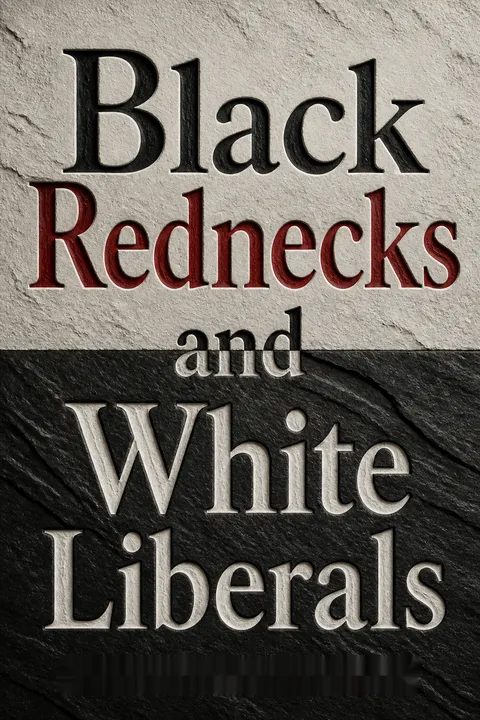
Black Rednecks and White Liberals is a collection of historical essays organized around a shared challenge: racial disparities should not be assigned a cause simply because that cause carries moral force or political usefulness. Sowell's strongest method is comparison. He places groups side by side across regions and generations, then asks whether familiar explanations survive those contrasts. The essays on middleman minorities and slavery extend that method beyond the United States, while the chapters on education and German history show how institutional settings and political crises can alter a group's trajectory.
The book is most persuasive when it corrects a categorical claim. Dunbar High School demonstrates that a low-income Black student body can achieve strong academic results. The prisoner-of-war camp illustrates how intermediaries can create value without producing physical goods. The global history of slavery warns against treating one region's experience as the whole human story. These examples expand the questions readers can ask.
The main analytical risk is moving from a counterexample to a comprehensive causal account. Evidence that a pattern predates slavery challenges slavery as its sole origin, but does not measure slavery's later effects. Differences between immigrant communities, regions, or schools can suggest cultural mechanisms, but are entangled with selection, institutions, resources, and policy. Sowell often treats such comparisons as evidence for broad cultural claims, while giving less space to how multiple causes interact.
The book's polemical style also creates a useful test for readers: apply its demand for consistency to its own claims. Its durable contribution is not a universal explanation of race, but a discipline of historical reasoning. Separate moral judgment from causal inference, examine counterexamples, and resist turning either victimhood or achievement into a complete account of a group's history.
Review Summary
Black Rednecks and White Liberals by Thomas Sowell receives polarized reviews averaging 4.37/5. Supporters praise its well-researched examination of cultural origins, particularly tracing "redneck culture" from Scotland to Southern blacks, and its challenging conventional narratives about slavery, race, and discrimination. They commend Sowell's evidence-based approach and historical perspective. Critics argue the book exhibits confirmation bias, oversimplifies complex issues, contains factual errors, hand-waves important topics, and dismisses systemic racism while blaming culture and liberal policies for black communities' struggles without offering concrete solutions.
People Also Read






Glossary
Redneck culture
A historically rooted subcultureSowell uses this term for a cluster of social habits he associates with poor Southern whites, including touchy honor, violence, weak interest in formal education, short-term spending, and distrust of steady work. He argues that some of these patterns originated among migrants from marginal parts of Britain and later influenced parts of Southern Black culture.
Black rednecks
A Black subculture shaped by Southern patternsIn Sowell's argument, this phrase refers to Black communities or individuals who retain traits he links to the older Southern white subculture. It is not meant to describe all Black Americans. He argues that some behaviors later framed as uniquely Black identity had earlier parallels among poor Southern whites.
Middleman minorities
Minorities concentrated in intermediary tradesA term for ethnic or social minorities disproportionately active in retailing, trade, lending, and other intermediary roles between producers and consumers. Sowell argues that these groups often supply valuable coordination and credit, while their visible position between buyers and sellers can make them targets of resentment and political scapegoating.
Cosmic justice
Equal outcomes despite unequal causesSowell uses this phrase for demands that people or groups should receive equal outcomes even when their histories, institutions, habits, and circumstances differ. He distinguishes this broad sense of fairness from social injustices caused by specific policies or actions, and argues that confusing them can produce remedies that misidentify the source of disparities.
intertemporal abstractions
Groups treated as continuous across centuriesSowell's term for treating a people or nation as though it were one enduring actor across generations. This framing can assign present-day individuals responsibility for acts committed by distant ancestors, or treat historical gains and losses as debts owed between groups that never existed as continuous, unchanged entities.
Volksdeutsche
Ethnic Germans outside GermanyThe term Sowell uses for people of German ancestry living outside Germany, especially communities in Eastern and Southern Europe. He distinguishes them from German citizens, and describes how Nazi leaders sometimes supported these minorities when doing so served German expansion, while restraining or abandoning them when other political goals took priority.
Reichsdeutsche
German citizens at home or abroadSowell uses this term for German citizens, distinguishing them from ethnic Germans living beyond Germany's borders. The distinction matters in his account of the Nazi era because ethnic Germans abroad had different legal and political relationships to Germany, and their participation in Nazi movements varied with their local circumstances.
About the Author
Other books by Thomas Sowell




Download PDF
Download EPUB
.epub digital book format is ideal for reading ebooks on phones, tablets, and e-readers.








