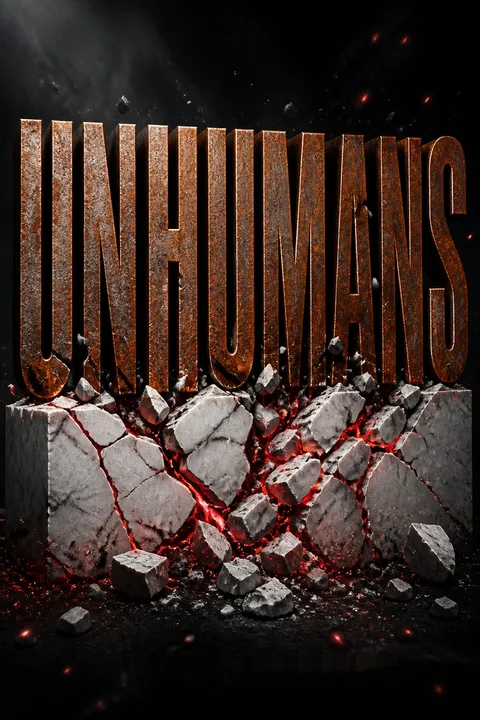


Key Takeaways
Judge a revolution by the power it organizes, not promises it makes
Power beneath the slogans. The authors argue that communism is best understood not only as a set of economic ideas, but as a method for gaining and holding power. They call people who pursue what they see as the destruction of civilization “unhumans,” a deliberately provocative label for revolutionary actors they associate with nihilism, resentment, and political violence. In their account, promises of fairness can mobilize supporters, while the movement's practical priority is control of institutions, property, and opponents.
A sweeping interpretation. The book applies this lens to revolutions from France and Russia to China, Spain, and contemporary America. It treats very different movements as variations on a common power-seeking pattern. That makes the narrative easy to follow, but also risks treating political opponents with very different aims as one type of actor.
The distinction between stated ideals and actual institutional effects is useful well beyond revolutionary history. Political scientists often study movements by examining who gains authority, who loses it, and whether promised reforms survive contact with governing. Yet the label “unhumans” complicates the book's human-rights argument: describing adversaries as outside humanity can make reciprocal exclusion seem acceptable. A stronger test is behavioral and specific: identify the policies, organizations, and abuses at issue, then judge them by consistent standards rather than presumed inner motives.
Watch who gets divided, persuaded, and planted inside institutions
The pre-revolution playbook. The authors adapt Operational Preparation of the Environment, or OPE, a military concept for shaping a setting before an operation. Their political version has three stages: separate people into opposing groups, spread messages that deepen grievance, and gain influence inside institutions that can confer legitimacy or power.
The examples vary. The book describes Bolshevik organizers working through workers' and soldiers' councils, Soviet-linked cultural activity in Spain, and communist recruitment among Chinese students and peasants. It argues that each effort turned existing social tensions into an organized base. The framework is meant as an early-warning tool: ask who is being cast as a collective enemy, which messages are changing public perception, and which institutions are gaining new leadership or loyalties.
This framework's strength is its attention to preparation, not just the dramatic moment of revolt. Social movements do build networks, shape narratives, and compete for institutional influence; studying those processes can reveal how political power accumulates. The risk is reading ordinary organizing as covert subversion. A student association, protest campaign, or institutional appointment is not evidence of revolutionary intent by itself. The useful discipline is to distinguish observable coordination and conduct from speculation about hidden allegiance.
Track the shift from street unrest to confiscation and political purges
A three-part arc. The book organizes revolutionary change into incitement, seizure, and purge. Incitement brings conflict into the open. Seizure transfers control over institutions, rights, or property. Purge removes people and symbols considered obstacles to the new order. The authors present the sequence as a recurring pattern, while acknowledging that its pace differs across cases.
France supplies the vivid example. The storming of the Bastille in 1789 became a symbol of revolt. The monarchy fell, Louis XVI and Marie Antoinette were executed, and the Reign of Terror brought widespread political executions. Robespierre, a leading architect of the Terror, was himself executed as the revolution turned against its own leaders. The case illustrates how a movement that begins with grievances can develop into escalating coercion.
A staged model helps readers notice escalation and ask what changes when a protest movement acquires governing power. It also gives historical events a memorable structure. But revolutions do not all follow a fixed script, and the same labels can hide important differences between popular revolt, civil war, authoritarian consolidation, and state reform. Treating the sequence as a diagnostic hypothesis, rather than a law, keeps the framework useful without making every episode of unrest look like the first act of a purge.
Do not wait for a crisis to prove that a political threat is real
Delay narrows choices. In the Russian account, Nicholas II's abdication in 1917 did not end the struggle for power. The Bolsheviks gained influence in workers' and soldiers' councils, then overthrew the provisional government. The Romanov family was executed in 1918. The authors portray General Aleksei Brusilov as mistakenly expecting moderation to displace the Bolsheviks, while White Army commander Pyotr Wrangel organized serious resistance only after the new regime had strengthened.
Organization mattered. Wrangel evacuated anti-Bolshevik forces from Crimea in 1920, but the White movement could not reverse the takeover. The authors use this outcome to argue that opponents who assume a crisis will settle itself may lose the chance to act effectively. Their point is not that every crisis justifies force, but that institutions and coalitions need preparation before a breakdown.
The story highlights a real strategic problem: once rival authorities control security forces, communications, and administrative systems, restoring pluralism becomes harder. Comparative history also warns against the opposite error, when leaders describe reformers or dissidents as existential enemies and use that claim to justify repression. Early action is not automatically wise action. It should mean building reliable institutions, gathering evidence, and preserving lawful routes to challenge power, not treating political uncertainty as proof of impending tyranny.
Mao's promised leap to abundance became a state-made famine
Coercion overrode feedback. The authors describe Mao's Great Leap Forward as a drive to collectivize life and rapidly increase industrial output. People were moved into communes, private property was taken, and households were ordered to melt iron tools and cookware in backyard furnaces. With farming equipment destroyed and officials pressured to report success, agricultural production suffered while the state continued demanding grain.
The cost was enormous. The book cites estimates of 47 to 60 million deaths from the famine associated with the campaign. Mao's Hundred Flowers Campaign had already encouraged criticism, then punished many who offered it. During the Cultural Revolution, Red Guards attacked teachers, officials, religious institutions, and alleged political opponents. Together, these episodes show how a one-party state can suppress information and punish dissent until policy failure becomes catastrophe.
The central lesson is about feedback: systems become dangerous when leaders can punish bad news more easily than they can correct bad decisions. Research on organizational failure and authoritarian governance points to the same mechanism, where fear distorts reporting up the chain of command. The story also cautions against explaining mass suffering through ideology alone. State capacity, coercion, crop conditions, and administrative incentives all matter. Naming those mechanisms makes the history more analytically useful than treating catastrophe as proof of a single political essence.
A counterrevolution can stop one danger while creating another
Spain as the authors' counterexample. In their account of the Spanish Civil War, Soviet-backed communist and socialist factions fought Nationalist forces led by Francisco Franco. They emphasize persecution of clergy, seizures of land, and conflict among rival factions on the Republican side. Franco's victory ended the war in 1939 and preserved institutions the authors believed the revolutionaries intended to dismantle.
Victory had a price. The book presents Franco as a successful opponent of communism, but its narrative gives far less attention to the harms and restrictions associated with his own authoritarian rule. It also discusses Chile, where Augusto Pinochet's 1973 coup removed Salvador Allende, and credits the new government with restoring economic stability. These examples complicate any simple equation of anti-communist victory with liberty or humane government.
The distinction between defeating a revolutionary movement and establishing a just political order is essential. A government can suppress one form of coercion while imposing another, so outcomes need evaluation across civil liberties, political competition, violence, and economic conditions. The book's focus on the threat posed by communist factions makes its counterrevolutionary figures vivid, but its moral accounting is uneven. Applying the same standards to victors and losers would strengthen the historical lesson without erasing the violence the authors document.
Real grievances can mobilize a movement without guaranteeing fair outcomes
A coalition can turn on its supporters. The book's examples range from the Haitian Revolution to Cuba, Cambodia, Nicaragua, and Zimbabwe. Its recurring claim is that movements recruit people through grievances such as exploitation, inequality, or political exclusion, then concentrate power after victory. In Haiti, the authors recount how revolutionary leaders who had fought French rule later imposed coercive labor and political domination themselves. In Cambodia, the Khmer Rouge emptied cities and abolished private property after taking Phnom Penh in 1975.
Promises are not protections. In Zimbabwe, the authors describe Robert Mugabe's seizure of white-owned farms and the resulting economic crisis. These cases are presented as evidence that replacing one elite does not ensure security or prosperity for ordinary people. The book asks readers to judge a movement by what it does once it can govern, not by the justice of its original complaints alone.
This is among the book's strongest general insights: legitimate grievance does not guarantee a democratic or equitable settlement. Political transitions need constraints, accountability, and protection for minorities, including people associated with the previous regime. At the same time, grievances should not be dismissed simply because later leaders abuse them. The causes of a revolt and the conduct of its victors are separate questions. Keeping them separate allows historical analysis to recognize both injustice before a revolution and injustice committed in its name.
Read the 1960s as a contested transformation, not a simple morality play
A disputed second founding. The authors interpret the Civil Rights era as a major American revolution, arguing that the gains against legal segregation were followed by a new politics organized around group identity and unequal outcomes. They connect campus activism, the growth of grievance-focused academic programs, affirmative action, and welfare policy to what they call Cultural Marxism, their term for applying an oppressor-versus-oppressed framework to culture and identity.
Their account is polemical. It recognizes that racial discrimination was real and that civil-rights reforms addressed serious harms, but argues that later policies undermined equal treatment and prolonged social division. The chapter also cites the Moynihan Report's warning about family instability and discusses urban riots and migration from cities. It frames these developments as a legacy of the 1960s, a reading that remains contested.
The chapter usefully challenges the idea that social reforms have only intended effects; policies can solve one problem while generating new incentives or conflicts. Its account is less convincing when it treats a broad range of later changes as one coordinated revolutionary project. Civil-rights law, university culture, welfare policy, and family structure have distinct histories and causal pathways. A careful reader can take the book's invitation to scrutinize consequences while resisting the shortcut of attributing complex social change to a single ideological actor.
Treat claims of a hidden revolution as hypotheses requiring evidence
The modern analogy. The authors call contemporary Western politics an “Irregular Communist Revolution,” meaning a gradual struggle conducted through culture, institutions, media, and legal or economic pressure rather than conventional armed revolt. They describe “microrevolutions” as focused campaigns that can damage an individual's reputation, livelihood, or access to platforms. They cite social-media cancellations and January 6, 2021, which they characterize as a purge of political opponents rather than an insurrection.
Those are interpretations, not settled facts. The book argues that familiar revolutionary patterns explain current political conflicts, but its reading of the 2020 election, January 6 prosecutions, and institutional behavior is highly partisan. Readers should separate documented events from claims about motive, coordination, or equivalence with historical revolutions. The analogy may prompt questions; it cannot answer them without evidence.
The gray-zone lens can draw attention to pressure that falls short of armed conflict, including disinformation, intimidation, and economic coercion. Its danger is conceptual overreach: if ordinary moderation, prosecution, protest, or political advocacy all count as revolutionary warfare, the claim becomes difficult to test or disprove. A sound analysis specifies actors, actions, evidence, and alternatives. It also distinguishes a real threat to rights from a contested interpretation of political events, especially when the label itself may intensify distrust.
Build lawful counterpower before a conflict leaves you isolated
The proposed response is organized action. The authors recommend building trusted networks, supporting aligned media and businesses, taking part in local institutions, and creating alternatives when existing organizations seem compromised. They also endorse boycotts, public exposure of officials or institutions, and reciprocal legal action. Their closing chapter urges readers to prepare for reputational attacks and to answer online hostility with humor rather than panic. They explicitly reject illegal political violence.
Local work is the practical core. The book points readers toward school boards, sheriffs, prosecutors, community education, and independent sources of income. It also proposes greater transparency in public spending and voting. These measures are framed as ways to reduce dependence on institutions that may act unfairly and to organize before a crisis. The underlying prescription is to build capacity, not merely complain after power has shifted.
The emphasis on local participation, independent institutions, and durable relationships is constructive because democratic resilience depends on more than national elections. But exact reciprocity can slide from accountability into retaliation, especially when public shaming or legal pressure is applied without due process. Durable counterpower requires the same standards for allies and opponents: credible evidence, transparent procedures, proportional responses, and protection of lawful dissent. Those safeguards make resistance more persuasive and help prevent the counterstrategy from reproducing the abuses it opposes.
Analysis
Unhumans is a polemical history and political warning, not a neutral survey of communism. Its organizing achievement is to connect revolutions across eras through a compact sequence: deepen social divisions, shape public interpretation, acquire institutional leverage, and consolidate power. The OPE analogy gives that sequence a strategic vocabulary, while episodes from France, Russia, China, Spain, and the Cold War give the argument narrative momentum. The book's most durable analytical point is that movements should be judged by the institutions they build and the treatment of opponents after victory, not solely by the grievances they invoke.
Its central weakness is category expansion. “Communism” begins as a specific revolutionary tradition, then becomes a label for a wide range of left-wing policies, institutions, and contemporary controversies. That move makes the framework flexible, but risks making it unfalsifiable: evidence of ordinary political conflict can be recast as evidence of covert revolution. The narrative also gives considerable attention to crimes committed by revolutionary regimes while offering less scrutiny of coercion, violence, or political limits under anti-communist governments. A consistent comparison would examine both sides by the same criteria.
The book's proposed answer, exact reciprocity, contains a tension. It calls for defending law and order, yet also advocates public shaming and aggressive legal tactics. Those can expose genuine abuses, but can also punish people before evidence is tested. The strongest practical reading is therefore narrower than the book's rhetoric: strengthen civic institutions, investigate claims carefully, protect peaceful dissent, and hold governments accountable without assuming that every opponent is an enemy of civilization. Historical analogy can sharpen attention, but it cannot replace case-specific evidence.
Review Summary
Unhumans by Jack Posobiec receives mixed reviews. Supporters praise it as an important expose of communist tactics and history, while critics dismiss it as paranoid propaganda. The book draws parallels between historical communist revolutions and current leftist movements in the US. Some readers find the historical analysis informative, while others argue it misrepresents facts. The writing style and repetitive phrases are criticized by several reviewers. Overall, the book appears divisive, with ratings largely split between 5 and 1 stars.
People Also Read


Glossary
Unhumans
Authors' label for destructive revolutionariesThe authors' deliberately inflammatory term for political actors they believe seek to dismantle civilization through resentment, coercion, and the denial of others' rights. It is not a neutral historical category. In the book, it groups together different revolutionary actors and is used to connect past communist regimes with contemporary political movements the authors oppose.
Operational Preparation of the Environment (OPE)
Shaping conditions before an operationA military concept the book describes as preparing physical and human environments before an operation, reducing uncertainty and improving the chance of success. The authors adapt it to political movements, arguing that organizers can study social divisions, shape public opinion, and gain influence in institutions before openly attempting to take power.
Communist OPE
Three-stage revolutionary preparationThe authors' political adaptation of OPE. It consists of separating society into groups framed as oppressors and oppressed, messaging that strengthens grievance and blame, and infiltrating or influencing institutions that can provide authority and reach. The framework is offered as a way to identify preparation for political upheaval, though its application to particular movements is the authors' interpretation.
Three Acts to Power
Incitement, seizure, and purgeThe book's model of revolutionary consolidation. First, conflict is incited and becomes open violence. Second, the movement takes control of property, rights, or political institutions. Third, people and symbols identified with the former order are removed or suppressed. The authors present this as a recurring pattern, although the sequence and scale differ among the historical cases they discuss.
Cultural Marxism
Class struggle applied to cultureThe authors' term for applying an oppressor-versus-oppressed framework to social identities, institutions, and cultural life rather than primarily to economic classes. They use it to interpret developments in education, law, media, and American politics after the 1960s. The term has contested meanings and should be understood here as the book's particular political definition.
Irregular Communist Revolution
Revolutionary change below open warfareThe authors' description of a contemporary political struggle they believe operates through cultural influence, institutional pressure, media, economic leverage, and legal action rather than conventional armed conflict. They connect it to gray-zone warfare, where activity falls between peace and open war. This is the book's argument about the present, not an established historical classification.
Microrevolution
Targeted campaign against an individualThe authors' name for a short, concentrated campaign that seeks to damage a specific person's reputation, livelihood, or public standing. They associate these campaigns with social-media mobilization, boycotts, and demands for punishment, describing them as a small-scale version of their proposed revolutionary pattern. Whether a particular campaign fits this term depends on evidence about its actions and aims.
Iron Law of Exact Reciprocity
Answer tactics with equivalent tacticsThe authors' rule for countering political tactics: respond to actions such as public shaming, boycotts, or legal pressure with comparable measures against those responsible. They ground the idea in reciprocal punishment and deterrence, arguing that one-sided restraint invites further abuse. The principle is controversial because reciprocal tactics can become retaliation unless constrained by evidence, proportionality, and due process.
anarcho-tyranny
Selective enforcement and nonenforcementA term the book uses for a political condition in which authorities strictly enforce laws against one group while failing to enforce laws against another. The authors apply it to situations they interpret as unequal treatment under law. The concept highlights selective enforcement as a concern, but each allegation requires case-specific evidence about policy, conduct, and legal outcomes.
FAQ
1. What’s Unhumans: The Secret History of Communist Revolutions by Jack Posobiec about?
- Focus on reality, not ideology: The book examines the harsh realities and operational tactics of communist revolutions, rather than just their ideological underpinnings.
- Global and historical scope: It covers revolutions in France, Russia, China, Spain, America, Latin America, and Africa, revealing patterns of violence, terror, and societal destruction.
- Modern warning: The authors argue that a new, irregular form of communist revolution is underway in the West, connecting past events to current cultural and political movements.
- Call to vigilance: The book urges readers to recognize early warning signs and resist the spread of revolutionary tactics in their own societies.
2. Why should I read Unhumans by Jack Posobiec and Joshua Lisec?
- Unveils hidden history: The book exposes stories and facts about communist revolutions that are often omitted from mainstream narratives and textbooks.
- Practical framework: It provides readers with a clear structure for understanding how revolutions unfold and how to recognize similar patterns today.
- Actionable strategies: The authors offer concrete advice and counterrevolutionary tactics to help individuals and communities defend themselves.
- Critical perspective: Reading the book encourages skepticism of official narratives and equips readers to think critically about both history and current events.
3. What are the key takeaways from Unhumans: The Secret History of Communist Revolutions?
- Revolutionary patterns repeat: Communist revolutions follow a predictable arc—incite, seize, and purge—regardless of time or place.
- Operational tactics matter: The concept of Operational Preparation of the Environment (OPE) is central to understanding how revolutions are engineered.
- Modern relevance: The book draws direct parallels between historical revolutions and current cultural, legal, and political tactics in the West.
- Counterrevolution is possible: By recognizing and countering revolutionary strategies early, individuals and societies can resist and even prevent destructive upheaval.
4. What are the most important concepts and definitions in Unhumans by Jack Posobiec?
- Unhumans: A term for those who embrace nihilism and seek to destroy civilization and human rights through revolutionary means.
- Operational Preparation of the Environment (OPE): A covert, systematic process of dividing society, spreading propaganda, and infiltrating institutions to prepare for revolution.
- Three Acts of Revolution: The stages of Incite (conflict), Seize (power and property), and Purge (eliminate opposition and rewrite history).
- Cultural Marxism: The shift from economic class struggle to sociocultural identity struggles, targeting culture and institutions for revolutionary change.
5. How does Unhumans by Jack Posobiec explain the stages of communist revolutions?
- Incite: Revolutionaries provoke violent conflict and societal division, mobilizing the oppressed against the oppressors.
- Seize: They confiscate property, suspend rights, and impose control over assets and freedoms.
- Purge: The final phase involves eliminating opposition through executions, exile, and rewriting history to solidify the new order.
- Pattern recognition: These stages are consistent across different revolutions and are key to understanding how they unfold.
6. What is the "Operational Preparation of the Environment" (OPE) method in Unhumans?
- Definition and purpose: OPE is a covert strategy to prepare a society for revolution by dividing groups, spreading propaganda, and infiltrating key institutions.
- Three stages: OPE consists of Separation (dividing society), Messaging (propaganda to inflame grievances), and Infiltration (placing revolutionaries in power).
- Modern application: The authors argue that OPE is active today in the West through cultural Marxism, cancel culture, and institutional capture.
- Early recognition is crucial: Understanding OPE helps individuals and communities spot revolutionary tactics before open conflict erupts.
7. How does Unhumans by Jack Posobiec describe the role of terror in communist revolutions?
- Terror as a tool: Terror is used to paralyze and control populations, making resistance nearly impossible through fear and dread.
- Historical examples: The French guillotine, Russian Red Terror, and Mao’s purges are cited as methods of enforcing revolutionary control.
- Psychological impact: The book stresses that by the time terror is widely felt, it is often too late to resist effectively.
- Necessity of early action: Recognizing the buildup to terror is essential for timely and effective opposition.
8. What does Unhumans by Jack Posobiec say about Cultural Marxism and its impact on modern society?
- Definition and shift: Cultural Marxism is described as a move from economic class struggle to identity-based cultural struggles, focusing on oppressor versus oppressed group dynamics.
- Connection to the 1960s: The book links the rise of Cultural Marxism to the 1960s Civil Rights Movement, arguing it introduced new forms of social conflict.
- Consequences: The authors claim Cultural Marxism has led to urban decay, family breakdown, and legal frameworks that institutionalize division and discrimination.
- Ongoing influence: Cultural Marxism is portrayed as a driving force behind current cultural and political upheavals in the West.
9. How does Unhumans by Jack Posobiec interpret modern tactics like lawfare and cancel culture?
- Lawfare as a weapon: The use of legal systems to harass and neutralize opponents is described as a key revolutionary tactic.
- Cancel culture as microrevolution: Cancel culture is framed as a rapid, intense social movement to destroy reputations and livelihoods, reflecting Marxist class struggle in a cultural context.
- Impact on society: These tactics create fear, self-censorship, and social isolation, neutralizing opposition without physical violence.
- Gray-zone warfare: Lawfare and cancel culture are seen as forms of irregular, non-violent warfare that undermine societal cohesion.
10. What is the "Ouroboros as Strategy" concept in Unhumans by Jack Posobiec?
- Self-consuming revolution: The ouroboros, a snake eating its own tail, symbolizes how communist regimes eventually turn on their own members through purges and infighting.
- Historical examples: The Soviet Union’s collapse is cited as a case where internal paranoia and purges led to self-destruction.
- Strategic implication: Recognizing this tendency allows opponents to exploit internal divisions and hasten the collapse of revolutionary movements.
- Passive resistance: Sometimes, containing and isolating revolutionary groups allows them to destroy themselves from within.
11. What counterrevolutionary strategies does Unhumans by Jack Posobiec recommend?
- Let them eat themselves: Exploit the internal contradictions and self-destructive tendencies of revolutionary movements.
- Support strong leaders: Emulate historical figures like Franco and Caesar who decisively crushed revolutions.
- Win before fighting: Organize politically and socially to prevent revolutions from gaining momentum, using intelligence and preparation similar to OPE.
- Iron Law of Exact Reciprocity: Meet revolutionary tactics with equivalent legal, social, and economic countermeasures to deter aggression.
12. What practical advice does Unhumans by Jack Posobiec offer for resisting modern revolutionary tactics?
- Build trusted networks: Create communities of like-minded individuals across key sectors to support and protect each other.
- Use laughter as a weapon: Mocking and ridiculing revolutionaries can disarm their terror tactics and prevent them from controlling the narrative.
- Engage locally: Volunteer, run for local office, and support independent media to counteract institutional capture and corruption.
- Promote transparency: Advocate for open processes in taxation and voting to resist subversive tactics and restore civic trust.
Download PDF
Download EPUB
.epub digital book format is ideal for reading ebooks on phones, tablets, and e-readers.








