

Key Takeaways
Free speech is indispensable because it helps make people fully human.
More than a tool. The book distinguishes a functionalist view, which protects speech for its contribution to democracy, from an autonomy-based view, which treats expression as part of human freedom in its own right. The distinction matters: if speech is protected only when it serves a public purpose, officials can downgrade speech they consider useless or harmful. The story of Charlotte Anita Whitney makes the tension concrete. She was convicted for political activity, even as Justice Louis Brandeis wrote a famous defense of speech in her case.
Expression and creation. Turley links speech to a human impulse to create, whether through argument, art, or everyday expression. He invokes the brain injury of Phineas Gage and studies of isolation to suggest that disrupting human capacities and social contact can damage identity and creativity. Those examples support the book’s claim that expression is fundamental, although they do not by themselves establish a legal rule.
What's striking is the shift from asking what speech does for society to asking what its denial does to a person. That resembles arguments for bodily autonomy: a liberty can matter even when its exercise produces no measurable public benefit. The neurological stories make the claim vivid, but the legal conclusion rests on a moral premise, not a brain scan. A society can recognize expression as intrinsic to personhood while still drawing careful boundaries around threats, fraud, and coercion.
Let anger speak, but punish the violence that silences others.
Anger has a voice. Turley uses rage rhetoric to describe intense, often provocative expression that signals grievances or demands change. It can be ugly, frightening, and politically useful to its speaker, but the author argues that speech alone is not the same as violence. Treating angry words as inherently dangerous lets officials punish dissent based on how an audience might react. The book points to calls for radical change across political movements, including language associated with the 1960s, to show how forceful rhetoric can express urgency without necessarily directing a specific crime.
Conduct changes the case. The distinction is not a license for violence. Attacking people, planning a crime, or using threats to intimidate others can be punished as conduct. The author argues that protecting expression also protects the ability of less powerful groups to make suppressed grievances audible.
The distinction between expression and conduct helps prevent a heckler from gaining power over a speaker: if the audience reacts violently, the state should not automatically blame the words that provoked it. The argument also acknowledges a real difficulty. Political rhetoric can encourage violence without spelling out a plan, and listeners can interpret the same phrase differently. That ambiguity makes attention to intent, context, and concrete acts essential, rather than treating intensity itself as proof of criminality.
Judge dissent by one rule, whether it comes from allies or opponents.
Rage changes labels. The Boston Tea Party is celebrated as resistance to British rule, although it involved deliberate property destruction. By contrast, the book’s account of Fries’s Rebellion describes Pennsylvania farmers protesting a federal tax, with many insisting that they were defending constitutional rights. The Adams administration treated their resistance as treason and sedition. Turley argues that political loyalties often determine whether people call a protest patriotic, criminal, or an insurrection.
Compare carefully. The book draws a parallel to January 6, describing the Capitol attack as a riot rather than an insurrection and arguing that most participants did not join an organized plot. That is the author’s contested interpretation, not a neutral legal finding. His broader warning is that comparisons can expose double standards, but they do not establish that different events, participants, or harms are equivalent.
Consistency is a useful test of principle, but comparison is not a substitute for analysis. A protest’s goals, planning, scale, and use of force all matter, even when its participants claim to defend the Constitution. The book’s own comparisons are strongest when they ask whether the same legal threshold applies across political camps. They are weaker when a shared feature, such as rhetoric or a crowd at a government building, is allowed to imply that events are alike in every important respect.
Treat emergencies as accelerants, not explanations, for recurring censorship.
Fear revives old powers. Turley traces a recurring pattern from English prosecutions of criticism to the early American republic. The Alien and Sedition Acts punished criticism of federal officials; Jefferson opposed the federal laws but still favored selective state prosecutions of some critics. Andrew Jackson used martial law in New Orleans to detain opponents, and Lincoln’s government arrested or suppressed some critics during the Civil War. In each period, leaders described exceptional measures as necessary to protect order or the nation.
The cycle outlasts the crisis. During World War I, the government prosecuted antiwar speakers and organizers; during the Red Scare, political association itself could trigger suspicion and blacklisting. Turley’s point is not that every crisis is identical, but that fear makes familiar arguments for controlling speech politically attractive, including to leaders who once opposed such controls.
The historical sequence resembles institutional path dependence: once officials have a tool for controlling dissent, it remains available for the next emergency, even when the stated danger changes. This does not mean every restriction is equally severe or unjustified. It does suggest that emergency powers need clear limits, public scrutiny, and an endpoint. The book’s emphasis on repeated reversals also challenges the comforting story that repression belongs only to discredited leaders of the past.
Reject distant predictions of harm as grounds for jailing political speech.
A flexible test can shrink rights. In 1919, Justice Oliver Wendell Holmes upheld Charles Schenck’s conviction for circulating anti-draft leaflets. His opinion introduced the clear and present danger standard and used an analogy about a false fire alarm in a theater. The case record, as Turley presents it, included testimony from eleven draft-age recipients who said the leaflet did not affect them. Holmes also upheld convictions of antiwar speaker Eugene Debs and newspaper editor Jacob Frohwerk, relying on predictions that their words could undermine the war effort.
The doctrine shifts. Holmes later dissented in Abrams, offering a stronger defense of debate, but his earlier decisions remained influential. The Supreme Court’s 1969 Brandenburg standard set a tighter boundary: speech advocating lawbreaking is generally protected unless it is aimed at provoking imminent lawless action and likely to do so.
The legal history shows how an apparently protective test can still permit broad discretion if judges define danger speculatively. The distinction between immediate incitement and remote influence is crucial because nearly all political argument hopes to change someone’s behavior. At the same time, imminence is not a magic word: courts still have to assess evidence, intent, and context. A sound standard constrains government judgment without pretending that every dangerous situation can be reduced to a mechanical formula.
Stop grading speech by its usefulness to the political system.
Function can become a filter. A functionalist theory protects expression because it helps citizens deliberate, discover political truth, or hold officials accountable. Turley accepts those benefits but argues that this rationale also invites officials to rank speech by its social value. Courts have treated categories such as fighting words or obscenity as less deserving of protection, reasoning that their contribution to public debate is slight. In the author’s account, this repeats an older logic: speech that appears disruptive or unhelpful can be restricted for the sake of order.
A different foundation. An autonomy-based theory protects expression because it belongs to the individual, not because every idea improves democracy. That does not make all ideas equally sound or morally acceptable. It means the government should not decide who may speak by scoring the usefulness of a viewpoint.
The autonomy-based argument answers a problem that marketplace metaphors cannot: unpopular expression may have little persuasive power and still matter to the person expressing it. But a right centered on the speaker also needs to account for people targeted by threats, defamation, and coercion. The useful distinction is not between good and bad ideas. It is between expression that others dislike and conduct that violates their rights. That distinction is principled, though applying it consistently requires attention to the actual harm claimed.
Expose government censorship when it is outsourced to private platforms.
Control can be indirect. Censorship by surrogate describes the book’s concern that government officials may use private companies or intermediary groups to restrict speech they could not directly prohibit. Turley points to records released in connection with Twitter, including government requests to review accounts and posts, and describes pressure on platforms to expand content moderation. He also discusses the blocking of the New York Post’s Hunter Biden laptop story before the 2020 election and the removal or labeling of some COVID-related claims.
Coordination matters. The author argues that government direction, coercion, or close collaboration can make private moderation a constitutional concern. He also cites a 2023 federal appeals court order limiting some government contacts with platforms. These examples are part of a live dispute over what the records prove and where lawful government communication ends and censorship begins.
The public-private boundary deserves more precision than either slogan provides. A platform’s independent decision to moderate content is not automatically state censorship; nor should government officials be able to evade constitutional limits by applying pressure through intermediaries. The key questions are who initiated the action, what leverage was used, and whether the company retained genuine choice. Transparency about government requests can help answer those questions without assuming that every moderation decision is either neutral or state-directed.
Keep universities open to dissent, even when their own communities object.
A campus needs disagreement. Turley presents higher education as a place for inquiry where students and faculty should encounter arguments they reject. He traces academic freedom to protections for teaching, learning, and scholarly self-governance, then argues that these protections weaken when a university treats disagreement as harm. His examples include speakers shouted down, faculty sanctioned for controversial views, and the University of Washington dispute over a professor’s alternative land acknowledgment.
Protect the conditions. The University of Chicago’s principles are offered as a model: do not cancel invited speakers simply because their views are controversial, and do not promise students an intellectual refuge from disagreement. Turley also proposes conditioning federal support on baseline rules for viewpoint neutrality, due process, and protection against disruption or violence.
A university cannot guarantee that every idea receives equal academic credibility, but it can protect the ability to question, answer, and teach without intimidation. That is different from requiring faculty to pretend that all claims are equally supported. The strongest case for viewpoint diversity is pedagogical: students need practice evaluating arguments, not only receiving approved conclusions. Funding conditions could support that goal, but they require narrow design so that government does not replace campus orthodoxy with its own.
Use a narrow harm test: target concrete injury, not offense or disagreement.
Harm needs a boundary. Turley draws on John Stuart Mill’s harm principle: coercion is justified to prevent harm to others, not merely to shield people from ideas they find offensive. The book argues that vague claims of emotional, social, or political harm make it easy to expand censorship. A closer connection to concrete conduct, such as fraud, a true threat, or a specific criminal conspiracy, offers a more workable limit.
Speech and attempts. The author favors focusing on acts and on efforts sufficiently connected to a particular crime, rather than punishing speech for its supposed tendency to cause trouble someday. This approach is intended to distinguish advocacy from a genuine attempt to commit violence. It does not eliminate hard cases, but it demands more than the claim that listeners might be persuaded or angered.
The harm principle is most useful when it forces decision-makers to identify a victim, an injury, and a causal link instead of relying on generalized anxiety. Yet the boundary between speech and action can be difficult: threats and fraud are communicated through words, while a conspiracy may use speech as evidence of coordination. The principle therefore works best as a demand for specific proof and narrow definitions, not as a claim that verbal conduct can never cause legally relevant harm.
Remove sedition from the law; prosecute planned violence as planned violence.
A dangerous label persists. Madison called sedition a threat to the republic, yet the United States repeatedly revived speech crimes during periods of fear. Turley argues that modern seditious conspiracy charges can add a stigmatizing political label even when other offenses already address obstruction, assault, or conspiracy. He focuses on charges brought against a small number of Proud Boys and Oath Keepers after January 6, while recognizing that people who planned or committed violence could face serious punishment under other laws.
Draw a brighter line. The proposed reform is to remove sedition offenses and prosecute concrete criminal conduct directly. The author contends that this would separate dissenting ideas from force, reduce selective enforcement, and make the government prove the acts it seeks to punish. The principle is not leniency toward violence. It is resistance to making political opposition itself part of the crime.
Repeal would carry symbolic force, but statutory change alone cannot prevent prosecutors from stretching other conspiracy or obstruction laws. The important safeguard is a consistent requirement to prove specific intent and conduct, with courts scrutinizing charges that turn ideology into evidence of guilt. The January 6 prosecutions also show why labels require care: organized planning and individual participation are distinct questions. A bright line protects dissent most effectively when it is paired with accountability for demonstrable acts.
Analysis
This book is a sweeping legal history organized around a pointed claim: American free speech has repeatedly failed not simply because emergencies arrive, but because the country lacks a stable account of why expression deserves protection. Its narrative moves from ancient dissent and English sedition law to the founding, recurring American crackdowns, Holmes’s speech jurisprudence, and contemporary debates over platforms and universities. The central distinction is between protecting speech as a useful democratic instrument and protecting it as an aspect of individual autonomy. That distinction explains why officials can praise free speech in principle while narrowing it whenever a viewpoint seems dangerous or worthless.
The historical pattern is persuasive in one important respect. Leaders across parties have borrowed similar arguments: public order is fragile, ordinary people are easily misled, and a speaker’s influence may cause future harm. The stories of John Peter Zenger, Anita Whitney, Eugene Debs, Ida B. Wells, and others make the cost of those arguments legible. Holmes is an especially apt figure because his evolving opinions show that intellectual brilliance does not immunize a judge from the assumptions of his moment.
The book’s own method, however, needs the consistency it demands of government. Its comparisons involving January 6 are politically consequential and sometimes place greater weight on the author’s characterization than on disputed questions of intent, organization, and culpability. Comparing cases is valuable, but resemblance in rhetoric or protest form does not establish equivalence. Similarly, government coordination with platforms raises serious constitutional questions, yet independent moderation, coercive pressure, and formal state action should not be collapsed into one category. The distinctions are central, not technicalities.
The autonomy-based theory also offers a strong defense against official viewpoint rankings, but it does not settle every conflict. Speech can be integral to threats, fraud, or conspiracy, and the proposed harm standard must specify how those cases are proved. The most durable contribution is therefore not that every utterance is harmless. It is that a government should have to identify concrete unlawful conduct, rather than treating dissent, offense, or speculative influence as a crime. The book’s history makes that burden seem less like legal fussiness than democratic self-preservation.
Review Summary
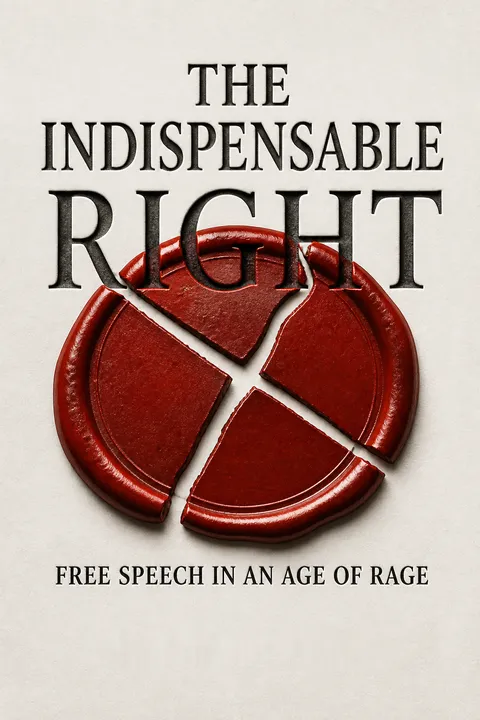
The Indispensable Right: Free Speech in an Age of Rage by Jonathan Turley examines free speech history from colonial America to present day. Most reviewers praise Turley's thorough historical analysis showing how leaders who championed free speech often suppressed dissent once in power. The book covers the Alien and Sedition Acts, wartime censorship, and contemporary issues including COVID-19 restrictions, January 6th, and campus censorship. Critics appreciate his balanced, non-partisan approach, though some find the writing dry or overly legalistic. Several reviewers note Turley's defense of absolutist versus functionalist interpretations of the First Amendment and his argument that free speech faces unprecedented modern threats.
People Also Read


Glossary
Rage rhetoric
Angry political expressionTurley’s term for intense or provocative expression that gives voice to deep political or social grievances. It can use violent-sounding language without itself directing a specific crime. The distinction matters because governments have often treated inflammatory speech as proof of dangerous intent, even when speakers have not planned or committed violence.
Functionalist view
Speech protected for its social functionA theory that justifies protecting speech because it supports goals such as democratic self-government, public debate, or the discovery of political truth. Turley argues that this approach can make protection conditional: speech seen as low-value or harmful to those goals may receive less protection or be excluded.
Autonomy-based view
Speech as individual libertyA theory that treats expression as an essential liberty belonging to individuals, rather than protecting it only for its contribution to democracy. Under this view, the state should not rank ideas by their perceived social value. Restrictions require a concrete justification tied to harm or unlawful conduct, not merely offensiveness or disagreement.
Bad tendency
Speech restricted for possible effectsA rationale for suppressing expression because it might encourage disorder, weaken government authority, or lead others toward unlawful acts. The standard does not require proof that the speech caused harm or that the harm was imminent. Turley presents it as a recurring justification for punishing dissent across British and American history.
Clear and present danger
Context-based danger testA standard associated with Justice Oliver Wendell Holmes’s 1919 opinion in Schenck v. United States. It asked whether speech, given its circumstances and character, created a clear and present danger of a harm the government could prevent. Turley argues that the test’s flexibility allowed courts to criminalize political speech based on predictions of possible future effects.
Brandenburg standard
Imminent incitement testThe Supreme Court’s 1969 rule for punishing advocacy of lawbreaking. Speech may be punished as incitement only when it is directed toward producing imminent lawless action and is likely to produce it. The standard narrowed the older clear and present danger approach by requiring a closer link between expression and immediate unlawful conduct.
Harm principle
Coercion to prevent harmJohn Stuart Mill’s principle that society may use coercion to prevent harm to others, rather than merely to enforce morality or protect people from offensive ideas. Turley adopts a narrow interpretation for speech, favoring restrictions tied to concrete injury or specific crimes rather than speculative effects, emotional offense, or political disagreement.
Censorship by surrogate
Government control through intermediariesTurley’s term for government efforts to suppress speech indirectly by relying on private companies, academic groups, or other intermediaries. The constitutional question is whether officials directed, coerced, or significantly encouraged a private party to restrict expression. Independent private moderation, by itself, is not necessarily government censorship.
Seditious libel
Criminalized criticism of governmentA historical speech crime used to punish criticism of a ruler, government, or public officials, often on the theory that such criticism threatened public order. In English and early American practice, truth could fail to provide a defense. Turley treats seditious libel as a model for later efforts to criminalize dissent without proving an overt act of treason.
Download PDF
Download EPUB
.epub digital book format is ideal for reading ebooks on phones, tablets, and e-readers.








