

Key Takeaways
Treat medical consensus as a hypothesis until its evidence survives scrutiny
Consensus can mislead. Marty Makary argues that medicine excels when recommendations rest on strong studies, but can cause widespread harm when opinion is presented as settled science. His examples range from peanut-allergy guidance to hormone therapy and antibiotics. A committee’s confidence, a guideline’s authority, or a familiar phrase in medical training does not establish that a treatment works. The practical habit is to ask what evidence supports a recommendation, how strong it is, and whether uncertainty is being acknowledged.
Humility protects trust. Makary’s recurring alternative to false certainty is a plain admission: the evidence is incomplete, or the answer is not yet known. That does not mean rejecting medicine. It means distinguishing reliable care from confident guesswork, and updating advice when better research arrives.
The book’s most durable contribution is a distinction between expertise and certainty. Expertise is not the ability to sound sure; it is the capacity to explain how a claim was tested and what could change the conclusion. That distinction matters beyond health care, wherever institutions convert provisional findings into rules. Still, skepticism needs its own discipline. A recommendation being wrong once does not make its opposite correct, and an appealing dissenting theory does not become sound evidence merely because authorities resisted it. The strongest posture is neither obedience nor reflexive contrarianism, but calibrated trust.
In peanut prevention, avoidance advice reversed the immune lesson
A precaution backfired. In 2000, the American Academy of Pediatrics advised high-risk infants and some mothers to avoid peanuts, despite the cited evidence not showing that maternal peanut consumption caused allergy. Many families and pediatricians applied the advice broadly. Makary describes rising peanut allergies alongside this policy, then the reversal that followed better research.
Exposure changed the outcome. Observations from Israel, where infants commonly ate peanut snacks, prompted Gideon Lack to test early exposure. In a randomized trial of 640 infants, introducing peanut during infancy was associated with an 86% reduction in peanut allergy by age five compared with avoidance. The book presents this as a striking failure of confident guidance issued before a decisive trial. It is a history of public-health policy, not individual medical instructions.
This episode shows why biological mechanisms and clinical outcomes need to meet. The idea of immune tolerance made early exposure plausible, but the randomized trial mattered because plausible mechanisms alone cannot tell clinicians what happens in children. The institutional failure was not simply that experts guessed incorrectly. It was that uncertain advice hardened into a near-universal rule, while a basic test of that rule was delayed. The case also cautions against treating “more exposure” as a universal principle: the timing, dose, and individual risk matter, which is why prevention guidance belongs with carefully designed evidence and clinical judgment.
A dramatic press release can outlive the data it misstates
The WHI alarm. In 2002, investigators announced that hormone replacement therapy, or HRT, increased breast cancer risk by 26%. The announcement prompted fear, reduced prescribing, and an estimated 80% drop in U.S. prescriptions. Makary argues that the published Women’s Health Initiative results did not establish a statistically significant increase in breast cancer, despite the forceful public message. He recounts how study investigators were given little time to review the paper before publication, and how dissenting coauthor Robert Langer challenged its interpretation.
Context changes the question. The trial participants began treatment at an average age of 63, while the book’s cited evidence on benefits focuses on women starting closer to menopause. Estrogen-only and combined HRT also differ. Makary describes potential relief of menopausal symptoms and other reported benefits, while acknowledging that HRT is not suitable for everyone.
The central lesson is about communicating statistical uncertainty, not a blanket verdict on HRT. A relative-risk headline can sound decisive even when the underlying estimate is imprecise, and a study of one population or formulation may not answer every clinical question. The book effectively highlights the harm caused when a dramatic interpretation becomes the only remembered result. Its own strong claims deserve the same scrutiny: evidence about symptom relief, cancer outcomes, and long-term prevention should be considered separately, with treatment decisions shaped by a patient’s circumstances rather than a counter-dogma.
Prescribe antibiotics for infections, not for reassurance
The gut is an ecosystem. The microbiome is the community of bacteria and other organisms living in the body, especially the gut. It contributes to digestion, immune function, and other processes. Antibiotics can save lives, but unnecessary courses also disrupt this community and cause direct adverse effects. Makary cites research estimating that about half of U.S. antibiotic prescriptions are unnecessary, and a study finding that one in five hospitalized patients given antibiotics experienced an adverse effect.
Risk is not proof of cause. Studies link early antibiotic exposure with later conditions including asthma, obesity, and inflammatory bowel disease. Animal experiments support the possibility that altered gut communities affect metabolism and inflammation. These findings raise serious questions, but observational links in people do not establish that antibiotics alone caused each disease. The book’s point is to use antibiotics when indicated and to stop treating them as harmless.
Antibiotic stewardship is a classic collective-action problem. A prescription may feel like a small convenience for one patient, while resistance and ecological disruption accumulate across many people. That makes the decision different from weighing only immediate side effects. At the same time, the microbiome is complex, and associations can reflect the illness that led to treatment as well as the drug itself. The most defensible conclusion is therefore practical but measured: avoid antibiotics when they cannot help, use them promptly when needed, and improve research capable of separating treatment effects from the underlying disease.
Question food rules that confuse dietary cholesterol with cardiovascular risk
A simple story took hold. After President Eisenhower’s heart attack, physiologist Ancel Keys argued that dietary fat contributed to heart disease. His theory helped shape influential advice to limit fat and cholesterol. Makary recounts criticism of Keys’s country comparisons, the sidelining of rival explanations, and large studies that did not show people lived longer on low-fat diets. He also notes that dietary cholesterol and blood cholesterol are not the same thing, and that the body makes much of its own cholesterol.
Do not replace one slogan with another. The book argues that dietary cholesterol has not been shown to be a major cause of cardiovascular disease and describes how low-fat foods often contained more refined carbohydrates. It does not establish that every high-fat diet is healthy. Makary acknowledges that food choices can affect blood markers and discusses other cardiovascular risks.
The episode is less a license to ignore nutrition than a warning about turning one biomarker into a complete theory of disease. Dietary patterns, metabolic health, and cardiovascular outcomes are different levels of analysis; evidence about one does not automatically settle the others. The book is persuasive when it asks readers to inspect how a guideline was built and whether outcomes such as mortality were measured. Its historical case is also contested, so the best takeaway is methodological: do not infer that a food is dangerous or protective from a simplified chain of reasoning alone.
When evidence threatens identity, people raise the evidentiary bar
Beliefs defend themselves. Cognitive dissonance is the discomfort people feel when new information conflicts with what they already believe. Psychologist Leon Festinger’s work helps explain why people may dismiss inconvenient evidence or reinterpret it to preserve their existing view. In one experiment described by Makary, participants paid only a dollar to complete a tedious task later described it as more enjoyable than participants paid twenty dollars. They appeared to justify the effort by changing how they remembered the task.
Medicine has its own examples. Makary describes surgeons who kept demanding additional randomized trials after studies showed that antibiotics could treat some uncomplicated appendicitis without surgery. The relevant evidence accumulated, yet practice changed slowly. He connects this resistance to effort justification: people may defend a difficult training or work practice because admitting it was unnecessary would make past hardship harder to explain.
This is a useful model for recognizing motivated reasoning without assuming that every disagreement is bad faith. The surgeon who asks for more evidence may be protecting patients, professional identity, income, or some combination; the mechanism alone cannot tell which. A practical safeguard is to set evidentiary standards before results arrive, then apply them consistently to favored and unfavored ideas. Otherwise, “show me more data” can become an endlessly movable threshold. Good scientific culture makes changing one’s mind a sign of competence, not a confession of weakness.
Protect dissent, disclose uncertainty, and give patients access to evidence
Institutions can defend themselves. Early in the AIDS crisis, clinicians warned that infected blood could transmit HIV, but blood-bank organizations and public officials repeatedly minimized the risk. A Stanford team developed a screening test in 1983, yet routine blood screening took years to arrive. Makary links the delay to leaders’ fear that public concern would undermine blood donation. Patients, including people with hemophilia, paid a devastating price.
Transparency is a safety measure. The book also questions the old practice of transfusing patients by fixed thresholds or automatically giving two units, and criticizes barriers to patients seeing test results. Its broader concern is that journals, professional societies, and funding bodies can suppress dissent or reward familiar ideas. Review, debate, and access to information cannot guarantee correct decisions, but they make hidden assumptions easier to challenge.
This chapter joins scientific openness to patient autonomy. The two are related: when patients can see information and clinicians can contest institutional guidance, errors have more routes to discovery. Yet openness is not synonymous with publishing every claim without review. Medical misinformation can also cause harm, so the challenge is to create accountable processes that scrutinize evidence without punishing disagreement itself. A system should make it easier to test claims, correct errors, and communicate uncertainty, while keeping clinical decisions grounded in the best evidence available.
In childbirth, humane low-tech care can complement high-tech rescue
Routine is not always care. Makary describes past practices that separated newborns from mothers, cut the umbilical cord immediately, and treated premature infants as though they could not feel pain. Some preemies were even denied early feeding. The book contrasts those routines with evidence supporting delayed cord clamping and skin-to-skin contact when safe. One hospital program led by neonatologist Arpitha Chiruvolu reported a 25% increase in breastfeeding, alongside reductions in NICU admissions and postpartum depression.
Use intervention deliberately. Some babies need urgent resuscitation, antibiotics, or cesarean delivery. The point is not to reject medical technology, but to avoid applying it automatically. Makary also describes tracking whether procedures such as C-sections are appropriate, and how many women can consider vaginal birth after a previous C-section. Better measurement can reveal when common practice varies more than patient need would justify.
The chapter’s strongest insight is that humane care and technical competence are not competing ideals. Skin-to-skin contact may be a clinical practice, not merely a sentimental gesture, while intensive care remains essential for babies who need it. The key is context: a practice that benefits many healthy newborns cannot be imposed when a baby requires immediate treatment. Measuring intervention rates can expose outliers, but rates alone do not prove poor care. They are prompts for case review, not substitutes for understanding each mother and child.
Target ovarian cancer prevention at the fallopian tubes, not healthy ovaries
The assumed origin changed. Research described by Makary found that the most common aggressive ovarian cancer, serous cancer, often begins in the fallopian tubes and spreads to the ovaries. That discovery challenges decades of removing healthy ovaries in some women to prevent a cancer believed to originate there. The book explains that ovaries continue to produce hormones after menopause, so removing them can have consequences beyond fertility.
A promising option needs limits. Removing the fallopian tubes while preserving the ovaries may reduce cancer risk when someone is already having certain abdominal or gynecologic procedures. A Canadian observational study cited in the book found one serous cancer among women whose tubes were removed, compared with nineteen in a comparison group. The author supports discussing the option in appropriate settings, but stresses that evidence is not sufficient to recommend standalone surgery for every woman.
This case illustrates how better knowledge of disease origin can make prevention more precise. It also shows why the word “prevention” should not end the conversation: the absolute risk, surgical risk, age, fertility plans, and hormone effects all matter. Observational comparisons are encouraging but can be affected by differences between groups, and they do not settle who benefits most. The appropriate response is to make the option visible, explain the uncertainties, and avoid converting a promising procedure into another universal rule.
Test today’s certainties before turning them into population-wide policy
Prevention needs evidence too. Makary surveys unsettled questions including broad cancer blood tests, mammograms for low-risk women in their forties, routine fever treatment, fluoride in drinking water, tongue-tie procedures, and long-term use of GLP-1 drugs. He argues that early detection is not automatically lifesaving: a test can create false alarms and invasive follow-up without improving survival. He also warns against assuming that an intervention is self-evidently beneficial and therefore needs no study.
The parachute argument. This is the claim that an intervention is so obviously useful that it should not need a randomized trial. Makary accepts that some interventions are too obvious or unethical to test that way, but argues the exemption is often applied selectively. His proposed discipline is to state what is known, what remains opinion, and what outcomes would demonstrate real benefit.
The chapter is most valuable as a research agenda, not as a list of verdicts. Some examples have stronger evidence than others, and the book’s critiques should not be mistaken for proof that the practices are harmful. Screening, for instance, must be judged by meaningful outcomes, not simply by the number of abnormalities found. At the same time, insisting on perfect evidence before any action can also delay useful care. Good policy weighs uncertainty, potential benefit, potential harm, and the cost of waiting, then revises recommendations as evidence improves.
Analysis
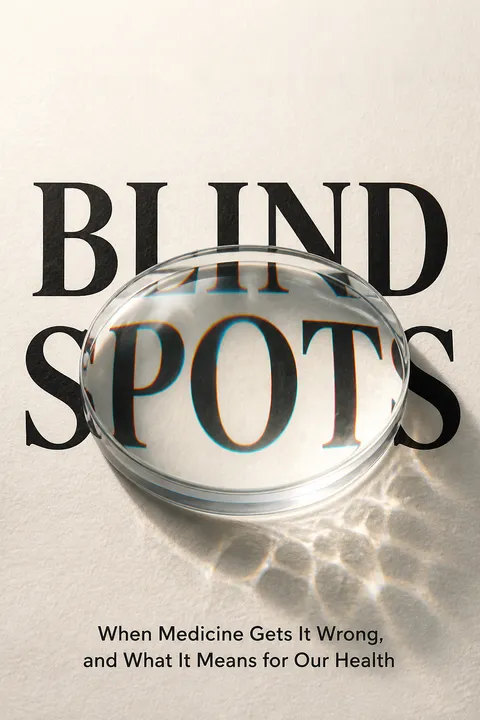
Blind Spots is a physician-journalist’s case-based argument about how medical beliefs become institutional rules. Its structure moves from vivid clinical episodes, such as peanut avoidance and contaminated blood, through psychology and medical history, toward a practical demand for more transparent evidence and better research. The stories give abstract failures human stakes: parents following trusted advice, patients harmed by unnecessary treatment, and innovators whose findings challenged established practice.
The book’s central strength is its insistence that consensus is not a substitute for evidence. It makes statistical interpretation, conflicts of interest, professional incentives, and patient autonomy accessible without flattening them into technical jargon. Its historical examples also show that medical progress depends on both discovery and adoption. Semmelweis could identify a lifesaving practice, but institutions still had to accept it; modern discoveries face similar implementation barriers.
Its greatest limitation is uneven evidentiary weight. Some chapters describe strong reversals supported by randomized trials, while others discuss associations, contested interpretations, or questions the author says remain unresolved. The narrative’s confident tone can make these different levels of certainty feel equivalent. In particular, a persuasive case that a guideline was flawed does not by itself prove the author’s preferred alternative, and observational links between treatment and later disease require careful causal analysis. The chapters on HRT, nutrition, and current preventive practices especially call for readers to separate the author’s interpretation from settled clinical guidance.
The book is therefore best read neither as a catalogue of medical mistakes nor as a counter-guideline. Its useful method is to ask what was measured, who interpreted it, what uncertainty remains, and whether the recommendation matches the evidence and the individual patient. The ultimate institutional challenge is to make correction routine: fund questions before issuing sweeping advice, disclose uncertainty, preserve respectful dissent, and communicate reversals plainly. Skepticism serves patients only when it is disciplined by the same standards applied to orthodoxy.
Review Summary
Blind Spots exposes flaws in medical practices and challenges long-held beliefs. Readers praise Makary's evidence-based approach, highlighting issues like peanut allergy misconceptions and antibiotic overuse. The book critiques medical dogma, emphasizing the need for transparency and questioning established norms. Many reviewers found it eye-opening and recommend it for both healthcare professionals and patients. While some note occasional contradictions, most appreciate Makary's call for critical thinking and reform in healthcare, describing the book as thought-provoking and essential reading.
People Also Read







Glossary
Medical dogma
Authority mistaken for evidenceMakary uses medical dogma for a health belief or practice treated as unquestionably true because authorities have endorsed it, even when the supporting evidence is weak, misread, or absent. The term describes how an opinion can acquire the force of a scientific fact through repetition, professional consensus, and institutional guidance.
Cognitive dissonance
Discomfort from conflicting beliefsA psychological state of unease that arises when new information conflicts with an existing belief or action. In the book, people may reduce this discomfort by dismissing the new evidence, changing their interpretation of it, or adjusting their belief. The concept helps explain why professionals can resist findings that challenge established practice.
Effort justification
Effort made to seem worthwhileA tendency to value an outcome more when significant effort was required to obtain it. Makary describes experiments in which people who underwent a difficult initiation rated a dull talk more favorably than those who faced an easier entry. In medicine, the idea helps explain why people may defend exhausting traditions they endured themselves.
Microbiome
Community of bodily microorganismsThe collection of bacteria, fungi, and other microorganisms living in and on the body, especially the gut. Makary emphasizes that these organisms form a complex ecosystem involved in digestion and immune function. Antibiotics and other exposures can alter this community, though the health consequences of many changes remain under investigation.
Bacteriotherapy
Treatment using beneficial bacteriaAn approach that gives patients bacteria, or molecules produced by bacteria, in an effort to restore or influence an altered microbiome. The book describes treatment using donor-derived gut microbes for recurrent Clostridioides difficile infection, as well as research into probiotics for other conditions. It is an evolving field, and benefits depend on the specific organisms and disease.
Women’s Health Initiative
Large study of women’s healthThe Women’s Health Initiative, or WHI, was a large U.S. research program that included a trial of menopausal hormone therapy. A 2002 announcement focused public attention on a reported breast cancer risk and was followed by a steep decline in HRT use. Makary argues that the public interpretation overstated what the trial’s statistical results established.
Global Appropriateness Measures
Measures of care appropriatenessA consortium described by Makary that develops measures to identify unusually high or low use of medical procedures across specialties. The aim is to flag practice patterns for peer review and quality improvement, rather than assume every procedure is necessary or unnecessary. The measures are intended to help health systems examine whether care matches clinical need.
Parachute argument
Claim that proof is unnecessaryMakary’s label for the claim that an intervention is so obviously beneficial that formal study is unnecessary, as in the analogy that parachutes need not be tested by asking people to jump without them. He argues that this logic can be reasonable in some cases but is often applied selectively to medical practices that still need careful evaluation.
Opportunistic salpingectomy
Tube removal during another operationRemoval of the fallopian tubes while a patient is already undergoing certain gynecologic or abdominal procedures, with the ovaries left in place when appropriate. The approach is intended to lower the risk of some ovarian cancers that research suggests often begin in the tubes. Makary notes that evidence supports discussing it in suitable circumstances, not treating it as universal standalone surgery.
FAQ
What's Blind Spots: When Medicine Gets It Wrong, and What It Means for Our Health about?
- Exploring medical misconceptions: The book delves into common misconceptions and dogmas in modern medicine that can lead to harmful health recommendations.
- Challenging established norms: It discusses how groupthink and resistance to new ideas can hinder progress in healthcare, emphasizing the importance of questioning established practices.
- Real-life implications: Through case studies, such as the peanut allergy epidemic, the book illustrates the real-world consequences of medical blind spots on patients' health.
Why should I read Blind Spots by Marty Makary?
- Awareness of medical dogma: It helps readers understand the pitfalls of modern medicine and the importance of questioning medical advice.
- Empowerment through knowledge: The book encourages readers to ask for evidence behind health recommendations, fostering a more informed approach to personal health.
- Engaging storytelling: Makary's narrative style makes complex medical topics accessible and relatable, using personal anecdotes and case studies.
What are the key takeaways of Blind Spots?
- Questioning medical authority: The book emphasizes the importance of questioning medical recommendations and seeking evidence-based answers.
- Understanding the microbiome: It highlights how antibiotics can disrupt the microbiome, leading to health issues, and stresses careful antibiotic use.
- Impact of dietary cholesterol: The book debunks myths about dietary cholesterol's impact on heart disease, encouraging a reevaluation of dietary guidelines.
What are the best quotes from Blind Spots and what do they mean?
- “Just memorize it for the exam.” This reflects the rote learning culture in medical education, discouraging critical thinking.
- “The ability to determine which infants are high risk is imperfect.” It underscores flaws in medical guidelines, calling for a nuanced understanding of risk.
- “We can enact health care reform... but if we continue to recklessly issue health recommendations... we’ll continue to struggle.” This emphasizes the need for evidence-based medicine over consensus-driven recommendations.
How does Blind Spots address the issue of over-medicalization?
- Critique of current practices: Makary argues that many interventions are performed without sufficient evidence, leading to potential harm.
- Historical context: The book provides examples of how medical practices have evolved, often swinging between extremes.
- Advocacy for patient-centered care: It calls for a more patient-centered approach, promoting informed decision-making over a one-size-fits-all model.
What is the significance of the peanut allergy epidemic discussed in Blind Spots?
- Flawed recommendations: The book details how recommendations for peanut avoidance led to an increase in allergies, illustrating the dangers of guidelines without solid evidence.
- Role of early exposure: It highlights research showing early introduction of peanuts can reduce allergy risk, challenging previous dogma.
- Consequences of groupthink: The case serves as a cautionary tale about groupthink leading to widespread harm in public health.
How does Blind Spots challenge traditional views on cholesterol and dietary fat?
- Debunking cholesterol myths: The book argues dietary cholesterol doesn't significantly impact heart disease risk, challenging long-held guidelines.
- Role of inflammation: Makary suggests inflammation, driven by refined carbohydrates, is a more significant factor in heart disease.
- Encouraging a balanced diet: The author advocates for including healthy fats in a balanced diet, promoting a holistic approach to nutrition.
What psychological concepts does Blind Spots explore in relation to medical beliefs?
- Cognitive dissonance: The book discusses how it can lead individuals to reject new information contradicting their beliefs.
- Effort justification: Makary explains how people justify past efforts, even with new evidence, hindering progress.
- Groupthink in medicine: The author highlights how groupthink silences dissenting opinions, leading to adherence to flawed practices.
How does Blind Spots suggest improving patient care?
- Emphasizing evidence-based practices: Makary advocates for treatments grounded in solid research.
- Encouraging patient involvement: The book stresses involving patients in care decisions, empowering them to ask questions.
- Addressing systemic issues: It calls for systemic changes prioritizing patient welfare over profit, advocating for transparency.
What are some common misconceptions in medicine discussed in Blind Spots?
- C-Section necessity: The book challenges the idea that a C-section must always follow a previous one, citing successful VBAC rates.
- Routine induction of labor: Makary critiques the ARRIVE trial, arguing its methodology led to unnecessary interventions.
- Oxygen use in newborns: It highlights the outdated practice of administering 100% oxygen to newborns, which can cause harm.
What role does humility play in Blind Spots?
- Acknowledging limitations: Humility is essential for recognizing limitations and the evolving nature of medical knowledge.
- Encouraging open dialogue: The book advocates for discussions about uncertainties, fostering an environment of questioning and learning.
- Patient trust: Demonstrating humility helps build trust with patients, leading to better communication and care.
What are the implications of the findings in Blind Spots for future medical practices?
- Need for continuous research: The book underscores the importance of ongoing research to validate or refute current practices.
- Cultural shift in medicine: Makary suggests a shift towards humility, open-mindedness, and adaptation to new information.
- Focus on patient outcomes: Future practices should prioritize patient outcomes and quality of life over procedural or profit-driven approaches.
About the Author


Download PDF
Download EPUB
.epub digital book format is ideal for reading ebooks on phones, tablets, and e-readers.








