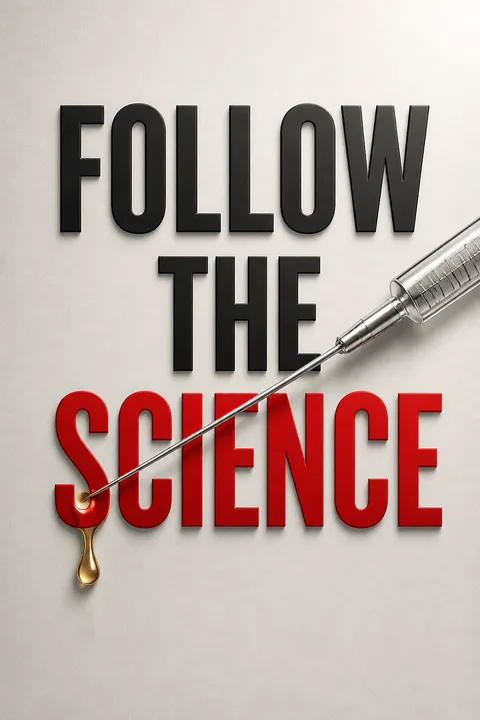


Key Takeaways
Follow a safety signal before it becomes an official warning.
Signals deserve attention. Attkisson’s investigations began with the 2002 smallpox vaccination restart after 9/11. The vaccine carried known risks, and early monitoring recorded heart inflammation and deaths among recipients. She later found that NBC correspondent David Bloom, who died of a blood clot after military vaccinations, had not been included in the count she was investigating. Her reporting helped bring his case to official attention. She also reported on Army reservist Rachel Lacy, whose death the military later said was likely related to her vaccinations.
A signal is not proof. The book argues that adverse events are widely underreported and urges more scrutiny of patterns. Reports can reveal questions worth investigating, but they cannot by themselves show that a medicine caused an illness.
What's valuable here is the distinction between noticing a pattern and waiting for an institution to confirm it. In safety science, early warnings often begin as scattered reports, not definitive trials. But the same reports lack reliable comparison groups and can be affected by coincidence, underlying illness, or reporting bias. Treating them as leads preserves both vigilance and rigor: investigate promptly, communicate uncertainty, and avoid turning temporal sequence into a causal verdict.
Ask who paid for the evidence, not just who published it.
Funding shapes incentives. The book describes industry-funded researchers, medical spokespeople presented as independent, and articles written by drug-company contractors but signed by doctors. One extended case concerns biologist Tyrone Hayes, hired by Novartis to study atrazine, a widely used herbicide. Hayes says his findings about altered frog development met resistance. After he left the project and published further work, internal Syngenta documents later revealed plans to discredit him, influence online searches, and recruit outside voices to defend atrazine.
Disclosure matters. Attkisson also recounts how drug companies referred her to doctors with undisclosed financial ties to the products they defended. The concern is not that funding automatically makes research false, but that hidden interests make it harder to judge how evidence was produced.
This is a strong application of principal-agent thinking: researchers, journals, and professional groups can serve patients in principle while depending financially on parties with commercial interests. Disclosure helps readers assess that tension, but it does not settle whether a finding is sound. A better audit asks whether methods were prespecified, data are accessible, independent teams can reproduce results, and conclusions survive scrutiny from investigators with different incentives.
Protect informed consent even when researchers fear it will limit recruitment.
Consent is substantive. In the government-funded SUPPORT study, 1,316 extremely premature infants were assigned to different oxygen ranges. Researchers sought guidance for future care, but parents interviewed by Attkisson said they were told the project offered support or collected routine information. The study used altered monitor readings to keep staff from adjusting oxygen levels, and the consent forms did not clearly describe foreseeable risks such as blindness, neurological damage, or death, according to the federal research ethics office.
Accountability weakened. The ethics office initially found serious consent deficiencies, then suspended corrective action after substantial pushback. At a public meeting, some researchers argued that fully describing risks could discourage participation. The book connects this episode to the history of Tuskegee, which helped establish modern protections for people enrolled in research.
The case shows why consent is not paperwork attached to scientific progress. It is the mechanism that lets participants decide whether the knowledge sought is worth the risks imposed on them. Research involving critically ill newborns makes the ethical stakes especially sharp because parents are under pressure and cannot simply weigh options as detached observers. Streamlined consent can be appropriate for genuinely minimal-risk work, but that category needs independent review rather than self-certification by investigators.
A peer-reviewed label cannot repair a compromised research pipeline.
Publication is not validation. Attkisson describes ghostwritten articles, unpublished negative findings, selective analysis, and study contracts that give sponsors control over data or publication. In one example, a researcher who published unfavorable results on an AIDS vaccine was sued by the company that made it. The book also examines the Alzheimer’s drug aducanumab: its maker stopped two large studies after an interim analysis suggested they were futile, then argued that a later review of the data supported approval. The FDA approved the drug despite its advisory panel’s overwhelming opposition.
The pipeline matters. A journal’s review comes after decisions about what to study, which outcomes to measure, what data to share, and which results to publish. Any weakness earlier in that chain can limit what peer review can catch.
The key insight is institutional rather than cynical: no single checkpoint can guarantee trustworthy evidence. Peer review can detect flaws, but it is not a substitute for public protocols, complete reporting, transparent data, and post-publication correction. The book’s critique is persuasive when it identifies specific vulnerabilities. Its broader suspicion of medical journals needs more careful calibration, since uneven quality does not mean every published finding is unreliable.
Interrogate how agencies define, count, and communicate health risks.
Numbers depend on choices. During Covid, Attkisson challenged official claims about transmission, mortality, and risk to children. She argues that early fatality estimates were inflated when they used confirmed cases rather than all infections, including asymptomatic ones. She also cites an analysis identifying twenty-five statistical errors in CDC communications, many of them making Covid seem more dangerous to children. In Colorado, she interviewed coroners who said deaths from causes such as gunshot wounds were listed as Covid-related after a positive test.
Labels shape the ledger. The book also notes that definitions of “fully vaccinated” changed as infections occurred after vaccination, and that the CDC changed its vaccine definition in 2021. These examples raise a crucial question: are shifts in terminology and measurement explained clearly enough for the public to interpret the data?
Public statistics are built from definitions, denominators, coding rules, and time windows. Those choices can change the apparent size of a risk without changing the underlying events. That makes transparent methods essential, especially during emergencies when decisions move quickly. Yet a revised definition is not automatically evidence of bad faith; scientific categories sometimes need updating. The fair test is whether agencies publish the rationale, preserve earlier versions, and let outside analysts check the numbers.
Apply equal evidence standards to official treatments and their challengers.
Emergency choices need testing. Attkisson recounts the fight over hydroxychloroquine and ivermectin, older medicines that some clinicians and researchers proposed for Covid. She argues that public officials and media outlets dismissed these treatments too quickly, while favoring remdesivir, a newer and more expensive drug. She also describes financial ties between some members of a government treatment panel and remdesivir’s maker, and reports that restrictions on hydroxychloroquine made some studies harder to conduct.
The evidence remains the issue. The book cites studies and doctors who believed the older medicines could help, especially early in illness. But selected studies, patient stories, and disclosed conflicts do not by themselves establish that a treatment works. Nor does institutional endorsement prove that it does. The same standards of controlled comparison and transparent reporting should apply to every option.
The most useful principle is symmetry. A treatment should not be rejected because it is politically unfashionable, nor accepted because a doctor reports success in practice. Observational experience can identify promising hypotheses, while randomized comparisons can help distinguish treatment effects from differences in patients, timing, and care. During a crisis, the danger runs in both directions: bureaucratic rigidity can block useful options, while enthusiasm for a cheap or familiar remedy can outrun evidence.
Trace institutional ties, but do not mistake suspicion for proof.
Origins deserve independent inquiry. Attkisson argues that Covid probably emerged from a Wuhan laboratory and that US funding supported gain-of-function research, in which organisms are altered to give them new properties. She points to studies involving US and Chinese researchers, grants from US agencies, and emails showing that scientists with relevant ties helped shape influential arguments for a natural origin. She also recounts the Havana Syndrome episode, where a theory of foreign attacks gained public traction before US intelligence assessments found no supporting evidence.
Connections raise questions. The book makes a strong case for disclosing who funded research and who participated in public explanations. Those connections can reveal conflicts that deserve investigation. But they do not, on their own, establish how Covid began or prove that a particular account was deliberately false.
Conflicts of interest are most useful as prompts for verification, not as verdicts. A scientist’s involvement in a research program may compromise the independence of an assessment, but it does not automatically make the assessment wrong. This distinction is central to credible investigative work: document the relationship, test the claim against primary evidence, and state what remains unknown. The same discipline should apply whether the claim comes from an agency, a company, or an alternative source.
Take persistent patient symptoms seriously without assuming their cause.
Patients can reveal blind spots. The book profiles Maddie de Garay, who became severely ill after taking part in a Covid vaccine trial, according to her family. Her symptoms included loss of mobility and seizures; she was later diagnosed with a nerve disorder and received ongoing treatment. Attkisson also interviews physician Jordan Vaughn, who describes treating patients with persistent symptoms after Covid or vaccination and investigating possible microclots. He says his clinic had treated more than 1,100 such patients.
Observation is a starting point. These stories illustrate how patients can be dismissed when routine tests do not explain what they feel. They also show why personal accounts and a clinician’s treatment experience cannot establish a general cause. The book uses the term “Long Vax” for lasting illness attributed to vaccination, but the proposed mechanisms and extent of that connection remain unsettled.
Taking symptoms seriously is a basic requirement of good clinical practice, not an endorsement of a particular explanation. Patient reports can reveal patterns that standard diagnostic systems miss, and clinicians who listen may generate useful hypotheses. Those hypotheses still need replication, comparison groups, and careful differential diagnosis. The strongest approach avoids both reflexive dismissal and premature labeling, especially when patients are vulnerable and the underlying illness may have several overlapping causes.
Verify claims at the source, and report adverse events responsibly.
Use an audit trail. Attkisson advises readers to check a source’s track record, inspect financial ties, compare competing accounts, and look for original studies or documents rather than relying on repeated summaries. She describes using Freedom of Information requests to obtain records, while warning that agencies may delay or narrow searches. Her practical guidance also includes filing reports through VAERS for vaccine-related events and MedWatch for other medicines.
Reporting is not diagnosis. These systems collect events after treatment so that patterns can be investigated; a report does not prove that a medicine caused the event. The book emphasizes that clinicians and patients should not need to establish causation before reporting. Its broader point is to widen the evidence base while keeping conclusions proportionate to what the available data can show.
The practical advice is strongest when treated as disciplined triangulation, not a hunt for sources that confirm prior doubts. Checking primary materials, searching for financial relationships, and comparing independent analyses can expose omissions in official or commercial accounts. The same scrutiny must apply to sources Attkisson recommends. A healthy information practice does not replace one trusted authority with another; it compares claims, checks methods, and remains willing to revise conclusions.
Analysis
Follow the Science is an investigative argument told through the reporter’s own conversion from trust in medical institutions to skepticism of their incentives. Its narrative engine is a recurring discovery: a troubling signal appears, an insider or patient gives it context, and institutional responses seem designed to minimize the question. The cases range from smallpox vaccination and the SUPPORT neonatal study to drug marketing, Covid policy, and disputed treatments. The connecting thesis is that commercial dependence can shape not only what research is funded, but what reaches doctors and the public as established knowledge.
The book is most persuasive when it documents concrete process failures: undisclosed financial ties, weak consent, sponsor control of research, or statistical errors that can be checked against records. These examples make a compelling case for transparency, independent oversight, and better adverse-event reporting. Its strongest practical lesson is methodological: examine incentives and source material rather than treating titles or institutional prestige as guarantees.
Its central weakness is that the same skepticism is not always applied evenly. Financial ties can create bias, but they do not prove a conclusion false; an event after vaccination is not proof of causation; and a collection of favorable studies does not establish a treatment’s effectiveness. The book often moves from documented conflicts to claims of coordinated deception, and from contested evidence to confident conclusions, particularly around vaccines, Covid treatments, and the pandemic’s origins. Those claims require independent appraisal rather than acceptance or dismissal as a bloc.
The book is therefore best read as an adversarial audit, not a neutral survey of medical evidence. Its investigative accounts can teach readers where safeguards fail and what questions to ask. They cannot, by themselves, settle every scientific controversy they raise. The most faithful response to its challenge is not blanket distrust, but symmetrical scrutiny: demand evidence from agencies and companies, and demand it just as firmly from critics and alternative practitioners.
Review Summary
Follow the Science exposes corruption in the pharmaceutical industry and its influence on health information. Attkisson argues that corporate interests often shape public health policies at the cost of transparency and patient welfare. The book covers topics like vaccine safety, COVID-19 misinformation, and conflicts of interest in medical research. While some readers praise Attkisson's investigative work, others criticize her for promoting controversial viewpoints. The book challenges readers to question established narratives and seek out independent sources of health information.
People Also Read



Glossary
SUPPORT
Premature infant oxygen trialAn NIH-funded clinical study formally titled Surfactant, Positive Airway Pressure, and Pulse Oximetry Randomized Trial. It enrolled 1,316 extremely premature infants and compared different oxygen targets to inform future treatment. Attkisson focuses on allegations that parents were inadequately informed of risks and that modified monitors affected bedside decisions.
Vaccine Adverse Event Reporting System (VAERS)
Vaccine event reporting databaseA US reporting system that collects reports of health problems occurring after vaccination. Patients, family members, and health professionals can submit reports, which can help identify patterns for further investigation. A report records an event after vaccination; it does not establish that the vaccine caused the event.
Vaccine Court
Federal vaccine injury claims processThe special process established under the National Childhood Vaccine Injury Act of 1986 for claims involving vaccine injuries. It operates within the US Court of Federal Claims and uses procedures different from ordinary civil lawsuits. The book discusses both its compensation decisions and advocates’ concerns about proof requirements, deadlines, and access to evidence.
Omnibus Autism Proceeding
Grouped vaccine autism claimsA set of proceedings in the federal vaccine compensation system that grouped autism-related claims and tested selected theories through representative cases. The process was intended to guide how similar claims would be handled. Attkisson focuses on the proceedings’ decisions and on the separately compensated case of Hannah Poling.
Ghostwriting
Hidden authorship of medical articlesA practice in which a company or its hired writers prepare a medical article that is published under the name of a doctor or researcher who did not write it. When sponsorship and authorship are concealed, readers may mistake promotional material for independent scholarship and may not see how benefits or risks were framed.
Gain of function
Research that alters organism traitsResearch that changes an organism to give it a new or enhanced property. In the book’s discussion of coronavirus research, the term refers to experiments intended to alter viruses and investigate their potential to infect human cells. The practice raises questions about scientific purpose, oversight, and the risks of accidental release.
Long Vax
Persistent illness attributed to vaccinationA term used in the book for ongoing symptoms or illness that patients or clinicians attribute to Covid vaccination. Attkisson discusses reported symptoms, possible mechanisms such as spike protein effects and microclots, and clinicians’ efforts to treat patients. The term describes a proposed category and does not itself establish causation or prevalence.
Evidence-Based Medicine
Care guided by available evidenceAn approach to medical decisions that uses the best available research evidence. Attkisson argues that its application can be distorted when research is selectively funded, published, or interpreted, and when guidelines become slow to reflect new findings. The term does not mean that one study or a single evidence hierarchy can answer every clinical question.
About the Author
Other books by Sharyl Attkisson

Download PDF
Download EPUB
.epub digital book format is ideal for reading ebooks on phones, tablets, and e-readers.








