

Key Takeaways
When drugmakers control the evidence, even good doctors can prescribe harm.
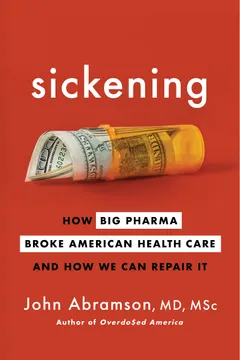
The central imbalance. The United States spends 17.7 percent of its economy on health care, compared with an average of 10.7 percent in eleven other wealthy countries, yet Americans fare worse on measures of health and care. Abramson argues that pharmaceutical companies help drive this contradiction by shaping not only drug prices but the medical knowledge used to choose treatments. They often fund, design, analyze, and publicize research about their own products, while keeping the underlying data confidential.
Innovation is not enough. The book notes that only about one in eight newly approved drugs offers a previously unavailable benefit. When evidence is selected to support sales, modest or nonexistent advantages can look like breakthroughs, and costs rise without corresponding gains in health.
The argument is strongest when it identifies a mechanism, not merely a villain: whoever controls the evidence can shape what counts as a reasonable medical choice. That is a problem of institutional design familiar from corporate governance, where independent audits exist because decision-makers have incentives to present favorable accounts. The comparison between national spending and health outcomes is provocative, but it cannot by itself prove that pharmaceutical practices caused the gap. The book’s detailed cases make the narrower claim more compelling: a flawed evidence pipeline can misdirect care even when physicians are conscientious.
A journal's prestige cannot rescue a trial whose key data stay hidden.
A warning ignored. Stacey Palmer was seventeen when her doctor gave her Vioxx samples for headaches after a fall. The drug’s pivotal published study suggested a safety advantage over naproxen, but FDA records showed that the report omitted heart attacks and other serious cardiovascular outcomes. Merck knew of the risk, the New England Journal of Medicine did not promptly correct its article, and the FDA did not ensure that doctors heard the warning clearly.
Trust had consequences. Vioxx was withdrawn in 2004 after millions of Americans had used it. Researchers estimated it contributed to 40,000 to 60,000 American deaths. The tragedy, as Abramson presents it, was not simply a bad drug. It was the failure of the manufacturer, journal, and regulator to make the evidence useful to prescribers in time.
The case exposes a crucial distinction between peer review and verification. Experts can assess whether a paper looks methodologically plausible, but they cannot check claims against data they are not allowed to see. That makes transparency a safety feature, not a technical preference. At the same time, assigning responsibility across several institutions matters: a manufacturer’s misconduct is not identical to a journal’s editorial failure or a regulator’s weak response. Naming each failure helps reform target the handoffs where warnings can disappear.
Treat a drug's marketing story as a claim to test, not proof.
Neurontin went far beyond its approvals. Prescribing an approved drug for an unapproved condition is called off-label prescribing, and it is legal for clinicians. Manufacturers, however, may not promote a drug for those unapproved uses. Pfizer marketed Neurontin for conditions such as bipolar disorder and nerve pain even though its own studies offered little support, and one bipolar study found outcomes worse than placebo.
Evidence was curated. Pfizer promoted a small, uncontrolled study while delaying the publication of a larger negative trial. In a nerve-pain study, the company highlighted improvement within the drug group rather than the comparison with placebo. A jury found Pfizer had fraudulently promoted Neurontin and violated the federal racketeering law, tripling the award to $142 million. The book notes that the penalty was still small relative to sales.
This example makes statistical literacy a matter of patient protection. Improvement after treatment does not establish that treatment caused improvement: symptoms can ease naturally, and expectations can change how people report pain. A control group helps distinguish those effects from a drug’s contribution. The trial also shows why publishing only favorable studies is not a neutral editorial choice. A limitation is that one courtroom case cannot establish how often similar tactics occur across the industry, but it demonstrates that such conduct is possible and profitable.
Ask how many people benefit before taking a statin for low risk.
Risk changes the calculation. Jane followed cholesterol guidelines, took increasingly strong statins, and later had a heart attack. Her story does not prove the drugs caused it; it shows that guideline-based treatment can create confidence without eliminating risk. Abramson argues that evidence for statins is strongest for people who have already had a heart attack or stroke. For lower-risk people, the benefit is much smaller.
Count the absolute benefit. In the author’s analysis, roughly 100 low-risk people would need to take a statin for five years to prevent one nonfatal heart attack or stroke, with no demonstrated reduction in death. That measure is the number needed to treat, or how many people receive a treatment for one person to experience a defined benefit. Statins can still be valuable for high-risk patients.
Absolute benefit turns an abstract statistic into a decision a patient can weigh. A relative reduction can sound impressive while the chance of an event was small to begin with. The number needed to treat is also incomplete unless paired with treatment duration, adverse effects, and the patient’s priorities. The book’s critique of broad statin recommendations is useful, but its estimates depend on how risk groups and outcomes are defined. Individual decisions require current evidence and clinical advice, not a single headline number.
A newer insulin can become dangerous when its price forces rationing.
Alec could not afford treatment. After losing insurance at age twenty-six, Alec Smith learned that his insulin and supplies would cost about $1,300 a month. He rationed his insulin and died of diabetic ketoacidosis. His case shows how a drug’s clinical value is irrelevant if a patient cannot obtain it reliably.
New did not mean necessary. In 2019, the book reports, a year of commonly used insulin analogs cost about $5,224, compared with $468 for human insulin. For type 2 diabetes, reviews found the older human insulins worked about as well. For type 1 diabetes, some analogs may offer advantages, but the difference is not absolute. Abramson argues doctors should explain affordable alternatives rather than treating the newest product as the only acceptable option.
Alec’s story brings affordability inside the clinical definition of effectiveness. A treatment that works under trial conditions but is rationed in ordinary life does not deliver its intended benefit. This is a familiar implementation problem in public health: access, adherence, and outcomes are linked, so price is not separate from medicine. Still, the comparison between insulin products should not erase individual differences in dosing needs or response. The practical lesson is to make affordability an explicit part of shared treatment decisions, not a private burden patients must solve alone.
Notice how marketing turns professional trust into a sales channel.
Belief can be engineered. Drug companies do not rely only on advertisements. They use journal articles, expert lectures, guidelines, and drug representatives to deliver consistent messages that feel like scientific consensus. Abramson describes how Pfizer’s Neurontin marketing materials were designed to align what doctors heard at educational events with the conclusions published in medical articles.
Doctors are human too. Small gifts and meals can create a sense of obligation, while authoritative speakers and respected institutions make messages easier to accept. Nexium was marketed as a superior successor to Prilosec even though the author argues it offered no meaningful advantage at typical doses. OxyContin was promoted as less addictive and reliably long-acting despite contrary evidence. These cases show how branding can make a product seem clinically distinctive before its advantage is established.
The insight is not that physicians are foolish, but that professional judgment operates inside social systems. People naturally use trusted authorities and familiar cues to manage information overload. Marketing succeeds when it borrows those cues while hiding its commercial purpose. This resembles the broader problem of sponsored research in any field: disclosure helps, but it does not neutralize bias in study design, emphasis, or repetition. A useful safeguard is to ask whether a claim survives comparison with the best alternative, rather than whether it comes wrapped in scientific language.
Do not mistake the prescription market for a fair consumer market.
The buyer cannot see the whole product. In an ordinary market, customers can compare quality and price directly. In prescription medicine, patients depend on clinicians to select products, clinicians may not pay the price themselves, and insurance can obscure much of the cost. Meanwhile, manufacturers often control the evidence used to describe a drug’s value.
Monopoly pricing magnifies the problem. The United States allows companies to set prices for brand-name drugs without a national system to negotiate based on added benefit. Abramson reports that U.S. brand-name drug prices were about three and a half times those in other OECD countries. He cites an estimate that Americans pay $170 billion each year beyond the value provided by prescription drugs. High revenues then help fund further marketing and lobbying.
This is an information problem as much as a price problem. A market cannot reliably reward quality when buyers cannot evaluate quality and prescribers do not face the same financial trade-offs as patients. Yet price regulation alone would not settle what counts as value: a therapy may be worth more to some patients than to others, and rare diseases can complicate comparisons. Independent assessment can improve the information available, but it should make its assumptions visible and include patient priorities rather than reduce every choice to a single cost metric.
Demand meaningful clinical outcomes when approval rests on a surrogate.
A proxy is not a patient benefit. In the book’s afterword, Abramson describes the FDA’s approval of Aduhelm for Alzheimer’s disease. The drug’s major trials had been stopped after interim results suggested they were unlikely to show benefit. A later analysis found a very small change on a rating scale, below the threshold the author describes as clinically meaningful.
The risks were substantial. The manufacturer’s data showed brain swelling or bleeding on scans in 41 percent of patients receiving the high dose, compared with 9 percent receiving placebo. The FDA approved the drug despite a nearly unanimous advisory committee vote against the evidence being sufficient. The episode illustrates how a biological marker can be treated as a substitute for demonstrated improvement in daily life, even when earlier drugs targeting the same marker had not helped patients.
Surrogate measures can speed research, especially when meaningful outcomes take years to observe, but they are only useful if they reliably predict outcomes patients care about. The Aduhelm episode highlights the danger of treating biological plausibility as clinical proof. It also reveals a regulatory tension: waiting for stronger evidence can delay a genuinely helpful treatment, while premature approval exposes patients to risk and systems to expense. The appropriate response is not to reject surrogates categorically, but to require validation, transparent uncertainty, and rigorous follow-up.
Repair the evidence pipeline before expecting drug markets to self-correct.
Make verification routine. Abramson proposes that clinical trial data be available to authors, peer reviewers, and editors before results are published. Trials should compare a new product with the best available treatment, use participants resembling real patients, and assess outcomes that matter to patients. The full clinical study report, which records a trial’s methods and detailed results, can help reviewers check whether journal articles represent the evidence fairly.
Judge value independently. Health technology assessment compares the benefits, harms, and costs of treatments to help guide coverage and prescribing. Most wealthy countries use some form of it; the United States lacks a national system with authority to assess value and inform drug prices. The book also warns that health reforms such as Obamacare expanded coverage but avoided some cost controls and independent cost-effectiveness analysis.
This is a coherent institutional remedy because it addresses incentives upstream, before misleading claims become accepted practice. But transparency alone is not enough: reviewers need time, statistical skill, and independence from the organizations that benefit from favorable conclusions. Nor should an assessment agency become a single unquestioned authority. Public methods, competing analyses, patient representation, and appeal mechanisms can make such oversight more legitimate. The goal is not to suppress innovation, but to distinguish genuine clinical progress from commercially successful novelty.
Organize patients, clinicians, and payers around prevention and trustworthy evidence.
Prevention can outperform another prescription. In the Diabetes Prevention Program, people at high risk of type 2 diabetes received standard advice, metformin, or intensive counseling on diet, exercise, and behavior. After three years, the lifestyle group had lost an average of twelve pounds and reduced diabetes risk by 58 percent compared with placebo, more than the medication group did.
Reform needs a constituency. Abramson calls for health-care professionals, purchasers such as employers and unions, government, and consumers to press together for reliable evidence, affordable treatment, and attention to the social conditions that shape health. His point is that reform cannot depend on voluntary corporate restraint. The groups that pay for, deliver, and receive care must make public benefit a stronger political force.
The prevention example challenges a system that rewards treatments more readily than it rewards avoiding disease. Its success also cautions against blaming individuals when food, time, income, and safe places to exercise are unequally distributed. Lifestyle programs work best when practical support makes the healthier choice feasible. A coalition can connect those conditions to medical spending, but it must avoid treating patients as passive beneficiaries or assuming that one prevention program fits everyone. Evidence becomes more useful when communities help define both the problem and the outcome.
Analysis
Sickening is best understood as an argument about who gets to define medical knowledge. Its most persuasive evidence is granular: Vioxx trial omissions, Neurontin’s suppressed or distorted findings, and the pricing consequences of steering patients toward insulin analogs. These episodes show how commercial incentives can travel through institutions that physicians reasonably trust. The book’s larger claim, that this knowledge system helps explain America’s poor health relative to its spending, is more difficult to establish. Cross-country outcomes reflect many forces, including inequality, public health capacity, social policy, and access to care. Pharmaceutical influence is an important mechanism, but it is not a complete causal account.
The distinction matters because the book is not strongest as a case against medicine or innovation. Drugs have transformed HIV treatment, hepatitis C care, and other conditions. The sharper argument is that innovation should be judged by added patient benefit, not by novelty, sales, or a surrogate measure that has not been validated. Trust in science should depend on inspectable methods and independent verification, not institutional prestige alone.
The proposed reforms carry their own design questions. A health technology assessment agency could make price and benefit comparisons more transparent, but its choices about evidence, acceptable cost, and patient priorities would still be political. It should publish uncertainty, account for unequal access, and allow independent challenge. Likewise, wider data access needs strong privacy protections and enough expert capacity to analyze the material responsibly.
The book’s deepest contribution is to make evidence integrity part of everyday care. A doctor choosing between treatments, a patient weighing side effects, or a policymaker setting coverage rules all need the same basic things: credible comparisons, honest uncertainty, and a clear view of who benefits. Better information will not solve every failure in American health care. Without it, however, reform begins with the wrong map.
People Also Read










Glossary
Evidence-based medicine (EBM)
Care guided by researchA method of clinical practice that uses research evidence, clinical expertise, and patient circumstances to guide treatment decisions. Abramson argues that EBM is valuable but insufficient when the research reports doctors rely on cannot be independently checked against the underlying trial data.
Health technology assessment (HTA)
Comparing treatment valueA structured evaluation of a medicine or other health technology, including its clinical benefits, harms, and costs compared with available alternatives. Many wealthy countries use HTA to inform coverage and pricing decisions. Abramson argues that the United States needs an independent public system with access to complete evidence.
Asymmetry of information
One side knows moreA condition in which one party to a decision has substantially more relevant information than another. In the book, drug manufacturers possess detailed trial data while physicians, patients, and payers often see only selected summaries. That imbalance makes it difficult to judge a product’s true benefits, risks, and value.
Off-label prescribing
Prescribing beyond approvalA clinician’s use of an approved medicine to treat a condition, patient group, or dosage not specifically approved by the FDA. The practice is legal, but manufacturers generally may not promote unapproved uses. Abramson uses Neurontin to show how company marketing can encourage off-label use without adequate supporting evidence.
Number needed to treat (NNT)
Patients treated per benefitThe number of people who must receive a treatment for a specified period to prevent one defined adverse outcome or produce one defined benefit. It is calculated from the absolute difference in outcomes between treated and comparison groups. The measure helps patients understand how likely an individual benefit is.
Clinical study report (CSR)
Detailed trial recordA comprehensive document prepared for a clinical trial, containing its protocol, statistical analysis plan, methods, and detailed results. It is much more extensive than a typical journal article. Abramson argues that CSRs should be available to authors, peer reviewers, and editors before trial results are published.
Learned intermediary
Clinician between drug and patientThe role of a health-care professional who interprets medical evidence and recommends treatment to a patient. The concept reflects the clinician’s responsibility to use professional judgment rather than leave drug decisions entirely to manufacturers or advertising. Abramson argues that distorted evidence can undermine this intermediary role.
Healthy-user bias
Healthier people choose treatmentA distortion that can occur in observational research when people who choose a treatment differ in important ways from those who do not. For example, people receiving a therapy may also have greater resources or use more preventive care. Their better outcomes may therefore be wrongly attributed to the treatment itself.
VIGOR study
Merck trial of VioxxA Merck-sponsored study comparing Vioxx with naproxen in people with arthritis. It was designed to examine gastrointestinal outcomes. Abramson argues that the journal article reporting its results omitted cardiovascular events and overstated reassurance about Vioxx’s safety, while FDA records contained a fuller account.
Diabetes Prevention Program
Trial of diabetes preventionA publicly funded study that assigned people at high risk of type 2 diabetes to standard advice with placebo, standard advice with metformin, or intensive lifestyle counseling. The study found that the lifestyle intervention reduced diabetes risk more than metformin over three years, demonstrating the value of testing prevention alongside drug treatment.
ACCORD study
Trial of tight glucose controlA major study comparing intensive blood-sugar lowering with standard treatment in people with type 2 diabetes. It was stopped early after the intensive-treatment group experienced higher mortality and more severe hypoglycemia. Abramson cites it as evidence against assuming that tighter control is always safer or more beneficial.
Download PDF
Download EPUB
.epub digital book format is ideal for reading ebooks on phones, tablets, and e-readers.








