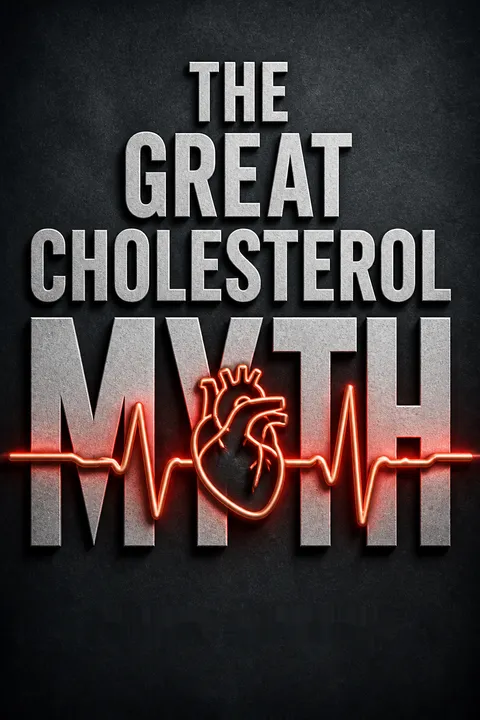


Key Takeaways
Look beyond total cholesterol; the book argues it cannot map heart risk
A number is not a diagnosis. Bowden and Sinatra challenge the idea that total cholesterol, by itself, explains or predicts heart disease. They emphasize that cholesterol is essential to cell membranes and is used to make hormones, vitamin D, and bile acids. Their objection is not that blood measurements contain no information, but that one total number can conceal very different underlying risks. The authors cite studies in which many heart attack patients had ordinary cholesterol readings, while many people with high readings had no diagnosed heart disease.
Their showcase is the Lyon Diet Heart Study. Among 605 people who had survived a heart attack, the group advised to follow a Mediterranean-style diet had substantially fewer deaths, while its cholesterol levels did not change. The authors take this as evidence that prevention depends on more than lowering cholesterol. One study, however, cannot establish that cholesterol is irrelevant.
The book is strongest when it asks readers to distinguish a risk marker from the disease process itself. A single lab value rarely captures a complex illness, and the authors are right to resist treating a number as a complete explanation. But the leap from “total cholesterol is an incomplete predictor” to “cholesterol is harmless” is not justified by that observation. Modern cardiovascular evidence identifies apoB-containing particles, including LDL, as causal contributors to artery disease. The practical lesson is not to ignore cholesterol tests, but to interpret them alongside overall risk and other clinical information.
Judge LDL particle patterns, not just the old good-versus-bad labels
The particles differ. Cholesterol travels through blood inside lipoproteins. The authors argue that LDL is not a single uniform substance: they describe larger, buoyant LDL as pattern A and smaller, denser LDL as pattern B, which they consider more likely to enter artery walls and become damaged. They also distinguish HDL subtypes and draw attention to Lp(a), a lipoprotein they describe as particularly inflammatory and involved in clotting. In this model, the familiar labels “good” HDL and “bad” LDL are too crude to capture particle differences.
They suggest looking deeper. The book points to particle-size tests and to the triglyceride-to-HDL ratio as useful clues about metabolic health and LDL pattern. These measures can add context, but the book’s claim that particle size is the only cholesterol information that matters goes too far.
This section’s lasting contribution is its insistence that biological categories often contain meaningful subtypes. “LDL” is a shorthand, not a complete portrait of an individual’s lipoprotein profile. Yet particle size should not be mistaken for a replacement for particle number or the wider clinical picture. Contemporary risk assessment gives substantial weight to the burden of apoB-containing particles, while also considering blood pressure, diabetes, smoking, age, and prior cardiovascular disease. The useful habit is to ask what a test measures, what it misses, and whether the result would actually change care.
Focus on arterial injury and inflammation, not cholesterol in isolation
The artery wall is active tissue. The authors describe the endothelium, the thin inner lining of blood vessels, as a key site where vascular damage begins. They propose that oxidation, or chemical damage from free radicals, and chronic inflammation make the lining more vulnerable. In their account, damaged LDL can enter the artery wall, prompt an immune response, and contribute to plaque. The image is less “cholesterol clogging a pipe” than a repair process that can become destructive when injury and inflammation persist.
Smoking illustrates their argument. The book says cigarette smoke can oxidize LDL, helping explain why a smoker with an ordinary LDL reading may still face serious risk. It also identifies chronic inflammation as distinct from the short-lived swelling around a cut. This model highlights important mechanisms, though it should not be read as proof that LDL itself is an innocent bystander.
Atherosclerosis is not passive plumbing. It involves blood particles, the vessel lining, immune cells, and processes that affect plaque stability. The book’s focus on inflammation helps make this biology easier to visualize, and its smoking example shows why risk cannot be reduced to one cholesterol value. The nuance is that inflammation and LDL are not competing explanations: retained apoB-containing particles can initiate an immune response in the artery wall. Treating inflammation as the single root cause can obscure that interaction and make a complicated chain of events look simpler than it is.
Cut sugary drinks and refined starches to improve insulin-related risk markers
The authors shift attention to insulin. Insulin helps move glucose from the blood into cells. When a person repeatedly consumes more rapidly absorbed carbohydrate than their body uses, the authors argue, insulin demand can rise and tissues may become less responsive. They connect this pattern with higher triglycerides, lower HDL, abdominal weight gain, and elevated blood pressure. They also explain glycation: excess sugar can attach to proteins, creating advanced glycation end products, or AGEs, that may damage tissues.
Fructose is a particular target. The book warns about concentrated sweeteners in soda and processed foods, while distinguishing these from whole fruit, which also contains fiber and is eaten in a different food matrix. It presents the triglyceride-to-HDL ratio as a clue to insulin resistance, not a diagnosis. Its broader practical advice is to reduce sugary drinks and highly processed carbohydrates.
This argument makes food quality and metabolic response central, rather than assuming equal calories have identical effects. That is a useful corrective to overly simple diet advice, especially when sweetened drinks and refined snacks are easy to consume in large amounts. The book sometimes treats fructose as a poison and uses strong causal language where evidence depends on dose, food form, and the person’s overall diet. Whole fruit is not nutritionally equivalent to a sweetened drink. A sound application is to reduce frequent added sugars without turning every carbohydrate, or every fruit, into a suspect.
Do not replace saturated fat with refined carbohydrates by default
The replacement matters. The authors question blanket advice to avoid saturated fat, arguing that health effects depend partly on what takes its place. They cite a meta-analysis of 21 studies, involving about 348,000 people, that found no association between saturated-fat intake and cardiovascular events. They also discuss research in which replacing saturated fat with refined, high-glycemic carbohydrates was associated with worse risk markers or more atherosclerosis progression. Their point is not that unlimited butter is beneficial, but that “low fat” can become a poor diet if the missing fat is replaced with processed starch and sugar.
They separate fat types. The book condemns industrial trans fats and questions excessive omega-6-rich vegetable oils, while favoring sources such as fish and olive oil. Its proposed ideal omega-6-to-omega-3 balance is a book claim, not a universal prescription.
Nutrition is a substitution problem: removing one food means another takes its place. This makes the authors’ question, “What replaces it?” more useful than judging a nutrient in isolation. Their critique of refined-carbohydrate replacements is supported by a broader concern about highly processed diets. Still, a meta-analysis of observational studies cannot prove that saturated fat protects the heart, and effects may differ by food source and replacement nutrient. The strongest lesson is modest: avoid industrial trans fats, prioritize minimally processed foods, and evaluate dietary advice by its actual replacement pattern.
Weigh statin benefits and harms by personal risk, not a single number
The book challenges routine prescribing. Bowden and Sinatra argue that statins’ benefits are overstated when prescriptions are based on cholesterol alone. They emphasize possible muscle symptoms, fatigue, and cognitive complaints, and explain that statins reduce production of CoQ10 through the same biochemical pathway that produces cholesterol. They also argue that some statin benefits may come from effects beyond cholesterol lowering, such as reducing inflammation.
Their number lesson is important. The authors distinguish relative risk from absolute risk. In their discussion of the JUPITER trial, a risk reduction described as 50 percent corresponds to an absolute difference of less than one percentage point over the reported period, and they estimate that roughly 120 people would need treatment to prevent one event. The book’s interpretation is polemical, however. Statins reduce cardiovascular events for many appropriately selected patients, and decisions should be made with a clinician. Do not stop a prescribed statin on your own.
Absolute benefit is essential to informed consent: a large relative reduction can represent a small change in an individual’s actual probability of an event. The authors’ demand for transparent numbers is valuable, as is attention to side effects that patients may struggle to have taken seriously. But their broad skepticism risks making a useful therapy sound ineffective. Evidence supports statins in secondary prevention and for some people at elevated primary risk, with benefit depending on baseline risk and treatment context. The relevant question is not whether statins are universally good or bad, but whether expected benefit outweighs burden for this patient.
Use risk tests and supplements as clinician-guided tools, not a DIY protocol
The book proposes a broader workup. Instead of relying only on a standard cholesterol panel, it recommends discussing LDL particle testing, high-sensitivity C-reactive protein, fibrinogen, ferritin, Lp(a), homocysteine, interleukin-6, and coronary calcium imaging. The authors also describe supplements including omega-3 fats, magnesium, CoQ10, and others, presenting them as ways to address inflammation, clotting, or energy metabolism. Their “Awesome Foursome” for cardiac energy consists of CoQ10, D-ribose, L-carnitine, and magnesium.
These are not interchangeable prescriptions. The book’s proposed tests and supplement doses should not be treated as a universal checklist. Each test has a particular purpose and limitations, while supplements can interact with medicines or be inappropriate for certain conditions. The useful takeaway is to bring specific questions to a qualified clinician rather than starting a broad regimen independently.
The authors are right that prevention involves more than one lab number, and that patients benefit from understanding why a test is being ordered. But adding tests is not automatically better care. A result is useful when it improves a decision, not merely when it produces more data. The same applies to supplements: biological plausibility and small studies do not guarantee better clinical outcomes, and products can carry risks or interact with treatment. A clinician-guided conversation preserves the book’s curiosity about overlooked factors without turning its supplement chapter into a substitute for individualized medicine.
Treat chronic stress and isolation as cardiovascular concerns, not side notes
Stress has a physical pathway. The authors distinguish acute stress, which can mobilize the body for a brief threat, from chronic stress, which keeps stress responses active. They describe cortisol and adrenaline raising heart rate and blood pressure, and propose that prolonged stress can affect blood vessels and clotting. Their story of tree frogs exposed to both a pesticide and predator cues shows how two individually manageable stressors can combine into greater harm.
Connection is part of their prevention plan. The Roseto Effect refers to observations of unusually low heart-disease rates in a close-knit Pennsylvania town, where extended families and community ties were common despite other health risks. The authors recommend practices such as deep breathing, meditation, emotional expression, play, and social connection. These can support well-being, but they do not replace medical evaluation or treatment.
The section expands heart health beyond food and laboratory values, drawing attention to how stress, behavior, and social relationships interact. The Roseto story is memorable because it resists the idea that health is only a matter of individual discipline. Yet it is an observation, not a controlled experiment: community life may correlate with many factors that are difficult to separate. Stress-management practices can still be worthwhile for quality of life and may support healthier routines. Their value does not depend on claiming that meditation or friendship alone prevents heart attacks.
Analysis
The Great Cholesterol Myth is a health polemic organized as a counter-narrative. Its authors begin with professional reversals: Bowden sees clients improve on diets that contradict his low-fat training, while Sinatra describes moving from paid statin advocacy to skepticism after observing patients and studying drug effects. They then widen the challenge from clinical practice to the history of dietary policy, portraying cholesterol guidance as a mixture of weak inference, institutional momentum, and commercial incentives. The story culminates in a replacement model centered on inflammation, oxidation, sugar, fats, stress, and lifestyle, followed by tests and an extensive supplement and food plan.
Its most useful intellectual move is to separate a biomarker from a mechanism and to insist that treatment benefits be expressed in absolute as well as relative terms. Its most important weakness is turning those questions into a confident verdict that cholesterol is harmless and that statins rarely help. The book’s own evidence does not establish that conclusion. A lack of change in cholesterol during one dietary trial does not show cholesterol has no causal role, and critique of total cholesterol does not invalidate the role of LDL particles. Current cardiovascular evidence supports a causal contribution from apoB-containing lipoproteins and shows that lowering LDL with statins reduces events, particularly for people with established disease or sufficiently high baseline risk. The size of the benefit varies, which reinforces rather than replaces individualized assessment.
The dietary and behavioral sections are strongest when they encourage less added sugar, fewer ultra-processed foods and trans fats, more vegetables and other minimally processed foods, movement, and attention to stress and social connection. They are weaker when they treat disputed nutrient ratios, supplement claims, or selected studies as settled clinical guidance. Read the book as a forceful case for asking better questions, not as a safe basis for stopping prescribed medication or self-directing treatment. Its durable message is to examine the whole risk picture while keeping evidence strength and medical context in view.
Review Summary
The Great Cholesterol Myth challenges conventional wisdom about cholesterol and heart disease. Readers praise its eye-opening revelations about statins, sugar's role in heart disease, and the importance of inflammation. Many found it life-changing, questioning their doctors' advice on cholesterol medication. The book's casual tone and occasional editing issues were noted. Some critics found the dietary recommendations unrealistic or potentially harmful. Overall, most readers appreciated the book's message about rethinking cholesterol's role in heart health and the need for a more holistic approach to preventing heart disease.
People Also Read

Glossary
Diet-heart hypothesis
Fat and cholesterol cause heart diseaseThe book uses this term for the theory that dietary saturated fat raises blood cholesterol, which in turn causes or contributes substantially to heart disease. Bowden and Sinatra dispute the theory and argue that it became accepted despite contested evidence. The term describes the position they challenge, not a consensus conclusion established by the book.
Pattern A
Larger LDL particles predominateIn the book’s account, Pattern A describes an LDL profile dominated by larger, more buoyant particles. The authors regard these particles as less likely than smaller, denser LDL to enter artery walls and contribute to atherosclerosis. They use Pattern A to argue that an LDL cholesterol total alone can hide differences in particle composition.
Pattern B
Smaller LDL particles predominateIn the book’s account, Pattern B describes an LDL profile dominated by small, dense particles. The authors argue that these particles are more likely to enter the artery wall and become oxidized, contributing to inflammation and plaque formation. They link Pattern B with higher triglycerides and lower HDL, while acknowledging that standard cholesterol tests do not identify particle size.
Endothelial dysfunction
Impaired blood-vessel lining functionEndothelial dysfunction is impaired function of the endothelium, the thin layer of cells lining blood vessels. The book presents this dysfunction as an early feature of cardiovascular damage, particularly when vessels cannot respond normally by widening to support blood flow. Its model connects damage to this lining with oxidation, inflammation, and the development of atherosclerotic plaque.
Advanced glycation end products (AGEs)
Sugar-damaged protein compoundsAGEs form when sugar molecules bond with proteins through glycation. The book describes these compounds as damaging to tissues and as one route by which high blood sugar may harm blood vessels and alter LDL. The authors connect AGE formation with diabetes, aging, inflammation, and cardiovascular risk.
Insulin resistance
Reduced response to insulinInsulin resistance occurs when cells respond less effectively to insulin, the hormone that helps regulate blood sugar. The book links this state with elevated insulin and glucose, higher triglycerides, lower HDL, abdominal fat, hypertension, and type 2 diabetes. It presents reducing sugary drinks and refined carbohydrates as ways to improve related metabolic markers.
General Adaptation Syndrome (GAS) theory
Three-stage model of stressThe General Adaptation Syndrome is Hans Selye’s model of the body’s response to stress. It describes three stages: alarm, when the body mobilizes for a challenge; resistance, when it attempts to cope with continuing demands; and exhaustion, when prolonged or repeated strain depletes its capacity to adapt. The book uses the model to explain potential effects of chronic stress.
Roseto Effect
Community-linked health observationThe Roseto Effect refers to observations that residents of Roseto, Pennsylvania, had unusually low rates of heart disease compared with nearby populations during the period described in the book. The authors attribute this pattern partly to strong family, social, and community ties. It is an observational account, not proof that social connection alone caused the difference.
Lyon Diet Heart Study
Mediterranean-style diet trialThe Lyon Diet Heart Study followed 605 people who had survived a heart attack and compared advice to follow a Mediterranean-style diet with a control group advised to follow a prudent diet. The book highlights the substantially lower mortality reported in the Mediterranean-style group despite little change in cholesterol. The study supports the value of the dietary pattern, but does not by itself show that cholesterol is irrelevant.
JUPITER trial
Rosuvastatin prevention trialJUPITER tested rosuvastatin, a statin, in people with relatively low LDL cholesterol but elevated C-reactive protein, a marker associated with inflammation. The book emphasizes the trial’s short follow-up, early stopping, and the difference between relative and absolute risk reduction. It uses the trial to question broad statin prescribing, although its interpretation is disputed and does not represent the full evidence on statin treatment.
FAQ
What's The Great Cholesterol Myth about?
- Challenging Conventional Beliefs: The book argues against the traditional view that cholesterol is the main cause of heart disease, suggesting that factors like inflammation, sugar, and stress are more significant.
- Critique of Statins: It critiques the widespread use of statin drugs, claiming they focus on lowering cholesterol rather than addressing the real causes of heart disease.
- Holistic Approach: Authors Jonny Bowden and Stephen Sinatra propose a comprehensive plan for heart health, emphasizing dietary changes, supplements, and lifestyle modifications over medication.
Why should I read The Great Cholesterol Myth?
- Revolutionary Insights: The book offers a fresh perspective on heart disease and cholesterol, challenging long-held beliefs that may not align with current research.
- Empowering Knowledge: It equips readers with the information needed to make informed health decisions, particularly regarding cholesterol and heart disease management.
- Practical Advice: The authors provide actionable steps and a statin-free plan to improve heart health, making it a valuable resource for those concerned about cardiovascular health.
What are the key takeaways of The Great Cholesterol Myth?
- Cholesterol is Not the Villain: Cholesterol is essential for life and not the primary cause of heart disease, as traditionally believed.
- Focus on Inflammation: Inflammation is highlighted as the true culprit behind heart disease, with recommendations to address it through diet and lifestyle changes.
- Critique of Statins: Statin drugs are described as overprescribed and often unnecessary, with limited benefits in preventing heart disease.
What are the best quotes from The Great Cholesterol Myth and what do they mean?
- "Cholesterol is harmless!": This quote encapsulates the book's thesis that cholesterol is not the enemy it has been made out to be.
- "The primary cause of heart disease is inflammation.": This statement shifts the focus from cholesterol to inflammation, urging readers to address it for better heart health.
- "Lowering cholesterol has extremely limited benefits.": This challenges the effectiveness of cholesterol-lowering strategies, particularly the use of statins.
How do the authors define heart disease in The Great Cholesterol Myth?
- Inflammation as the Core Issue: Heart disease is primarily a result of chronic inflammation rather than high cholesterol levels.
- Role of Sugar and Stress: Sugar and stress are significant contributors to heart disease, suggesting the need for dietary and lifestyle changes.
- Cholesterol's Minor Role: Cholesterol is portrayed as a minor player in heart disease, with levels being a poor predictor of heart attacks.
What dietary changes do the authors recommend in The Great Cholesterol Myth?
- Reduce Sugar Intake: A significant reduction in sugar consumption is advised, as sugar poses a greater danger to heart health than fat.
- Embrace Healthy Fats: The authors encourage the consumption of healthy fats, including saturated fats, which can improve heart health.
- Focus on Whole Foods: A diet rich in whole foods, vegetables, and healthy fats is promoted, while minimizing processed carbohydrates and sugars.
What supplements do the authors suggest for heart health in The Great Cholesterol Myth?
- Coenzyme Q10: Recommended especially for those on statin drugs to counteract depletion caused by these medications.
- Omega-3 Fatty Acids: Suggested for their anti-inflammatory properties and benefits for heart health.
- Other Heart-Healthy Supplements: Various supplements are discussed to support heart health, emphasizing a holistic approach to nutrition.
How does The Great Cholesterol Myth address the relationship between cholesterol and heart disease?
- Cholesterol is Essential: Cholesterol is vital for many bodily functions, including hormone production and cell membrane integrity.
- Misleading Cholesterol Metrics: Traditional cholesterol metrics are not reliable indicators of heart disease risk.
- Focus on Inflammation and Lifestyle: Lifestyle factors, such as diet and stress management, are more critical in preventing heart disease than focusing solely on cholesterol levels.
What is the significance of the triglyceride-to-HDL ratio mentioned in The Great Cholesterol Myth?
- Better Predictor of Heart Disease: This ratio is a more accurate predictor of heart disease risk than cholesterol levels.
- Indicates Insulin Resistance: A high ratio often indicates insulin resistance, linked to various health issues, including heart disease.
- Actionable Metric: Monitoring this ratio can provide insights into heart health and guide dietary and lifestyle changes.
What is the authors' stance on statin drugs in The Great Cholesterol Myth?
- Statins Are Overprescribed: Statins are often prescribed without sufficient justification, especially for those without a history of heart disease.
- Limited Benefits: The benefits of statins are exaggerated, with positive effects not necessarily linked to cholesterol lowering.
- Significant Side Effects: Numerous side effects, including muscle pain and cognitive issues, are associated with statin use.
How do the authors suggest managing stress in relation to heart health in The Great Cholesterol Myth?
- Recognizing Stress as a Factor: Stress is identified as a significant contributor to heart disease, necessitating effective management techniques.
- Lifestyle Changes: Exercise, meditation, and relaxation techniques are recommended to manage stress levels and improve heart health.
- Holistic Approach: A holistic approach to heart health includes addressing stress alongside dietary and lifestyle modifications.
How does The Great Cholesterol Myth address the emotional aspects of heart health?
- Stress as a Risk Factor: Chronic stress is linked to inflammation and cardiovascular disease, highlighting the need for stress management.
- Importance of Emotional Expression: Expressing emotions and connecting with others are crucial for overall heart health.
- Community and Connection: Strong social connections and community support have protective effects on heart health, mitigating stress effects.
About the Author
Other books by Jonny Bowden
Download PDF
Download EPUB
.epub digital book format is ideal for reading ebooks on phones, tablets, and e-readers.








