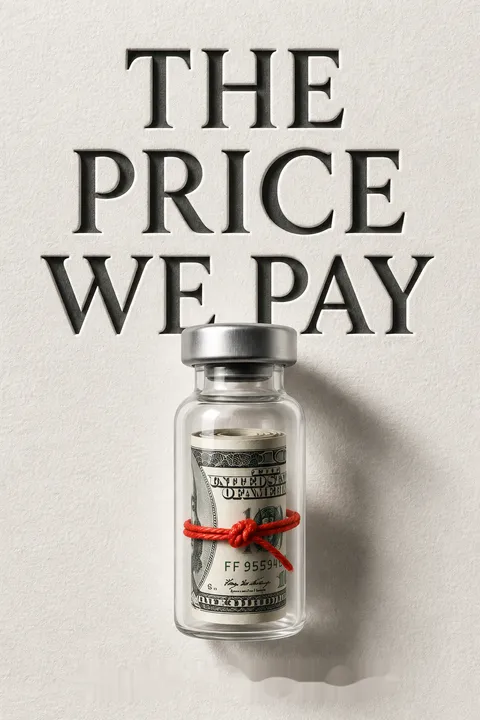


Key Takeaways
Fix both the care and the price: medicine wastes money twice
Two failures compound. Marty Makary argues that America’s health care crisis is driven by both inappropriate care and distorted prices. In a survey of 2,100 doctors, respondents estimated that 21% of medical care was unnecessary, including 25% of tests and 22% of prescriptions. Meanwhile, patients often cannot learn what a service will actually cost until after receiving it. The result is waste on the clinical side and inflated, unpredictable bills on the financial side.
Follow the money. The book’s core claim is that the country already spends enough to provide excellent care, but waste, hidden prices, and layers of middlemen divert money from patients and caregivers. Makary’s reporting follows those failures from church screening events to hospital billing offices, and then looks for workable alternatives.
The distinction between how much a system spends and what it buys is analytically useful. It turns a sprawling political argument into two questions: Was the service appropriate, and was its price fair? Those questions require different remedies, from clinical review to disclosure and competition. The survey figure is a physician estimate, not a direct audit of every service, so it signals perceived scale rather than a precise national count. That caveat does not erase the pattern, but it matters when translating a striking number into policy.
Treat a screening result as a question, not a diagnosis
Testing can recruit patients. Makary visits a church health fair where a medical group tests congregants for leg artery problems, despite guidelines against screening people without significant symptoms. A borderline result can lead to an ultrasound, another scan, a catheter procedure, and a stent. Each step can create cost, risk, and anxiety, even when the original person felt well. His research team identified about 1,100 houses of worship being used for vascular screenings, and found that the resulting procedures disproportionately affected minority and low-income communities.
Words steer decisions. A doctor can frame ordinary leg aches as evidence of blocked arteries, just as an obstetrician can imply that a C-section is the only safe option. A test is not automatically beneficial because it can detect an abnormality. Its value depends on whether finding that abnormality improves health enough to justify what follows.
Screening is most persuasive when its downstream consequences remain invisible. A patient sees a quick test offered as prevention, not the chain of follow-up decisions that a false positive or harmless finding may set in motion. This is a classic problem of asymmetric information: the clinician understands the cascade better than the person being tested. The answer is not to reject screening wholesale. It is to make the evidence, likely harms, and alternatives understandable before testing, especially in outreach settings where trust is high.
Never mistake a hospital's sticker price for the price it accepts
The posted price may be fiction. A French visitor was quoted $150,000 for a heart operation at a U.S. hospital. When he said the family might have the surgery in France for $15,000, the hospital quickly lowered its offer, first to $50,000, then to $25,000. A University of Iowa study found that only 53 of 101 hospitals would provide a price for the same bypass operation. Their quotes ranged from $44,000 to $448,000, with no relationship between price and quality.
Surprise extends beyond hospitals. Makary describes air ambulance bills that can reach tens of thousands of dollars for short trips, often because the company is out of network and can bill patients for the balance. These cases reveal a market where patients cannot compare prices when they need care most.
A price that changes dramatically when challenged is not a reliable signal of underlying cost or value. It is evidence of bargaining power and information control. Yet price transparency cannot do all the work: emergency transport and urgent treatment may leave little room to shop, and a lower price is not automatically better care. The useful goal is not consumer choice in every clinical moment. It is to make predictable services comparable, protect patients when choice is impossible, and stop treating secret discounts as a substitute for fair pricing.
Count debt collection as a complication of medical care
A bill can cause lasting harm. In Carlsbad, New Mexico, Makary and a medical student found that the local hospital routinely sued patients over medical bills and garnished wages. One teacher faced lawsuits over modest emergency visits; a single mother described losing part of her paycheck after a short hospital treatment. The researchers estimated that about one in five people in the town had been sued by the hospital and had wages garnished.
This was not isolated. In a Virginia study, 37% of hospitals sued patients in 2017, filing more than 20,000 cases that year. Many patients were insured but unable to afford high deductibles or inflated balances. Lawsuits, damaged credit, and collection calls can create financial and emotional injury, while fear of bills may deter people from seeking needed care.
The book’s most powerful reporting move is to follow a bill into the courthouse and the household. It reveals a harm that conventional hospital quality scores can miss: care may be clinically adequate yet financially devastating. Calling financial injury a complication broadens quality from what happens inside the operating room to what the institution does afterward. At the same time, unpaid bills have varied causes, and hospitals need sustainable ways to fund care. Fair assistance, understandable bills, and proportionate collection practices are more defensible than treating every balance as proof of bad faith.
Publish actual prices so proxy shoppers can reward fair care
Show what gets paid. Makary distinguishes inflated list charges from the negotiated amounts hospitals actually accept. He argues that employers and health plans can act as proxy shoppers: they compare prices on behalf of many patients, even when individual patients do not shop themselves. One employer used that leverage by offering free diapers and wipes to employees who chose a hospital where childbirth cost about $8,000 rather than one charging as much as $40,000, with similar quality.
Competition can change incentives. The Surgery Center of Oklahoma posts prices and charges one fair rate regardless of who pays. Makary reports that medical groups adopting full price transparency saw patient volume rise 50% and revenue rise 30%. He also highlights Florida’s law requiring hospitals to publish average amounts paid, not merely their inflated sticker prices.
The proxy shopper idea answers a common objection: most patients will not compare prices during illness, so disclosure seems pointless. Employers and insurers can still use comparable prices to redirect large volumes of business, changing incentives for everyone. But transparency works only when the figures are standardized, quality is visible, and patients are protected from being pushed toward cheaper but unsuitable care. A market is not made fair by publishing numbers alone. The numbers must describe comparable services and be usable by buyers with genuine leverage.
Judge care by patterns of need, not outcomes alone
A clean outcome can hide overuse. A doctor who performs unnecessary operations on healthy patients may still report few complications. Makary argues that quality measurement should also ask whether patients needed the intervention. His Improving Wisely project builds specialty-specific measures with practicing physicians, identifies unusually high rates of potentially inappropriate care, and sends confidential peer comparisons rather than imposing blanket rules.
Feedback changed behavior. In a project with Mohs skin cancer surgeons, experts agreed that routinely removing more than about 2.2 tissue stages per procedure was an outlier pattern. After receiving individual reports, 83% of notified outliers reduced their average number of stages. The project cost $150,000 and was associated with $11.1 million in Medicare savings. The measures were designed to flag patterns for review, not to declare every unusual case improper.
This approach treats professional judgment as an asset rather than an obstacle. Clinicians help define what counts as an outlier, which makes feedback more credible and reduces the risk that a crude metric punishes legitimate exceptions. It also resembles quality improvement in aviation and energy use, where specific feedback can change behavior without public shaming. The hard part is ensuring the comparison is fair: case mix, coding, and local resources can distort apparent differences. Peer review is strongest when its measures are transparent, revisable, and paired with a route to explain exceptions.
Audit the middlemen hiding what drugs and insurance really cost
The intermediary may profit from confusion. Insurance brokers can receive commissions and bonuses from insurers, creating incentives to recommend plans that pay the broker more. Pharmacy benefit managers, or PBMs, negotiate drug benefits for employers and health plans. Their spread is the gap between what they charge a plan and what they pay a pharmacy. Makary reports examples where employers were charged five to twenty times the pharmacy payment, while the itemized reports concealed that difference.
The same opacity appears in supply purchasing. Group purchasing organizations negotiate hospital supply contracts, but manufacturers may pay fees for product placement or exclusive access. The Ohio Medicaid audit cited in the book found $224 million in spread pricing in one year. Makary’s proposed countermeasures include independent audits, clear disclosure, and contracts that pay a transparent administrative fee instead of hidden markups.
Middlemen are not inherently wasteful. They can pool purchasing power, process claims, and reduce administrative burdens. The problem arises when the party paid to find savings also profits from higher prices or concealed transactions. This is a principal-agent conflict: employers and patients delegate decisions to an intermediary whose incentives may diverge from theirs. Auditing can expose the gap, but disclosure alone may not change behavior if buyers lack alternatives or bargaining power. Contract design and genuine competition matter as much as sunlight.
Prescribe to the procedure and patient, not the default
Routine can become excess. Makary describes discovering that his surgical patients were routinely sent home with opioid prescriptions, even when they had not needed opioids in the hospital. His father recovered from a similar operation using ibuprofen, prompting him to question his own habits. The book cites research suggesting about one in sixteen patients prescribed opioids becomes a chronic user, and notes that roughly 70% of pills prescribed after surgery may go unused.
Make guidance specific. A Johns Hopkins expert panel developed procedure-specific recommendations for opioid-naive adults, using clinicians, nurses, pharmacists, residents, and patients. For laparoscopic gallbladder surgery, the panel recommended zero to ten pills, rather than a generic large supply. Makary also recounts stopping Nexium after lifestyle changes relieved his heartburn, and avoiding back surgery after physical therapy helped.
Defaults are powerful because they convert yesterday’s habits into today’s clinical decisions. Changing an electronic prescription default can therefore prevent excess without requiring every clinician to start from scratch. Procedure-specific guidance is more thoughtful than a single legal limit for all patients, since pain and recovery differ. The broader lesson is not that medication or surgery is bad. It is that treatment should follow an individual need, with room for reassessment, rather than being supplied automatically because it is familiar, billable, or convenient.
Demand evidence before surrendering health data to workplace wellness
Good intentions do not prove effectiveness. Makary examines workplace wellness programs that require screenings, health questionnaires, or participation to avoid higher premiums. Some programs offer questionable advice, search for disease in healthy people, or collect private information that may be shared with outside companies. The author contrasts their promises with research reviews finding limited and inconsistent economic benefits. A randomized study of nearly 5,000 university employees found no meaningful differences in health or spending between participants and nonparticipants; another large study reported no significant differences across several health and work outcomes.
Education can be more useful than surveillance. Makary highlights Quizzify, a program that teaches employees about common medical overuse through interactive quizzes. Its focus is helping people ask better questions about tests and treatments, rather than pressuring them to disclose sensitive information or accept dubious screening.
Workplace wellness can blur the line between support and coercion. A program may look voluntary while financial penalties make refusal costly, and health data can outlast the wellness campaign that collected it. Evidence should therefore cover not only clinical outcomes and spending, but also privacy, consent, and unequal effects on workers. At the same time, a null average effect does not mean every component is useless. Accessible education, fitness opportunities, or help navigating care may be valuable when offered without surveillance or inflated promises.
Invest in relationships before ordering another test
Time can prevent expensive care. Makary visits Iora Health, a primary care model that assigns patients a doctor and a health coach. Teams hold daily discussions, coordinate specialists, follow up after hospital visits, and address obstacles such as transportation or medication schedules. One patient with heart failure kept missing diuretics because frequent bathroom stops conflicted with his bus-driving job. The team adjusted his treatment to fit his life, helping him avoid repeated hospitalizations.
The reported results were substantial. In a cohort of 1,176 Medicare enrollees followed for 18 months, hospital admissions were cut in half, emergency visits fell 20%, and insurer spending declined 12%. Makary’s closing argument is that restoring trust requires care organized around people, paired with honest prices, appropriate treatment, and clinicians willing to advocate for patients.
Iora’s model changes the unit of care from the isolated appointment to the patient’s actual life. That shift makes adherence less about blaming individuals and more about discovering practical barriers, an insight shared by human factors research and social work. Paying teams to prevent avoidable crises can also reward work that fee-for-service systems often neglect. The model requires stable funding, capable teams, and accountability across a population, so it cannot be copied by simply adding a health coach to a rushed clinic. Its deeper lesson is to design care around continuity.
Analysis
The book’s strongest analytical move is to treat American health care as two connected failures rather than one giant bill. First, patients receive services that may not help them, from screening cascades to unnecessary procedures and prescriptions. Second, the prices attached to necessary and unnecessary services are often hidden, inflated, or negotiated through intermediaries. These problems reinforce one another: more billable activity creates more revenue, while opaque pricing makes it difficult for patients and purchasers to distinguish value from extraction.
Makary’s reporting is most persuasive when a system-level claim is made concrete. Church health fairs show how prevention can become patient recruitment. Carlsbad shows what happens when billing power reaches the courthouse. The Mohs surgery project offers a counterexample to fatalism: specialty experts defined an outlier pattern, doctors received private comparisons, and many changed practice without punitive rules. The Nebraska hospital and Iora offer further proof that patient-centered operations need not be financially impossible.
The book also has limits worth keeping in view. Its survey of doctors measures their estimates of unnecessary care, not a full audit of every clinical decision. Vivid patient stories reveal mechanisms and harms, but they do not alone establish how common each practice is nationally. Price transparency can improve competition for predictable services, but it cannot make emergency care shoppable, guarantee quality, or correct a market where patients lack bargaining power. Similarly, clinical pattern measures can identify unusual behavior, but fair use requires case-mix awareness, clinician participation, and room for justified exceptions.
The most durable proposal is therefore not simply to rely on markets or to regulate every decision. It is to make information usable, align incentives with patient benefit, and hold institutions accountable for both clinical and financial harm. In this account, trust is not a sentimental extra. It is a working condition of medicine, and its repair depends on how care is delivered, priced, and explained.
Review Summary
The Price We Pay exposes flaws in the American healthcare system, including predatory billing, lack of price transparency, and unnecessary procedures. Makary criticizes hospitals, insurance companies, and middlemen while offering solutions like increased transparency and patient empowerment. Readers found the book informative and eye-opening, though some criticized Makary's writing style and limited reform proposals. Many consider it essential reading for understanding healthcare costs and navigating the system, despite its sometimes repetitive content and reliance on anecdotes.
People Also Read



Glossary
chargemaster
Hospital list-price systemA hospital’s internal catalog of listed charges for services, tests, and supplies. These sticker prices are often much higher than the amounts insurers negotiate or the hospital accepts. Because patients may be billed at or near these charges when they are uninsured or out of network, the chargemaster can shape large bills without reflecting the actual cost of care.
proxy shoppers
Buyers comparing care for othersEmployers, health plans, and some out-of-pocket patients that use price information to compare medical services on behalf of a larger group. Makary argues that they can influence provider prices even if most individual patients do not shop. Their purchasing power can direct business toward providers that offer fair prices and acceptable quality.
Improving Wisely
Physician-led overuse measurementA project that develops specialty-specific measures of potentially inappropriate care with practicing clinicians. It uses patterns in medical data to identify physicians whose practice rates fall far outside an expert-defined range, then provides comparative feedback and educational support. The project aims to reduce unnecessary treatment through professional engagement rather than automatic punishment.
practice patterns
A clinician’s repeated choicesThe recurring tendencies in a physician’s decisions across many patients, such as how often the physician performs a procedure, orders a test, or prescribes a medication. Makary uses these patterns to detect possible overuse that may be difficult to identify by reviewing a single case. Patterns require clinical context and should allow for justified exceptions.
The spread
PBM charge minus pharmacy paymentThe difference between what a pharmacy benefit manager bills an employer or health plan for a medication and what it pays the pharmacy that dispenses it. The spread can generate hidden revenue for the intermediary. If the plan’s reports omit the pharmacy payment, the employer may see an itemized bill without being able to identify the markup.
Pharmacy benefit managers (PBMs)
Prescription benefit administratorsCompanies hired by employers, health plans, or insurers to manage prescription drug benefits. Their work can include negotiating with pharmacies, processing claims, and managing formularies. Makary argues that opaque spreads, rebates, mail-order arrangements, and ownership ties can create incentives that conflict with lowering drug costs for patients and plan sponsors.
Group purchasing organizations (GPOs)
Hospital purchasing intermediariesOrganizations that negotiate supply and product contracts for groups of hospitals. They can simplify purchasing and use collective volume to seek lower prices. Makary criticizes practices such as manufacturer fees for product placement and exclusive supplier contracts, arguing these may weaken competition, raise costs, and make hospitals dependent on a narrow supply chain.
Delphi method
Iterative expert consensus processA structured process for developing expert agreement through repeated rounds of judgments. In the book’s opioid guideline example, clinicians, patients, and other experts first voted on recommended prescription limits, discussed their reasoning, and then voted again. The revised judgments helped the group reach procedure-specific consensus recommendations.
relationship-based care
Care built on sustained relationshipsA model of primary care organized around continuity, time, and an ongoing connection between patients and a coordinated care team. In the Iora example, doctors work with health coaches and other staff who learn patients’ goals and circumstances, coordinate outside care, and help address practical barriers. The model aims to prevent crises rather than simply process visits.
SOLVE collaborative
Procedure-specific opioid reduction effortA collaborative effort described in the book to reduce excessive opioid prescribing. It uses expert recommendations to reset electronic prescription defaults to lower, procedure-specific amounts and supports feedback on clinician prescribing patterns. Its premise is that better defaults and relevant guidance can prevent unnecessary exposure while preserving individualized decisions about pain care.
FAQ
What's The Price We Pay about?
- Focus on Healthcare Crisis: The book delves into the systemic issues within American healthcare, such as overprescribing, overtreatment, and financial burdens on patients.
- Call for Reform: Marty Makary advocates for transparency, accountability, and a return to patient-centered care, emphasizing the need for significant changes in healthcare delivery and billing.
- Personal Stories and Data: Makary uses personal anecdotes and data-driven insights to illustrate the challenges faced by patients and healthcare professionals.
Why should I read The Price We Pay?
- Insightful Analysis: The book offers a thorough examination of the financial and ethical dilemmas in healthcare, essential for understanding American medicine's current state.
- Real-Life Implications: Readers gain awareness of how healthcare costs affect individuals and families, as well as broader economic implications.
- Proposed Solutions: Makary presents innovative solutions and examples of successful healthcare reforms, making it a valuable read for those interested in improving the system.
What are the key takeaways of The Price We Pay?
- Healthcare as a Business: The book emphasizes that the healthcare system often prioritizes financial gain over patient care.
- Need for Transparency: Makary argues for price transparency in healthcare to cut waste and restore trust between patients and providers.
- Empowerment Through Knowledge: Patients are encouraged to be informed consumers, advocating for a more active role in their medical decisions.
What are the best quotes from The Price We Pay and what do they mean?
- “We must restore medicine to its noble mission.”: This quote calls for a return to healthcare's foundational values, emphasizing compassion and patient advocacy.
- “The money games of medicine, loaded with middlemen, kickbacks, and hidden costs.”: It highlights the complexity and opacity of healthcare pricing, urging recognition of financial maneuvers that harm patients.
- “Patients are getting shaken down for inflated bills.”: This stark statement reflects the reality many face, where exorbitant costs can lead to financial ruin.
How does The Price We Pay address unnecessary medical procedures?
- Overtreatment Crisis: Makary highlights that a significant portion of medical care is unnecessary, with estimates suggesting that “21% of everything done in medicine is unnecessary.”
- Examples of Overtreatment: The book provides cases like unnecessary C-sections to illustrate how financial incentives lead to excessive care.
- Call for Accountability: Makary advocates for measuring and monitoring practice patterns to reduce unnecessary procedures, promoting ethical patient care.
What is the "Improving Wisely" initiative discussed in The Price We Pay?
- Focus on Appropriateness: The initiative aims to measure the appropriateness of medical procedures and reduce unnecessary treatments by analyzing practice patterns.
- Data-Driven Approach: Using Medicare data, it identifies outlier physicians who perform excessive procedures, allowing for targeted interventions.
- Collaboration with Specialists: The program involves working with medical associations to develop consensus on appropriate care, fostering accountability.
How does The Price We Pay suggest we can fix the healthcare system?
- Emphasizing Transparency: Makary argues that transparent healthcare pricing will empower patients and encourage competition, driving down costs.
- Patient-Centered Care: The book advocates for a healthcare model prioritizing patient needs over profit, restoring trust in the medical profession.
- Innovative Solutions: Makary highlights examples of successful healthcare reforms, demonstrating that change is possible and beneficial.
What role do patients play in the healthcare system according to The Price We Pay?
- Active Participants: Makary encourages patients to take an active role in healthcare decisions, advocating for informed choices and questioning unnecessary treatments.
- Consumer Awareness: Understanding healthcare costs and pricing practices empowers patients to seek fair treatment.
- Advocacy for Change: Patients are crucial stakeholders in healthcare reform, influencing providers and policymakers through their experiences.
How does The Price We Pay address the opioid crisis?
- Overprescribing Opioids: Makary discusses how liberal opioid prescriptions have contributed to the epidemic, with many patients becoming addicted.
- Need for Alternatives: The book advocates for exploring non-opioid pain management options, highlighting that many patients do not need opioids after surgery.
- Crisis as a Symptom: The opioid crisis is presented as a manifestation of broader issues in healthcare, underscoring the need for systemic change.
What role do Group Purchasing Organizations (GPOs) play in healthcare costs according to The Price We Pay?
- Middlemen in Supply Chain: GPOs act as intermediaries in purchasing medical supplies, often charging fees that inflate costs.
- Impact on Pricing: They can create a lack of competition by favoring certain manufacturers, leading to higher prices for hospitals and patients.
- Need for Reform: Makary calls for eliminating pay-to-play practices within GPOs, advocating for a transparent and competitive marketplace.
How does The Price We Pay suggest improving medical education?
- Focus on Relevant Skills: Makary argues for teaching skills directly applicable to patient care, like effective communication and teamwork.
- Incorporating Behavioral Skills: Emphasizing empathy and humility in future physicians is crucial for building trust with patients.
- Adapting to Modern Needs: The curriculum should reflect current healthcare challenges, preparing students to navigate complexities and advocate for patients.
What actions can individuals take after reading The Price We Pay?
- Demand Price Transparency: Readers are encouraged to ask for price quotes before receiving medical services, advocating for cost transparency.
- Engage with Healthcare Providers: Individuals should discuss the necessity of treatments and potential alternatives with their providers.
- Advocate for Systemic Change: Makary calls on readers to participate in grassroots movements for healthcare reform, pushing for accountability and fairness.
About the Author


Download PDF
Download EPUB
.epub digital book format is ideal for reading ebooks on phones, tablets, and e-readers.








