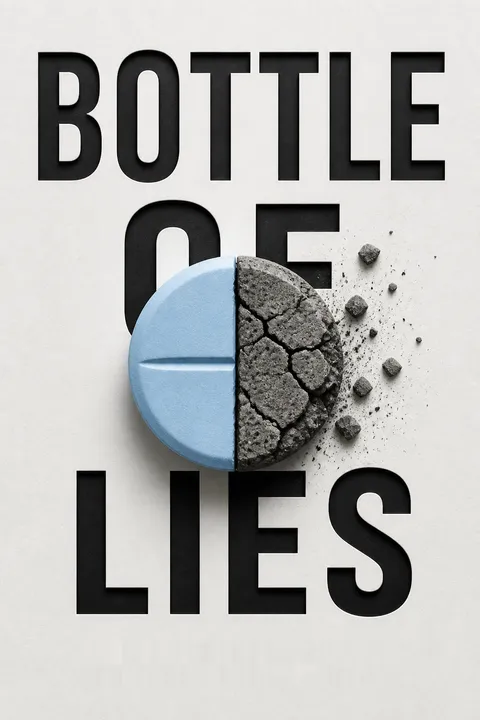


Key Takeaways
A low price is not proof a generic was made right
Access can save lives. Generic drugs have made treatment affordable for millions, including people in the United States and patients with HIV in Africa. In 2001, Cipla chairman Yusuf Hamied offered a three-drug AIDS treatment for about one dollar a day, compared with Western prices of up to $15,000 a year. The price collapse helped make large treatment programs possible, including the U.S.-funded PEPFAR initiative.
Affordability needs assurance. The same global system that delivered cheap medicine also made it difficult to see how drugs were manufactured. Some companies supplied reliable products, while others manipulated data or cut corners. The book is not an argument against generics. It is a warning that low cost and legal approval do not, by themselves, guarantee consistent quality.
The tension here is not between cheap medicine and safe medicine as competing ideals. It is between access and accountability, which must be designed together. Public-health programs often focus on procurement price because budgets are visible and quality failures are harder to measure. That imbalance can make the cheapest bid look like the most humane choice. The book’s strongest contribution is to insist that a medicine’s value includes whether it reliably works. At the same time, documented failures at some manufacturers should not become a blanket indictment of generics, whose broad benefits are real.
A six-month jackpot made speed more valuable than careful development
First place paid. Under the Hatch-Waxman system, a generic company that filed the first qualifying challenge to a drug patent could receive six months of exclusive sales. During that period, the generic could sell near the brand’s price before competition drove costs down. The reward gave companies a powerful reason to race, sometimes camping outside the FDA to secure a filing position.
Pressure met weak ethics. Ranbaxy’s leaders faced a telling choice when its acne drug Sotret failed tests after production scaled up. The company knew the formulation was not dissolving reliably, yet executives chose to keep selling while searching for a fix. The problem was not that competition exists. It was that a high-stakes race rewarded speed while the people bearing the risk were patients.
This is a classic incentive-design problem: rules can produce behavior their authors did not intend. A first-filer reward was meant to offset the cost and legal risk of challenging patents, and it helped create a viable generic industry. But when speed determines an enormous prize, management can treat quality controls as delays rather than safeguards. The useful question is not whether incentives should exist, but what they reward and what penalties make misconduct costly. The Sotret episode also shows why written quality policies matter only when executives accept that a failed result can stop a launch.
Trust the manufacturing trail, not the polished batch result
Quality lives in the process. Current good manufacturing practices, or cGMP, are rules for controlling and documenting how medicine is made. Their logic is simple: a final sample cannot establish the quality of every dose in a large batch. Each stage needs reliable records, and deviations need investigation. Process validation means showing that a manufacturing process consistently produces the intended result, not merely that a few pills passed a final test.
Data is part of the drug. FDA investigator Peter Baker found hidden tests and unofficial equipment in Indian plants. At Wockhardt, torn records revealed that insulin vials containing black particles had failed inspection, while official records concealed those failures. Without trustworthy records, regulators cannot reconstruct what happened or establish that the medicine is safe.
The book’s focus on records is more than bureaucratic fussiness. In complex systems, documentation is a form of memory: it lets a later investigator distinguish an isolated mistake from a recurring failure. Aviation and nuclear power use similar traceability because a finished product can look normal while its production history is not. Still, documentation can become theater if firms are rewarded for complete-looking files rather than truthful ones. The crucial test is whether records preserve inconvenient results and trigger corrective action. A clean binder is not the same thing as a controlled process.
A spreadsheet can expose what a corporate hierarchy wants hidden
An insider mapped the gaps. At Ranbaxy, information scientist Dinesh Thakur was asked to compare the company’s drug data with what it had submitted to regulators. He found that records were missing, invented, altered, or borrowed from other products. His review covered markets around the world and helped show that the failures were not confined to one plant or one drug.
The truth became dangerous. Thakur’s former boss, physician Raj Kumar, presented the findings to a board committee in a report known internally as the Self-Assessment Report, or SAR. Executives ordered copies destroyed, but Thakur eventually gave the report to U.S. investigators. Ranbaxy later pleaded guilty to seven federal counts and paid $500 million. No individual executive was criminally convicted in the settlement, while Thakur paid a steep personal and professional price for speaking up.
Thakur’s spreadsheet demonstrates how an information system can reveal a pattern that organizational silos keep invisible. Each team may see a local exception; a cross-market comparison can show that the exception is a method. This resembles forensic accounting, where apparently unrelated entries become evidence once they are assembled into a common timeline. Whistleblowing, however, is not a substitute for internal controls. It places the burden on individuals who may lack protection, authority, or financial security. A resilient organization makes dissent routine enough that a junior employee need not become the last line of defense.
Inspect factories when nobody expects you, especially their data systems
Advance notice invites staging. FDA investigators traditionally arrived unannounced at U.S. plants, but overseas inspections often came with weeks or months of warning because of travel and visa logistics. Companies could clean facilities, prepare records, and coach staff. Baker’s inspection at Wockhardt began with an employee trying to discard torn production records. The hidden paperwork revealed a secret manufacturing area and failed insulin tests.
Forensics changed the inspection. Baker began checking computer audit trails, unofficial folders, and unregistered laboratory equipment instead of relying on company-guided tours. In India, a short-notice inspection of Ranbaxy’s Toansa plant uncovered employees backdating records before the expected visit. These findings show how a polished factory tour can conceal a second system operating behind the official one.
Inspection design is itself a control. Surprise visits reduce the opportunity to stage compliance, while digital forensics can reveal what paper records omit. This is closely related to fraud auditing, where investigators look for traces that routine monitoring was never built to notice. Surprise is not a complete solution, however. It requires trained staff, safe travel, access to original data, and follow-up enforcement. Otherwise, inspections become episodic spectacles. The strongest system makes ordinary operations auditable every day, then uses unpredictable inspections to test whether that claim is true.
Bioequivalence is a population test, not a promise for every patient
Similarity has a statistical meaning. The FDA generally approves a generic when testing shows that its drug exposure falls within a defined range compared with the brand. The standard uses a 90 percent confidence interval and an 80 to 125 percent acceptance range for key measures of drug concentration. It is a population-level test, not a guarantee that every patient will experience every formulation identically.
Some formulations challenged confidence. Patients taking Teva’s extended-release generic Budeprion XL reported renewed depression and other serious symptoms. The FDA initially defended the product, but a later study found that the 300-milligram version did not deliver the active ingredient at the same rate and extent as the brand. The book also describes doctors’ concerns about drugs where small dose differences can have serious consequences. Patient reports can raise alarms, though they do not alone prove a drug caused harm.
This section separates a statistical rule from the clinical reality it is meant to approximate. Average similarity can be appropriate for many drugs, but extended-release products and medicines with narrow therapeutic windows leave less room for variation. That does not mean every patient should avoid generics or that a troubling anecdote proves a manufacturing defect. It means post-market monitoring and responsive investigation are essential complements to preapproval studies. The Budeprion episode also illustrates a general lesson in measurement: a proxy can be technically valid and still miss a dimension that matters to users.
Bad medicine in poor countries can become a resistance problem everywhere
Substandard is not counterfeit. A counterfeit drug is falsely presented as genuine; a substandard drug may come from a legitimate manufacturer but fail to meet quality standards. In Uganda, doctors suspected an antibiotic was failing to treat a thirteen-year-old boy with a severe infection. Testing of a sample of the ceftriaxone found less than half the active ingredient stated on its label. The boy died, though the report could not prove the drug alone caused his death.
Weak doses can have wider costs. Doctors in several low-income countries described relying on backup medicines, changing drugs, or raising doses when generic products seemed ineffective. Researchers warned that subpotent antibiotics may kill weaker microbes while allowing more resistant ones to survive. The book presents this link as a serious concern with emerging evidence, not a settled explanation for every case of antimicrobial resistance.
The global consequence is an externality: the cost of a weak drug is not limited to the patient who receives it. If inadequate exposure helps resistant organisms survive, the risk can spread through communities and across borders. The mechanism is biologically plausible, and the book notes early laboratory evidence, but it should not be overstated as the sole driver of resistance. Overprescribing, incomplete courses, and agricultural use also matter. This is precisely why drug quality belongs in resistance policy, alongside prescribing practices and infection control, rather than being treated as a separate procurement concern.
Do not let shortages turn enforcement into a bargaining chip
The Lipitor decision exposed a bind. Ranbaxy’s application to sell generic Lipitor promised enormous savings and held the first-filer position. Yet investigators found serious problems at the Toansa plant that supplied the active ingredient. The inspection team rated the facility Official Action Indicated, its most serious classification, but FDA officials revised the assessment and approved the application in 2011. Ranbaxy earned nearly $600 million during the first six months of sales.
The consequences were visible. In 2012, the company recalled millions of tablets after finding tiny blue-glass fragments. The case showed regulators balancing access, shortages, enforcement, and a major company’s ability to pay a settlement. Ranbaxy eventually paid $500 million, but the settlement did not result in individual criminal convictions. The story is not that every approved batch was defective, but that institutional compromises can weaken confidence in the whole approval system.
Regulators face genuine trade-offs: blocking a supplier can worsen shortages, while approving a questionable product can expose patients to risk. The danger arises when market dependence quietly changes the evidentiary standard. This resembles the too-big-to-fail problem in finance, where a system’s reliance on one actor can soften the consequences of its misconduct. A credible response needs contingency suppliers and transparent criteria for exceptions. Otherwise, companies learn that scarcity itself is leverage. The book also shows why enforcement cannot be judged only by settlement size; deterrence depends on consistent consequences and meaningful accountability.
Make honest quality easier than cheating across the global supply chain
Oversight needs local capacity. The FDA could not inspect every overseas facility often enough, while many countries importing medicines lacked strong regulators and testing laboratories. The book reports that only about one-tenth of African countries had effective drug regulators, and two-fifths lacked laboratories for routine quality testing. A training center in Ghana, CePAT, aimed to build the expertise needed to assess company data and test products.
Rules must be enforceable. FDA investigator Altaf Lal’s India pilot used short-notice or unannounced inspections, which exposed falsified records that announced visits had missed. But in 2016 the FDA ended the pilot and told Indian companies routine inspections would again be announced in advance. Better laws matter, but so do independent inspectors, laboratories, protected whistleblowers, and purchasing rules that reward reliable medicine rather than the lowest bid alone.
The remedy is institutional, not merely moral. Asking each company to behave well is weak protection when the commercial reward for cutting corners is high and detection is unlikely. Regulators need technical capacity, legal authority, and independence; buyers need contracts that make quality visible and valuable. Shared standards can help, but mutual cooperation cannot replace independent verification when trust is low. The India pilot’s reversal is especially instructive: a successful investigative method can remain politically fragile if it disrupts trade or diplomatic relationships. Durable reform must make rigorous oversight ordinary, funded, and difficult to quietly undo.
Analysis
Bottle of Lies works as both an investigation and a systems diagnosis. Its narrative follows Dinesh Thakur from an optimistic recruit at Ranbaxy to an insider who discovers that the company’s regulatory submissions cannot be trusted, then tracks how the FDA struggles to prove what he already knows. Peter Baker’s factory inspections widen the frame: the deception is not only a Ranbaxy scandal but a vulnerability in global manufacturing oversight. The stories make abstract failures legible. A discarded record, a hidden refrigerator, or a computer folder labeled as miscellaneous can reveal more than a polished facility tour.
The book’s central argument is not that generic drugs are inherently unsafe. It is that an essential public-health bargain depends on invisible conditions: truthful data, disciplined manufacturing, effective regulators, and incentives that do not reward evasion. Generics lower prices and expand treatment, but patients cannot independently inspect plants or compare laboratory files. That information asymmetry makes regulatory credibility part of the medicine itself.
The reporting also complicates the idea that a strong regulator can simply solve the problem. The FDA has expertise and legal tools, yet faces staffing limits, foreign-policy concerns, drug shortages, internal disagreements, and pressure to approve products. Its decisions sometimes soften field investigators’ findings, while companies can exploit the agency’s dependence on announced visits and scarce suppliers. Enforcement is therefore not just a matter of discovering misconduct. It requires an institution willing to accept the consequences of acting on what it finds.
The most important unresolved question is how to preserve affordable access without normalizing weak oversight. Blanket rejection of overseas generics would harm patients and ignore the many products that work. But a system that treats low prices as proof of public benefit can also conceal costs shifted onto patients, poorer countries, and future generations facing drug resistance. The book’s practical implication is to treat quality as a measurable public good: invest in independent testing and inspectors, protect credible whistleblowers, and make transparent manufacturing a condition of market access. Its ending remains deliberately unsettled because the market is global, while accountability remains fragmented.
Review Summary
Bottle of Lies is a gripping exposé of the generic drug industry, focusing on Indian manufacturers like Ranbaxy. Readers praise Eban's investigative journalism, describing the book as eye-opening and disturbing. It reveals widespread fraud, data manipulation, and disregard for patient safety in pursuit of profits. Many readers express shock at the FDA's limitations and the potential dangers of generic drugs. While some find the book one-sided or overly detailed, most consider it an important, thought-provoking read that will change how they view medications.
People Also Read





Glossary
ANDA
Generic drug applicationAn Abbreviated New Drug Application is the FDA submission a company uses to seek approval for a generic medicine. Rather than repeat the brand drug’s full clinical development program, the applicant generally provides evidence that its product is sufficiently similar in quality and performs comparably in the body. The application includes information about the drug, its testing, and its manufacturing.
cGMP
Drug manufacturing rulesCurrent good manufacturing practices are FDA requirements for controlling the facilities, equipment, staff, procedures, and records used to make medicine. They are designed to make each batch consistent and to ensure that problems are documented and investigated. The rules treat failures in the manufacturing process as potential failures in the product, even when a limited final sample passes testing.
bioequivalence
Comparable drug exposureBioequivalence is the regulatory standard used to assess whether a generic drug delivers its active ingredient into the body at a sufficiently similar rate and extent as the brand-name drug. The FDA evaluates blood concentration measurements using a statistical acceptance range. The test supports a judgment about similarity across study participants, but it does not mean that every individual patient will respond identically.
first-to-file
Early filer exclusivityUnder the Hatch-Waxman system described in the book, the first qualifying generic applicant to challenge a brand drug’s patent could receive a period of exclusive generic sales, typically six months. During that window, the company could earn far more than after competitors entered and prices fell. The incentive helped create generic competition, while also encouraging intense races to file applications.
Application Integrity Policy
Fraud-related application holdAn Application Integrity Policy is an FDA sanction used when the agency has reason to believe that a company’s application data may be fraudulent or unreliable. It can halt review of pending applications until the company demonstrates that its data are trustworthy, often with outside auditing. The policy shifts the burden toward the company to establish the integrity of its submissions.
process validation
Proof of consistent productionProcess validation is the documented demonstration that a manufacturing process can repeatedly produce medicine meeting required quality standards. Instead of relying on a final test of a small sample, manufacturers collect and review evidence from the steps used to make a batch. The process creates a record that can help identify where a failure occurred and whether corrective action worked.
Jugaad
Shortcut-based problem solvingJugaad is a term used in the book for improvisational workarounds that bypass formal systems to reach a desired result quickly or cheaply. The author distinguishes it from resourceful innovation: in manufacturing, the workaround can become an ethically dubious shortcut that compromises quality or documentation. The term describes a permissive attitude toward avoiding rules, not a trait of all Indian companies or workers.
dual-track manufacturing
Different quality by marketDual-track manufacturing, also called multi-tier or row A/row B production, refers to making a higher-quality version of a drug for markets with stronger oversight and a cheaper, lower-quality version for markets with weaker regulation. The book describes this practice as a way to reduce costs while lowering the chance of detection. It raises particular risks for patients who cannot verify a product’s source or quality.
Self-Assessment Report
Ranbaxy fraud reviewThe Self-Assessment Report, or SAR, was an internal Ranbaxy presentation prepared after a company review found widespread discrepancies between drug data and regulatory submissions. It described fabricated, altered, or missing information across products and markets. Company leaders attempted to suppress the document, but it became important evidence in the FDA and Justice Department investigations.
FAQ
What's Bottle of Lies about?
- Exploration of Generic Drugs: Bottle of Lies by Katherine Eban investigates the generic drug industry, focusing on the quality and safety of medications produced in countries like India.
- Whistleblower's Journey: The narrative follows Dinesh Thakur, a former Ranbaxy employee, who exposes the company's fraudulent practices that jeopardized patient safety.
- Global Health Implications: Eban discusses the broader implications of substandard drugs, particularly in developing countries, highlighting how these practices endanger lives and contribute to global health crises.
Why should I read Bottle of Lies?
- Insightful Investigation: Eban's thorough research provides a deep understanding of the pharmaceutical industry, making it essential reading for anyone interested in healthcare.
- Real-World Consequences: The book discusses the real-world impact of corporate greed and regulatory negligence, making it relevant for those concerned about safety.
- Informed Consumer Choices: Understanding the issues raised can empower readers to make more informed choices about their medications.
What are the key takeaways of Bottle of Lies?
- Quality vs. Cost: The book illustrates the tension between cost-cutting measures and the need for high-quality, safe medications.
- Regulatory Failures: Eban emphasizes the inadequacies of regulatory bodies like the FDA in ensuring the safety of imported drugs.
- Patient Advocacy: It highlights the importance of patient voices and the need for systemic changes to protect consumers from substandard medications.
What are the best quotes from Bottle of Lies and what do they mean?
- “Without products from overseas, not a single drug could be made.”: This underscores the reliance on foreign manufacturing, raising concerns about quality control.
- “We don’t have a system. We have a way to work around the system.”: Reflects the pervasive culture of corruption and shortcuts in the industry.
- “This is a public health issue.”: Emphasizes that the consequences of fraud in drug manufacturing extend beyond corporate malfeasance to affect public health directly.
Who is Katherine Eban and what is her background?
- Experienced Investigative Journalist: Katherine Eban is a seasoned journalist with extensive experience reporting on the pharmaceutical industry and public health issues.
- Author of Previous Works: She is also the author of Dangerous Doses, which exposed the gray market for pharmaceuticals.
- Focus on Consumer Safety: Eban’s work emphasizes the importance of consumer safety and the ethical responsibilities of pharmaceutical companies.
What specific issues does Bottle of Lies highlight regarding generic drugs?
- Manufacturing Quality Concerns: The book details how many generic drugs are produced in facilities that cut corners on quality.
- Fraudulent Data Submission: Eban reveals instances where companies submitted falsified data to regulatory agencies.
- Lack of Oversight: The narrative illustrates the infrequent inspections by regulatory bodies like the FDA.
How does Bottle of Lies address the role of the FDA?
- Infrequent Inspections: Eban discusses how the FDA’s inspections of foreign drug manufacturing plants are often announced in advance.
- Regulatory Challenges: The book highlights the challenges the FDA faces in maintaining oversight over a growing number of foreign manufacturers.
- Calls for Reform: Eban advocates for reforms in the regulatory process to ensure that drug quality is prioritized over corporate profits.
What impact has globalization had on the pharmaceutical industry, according to Bottle of Lies?
- Increased Reliance on Foreign Manufacturing: The book illustrates how globalization has led to a significant portion of the U.S. drug supply being manufactured overseas.
- Quality Compromises: Eban argues that the drive for lower costs has resulted in compromised quality and safety standards.
- Complex Supply Chains: The narrative reveals the complexities of global supply chains, which can obscure accountability.
What role do whistleblowers play in Bottle of Lies?
- Dinesh Thakur's Story: Thakur's whistleblowing at Ranbaxy serves as a central narrative thread, highlighting the critical role of whistleblowers.
- Challenges Faced: Eban details the personal and professional challenges that whistleblowers encounter, including retaliation and isolation.
- Impact on Reform: The revelations brought to light by whistleblowers have led to increased scrutiny of the pharmaceutical industry.
How does Bottle of Lies illustrate the consequences of substandard medications?
- Real Patient Stories: Eban shares narratives from patients who suffered adverse effects from generic drugs.
- Public Health Risks: The book connects substandard medications to broader public health implications.
- Call to Action: Eban’s work serves as a rallying cry for consumers, regulators, and healthcare professionals.
What solutions does Bottle of Lies propose for the issues it raises?
- Stricter Regulatory Oversight: Eban advocates for more rigorous inspections and oversight of foreign drug manufacturing facilities.
- Transparency in Drug Manufacturing: The book calls for greater transparency in the pharmaceutical supply chain.
- Empowerment of Patients: Eban emphasizes the importance of patient advocacy and awareness of medication quality.
How does Bottle of Lies critique the FDA's practices?
- Pre-Announced Inspections: Eban criticizes the FDA's practice of giving advance notice for inspections.
- Downgrading Violations: The book highlights instances where the FDA downgraded serious violations.
- Need for Reform: Eban calls for significant reforms within the FDA to enhance its ability to protect public health.
Download PDF
Download EPUB
.epub digital book format is ideal for reading ebooks on phones, tablets, and e-readers.








