

Key Takeaways
Test the book’s core claim: ideology, not borders, blocks peace
The book’s hinge. Robert Spencer argues that the conflict is driven not only by land, security, or competing national claims, but by religious beliefs that reject Jewish sovereignty. He points to statements by Hamas figures and Muslim clerics who describe the struggle as religious, invoke jihad, or oppose negotiations on theological grounds. In his interpretation, territorial concessions cannot resolve a conflict whose central aim is the elimination of Israel.
A claim about causes. Spencer uses these statements to argue that religious ideology is the conflict’s deepest obstacle. The examples establish that some influential leaders use such rhetoric. They do not establish that all Palestinians or Muslims share it, or that religion alone explains political decisions.
What’s valuable here is the insistence that public ideology belongs in foreign-policy analysis, not outside it. Leaders’ language can define which compromises their followers regard as legitimate. But statements by hard-line clerics cannot, by themselves, describe an entire population or prove a single cause. A stronger test would compare rhetoric with behavior across political factions and periods, and ask how religious claims interact with nationalism, security fears, and leadership incentives.
Keep Jewish continuity and Palestinian rootedness in the same history
A long connection. Spencer counters the claim that Jews arrived as strangers by tracing Jewish communities in the land across centuries, despite conquest, expulsion, and hardship. He also describes waves of Jewish immigration from the late nineteenth century, alongside European Christian advocacy for a Jewish homeland. Jewish settlers bought land, and the author cites accounts of new communities and economic development.
A disputed landscape. To challenge claims of continuous Arab indigeneity, Spencer quotes nineteenth-century travelers who described Palestine as sparsely populated and economically neglected. He argues that Arab migration increased alongside Jewish investment. Travel accounts and population estimates support his picture of demographic change, but cannot by themselves establish who has the stronger modern political claim.
The book usefully restores Jewish historical presence to a debate that can treat Zionism as if it began from nowhere. Yet indigeneity is not a winner-takes-all test: enduring Jewish attachment and generations of Palestinian life can both be real. Population growth or migration does not erase a community’s later roots. Historical connection helps explain competing claims, but sovereignty also depends on political choices, law, and the rights of people living there now.
Treat partition’s rejection as evidence, not a complete explanation
Partition enters the story. British commissions explored dividing the territory in the 1930s, and the United Nations proposed separate Arab and Jewish states in 1947. Spencer emphasizes that Zionist leaders accepted partition as a basis for statehood, while Arab leaders rejected plans that recognized a Jewish state. The United Nations proposal was followed by fighting, Israel’s declaration of independence, and invasion by neighboring Arab states.
Spencer’s inference. He reads these episodes as evidence that opposition extended beyond particular borders to Jewish sovereignty itself. The sequence matters, but rejection had political and strategic contexts, and the parties’ positions changed over time. A proposal’s rejection helps explain a failed negotiation; it cannot alone prove what every opponent wanted or what a later agreement might achieve.
The comparison highlights an important negotiating question: are parties bargaining over terms, or disputing the other side’s right to exist? That distinction can shape the design of talks. Still, a historical rejection is not a permanent psychological diagnosis. Political coalitions change, and leaders may reject a proposal because of its terms, timing, or domestic costs. The useful lesson is to examine the stated reasons and subsequent conduct rather than infer a fixed motive from one vote.
Explain 1948 displacement without reducing it to one cause
A contested exodus. Spencer challenges the claim that Israeli forces drove all Palestinian Arabs from their homes in 1948. He cites Arab leaders and newspapers urging people to leave temporarily while Arab armies fought, expecting a quick victory and a return. He describes reports from Haifa and other places in which such instructions contributed to departures, and argues that many refugees expected to come back soon.
The author’s conclusion. Spencer presents leadership decisions and wartime fear as central explanations for the flight. His account does not make the displacement less consequential: many people lost homes and did not return. The narrative gives less weight to expulsions and other local causes, so its explanation should not be treated as a complete account of every community’s experience.
The most reliable way to discuss a mass displacement is to resist a single-cause story. Wartime flight, fear, explicit orders, and expulsions can occur in different places and at different moments. Evidence that some leaders urged civilians to leave does not settle what happened in each town, just as evidence of expulsions does not explain every departure. This distinction matters because historical accuracy and recognition of suffering need not be traded against each other.
A constructed national identity is still politically real
Identity takes shape. Spencer notes that some Arab leaders in the early twentieth century described Palestine as part of Syria and called for Arab unity. He contrasts this with the later emergence of a distinct Palestinian national movement and argues that the identity was promoted as a political tool in the 1960s. He also repeats a former Romanian intelligence official’s allegation that the KGB helped manufacture the identity and alter Yasser Arafat’s birth records.
A leap in the argument. The book treats a relatively recent national identity as evidence of fabrication. But national identities often develop through political movements, institutions, and shared experience. The historical timing of Palestinian nationalism is relevant; it does not make Palestinian identity unreal or cancel the claims of people who identify with it.
The distinction between an identity’s origins and its legitimacy is essential. Most nations are historically formed rather than timeless, and political actors often help shape shared narratives. That does not make every national claim equally persuasive, but it does make the word invented a poor substitute for examining the evidence. The KGB allegation is especially consequential: it should be weighed as a disputed claim from a named source, not treated as settled proof that a people was fabricated.
Separate Egypt’s treaty from the unresolved Palestinian conflict
A bilateral breakthrough. In 1977, Egyptian president Anwar Sadat visited Jerusalem. The next year, he, Israeli prime minister Menachem Begin, and U.S. president Jimmy Carter reached the Camp David Accords. The resulting Egypt-Israel treaty established diplomatic relations and led Israel to withdraw from the Sinai. It did not settle the Palestinian question or end hostility among other actors in the region.
A mixed exchange. Spencer portrays Carter as too sympathetic to Sadat and the agreement as requiring major Israeli concessions in return for promises. Yet the treaty shows that a state-to-state agreement could be reached even while the broader conflict remained unresolved. Sadat was assassinated by Islamist militants in 1981, a reminder of the risks facing leaders who pursued peace.
Camp David is clearest when peace is measured in layers. A treaty can reduce the risk of war between two governments without producing reconciliation across a region or among every political movement. This resembles the distinction between negative peace, the absence of direct fighting, and positive peace, the presence of wider social trust and cooperation. Spencer’s critique of asymmetry deserves attention, but the agreement’s practical achievement should not disappear inside the larger failure to resolve everything.
Read Oslo promises against conduct, but test claims of deliberate deceit
Recognition and risk. The 1993 Oslo Accords began a process of mutual recognition between Israel and the Palestine Liberation Organization, or PLO, and established the Palestinian Authority. The PLO pledged to recognize Israel and renounce terrorism. Spencer juxtaposes those commitments with continuing attacks and Yasser Arafat’s later praise of jihad, arguing that the promises were tactical rather than sincere.
The Hudaybiyya analogy. Arafat compared Oslo to an early Islamic treaty between Muhammad and the Quraysh of Mecca, a truce that, in Islamic tradition, preceded a later shift in power. Spencer interprets the comparison as evidence of a temporary strategy. It is a striking clue about how Arafat framed the agreement to Muslim audiences, but it does not alone prove that every participant or every provision was understood as deception.
The core lesson is to treat signed agreements as hypotheses about future behavior, then verify whether commitments are carried out. Violence, public statements, and institutional practice all matter. At the same time, interpreters should distinguish a leader’s strategic rhetoric from proof of a unified secret plan. Translation, audience, and political context affect meaning. Careful verification is stronger than either assuming good faith from ceremony or declaring bad faith from a single analogy.
Verify atrocity claims before allowing images to dictate policy
Narratives at war. Spencer argues that Palestinian leaders and media have sometimes exaggerated or fabricated Israeli atrocities to win international support. He discusses inflated early accounts of killings at Deir Yassin in 1948, an image of Nazi victims later presented as Palestinians, and disputed claims surrounding casualties during Gaza border protests in 2018. He also notes the role of Hamas in using civilian suffering for publicity, including allegations that it encouraged dangerous protest behavior.
Evidence still matters. The book’s cases illustrate how a false image or unverified report can spread quickly and shape opinion. They do not mean that civilian casualties or Israeli misconduct should be presumed false. Each incident requires independent investigation, clear sourcing, and attention to the conduct of all parties.
In conflict reporting, speed rewards the most emotionally legible story, while verification is slow and often difficult. That makes transparent corrections and independent corroboration crucial. The same standard must apply to every side: a misleading image does not disprove other civilian harm, and an official denial does not establish innocence. Spencer’s examples raise a serious question about propaganda, but a catalogue of selected cases cannot establish the accuracy of every disputed report.
Plan for security after withdrawal, not peace by assumption
A tangible test. In 2005, Israel withdrew its settlements from Gaza. Donors bought greenhouse equipment so Palestinian farmers could continue operating facilities that had employed thousands of people. Spencer recounts that some greenhouses were looted or destroyed after the Israeli departure. In 2006, Hamas won the Palestinian legislative election. He presents this sequence as a warning against assuming that withdrawal or economic opportunity will automatically produce peaceful cooperation.
His policy answer. Spencer concludes that conflict may be managed even if a comprehensive peace agreement cannot be reached. He calls for strength and says negotiations should depend on verifiable action against terrorism and incitement. Gaza is an instructive case, but it is not a controlled test of every possible political arrangement or economic policy.
The greenhouse story makes incentives concrete: resources offered for cooperation can be squandered when institutions are weak or political actors gain from confrontation. But one episode cannot show that aid or withdrawal is inherently futile. Outcomes depend on governance, security, local legitimacy, and the terms of disengagement. Spencer’s emphasis on verification is a practical contribution; his expectation that lasting peace is impossible risks turning a sober risk assessment into a self-fulfilling policy.
Analysis
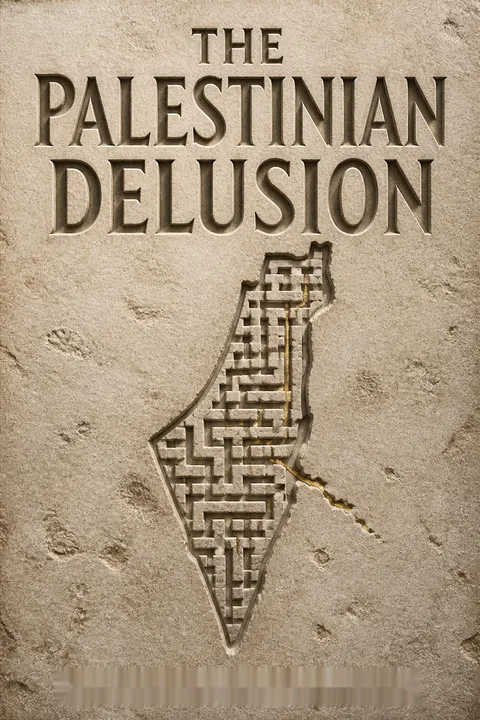
The Palestinian Delusion is a polemical history and policy argument, not a neutral survey. Its narrative runs from Jewish historical attachment and modern Zionism through partition, war, and repeated negotiations, then interprets each failed initiative through a central claim: religiously framed rejection of Jewish sovereignty has mattered more than disputed borders. The book is strongest when it insists that agreements should be judged against speeches, violence, and implementation, and when it shows how a diplomatic breakthrough can coexist with a wider unresolved conflict.
Its reasoning becomes less secure when examples from extremist speakers are used to characterize broad populations, or when contested historical claims are presented as definitive. The distinction between evidence and inference is especially important in its accounts of Palestinian identity, the 1948 refugee crisis, and the meaning of Arafat’s Hudaybiyya comparison. A leader’s statement may reveal an important political frame, but it does not automatically establish a unified motive shared by a people. Nor does the relatively recent development of a national movement make its adherents’ identity fictitious. National identities are historically formed; their formation is not, by itself, a refutation of political rights.
The book’s causal model also gives ideology priority over security concerns, leadership incentives, displacement, and competing national aspirations. These factors can reinforce one another. A fuller explanation would ask when religious arguments mobilize supporters, when leaders use them strategically, and how they interact with the practical stakes of territory and governance. Readers can gain from the book’s skepticism toward diplomatic theater while treating its broadest claims as hypotheses to test against a wider historical record. The result is a useful account of one influential interpretation of the conflict, but not a sufficient account of the conflict as a whole.
Review Summary
People Also Read







Glossary
jihad
Struggle, including armed struggleAn Arabic term meaning struggle or striving. Islamic traditions use it in multiple ways, including personal moral effort and armed struggle. Spencer emphasizes the armed and political meanings, arguing that some movements regard fighting Israel as a religious obligation. That interpretation is central to his argument, but Muslims and Islamic scholars do not all understand the term identically.
Hudaybiyya
Early Muslim-Quraysh treatyThe Treaty of Hudaybiyya was a truce concluded between Muhammad’s followers and the Quraysh of Mecca in 628, according to Islamic tradition. The agreement included concessions by Muhammad’s side and was followed by a later change in the balance of power. Spencer highlights Arafat’s comparison of the Oslo Accords to this treaty as evidence that Arafat viewed Oslo as tactical.
hudna
Temporary truceA hudna is a truce or period of suspended hostilities. In the book, the term appears in discussions of temporary agreements between Muslim and non-Muslim parties, including the political meaning Spencer assigns to Hamas’s offers of a long-term truce. It is distinct from a permanent settlement, although its precise legal and political interpretation can vary.
Nakba
Palestinian term for catastropheNakba is Arabic for catastrophe and is the term Palestinians use for the mass displacement and loss associated with the 1948 war and the establishment of Israel. The book discusses competing explanations for why Palestinians left their homes. The term names a collective historical experience, while the causes and responsibility for particular departures remain subjects of dispute.
Palestinian victimhood machine
Alleged system of victimhood propagandaSpencer’s label for what he describes as a coordinated pattern of exaggerating or fabricating Israeli abuses to build sympathy for Palestinians and pressure Israel. He uses examples involving wartime reports, disputed casualty claims, and media imagery. The label represents the author’s interpretation, not a neutral description of Palestinian institutions or a settled finding about every allegation.
About the Author

Download PDF
Download EPUB
.epub digital book format is ideal for reading ebooks on phones, tablets, and e-readers.








