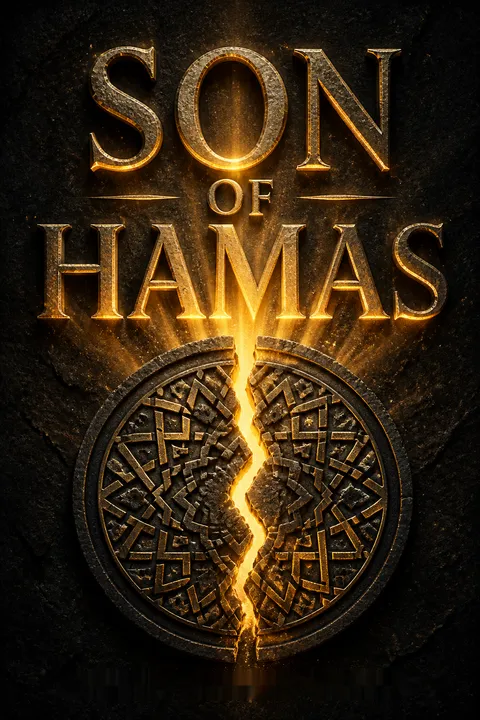


Key Takeaways
A son of Hamas can become its fiercest critic without ceasing to love his father.
A family divided by conviction. Mosab Hassan Yousef grows up as the eldest son of Sheikh Hassan Yousef, a respected preacher and one of Hamas’s founders. His father is loving, humble, and devoted to his community, yet supports a movement whose violence Mosab comes to reject. Their bond makes the memoir more than an account of espionage or conversion: every new belief risks becoming a wound to the people he loves.
At eighteen, Mosab is arrested after buying malfunctioning guns for a friend. He is beaten, interrogated, and imprisoned, while his father is repeatedly jailed too. The son’s journey runs between loyalties, not neatly away from them. Even after leaving, he describes his father’s love as enduring.
The memoir’s emotional force comes from refusing an easy conversion story in which a new identity cancels the old one. Family attachment persists across profound religious and political disagreement. That resembles what family-systems theory calls differentiation: a person can develop an independent moral judgment without severing every bond. Yet this is not a universal template. In situations involving coercion or danger, preserving family ties may be impossible or unsafe. Mosab’s specific account is notable because his father’s affection survives a break that could have made intimacy politically costly.
Political violence recruits children by making danger feel like belonging.
A cemetery becomes a playground. As a boy, Mosab grows up near a cemetery where bodies arrive amid the First Intifada. He and his friends begin throwing stones, partly to feel respected and to prove they are brave. One evening they aim at a bus but strike an Israeli military vehicle instead. Later, a settler catches Mosab after he hits a car with a stone and leaves him to walk home without shoes.
The violence is not abstract to him. It fills streets, disrupts school, and turns ordinary places into danger zones. Yet the rush of challenging armed soldiers makes him feel powerful. The memoir shows how children can mistake participation for agency when adults and political movements make fighting seem like the only meaningful role available.
The shift from fear to exhilaration is a sharp portrait of how group belonging can reward risk. Social identity research helps explain the appeal: people often adopt a group’s symbols and actions to secure status, especially when ordinary routes to recognition feel blocked. The story also complicates the idea that recruitment requires deep ideology. A child may join the performance of resistance before grasping its costs. Still, childhood participation is shaped by coercion, grief, and occupation, not merely peer pressure. Understanding the attraction does not excuse violence; it helps explain why punishment alone may fail to prevent it.
A movement built to serve the poor can drift toward armed struggle.
Welfare work changes direction. Mosab traces his father’s path from religious service into the Muslim Brotherhood, which he first understood as a movement of faith, education, charity, and care for poor families. In the West Bank, a younger faction pressed the Brotherhood to resist Israeli occupation. At a secret 1986 meeting, seven men, including Hassan Yousef, agreed to begin with civil disobedience. Hamas emerged from that decision.
In Mosab’s account, the movement’s tactics and purpose then change. Stones and burning tires give way to guns, suicide bombings, and attacks on civilians. The escalation is not presented as a single founding intention suddenly revealed, but as a succession of choices made under pressure, grief, and competition. The distance between serving a community and claiming a mandate to kill becomes harder to see from within.
This is a valuable warning about institutional drift: organizations can preserve their founding language while changing what that language permits. In political sociology, movements often contain competing wings whose influence shifts as repression, recruitment, and opportunity change. The account’s ladder metaphor captures gradual normalization, but its suggestion that moderation itself is especially dangerous risks treating a diverse population as a pipeline to extremism. The stronger insight is narrower: a benevolent social mission does not immunize an organization against militarization. Leaders and members need explicit limits on violence, not merely confidence in their original motives.
Prisons can become rival governments, where suspicion turns justice into torture.
Two systems punish the accused. Mosab describes Israeli detention in Maskobiyeh, where he is hooded, deprived of sleep, and chained for long periods. But prison also exposes him to coercion by Hamas’s own security wing, the maj’d. It investigates suspected collaborators and maintains discipline inside the camp, with threats and beatings used to force confessions.
His friend Akel Sorour, a poor farmer, is tortured after another prisoner names him under pressure. Akel confesses to grotesque acts Mosab believes are fabricated; the accusations then reach his village, and his sister and neighbors reject him. Mosab’s father later reviews the files and concludes that many suspects were innocent. The episode shows how a security apparatus can reproduce the abuses it claims to resist, while fear makes unreliable testimony look like proof.
The parallel is disturbing because it shifts attention from which side claims legitimacy to how power operates when oversight disappears. Coerced confession is a known problem in criminal justice: pain and sleep deprivation can produce compliance rather than truth. The book’s prison scenes make that principle concrete through the lasting social punishment of Akel and his family. At the same time, the accounts come through one participant’s recollection and should not be mistaken for a complete institutional audit. Their ethical force does not depend on every detail being independently established: unchecked secret authority invites abuse.
Treating enemies as people can interrupt inherited hatred, but not erase politics.
A different moral vocabulary. Mosab enters a Christian Bible study while still a Muslim, curious about what outsiders might teach him. Reading the Sermon on the Mount, he encounters the idea that enemies should be loved rather than hated. His Israeli Shin Bet contacts have also complicated his assumptions: although some Israeli soldiers abused him, individual handlers treat him with patience and respect. He begins to distinguish people from the ideas and systems that drive them.
This change does not make his earlier suffering disappear, nor does it settle the conflict over land, rights, or security. It changes the question he asks himself: rather than assigning enemy status by nationality or religion, he examines the impulses of revenge and prejudice within himself. For Mosab, that moral shift becomes the basis for a life no longer organized around retaliation.
The insight connects interpersonal contact with prejudice reduction: meeting people as individuals can weaken stereotypes that thrive at a distance. Mosab’s encounters are unusually intense because they occur inside detention, intelligence work, and religious study, not in a low-stakes exchange. His account also gives forgiveness a demanding meaning: it does not require pretending that abuse was harmless. A necessary qualification is that personal reconciliation cannot substitute for political remedies. Loving an adversary may reduce the desire for revenge, but it cannot by itself resolve unequal power, displacement, or competing claims to sovereignty.
Intelligence can save lives while making its informant morally complicit.
A dangerous bargain. After Mosab agrees to work with the Shin Bet, he initially imagines becoming a double agent who can acquire weapons and kill Israelis from within. Instead, his handler, Loai, offers money, education, and a relationship built on conversation. Mosab begins sharing information about Hamas and other armed groups. He says that intelligence helped prevent attacks and protect civilians, and that it also helped keep his father from being assassinated.
The work is never morally clean. Mosab helps identify targets, supports operations, and sees people killed. When Israeli forces prepare to assassinate five would-be bombers, he insists they try to arrest them instead. They are captured, but one names him, placing him at risk. His story presents intelligence as a series of choices between competing harms, not a simple contest between good and evil.
The tension resembles the ethics of consequentialism: an action may be defended by the lives it is expected to save, yet its means and foreseeable costs still matter. Informants also face a principal-agent problem, since handlers control information and can use an asset in ways the asset cannot fully judge. Mosab’s insistence on capture over killing is a meaningful boundary, but it does not dissolve his involvement in lethal operations. The memoir is strongest when it leaves that residue visible. Readers can recognize lifesaving consequences without treating them as automatic moral absolution.
An insurgency can have no single head, and still remain organized.
The visible leaders are not always in charge. Mosab’s account portrays Hamas as difficult to map: prominent figures are arrested or watched, yet the organization continues operating. His father, widely treated as a leader, admits he does not control the movement’s decisions or even know who has access to its funds. Mosab eventually helps identify a concealed network of men who manage money, weapons, recruitment, and logistics through an Islamic studies center.
The revelation changes the intelligence problem. Removing famous leaders does not necessarily dismantle a movement if resources and decisions flow through hidden relationships. Mosab describes finding a senior military leader through prolonged surveillance of an unremarkable garage. The case suggests that an organization can look leaderless in public while still relying on a small, secretive network behind the scenes.
This distinction between public hierarchy and operational network is central to understanding clandestine groups. Network analysis asks who connects people, money, and information, rather than assuming the most visible figure holds the most power. That model also explains why decapitation strategies can disappoint: replacing a leader may leave the connective structure intact. Yet the memoir’s discovery is a personal account, not a general proof that Hamas always functions this way. Its broader lesson is methodological: investigators should test assumptions about authority instead of confusing public prominence with control.
Peace demands institutions and compromise, not only brave individuals or ceasefires.
Revolutionaries inherit practical duties. Hassan Yousef eventually argues that Israel is a lasting reality and suggests that a two-state arrangement could be considered. He worries that Hamas is poorly suited to govern: movements that prize ideological purity may struggle with the compromises required to manage budgets, water, food, electricity, and public services. Mosab also recounts failed negotiations and leaders who, in his view, benefited politically from continued confrontation.
The book’s own political judgments are strongly shaped by the narrator’s experience and should be read as such. Its central practical point is clear: a ceasefire or a celebrated leader cannot build a functioning political settlement on its own. Peace requires institutions able to govern, negotiate, and accept limits, as well as parties willing to treat coexistence as a real objective rather than a temporary tactic.
The contrast between revolutionary politics and governing is a useful institutional insight. Protest movements can unify people through a shared enemy, while administration forces decisions about scarce resources and competing needs. Those demands reward compromise, accountability, and technical competence. The memoir’s account of particular offers and leaders is contested political interpretation, not a neutral history of the negotiations. Still, the distinction survives that caveat: peace agreements depend on incentives and institutions, not simply good intentions. A durable settlement also needs to address substantive grievances, or procedural cooperation will remain fragile.
Leaving the conflict did not end the cost of choosing conscience.
Freedom arrives with separation. By 2007, Mosab is exhausted by secrecy, danger, and the feeling that intelligence work cannot end a war sustained by ideas. He refuses offers to remain in the Shin Bet’s service and leaves for the United States. In 2008, he publicly declares his Christian faith. The news devastates his family, especially his father, who fears that his son has abandoned both Islam and their shared future.
Their relationship does not vanish. His father refuses to disown him and tells him that he remains his son, even as they disagree. Mosab’s departure brings physical safety and the freedom to speak, but also loneliness, financial uncertainty, and the loss of status and home. The ending offers no political resolution. It measures the choice by the lives and loyalties it costs.
The ending resists the familiar redemption plot in which a moral decision produces a clean reward. Instead, conscience creates new forms of loss, while love remains possible without agreement. That complexity matters because public defections are often narrated as either heroic liberation or betrayal; lived experience can contain both social consequences and genuine relief. The memoir also leaves readers with a difficult question: how much sacrifice should an individual be expected to make for a principle? Its answer is personal rather than universal, and the costs should not be romanticized.
Analysis
Son of Hamas works simultaneously as family memoir, conversion narrative, and insider account of an armed movement. Its structure is deliberately double-sided: Mosab begins with the bodily immediacy of arrest, then circles back to his childhood, his father’s religious formation, and the political history that shaped their household. The result is not a detached history of the conflict. It is a story about how political categories enter a family and become intimate obligations.
The central moral transformation is not simply from Muslim to Christian or from militant to informant. It is from judging people primarily through collective identity toward evaluating the consequences of specific choices. That change gives the memoir its strongest scenes: a son recognizing his father’s virtue and complicity at once, an intelligence asset choosing arrest over assassination, and a prisoner seeing that his own movement can abuse its members. These contradictions prevent easy moral sorting.
The book’s account of political history is also openly interpretive. Its claims about leaders’ motives, negotiations, intelligence operations, and responsibility for violence come from a participant with exceptional access but also strong religious and political commitments. Readers should distinguish the value of testimony from the completeness of a historical explanation. One person’s vantage can reveal hidden decisions while leaving other participants’ accounts absent.
That limitation sharpens, rather than erases, the book’s broader argument. Personal forgiveness can weaken the emotional machinery of revenge, but it cannot independently settle disputes over territory, rights, security, or statehood. The narrative is most persuasive when it shows how individual moral change interrupts violence without pretending that structural conflict has disappeared. Its lasting question is therefore both intimate and political: can people refuse to reproduce the injuries that shaped them, while still confronting the systems that keep those injuries in motion?
Review Summary
Son of Hamas is a controversial memoir by Mosab Hassan Yousef, son of a Hamas founder. Reviews are mixed, with some praising its insights into the Israeli-Palestinian conflict and the author's conversion to Christianity, while others question its credibility and motives. Many readers found it gripping and eye-opening, offering a unique perspective on Hamas, Israeli intelligence, and life in the occupied territories. Critics argue it may be biased or inaccurate. The book sparked discussions about religion, politics, and the complexities of the Middle East conflict.
People Also Read
Glossary
Green Prince
Mosab’s intelligence codenameThe codename Mosab says the Shin Bet gave him while he worked as an informant. Green referred to Hamas’s flag, while Prince referred to his position as the son of a prominent Hamas leader. The name captures the unusual access that made him valuable to Israeli intelligence and the double life that defined his work.
Shin Bet
Israeli internal security serviceIsrael’s domestic security and intelligence agency, responsible in the memoir for interrogations, surveillance, and efforts to prevent attacks. Mosab describes working with Shin Bet officers who recruit and manage him as an informant. His account distinguishes the agency from the Mossad, Israel’s foreign intelligence service, while showing cooperation and rivalry among security organizations.
maj’d
Hamas prison security wingThe name Mosab uses for Hamas’s internal security group in the Israeli prison camps. It monitors prisoners, gathers intelligence, enforces rules, and investigates suspected collaborators. In his account, the maj’d uses coercion and torture to obtain confessions, sometimes punishing people on unreliable accusations and allowing fear to govern prison life.
Al-Qassam Brigades
Hamas’s armed wingThe armed wing of Hamas, named in the book as the Ezzedeen Al-Qassam Brigades. Mosab traces its emergence alongside Hamas’s turn from social and political organizing toward armed operations. The memoir describes its members as operating through cells and networks, with varying degrees of coordination and independence.
Intifada
Palestinian uprisingAn uprising against Israeli rule in the occupied territories. The memoir discusses the First Intifada, which began in 1987 and included demonstrations, strikes, stone throwing, and escalating violence, and the Second Intifada, which began in 2000 and involved intensified attacks, military operations, and civilian casualties. The term means an uprising or shaking off.
shurah council
Hamas consultative decision groupA small council that Mosab describes as making strategic and daily decisions for Hamas. In his account, its members were senior figures, but they were not necessarily the hidden network controlling finances and military operations. The term illustrates why formal or visible leadership did not always reveal who held practical authority.
jalsa
Islamic study meetingA religious study group or meeting. In Mosab’s youth, a jalsa encouraged Qur’an memorization and taught principles that participants understood as guiding them toward an Islamic state. In prison, the term also describes scheduled group meetings for religious instruction, organizational discipline, and news among members.
FAQ
What's Son of Hamas about?
- Personal Journey: Son of Hamas is a memoir by Mosab Hassan Yousef, chronicling his life as the son of a Hamas leader and his transformation from a potential terrorist to a follower of Jesus.
- Conflict and Betrayal: The book delves into themes of betrayal, political intrigue, and the moral dilemmas faced by individuals in the Israeli-Palestinian conflict.
- Unique Perspective: Yousef offers a rare insider's view of Hamas, the complexities of the Middle East, and the personal cost of diverging from his family's expectations.
Why should I read Son of Hamas?
- Insightful Perspective: The book provides a unique viewpoint on the Israeli-Palestinian conflict from someone deeply embedded in Hamas who chose a different path.
- Personal Transformation: Readers will find inspiration in Yousef's journey of faith and his struggle to reconcile his upbringing with his newfound beliefs.
- Understanding Extremism: It offers a deeper understanding of the motivations behind extremism and the potential for change, relevant for discussions on peace and conflict resolution.
What are the key takeaways of Son of Hamas?
- Power of Choice: Yousef emphasizes the importance of personal choice in shaping one's identity and destiny, even against familial and societal pressures.
- Complexity of Conflict: The book illustrates that the Israeli-Palestinian conflict involves deep-rooted historical, cultural, and religious complexities.
- Hope for Peace: Yousef's story conveys a message of hope, suggesting that understanding and compassion can lead to reconciliation and peace.
What are the best quotes from Son of Hamas and what do they mean?
- "I could have been a hero and made my people proud of me." This quote reflects Yousef's internal conflict between societal expectations and his desire for a different life.
- "When Middle Eastern nations—Jews and Arabs alike—start to understand some of what I understand, only then will there be peace." It highlights Yousef's belief in mutual understanding as essential for peace.
- "I realized that what I have done has caused another deep wound that might not heal in this life." This speaks to the personal cost of his choices and the pain of betrayal felt by his family.
How does Mosab Hassan Yousef describe his relationship with his father in Son of Hamas?
- Admiration and Conflict: Yousef admires his father, a prominent Hamas leader, but struggles with the expectations to follow in his footsteps.
- Betrayal and Shame: He feels a deep sense of betrayal for choosing a path against his father's beliefs, acknowledging the shame it brings to his family.
- Desire for Understanding: Despite the conflict, Yousef expresses a desire for his father to understand his choices, emphasizing the complexity of their relationship.
What role does faith play in Son of Hamas?
- Transformation Through Faith: Yousef's journey to Christianity is central to the narrative, illustrating how faith can transform one's life and perspective.
- Conflict with Upbringing: His newfound beliefs create tension with his Islamic upbringing, leading to feelings of guilt and shame for betraying his family's expectations.
- Hope and Redemption: Faith becomes a source of hope and redemption for Yousef, guiding him through challenges and shaping his understanding of love and forgiveness.
How does Son of Hamas address the theme of violence?
- Cycle of Violence: Yousef discusses the cycle of violence in the Israeli-Palestinian conflict, highlighting its perpetuation of suffering on both sides.
- Personal Experience: He shares his experiences witnessing violence and its impact on his worldview, ultimately leading him to reject violence as a means to an end.
- Call for Peace: The book advocates for understanding and compassion as alternatives to violence, suggesting true change comes from within rather than through aggression.
What insights does Son of Hamas provide about Hamas?
- Insider Perspective: Yousef offers an insider's view of Hamas, detailing its inner workings, motivations, and leadership complexities.
- Humanizing the Enemy: He humanizes Hamas members, showing they are driven by ideology, personal experiences, and a desire for justice.
- Critique of Extremism: While acknowledging the organization's goals, Yousef critiques Hamas's methods, particularly the violence and terror tactics against civilians.
How does Yousef's story reflect the broader Israeli-Palestinian conflict?
- Personal vs. Political: Yousef's personal journey mirrors the larger political struggle, illustrating how individual choices can impact the collective narrative.
- Complex Identities: The book highlights the complexity of identities in the conflict, showing individuals can embody multiple roles and beliefs.
- Hope for Reconciliation: Ultimately, Yousef's story serves as a microcosm of the potential for reconciliation and understanding amidst deep-seated animosities.
What challenges does Yousef face in Son of Hamas?
- Cultural Expectations: He grapples with family and societal expectations, feeling the weight of his father's legacy as a Hamas leader.
- Identity Crisis: Yousef experiences an identity crisis as he navigates his faith, his family's beliefs, and his desire for peace and understanding.
- Fear of Rejection: He fears rejection from both his family and the broader Muslim community for his conversion to Christianity, leading to feelings of isolation.
How does Son of Hamas conclude?
- Journey of Faith: The conclusion emphasizes Yousef's ongoing journey of faith and understanding, highlighting the importance of love and forgiveness.
- Message of Hope: He leaves readers with a message of hope, suggesting peace is possible through understanding and compassion, even amidst deep-rooted conflict.
- Call to Action: Yousef encourages readers to reflect on their beliefs and actions, urging them to seek understanding and work towards reconciliation in their own lives.
Download PDF
Download EPUB
.epub digital book format is ideal for reading ebooks on phones, tablets, and e-readers.








