

Key Takeaways
Read Muhammad's contested biography through the sources Muslims treat as authoritative
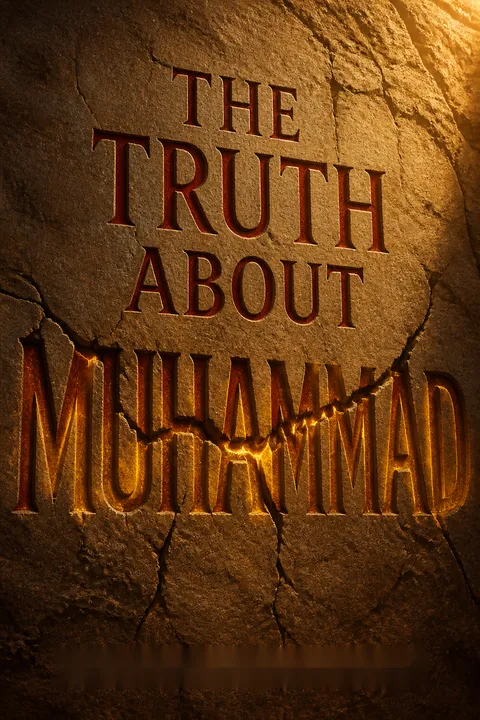
The book's central question. Robert Spencer asks what Muhammad's life means in a present where both peaceful reformers and violent movements appeal to his example. He argues that the Qur'an, reports about Muhammad, and early biographies matter not only as evidence about seventh-century events, but because Muslim traditions use them to guide belief and law. The book grew out of post-9/11 debates over jihad, religious pluralism, and the 2006 Muhammad-cartoon controversy.
A charged argument. Spencer's subtitle and selection of incidents signal a polemic, not a neutral or comprehensive biography. He focuses on material he sees as troubling for modern readers, while repeatedly asking whether extremists can cite accepted Islamic sources. The reader's task is to separate what the sources report from the author's wider claims about Islam and Muslims.
What's valuable here is the insistence that public debate take religious sources seriously rather than treating them as irrelevant whenever they complicate a reassuring story. But taking a source seriously is not the same as accepting one author's interpretation of it. The distinction matters especially in a book whose title announces its verdict before its evidence is weighed. Read it as an argument about the political power of religious memory, then test its conclusions against the diversity of Muslim interpretation it describes.
Separate the historical Muhammad from the Muhammad communities inherit
Three kinds of evidence. The Qur'an offers scattered references to events, not a continuous life story. Hadith are reports of Muhammad's sayings and actions, collected and assessed by later scholars. The sira is biography, with Ibn Ishaq's influential account written roughly 150 years after Muhammad's death and preserved through a later editor. Spencer notes that Muslim scholars themselves recognize forged or disputed reports, even as some collections, especially Bukhari, carry great religious authority.
Two questions, not one. The book distinguishes what can be established about Muhammad as a historical person from what Muslims have inherited as his authoritative example. The first remains uncertain, Spencer says; the second continues to shape religious practice whether or not every reported episode can be independently verified.
This distinction is a useful safeguard against a common mistake: treating a tradition's influence as proof that every story in it is historically exact. A report can shape law and identity even when its origins are uncertain. Conversely, the late compilation of a report does not automatically make it false. The strongest reading keeps both questions open: how reliable is the account, and what authority does a community give it? Spencer raises this methodological problem, though his own polemical purpose sometimes encourages a firmer verdict than his source caveats warrant.
Track the Hijra: a persecuted preacher becomes a governing power
A turning point in the story. The Hijra is Muhammad's move from Mecca to Medina in 622, after years of opposition to his preaching. Spencer treats it as the shift from a small religious movement to a community with political and military authority. The Muslim calendar begins with this migration, underscoring its importance as the start of an organized Muslim society.
New responsibilities, new revelations. In Medina, Muhammad led a community, negotiated with local groups, made laws, and directed military action. The book contrasts the early Meccan passages, often focused on monotheism and judgment, with later material addressing governance and conflict. This is the narrative hinge that frames Spencer's account of Muhammad's transformation into a political and military leader.
The Hijra illustrates how religious movements change when they move from marginal preaching into public rule. Questions of security, law, taxation, and loyalty become practical rather than theoretical, and scripture can speak to those pressures. That context helps explain the different concerns found in the book's Meccan and Medinan material. It does not settle whether particular policies were necessary, just, or binding in other eras. A historical transition can explain a teaching's emergence without proving that later communities must reproduce it.
Treat battlefield stories as lawmaking, not merely ancient war reports
Raids shaped doctrine. Spencer describes the Nakhla raid, in which Muslims attacked a Quraysh caravan during a month when fighting was traditionally restricted. Muhammad first distanced himself from the action, but a Qur'anic revelation then defended the raid by judging the opponents' persecution more serious. The episode, in Spencer's reading, shows how military events and religious justification became intertwined.
Badr made the pattern visible. At the 624 Battle of Badr, a smaller Muslim force defeated a larger Quraysh force. The Qur'an and later reports connected victory to divine help, discussed prisoners and booty, and urged believers to fight. Spencer argues that these accounts supplied later Muslims with precedents for armed struggle. His case concerns the authority such stories acquired, not simply the fact that battles occurred.
Founding stories often do more than preserve memory: they provide examples for later decisions. Badr's religious significance, as presented here, lies in how victory becomes a model of faith, leadership, and reward. Yet a precedent is not self-interpreting. Later readers decide whether it applies, what counts as an equivalent situation, and which ethical limits remain in force. Spencer is right to ask how militants use such narratives, but their use of a precedent does not establish that it is the only legitimate reading.
Notice how the book ties Jewish relations to political conflict
From alliance to rupture. Spencer recounts an early agreement between Muhammad's Muslim community and Jewish groups in Medina, followed by growing conflict. He describes disputes over Muhammad's prophetic claims, the change in the direction of prayer from Jerusalem to Mecca, and the expulsion of Jewish tribes. In his account, the remaining Banu Qurayzah were accused of breaking their alliance during the siege of Medina in 627.
A contested mass killing. Early Muslim accounts cited by Spencer say that the men of Qurayzah were executed and women and children taken captive. The reported number of men killed varies, with Ibn Ishaq's account placing it in the hundreds. Spencer argues that the episode matters because Muhammad's example carries religious authority. The event's scale, circumstances, and interpretation remain disputed within the material he surveys.
This episode is the book's starkest test of how historical context and moral judgment interact. The account describes a wartime allegation of betrayal, a decision by an allied arbiter, and a lethal punishment that later readers may treat as precedent. Context helps explain the actors' choices, but does not erase the human cost. Equally, an account preserved in religious tradition deserves scrutiny rather than automatic acceptance. The chapter's implications should not be generalized from a reported seventh-century conflict to Jews, Muslims, or their relations across all periods.
Ask whose interests a revelation appears to settle
Revelation in personal disputes. Spencer highlights passages that Islamic tradition connects to Muhammad's household. One concerns his marriage to Zaynab, his adopted son's former wife, and a revelation addressing the marriage and adoption. Another concerns accusations against Aisha, whose innocence the tradition says was affirmed by revelation. The book also presents differing accounts of a revelation involving Muhammad's wives and either honey or his concubine Mary.
A disputed episode. Spencer also discusses the so-called Satanic verses, a contested report that Muhammad briefly recited words approving pagan intercessors before retracting them. Some Muslim scholars reject the account; others in the early tradition transmitted it. Spencer sees these stories as raising questions about prophetic authority and convenience. They are reports and interpretations, not independently established facts simply because the book recounts them.
When religious authority enters domestic or political disputes, observers naturally ask whether revelation confirms a decision already desired by its recipient. That is a serious question, but motive is difficult to establish from a story transmitted generations later, especially when versions differ. The value of these examples is less that they prove private intent than that they expose a tension: believers may understand a ruling as divine guidance, while critics may see personal advantage. A careful account keeps both the narrative's religious meaning and its evidentiary limits in view.
Treat gender rules as part of the biography's continuing legacy
Marriage and authority. Spencer draws attention to reports that Muhammad married Aisha when she was six and consummated the marriage when she was nine, and to Qur'anic and hadith material on marriage, inheritance, testimony, and a husband's authority over his wife. He also describes the taking of women as captives after military victories. The book argues that such reports matter because Muhammad is widely treated in Islamic tradition as a model for conduct.
History is not a license. Spencer connects these precedents to later debates about child marriage and women's legal status. He acknowledges that child marriage existed in seventh-century Arabia, but argues that invoking Muhammad's example can give the practice continuing religious legitimacy. The book's broad claims about effects across Muslim societies require care: a textual precedent does not by itself describe every community's law or every Muslim's behavior.
The chapter raises an important question about how exemplary biographies influence norms: when a revered figure's conduct is treated as timeless, historical explanation alone may not answer modern ethical objections. At the same time, religious communities interpret precedent through institutions, changing law, and competing authorities. The gap between a source and actual practice matters. Criticism is strongest when it identifies the specific rule, its transmission, and its effects, rather than treating Muslim women or Muslim societies as uniform.
Do not confuse textual precedent with every Muslim's practice
A figure with more than one face. Spencer records accounts of Muhammad's kindness to his companions and servants, and examples of mercy toward opponents. He sets these beside reports of warfare, executions, enslavement, and commands against unbelievers. His central argument is that both peaceful Muslims and jihadists can appeal to the same revered figure, while jihadists often use martial episodes to claim they represent the pure tradition.
Interpretation remains decisive. The book acknowledges a spectrum of Muslim belief and practice, and notes that many Muslims oppose terrorism. Yet it argues that reformers are disadvantaged when they ignore difficult passages. This is a claim about religious authority and political contest, not proof that all Muslims endorse violence or that texts determine behavior in a single way.
The tension between a tradition's peaceful and coercive resources is not resolved by selecting only the passages that flatter one's preferred image. It is resolved through interpretation, community norms, and institutions that decide which examples govern present conduct. Spencer usefully challenges simplistic claims that extremists have no textual basis. But a textual basis is not a social consensus, and the conduct of a violent minority cannot establish the beliefs of a whole population. The question is how interpretations gain authority, not merely which passages exist.
Defend inquiry without turning criticism into collective blame
Speech as a test. The book opens with the 2006 cartoon controversy and the 2004 murder of Dutch filmmaker Theo van Gogh to argue that threats and violence should not place religious figures beyond criticism. Spencer regards freedom of speech as including the right to offend, and rejects polite accounts that evade difficult evidence. He urges readers and policymakers to examine the sources rather than assume that extremism has no connection to religious tradition.
A sweeping prescription. Spencer proposes conditioning aid on opposition to jihadist teaching, scrutinizing immigration applicants' commitments to pluralism, and challenging Muslim organizations he considers insufficiently reformist. These recommendations are part of the book's argument, not neutral historical findings. They raise a further question: how can a society defend open debate without treating religious identity itself as evidence of disloyalty?
The defense of free inquiry is strongest when it protects criticism of every religion and ideology consistently, including unpopular or offensive criticism. The book's proposals, however, move from textual analysis to broad security policy. That step needs independent evidence, due process, and safeguards against collective suspicion. A government can oppose violence and coercion without assuming that a faith's adherents share one political program. The productive challenge is to hold both commitments together: investigate ideological justifications rigorously, and protect equal civic standing for people who reject them.
Analysis
Spencer's book is best read as a polemical intervention in the post-9/11 debate over whether jihadist violence is an aberration or has roots in authoritative Islamic tradition. Its strongest organizing insight is that a religious founder's received biography can matter politically even when historians cannot verify every episode. The distinction between the historical Muhammad and the Muhammad preserved in Qur'an, hadith, and sira is therefore essential: uncertain reports can still shape law, devotion, and claims of legitimacy.
The book also identifies a real interpretive problem. Jihadists cite accounts of warfare, conquest, and punishment, while reform-minded Muslims may emphasize mercy, restraint, or historical context. Simply asserting that extremists have hijacked a peaceful religion does not answer their textual arguments. At the same time, Spencer often moves quickly from reported episodes to broad conclusions about Islam's character and the weakness of Muslim reformers. That inference is not established by the existence of a precedent. Texts require interpretation, and communities differ in which reports they accept, how they reconcile them, and whether they treat them as binding.
Source criticism is a central tension. Spencer notes that the Qur'an is not a continuous biography, that hadith reports can be disputed, and that the earliest full biography was compiled generations after Muhammad. Yet he frequently presents the most damaging traditions as decisive evidence. A more cautious method would distinguish the report's age, transmission, competing versions, later legal reception, and present-day use. The book's selective focus also makes it a poor stand-alone introduction to Islam, though a useful guide to controversies it foregrounds.
Its lasting value lies less in its sweeping policy prescriptions than in the questions it forces into view: how does a community decide which founder stories govern present behavior, and can free societies examine those stories without stigmatizing believers? The most rigorous answer neither sanitizes difficult sources nor mistakes them for a uniform Muslim political program.
Review Summary
The Truth About Muhammad receives polarized reviews (3.88/5, 1547 reviews). Supporters praise Spencer's research, citing direct quotes from Islamic sources and finding the work factual and enlightening about Muhammad's life, military campaigns, and influence on modern Islam. Critics call it biased, Islamophobic, racist propaganda with distorted facts and cherry-picked information. Several reviewers note the book's one-sided approach, though some appreciate its unflinching examination compared to apologetic accounts. Many recommend reading it alongside Karen Armstrong's contrasting biography for balance.
People Also Read






Glossary
Qur'an
Islam's sacred scriptureThe central scripture of Islam, understood by Muslims as revelation from Allah delivered to Muhammad. In Spencer's account, it contains scattered references to events in Muhammad's life rather than a continuous biography. Its passages are interpreted alongside reports about Muhammad and later commentary.
Hadith
Reports about MuhammadA report describing Muhammad's words, actions, or tacit approval. Hadith collections were compiled after his death and include traditions assessed by scholars for reliability. In Islamic practice, hadith help explain Qur'anic passages and inform religious conduct and law.
Sira
Biography of MuhammadThe biographical tradition about Muhammad. Spencer focuses especially on Ibn Ishaq's early biography, which survives through a later edited version and excerpts preserved by other writers. Sira supplies narrative detail that is not presented as a continuous account in the Qur'an.
Sunnah
Prophetic model and practiceThe normative example associated with Muhammad, drawn principally from reports of his words, actions, and approvals. Muslims consult the Sunnah alongside the Qur'an for religious practice and legal reasoning. The term refers to an authoritative model, not simply a record of historical events.
Hijra
Migration to MedinaMuhammad and his followers' migration from Mecca to Medina in 622. The move marked a major change in the community's circumstances, as Muhammad became a political as well as religious leader. The Islamic calendar counts its years from this event.
jihad
Striving in God's causeA term used in Islamic traditions for striving in God's cause. In the sources emphasized by Spencer, it often refers to armed struggle, particularly in accounts of Muhammad's military campaigns and later legal discussions. Its meaning and application vary across interpretations and contexts.
dhimmi
Protected non-Muslim subjectA non-Muslim, especially a Jew or Christian, living under Muslim rule with a recognized but subordinate legal status. In the historical arrangements described by Spencer, dhimmis could practice their religion under conditions and restrictions, and typically paid a special tax. Practices varied across governments and periods.
jizya
Tax on non-Muslim subjectsA tax historically imposed on certain non-Muslim subjects under Muslim rule. In Spencer's account, payment of jizya was connected to protection and to a subordinate status for Jews and Christians who did not convert to Islam. The tax's application and meaning differed across historical settings.
qibla
Direction faced during prayerThe direction Muslims face during prayer. Spencer recounts the early Muslim community's change from facing Jerusalem to facing the Ka'bah in Mecca. The shift appears in the book as both a religious practice and a marker of the community's changing relationship with other groups.
Satanic verses
Disputed report of recitationA contested account in early Islamic tradition that Muhammad briefly recited words approving the intercession of pagan goddesses before retracting them. Some Muslim scholars reject the report, while other early sources transmit it. Spencer discusses it as a challenge to claims about prophetic revelation and reliability.
About the Author
Other books by Robert Spencer
Download PDF
Download EPUB
.epub digital book format is ideal for reading ebooks on phones, tablets, and e-readers.








