Key Takeaways
1. The Koran Presents a Contradictory Message of Peace and Violence
It’s hard to imagine that Blair, Bush, and Potemra are reading the same book as that read by Wilders, Fallaci, and Khomeini.
Conflicting interpretations. The book highlights a stark dichotomy in how the Koran is perceived: some Western leaders view it as progressive and humanitarian, while critics and jihadists see it as inciting hatred and war. This divergence suggests a fundamental misunderstanding or selective reading of the text. For example, former British Prime Minister Tony Blair called the Koran "progressive [and] humanitarian," while Dutch parliamentarian Geert Wilders labeled it "the Mein Kampf of a religion which has always aimed to eliminate the others."
Jihadist justification. Jihadists consistently cite Koranic verses to justify violence against non-Muslims, viewing it as a divine mandate. Figures like Osama bin Laden and Khalid Sheikh Mohammed copiously quote passages such as "Then fight and slay the pagans wherever you find them" (9:5) to legitimize their actions. This interpretation is not dismissed as a fringe view by the author, but rather as a consistent thread within the text.
The author's conclusion. The author argues that the Koran contains both peaceful and violent injunctions, leading to confusion. This dual nature means that readers can find justification for either tolerance or aggression, depending on their interpretation and the context they apply. The book emphasizes that understanding this inherent tension is crucial for comprehending the motivations behind global jihad.
2. Western Leaders Misinterpret the Koran's True Intent
Many policymakers simply assume the Koran teaches peace without bothering to study the text, an act which might raise some uncomfortable questions.
Flawed policy assumptions. The book contends that many Western policymakers operate under the unquestionable dogma that the Koran teaches peace, leading to flawed foreign and domestic policies. This assumption often stems from a fear of being labeled "racist" or "bigoted" if they question Islam's peaceful narrative. For instance, President Obama's 2009 Cairo address, filled with reverential references to the "holy Koran," is presented as an example of "wishful thinking, self-delusion, and political correctness."
Selective quoting. The author criticizes leaders for selectively quoting Koranic verses out of context to support a narrative of peace. Obama, for example, cited 5:32 ("whoever kills an innocent, it is as if he has killed all mankind") but ignored the immediate follow-up in 5:33, which mandates severe punishments for those deemed "not innocent." Similarly, Obama's use of 9:119 to advocate inter-religious tolerance is shown to be a misrepresentation of a passage actually scolding Muslims for refusing to fight unbelievers.
Consequences of ignorance. This willful blindness, the book argues, prevents an accurate assessment of the jihadist threat. If the Koran mandates jihad against non-Muslims, then displays of U.S. goodwill are unlikely to have much effect. The author stresses that understanding Islam's theological and cultural frame of reference is crucial for effective policymaking, as current approaches often inadvertently reinforce worldviews that legitimize "everlasting enmity between Muslims and non-Muslims."
3. The Koran's Claim of Perfection Belies Its Complex Compilation
The 114 chapters of the Quran have remained unchanged through the centuries.
Contradictory claims. The Koran is revered by Muslims as the unadulterated, eternal, and perfect word of Allah, a "glorious Koran" (85:21) that is "free from any flaw" (39:28). However, the book highlights that this claim of immutability is challenged by the historical process of its compilation. Muhammad himself, being "unlettered" (7:157), did not write down his revelations, leading to a fragmented collection after his death.
Lost and abrogated verses. The impetus for collecting the Koran arose after many Muslims who had memorized parts of it were killed in battle, raising fears that "a large part of the Qur’an may be lost." The Koran itself acknowledges that Allah "abrogate[s] or cause[s] to be forgotten" revelations (2:106). Notably, a passage mandating death by stoning for adultery was originally part of the Koran but was later omitted, yet its legal force persists in Islamic law due to early Muslim testimony.
Variant versions and suppression. The first compilation by Zaid bin Thabit was not widely distributed, leading to arguments over the correct text during Uthman's caliphate. Uthman ordered all other versions burned, including those by prominent companions like Abdullah bin Masud and Ubayy bin Ka'b, which differed significantly. The discovery of ancient Koranic manuscripts in Sana'a, Yemen, containing passages different from the canonical version, further challenges the notion of a perfectly preserved, unchanging text.
4. Biblical Narratives are Reimagined to Affirm Muhammad's Prophecy
The Koran’s borrowings from the Bible go all the way back to the story of Adam and Eve, although it does not appear at the beginning of the Koran as it does at the beginning of the Bible.
Shared stories, altered meanings. The Koran incorporates numerous stories from Jewish and Christian scriptures, presenting them as part of a continuous divine revelation. However, these narratives are often subtly altered or embellished to serve the overarching goal of validating Muhammad's prophethood and the supremacy of Islam. For instance, the story of Noah's ark appears, but Noah's people are punished for idolatry, not just corruption, making Noah a "proto-Muhammad" preaching an identical message.
Jewish and Christian legends. The book details how the Koran draws not only from canonical scriptures but also from Jewish and Christian legends and apocryphal texts.
- The story of Solomon and the Queen of Sheba includes talking animals and the Queen's hairy legs, elements found in the Targum of Esther, not the Bible.
- The "companions of the Cave" (18:9–26) is an adaptation of the Christian story of the Seven Sleepers of Ephesus.
- Jesus breathing life into clay birds (3:49) is found in the second-century Infancy Gospel of Thomas.
Muhammad's defense against plagiarism. During Muhammad's lifetime, critics accused him of passing off "tales of the ancients" (8:31) as divine revelation. The Koran responds by asserting that Muhammad's knowledge of these ancient stories, despite not being present, is proof of his divine inspiration. This narrative strategy transforms familiar tales into evidence for Islam's truth, while simultaneously claiming that earlier scriptures were corrupted.
5. Muhammad's Life and Example are Central to Islamic Conduct
In light of Allah’s tender solicitude for his prophet, it’s no wonder the Koran and Islamic tradition are clear that Muhammad is the supreme example of behavior for Muslims to follow.
The "excellent example." The Koran presents Muhammad as the "seal of the prophets" (33:40) and an "excellent model of conduct" (33:21), whose words and deeds are to be obeyed (4:80). This centrality means that Muhammad's actions, even in personal matters, become normative for Muslims. The Hadith, a voluminous collection of his sayings and actions, fills in the details where the Koran is vague, forming a crucial foundation for Islamic legal reasoning.
Divine solicitude for Muhammad. The book highlights instances where Allah intervenes directly to address Muhammad's personal difficulties or validate his choices.
- Allah reassures Muhammad when he is troubled by unbelievers' rejection (6:33; 18:6).
- Allah grants Muhammad special permission for an unlimited number of consorts, a privilege not extended to other Muslims (33:50).
- Allah intervenes to sanction Muhammad's marriage to Zaynab, his adopted son's ex-wife, to legitimize such unions (33:37).
- Allah frees Muhammad from an oath to avoid a concubine, Mary the Copt, after two wives confronted him (66:1-5).
Implications for emulation. These divine interventions and Muhammad's status as the supreme example mean that his actions, even those considered controversial by modern standards, are seen as divinely sanctioned and worthy of emulation. This perspective is crucial for understanding why certain practices, such as child marriage (Muhammad married Aisha when she was six and consummated when she was nine), persist and are defended in parts of the Islamic world.
6. Infidels are Inherently Corrupt and Destined for Divine Punishment
The worst of all sins in the sight of Allah is idolatry.
Definition and condemnation. In the Koran, "Infidels" (kuffar) are those who reject Islam, including polytheists, Jews, and Christians. They are deemed inherently corrupt, obstinate, and enemies of Allah and Muslims. Their rejection of Islam is never attributed to sincere conviction but to "envy" (3:19) or "perversity," as they supposedly know Muhammad is a prophet but refuse to accept him.
The unforgivable sin. The cardinal sin of "shirk" (associating partners with Allah), committed by Christians who worship Jesus as the Son of God, is considered the worst of all evils and is unforgivable (4:48). This theological stance effectively delegitimizes all non-Islamic religious traditions. The book quotes a Muslim writer who states that "the crime of shirk" outweighs "murder, rape, child molesting and genocide" because it is an injustice directed at Allah.
Terrible agony in this world and the next. Infidels are destined for eternal damnation in hell, where they will suffer "humiliating" (4:14) and unending tortures, including "boiling water" (56:54) and "food that chokes" (73:13). Furthermore, Allah promises "terrible agony in this world and in the Hereafter" (3:56) for those who reject faith, with Muslims often acting as the agents of this worldly punishment. The Koran states that Muslims are "hard against the disbelievers and merciful among themselves" (48:29).
7. The Koran Portrays Jews as Deceitful and Accursed Enemies
Reading the Koran, a believing Muslim will learn that the Jews are crafty, scheming deceivers, inveterate rebels against the authority of Allah, and above all, the fiercest enemies (along with the pagans) of the Muslims (5:82).
Rejection of Muhammad and divine wrath. The Koran depicts Jews as having rejected Muhammad despite knowing he was a prophet, leading to Allah's fury. They are accused of "throwing away the Book of Allah behind their backs" (2:101) and concealing parts of divine revelation. Consequently, both David and Jesus are said to curse the disbelieving Jews (5:78), and they are "covered with humiliation and misery; they drew on themselves the wrath of Allah" (2:61).
Stereotypes and accusations. The book details numerous Koranic accusations against Jews:
- Fabricating lies against Allah (5:64; 3:75; 3:181).
- Loving to listen to and spread lies (5:41; 3:78).
- Breaking covenants and never keeping promises (5:13; 2:100).
- Killing prophets "without just cause" (2:61; 3:112).
- Being characterized by "cowardice" and "love for this worldly life" (59:14; 2:96).
"Apes and pigs" and land claims. The Koran infamously describes disobedient Jews as being transformed into "apes and pigs" (2:63–66; 5:59–60; 7:166), a derogatory term still used in parts of the Muslim world. While some argue that Koran 5:21 promises Israel to the Jews, the book counters that this promise is conditional on obedience, which the Jews, being "accursed," have forfeited. The Islamic claim to Jerusalem is also presented as tenuous, based on a legendary journey rather than explicit Koranic mention.
8. Christianity is a Distorted Faith, Jesus a Subordinate Prophet
Ultimately, the Koran concludes that Christians have departed from the truth by teaching the Trinity and the Divinity of Christ.
Jesus as a prophet, not divine. While the Koran acknowledges Jesus's virgin birth and miracles, it vehemently denies his divinity and sonship of God. Jesus is referred to as "Jesus the Son of Mary" and "the Word" of Allah, but explicitly as a "slave of Allah" (19:30; 43:59), not God. The Koran rejects the Trinity, seemingly misunderstanding it as Allah, Jesus, and Mary (5:116), and states that those who believe Jesus is divine are "Infidels" (5:72).
Corrupted scriptures and lost Gospel. The Koran claims that Christians, like Jews, "forgot a good part of the message that was sent them" (5:14), leading to "distorted" beliefs. It asserts that Jesus was given a "Gospel" by Allah (5:46), which was a book of guidance, not the narrative of Christ's life. This original Gospel is deemed lost, and the New Testament is considered a corrupted version that fails to affirm Muhammad's prophethood.
Denial of crucifixion and future role. The Koran denies the reality of Jesus's crucifixion, stating "They did not kill him, nor crucify him, but they thought they did" (4:157), a concept borrowed from Christian Gnosticism. Islamic tradition holds that Jesus will return to earth as a Muslim prophet, "break the Cross and kill the pig and abolish the Jizya" (tax on non-Muslims), thereby Islamizing the world and destroying all religions except Islam.
9. Koranic Law Establishes Women's Subordination and Inequality
Woman has been created from a rib and will in no way be straightened for you; so if you wish to benefit by her, benefit by her while crookedness remains in her.
Inherent inferiority. Despite verses suggesting spiritual equality, the book argues that the Koran and Hadith fundamentally portray women as subordinate and inferior to men. Muhammad's saying that "Woman has been created from a rib" and is inherently "crooked" reinforces this view. The Koran explicitly states that "men are a degree above them" (2:228) and likens women to a "tilth" for men to cultivate as they will (2:223).
Legal and social disparities. Koranic law, as interpreted in Islamic tradition, mandates significant inequalities:
- A woman's legal testimony is half that of a man (2:282).
- A son's inheritance is twice that of a daughter (4:11).
- Men may have up to four wives and sexual relations with slave girls (4:3; 23:1-6).
- Child marriage is sanctioned, with divorce procedures for "those who have not yet menstruated" (65:4), reflecting Muhammad's marriage to Aisha at a young age.
Sanctioned violence and control. The Koran permits men to beat disobedient wives after warning them and separating beds (4:34), a verse that translators render as "scourge them" or "beat them." This practice, though controversial, is defended by some clerics and has led to violence against women in Islamic societies. Additionally, women are mandated to cover themselves in public (24:31), with some interpretations requiring full concealment except for the face and hands, and are forbidden from drawing attention to themselves with adornments or scents.
10. "No Compulsion in Religion" Coexists with the Mandate for Global Jihad
"The worst of sins are Infidelity (Kufr) and Polytheism (shirk) which constitute rebellion against Allah, The Creator. To eradicate these, Muslims are required to wage war until there exists none of it in the world, and the only religion is that of Allah."
The paradox of compulsion. The Koran's famous verse "Let there be no compulsion in religion" (2:256) is often cited as proof of Islam's peaceful nature. However, the book argues that this verse does not contradict the imperative for jihad, as the goal of jihad is not forced conversion but the subjugation of non-Muslims within an Islamic social order. Once subdued, non-Muslims may choose to convert to escape discriminatory "dhimmi" status, but their conversion is then considered "free."
The evolving command to fight. The author traces the progression of Koranic teachings on warfare:
- Initial period of tolerance and endurance of insult.
- Permission for defensive warfare (22:39).
- Command to fight until "there is no more tumult or oppression [fitnah], and there prevail justice and faith in Allah altogether and everywhere" (2:193; 8:39). This is interpreted by many Islamic authorities as fighting until "God alone is worshipped" and "no more Shirk" exists globally.
Jizya and dhimmitude. The explicit command to "Fight those who believe not in Allah nor the Last Day... until they pay the Jizya with willing submission, and feel themselves subdued" (9:29) is central. This poll tax and the "Pact of Umar" (a set of humiliating restrictions on non-Muslims) illustrate that subjugation, not just defense, is a core objective. The book notes that this verse is often seen as abrogating earlier, more peaceful injunctions.
Deception (Taqiyya) and its implications. The doctrine of taqiyya (3:28) allows Muslims to outwardly show friendship to unbelievers while harboring inner animosity, especially when under their authority, for self-preservation or the protection of Islam. This doctrine, combined with the Koranic mandates for global jihad and the subjugation of Infidels, poses a significant challenge for Western policymakers attempting to assess genuine intentions and build trust.
Last updated:
Review Summary
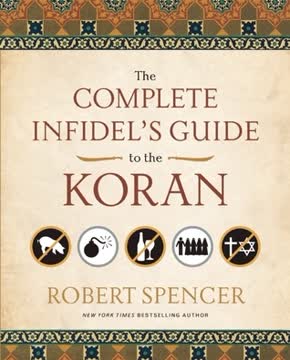
The Complete Infidel's Guide to the Koran receives polarized reviews with an overall 3.71/5 rating. Supporters praise Spencer's thorough analysis, claiming he accurately quotes the Koran and reveals passages used to justify violence. They find it educational and necessary for understanding Islamic extremism. Critics condemn the book as heavily biased, cherry-picking verses, and presenting an incomplete, Islamophobic perspective. Many reviewers acknowledge learning about the Koran's content but express concern about Spencer's one-sided approach and political agenda, suggesting readers seek additional balanced sources.
Similar Books