

Key Takeaways
Read Jerusalem as an inheritance people repeatedly rebuild, not a prize with one owner.
A city by selection. Jerusalem began as a small, remote stronghold in dry hills, far from major trade routes. Its spring offered water, and its heights offered defense, but geography alone could not explain its later importance. The book’s answer is historical: rulers, prophets, conquerors, and communities repeatedly made the city sacred by choosing it as a capital, shrine, or promised home.
One place, many claims. Jerusalem became the capital of two peoples, sacred to three religions, and a symbol for believers far beyond its walls. Its physical reality and imagined heavenly counterpart have always overlapped. The city’s history therefore cannot be reduced to a single origin story or a simple contest between two sides. It is a long sequence of overlapping attachments, each carrying real political force.
The book’s central move is to treat holiness as something accumulated through repeated use, memory, and institution, rather than as a quality that can be explained by landscape alone. That makes Jerusalem legible without asking readers to accept any faith’s theology. It also cautions against turning ancient attachment into an automatic modern title deed. Historical depth explains why claims endure; it does not, by itself, decide how people living there now should share power.
The Temple’s destruction made scripture a portable Jerusalem.
Two destructions, one turning point. Nebuchadnezzar’s Babylonian army destroyed Jerusalem and its Temple in 586 BC. The catastrophe drove exiles to preserve their identity through religious law, memory, and sacred texts. When Cyrus later allowed their return, the Temple was rebuilt, but the written tradition had already become essential to Jewish life beyond the city.
The second loss traveled further. Rome destroyed Herod’s Temple in AD 70 after siege and famine devastated Jerusalem. The Jewish community survived without its central sacrificial shrine. Christians interpreted the ruin through the story of Jesus; early Muslims also connected their emerging faith to Jerusalem, before prayer direction shifted toward Mecca. The book presents destruction not as an ending, but as a force that made the city’s meaning portable and available to new religious communities.
The account shows how a place can remain central even when its most important building disappears. Text, ritual, and memory let a community sustain attachment across distance and generations. This resembles a form of cultural infrastructure: the sacred site is no longer only a location, because practices can reproduce its significance elsewhere. The caution is that portability does not make claims interchangeable. Each tradition remembers the losses and inheritances differently, and those differences matter politically.
Every conqueror inherits sacred stones, then rewrites their meaning.
A city built from layers. Herod expanded the Temple Mount into a monumental platform, parts of which survive in the walls and Western Wall. Rome later destroyed the Temple, but conquerors kept reusing the stones and structures rather than clearing every trace. Jerusalem’s monuments became a kind of historical embroidery: older materials and sites remained inside new buildings.
Reuse carried a message. Constantine built the Church of the Holy Sepulchre over a site associated with Jesus’ death and burial, challenging the old pagan city. Centuries later, Abd al-Malik raised the Dome of the Rock above the Temple Mount, asserting Islam’s connection to earlier prophets and its own political authority. Crusaders converted Islamic buildings for Christian use; Saladin adapted those same structures again. Construction here was also an argument about inheritance.
Architecture makes power visible, but Jerusalem’s buildings also preserve evidence that rulers cannot fully control what their monuments mean. The same site can support rival histories, even when its stonework changes hands. This is a useful counterweight to the idea that conquest settles the past. Yet reuse is not always gentle continuity: destruction, exclusion, and forced conversion also shaped the city. The palimpsest metaphor illuminates layering, but should not soften the violence written into it.
Track rulers and families, because Jerusalem’s turning points were chosen, not inevitable.
Decisions made the city. Around 1000 BC, David captured Jerusalem and chose it as a capital partly because it belonged neither to his southern tribe nor to the northern tribes. His son Solomon built the first Temple there. The city’s future depended on particular acts of political judgment, not on a plan that history had to fulfill.
Later choices redirected history. Titus’ destruction of the Temple helped create conditions for Judaism, Christianity, and Islam to claim Jerusalem in different ways. Constantine made the city a Christian pilgrimage centre; Abd al-Malik built the Dome of the Rock; Suleiman rebuilt the walls that still define the Old City. Montefiore’s land purchase began Jewish construction outside those walls. Following families and individuals reveals how each era reacted to the choices before it.
The biographical approach resists hindsight. It shows people acting amid uncertainty, personal rivalry, and political necessity, rather than marching toward a predetermined modern outcome. That is especially valuable in a city whose current conflicts encourage readers to treat earlier events as inevitable proof. Families also reveal continuities that national histories can miss. Still, individual stories are not a substitute for institutions or material power: rulers’ choices matter partly because they command armies, property, and law.
Look beneath religious labels: Jerusalem’s daily life was hybrid, not two camps.
A crowded social mosaic. Jerusalem’s residents included Arab Muslims and Christians, Sephardic and Ashkenazi Jews, Armenians, Russians, and many others. Their loyalties could overlap: language, family, religion, class, and imperial allegiance did not always point in the same direction. The Families competed for office and influence, yet also intermarried and made alliances.
Ordinary life crossed boundaries. In Ottoman Jerusalem, Muslims, Christians, and Sephardic Jews shared music, markets, festivals, and neighbourhood life. The oud-player Wasif Jawhariyyeh, a Christian Arab, performed for Jewish and Muslim families and recorded the city’s shifting social world. This coexistence was never a guarantee of safety: sectarian feuds, pogroms, repression, and communal violence recur throughout the history. But a two-camp picture misses how much life crossed its supposed borders.
The social history complicates the familiar map of Jerusalem as a simple Jewish-Muslim or Christian-Muslim contest. Mixed practices and layered identities are not decorative exceptions; they are part of how the city functioned. That matters because political solutions often imagine communities as internally uniform blocs. The nuance is equally important: evidence of shared meals or music does not erase unequal status or violence. Coexistence can be real and still be fragile, conditional, and contested.
Foreign powers projected their own Jerusalem onto a city they barely understood.
A distant city, a local prize. European and American visitors often arrived with a biblical image of Jerusalem and judged the living city against it. Napoleon imagined a conquest; Victorian evangelicals sought Jewish restoration and the Second Coming; Russian emperors and pilgrims saw an Orthodox centre. Archaeologists also pursued biblical evidence while their governments competed for influence.
Projection changed policy. British officials supported Zionism partly from evangelical conviction and partly from imperial calculation. The Balfour Declaration promised a Jewish national home while also promising not to prejudice the rights of existing non-Jewish communities. The city’s residents were often treated as background to outsiders’ religious or strategic visions. Those visitors could reshape the city precisely because their imagined Jerusalem had diplomatic, military, and financial backing.
Jerusalem functions in this narrative as a mirror: distant powers see their own theological hopes and imperial ambitions reflected back at them. The connection between belief and policy is especially revealing because neither motive alone explains British, Russian, or French involvement. A useful question for readers is who gets to define a place as sacred, and who has the power to act on that definition. The book’s focus on outsiders is illuminating, though local communities also pursued their own agendas.
Treat Zionism and Palestinian loss as histories that collide, not claims to erase.
Two national movements converged. Zionism gave political organization to a long-standing Jewish attachment to Jerusalem, strengthened by European antisemitism and pogroms. Palestinian Arab opposition grew as immigration and land purchases accelerated, and as local leaders feared losing political control. British wartime diplomacy encouraged both hopes: it backed a Jewish national home while making ambiguous commitments to Arab independence.
The collision became catastrophe. The 1947 UN partition plan proposed separate states and an internationally governed Jerusalem. Jewish leaders accepted it; Arab leaders rejected it. Israel’s 1948 independence followed by war and Palestinian displacement, remembered as the Nakhba, while Israelis remember independence and survival. These histories are not identical in power or outcome. Understanding both helps explain why the conflict persists without pretending that historical legitimacy cancels present-day loss.
This framing avoids two tempting shortcuts: treating Zionism as an inexplicable intrusion, or treating Palestinian dispossession as incidental to Jewish statehood. The book shows how both national claims draw on real histories, while the consequences of war and state power were not evenly distributed. That distinction matters. Recognizing competing attachments is not the same as declaring equal responsibility for every event, and historical sympathy should not become a device for minimizing displacement or insecurity.
After 1967, Israel held Jerusalem, but control never settled its rival claims.
A victory with an unresolved structure. In 1948, Jerusalem was divided: Jordan controlled the Old City and east Jerusalem, while Israel held the west. In the Six Day War of 1967, Israeli forces captured the Old City and reunited the municipality under Israeli rule. Jews regained access to the Western Wall after centuries of exclusion, a powerful moment for religious and secular Israelis alike.
One city, layered authority. Defence minister Moshe Dayan chose not to replace Muslim religious administration on the Temple Mount with Israeli worship. The Waqf retained responsibility for the Islamic holy sites, while Israel controlled the surrounding city. This arrangement did not settle sovereignty, access, or competing national narratives. The book ends its main chronology at 1967 because that war established the basic political situation that still shapes the city.
Dayan’s distinction between territorial control and religious administration shows why sovereignty in Jerusalem cannot be reduced to a line on a map. Different institutions can govern different aspects of the same sacred space, but such arrangements remain vulnerable when either community sees them as temporary or unfair. The account makes the unresolved structure visible without suggesting that a technical formula can dissolve emotional claims. A durable settlement would need both workable rules and recognition of what the sites mean to others.
Analysis
Montefiore’s central achievement is not simply compression of a long chronology. It is a change in scale: Jerusalem is presented at once as a small, difficult town and as a world-making symbol. The contrast explains why the city’s strategic value often seems disproportionate to its geography. Its importance is produced by accumulated memory, ritual, architecture, and political investment. Once a ruler or community makes a claim, later actors inherit a landscape already dense with meaning.
The book’s narrative method supports this argument. Following rulers and families makes history contingent, not teleological. David’s choice, Constantine’s Christian building program, Abd al-Malik’s Dome, and British policy each become decisions made under pressure rather than steps toward an inevitable present. This is also why the recurring reuse of buildings matters: Jerusalem is not a clean succession of civilizations. Each new order occupies, alters, and interprets the remains of earlier ones.
The book is strongest when it resists neat binaries. It gives readers evidence of collaboration and shared daily life without hiding massacres, expulsions, or unequal rule. That balance is essential, but it creates a demanding interpretive task. A long history of overlapping claims can be mistaken for moral equivalence. The political effects of conquest, displacement, and control differ by period and cannot be averaged into a generic story of mutual grievance.
A useful analytical model is to distinguish three layers of authority: who governs the surrounding territory, who administers a shrine, and who believes that shrine defines collective identity. Jerusalem repeatedly shows that these layers can belong to different actors and still remain unstable. Its history therefore complicates any solution based only on sovereignty or access. The book’s deeper lesson is that historical understanding cannot settle ownership, but it can expose the cost of plans built on selective memory. Any durable politics must account for both the shared city and the unequal realities of power within it.
Review Summary
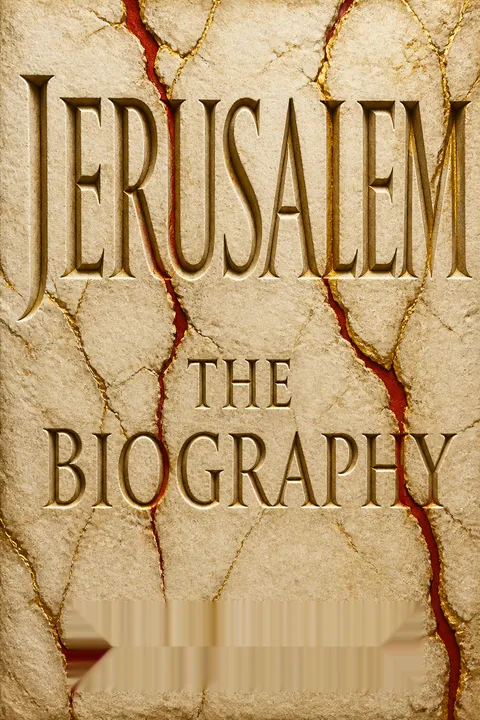
Jerusalem: The Biography is a comprehensive history of the holy city, praised for its balanced approach and engaging writing style. Readers appreciate the vast scope and detail, though some find it dense and overwhelming at times. The book covers Jerusalem's importance to three major religions and its tumultuous past. While most reviewers found it informative and well-researched, a few criticize perceived biases or historical inaccuracies. Overall, it's considered a valuable resource for understanding Jerusalem's complex history and ongoing significance.
People Also Read


Glossary
Jerusalem Syndrome
Religious crisis in JerusalemA form of acute religious delusion associated with intense expectations about Jerusalem. The book describes visitors whose anticipated encounter with the holy city gives way to distress, disappointment, or a conviction that they have a sacred identity or mission. Montefiore also uses the term more broadly for the political irrationality produced by the city’s powerful religious and emotional claims.
Zionism
Jewish national movementA modern political movement supporting the return of Jews to their historic homeland and the establishment of a Jewish national home there. Montefiore traces both its religious roots and its secular political form, especially Theodor Herzl’s effort to organize Jewish national aspirations in response to European antisemitism. Zionism became a central force in the modern struggle over Palestine and Jerusalem.
Outremer
Crusader territories overseasA medieval term meaning lands across the sea, used for the Crusader territories established in the eastern Mediterranean. These included the Kingdom of Jerusalem and the principalities and counties that supported it. Outremer was not one unified state but a fragile network of related fiefdoms, ruled by competing nobles and dependent on military support from Europe.
dhimmi
Protected non-Muslim subjectA non-Muslim living under Muslim rule within a protected but subordinate legal status. In the book’s account, Jews and Christians could maintain their religions and communal institutions, often in return for a special tax, but their rights and safety varied greatly between rulers and periods. The status offered neither equality nor consistent protection from discrimination or violence.
Haram al-Sharif
Jerusalem’s Islamic sanctuaryThe Arabic name for the Noble Sanctuary, the elevated platform in Jerusalem that contains the Dome of the Rock and al-Aqsa Mosque. The same area is known in Jewish tradition as the Temple Mount or Har ha-Bayit. Its religious importance to both communities makes control, worship, and access there among the most sensitive questions in Jerusalem.
Mamluks
Military slave eliteA ruling military class formed from enslaved boys, often of Turkic or Caucasian origin, who were converted to Islam and trained as soldiers. Mamluk officers rose through military service to govern Egypt and Syria, including Jerusalem. Their sultanate ruled Jerusalem for centuries, building many of the monuments and religious institutions that still define the Old City.
Balfour Declaration
British support for a Jewish homeA 1917 statement by British Foreign Secretary Arthur Balfour expressing support for establishing a national home for the Jewish people in Palestine. It also said that the civil and religious rights of existing non-Jewish communities should not be harmed. The declaration helped shape the British Mandate and became a pivotal, contested document in Jewish and Palestinian history.
Nakhba
Palestinian catastrophe of 1948The Arabic term meaning catastrophe, used for the Palestinian experience of the 1948 war and the loss of homes and communities as Israel was established. Montefiore describes the mass departure of Palestinians alongside the Israeli account of independence and survival. The term remains central to Palestinian collective memory and to arguments over displacement, return, and responsibility.
status quo
Existing rules for holy sitesThe established arrangements that regulate access, worship, and custodianship at Jerusalem’s shared or contested religious sites. The phrase is especially associated with the division of rights among Christian communities at the Church of the Holy Sepulchre, and with practices around the Wall and Temple Mount. These arrangements preserve routines but do not resolve the rival claims beneath them.
FAQ
What is Jerusalem: The Biography by Simon Sebag Montefiore about?
- Comprehensive city biography: The book traces Jerusalem’s 3,000-year history, exploring its religious, political, and cultural significance as the center of Judaism, Christianity, and Islam.
- Dual nature of Jerusalem: Montefiore presents Jerusalem as both a “heavenly” and “earthly” city, embodying spiritual ideals and harsh realities.
- Focus on people and power: The narrative is structured around influential families, rulers, and key figures who shaped the city’s destiny across empires and epochs.
- Continuity amid change: The book highlights how Jerusalem’s identity has been forged through constant transformation, conflict, and coexistence.
Why should I read Jerusalem: The Biography by Simon Sebag Montefiore?
- Unparalleled depth and scope: Montefiore combines rigorous scholarship with vivid storytelling, making complex history accessible and engaging.
- Balanced and inclusive perspective: The book offers a non-partisan account, respecting religious beliefs while focusing on historical facts, appealing to both believers and secular readers.
- Insight into modern conflicts: Understanding Jerusalem’s layered past is essential for grasping the roots of today’s religious and political tensions.
- Coverage of lesser-known aspects: The narrative sheds light on underexplored periods and figures, enriching readers’ knowledge of the city’s multifaceted past.
What are the key takeaways from Jerusalem: The Biography by Simon Sebag Montefiore?
- Jerusalem’s centrality: The city is the spiritual and historical heart of the Abrahamic faiths, shaping world history and identity.
- Enduring conflict and coexistence: Jerusalem’s story is marked by cycles of conquest, destruction, and renewal, with periods of both violence and tolerance.
- Power of individuals and families: The ambitions and rivalries of dynasties, religious leaders, and political actors have continually shaped the city’s fate.
- Modern relevance: The book connects ancient and modern events, showing how Jerusalem’s past informs its present-day challenges.
What are the main historical periods covered in Jerusalem: The Biography by Simon Sebag Montefiore?
- Ancient and biblical eras: The book covers Jerusalem’s early settlement, the reigns of David and Solomon, and the First and Second Temples.
- Classical to medieval times: It details Roman destruction, Byzantine and Islamic rule, the Crusades, and the Mamluk and Ottoman periods.
- Modern developments: The narrative extends through the British Mandate, the 1948 Arab-Israeli War, the Six-Day War, and the ongoing Israeli-Palestinian conflict.
How does Simon Sebag Montefiore describe the religious significance of Jerusalem in Jerusalem: The Biography?
- Center of Abrahamic faiths: Jerusalem is portrayed as uniquely sacred to Judaism, Christianity, and Islam, each interpreting its history through their own religious narratives.
- Place of divine encounter: The city is described as the necessary site for communication between God and humanity, central to prophecy and eschatology.
- Source of rivalry and reverence: The book explores how religious claims to Jerusalem have fueled both devotion and conflict throughout history.
Who are the key figures and families featured in Jerusalem: The Biography by Simon Sebag Montefiore?
- Ancient dynasties: The House of David, the Maccabees, and the Herods are profiled for their foundational roles.
- Medieval and Islamic leaders: Figures like Saladin, Frederick II, and Mamluk Sultan Baibars are highlighted for their impact on the city’s fate.
- Modern actors: Zionist leaders (Herzl, Ben-Gurion), Arab leaders (Haj Amin al-Husseini), British officials (Herbert Samuel), and prominent families (Husseinis, Nashashibis) are examined for their influence on Jerusalem’s modern history.
How does Jerusalem: The Biography by Simon Sebag Montefiore portray the impact of the Crusades on Jerusalem?
- Violent conquest: The book details the brutal capture of Jerusalem in 1099, including the mass slaughter of Muslims and Jews.
- Religious transformation: Crusaders imposed Latin Christian rule, built new churches, and altered the city’s religious landscape.
- Enduring legacy: The narrative traces the rise of military orders, the eventual Muslim reconquest under Saladin, and the Crusader period’s lasting effects on Jerusalem’s identity.
What insights does Jerusalem: The Biography by Simon Sebag Montefiore provide about the Islamic period and the building of the Dome of the Rock?
- Islamic sanctification: The Umayyad Caliph Abd al-Malik’s construction of the Dome of the Rock asserted Islamic claims and created a new sacred architecture.
- Symbolism and politics: The Dome’s design reflects both religious symbolism and imperial ambition, positioning Jerusalem as a spiritual and political center.
- Continuity and adaptation: Islamic rulers preserved, adapted, and sometimes supplanted earlier religious sites, illustrating the city’s layered sacred geography.
How does Simon Sebag Montefiore address archaeological controversies in Jerusalem: The Biography, especially regarding King David?
- Acknowledgment of debate: Montefiore discusses the contentious nature of archaeological evidence, particularly about King David’s reign and the city’s ancient fortifications.
- Use of multiple sources: He combines biblical accounts with external archaeological finds, such as the Tel Dan Stele, to support historical claims.
- Balanced presentation: The book presents various scholarly views, emphasizing the tentative nature of many conclusions and the complexity of reconstructing early Jerusalem.
How does Jerusalem: The Biography by Simon Sebag Montefiore portray the British Mandate and the 20th-century transformation of Jerusalem?
- Complex colonial rule: The book describes British efforts to govern a city rife with ethnic and religious tensions, highlighting key figures and administrative challenges.
- Rise of nationalism: It details Arab revolts, Jewish immigration, and the emergence of militant groups, showing how British policies often exacerbated conflicts.
- International diplomacy: The narrative covers conflicting British promises (Balfour Declaration, Arab agreements) and their role in shaping future disputes.
What does Jerusalem: The Biography by Simon Sebag Montefiore reveal about the 1948 Arab-Israeli War and the Six-Day War’s impact on Jerusalem?
- Division and displacement: The 1948 war split Jerusalem between Israeli and Jordanian control, causing significant population shifts and transforming the city into a frontline.
- Reunification and tension: The Six-Day War in 1967 led to Israeli capture of East Jerusalem, reunifying the city but intensifying religious and nationalist sentiments.
- Ongoing challenges: The book discusses the complexities of governing a unified Jerusalem, the status of Arab residents, and the city’s role as a flashpoint in the broader conflict.
What are the most memorable quotes from Jerusalem: The Biography by Simon Sebag Montefiore, and what do they mean?
- On Jerusalem’s universality: “Observing Jerusalem is to consider the history of the world; not only that, but Jerusalem’s history is the history of heaven and earth.” — Benjamin Disraeli, highlighting the city’s global and spiritual significance.
- On layered sanctity: “Israel is the center of the world; Jerusalem is the center of Israel…” — Midrash Tanhuma, illustrating the city’s centrality in religious thought.
- On paradox and pain: “Jerusalem is a city of pain and joy, where great men become small.” — The book’s reflection on the city’s paradoxical nature.
- On contested ownership: “No one truly ever owned Jerusalem.” — John Tiller, underscoring the city’s complex history of conquest and shared claims.
- On mystical allure: “Jerusalem is a flame, not a city; no one can divide a flame.” — Shimon Peres, capturing the city’s indivisible and passionate identity.
Download PDF
Download EPUB
.epub digital book format is ideal for reading ebooks on phones, tablets, and e-readers.








