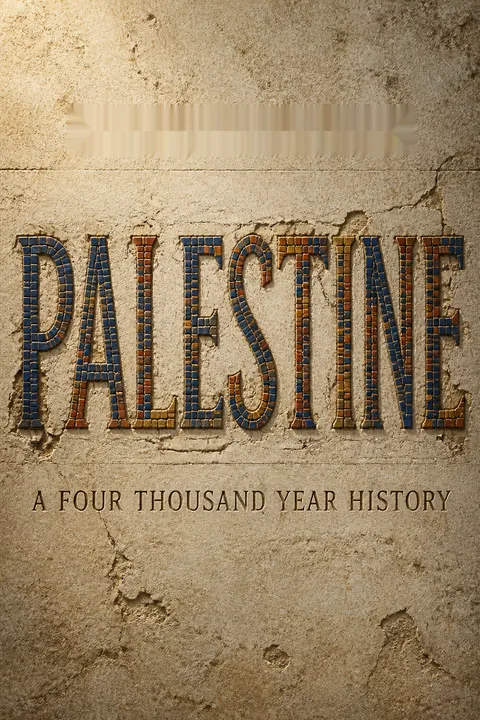


Key Takeaways
Treat Palestine as an old country, not a timeless nation-state
Country before nation-state. Masalha distinguishes Palestine as a country with a long, changing geographic and political history from Palestinian nationality, a modern form of national identity that emerged in the late Ottoman and early twentieth-century periods. Earlier people could feel attachment to Palestine without sharing modern nationalism or a fixed border.
Many beginnings, not one myth. Medieval writers called Palestine their country, and ancient administrations used the name, but neither fact proves an unchanged nation existed for millennia. The book argues that modern Palestinian identity draws on older regional memories while remaining distinct from them.
What's useful here is a distinction often lost in arguments about origins: a place can have a long history without its present-day nationhood being ancient in the same sense. Historians of nationalism describe nations as modern political communities, but that does not make their attachments fabricated or insincere. The harder question is how strongly older regional labels shaped ordinary people's identities, since surviving texts mostly record educated writers and officials. Masalha's distinction helps readers resist both the claim that Palestine appeared from nowhere and the opposite claim that modern nationality existed unchanged in antiquity.
Trace Palestine's name through inscriptions, not only sacred texts
Names leave evidence. The book traces a form of Palestine to Egyptian references to Peleset around the thirteenth century BC, then to Assyrian forms such as Palashtu and Pilistu. Greek writers, especially Herodotus in the fifth century BC, used Palaistinē for a wider region than the original Philistine coastal territory. The name's reach and boundaries changed over time.
Do not move it backward. Masalha explicitly says the name cannot safely be applied to the region before its earliest known appearance. Coins, maps, inscriptions, and administrative records document later uses. The central point is not that every use meant exactly the same territory, but that the name has a long, traceable history independent of biblical naming.
Following a place name across languages is a form of historical evidence, but it is not a shortcut to a single, stable definition. Names travel, broaden, narrow, and acquire administrative meanings. That makes the book's emphasis on inscriptions and coins valuable, especially where later political narratives treat a name as either timeless or newly invented. The evidence still requires careful context: an ancient term for a coast does not automatically describe the borders or population of a modern country. Continuity of a name is meaningful, but it is not proof of an unchanging political entity.
Read changing cities as evidence of continuity, not simple replacement
Cities outlast rulers. Palestine's urban history reaches back to early settlements such as Jericho and Bronze Age centers including Gaza, Jerusalem, and Megiddo. Later empires renamed cities, built new roads, and changed institutions, yet many urban centers continued to serve local populations and surrounding villages. Nablus, for example, carried a Greek-derived name into Arabic and remained an important city under successive governments.
Culture was remade locally. Masalha describes Palestinian architecture and crafts as mixtures of inherited and adopted forms. Buildings and materials were reused, while Byzantine urban planning and mosaic traditions influenced later Islamic construction. The result was neither sealed cultural purity nor a simple succession of foreign civilizations, but ongoing exchange shaped by local people.
A city is a useful unit for studying history because buildings, markets, and roads reveal exchange as well as political control. This approach also counters histories that reduce a region to the sequence of empires that conquered it. Yet a city's survival does not demonstrate that its population remained unchanged. Archaeology can establish occupation, construction, and trade more securely than it can establish modern ethnic identities. The strongest version of Masalha's argument is therefore cultural continuity through adaptation, not an assumption that one community remained identical across every century.
Look for Palestine inside empires, not only between them
Provinces had names. In 135 AD, Rome organized a province called Syria Palaestina. Byzantine rulers later divided the region into Palaestina Prima, Secunda, and Salutaris, also called Tertia. After the Muslim conquest in the seventh century, the province of Jund Filastin continued Palestine as an administrative unit, lasting until the Crusader invasion of 1099.
Rule was not independence. These provinces belonged to larger empires, and their borders shifted. Still, local administration, military command, religious institutions, and economic life gave Palestine more than a purely biblical or modern existence. Masalha uses the sequence to challenge the idea that Palestine only became an official entity under British rule.
Administrative records complicate the assumption that only sovereign nation-states count as real political geography. Provinces can shape taxation, law, military organization, and how people describe their home, even when imperial rulers hold ultimate authority. The distinction matters beyond Palestine: many present-day countries formed from older regions that were never fully independent. At the same time, a province's existence should not be mistaken for modern sovereignty. Masalha's strongest point is that imperial rule and local political identity can coexist, not that ancient provinces were equivalent to contemporary states.
Do not confuse Arabization with Islamization
Two different transitions. When Muslim armies took Palestine in the seventh century, the population was largely Christian, and many ordinary people spoke Palestinian Aramaic. Arabic-speaking Christian communities, including Ghassanid Arabs, had been present before Islam. The change in political rule did not instantly turn the population Muslim or erase local languages.
Change took generations. The book describes Arabic becoming the region's common language through administration, trade, and cultural change, while conversion to Islam proceeded gradually. Over centuries, Palestine became predominantly Arabic-speaking and Muslim, but retained Christian, Jewish, Samaritan, and other traditions. Masalha presents this as transformation through adaptation rather than the replacement of one population by another.
Separating language shift from religious conversion prevents a familiar historical error: treating a new ruling power as if it immediately changed everyone's identity. Linguistic change often follows institutions, commerce, and intermarriage at different speeds, while religious practice can persist across political transitions. This perspective also helps make sense of communities whose language and faith do not map neatly onto modern national categories. The caution is that gradual cultural change should not be romanticized as frictionless. The book emphasizes continuity, but its own account includes political conflict, social hierarchy, and uneven power.
Follow trade routes and capitals to see how Palestine held together
A crossroads with a rural base. The Via Maris connected Egypt with the Levant, passing through Palestinian coastal cities and linking inland routes. Trade, agriculture, and ports helped cities such as Gaza, Jaffa, and Acre prosper, while their surrounding villages supplied food and goods. Masalha argues that urban and rural life were interdependent, not separate worlds.
Capitals served different roles. For centuries under early Muslim rule, al-Ramla was the administrative center of Jund Filastin, while Jerusalem, known as al-Quds, held religious centrality. Al-Ramla's position on trade routes helped make it a major commercial hub. Under later rulers, Jerusalem also became the administrative capital. The changing pattern shows how geography and political priorities shaped Palestine's internal center of gravity.
A network of ports, roads, markets, and farming districts often explains regional unity better than a border drawn on a later map. This network perspective is especially useful for Palestine, positioned between Egypt and al-Sham and connected to routes reaching the Red Sea. It also makes cities legible as working parts of a landscape rather than isolated monuments. Still, trade integration does not necessarily produce a shared national identity. Economic connections establish practical interdependence; political belonging requires additional evidence from institutions, language, and people's own descriptions.
Use Daher al-Umar to rethink what sovereignty looked like
Power from the countryside. In the eighteenth century, Daher al-Umar built an autonomous regime in Galilee that challenged Ottoman authority. His rule, which lasted from the 1730s until 1775, relied on a military force, local alliances, and control of trade. Acre became his capital and grew into a major port tied to European demand for Palestinian cotton and grain.
Sovereignty had degrees. Al-Umar's state was not a modern Palestinian nation-state, and its aims were dynastic. Yet it exercised practical authority over much of Palestine, collected revenue, maintained order, and resisted Ottoman forces. Masalha uses this history to show that political autonomy can exist without modern national independence or full separation from an empire.
Al-Umar's career is a strong reminder that sovereignty is not always a yes-or-no status. Political authority can be measured through the capacity to tax, protect territory, command armed forces, and negotiate with outside powers. That makes the episode valuable for histories focused too narrowly on formal legal independence. The qualification matters just as much: al-Umar was a dynastic ruler, not a nationalist leader in the twentieth-century sense. His regime demonstrates local political capacity, but it should not be retrofitted into a modern national project.
Call Palestinian nationalism modern without calling Palestine invented
Old belonging, new politics. The book distinguishes older regional attachment from modern nationalism. Medieval writers such as al-Maqdisi described Palestine as their country, and seventeenth-century scholars used the name Filastin. These sources suggest that Palestinian territorial consciousness preceded modern nationalism, but they do not establish a modern nation in those periods.
Print made identity public. In the late Ottoman era, education, journalism, and cultural debate helped shape a newer national identity. In 1911, Palestinian journalists founded the Jaffa newspaper Falastin, using the familiar spoken name of the country. The paper helped turn existing attachments into a public political language, especially as Zionist settlement and British rule altered the stakes.
This account fits a broader understanding of nationalism: modern media and political institutions can assemble a national community from older memories, local loyalties, and shared experiences. That process does not make the resulting identity fraudulent. The newspaper Falastin is a concrete example of how print turns a name into a recurring public reference point. A useful limit is that elite texts and newspapers cannot reveal how every villager understood identity. The book persuasively rejects the idea that nationalism appeared from nowhere, while leaving room for debate about how widespread earlier territorial consciousness was.
Read place names as evidence of who controls memory
Naming claims ownership. Masalha treats maps and place names as political acts, not neutral labels. British surveys, Zionist mapping, and later Israeli renaming projects drew on biblical geography while often minimizing Palestinian names and histories. The pattern intensified after the Nakba, when the Israeli state gained control of much of the land and renamed sites, villages, and roads.
Erasure has material traces. The book cites a survey of 418 depopulated Palestinian villages: 293 were totally destroyed and 90 largely destroyed. In some cases, a Hebrew name echoed or adapted the earlier Arabic one, as with Mahlul and Nahlal. Such practices could preserve a sound while detaching it from the people and history that gave it meaning.
Place names work like compact archives: they can preserve language, land use, and local memory, while official renaming can make a new political order feel natural. Scholars of cartography and collective memory show that maps do not merely depict territory; they organize what can be seen and remembered. The village statistics give this argument physical weight. Still, not every renamed place carries the same intent, and linguistic resemblance alone cannot prove a specific political motive. The book's broader evidence is most persuasive when it connects naming decisions to state policy and documented displacement.
Keep evidence-based history distinct from sacred memory
Texts answer different questions. Masalha argues that biblical narratives should not be treated automatically as verified chronicles. He points to archaeology's failure to substantiate a large conquest of Canaan or the powerful united kingdom of David and Solomon as described in scripture. The book asks historians to test such claims against material evidence, inscriptions, and contemporary records.
Respect belief, assess claims. Sacred stories remain important as theology, literature, and collective memory, even when they cannot be confirmed as factual history. This distinction also applies to Palestinian and Zionist national narratives: political importance does not replace evidence. The method is to ask what a source can establish, when it was produced, and whose perspective it records.
Separating faith traditions from empirical claims can make historical discussion more rigorous without dismissing religion's cultural importance. Archaeology is particularly powerful when it reveals settlement patterns and material life beyond elite texts. Yet archaeological absence must be stated precisely: it can weaken a specific claim without proving that no related event or person ever existed. The book's challenge to literal readings is important, but some of its formulations are more categorical than the evidence alone can warrant. A careful reader should distinguish well-supported findings from arguments that remain contested.
Analysis
Masalha's central contribution is to change the scale of the Palestine question. Instead of treating the territory as a stage that matters only when biblical Israel, an empire, or the modern conflict enters the story, he follows its names, cities, administrative arrangements, languages, and inhabitants across a long period. The result is a history of a place with multiple beginnings and shifting boundaries, not a seamless national epic. His most useful conceptual distinction is between Palestine as a country with a deep history and Palestinian nationalism as a modern political formation. It allows historical depth without pretending that ancient inhabitants held present-day national identities.
The book is also a sustained intervention in how evidence is selected. Inscriptions, coins, Arabic geographical writing, church records, maps, village names, and oral memory all appear as alternatives to narratives built mainly from scripture or imperial chronology. Its accounts of Jund Filastin, the urban prosperity of early Islamic Palestine, Daher al-Umar's eighteenth-century regime, and the late Ottoman press make local institutions and agency visible. The final discussion of renaming connects this historical recovery to the modern politics of land and memory.
The same polemical force that makes the argument memorable calls for careful reading. The history of a name is not proof of stable borders, continuous political sovereignty, or unchanging population. Regional consciousness in medieval texts is not identical to mass national identification. Nor does archaeology settle every question about biblical literature simply by failing to verify a narrative. The book sometimes presents disputed interpretations with greater certainty than a neutral survey would. Readers should treat its framing as an explicitly indigenous and decolonial argument, then assess individual claims against the range of archaeological and historical scholarship.
At its best, the book holds two ideas together: identities are historically made, and historical making does not make them unreal. Palestine changed through migration, conquest, conversion, trade, and political reorganization. Its inhabitants were not passive scenery in those changes. That combination of continuity and transformation is the adaptation's most durable lesson.
Review Summary
Palestine by Nur Masalha presents a historical account of the region spanning thousands of years, arguing that "Palestine" has been the most common toponym for the area. Reviews are polarized: supporters praise its comprehensive documentation and counter to Zionist narratives, while critics fault its lack of maps, contradictory arguments, selective scholarship, and perceived bias. Common complaints include dense academic writing, poor editing, and focus on etymology over chronological history. Defenders consider it essential reading for understanding Palestinian identity and challenging historical erasure, while detractors view it as polemical propaganda dismissing Jewish historical presence.
People Also Read


Glossary
Jund Filastin
Early Islamic Palestine provinceThe Arab Muslim administrative and military province of Palestine, established after the seventh-century conquest. It belonged to the wider geographic region of al-Sham but was distinct from the neighboring provinces. Its territory and administrative arrangements changed over time, and its main political center was al-Ramla for several centuries.
Syria Palaestina
Roman provincial designationThe Roman name for a province formed in 135 AD from territories including Judaea, Samaria, Philistia, Galilee, and Idumaea. In Masalha's account, it formalized the established regional name Palestine within Roman administration. It should not be confused with the separate Roman province of Syria or treated as having fixed modern borders.
Palaestina Prima, Palaestina Secunda, Palaestina Salutaris
Three Byzantine Palestine provincesThe three administrative provinces into which Byzantine rulers divided greater Palestine from the fourth century onward. Palaestina Prima was centered on Caesarea, Secunda included much of Galilee, and Salutaris, also called Tertia, covered southern and southeastern territories. The book emphasizes their connections through shared political, military, cultural, and religious institutions.
Bilad al-Sham
Broad Levantine geographic regionAn Arabic geographic term for the broad northern region that included Palestine, present-day Syria, Lebanon, Jordan, and at times areas farther north. It was not simply another name for modern Syria. Within this larger region, Palestine also existed as a distinct country and, under early Muslim rule, as the province of Jund Filastin.
dawlah qutriyyah
Territorial state or polityAn Arabic term used in the book for a country-based political entity that could exercise practical autonomy without being a modern nation-state. Masalha applies it to Daher al-Umar's eighteenth-century regime in Palestine. The concept distinguishes effective local government from formal independence and from modern nationalist claims.
toponymicide
Erasure through renamingThe systematic replacement or suppression of place names in ways that weaken the memory of earlier inhabitants and political histories. Masalha uses the term for renaming practices associated with colonial and settler-colonial power in Palestine. Such processes can accompany physical displacement, but they also operate through maps, signs, official records, and public education.
memoricide
Destruction of collective memoryThe deliberate or systematic effort to erase a people’s remembered presence and history. In the book, the term describes practices that follow Palestinian displacement, including the destruction of villages, removal of names from maps, and recasting of landscapes as if earlier inhabitants had not lived there.
Being Palestine, becoming Palestine
Evolving territorial identityA framework for understanding Palestinian identity as both rooted in a historical place and continually formed through lived experience, memory, language, and political change. It rejects a rigid choice between an identity supposedly unchanged since antiquity and one supposedly created from nothing in modern times.
Philisto-Arabian coinage
Ancient regional silver currencyA group of silver and silver-plated coins produced in cities of Philistia, including Gaza, Ascalon, and Ashdod, mainly between the sixth and fourth centuries BC. Their designs combined local and external influences. Masalha presents the coinage as evidence of regional trade, monetary development, and a measure of local economic autonomy.
Via Maris
Coastal trade corridorThe modern name for a major ancient route connecting Egypt with the Levant and the Fertile Crescent. It ran through Palestinian coastal cities and linked with inland roads. The book uses the route to explain Palestine's strategic position, urban growth, and connections between Mediterranean trade and regional political centers.
Download PDF
Download EPUB
.epub digital book format is ideal for reading ebooks on phones, tablets, and e-readers.








