

Key Takeaways
Treat justice as a choice of rules, not a promise to repair fate
Two meanings collide. Sowell distinguishes traditional justice, which asks whether people were treated by fair, impartial rules, from cosmic justice, which asks whether people received outcomes or prospects made equal despite undeserved disadvantages. A criminal trial can follow proper procedures even when its verdict disappoints; a game can apply the same rules to all players without producing equal scores. The second conception asks authorities to correct the results themselves, often by treating groups differently.
The distinction changes policy. In Sowell's account, equal rules and repaired outcomes are not simply two degrees of fairness. The latter requires someone to override ordinary rules and decide which disadvantages count, whose losses deserve correction, and what result would be fair. The book asks readers to name that choice rather than hide it inside a shared word.
This distinction is useful because arguments about fairness often mix procedural and distributive claims without noticing the switch. Political philosophy makes a similar distinction between equal treatment and equitable distribution, though neither category settles what a just policy should be. A procedural rule can protect people from arbitrary power, while an outcome-focused remedy may address barriers that neutral rules leave untouched. The practical question is not which definition sounds nobler, but what evidence and safeguards justify moving from one to the other.
Count the costs before asking government to correct an unequal outcome
Good intentions have prices. Sowell illustrates the issue with a San Francisco rule requiring delivery businesses to serve every neighborhood after a company declined to deliver to a high-crime area. The policy aimed to give residents equal access, but it also exposed drivers to risks the rule-makers did not bear. The point is not that residents' needs are unimportant. It is that a remedy can shift costs to other people, including people with little say in the decision.
Knowledge is limited, too. Individuals can hold a mix of unearned advantages and disadvantages that changes over a lifetime. A policymaker cannot easily calculate a person's overall starting position, much less restore the exact life that person might have had under different circumstances. Sowell argues that the more a policy depends on such fine-grained judgments, the greater the danger of error and unintended harm.
This is a strong application of externalities: a decision-maker may receive the moral credit for a policy while someone else bears its financial, physical, or social cost. Cost accounting therefore belongs in ethical reasoning, not just economics. But costs are not always easy to compare, and safety risks should not automatically outweigh exclusion or deprivation. The useful discipline is to identify who benefits, who pays, what uncertainty remains, and whether a less coercive response can address the same need.
Do not mistake a statistical category for a permanent human class
Snapshots can mislead. Sowell argues that annual income groups are often treated as enduring social classes even though people move between them. He cites a study in which only 3 percent of Americans remained in the bottom income fifth for eight years. Some people counted as poor in a given year were students, new workers, or business owners having a temporarily low-income year, rather than people trapped in long-term poverty.
Track people over time. A changing population inside a category can make a snapshot look like a fixed hierarchy. The book also notes that wealth and income tend to rise with age and experience, so a comparison between young and older households may reflect different life stages. Sowell's prescription is to ask whether statistics follow the same individuals, account for assets, and distinguish temporary hardship from persistent disadvantage.
The distinction between a cross-sectional snapshot and a longitudinal record is central to sound social measurement. It prevents a temporary status from being mistaken for a permanent identity and helps direct assistance toward persistent need. Yet mobility in the aggregate does not show that every person can move upward, or that brief periods of poverty are harmless. Good policy needs both views: population snapshots reveal distribution, while individual histories show duration, transitions, and the obstacles people encounter.
Equality of treatment cannot guarantee equality of performance or result
Equality has many dimensions. Equal regard for people is different from equal income, equal opportunity, equal performance, or equal outcomes. Even performance is hard to measure: Ty Cobb had a better lifetime batting average than Babe Ruth, while Ruth hit far more home runs. Choosing which statistic matters requires a judgment about what counts as valuable performance.
Groups also differ in circumstances. Sowell points to age, family size, geography, migration, and cultural history as factors that can produce unequal results without proving discrimination. He notes that China led Europe in many technologies for centuries, while later the balance shifted, and that societies routinely adopt useful practices from elsewhere. His argument is that disparity alone cannot establish either its cause or its moral meaning.
Measurement theory reinforces the book's warning: indicators do not merely record reality, they select which parts of reality count. A batting average, income figure, or representation rate can each illuminate one dimension while obscuring others. This caution is not a reason to dismiss discrimination. It is a reason to test competing explanations with relevant comparisons, clear definitions, and evidence about mechanisms. Unequal results may signal unfair barriers, different circumstances, or both, and careful analysis must be able to distinguish among them.
Reward productive contribution, not a moral score no institution can calculate
Merit is hard to isolate. A person's achievement may reflect effort, talent, family resources, education, timing, or luck. Sowell contrasts moral merit with productivity: society can observe whether a service or product is useful to others, but cannot reliably calculate how much of each person's success was deserved. A struggling laborer may show more character than a celebrated entrepreneur, even if the entrepreneur produces more measurable output.
Rewards shape future behavior. Sowell argues that paying for productivity can encourage people to develop skills and direct effort toward work others value. He points to Hong Kong and Singapore as places that attracted capital and entrepreneurship despite limited natural resources. Policies that punish success in the name of correcting undeserved wealth, he warns, can reduce investment and opportunities for many people who were not the policy's target.
The distinction between deservingness and contribution helps separate moral respect from economic coordination. Markets provide feedback about what buyers value, but that feedback is not a complete moral verdict: purchasing power is unequal, and socially valuable work is not always well paid. The book is strongest when it shows that incentives have consequences beyond the intended recipient. A fuller policy judgment must also ask whether market rewards reflect genuine productivity, institutional privilege, or a mixture of both.
Turn concern for disadvantage into capacity, not permanent dependence
Help can expand choices or narrow them. Sowell describes nineteenth-century housing reformers who sought to outlaw crowded, substandard tenements. Immigrant families sometimes accepted poor housing to save money for relatives or a future move. Raising legal standards could improve the buildings while leaving those families with less money and fewer options. He makes a related argument about restricting goods made under low-wage conditions abroad: a ban may remove one of the few available jobs without creating a better one.
Build routes out. Sowell does not equate rejecting government programs with doing nothing. He points to private philanthropy, voluntary assistance, and economic development as ways to address hardship. His preferred emphasis is on conditions that let people earn, learn, and improve their circumstances, rather than rules that manage their lives or define them as permanently dependent.
The distinction between improving a condition and expanding a person's options is a valuable test for reform. It resembles the capability approach in development economics, which evaluates whether people gain real freedom to pursue valued lives, not only whether a single indicator improves. Still, voluntary aid and growth do not guarantee that people facing disability, discrimination, or acute poverty can access those opportunities. The case for agency is strongest when paired with credible protections against severe deprivation and barriers that individuals cannot overcome alone.
Test grand visions against outcomes, especially when leaders promise peace
A noble aim is not proof. Sowell contrasts interwar advocates of disarmament and international pledges with those who urged military deterrence as Nazi Germany and Japan expanded their power. Neville Chamberlain's meetings with Hitler produced reassurance but did not stop aggression; Churchill had warned that weakness could invite it. Sowell presents this history as a warning that conciliatory intentions can fail when leaders misread an opponent's incentives.
Ideas need empirical checks. The chapter also examines Lenin's claim that imperialism let rich countries export surplus capital and pacify workers. Sowell argues that Lenin's broad regional categories obscured the fact that much European investment went to other industrial economies, weakening the theory's evidence. In both cases, the book asks readers to test a vision against what happened, not merely admire the moral purpose it claims.
The insistence on testing a policy against results is essential, especially where failure carries irreversible costs. The historical example also calls for restraint: the Second World War's outcome makes appeasement look plainly mistaken, but counterfactual claims about what would have prevented war remain difficult to prove. Deterrence can fail or provoke escalation as well as prevent attack. A sound analysis separates the evidence that a strategy failed in a particular case from the broader claim that one strategy reliably works.
Preserve predictable laws even when particular outcomes offend moral instinct
Rules protect more than litigants. Sowell contrasts a legal system governed by known, prospective rules with one in which judges adjust decisions to achieve preferred results. A judge who changes standards after seeing who won may appear compassionate in one case, but citizens and institutions cannot plan if the governing rule is uncertain. The book invokes Oliver Wendell Holmes's view that a judge's role is to apply the law, not to replace it with a personal judgment of justice.
Outcome remedies strain consistency. Policies such as affirmative action or disability accommodation may require exceptions to identical treatment to compensate for disadvantage. Sowell argues that when legal duties depend on vague standards such as reasonable accommodation or retrospective statistical impact, people cannot know in advance what the law requires. The question is whether a remedy can be written and applied without sacrificing predictability and equal legal process.
Legal predictability is a public good: it lets people coordinate, make agreements, and challenge power without having to guess a judge's moral preferences. At the same time, neutral rules can preserve barriers built into prior institutions, so stability alone cannot certify justice. The important institutional challenge is to make remedies explicit, reviewable, and bounded. That avoids treating discretion as either automatically virtuous or automatically tyrannical, and makes the tradeoff visible to citizens.
Guard constitutional limits before benevolent programs make power irreversible
The American design distrusts concentrated power. Sowell sees the Revolution's central achievement not as installing better rulers, but as creating processes that limit and replace rulers. Constitutional rights, divided authority, and the Tenth Amendment were meant to preserve space for citizens and local governments to act without national permission.
Funding can carry control. The book argues that federal grants often arrive with conditions, allowing Washington to influence schools, universities, hospitals, and other institutions even where direct federal authority is disputed. A school or university may be unable to refuse money without losing ground to competitors. In Sowell's account, power can therefore expand gradually through subsidies and rules presented as helpful, rather than through an openly announced transfer of authority.
This analysis connects constitutional structure to the problem of institutional dependence. Conditional funding can alter choices without formally banning alternatives, a form of power that is easy to underestimate because participation appears voluntary. Yet federal standards can also coordinate action and protect people when local authorities fail them. The key test is whether conditions are authorized, transparent, proportionate, and reversible. Constitutional limits matter most when a popular program makes scrutiny feel unnecessary.
Analysis
The book's central contribution is a vocabulary for separating fair procedures from desired distributions. That distinction is valuable because public debate often treats a just intention as evidence that a policy is just, while leaving the definition of fairness and the identity of cost-bearers unstated. Sowell's recurring questions about knowledge, incentives, and third-party effects expose the gap between moral aspiration and administrative capacity. His account also clarifies why a society can become more unequal in political power while trying to reduce economic inequality.
The argument is most persuasive as a warning about institutional humility, not as a complete theory of justice. General rules do not require officials to rank every person's life history, but rules can preserve advantages created by earlier exclusion. Conversely, targeted remedies can correct barriers while creating new distortions or discretionary power. The relevant choice is rarely between perfect equality and pure neutrality. It is between imperfect institutions whose errors, beneficiaries, and costs differ.
Sowell often treats unintended consequences as a reason to distrust intervention, while the status quo also has consequences that may be less visible because they are dispersed or familiar. His historical examples and statistics serve as useful counterexamples to easy causal stories, but they do not always establish the policy conclusion by themselves. A disparity that has explanations beyond discrimination does not prove discrimination absent, just as a moral rationale does not demonstrate a remedy's effectiveness. Causal claims need comparisons that account for context, and policy claims need evidence about behavior after implementation.
The strongest practical reading is therefore a method: define the kind of justice being sought, identify the decision-maker and the limits of their knowledge, follow costs beyond intended beneficiaries, and compare actual outcomes with plausible alternatives. This approach neither guarantees restraint nor demands intervention. It makes moral confidence answerable to institutional design and evidence, which is a more demanding standard than good intentions alone.
Review Summary
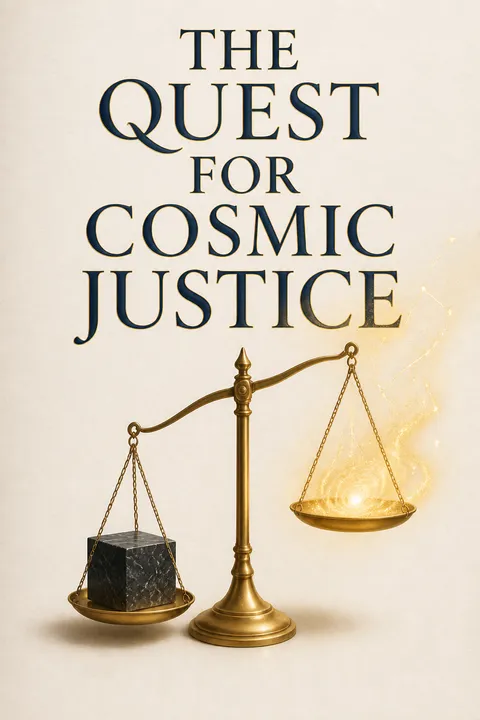
The Quest for Cosmic Justice presents Thomas Sowell's critique of "cosmic" or social justice versus traditional justice. Reviewers praise Sowell's distinction between equality of outcomes and equality before the law, noting his use of historical data and logical arguments. Many find his analysis of unintended consequences compelling, particularly regarding affirmative action, judicial activism, and constitutional erosion. Supporters appreciate his defense of individual freedom and the rule of law. Critics argue he oversimplifies progressive thought, uses anecdotes selectively, and exhibits ideological bias. Most agree the core concept is thought-provoking, though some find the book repetitive of his other works.
People Also Read






Glossary
Cosmic justice
Correcting undeserved outcomesSowell's term for a conception of justice that seeks to offset disadvantages people did not deserve, including those arising from social conditions, birth, biology, or history. It aims to make outcomes or prospects fairer, rather than focusing only on whether people were treated impartially under common rules. In the book, pursuing it requires authorities to make judgments about people and groups.
Traditional justice
Impartial rules and proceduresSowell's term for justice understood primarily as fair processes: known rules applied impartially to people, regardless of whether the resulting outcomes are equal. A trial can meet this standard even when its verdict is unpopular. The concept emphasizes predictable rules governing interactions, rather than retrospective attempts to produce particular results for selected individuals or groups.
Visions
Assumptions shaping social theoriesIn Sowell's usage, visions are broad, often implicit assumptions about human nature and society that shape how people interpret problems and favor policies. A vision can guide theory and inquiry, but becomes dangerous when treated as unquestionable dogma, insulated from evidence, or used to justify concentrated power. It also influences which facts seem important and which explanations feel plausible.
Aha statistics
Numbers confirming prior beliefsSowell's label for statistics that attract attention because they appear to confirm an existing political or moral interpretation. Statistics pointing in the opposite direction may receive less notice, even when they come from the same dataset. The term cautions readers to examine comparison groups, relevant variables, and the full body of evidence before treating a striking disparity as proof of its cause.
Inter-temporal abstractions
Group claims across generationsSowell's term for claims that assign rights, injuries, or obligations to groups extending across time, rather than only to identifiable living individuals. Reparations for historic wrongs are one example. Because past victims, present beneficiaries, and present payers are different people, such claims cannot be settled through direct exchanges among all affected parties and require political decisions about responsibility and remedy.
Anointed visionaries
Self-appointed moral rescuersSowell's description of people who see themselves as uniquely qualified to diagnose society's failures and direct its transformation. He argues that this self-image can reward advocates with moral prestige while reducing attention to evidence about whether proposed policies help their intended beneficiaries. The term identifies a recurring political role in the book, not a formal organization or policy framework.
About the Author
Other books by Thomas Sowell



Download PDF
Download EPUB
.epub digital book format is ideal for reading ebooks on phones, tablets, and e-readers.








