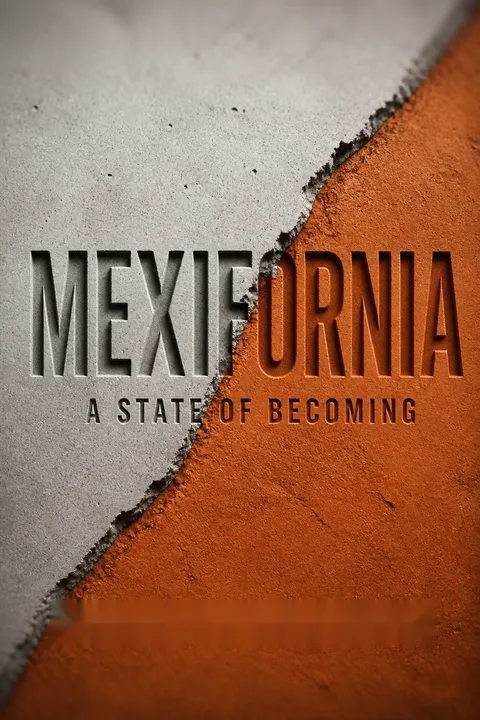


Key Takeaways
California's future is made by choices, not by demographic destiny
A changing hometown. Hanson opens with Santiago Lara, a Mexican farmworker he first hired in 1982. Decades later, Lara still works occasional farm jobs, speaks little English, and has children whose lives vary widely in outcome. Hanson uses this personal history to frame a larger question: what kind of society is California becoming? His account of Selma describes a town transformed by immigration, with new languages, larger schools, and weakened familiarity among neighbors.
A political argument. The book rejects both the claim that California is doomed to become a Mexican colony and the claim that rapid change brings no serious costs. Hanson argues that policy choices, especially about illegal entry, assimilation, and education, determine the outcome. His observations come from a Central Valley farmer and classics professor, not a systematic social-science study.
The opening is strongest as a portrait of change experienced at human scale. Lara is not reduced to either a success story or a symbol of failure, and the family’s mixed outcomes resist easy moral sorting. That complexity supports the book’s central insistence that demographic change is not destiny. At the same time, a long view of one town cannot establish which policies caused its changes or how representative it is. The narrative is valuable evidence of what residents notice and fear, but it needs broader measures to distinguish local experience from statewide pattern.
Cheap labor's real price is hidden in workers' lives and public accounts
A bargain with costs. Hanson describes farms, restaurants, hotels, and households relying on Mexican workers for jobs many native-born residents avoid. Employers gain dependable labor, while consumers benefit from services and products that may cost less. But the bargain also has costs: workers can face unsafe conditions and cash deductions, while public services and unpaid taxes complicate the fiscal picture.
Contested accounting. Studies cited in the book reach sharply different conclusions. Some estimate net public revenue from immigration; others estimate substantial long-term costs. Hanson reports one estimate that an average California household paid about $1,200 a year toward the gap between immigrant-related services and tax contributions. These are period-specific claims from a 2003 book, not settled or current measurements. The disagreement itself is part of his argument: benefits and burdens fall on different people.
The book usefully asks who benefits from low labor costs and who absorbs the side effects. That question is sharper than treating immigration as either an aggregate economic gain or an aggregate fiscal loss. Economic analysis often separates total output from distribution: lower prices may help consumers, while wage competition or service costs burden particular workers and taxpayers. The evidence here is less decisive than the rhetoric sometimes suggests, since the estimates vary with definitions and assumptions. The durable insight is to make those assumptions visible and track costs alongside the gains.
A nearby border sustains cross-border ties older immigrant models lacked
A different migration pattern. Hanson argues that migration from Mexico differs from earlier mass arrivals because the border is close enough for frequent travel and family contact. For immigrants who crossed oceans, returning home was difficult, so learning the host country’s language and customs became more pressing. Mexican migrants, he says, can maintain stronger ties with their communities of origin, while continuing arrivals replenish Spanish-speaking networks in California.
Not a universal barrier. The book contrasts this steady flow with earlier waves that arrived in concentrated periods and then slowed. Hanson argues that a newcomer may face less pressure to assimilate when a large community shares familiar language and customs. Yet he also describes Mexican-American students who learn English, pursue demanding studies, and build professional lives. In his account, proximity changes the conditions for assimilation; it does not make assimilation impossible.
Migration networks can lower the cost of moving by providing information, contacts, and support. That same infrastructure can help newcomers settle while preserving ties to home, so the mechanism is not uniquely Mexican or inherently anti-assimilation. The book’s useful distinction is between a one-time influx and ongoing migration that continually renews ties across a border. A more complete account would also separate cultural continuity from civic participation. People can retain a language, visit family, and identify with an ancestral home while becoming deeply involved in the institutions of their new country.
Treat Mexico's emigration policy as part of the immigration equation
An alleged safety valve. Hanson argues that Mexico’s leaders benefit when poor citizens leave rather than press for reform at home. Migrants send money back to relatives, and their departure, in his view, eases pressure on a state that struggles to provide jobs and services. He also criticizes Mexican officials for defending emigrants in the United States while, as he sees it, neglecting abuses and failures within Mexico.
A disputed explanation. This is a central but contentious claim in the book. Hanson presents emigration as a way for Mexican elites to avoid confronting inequality and weak institutions. He further argues that remittances and the presence of a large expatriate community give Mexico economic and political leverage. The book offers examples and reasoning for this interpretation, but does not establish that Mexican policy is a single, coordinated effort to export poverty.
The argument broadens the usual focus on destination-country employers and border enforcement by asking what departure does for the country people leave. Remittances can support families, while migration can also reduce immediate pressure on local institutions. Those effects do not by themselves prove that a government deliberately encourages mass emigration to avoid reform. The causal question is important: does migration delay change, or does it provide resources and connections that may enable it? Treating origin-country policy as part of the story is valuable, provided that structural incentives are not mistaken for a unified national intention.
The American dream can pay well and still end in bodily ruin
Hard work has a horizon. Hanson describes peach pickers climbing ladders in extreme heat and carrying heavy loads. Under favorable conditions, a worker paid by the amount picked might earn $90 to $120 in a nine-hour shift, far more than he could earn in some Mexican villages. Yet the work is physically punishing, risky, and difficult to sustain as the worker ages. An injury can erase the advantage of a good wage.
Success is relative. The book follows the worker’s imagined return home with savings, then contrasts it with the reality that many remain in California, where a low-wage worker’s responsibilities grow as his body weakens. A paycheck can vastly improve life compared with the place left behind while still leaving a worker shut out of travel, security, and professional advancement. Hanson emphasizes both opportunity and the resentment produced by visible inequality.
This account distinguishes absolute improvement from relative deprivation. A worker may have better housing and income than before migration yet feel acutely disadvantaged beside employers whose lawns and homes he maintains. The life-cycle perspective is also important: wages that look adequate for a young single worker may not support a family or compensate for decades of physical strain. The book’s personal detail makes that vulnerability vivid, though its portrait should not be treated as a universal immigrant trajectory. Work conditions, legal protections, family structure, and opportunities to change jobs can produce very different outcomes.
Build belonging through shared civic competence, not inherited grievance
A common civic education. Hanson contrasts the older Selma schools he remembers with the multicultural programs of his own time. He recalls English instruction, civics, American history, literature, and expectations that students from different backgrounds learn a common public language and set of institutions. He argues that newcomers need access to the country’s civic and intellectual inheritance, not just recognition of their ancestry.
Achievement without erasure. His former students of Mexican heritage who studied Latin, Greek, and other subjects became teachers, scholars, and professionals. Hanson presents their academic work as a source of confidence and belonging. His preferred model allows private cultural traditions to continue while asking citizens to share public institutions and civic norms. The distinction matters: a common civic culture need not require people to abandon family languages, food, or history.
The strongest version of this argument is not that heritage should disappear, but that equal membership requires shared access to language, institutions, and intellectual tools. Civic education can create common ground among people who otherwise have little in common. Yet assimilation is not a single switch, and fluency in English cannot stand as a complete measure of loyalty or belonging. A plural society can support both a common civic framework and multiple cultural inheritances. The practical test is whether students gain the skills to participate fully, rather than whether their private identities become less visible.
Measure education by skills gained, not identity programs offered
A critique of remedies. Hanson argues that well-intentioned bilingual education, ethnic studies, and special assistance can fail when they substitute affirmation for strong instruction in English, mathematics, history, and other academic subjects. In figures he cites from the period, he notes high Hispanic dropout rates and widespread need for remedial courses among students entering California State University. He contrasts those outcomes with individual Mexican-American students who excelled after pursuing rigorous academic work.
Evidence and limits. The book’s point is that good intentions and extensive programming do not prove that students are learning. Schools should be judged by whether students acquire usable skills and can continue into advanced study or work. But anecdotes about successful classics students do not show which programs caused their success, and group-level statistics cannot reveal the needs of every student. The figures are historical claims cited in a 2003 book, not current data.
The insistence on outcomes is sound: spending, representation, and uplifting language are not substitutes for literacy or subject mastery. But the relevant comparison is not between cultural recognition and rigorous education, as though schools must choose only one. Students may need both academic instruction and a curriculum that makes their experiences legible. Evaluation should ask which combinations improve proficiency, graduation, and opportunity, while accounting for students’ starting conditions. The book’s examples establish that demanding education can serve immigrant students; they do not establish that ethnic content or bilingual support necessarily obstructs it.
Popular culture can blend tastes without creating informed citizens
A shared consumer world. Hanson sees malls, television, movies, fast food, sports, and mass-market clothing drawing people from different backgrounds into common habits. He describes neighbors with different education and incomes buying similar goods, driving similar cars, and enjoying the same entertainment. In his view, this commercial culture can weaken old social boundaries and encourage everyday contact, even when schools and political leaders emphasize ethnic separation.
A shallow unity. Shared tastes are not the same as shared civic knowledge. A person can recognize the same celebrities and enjoy the same music as a neighbor without understanding the neighbor’s history, language, or political commitments. Hanson welcomes mass culture as a force that may reduce social distance, but worries that it replaces demanding forms of education and local tradition. It can make people look alike while leaving significant differences in income, opportunity, and public influence untouched.
Consumer markets can create low-friction points of contact: people watch the same programs, visit the same stores, and learn the same references. That is a real form of social convergence, but it is thinner than shared civic purpose. Similar purchases can conceal unequal access to stable work, education, or influence, and common entertainment does not guarantee trust. The book’s ambivalence is productive: mass culture can soften boundaries even as it displaces local traditions. Its equalizing power should be treated as a bridge to fuller participation, not as proof that integration is complete.
Choose a coherent immigration bargain instead of funding contradictory expectations
Three paths, three costs. Hanson warns that continuing the status quo risks a California with large, poorly served, and weakly integrated communities. He considers keeping migration high while demanding rapid cultural and civic integration; sharply reducing immigration while enforcing existing law; and combining lower immigration with an end to government-sponsored separatism. Each route imposes costs. Employers may lose access to inexpensive labor, consumers may pay more, and stricter enforcement would affect migrants and families.
The central decision. The book’s closing argument is that residents cannot indefinitely depend on undocumented workers while avoiding the responsibilities created by their presence. Its alternatives are not presented as effortless solutions, but as choices about labor, law, education, and social cohesion. Hanson favors a more restrictive and assimilationist direction. The broader lesson is to make policy goals consistent: a country cannot promise cheap labor, minimal enforcement, full public services, and effortless integration all at once.
The closing framework is useful because it makes tradeoffs explicit rather than treating every desirable outcome as compatible. It also exposes an asymmetry: employers and consumers can benefit from low-cost labor while workers, local services, and communities absorb different risks. The scenarios are broad, however, and leave practical questions unresolved, including how legal labor demand would be met, how enforcement would be administered, and how schools would support varied learners. A serious policy choice needs both a stated destination and a credible account of who bears its transition costs.
Analysis
Mexifornia is a polemical work of political history and personal observation, organized around a California farmer’s claim that immigration policy, civic confidence, and assimilation shape the state’s future. Its most valuable move is to connect choices that are often discussed separately: employers’ demand for inexpensive labor, workers’ precarious lives, public-service costs, schools’ educational goals, and the national meaning of citizenship. The book insists that neither economic dependence nor demographic change is politically neutral.
Its evidentiary strength is uneven. The farm and classroom scenes give the argument texture, and the author acknowledges that individual immigrants succeed as well as struggle. But the jump from one Central Valley town to claims about millions of people is not supported by a consistent method. The fiscal estimates differ, and the statistics are snapshots cited in 2003, not measures of present conditions. The book also treats culture as a major cause of economic outcomes while giving less sustained attention to legal status, labor-market structure, and variation among communities. Selection effects matter: people who undertake migration may differ from those who stay, so their later outcomes cannot cleanly establish that one national culture alone explains success.
The book’s distinction between a multiracial society and a multicultural society captures a real political question: what should citizens share, and what can remain plural? Its answer leans toward common language and civic formation. That need not imply that heritage and public belonging are mutually exclusive. English proficiency, educational achievement, civic participation, and cultural identification are related but distinct dimensions. Treating them as interchangeable risks turning a call for common citizenship into a demand for cultural sameness.
The book remains useful as a diagnosis of conflicting incentives and a warning against policies that promise benefits without naming costs. It is less reliable as a comprehensive empirical account. Readers should take its questions seriously while testing its causal claims, dated numbers, and proposed solutions against evidence beyond the author’s own experience.
Review Summary
Mexifornia by Victor Davis Hanson receives polarized reviews, averaging 3.93/5 stars. Critics dismiss it as racist rhetoric lacking rigorous data, relying heavily on anecdotes rather than scholarly analysis. Supporters praise Hanson's firsthand perspective as a California farmer and professor, appreciating his nuanced examination of illegal immigration's impact. Central themes include concerns about assimilation versus multiculturalism, the failure of bilingual education and Chicano studies programs, and economic consequences of mass immigration. Reviewers note Hanson doesn't blame immigrants themselves but criticizes political elites, educational systems, and policies preventing cultural integration. Some find his solutions thoughtful; others consider them nativist nostalgia for 1950s America.
People Also Read










Glossary
Mexifornia
A hybrid CaliforniaHanson’s term for a possible California shaped by sustained Mexican immigration and weak assimilation. In this imagined outcome, the state would be neither fully Mexican nor fully American, but a hybrid society with divided civic norms, weakened schools, and communities that remain culturally and economically separate. The book presents it as a possible consequence of current choices, not an inevitable result.
race industry
Institutions trading in identityHanson’s critical label for activists, academics, media figures, and officials whom he believes gain influence by emphasizing racial grievance and group identity. He argues that some such institutions prioritize ethnic solidarity and political concessions over educational achievement and assimilation. The term expresses his polemical interpretation, not a neutral name for all advocacy or ethnic-studies work.
assimilationist model
Shared civic integrationThe approach Hanson favors, in which immigrants learn English, gain access to a common civic and educational culture, and participate in shared public institutions. In his account, this model allows people to retain private traditions while encouraging a common national identity. He contrasts it with policies that preserve separate languages or group identities in public life.
multiracial society
Many races, shared institutionsHanson’s term for a society composed of people from different racial backgrounds who share a public language, civic framework, and common institutions. He presents this as distinct from cultural uniformity in private life. In the book, the ideal is broad racial inclusion paired with a common civic culture and shared national membership.
multicultural society
Separate public culturesIn Hanson’s contrast, a society that formally sustains separate languages, histories, and group identities in public institutions rather than emphasizing a shared civic culture. He argues that this approach can weaken national cohesion and encourage political separation. The book uses the term critically, although the word can also describe cultural diversity without implying institutional division.
About the Author
Other books by Victor Davis Hanson


Download PDF
Download EPUB
.epub digital book format is ideal for reading ebooks on phones, tablets, and e-readers.








