Key Takeaways
1. California's Transformation: A National Warning
People from the rest of the country look at the eerie, fascinating thing that California is becoming, and they wonder about their own destiny.
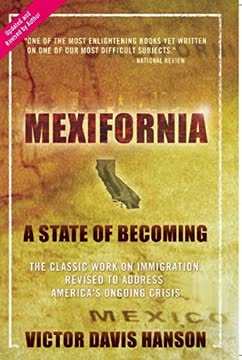
A societal experiment. California, traditionally a trendsetter for the nation, is undergoing an unprecedented demographic and cultural revolution driven by massive, largely illegal, Mexican immigration. This transformation has created a unique societal paradox, where the state struggles to reconcile its progressive ideals with the practical challenges of integrating millions of newcomers. The author, a farmer and classics professor in California's Central Valley, observes this upheaval firsthand, noting how his once cohesive hometown has become a frontier-like "Mexifornia."
Confused identity. The influx has led to a profound confusion about California's identity, questioning whether it remains "plain California with new faces and the same old customs" or is evolving into something entirely new, like "Mexisota, Utexico, Mexizona or even Mexichusetts." This uncertainty is not merely academic; it raises fundamental questions about shared values, secure borders, and a unified citizenry, especially in a post-9/11 world where national cohesion is paramount. The state's experience serves as a stark warning for other regions.
Unsolvable calculus. The core dilemma is a simple yet seemingly intractable problem: Americans desire cheap labor from foreigners, wrongly assuming these immigrants will seamlessly assimilate. Simultaneously, the immigrants and their advocates romanticize Mexico, the very nation they fled, while often deprecating the United States, which offers them sanctuary. This paralysis of "timidity and dishonesty" prevents the enactment of workable solutions, as confronting the truth risks being labeled "isolationist" by the corporate Right or "racist" by the multicultural Left.
2. Unique Challenges of Mexican Immigration
For the Mexican immigrant, by contrast, the Rio Grande is no ocean, but a trickle easily crossed by a drive over a tiny bridge.
Geographical proximity. Unlike previous immigrant waves from distant lands, Mexican immigration is uniquely shaped by geographical closeness. The short distance to the border allows for easy back-and-forth movement, preventing the "psychological guillotine" that historically forced other groups to fully commit to their new homeland. This constant replenishment of new arrivals hinders the natural assimilation process, as immigrants can maintain strong ties to Mexico without fully integrating into American society.
Continuous flow. Most historical mass migrations were explosive, one- or two-time events (e.g., Irish after famines, Jews fleeing pogroms), followed by a cessation that allowed for gradual assimilation. Mexican immigration, however, has been a "steady surf rather than a single tidal wave" since 1970, continuously refreshing the Hispanic community with new aliens. This constant influx means that for every assimilated Mexican, several more newcomers arrive, strengthening expatriate culture and making English fluency less urgent.
Cultural resistance. The proximity and continuous flow foster a unique resistance to assimilation. An immigrant from the Philippines or China knew that failure to learn English and the American system meant being left behind. A Mexican in California, however, can find a viable expatriate culture, with services and communication available in Spanish, reducing the immediate pressure to integrate. This dynamic creates a situation where, even after decades, a significant portion of Mexican immigrants do not become naturalized citizens, maintaining a dual identity that complicates national cohesion.
3. The Harsh Reality of Alien Labor
Young men and women from Mexico now take on tasks that whites, Asians, African-Americans and second-generation Mexican-Americans apparently will not.
Undesirable labor. The vast majority of physical labor requiring little skill but immense strength and stamina—such as picking fruits, mowing lawns, washing dishes in restaurants, and construction—is now performed by Mexican immigrants, many of whom are undocumented. This phenomenon is often denied by native-born Americans, who mistakenly believe aliens are taking "good jobs," despite millions of American teenagers and lower-class citizens largely shunning such demanding, low-wage work.
Exploitation and danger. While wages in America are significantly better than in Mexico (e.g., $10/hour vs. $25/week), the work is physically brutal and dangerous. Immigrants face:
- Physical hazards: Extreme heat, heavy lifting, risk of injury from ladders or machinery.
- Financial exploitation: Contractors withholding pay or making excessive deductions.
- Crime: Vulnerability to robbery (carrying cash), gang violence, meth labs, and predatory criminals targeting their earnings.
- Health issues: High rates of venereal diseases, tuberculosis, and intestinal parasites, often untreated or improperly managed.
Dwindling expectations. Initially, the "El Dorado" of American wages is dazzling, fueling dreams of returning to Mexico as a wealthy success. However, this dream often remains a fantasy. As immigrants age, their bodies break down, and family obligations mount, they face a "poverty of dwindling expectations." The physical demands of their labor become unsustainable, leading to reliance on welfare and a growing bitterness that their hard work primarily benefited others, not themselves or their children.
4. The Host's Dilemma: Hypocrisy and Social Costs
Most Califormans of all backgrounds understand these growing social and cultural costs that ultimately originate from their dependence on seemingly limitless cheap labor - the Devil's bargain we have made to avoid cutting our own lawns, watching our own kids, picking our peaches, laying our tile and cleaning our toilets.
The devil's bargain. Californians, and Americans generally, have made a "Devil's bargain" by relying on cheap, often illegal, immigrant labor for tasks they prefer not to do. This dependence creates a deep-seated hypocrisy: individuals may appreciate their housekeeper or gardener, but collectively resent the systemic problems associated with mass illegal immigration. This tension manifests in successful ballot initiatives against aid to illegals, affirmative action, and bilingual education, often driven by private anger rather than public discourse.
Strain on public services. The influx of millions of low-income, often uninsured, and non-English-speaking immigrants places immense strain on public services. Examples include:
- Emergency rooms: Overwhelmed with patients seeking free maternity care or treatment for serious illnesses, often without insurance.
- Schools: Overcrowded classrooms, demand for bilingual education, and low academic achievement among immigrant children.
- Prisons: A significant portion of California's inmates are from Mexico, with high rates of drug-trafficking arrests involving illegal aliens.
- Infrastructure: Increased traffic, trash dumping, and environmental degradation.
Legal inconsistencies. The state often creates an "alternate universe" for illegal aliens, where standard laws and protocols are bent or ignored. This leads to absurd situations, such as:
- Driver's licenses: Debates over granting licenses without proof of legal status, potentially making it easier for illegals than for citizens.
- Tuition rates: Illegal aliens sometimes pay less for in-state university tuition than American citizens from other states.
- Property rights: Citizens' property (e.g., vineyards, mailboxes) is often damaged or stolen by illegals, with little legal recourse.
This creates a cynical environment where politicians prioritize potential future votes over consistent application of law, further eroding public trust and exacerbating social divisions.
5. The Failure of Multiculturalism
Almost every well-intended and enlightened gesture designed to help immigrants in the last three decades - de facto open borders, bilingual education, new state welfare programs, the affirmation of a hyphenated identity, a sweeping revisionism in southwestern American history - has either failed to ensure economic parity or thwarted the processes of assimilation.
Ideological erosion. The rise of multiculturalism, cultural relativism, and authoritarian utopianism in American education and politics has profoundly undermined civic education and assimilation. These ideologies, which often dismiss facts and traditional Western values as biased, have replaced the historical goal of creating a unified nation with a focus on "absolute equality of results" and the celebration of separate ethnic identities. This approach, though well-intended, has inadvertently hindered immigrant progress.
Counterproductive curricula. Universities, in particular, have become "intellectual ghettoes" offering dozens of courses on "Chicano pride," "Methodology of the Oppressed," and "Decolonizing Cyber-Cinema," while neglecting core American history, logic, and Western literature. This curriculum, often recycled from 1960s radicalism, fosters a sense of victimhood and grievance rather than providing the competitive skills needed for success. The author notes the irony that these programs are often designed by affluent elites who themselves benefit from the system they critique.
The "race industry." A powerful "race industry" of academics, bureaucrats, and activists profits from perpetuating ethnic separatism and demanding concessions. This industry often:
- Distorts history: Romanticizes figures like Pancho Villa and ignores Mexican racism or the positive aspects of American history.
- Promotes bilingualism: Despite evidence that English immersion improves test scores, advocates push for bilingual education, potentially depriving immigrants of crucial English fluency.
- Fosters resentment: Through biased media reports and studies, it blames "white" society for Hispanic problems (e.g., air quality, diabetes, crime rates) rather than addressing individual choices or cultural factors.
This system, rather than helping immigrants, often traps them in a cycle of dependence and resentment, ensuring a perpetual constituency for the racialists.
6. The Old Assimilationist Model's Success
The goal of assimilation that was once the standard, if unspoken orthodoxy in our schools and government is now ridiculed as racist and untrue.
Unapologetic assimilation. Prior to the 1970s, California's approach to immigration, though sometimes "coarse," was based on an unapologetic insistence on assimilation. The underlying assumptions were clear: immigrants came to America to stay and become American, not to replicate their old country's culture. This meant learning English, adopting American customs, and embracing the core political, economic, and social values of the United States, which were implicitly understood to be superior to those of the countries immigrants had left.
Civic education and opportunity. Schools played a crucial role in this process, emphasizing:
- English immersion: Spanish was discouraged, and accents were corrected to facilitate integration into mainstream society.
- Patriotism and civics: Students memorized American history, patriotic songs, and the principles of the Constitution, fostering a shared national identity.
- Work ethic: Education was presented as the "great escape from the fields," encouraging upward mobility and a better life than manual labor.
- Egalitarianism: The aim was to create a mass of students with equal chances of success, judged by performance rather than race or background.
Evidence of success. The author provides numerous examples of successful Mexican-Americans from his youth who assimilated, excelled in various fields (sports, entertainment, professions), and were widely accepted by all races, often before the advent of militant ethnic movements. This suggests that roadblocks to success were primarily social prejudices, not institutional racism, and that money and education eventually "trumped race" in America. The old model, despite its flaws, effectively turned immigrants into productive, integrated citizens.
7. Mexico's Complicity and Internal Racism
Simply put, Mexican elites rely on immigration northward as a means of avoiding domestic reform.
A "safety valve." The Mexican government plays a complex, often duplicitous, role in the immigration crisis. It actively encourages its poorest citizens to emigrate northward, viewing it as a "safety valve" to relieve domestic pressures and avoid necessary reforms in its own corrupt political and economic systems. This mass outflow of the oppressed prevents them from becoming a vocal force for change within Mexico.
Economic benefits and political leverage. Mexico benefits significantly from this arrangement:
- Remittances: Billions of dollars are sent back to Mexico by expatriates, propping up the economy and feeding those who lack a social safety net at home.
- Political leverage: A large expatriate community in the U.S. gives Mexico influence in its relationship with the United States, affecting loan guarantees and trade agreements.
- Camouflage of compassion: Feigned concern for its citizens abroad provides a veneer of compassion for a government that often neglects its underclass at home.
Internal racism. A disturbing aspect, often ignored in American discourse, is Mexico's internal racism. It is primarily the poorest, "brownest," largely Indian Mexicans who emigrate, not the light-skinned elites of Spanish heritage. This suits Mexico City's elite, who avoid explaining why whiter Mexicans are better off. Spanish-language media in the U.S. often reflect this bias, featuring predominantly white or light-skinned hosts and actors, while darker-skinned individuals are cast in subservient roles.
Irredentist claims. Adding to the complexity, a significant portion of Mexican citizens (58% in one poll) believe the U.S. Southwest rightfully belongs to Mexico, fueling irredentist visions of "Nuevo California" or "Aztlan." This ideology, often promoted by Chicano studies departments, romanticizes a past that largely ignores the sparse Mexican population in the region before U.S. annexation, further complicating efforts at integration and national unity.
8. Popular Culture as an Unintended Assimilator
The supercharged nature of such texts, pictures and sounds, delivered instantaneously through inexpensive radios, televisions and the Internet - along with the swift and easy way they are discussed and debated via cell phones and e-mail - has the effect of creating a dynamic popular ethos that often trumps all previous hierarchies.
Amoral homogenizer. Despite the failures of formal assimilation efforts, a powerful, amoral force of global popular culture is inadvertently uniting people across racial, class, and linguistic divides. This culture, driven by shared appetites for material goods and entertainment, dissolves old prejudices and creates a veneer of sameness. While critics lament its "dumbing-down" effect, its accessibility and instant gratification make it a potent, if superficial, tool for integration.
Accessible and unifying. Popular culture's characteristics make it universally appealing:
- Low literacy barrier: Movies, video games, and TV shows require little formal education or language proficiency.
- Instant gratification: Fast food, cheap consumer goods, and immediate entertainment satisfy basic cravings.
- Shared tastes: Rap music, Hollywood blockbusters, and celebrity culture transcend ethnic boundaries, fostering commonality.
- Informality: Casual dress, slang speech, and relaxed social norms reduce the sense of "otherness."
Corporations as integrators. Ironically, the very corporations often denounced by critics are powerful engines of social and cultural equality. Driven by profit, these "amoral entities" care little about a clerk's legal status, race, or values, as long as they can perform the job. They adapt their services (e.g., multi-language options, simplified interfaces) to accommodate diverse populations, inadvertently creating a more inclusive, if commercially driven, society.
This "leveling effect" creates a "Potemkin middle-class existence" for many immigrants, who, despite lower incomes, can afford similar clothes, cars, and entertainment as native-born Americans. While this superficial immersion doesn't replace civic education, it buys time and prevents immediate racial separation, offering a strange, accidental salvation in the face of formal assimilation failures.
9. The Looming Crisis of Identity and Education
How can a society that is increasingly ignorant of its own past offer instruction to immigrants about the nature of the culture they must embrace?
Erosion of national identity. The combination of unassimilated populations, declining civic education, and the promotion of ethnic separatism has created a profound crisis of national identity. American students are increasingly ignorant of their own history and core values, making it impossible for them to transmit a coherent cultural framework to new immigrants. This vacuum is filled by "annoying catchphrases" like "diverse" or "multicultural," which offer no substantive definition of what it means to be American.
Educational catastrophe. The state's educational system, plagued by partisan ideologies and the "race industry," has produced disastrous results for immigrant children. Despite billions in expenditures, Hispanic students face:
- High dropout rates: 30% of Hispanic students drop out of high school.
- Low college readiness: Fewer than 4% are prepared for serious college-level math.
- Remedial needs: 47% of CSU students require remedial classes, indicating a failure to provide foundational skills.
This educational failure, coupled with the lure of ethnic chauvinism, leaves many immigrant youth stranded in a "destructive in-betweenness," vulnerable to gangs and crime rather than achieving upward mobility.
Fragile unity. The author warns that cultural unity is a "fragile state, not a natural condition," constantly eroded if not actively maintained. The choices made by university presidents, politicians, and journalists to embrace separatism over assimilation risk turning society towards the fragmentation seen in places like Rwanda or Yugoslavia. While popular culture offers a temporary "salvation" by fostering superficial commonality, it cannot substitute for a rigorous civic education that instills a shared commitment to American history, culture, and values. The long-term health of the nation depends on rejecting relativism and reaffirming a unifying core.
Last updated:
Review Summary
Mexifornia by Victor Davis Hanson receives polarized reviews, averaging 3.93/5 stars. Critics dismiss it as racist rhetoric lacking rigorous data, relying heavily on anecdotes rather than scholarly analysis. Supporters praise Hanson's firsthand perspective as a California farmer and professor, appreciating his nuanced examination of illegal immigration's impact. Central themes include concerns about assimilation versus multiculturalism, the failure of bilingual education and Chicano studies programs, and economic consequences of mass immigration. Reviewers note Hanson doesn't blame immigrants themselves but criticizes political elites, educational systems, and policies preventing cultural integration. Some find his solutions thoughtful; others consider them nativist nostalgia for 1950s America.